Bioadvanced (bayer) Grub Killer Instructions: When and How to Apply
 Sarah MitchellLawn Diagnostics Specialist | 12 Years
As an Amazon Associate we earn from qualifying purchases.
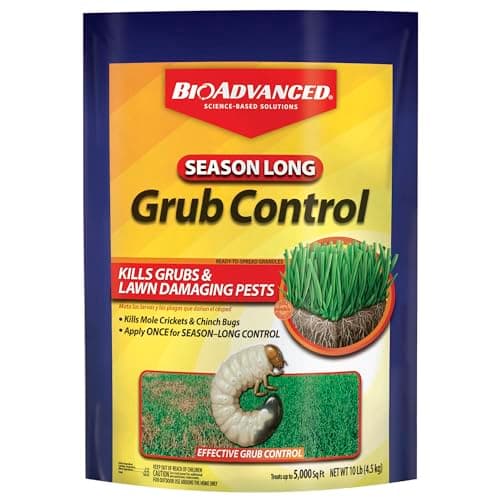
Quick answer: BioAdvanced (formerly Bayer) makes two different grub products, and picking the right one matters more than anything else. 24-Hour Grub Killer Plus uses trichlorfon, a fast-acting curative that kills grubs already feeding in your lawn. Apply it in late summer or early fall when you see damage. Season-Long Grub Control uses imidacloprid, a preventive applied once in late spring to early summer, before grub eggs hatch. Both must be watered in after application. If grubs are chewing your lawn right now, use the 24-Hour product. If you are planning ahead for next season, use Season-Long.
Few things frustrate a homeowner more than patchy, browning turf-especially when you realize the culprit is lurking just beneath the surface. Grubs, those pale C-shaped beetle larvae, quietly eat away at grassroots, leaving lawns vulnerable to dead spots and wildlife digging. It’s not just the damage you see; it’s the underlying health of your lawn that suffers when grubs go unchecked.
Choosing a proven grub killer is only half the battle. Applying it at the right time, in the right way, is what separates a thriving lawn from one in decline. Bioadvanced (formerly Bayer) Grub Killer is a trusted solution, but even the best product can disappoint if misapplied-too early, too late, or under the wrong conditions. As someone who’s diagnosed over a thousand grub-damaged lawns, I’ve seen that following the correct process is what makes or breaks your results.
This comprehensive guide is your blueprint. We’ll cover Bioadvanced (Bayer) Grub Killer instructions: when and how to apply for maximum impact, including exact timing, step-by-step application, advanced tips, regional nuances, and troubleshooting advice most other guides skip. Let's diagnose this step by step so you don’t just treat the problem-you solve it for good.
The symptom you’re seeing-irregular brown patches that lift easily like a piece of carpet-usually points to grub activity. To confirm, cut a one-square-foot section of turf in the affected area and peel it back. If you find more than 8-10 grubs per square foot, treatment is needed. Less than that, and your lawn can usually recover without chemicals.
The fix is to apply Bioadvanced (Bayer) Grub Killer at the correct time for your region and the grub’s life stage. For most lawns, early summer (June-July in northern areas) is ideal for prevention, while late summer to early fall is best for curative action. Don’t apply blindly-wrong timing or skipping the post-application watering often leads to failure. Expect to see visible improvement in 3-4 weeks, but always confirm grub reduction before reapplying or combining with other products.
24-Hour Grub Killer Plus vs Season-Long Grub Control (Which One Do You Have?)
Before you open the bag, check which product you actually bought. These two get mixed up constantly, and applying the wrong one at the wrong time is the number one reason BioAdvanced grub treatments "fail." Here is how they compare, per each product's label:
| Product | Active Ingredient | When to Apply | How It Works | Watering In |
|---|---|---|---|---|
| 24-Hour Grub Killer Plus | Trichlorfon (9.3%) | Late summer to early fall, when grubs are actively feeding and damage is visible | Curative: kills existing grubs on contact, typically within 24 hours once watered in | Water in immediately after application (about 0.5 inch) |
| Season-Long Grub Control | Imidacloprid (0.25%) | Once per year, spring to mid-August; the label's sweet spot is roughly June 1 to July 15, before eggs hatch | Preventive: forms a protective zone in the soil that kills young grubs as they hatch | Water thoroughly within 24 hours of application |
Coverage is similar for both: a 10 lb bag treats about 5,000 sq ft at the grub rate, and a 20 lb bag covers about 10,000 sq ft. Always confirm against your specific bag, since rates differ for other listed pests. If your lawn is 15,000 sq ft, plan on a 20 lb bag plus a 10 lb bag, or three 10 lb bags.
Understanding Grubs and Their Impact on Lawns
What Are Grubs?
Grubs are the larval stage of various beetles, including Japanese beetles, European chafers, and June bugs. These creamy-white, C-shaped larvae develop underground, feeding on grassroots as they grow. The life cycle starts when adult beetles lay eggs in midsummer; these hatch into grubs, which feed through late summer and fall, overwintering below the frost line. Come spring, they briefly feed again before pupating and emerging as adult beetles.
It’s this larval feeding-especially in late summer and early fall-that causes the most lawn damage. Grubs chew through roots, severing the grass’s connection to soil nutrients and water. As a result, you’ll see:
- Irregular brown or wilting patches, especially in sunny areas
- Turf that lifts up easily, sometimes rolling back like a carpet
- Increased wildlife activity (skunks, raccoons, birds) digging for a grub meal
If you suspect grubs, perform a simple check: Cut a one-square-foot section of turf in the affected area and peel it back. Count the grubs-if you find more than 8-10 per square foot, it’s time to act. For more detailed identification, see How to Identify and Treat Lawn Grub Damage.
Why Use Bioadvanced (Bayer) Grub Killer?
Bioadvanced (formerly Bayer) offers several grub control products, with two main active ingredients: imidacloprid (a preventive, long-lasting insecticide) and trichlorfon (a fast-acting, curative treatment). Imidacloprid targets young grubs before they cause major damage, while trichlorfon works quickly to kill larger, more mature grubs present in the lawn.
Both are highly effective-if applied at the right time and in the right way. The active ingredients move through the soil profile to target grubs at their most vulnerable stages. But if you apply too early (before grubs hatch) or too late (after heavy feeding or pupation), results can be disappointing. That’s why timing and proper application are critical for effectiveness-something that’s easy to miss if you jump straight to treatment without diagnosis.
What Is the Active Ingredient?
The active ingredient in BioAdvanced 24 Hour Grub Killer Plus is trichlorfon (9.3 percent), the same fast-acting curative chemistry sold for years under the Bayer Advanced name before the brand changed to BioAdvanced. Trichlorfon kills grubs that are already feeding, which is why this product is the right choice in late summer and fall when damage is visible.
The active ingredient in BioAdvanced Season-Long Grub Control is imidacloprid (0.25 percent), a systemic preventive that must go down in late spring to early summer, before eggs hatch. Once watered in, it forms a protective zone in the soil that kills young grubs as they emerge. Matching the active ingredient to the season is the single biggest factor in whether your grub treatment works.
Timing: When to Apply Bioadvanced (Bayer) Grub Killer
Understanding Grub Life Cycles and Seasonal Timing
To get the most from your Bioadvanced (Bayer) Grub Killer, you need to understand the grub’s life cycle and how it varies by region. Most lawn-damaging grubs hatch from eggs laid by adult beetles in midsummer. These young grubs feed through late summer and fall, then go dormant deeper in the soil over winter. They resume feeding briefly in spring before pupating into adults.
This means there are two main windows for treatment:
- Preventive treatment (imidacloprid): Apply just before or as eggs hatch, targeting young grubs before they feed heavily. This is most effective late spring to early summer (for most northern lawns, June to early July).
- Curative treatment (trichlorfon): Apply when you have an active infestation (large numbers of grubs in late summer or early fall). Curative products work fastest on young to mid-sized grubs, but are less effective once grubs mature or move deeper for winter.
Weather plays a role. Grub eggs hatch when soil temperatures reach 60-70°F at a 2-inch depth. In the North, that’s usually June-July; in the South, it may be May-June. Heavy rain can move products too deep or cause runoff, while drought can hinder product movement through dry soil.
Here’s a calendar overview for common US regions:
| Region | Preventive Window (Imidacloprid) | Curative Window (Trichlorfon) |
|---|---|---|
| Northern US (Cool-Season) | June 1 - July 15 | Late August - Early September |
| Transition Zone | May 15 - July 1 | Late August - Mid-September |
| Southern US (Warm-Season) | May 1 - June 15 | August - Early September |
Our Grass Database recommends confirming your grass type and region before setting your application window, as specific grass species (like Kentucky bluegrass or tall fescue) may show damage at slightly different times.
How to Confirm Grub Presence Before Applying
It’s tempting to treat at the first sign of brown patches, but not all damage is grub-related. Drought, disease, and even pet urine can look similar. Here’s how to confirm grubs before you apply:
- Choose several suspicious spots, especially at the edge of brown areas.
- Using a flat spade, cut three sides of a 1-square-foot section about 2 inches deep.
- Peel back the turf and count all visible grubs in the soil and roots.
- Repeat in 2-3 places. Average the numbers.
If you find 8-10 or more grubs per square foot, action is warranted. If fewer than 5, your lawn can usually tolerate the feeding. For thresholds by grass type and more on timing, see Best Time to Apply Lawn Treatments.
- Penn State Extension recommends treatment when grub counts exceed 8-10 per square foot, as lower numbers rarely cause significant turf loss.
How to Apply BioAdvanced Grub Killer Plus: Step-by-Step Instructions
Preparation: What to Do Before Application
Proper prep ensures the product reaches target pests and is safe for you and your lawn. Here’s what I recommend before you begin:
- Wear gloves, long sleeves, and eye protection-especially when handling concentrated products.
- Have the right tool: a broadcast or drop spreader for granules, or a hose-end or tank sprayer for liquids.
- Mow your lawn to 2-3 inches (removes excess debris, helps product reach soil).
- If soil is dry, water lightly (0.25 to 0.5 inches) the day before to soften the surface and improve penetration.
- Check the forecast: avoid applying if heavy rain or strong wind is expected within 24 hours.
Application Methods: Granular vs. Liquid Bioadvanced Grub Killers
Bioadvanced (Bayer) Grub Killer comes in both granular and liquid forms. Which you use depends on your lawn’s needs, your equipment, and your comfort level.
- Granular: Easy to apply with a spreader, less risk of drift, good for most home lawns. Must be watered in immediately after application.
- Liquid: Quicker-acting, ideal for spot treatments or smaller lawns. Requires careful mixing and even spray coverage.
Always read the specific product label for dosage and coverage. For example, Bioadvanced 24-Hour Grub Killer Plus granules typically cover 5,000 sq ft per 10 lb bag at the grub rate (2 lbs per 1,000 sq ft), and a 20 lb bag covers about 10,000 sq ft; liquids may treat 5,000-7,000 sq ft per bottle (check your label).
Pro tip: Calibrate your spreader before use. Too much or too little product wastes money and risks lawn injury or poor control. Each spreader model has its own setting-test on a driveway or tarp to confirm output before applying to your lawn.
Applying Bioadvanced Grub Killer: Step-by-Step Process
Here’s a detailed, actionable process for both granular and liquid forms:
- Measure your lawn’s square footage. Separate out hardscapes or mulched areas-you only need to treat turf.
- Calculate the amount of product needed based on the label rate (e.g., 2.0 lbs per 1,000 sq ft for granules or appropriate ounces for liquids).
- Load your spreader or sprayer on a hard surface, away from wells or storm drains.
- Apply evenly using a crisscross pattern for granules (north-south, then east-west). For liquids, walk at a steady pace, overlapping slightly for full coverage.
- IMMEDIATELY after application, water your lawn with at least 0.5 inch (about 30-45 minutes with a typical sprinkler). This moves the product into the root zone where grubs are feeding. Skipping this step is the #1 reason for control failures. (For Season-Long Grub Control, the label allows watering in within 24 hours, but sooner is better.)
- Clean your equipment and wash hands thoroughly.
Some Bioadvanced products (like 24-Hour Grub Killer Plus) may require slightly different rates or watering instructions-always double-check your bag or bottle for specifics. For cool-season lawns, our Grass Database notes Kentucky bluegrass and tall fescue handle these products well if the label rates are followed.
Aftercare: What to Do After Applying Grub Killer
Watering is essential right after application-at least 0.5 inch, but not so much that water pools or runs off. For optimal results:
- Keep the soil moist (not soaked) for 3-5 days after application.
- Avoid mowing for 24-48 hours to prevent disturbing the soil and product.
- Restrict children and pets from treated areas until the product has been watered in and the lawn has dried (usually about 24 hours for granules, or as indicated on the label for liquids).
- Monitor for improvement: You should see reduced wildlife digging within 1-2 weeks and turf recovery in 3-4 weeks. Confirm by repeating the grub dig test after 10-14 days.
If signs of grubs persist, consult the troubleshooting section below before considering retreatment.
Advanced Tips for Maximum Effectiveness
Integrating Grub Control Into Annual Lawn Care
Grub control works best as part of a holistic lawn plan. Here’s how to integrate it with fertilization and overseeding:
- Schedule grub killer applications before overseeding or fertilizing. Some fertilizers can interfere with insecticide movement, so separate applications by at least 7-10 days.
- Our Complete Annual Lawn Care Schedule suggests early summer (preventive) or late summer (curative) as the best windows for grub control, followed by fall overseeding and fertilization.
- Avoid mixing grub killer with weed control products unless the label specifically allows it-some combinations can stress grass or reduce efficacy.
Preventive strategies (using imidacloprid annually) are best in areas with a history of heavy grub infestations, while curative treatments should be reserved for confirmed outbreaks. For ongoing management, monitor annually and keep a lawn health calendar to track timing and outcomes.
Regional and Weather Considerations
Grub activity and optimal treatment timing vary by grass type and climate:
- Cool-season grasses (Kentucky bluegrass, tall fescue) in the North: Apply preventive products in June-July; curative in late August-early September.
- Warm-season grasses (bermudagrass, zoysiagrass) in the South: Apply preventive products in May-June; curative in August-early September.
- In drought, water the lawn lightly the day before application and avoid applying to bone-dry turf. In heavy rain, wait until the soil is damp but not saturated to prevent runoff.
- If you suspect a different grub species (like masked chafers in the Midwest), confirm with local extension resources, as timing and product selection may differ.
- Ohio State University Extension advises adjusting grub control timing based on soil temperature-target application just before or during peak egg hatch (soil at 60-70°F).
Safe and Responsible Use
When using any chemical grub killer, consider environmental impact and safety:
- Apply only to turf-avoid hard surfaces, flower beds, or vegetable gardens.
- Prevent runoff by watering in carefully and avoiding applications before storms.
- Protect pollinators by mowing flowering weeds before application and following label guidance on bee safety.
- Store leftover product in the original container, in a locked, dry place away from pets and children.
- Dispose of empty containers per local regulations-never dump excess product in drains or compost.
For more on sustainable options and organics, see Organic Grub Control Methods for Lawns.
If the dig test comes up empty and the brown patches turn out to be fungal rather than insect damage, the companion product walkthrough is our Scotts DiseaseEx instructions.
Troubleshooting: What to Do If Grubs Persist After Treatment
Signs That Treatment Didn’t Work
If you still see brown patches, easy-to-lift turf, or wildlife digging 2-3 weeks after application, it’s time to investigate. Repeat the dig test to check for live grubs. If you still find more than 8-10 per square foot, your initial treatment may have failed. Reasons include:
- Incorrect product for the grub’s life stage (e.g., preventive product applied to mature grubs)
- Poor timing (too early or too late relative to egg hatch)
- Insufficient watering-in after application
- Heavy rain/runoff washing product away
- Grub species not controlled by product (rare, but possible)
Understanding why this happens helps you prevent it next time. Confirm your diagnosis before retreating-sometimes patchy recovery is due to drought or disease, not active grubs.
Next Steps and Alternative Solutions
If grubs persist:
- Reapply Bioadvanced (Bayer) Grub Killer only if label allows (usually no more than 2 times per year, spaced at least 14 days apart). Note that Season-Long Grub Control is a once-per-year product per its label.
- Switch to a curative product (trichlorfon) if you initially used a preventive one (imidacloprid) and grubs are already large.
- Consider biological controls like beneficial nematodes (Heterorhabditis bacteriophora) or milky spore for Japanese beetle grubs. These are slower, but can build long-term suppression.
- If infestation is severe or you’re unsure of the problem, consult a lawn care professional for diagnosis and treatment.
For a deep dive into organic and biological options, see Organic Grub Control Methods for Lawns.
Common Mistakes to Avoid
Skipping the Grub Confirmation Test
One of the biggest errors I see is applying grub killer without confirming an actual infestation. Not only is this wasteful, but repeated unnecessary treatments can stress your lawn and harm beneficial soil life. A simple dig test, as described above, is your best insurance against misdiagnosis and wasted effort. Not sure your brown patches are even grubs? See our guide to brown spots in summer: drought, disease, or grubs before you buy anything.
Applying at the Wrong Time of Year
Many guides gloss over timing, but applying too early (before eggs hatch) or too late (after grubs have gone dormant) leads to poor results. In northern lawns, late spring to early summer is best for prevention; in southern regions, move up the calendar by a few weeks. Don’t rely solely on the calendar-use soil temperature or local extension reports for accuracy. For more, see Best Time to Apply Lawn Treatments.
Incorrect Application Methods
Another common pitfall: misreading label instructions or guessing on spreader settings. Overapplication can burn grass or pollute waterways, while underapplication leaves grubs untouched. Watering in the product immediately is essential-skipping this step is the #1 reason for control failures. Check your spreader calibration and follow label directions closely.

Safety Oversights With Pets and Children
Some guides don’t emphasize safety. Always keep pets and children off treated areas until the product is dry or as directed on the label. Improper storage of leftovers is another risk-always secure chemicals out of reach and dispose of them responsibly.
Conclusion
Effective grub control isn’t about picking the strongest product; it’s about diagnosing the problem, confirming the need, applying at the right time, and following through with precise aftercare. Bioadvanced (Bayer) Grub Killer can be highly effective-if you follow label instructions, confirm grubs are present, and time your application to the grub’s life cycle. Remember: 8-10 grubs per square foot is your action threshold, and watering in the product is non-negotiable for success.
Incorporate grub management into your annual lawn care plan for best results, and always adapt to your region and grass type. For next steps, check out How to Identify and Treat Lawn Grub Damage, The Complete Annual Lawn Care Schedule, or Organic Grub Control Methods for Lawns for advanced strategies and ongoing lawn health.
Not sure whether you even have a grub problem, or whether to go preventive or curative? Start with our guide to how to get rid of grubs in your lawn, including damage thresholds and treatment timing.
Top Picks

As an Amazon Associate we earn from qualifying purchases.
Free Lawn Care Tools
Check your lawn for grubs by cutting a 1-square-foot section and counting grubs. If you find more than 8-10 per square foot, treatment is needed.
Apply preventive products in late spring to early summer (June-July for northern regions, May-June for southern). Curative treatments are best in late summer to early fall.
Yes, always water in granular or liquid grub killer with at least 0.5 inch of water immediately after application to move the product into the root zone. The Season-Long Grub Control label allows watering in within 24 hours, but sooner is better.
Do not mix grub killer with other products unless the label allows it. Space fertilizer or weed control applications 7-10 days apart from grub killer.
Keep pets and children off treated areas until the product has been watered in and the lawn is dry (typically about 24 hours for granules). Store leftovers securely and follow label safety directions.
You should see reduced wildlife digging and improved turf within 1-2 weeks. Confirm grub reduction with a dig test 10-14 days after application.
Trichlorfon, at 9.3 percent. It is a fast-acting curative that kills grubs already feeding in the soil, which makes it the right product for late summer and fall rescue treatments.
Imidacloprid, at 0.25 percent. It is a systemic preventive that forms a protective zone in the soil and kills young grubs as they hatch. Apply it once per year, spring through mid-August, ideally June 1 to July 15, before eggs hatch.
Yes. BioAdvanced is the new name for the Bayer Advanced consumer lawn line after Bayer sold its consumer garden brands to SBM in 2018-2019. The grub products, like 24-Hour Grub Killer Plus (trichlorfon) and Season-Long Grub Control (imidacloprid), kept the same active ingredients under the new brand.
A 20 lb bag of 24-Hour Grub Killer Plus granules covers about 10,000 sq ft at the grub rate of 2 lbs per 1,000 sq ft. For Season-Long Grub Control, a 10 lb bag covers about 5,000 sq ft, so plan on two bags. Always confirm the rate on your specific bag.
Photos: koocbor / Openverse, tu nguyen / Pexels, CthulhuWho1 (Will Hart) / Openverse

Your lawn plan, in your pocket all season
Grass ID, a season plan, soil-timed reminders, and a lawn journal that remembers what you did. Free on iPhone.
Related Articles
 Lawn Care Tips
When to Apply Scotts Turf Builder & Pre-Emergent: 2026 Schedule
Apr 30, 2026•6 min read Lawn Care Tips
Scotts Halts Crabgrass Preventer Instructions: How to Apply, Water, and Time It
Mar 29, 2026•6 min read Lawn Care Tips
Scotts Turf Builder Triple Action Instructions: Complete Application Guide
Mar 29, 2026•6 min read