Scotts Turf Builder Triple Action Instructions: Complete Application Guide
 Marcus GreenTurf Management Pro | 18 Years
As an Amazon Associate we earn from qualifying purchases.
Here is the short version: apply Scotts Turf Builder Triple Action in early spring, once soil temperatures hold around 55°F for several days but before crabgrass germinates. Apply to grass that is lightly wet from morning dew or a quick sprinkle so the weed-killer granules stick to weed leaves, use a Scotts broadcast spreader at roughly setting 4½ (confirm on your bag), then don't water or mow for 24 hours. After that, water the lawn to activate the crabgrass preventer. Don't seed, sod, or aerate for 4 months afterward. And if your lawn is St. Augustine or centipede, you need Southern Triple Action instead, which works differently. The full details, settings, and regional timing are below.
Maintaining a dense, weed-resistant lawn can be a challenge-especially if you’re contending with crabgrass outbreaks, dandelion infestations, or patchy turf. The difference between a lackluster yard and a professional-grade result often comes down to both the products you use and how precisely you apply them. Scotts Turf Builder Triple Action is designed to simplify the process by offering fertilization, weed control, and crabgrass prevention in one application. But, as I’ve seen countless times on golf course fairways and home lawns alike, your results will only be as good as your application technique and timing.
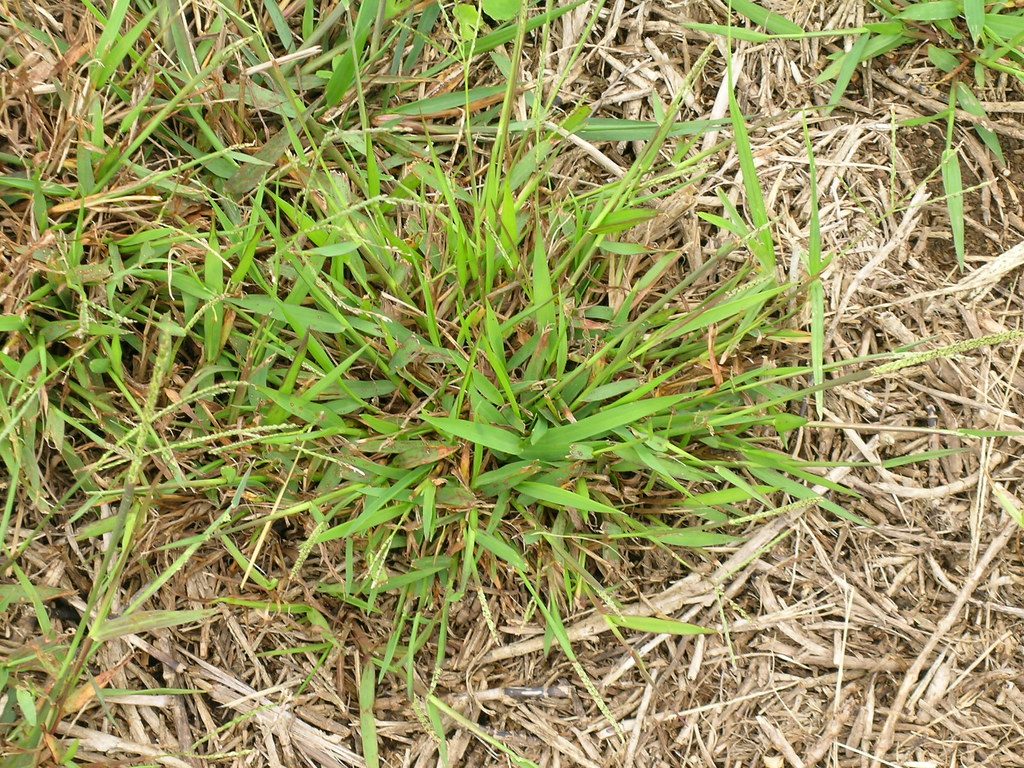
If you notice broadleaf weeds like dandelions, crabgrass starting to emerge, or your lawn looking thin and pale in early spring, Scotts Turf Builder Triple Action is likely the right tool. Confirm the need by checking for active weed growth and ensuring your grass type is compatible-avoid use on newly seeded or sodded areas less than 4 months old, and double-check the product matches your region (regular vs. Southern Triple Action).
Apply when soil temperatures are consistently around 55°F and before crabgrass seeds germinate-typically early spring. Apply to grass that is lightly damp from dew or a light watering so the granules stick to weed leaves, then hold off on watering or mowing for 24 hours. After 24 hours, water the lawn to move the crabgrass preventer into the soil. Don’t apply before heavy rain or when wind exceeds 10 mph. Expect visible weed reduction in 2-3 weeks, with crabgrass prevention lasting up to 4 months. If in doubt about overlap or missed spots, use a checkerboard pattern for full coverage.
Understanding Scotts Turf Builder Triple Action
What Is Scotts Turf Builder Triple Action?
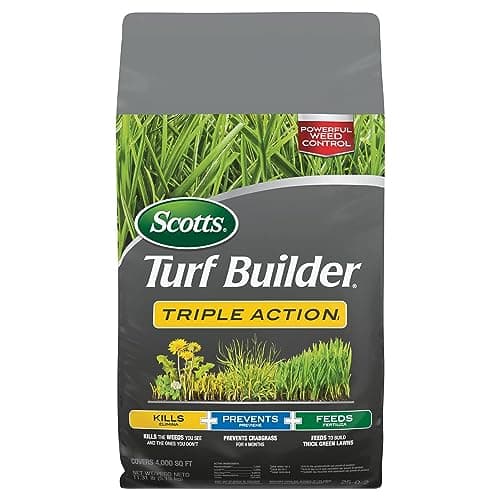
Scotts Turf Builder Triple Action is a granular lawn treatment designed to deliver three key benefits in a single application: fertilizing your turf, controlling broadleaf weeds, and preventing annual grassy weeds like crabgrass. This triple-action formula streamlines traditional lawn care into one step, making it a favored choice for homeowners seeking convenience without sacrificing results.
Unlike standard Scotts Turf Builder, which focuses solely on feeding grass, or Scotts Weed & Feed, which only targets existing weeds and fertilizes, Triple Action adds a pre-emergent herbicide that stops crabgrass before it starts. (Curious how Scotts products stack up on the pre-emergent question? See our breakdown of whether Scotts Weed & Feed counts as a pre-emergent.) Choose Triple Action if your primary spring concerns are both weed control (including crabgrass) and fertilization. If you only need to feed your lawn or treat broadleaf weeds already present, standard Turf Builder or Weed & Feed may suffice. For southern lawns, a specialized “Southern Triple Action” formula exists to match St. Augustine and centipede lawns-always match the product to your grass type and climate for best results.
How Does the Triple Action Formula Work?
The effectiveness of Scotts Turf Builder Triple Action comes from its blend of selective herbicides, pre-emergent weed control, and fertilizer (25-0-2 analysis). The main active ingredients are:
- 2,4-D and Dicamba: Target and kill broadleaf weeds like dandelion, clover, and chickweed.
- Pendimethalin: Acts as a pre-emergent herbicide, forming a barrier at the soil surface to prevent crabgrass and other annual grassy weeds from germinating for up to 4 months.
- Nitrogen (N) and Potassium (K): Feed existing turf, supporting vigorous green-up and recovery from winter.
The broadleaf herbicides work by sticking to weed leaves, which is why the label wants the grass lightly wet at application. Watering 24 hours later then moves the pre-emergent and fertilizer into the root zone. The science is simple: the selective herbicides only harm broadleaf weeds, leaving grass unharmed, while the pre-emergent stops crabgrass seeds before they sprout.
Which Lawns and Regions Is It Designed For?
The regular formula is labeled for Kentucky bluegrass, perennial ryegrass, tall and fine fescues, bermudagrass, bahiagrass, zoysiagrass, and centipedegrass (check your bag, as labeled grasses can vary slightly by bag size and year):
- Cool-Season Lawns (North): Kentucky bluegrass, fescue, and ryegrass benefit from the regular Triple Action formula.
- Warm-Season Lawns (South): St. Augustine (including Floratam) and carpetgrass require the “Southern Triple Action” version; zoysia and centipede appear on both labels, so either formula works (check your bag). Bermudagrass is the exception: it takes the regular formula, not Southern.
- Transition Zone: Use with caution-read the label for grass compatibility as the region overlaps cool and warm-season types.
Never use the regular formula on St. Augustine, carpetgrass, dichondra, or bentgrass-the 2,4-D based weed control can seriously injure them. Never apply to newly seeded or sodded lawns less than 4 months old. The wrong formula or timing can damage turf or miss critical weed prevention windows.
When to Apply Scotts Triple Action
When Should I Apply Scotts Turf Builder Triple Action?
Apply Scotts Turf Builder Triple Action in early spring, once soil temperatures hold near 55 degrees for several days but before crabgrass germinates, with daytime highs around 60 to 80 degrees. In northern lawns that is usually late March to mid-April. Southern Triple Action is different and goes down any time grass and weeds are actively growing.
Timing your application is crucial for maximum effectiveness. The ideal window is early spring, just as soil temperatures reach 55°F for several consecutive days-this is when crabgrass begins to germinate and broadleaf weeds become active. Scotts recommends applying when daytime temperatures are consistently between about 60°F and 80°F. For most regions, that’s:
- Northern U.S. (cool-season grasses): Late March to mid-April
- Transition Zone: Early to mid-April
- Deep South (St. Augustine, centipede): Use Southern Triple Action instead, and apply any time grass and weeds are actively growing-it isn’t tied to the crabgrass germination window.
Monitor soil temperatures with a probe or consult our Regional Climate Data for your local pre-emergent window. Avoid applying after crabgrass has already emerged, as prevention will be ineffective and post-emergent control is limited. The label also allows a second application (at least 8 weeks later, no more than two per year)-a late-summer or early-fall pass targets winter annual weeds, but it carries the same 4-month seeding restriction.
- Purdue Extension recommends applying pre-emergent crabgrass preventers when soil reaches 55°F for 3-5 days-typically before forsythia blooms drop.
Signs Your Lawn Needs Triple Action
The best candidates for Scotts Turf Builder Triple Action are lawns that show:
- Visible broadleaf weeds (dandelions, clover, plantain, chickweed)
- Known crabgrass issues in previous years
- Thin, pale, or slow-to-green turf in early spring
- No recent fertilization (last 6-8 weeks)
Assess your lawn by walking it in early spring. If you see young crabgrass seedlings or clusters of broadleaf weeds, and your turf isn’t thriving, you’ll benefit from a triple-action approach. Refer to our guide on How to Identify Common Lawn Weeds for visual diagnosis and confirmation.
Preparing Your Lawn for Application
Pre-Application Checklist
Preparation sets the stage for a uniform, effective application. Here’s what you should do 1-2 days before applying Scotts Turf Builder Triple Action:
- Mowing: Mow to your grass’s recommended height (our mowing data shows 1.0-2.0 inches for Bermudagrass, 2.5-3.0 inches for Kentucky bluegrass). Never scalp or mow extremely short before application.
- Moisture: Plan to apply when the grass is lightly wet from morning dew, or give it a quick sprinkle first. The moisture helps the weed-killer granules stick to weed leaves. Damp is the goal, not soggy or saturated.
- Debris Removal: Rake or blow away leaves, sticks, and heavy thatch. Excess debris can block granules from reaching soil and weed leaves.
- Mark Irrigation Heads and Obstacles: Use flags for hidden sprinklers and beds to avoid overlap or missed sections.
Safety Considerations for Family, Pets, and Environment
Scotts Turf Builder Triple Action is generally safe when used as directed, but precautions protect everyone:
- Keep pets and children off the lawn until the granules are watered in and the turf is dry again.
- Avoid application near vegetable gardens, ponds, or streams. The herbicide can run off into waterways or damage edible plants.
- Protect pollinator-friendly areas. Never apply over blooming clover or wildflower patches to avoid harming bees.
- Store unused product in a locked, dry location away from food, feed, and animal access.
Always wear gloves and eye protection when handling granular products and wash hands thoroughly after use.
Weather Factors to Consider
Weather conditions can make or break your application:
- Avoid windy days (over 10 mph): Wind can blow granules off-target, causing uneven coverage and potential drift onto sensitive plants.
- Do not apply before rain: Rain in the first 24 hours can wash the weed killer off weed leaves before it works. Check the forecast for a 24-hour dry window.
- Ideal temperatures: Apply when daytime highs are between 60°F and 80°F. Extreme heat or cold reduces effectiveness and increases turf stress.
- Morning dew is your friend: A light film of moisture on the blades helps granules adhere to weed leaves-just avoid applying to saturated, dripping-wet grass.
Scotts Triple Action Instructions (Step by Step)
Choosing the Right Spreader and Settings
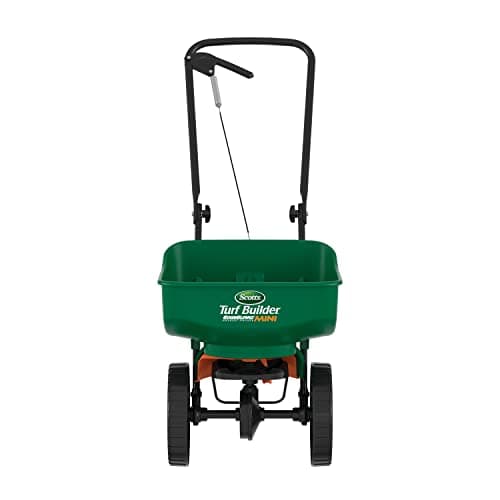
Precision is key to professional results. Homeowners should use either a broadcast (rotary) or drop spreader. Here’s how they compare:
- Broadcast spreaders: Cover large areas quickly, ideal for open lawns, but require careful edge control to avoid product in beds or pavement.
- Drop spreaders: Deliver a defined edge, perfect for smaller lawns or those with many beds, but take more time to cover large areas.
Scotts publishes a recommended setting for Triple Action on each bag. Typical settings are:
| Spreader Type | Typical Setting | Note |
|---|---|---|
| Scotts broadcast/rotary (EdgeGuard DLX, Mini) | 4½ | Confirm on your bag; varies by bag size |
| Scotts drop spreader (Classic Drop) | 7 | Confirm on your bag |
| Scotts Elite (Broadcast) | 5 | Confirm on your bag |
Always calibrate your spreader before use. For confirmation, fill with a known amount, apply to a measured 1,000 sq ft area, and weigh remaining product. Adjust as needed for even distribution.
Applying the Product: Step-by-Step Guide
- Wait for Light Moisture: Apply when the grass is wet from morning dew or a light sprinkle, so granules stick to weed leaves.
- Mark Boundaries and Obstacles: Use flags or stakes to outline the area to be treated, including beds, trees, and hardscapes.
- Load the Spreader: Fill the hopper on a driveway or tarp, not over grass, to prevent spills. Wear gloves and keep product dry.
- Apply in Even Passes: Walk at a steady pace (about 3 ft per second), moving in parallel lines. For large lawns, use a north-south pass, then an east-west pass (checkerboard pattern) for thorough coverage.
- Overlap Technique: Slightly overlap each pass by 2-3 inches. Avoid heavy overlap-this can cause fertilizer burn.
- Clean the Spreader: After application, empty residual granules, wash thoroughly, and dry before storage. Store unused product in its original bag, sealed tightly.
Should I Water After Applying Scotts Turf Builder Triple Action?
Yes, but not right away. Do not water for the first 24 hours so the broadleaf weed killer can absorb through the weed leaves. After 24 hours, water with about a quarter to half an inch to move the crabgrass preventer and fertilizer down into the soil. Southern Triple Action is the opposite and gets watered in immediately.
The watering sequence matters more with Triple Action than with plain fertilizer, because the two herbicides need opposite things:
- Do not water or mow for 24 hours after application. The broadleaf weed killer needs that time on the weed leaves to work; watering too soon washes it off.
- After 24 hours, water the lawn. Use roughly 0.25-0.5 inches-enough to move granules off leaves and into soil, activating the crabgrass preventer and fertilizer, but not so much as to cause runoff.
- Resume mowing after the turf dries. Typically, you can mow again 2-3 days after application and watering.
- Avoid raking or dethatching for at least 2 weeks. Disturbing the surface can break the pre-emergent barrier and reduce effectiveness.
Special Instructions for Problem Areas and Edges
Edges, slopes, and tricky spots require extra attention:
- Lawn Edges and Driveways: Use a drop spreader or shielded broadcast model to avoid granules in beds or on pavement. Sweep up stray granules promptly to prevent runoff.
- Slopes/Uneven Ground: Apply uphill and across slopes, not down, to prevent product from washing away during watering.
- Missed or Overlapped Sections: If you see stripes or missed spots after a week, spot-treat with a small amount using a handheld spreader. For overlapped areas showing burn, water deeply to dilute, but avoid reapplication until lawn recovers.
Southern Triple Action: What's Different?
If searchers land on one wrong assumption with this product line, it’s this: Southern Triple Action is not just a regional variant of the same formula. It’s a different product with different active ingredients, a different third job, and a different application routine.
| Triple Action (regular) | Southern Triple Action | |
|---|---|---|
| The three jobs | Kills broadleaf weeds + prevents crabgrass + feeds (25-0-2) | Kills listed weeds + kills and prevents fire ants up to 6 months + feeds (29-0-10) |
| Weed control | 2,4-D and dicamba, plus pendimethalin pre-emergent | Atrazine (kills dollarweed, dandelion, clover, oxalis, chickweed, henbit); no crabgrass pre-emergent |
| Insect control | None | Bifenthrin: fire ants, armyworms, chinch bugs, mole crickets, fleas, ticks |
| Safe grasses | Kentucky bluegrass, ryegrass, fescues, bermuda, bahia, zoysia, centipede | St. Augustine (including Floratam), centipede, zoysia, carpetgrass |
| Never use on | St. Augustine, carpetgrass, dichondra, bentgrass | Bermuda, bahia, bluegrass, ryegrass, fescue, bentgrass, dichondra |
| When to apply | Early spring, soil ~55°F, before crabgrass germinates | Any time grass and weeds are actively growing |
| Watering | Apply to dew-damp grass, wait 24 hours, then water in | Water in immediately after application |
Two practical takeaways. First, the grass lists barely overlap: bermuda takes the regular formula, St. Augustine takes Southern, and using the wrong bag can seriously injure the lawn (regular Triple Action’s 2,4-D is the classic St. Augustine killer). Second, the watering directions are opposites: Southern gets watered in immediately, while regular needs its 24-hour dry window. Both allow a second application after 8 weeks, with a maximum of two per year. If crabgrass is your concern on a Southern lawn, you’ll need a separate pre-emergent strategy, since Southern Triple Action doesn’t include one-see our Scotts pre-emergent schedule.
Optimizing Results: Advanced Tips & Pro Strategies
Combining with Other Lawn Care Practices
Scotts Turf Builder Triple Action delivers best results as part of a coordinated lawn care program. Here’s how to integrate it with other key practices:
- Overseeding: Do not overseed immediately after applying Triple Action. The pre-emergent will inhibit new grass seed as well as weeds. Wait at least 4 months before seeding, sodding, or aerating. For overseeding strategies, refer to How to Overseed a Lawn.
- Aeration and Dethatching: Aerate or dethatch before applying Triple Action, not after. Aerating after can break the pre-emergent barrier. Schedule these tasks 1-2 weeks before application for best results.
- Soil Amendments: Lime or sulfur can be applied a few weeks before or after, but always water in thoroughly and avoid mixing with Triple Action in the same week.
- Irrigation Systems: Adjust your system to provide 1 inch of water per week (including rain), and use a cycle-and-soak method to minimize runoff in heavy soils.
Dealing with Difficult Weeds or Heavily Compacted Lawns
If your lawn suffers from persistent weeds or severe compaction:
- Spot-Treat Stubborn Weeds: After the waiting period, use a selective post-emergent spray for any remaining broadleaf weeds.
- Adjust Application Rates: Never exceed label rates, but for thin or compacted areas, focus on improving soil health first (aeration, topdressing with compost) before reapplying product.
- Second Application: Only reapply Triple Action after at least 8 weeks, and never more than twice per year. Overuse increases the risk of turf injury. (Wondering how that compares to standard weed and feed schedules? See how often you can apply Scotts Weed & Feed.)
From my time managing championship greens, the key most homeowners miss is soil preparation-no product performs well in severely compacted or thatchy turf. Address those first for maximum results.
Troubleshooting and Frequently Asked Questions
What If It Rains After Application?
Rain matters most in the first 24 hours. During that window the broadleaf weed killer is still sitting on weed leaves, and rain can wash it off before it works, weakening weed control. Rain after the 24-hour mark is actually helpful-it does the watering-in for you, moving the crabgrass preventer and fertilizer into the soil. If heavy rain (over 1 inch) hit within hours of application, wait 2-3 weeks and assess: the fertilizer and pre-emergent usually still do their jobs, so spot-treat surviving weeds with a post-emergent spray rather than reapplying the full product. For widespread washout on slopes, delay any reapplication at least 4 weeks to avoid over-application stress.
- Contact your local extension office for advice on reapplication after extreme weather events.
Grass or Weed Damage: What Went Wrong?
Brown or yellow streaks usually indicate over-application or heavy overlap. Confirm by comparing affected areas to your spreader pattern. Remedy by deep watering (0.5-1 inch) over several days and avoid further fertilization until recovery. If weeds persist, confirm product compatibility and coverage-missed spots can be spot-treated with a post-emergent spray after 4 weeks. If crabgrass emerges, it typically means application was too late or the watering-in step was missed.
How Soon Can You Reapply or Use Other Products?
Wait at least 8 weeks before a second full application of Triple Action. For other fertilizers, allow at least 4-6 weeks. Avoid using other herbicides (especially containing 2,4-D or dicamba) within 3-4 weeks, as stacking can stress turf. For fungus or insect issues, always check label guidance for compatible intervals.
Addressing Unusual Scenarios
New Sod or Recently Seeded Lawns: Wait until new turf is fully established before use; Scotts advises the lawn should be mowed at least 4 times first. On dormant grass, delay application until green-up and active growth resumes.
Slopes or Shaded Areas: Apply with extra care to prevent runoff. In deep shade, consider alternative groundcovers if turf struggles year after year.
Unique Microclimates: Adjust timing to your local soil temperatures and microclimate conditions. Use a soil thermometer for accurate tracking in these areas.
Common Mistakes to Avoid
Many online guides gloss over the real-world pitfalls that separate professional results from DIY disappointment. Here’s what most miss-and how to avoid them:
Skipping Confirmation Tests and Coverage Checks
Never trust your spreader’s factory setting without a quick calibration test. Apply to 200 sq ft, check actual output, and adjust as needed. Walk your lawn in a grid pattern after application to check for missed spots or heavy stripes-early correction prevents weeks of uneven growth.
Incorrect Timing by Region or Lawn Type
Applying too early (before soil reaches 55°F) or too late (after crabgrass has emerged) is the number one cause of missed weed prevention. Always match the product formula to your grass type-Southern Triple Action for St. Augustine and centipede, regular Triple Action for bluegrass, fescue, and bermuda. Our Grass Database emphasizes correct timing based on your variety and local soil temperatures.
Safety Oversights with Pets and Family
Don’t overlook the wait period post-application. Let the lawn dry after watering before allowing pets or children to play. Store all leftovers in a secure, dry spot to prevent accidental ingestion or spillage.
Product Application Errors
Watering too soon (washing the weed killer off the leaves), overlapping passes, applying in wind, or treating before forecasted heavy rain are frequent homeowner mistakes. These lead to product burn, wasted material, or runoff into beds and waterways. Professional crews approach this differently-always check the weather, mark boundaries precisely, and sweep granules off hard surfaces immediately after application.
Conclusion
Scotts Turf Builder Triple Action is a powerful, convenient tool for creating a healthy, weed-resistant lawn-if you apply it with precision and respect the unique needs of your grass type and region. Take time to calibrate your spreader, monitor soil temperatures, and follow the pre- and post-application guidelines above. This ensures not just short-term green-up, but long-term turf resilience and minimal weed pressure.
For next-level results, integrate Triple Action into a year-round plan that includes proper mowing, watering, aeration, and overseeding at the right intervals. See our related guides on How to Overseed a Lawn, How to Control Crabgrass, and Best Time to Fertilize Your Lawn for deeper insights and advanced strategies. With the right approach, even a home lawn can rival a championship fairway.
Related Scotts Guides
Free Lawn Care Tools
Apply to grass that is lightly wet from morning dew or a quick sprinkle. The moisture helps the weed-killer granules stick to weed leaves, which is how the broadleaf control works. Then hold off on watering or mowing for 24 hours. Note this is the opposite of Southern Triple Action, which gets watered in immediately.
Wait 24 hours first. Watering too soon washes the weed killer off the weed leaves before it can work. After 24 hours, water the lawn to move the granules into the soil, which activates the crabgrass preventer and fertilizer.
No, do not overseed immediately after application. The pre-emergent herbicide will prevent grass seed from germinating. Wait at least 4 months before seeding, sodding, or aerating.
Yes, when used as directed. Keep pets and children off the lawn until you have watered it in (after the 24-hour wait) and the grass has dried again.
Scotts lists setting 4½ for its broadcast/rotary spreaders (EdgeGuard models) and around 7 for drop spreaders. Settings can vary by bag size and spreader model, so confirm the number printed on your bag and calibrate with a small test area first.
Rain within the first 24 hours can wash the weed killer off weed leaves before it works, weakening broadleaf control. Rain after the 24-hour mark actually helps by watering in the crabgrass preventer. If heavy rain hit early, wait to see results before doing anything; spot-treat surviving weeds rather than reapplying the full product.
Early spring, when soil temperatures hold around 55°F for several days but before crabgrass germinates, with daytime highs roughly 60-80°F. That is typically late March to mid-April in northern states. Southern Triple Action follows a different rule: apply any time grass and weeds are actively growing.
Yes. The label allows a second application, and a fall pass targets winter annual weeds like poa annua and chickweed before they establish. Space applications at least 8 weeks apart and do not exceed two per year. Remember the fall pass carries the same 4-month seeding restriction, so do not plan fall overseeding on a lawn you treat in September.
No. Regular Triple Action's 2,4-D based weed control can seriously injure St. Augustine. Use Scotts Turf Builder Southern Triple Action instead; it is formulated to be safe on St. Augustine (including Floratam), centipede, zoysia, and carpetgrass.
They are different products for different grasses. Regular Triple Action pairs 2,4-D based weed control with a pendimethalin crabgrass preventer for bluegrass, ryegrass, fescue, bermuda, and similar lawns. Southern Triple Action swaps in atrazine for weeds plus bifenthrin, which kills and prevents fire ants for up to 6 months, and it is safe on St. Augustine (including Floratam), centipede, zoysia, and carpetgrass. Southern does not include a crabgrass pre-emergent and must not be used on bermuda or northern grasses.

Your lawn plan, in your pocket all season
Grass ID, a season plan, soil-timed reminders, and a lawn journal that remembers what you did. Free on iPhone.