


Clover Seed: Identification & Removal Guide
 James ThorntonLawn Equipment & Maintenance Expert | 20 Years
As an Amazon Associate we earn from qualifying purchases.
Clumps of bright green leaves with little white flowers usually indicate clover, and if those flowers are turning brown, it means clover seed is being added to your lawn for years to come. For some homeowners that is a feature, for others it is a weed problem that slowly takes over thin turf.
This clover seed: identification & removal guide is written for three main groups: homeowners who want a traditional grass-only lawn, lawn care DIYers trying to cut back on herbicides but keep clover under control, and turf managers or contractors who need clear, science-based strategies to suppress clover in different grass types and climates. If you are trying to decide whether clover is friend or foe, or you are tired of it spreading back after you treat it, this guide will give you a complete roadmap.
Clover has real pros and cons. On the plus side, it fixes nitrogen from the air, improves soil in poor sites, stays green during mild drought and feeds pollinators. On the downside, it can make a lawn look patchy, attracts bees where kids or pets play barefoot, and can crowd out desired turf if fertility and mowing are off. Whether clover counts as a weed depends on your expectations for the lawn and how heavily it is seeded in the soil.
This guide will walk through clover identification, seed biology and the soil seed bank, practical removal strategies (manual, cultural and chemical), and long term prevention so you are not fighting the same patches every year. We will also look at regional differences, since cool season lawns with Kentucky bluegrass or fescue behave very differently from warm season lawns with bermuda or zoysia when clover shows up.
Keep in mind that timing matters. Cool season lawns in the northern half of North America and much of Europe typically see clover pressure in spring and early summer, then again in early fall. Warm season lawns further south often see clover thriving in the cooler months when bermuda or zoysia are semi dormant. The right removal and prevention strategy must be matched to your grass type and climate.
If you see low, mat forming patches with three round or oval leaflets, often with a pale V shaped chevron, and white or pink pom pom style flower heads, you are likely dealing with clover. Confirm by pulling a handful of plants and looking for creeping stems that root at nodes and for flowers that turn brown and crumbly as seeds mature. If brushing the brown heads releases tiny seeds into your hand, clover is actively adding to your lawn's seed bank.
To stop clover from spreading by seed, the immediate fix is to prevent it from going to seed while you improve lawn density. Mow before flowers turn brown, bag clippings if seed heads are present, and spot treat with a clover labeled broadleaf herbicide if you want it gone. Do not rip large patches out and leave bare soil, because exposed ground invites more clover seed and other weeds. Instead, follow up with overseeding and fertilizing at the proper seasonal window so turf can fill the gaps over 4 to 8 weeks.
Expect visible clover decline within 7 to 14 days after a selective herbicide treatment, with full turf fill in taking 1 to 2 growing months if you also address soil fertility and mowing height. If you choose not to use herbicides, repeated mowing before seed set combined with core aeration, balanced fertilization and overseeding each fall can shift the balance toward grass in one to three seasons. The key is consistency, because a single seed set period can reset much of your progress.
Understanding Clover in Your Lawn
What Is Clover? Basic Botany & Lawn Context
Clover is the common name for several Trifolium species, which are low growing legumes that coexist extremely well with turfgrass. In lawns, you will most often encounter:
- White clover (Trifolium repens) - the classic lawn clover, with white to slightly pink flower heads and creeping stolons that form mats.
- Red clover (Trifolium pratense) - taller, more upright, with pink to purple flower heads and larger leaves, often appearing in less frequently mowed areas.
- Microclover - dwarf selections of white clover bred to have smaller leaves and stay lower in the canopy, often intentionally mixed into eco friendly lawn seed blends.
- Less common species - such as alsike clover or hop clover, which can appear in older lawns, rural properties or areas near pastures and meadows.
Most of the clover seen in maintained turf is perennial, meaning individual plants can live for several years under the right conditions. White clover spreads both by stolons (above ground runners that root at the nodes) and by seed. Red clover is technically a short lived perennial or biennial, persisting mainly through reseeding. Microclover behaves like miniature white clover but is often less aggressive.
In the lawn context, clover can weave between grass plants, exploiting open soil and low fertility. Its legume roots host rhizobia bacteria that fix atmospheric nitrogen, converting it into plant usable forms. That allows clover to thrive where turfgrass struggles, especially in soil with low nitrogen and moderate compaction. Once established, clover patches often appear as distinct, bright green areas that remain lush when the rest of the lawn thins or pales.
Why Clover Appears in Lawns
If clover is showing up, it is almost always a symptom of underlying lawn or soil conditions. The main drivers are:
Soil fertility and nitrogen deficiency. Clover has a competitive advantage when soil nitrogen is low because it makes much of its own. Grass cannot, so it thins. If you see clover thriving where turf looks pale or stunted, the issue is usually insufficient nitrogen. As a diagnostic threshold, if it has been more than 8 to 10 weeks during the growing season since your last balanced fertilizer application, and you see pale grass plus vigorous clover, nitrogen deficiency is highly likely.
Low mowing heights and thinning turf. Mowing cool season lawns below about 2.5 inches, or warm season lawns significantly below their recommended range, increases sunlight reaching the soil surface and reduces turf density. Clover seedlings and stolons exploit that light. Slightly raising mowing height often reduces clover spread because taller grass shades clover seedlings and flowers.
Compacted soil and poor drainage. Compaction limits turf root growth and oxygen availability, especially in high traffic areas. Clover tolerates moderate compaction better and can root at multiple nodes along stolons, which helps it bridge hard spots. If a screwdriver or soil probe will not push at least 4 to 6 inches into moist soil with firm hand pressure, compaction is contributing to your weed problems, including clover.
Drought stress and irrigation patterns. Clover has deeper roots than many lawn grasses, especially in shallow or poor soils. Infrequent watering or hot, dry spells weaken turf but often leave clover green. You may notice clover staying lush while surrounding grass goes dormant or brown. This differential tolerance gives clover more chances to occupy open soil.
Past use of clover seed in old lawn mixes. Before broadleaf herbicides became widely used, clover was intentionally mixed into lawn seed to provide natural nitrogen and green color. Many older neighborhoods and rural lawns still have persistent clover seed banks as a legacy of those mixes. Even if you have renovated the turf, buried clover seed can germinate when soil is disturbed or sunlight reaches the surface.
Reduced herbicide use and organic trends. With more homeowners and municipalities cutting back on broadleaf weed control, clover and other legumes have a better chance to flower and set seed repeatedly. Organic or low input lawns that are not carefully managed for turf density often experience a gradual shift toward more clover over several seasons.
Clover Seed 101: Life Cycle & Seed Bank
Understanding how clover seeds develop and persist is central to any long term removal strategy. Clover plants follow a repeating cycle: vegetative growth, flowering, seed development and dispersal. Each cycle adds fresh seed to the soil, reinforcing the clover population.
Flowering and seed set. White and microclover produce small, round flower heads made up of many individual florets. After pollination, each floret can form a tiny seed pod. From the time you first see fresh white flowers to when seed is viable typically takes 3 to 4 weeks under normal growing conditions. As the seeds mature, the flower head fades from white to tan or brown and becomes dry and crumbly to the touch.
Seed dormancy and longevity. Once released into the lawn, clover seeds can lie dormant in the soil for years. Different studies report viable clover seed persisting in seed banks anywhere from 2 to 5 years or longer, depending on soil conditions and disturbance. That means a single season of flowering unchecked can create a multi year management challenge.
Dispersal mechanisms. Mowing can either help or hinder seed dispersal. If you mow when flowers are still white and not fully mature, you generally remove them before viable seed forms. If you mow once heads are brown and dry, the mower can shatter seed heads, blowing seed across the yard. Bagging clippings at this stage reduces dispersal but does not touch seeds that have already dropped into the canopy. Foot traffic, pets and wind also move seeds small distances, gradually enlarging patches.
Seasonal patterns. In cool season regions, white clover usually germinates in early spring as soil temperatures rise above about 50 to 55 degrees F and will flower heavily through late spring and again in early fall if moisture is adequate. In warm season regions where turf may be dormant in winter, clover can germinate in fall and flower in late winter and early spring while grass is still weak. Your primary seed production windows are typically late spring and early fall for cool season lawns and late winter through spring for warm season lawns.
Because of the persistent seed bank, any clover control plan must run at least 2 full growing seasons to meaningfully reduce seed reserves. Short term suppression without prevention simply opens space for new clover seedlings later.
Clover Identification: Leaves, Flowers, and Seed Clues
Visual ID: How to Recognize Clover in Turf
Clover is usually easy to spot once you know what to look for. Start with the leaves, then check growth habit and how it contrasts with the grass around it.
Leaf characteristics. Most clover species in lawns have trifoliate leaves, which means each leaf is divided into three smaller leaflets. In white clover and microclover, these leaflets are oval to slightly egg shaped and often show a pale V shaped chevron or crescent across the middle. Leaf size varies: white clover leaves are typically 0.25 to 0.75 inches long, while microclover leaves can be half that size. Red clover leaves are larger, often up to 1 inch, and the plant tends to stand taller than mowed turf.
Growth habit. White clover and microclover spread through low, creeping stems that hug the soil surface. These stolons root at nodes wherever they touch moist soil, creating a web like mat. Viewed from above, you will see clusters of trifoliate leaves radiating from points along a prostrate stem rather than a single upright clump. Over time, these mats expand outward, making the patch larger each season if conditions stay favorable.
Color and texture contrast. Clover often looks slightly brighter or more uniformly green than surrounding turf, especially in poor soils. The leaves have a soft, broadleaf texture compared to the narrow blades of grass. In a mixed lawn, look for smoothed over, almost velvety patches that visually differ from the finer, more upright turfgrass texture.
Distinguishing Clover from Look Alike Weeds
Several other broadleaf plants mimic clover at a glance, and proper identification matters because control products and strategies differ. The main look alikes are oxalis, black medic and a few other legumes.

Oxalis / wood sorrel vs clover. Oxalis also has three leaflets, but they are heart shaped, with distinct notch at the tip, instead of oval. The leaflets fold downward in low light or when disturbed. Oxalis usually has thin, wiry stems and produces small, bright yellow flowers, not white or pink pom pom heads. If you see yellow, single petal type flowers and heart shaped leaves, you are likely dealing with oxalis rather than clover. Some herbicides labeled for clover struggle with oxalis, so it is important to distinguish them.
Black medic (Medicago lupulina). Black medic has trifoliate leaves similar in shape to small clover leaves but usually with a tiny tooth at the tip of each leaflet. It grows from a central taproot rather than extensive stolons, and its flowers are small, yellow, and clustered in tight little globes. Once mature, the flower clusters turn into black, coiled seed pods. Black medic responds slightly differently to some herbicides than white clover, so close inspection is helpful.
Bird's foot trefoil and other legumes. Bird's foot trefoil has clusters of 5 leaflets rather than 3 and distinctive yellow flowers that resemble tiny pea blossoms, later forming seed pods that spread outward like a bird's foot. It is more common in roadsides and low maintenance turf. Many legumes share the nitrogen fixing trait but differ in leaf and flower structure. If leaflet count is not consistently three, you likely are not dealing with Trifolium clover.
Correct identification matters because some combination products are strong on clover but weaker on oxalis or vice versa. Non selective herbicides like glyphosate will kill any of them, including grass, but selective control depends on accurate diagnosis.
Flower and Seed Identification
Clover flowers and their transition to seed tell you when seed production is underway, which is a critical trigger for treatment and mowing decisions.
White clover flowers. White clover produces dense, ball shaped clusters of tiny individual florets on short stalks that rise just above the turf canopy. Fresh heads are white to cream colored, sometimes with a hint of pink. As they age, they fade to tan and then light brown. When fully mature and dry, the individual florets shrivel and the head becomes brittle.
Red clover flowers. Red clover forms taller, oval or cone shaped flower heads composed of many pink to purplish florets. Because red clover is usually taller than normal mowing heights, it is more common along edges, in meadows or in under maintained lawn sections. Its seed forms within these heads in a similar way, and brown, drying heads indicate active seed production.
Seed details. Clover seeds are tiny, often 1 to 2 millimeters long, and are contained in small pods that develop from individual florets within the head. They are generally kidney shaped, with colors ranging from yellowish to brown. You will rarely need to identify individual seeds in the field. Instead, focus on the heads: once they are brown and shed small particles when crushed between fingers or brushed with a hand, you can assume viable seed is present.
Field signs clover is going to seed. There are several simple clues:
- A significant percentage of flower heads in a patch have turned tan or brown rather than white or pink.
- Your mower discharge suddenly shows a lot of broken, brown clover head fragments after a cut.
These signs indicate that mowing without bagging may be scattering clover seed, and it is an appropriate time to either bag clippings, mow earlier in the flowering cycle or begin targeted treatments if you plan to reduce clover populations.
Confirming Clover Before You Treat
Before applying any herbicide, take 3 to 5 minutes to confirm that the target is truly clover. This simple check can prevent ineffective treatments and wasted time.
In lawn confirmation steps. Walk to a representative patch and kneel down. Look for three consistent leaflets per leaf, with no heart shaped notches. Check for pale V chevrons on the leaves, especially in white clover. Locate a stem and follow it along the ground; if it runs horizontally and roots at multiple points, you are seeing stolons typical of white clover. Gently tug up a portion and inspect the roots. A fine, fibrous root system emerging from multiple nodes suggests clover, while a single, deeper taproot suggests something like black medic or dandelion.
Using smartphone photos. Take a clear close up photo of leaves and flowers. Compare these with reputable plant ID resources or apps, but treat app suggestions as preliminary. Look for agreement between what you see in hand and multiple reference images. If you are uncertain, take a few samples including flowers and place them on plain paper for clarity, then photograph again.
Consulting local experts. If you are managing a large property or sports field, or you see an unfamiliar legume that does not fit the common patterns, contacting your local cooperative extension office or a turf professional is worthwhile. They can quickly confirm species from images or samples and recommend products labeled for your specific weed and grass combination.
Should You Remove Clover or Keep It?
Pros of Clover in Lawns
Before deciding to wage war on clover seeds, consider whether you actually want some clover in your lawn. There are real agronomic advantages.
Nitrogen fixation. Clover hosts symbiotic bacteria that convert atmospheric nitrogen into plant available forms in root nodules. Estimates vary by species and conditions, but white clover can contribute the equivalent of roughly 1 to 2 pounds of nitrogen per 1,000 square feet per growing season in a mixed sward. That nitrogen can benefit nearby grass, reducing your fertilizer requirement, especially in low input or organic systems.
Drought tolerance and low fertility performance. Clover often remains greener during moderate drought and stays reasonably attractive on poor soils where grass struggles. In low maintenance areas where cosmetic perfection is not the goal, a clover grass mix can provide a more consistently green surface with fewer fertilizer applications. Microclover lawns intentionally take advantage of this trait to reduce inputs while keeping a lawn like appearance.
Pollinator benefits. Clover flowers are an important nectar and pollen source for bees and other beneficial insects, especially in suburban and urban landscapes with limited floral diversity. Allowing some clover patches to bloom in out of the way areas supports pollinator health.
Visual benefits. In marginal soils, clover can even out color because it stays greener than hungry turf. Some homeowners like the soft, broadleaf texture mixed with grass, particularly in cottage or informal landscapes.
Cons of Clover (Why Some Owners Want It Gone)
On the other hand, there are strong reasons you might want to reduce or remove clover, especially in high use lawns and formal landscapes.
Uneven appearance. In a "pure" turf lawn, irregular clover patches disrupt uniformity. Clover can form low, patchy mats that contrast with upright grass, making the lawn look bumpy or blotchy from a distance. High end residential and commercial sites often aim for visual consistency that heavy clover presence undermines.
Bee stings and traffic concerns. Flowering clover attracts pollinators, which is good ecologically but not ideal in play areas where children or barefoot adults may be present. Frequent bee activity in clover patches increases sting risk. If you must balance pollinator support with safety, you might restrict clover to perimeter zones or mow before peak flowering in main activity areas.
Competition with desired turf. In lawns managed for dense, high quality turf, clover can compete for light and space, especially when turf is weakened. Its stolons can infiltrate thin areas faster than grass can fill them. Over time, unmanaged clover can dominate up to 30 to 50 percent of a lawn area in low fertility or compacted spots.
Herbicide and allergy considerations. Some people prefer to avoid broadleaf herbicides due to environmental or health concerns, yet also experience allergies or sensitivity to clover pollen. That tension can be resolved by better cultural practices and targeted spot treatments, but it requires planning.
How Much Clover Is "Too Much"?
There is no universal threshold, but for practical decision making, consider:
- If clover occupies less than about 5 to 10 percent of the lawn and you appreciate its benefits, consider tolerating it or managing seed set through mowing.
Either way, treating clover without fixing the soil and grass management conditions that favor it usually leads to repeat infestations from seed.
How to Remove Clover and Reduce Clover Seed
Step 1: Decide on Your Control Level and Tools
Removal strategies range from purely cultural to selective herbicides. Your approach should match your tolerance for clover, your lawn use and your stance on chemicals.
Ask yourself three questions:
- Is my goal complete clover removal, or simply reducing patches and preventing spread by seed?
For most homeowners aiming for a mostly grass lawn, a hybrid strategy works best: immediate seed suppression through mowing and spot treatments, medium term fertility and density improvement, and long term prevention of re germination.
Step 2: Immediate Seed Suppression
Your first priority is to stop current clover plants from adding more seed to the soil. Timing is everything here.

Mow before seed maturity. Once you see white or pink flowers appearing, begin mowing frequently enough that heads are cut before they turn tan or brown. In active growth periods, this may mean mowing every 5 to 7 days instead of every 10 to 14. The goal is to keep clover in vegetative growth, not reproductive mode.
Bag clippings when heads are brown. If you have missed the early window and many heads are already brown and dry, bag clippings during the next one or two mowings, especially in heavily infested zones. Set the mower height at your normal or slightly higher setting and collect the debris to physically remove a portion of the seeds. Dispose of clippings where seeds will not re enter the lawn, such as in a municipal green waste stream that reaches high composting temperatures.
Avoid scalping or aggressive dethatching. It may be tempting to scalp clover patches down "to get rid of it," but aggressive, low mowing or dethatching can disturb the soil surface and actually bring buried seed closer to optimal germination conditions. Keep mowing within recommended height ranges for your grass type.
Step 3: Cultural Controls to Weaken Clover
Cultural controls focus on making the environment less favorable to clover and more favorable to turf.
Adjust fertilization. Since clover thrives in low nitrogen soils, gradually improving fertility reduces its advantage. For cool season lawns, typical guidance is 2 to 4 pounds of nitrogen per 1,000 square feet per year, split across fall and late spring. For warm season lawns, 2 to 3 pounds of nitrogen per 1,000 square feet during late spring and summer is common. If you have not fertilized in a year or more, a single application of 0.5 to 0.75 pounds of nitrogen per 1,000 square feet in early fall (cool season) or late spring (warm season) often starts shifting the balance toward grass.
Raise mowing height. Mow cool season grasses like Kentucky bluegrass, perennial ryegrass and tall fescue at 3 to 4 inches. For bermuda and zoysia, stay within the recommended range, usually 1 to 2 inches for reel cut bermuda or 1.5 to 2.5 inches for rotary cut home lawns. Slightly higher mowing increases shade at the soil surface, limiting clover seed germination and stressing existing plants.
Core aeration to relieve compaction. If your screwdriver test suggests compaction, schedule core aeration during the active growth season of your grass (fall for cool season, late spring for warm season). Removing cores allows roots to penetrate deeper and improves oxygen and water infiltration, which helps turf outcompete clover. See How to Aerate Your Lawn the Right Way for step by step timing and depth guidance.
Watering practices. Water deeply and infrequently, aiming for about 1 to 1.5 inches per week from irrigation plus rainfall during the growing season, applied in one or two sessions. Shallow daily watering encourages weed seed germination, including clover, while deep watering supports deeper turf roots that can better compete.
- Penn State Extension recommends maintaining cool season lawns at 3 to 3.5 inches and applying 2 to 3 pounds of nitrogen per 1,000 square feet per year to promote dense turf that naturally suppresses clover and other broadleaf weeds.
Step 4: Manual Clover Removal (Small Patches)
For small, isolated clover patches or for homeowners avoiding herbicides, manual removal is feasible if done carefully.
Hand pulling technique. Water the area lightly the day before so soil is moist but not muddy. Grasp clover at the base and gently lift while using a weeding tool or trowel to loosen soil under the roots. Aim to remove as much of the root system and stolons as possible. Because white clover roots at multiple nodes, you may need to work outward from the center of a patch, following stolons in several directions.
Repairing bare spots. Do not leave bare soil after pulling. Immediately roughen the area with a rake, add a thin layer of compost or topsoil if needed, and overseed with a grass blend matched to your existing lawn. Lightly rake seed into the top 0.25 inches of soil and keep moist until germination. For details, refer to Overseeding Best Practices and How to Repair Bare Patches in Your Lawn.
Manual control is most realistic when clover occupies less than about 5 percent of the lawn surface. For larger infestations, combine manual removal in high priority spots with other methods.
Step 5: Selective Herbicides for Clover
If you are comfortable using lawn herbicides, selective broadleaf products can significantly reduce clover populations within a couple of weeks while leaving grass intact.
Product types. Most "weed and feed" or broadleaf lawn herbicide concentrates and ready to use sprays combine active ingredients such as 2,4 D, MCPP (mecoprop), dicamba or newer actives like fluroxypyr. Many of these mixtures are labeled for clover. Always confirm on the label that clover is listed as a controlled species and that your grass type is listed as tolerant.
Timing of application. For best results, apply when clover is actively growing and not drought stressed. In cool season lawns, this usually means mid to late spring and again in early fall if needed. For warm season lawns in areas where clover is a cool season weed, late winter to early spring applications are more effective. Avoid spraying during extreme heat, typically above 85 degrees F, to minimize turf injury.
Application guidelines. Follow label rates strictly. A common range for hose end or spot treatments is one uniform application across the affected area, with the option of a repeat after 3 to 4 weeks if clover persists. Do not exceed two or three broadleaf herbicide applications per season in the same area unless a professional has advised it. Calibrate your sprayer for even coverage and avoid overspraying, which wastes product and can damage desirable plants.
What to expect. Clover leaves usually show wilting, twisting or discoloration within 3 to 7 days after treatment. Full top kill can take 2 to 3 weeks. Some deep rooted plants may resprout from surviving nodes, which is why a second application after 21 to 28 days is sometimes recommended. Plan to overseed thin turf areas once the label permits reseeding, often 2 to 4 weeks after application.
- Ohio State University Extension notes that postemergent herbicides containing 2,4 D, MCPP and dicamba are generally effective on white clover when applied to young, actively growing plants and that two applications 3 to 4 weeks apart may be needed for dense infestations.
Step 6: Non Selective Herbicides (Last Resort)
For extremely clover dominated areas where turf is sparse or mostly weeds, some homeowners choose to wipe the slate clean and start over. Non selective herbicides kill both clover and grass.
Spot kill and renovate. In small sections, you can apply a non selective herbicide to the entire patch, wait 7 to 14 days for complete kill, then remove dead vegetation, lightly cultivate and reseed or resod. This approach is only advisable when clover dominates and turf is not worth preserving. Always follow label directions for waiting periods before seeding.
Whole lawn renovation. If clover and other weeds occupy more than 50 percent of the lawn, a full renovation might be more efficient. That involves killing everything, addressing soil problems and then reseeding or sodding. Renovation is a separate project, but understanding clover seed banks is important. Even after a non selective kill and new seeding, buried clover seed can germinate, so you must manage fertility, mowing and possibly preemergent or early postemergent controls in future seasons.
Recommended products
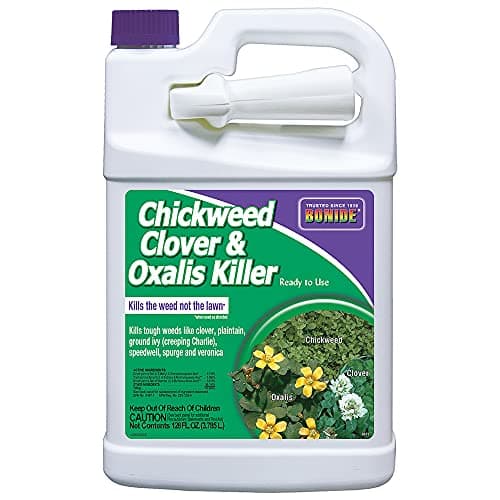
Bonide Chickweed, Clover and Oxalis Killer (Ready-to-Use)
A ready-to-use treatment built specifically for clover and the other low-growing legumes that shrug off basic weed killers.
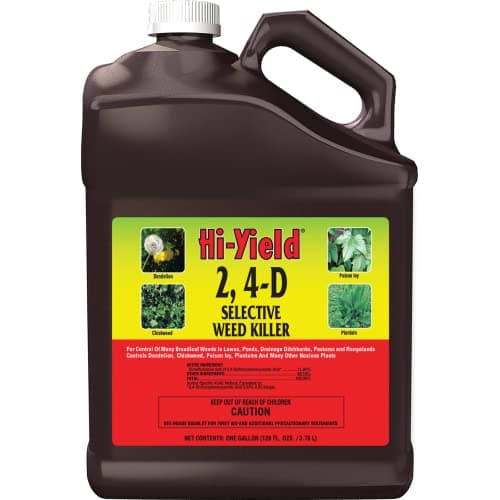
Hi-Yield 2,4-D Amine Selective Herbicide
A concentrate for larger clover stands, most effective in fall when the plants move nutrients to their roots.

The Andersons PGF Complete 16-4-8
A slow-release nitrogen feed that tips the competition back toward the grass, since clover thrives where nitrogen is short.
Long Term Prevention of Clover and Seed Build Up
Build and Maintain Dense Turf
The most sustainable way to reduce clover and its seed contributions is to maintain turf so dense and vigorous that legume seedlings struggle to establish.
Choose the right grass and overseed regularly. Select a grass species and cultivar blend well adapted to your climate, sunlight and use level. For example, tall fescue blends for many cool season home lawns provide deep roots and good density. Overseed thin or high stress areas at least every couple of years to keep stands young and thick. The guide Overseeding Best Practices provides timing and seeding rate details; as a rule of thumb, overseeding at 3 to 5 pounds of seed per 1,000 square feet in fall for cool season lawns often rejuvenates density.
Address chronic problems. If certain zones always develop clover, analyze why. Persistent shade, poor drainage, heavy traffic or shallow soil can prevent turf from ever becoming dense. In some cases, the fix requires changing use patterns, amending soil, improving drainage or accepting a groundcover other than grass.
Manage Fertility Strategically
Once soil fertility is improved and turf health recovers, clover is far less competitive.
Soil testing. Before committing to a fertilizer program, get a soil test every 3 to 4 years. Cooperative extension offices provide instructions and affordable analysis. Tests will indicate pH, phosphorus, potassium and sometimes organic matter. If pH is too low (below about 6.0 for most cool season lawns), liming may be recommended, which improves nutrient availability and overall turf vigor.
Balanced fertilization schedule. Use slow release nitrogen sources where possible and follow extension guidance for your region. For example, many cool season programs apply about 0.75 to 1 pound of nitrogen per 1,000 square feet in early fall and again in late fall, with an optional light application in late spring if needed. Proper timing avoids lush, weak growth and encourages strong root systems that push back against clover invasion.
Control Seed Inputs at Key Times
Even when you tolerate some clover, you can limit its expansion by controlling seed production.
Seasonal mowing strategy. During peak flowering windows in your region, mow more frequently and avoid letting clover bloom for multiple weeks unchecked. If you want to support pollinators but keep clover from dominating, you might allow flowering in spring for 2 to 3 weeks, then resume regular mowing before most heads turn brown. This compromise provides nectar but reduces seed formation.
Monitor new clover seedlings. In late summer and fall, walk the lawn and look for new, small clover rosettes. Small, young plants are easier to pull or spot treat than mature mats. Removing or treating seedlings within 2 to 3 weeks of emergence helps break the replenishment cycle of the seed bank.
What Other Guides Miss
Focusing on Plants, Not the Seed Bank
Many clover control articles stop at "spray this product" and ignore the fact that clover seeds can persist for years. Killing visible plants without limiting seed set or changing soil conditions is why clover often "comes back" the next year. Always pair plant control with seed suppression (mowing and bagging at the right times) and turf thickening.
Regional and Seasonal Nuances
A lot of advice is written as if all lawns behave the same. In reality, clover is a cool season grower in warm season turf regions and a spring and fall competitor in cool season lawns. Applying broadleaf herbicides in midsummer to dormant clover or to heat stressed turf is ineffective or risky. Match treatments to when clover is actively growing in your climate, and schedule core aeration and overseeding during your grass's optimal season, not randomly.
Overlooking Confirmation Tests
Some guides treat every trifoliate weed as clover, which leads to poor herbicide performance when the real problem is oxalis or black medic. Always do a quick identification check before treating: leaflet shape, flower color and presence or absence of stolons. If you cannot distinguish them confidently, collect a sample and verify with your extension office or a reliable plant ID reference.
Conclusion: A Practical Plan for Clover and Clover Seed
Clover in lawns is not inherently bad. It is a visible indicator of soil conditions and management choices, and it can be either a helpful ally or an unwanted competitor. The key is to make an intentional decision. If you value its nitrogen, drought resilience and pollinator benefits, manage clover by mowing before heavy seed set and building turf density so it stays a minor component rather than taking over.
If your goal is a cleaner, mostly turf grass lawn, the path is clear: correctly identify clover, stop it from adding new seed through targeted mowing and bagging, weaken it with proper fertilization and mowing height, and then, when needed, use labeled selective herbicides at the right seasonal windows. Follow through by overseeding and improving soil so grass occupies the space clover once used.

For a step by step companion on rebuilding thin areas after clover removal, check out Overseeding Best Practices and How to Repair Bare Patches in Your Lawn. Combining those practices with the clover seed: identification & removal strategies in this guide will give you a denser, healthier lawn that is far less inviting to clover in future seasons.
Top Picks
- Outsidepride Maya (Blackjack II) Bermuda Grass Seed (5 lb)Check price on Amazon
- Jacklin Seed by Barenbrug Heisman Kentucky Bluegrass Blend (5 lb)Check price on Amazon
- Southern Ag Methylated Seed Oil (MSO) Surfactant (32 oz)Check price on Amazon
As an Amazon Associate we earn from qualifying purchases.
Free Lawn Care Tools
Clover is the common name for several Trifolium species, which are low growing legumes that coexist extremely well with turfgrass. In lawns, you will most often encounter:
There is no universal threshold, but for practical decision making, consider:
Clover usually forms low, mat-like patches with three round or oval leaflets on each stem, often marked with a pale V-shaped chevron. The flowers are small, white to pink pom‑pom style heads held above the foliage. White or pink flower heads that later turn brown and crumbly are a strong sign you’re dealing with clover. Pulling a handful and finding creeping stems that root at the nodes is another clear identifier.
Timing depends on your grass type and climate. In cool season lawns, clover pressure peaks in spring to early summer and again in early fall, so treatments and overseeding work best in those windows. In warm season lawns, clover thrives during the cooler months when bermuda or zoysia are semi-dormant, so targeting it in those cooler periods is more effective. Matching your strategy to the growth cycle of both clover and your turf gives better long‑term results.
The key is to prevent flowers from maturing into brown seed heads. Mow before the flowers turn brown, and if seed heads are already present, bag your clippings instead of mulching them. You can also spot treat with a clover‑labeled broadleaf herbicide to knock back existing plants. As you do this, improve lawn density with proper fertilizing and overseeding so grass fills in and leaves fewer open spots for new clover seedlings.
With a selective broadleaf herbicide, visible decline usually appears within 7 to 14 days. Full turf fill‑in of the treated area typically takes 1 to 2 growing months if you also correct soil fertility and mow at the right height. Without herbicides, expect a longer timeline of one to three seasons, using consistent mowing before seed set, core aeration, balanced fertilization, and overseeding. Consistency is crucial, because a single unchecked seed set period can undo much of your progress.
Photos: Erik Mclean / Pexels, Engin Akyurt / Pexels, Gustavo Fring / Pexels

Beat weeds and brown spots from your phone
Snap a photo, get the fix, and follow a plan timed to your soil and weather. Free on iPhone.
Related Articles
 Seeding/Overseeding & Establishment
Can I Just Sprinkle Clover Seeds on My Lawn
Jun 15, 2026•12 min read Seeding/Overseeding & Establishment
Pennington Smart Seed Planting Guide: Step-by-step Instructions
Mar 29, 2026•7 min read Seeding/Overseeding & Establishment
Growing Grass from Seed How Long: Complete Care Guide
Dec 18, 2025•12 min read

