

Growing Grass from Seed How Long: Complete Care Guide
 James ThorntonLawn Equipment & Maintenance Expert | 20 Years
As an Amazon Associate we earn from qualifying purchases.
When people search for "growing grass from seed how long: complete care guide," they are rarely asking only how many days until seeds sprout. The real question is: how long until the lawn looks full, can handle foot traffic, and behaves like a real yard instead of a fragile project.
From the day you spread seed to the day the lawn is tough enough for kids, pets, and mowers, there are several stages and timelines to understand. Germination alone usually takes 5 to 21 days for most cool-season grasses and 7 to 30 days or more for warm-season grasses. The seedling stage, where plants are thin and delicate, lasts another 4 to 8 weeks. The first mow often happens around 3 to 8 weeks after seeding. Full establishment, where the lawn fills in and roots deeply, can take 3 to 12 months depending on grass type and conditions.
These ranges are wide because timing is driven by grass species, climate zone, and how well you handle site preparation and aftercare. Cool-season grasses like fescue and Kentucky bluegrass behave very differently from warm-season grasses like Bermuda or Zoysia. Soil temperature, not air temperature, controls how fast everything starts. Watering consistency, seed quality, and whether you fertilize appropriately can shorten or stretch your timeline by months.
Realistic expectations help you plan: in 30 days you can expect visible green coverage, but the lawn is still tender. At 60 days the lawn may support light foot traffic if cared for well. By 90 days many cool-season lawns feel usable for normal family activity, while some warm-season lawns may still be filling in. If you need a fully usable lawn in weeks, sod is faster but more expensive. If your existing lawn is thin but not dead, overseeding is often better than starting from bare soil. For small problem areas, focusing on how to repair bare patches in your lawn is usually smarter than a whole-yard renovation. For sprayed-on establishment of larger bare areas, see our hydroseeding guide.
This complete care guide will walk through each growth stage, realistic timelines for different grass types, what speeds things up or slows them down, and how to care for your new lawn so it establishes as quickly and reliably as possible.
New grass seed usually germinates in 5 to 21 days for cool-season types and 7 to 30 days or more for warm-season grasses, assuming soil temperatures are in the right range and moisture is kept consistently damp. You will see a thin “green haze” first, not an instant thick lawn. The lawn typically reaches mowing height in 3 to 8 weeks, and it often takes 3 to 6 months before it can handle regular family use without damage.
If grass is not emerging by the end of the normal germination window for your grass type and soil is still moist, check soil temperature with a probe thermometer and examine seeds by digging a small area. Hard, unchanged seed in cool soil usually means it is simply too cold, while mushy or moldy seed in soggy soil indicates rot and the need to improve drainage and watering. Avoid heavy foot traffic, weed killers, and high-nitrogen fertilizers in the first 4 to 6 weeks, and focus instead on light, frequent watering and mowing at the correct height once grass reaches about 3 to 4 inches. Under good conditions, you can expect light use at 8 to 10 weeks and a strong, durable lawn by the end of the first growing season.
Understanding Grass Growth Stages and Timelines
To answer how long it takes to grow grass from seed in a precise way, you need to understand the distinct growth stages. Each stage has its own timing, visual cues, and care requirements. If you know what should be happening at each point, you can quickly tell whether your lawn is on track or if something is slowing it down.
Think in four main phases: dormant seed, germination, seedling thickening, and full establishment. These overlap a bit, but separating them helps you choose the right actions in the right week rather than guessing or overreacting when you are simply in a slow but normal stage.
The Four Main Stages of Growing Grass from Seed
Stage 1: Dormant seed in soil
Right after seeding, nothing looks different on the surface for several days. Below ground, though, seeds are absorbing water (imbibition) and activating enzymes that break down stored food inside the seed. They will only start this process if soil stays moist and temperatures are within a workable range for that species. If soil dries out, seeds can stall in this stage and then restart when moisture returns, which is one reason timing can seem inconsistent across a yard.
During this stage, you will not see visible shoots, but you can dig up a few seeds from a test area after 3 to 7 days. Swollen seeds that are softer to the touch indicate the process has started. Hard, dry seeds indicate not enough moisture or temperatures that are still too low.
Stage 2: Germination (root emergence)
Germination is technically defined as the emergence of the root (radicle) from the seed. It starts underground, then shortly after you will see tiny green shoots breaking the surface. That first white root is critical because it anchors the plant and starts water and nutrient uptake. At this point, seedlings are extremely vulnerable to drying out. A single day of bone-dry soil on a sunny afternoon can kill thousands of germinating seeds.
Visually, this stage transitions from bare soil to a faint green cast to the surface. Many homeowners think they have weeds starting, but if you seeded recently, that fine, uniform fuzz is usually your grass seedlings.
Stage 3: Leaf and tiller development (thickening)
Once the first leaf blade is out, the plant begins to photosynthesize and produce more leaves. Cool-season grasses like Kentucky bluegrass and tall fescue develop "tillers," which are side shoots from the base of the plant that make the lawn denser. In this stage, the lawn thickens from a sparse fuzz to something that looks like a real yard, but roots are still shallow compared to a mature turf.
Depending on grass type and conditions, this stage lasts 4 to 8 weeks. During this time you will reach your first mow, usually when grass is around 3 to 4 inches tall. Proper mowing at this stage actually helps encourage tillering and a thicker stand.
Stage 4: Maturation and full lawn establishment
Even once the lawn looks green and covers the soil, plants are still building deeper roots, increasing tiller number, and, for some grasses, spreading via rhizomes or stolons. This root development is what makes your lawn resilient to heat, drought, and traffic. Full establishment can take 3 to 4 months for quick species like perennial ryegrass or tall fescue and 6 to 12 months for slower ones like Kentucky bluegrass and Zoysia.
At this stage, you should see the lawn holding color between mows, recovering from footprints quickly, and resisting small periods of dryness. If those things are not happening after a full season, it usually points to soil problems, poor fertility, or heavy shade rather than slow grass alone.
Typical Germination Times by Grass Type
Different grass types have very different built-in speeds. If you do not know your grass type, you cannot accurately judge whether your lawn is late or right on time. Here are typical ranges under good conditions:
Cool-season grasses (common in northern half of US and higher elevations):
- Kentucky bluegrass (KBG): Ideal soil temp 55 to 75°F, germination 10 to 21 days, first mow around 4 to 8 weeks, 6 to 12 months to full establishment. KBG is slow to start but fills in over time via rhizomes.
- Perennial ryegrass: Ideal soil temp 50 to 70°F, germination 5 to 10 days, first mow at 3 to 5 weeks, 2 to 4 months to a usable lawn. Very fast starter, often used in blends for quick cover.
- Tall fescue / fine fescue: Ideal soil temp 50 to 75°F, germination 7 to 14 days, first mow at 3 to 5 weeks, 3 to 6 months to strong establishment. Fescues form clumps with some tillering, so a good seeding rate is important.
Warm-season grasses (common in southern and transition zones):
- Bermuda grass (from seed): Ideal soil temp 65 to 80°F, germination 7 to 21 days, first mow around 4 to 6 weeks, 3 to 6 months to fill in. Spreads aggressively via stolons and rhizomes once established.
- Zoysia grass (from seed): Ideal soil temp 70 to 85°F, germination 14 to 30 days or longer, first mow often at 6 to 8 weeks, 6 to 18 months to full establishment. Very slow starter but durable once mature.
- Buffalo grass: Ideal soil temp 60 to 80°F, germination 14 to 21 days, first mow 6 to 8 weeks, 6 to 12 months to fill. Slow, sparse habit but very drought tolerant.
Blended seed mixes often include a fast species such as perennial ryegrass to give quick green cover, combined with slower but durable species like KBG or fescues. This means you may see early green from rye within a week but should not assume the project failed if the other components take 2 to 3 weeks longer to appear.
From Seed to Usable Lawn: How Long Until You Can Walk on It?
A key idea in any complete care guide is the difference between looking green and being ready for real use. The first "green haze" stage is purely visual. The grass at that point has shallow roots and very little stored energy. Footprints can crush it, and pets can uproot plants with a single sharp turn.
Under typical conditions with proper care:
- Light foot traffic such as a few careful passes for watering or light play can start around 6 to 8 weeks after seeding for fast cool-season lawns and 8 to 10 weeks for slower or warm-season grasses.
- Normal family use like kids playing occasionally, pets walking without aggressive running, and hosting small gatherings is safer at 8 to 12 weeks for cool-season grasses, and often closer to 3 to 4 months for warm-season types.
- Heavy wear such as sports practice, dog runs, or frequent rough play ideally waits at least one full growing season, especially on Kentucky bluegrass, Zoysia, or newly sodded but still rooting lawns.
The usable timeline always lags behind the "looks done" timeline by several weeks. If your lawn looks green at 4 weeks and you start regular sports games at week 5, you will usually see thinning, ruts, and bare spots by week 8. Waiting a bit longer for deeper roots almost always results in a tougher, lower-maintenance lawn later in the season.
Factors that Change How Long Grass Takes to Grow
Two homeowners can seed the same grass on the same day and end up with completely different results by week 6. The difference is not just luck. Four major factors control how quickly grass moves through the stages described above: climate and season, soil temperature and moisture, seed quality and species mix, and preparation and aftercare practices.
Understanding these variables allows you to predict your own timeline more accurately and adjust your strategy if things are progressing too slowly.
Climate Zone and Season: Why Timing is Everything
Grass is highly sensitive to climate, and the best seeding window is different in Minnesota than in Georgia. Seeding at the wrong time can double your establishment time or cause outright failure, even with good seed and watering.
Cool-season regions (roughly USDA Zones 3 to 6, including the northern and upper Midwest, New England, and much of the Pacific Northwest) favor Kentucky bluegrass, fescues, and ryegrass. In these areas, the ideal seeding windows are:
- Early fall: Often late August through September, when soil is warm (above 55°F), air temperatures are cooling, and weeds are less aggressive. Grass can establish for 6 to 10 weeks before winter and then surge again in spring. This is usually the best time and often cuts total establishment time in half compared to spring.
- Early spring: When soil temperatures first reach about 50 to 55°F, but before hot summer weather arrives. Grass will germinate and grow, but competition with spring weeds is higher, and upcoming summer heat can stress young turf with shallow roots.
Warm-season regions (roughly USDA Zones 7 to 10, including the Southeast, Gulf Coast, and much of the Southwest) favor Bermuda, Zoysia, St. Augustine (usually sodded, not seeded), centipede, and buffalo grasses. Ideal seeding is usually:
- Late spring to early summer: Once soil temperatures are consistently 65°F and rising. Warm-season grasses need heat to germinate and grow, and they do most of their growth in hot months. Seeding too early in cool soil delays germination and extends the vulnerable seedling period.
Shoulder seasons and "do not seed" windows are equally important. Mid-summer in cool-season regions typically brings high heat and drought, which are tough on young fescue or bluegrass. Deep winter or frozen soil in any region halts growth. Dormant seeding - spreading seed in late fall or winter so it will sprout as soon as spring soil warms - can work but shifts the "how long" timeline. In that case, most germination waits until soil hits 50 to 55°F, no matter when you applied the seed.
If you seed outside your grass type's optimal window, expect germination to be slow, patchy, or delayed for months. For example, cool-season seed applied to frozen ground often remains dormant until spring, so your functional timeline starts then, not at the calendar date you spread seed.
Soil Temperature and Moisture: The Two Biggest Levers
Soil temperature is often a bigger driver than air temperature. Grass seed in 40°F soil may sit for weeks with no visible change, even if daytime air reaches 60°F. Conversely, properly warmed soil at 60 to 70°F under cool air can produce fast germination.
The ideal soil temperature ranges are roughly:
- Cool-season grasses: 50 to 75°F at 2 inches depth, with 55 to 65°F being a sweet spot for fast, uniform germination.
- Warm-season grasses: 65 to 85°F at 2 inches depth, with many performing best above 70°F.
You can measure this with a simple soil thermometer. Insert it 2 to 3 inches deep in the seeding area in early morning, when temperatures are most stable. If soil is below the target range, expect delayed germination. Above the upper range, especially with high surface temperatures on bare soil, seeds and seedlings can dry out or overheat.
Moisture is the other major lever. Seeds need a consistently damp environment but not standing water. The surface 0.5 inch of soil where most seed lies should never be bone dry until after seedlings are several weeks old with multiple leaves.
Typical watering guidelines during establishment are:
- Light, frequent watering 2 to 4 times per day in the first 2 to 3 weeks, keeping the top layer damp but not flooded.
- Transition to once-daily deep watering for 10 to 15 minutes per zone as roots reach 1 to 2 inches deep, then gradually to every other day.
- By 6 to 8 weeks, shift toward the long-term goal of 1 to 1.5 inches of water per week total from rain and irrigation, applied in fewer, deeper sessions to encourage deep roots.
If soil dries completely for even one hot, windy afternoon during germination, many seedlings can die, resetting progress in those spots. On the other hand, constantly saturated soil can cause seed rot, diseases like damping off, and poor rooting. If you see slimy or moldy seed when you gently dig in, the watering schedule or drainage needs adjusting.
Seed Quality and Species Mix
Seed is not a commodity where all bags are equal. The label tells you a lot about how fast and how uniformly your lawn will establish.
Certified vs bargain seed is often the difference between a high and low germination rate. Certified turfgrass seed from reputable brands typically lists germination percentages of 80 to 90 percent or higher and weed seed content below 0.5 percent by weight. Bargain blends may have lower germination, more filler, and potentially higher percentages of weed seeds or coarse agricultural grasses that make the lawn look patchy.
When you see thin areas after the normal germination window, poor seed quality is one possible cause, especially if moisture and temperature have been appropriate. In that case, a second light seeding with better seed can dramatically improve coverage without waiting another full season.
Pure species vs blends and mixes also influence timing. A pure perennial ryegrass lawn will green up extremely quickly but may be less heat tolerant. A bluegrass-fescue-rye mix will show rye first, fescue soon after, and bluegrass last. This staggered emergence can make the lawn look uneven at first. Given time, slower species fill gaps, but you need to be patient and avoid reseeding too early just because the slow species are on their normal schedule.
Coated vs uncoated seed is another variable. Coated seed has a layer of material around it that may contain starter fertilizer, moisture-holding polymers, or fungicides. The coating increases seed size and weight, which can make distribution more uniform. Some coatings can help maintain moisture around the seed in the first days. However, the coating itself does not make seeds germinate faster if soil is too cold or too hot. You should still plan based on the species' standard timeline.
Preparation and Care Steps That Speed or Slow Growth
Even with perfect seed, temperature, and timing on the calendar, poor soil prep or rough aftercare can significantly slow your lawn's progress. Since you only seed a new lawn or major overseeding project every few years at most, getting these steps right is worth the effort.
Site Preparation: The Foundation for Faster Establishment
Good site preparation is often the difference between thick coverage in 6 to 8 weeks and a sparse lawn that needs constant patching. You want loose, well-graded, nutrient-rich soil at the surface where seeds will root.
The typical preparation sequence is:
- Remove debris and existing vegetation. Clear rocks, sticks, and old turf. If the site has a dense mat of weeds or failed grass, kill and remove it first. For established lawns being renewed, you may combine this with How to Aerate Your Lawn the Right Way to relieve compaction and improve seed-to-soil contact.
- Loosen the top 2 to 4 inches of soil. Use a rake, tiller, or core aerator depending on scale. Seeds root faster in loosened soil than in hardpan. If a screwdriver cannot be pushed at least 6 inches into the soil with moderate effort, compaction is an issue and aeration is recommended.
- Amend as needed. Incorporate compost or topsoil to correct very sandy or heavy clay areas, based on a soil test. If soil pH or nutrient levels are off, correcting them before seeding speeds establishment significantly.
- Rake to a fine, level grade. Remove large clods, level low spots where water could pool, and create a slight slope away from structures. A smooth surface improves mower performance later and reduces puddling that can rot seeds.
If you skip these steps and simply throw seed on hard, uneven ground, roots will struggle to penetrate, water may run off instead of soaking in, and low areas may stay too wet. All of that slows growth and can produce a patchy lawn even if germination itself is on time.
Seeding Technique and Coverage
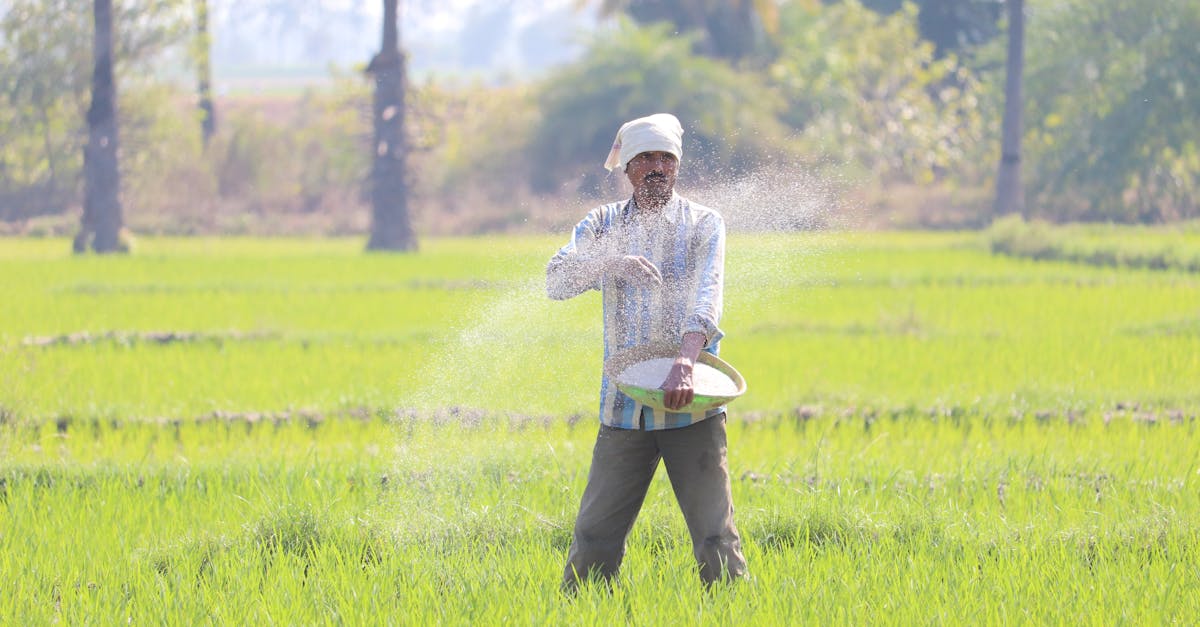
Even distribution and proper seed-to-soil contact are critical for a uniform and fast establishing lawn. Random hand scattering can work in very small patches but tends to create clumps and thin areas at lawn scale.
Most homeowners get better results by:
- Using a broadcast spreader or drop spreader set to the recommended seeding rate on the bag.
- Applying half the seed in one direction and the other half in a perpendicular direction for more uniform coverage.
- Lightly raking after seeding so that most seed is 1/8 to 1/4 inch into the soil, not sitting fully exposed on the surface.
- Optionally rolling lightly with a lawn roller to improve seed-to-soil contact in large areas, especially on looser soils.
Overseeding an existing lawn follows similar logic but also needs good contact between seed and exposed soil. Dethatching or core aeration beforehand improves this, as described in overseeding best practices. If new seed sits on top of thatch or matted dead grass, roots will take longer to reach real soil and your overall "how long" timeline stretches.
Watering, Fertilization, and Mowing Practices
Once seed is down, your daily care has a direct impact on how quickly grass progresses from one stage to the next.
Watering was discussed earlier from a moisture and germination standpoint. In practice, plan on 2 to 4 brief watering sessions per day for the first 2 weeks, then gradually fewer but deeper sessions as the lawn ages. Automatic irrigation with multiple start times per day can simplify this. Failure to adjust watering as roots deepen can either stunt root growth (if you stay too shallow) or stress seedlings (if you reduce too quickly).
Fertilization timing matters. A starter fertilizer with a higher phosphorus content applied at seeding, following label rates, can speed early root growth. However, heavy nitrogen right away can burn seedlings or push top growth faster than roots can support. A balanced approach is:
- Starter fertilizer at seeding if soil test indicates low phosphorus.
- A light nitrogen feeding (0.5 pound of actual N per 1,000 square feet) about 4 to 6 weeks after germination once you have mowed at least once.
- In cool-season regions, a stronger fall fertilization once the lawn is actively growing and temperatures are moderate, which helps winter hardiness and spring green up.
Mowing is the first stress you deliberately apply, and done right, it actually speeds thickening. Mow when the grass is about one-third taller than your target height. For most cool-season lawns, that means mow when grass reaches 3 to 4 inches and cut it down to 2 to 3 inches. For warm-season grasses, target heights vary more, but the "one-third rule" still applies. Make sure the mower blade is sharp. Tearing instead of cutting can damage young plants.
If you delay mowing for too long, seedlings become leggy and weak, more prone to lodging and disease. If you mow too early, you can uproot shallow plants. Typically, the first mowing window is 3 to 8 weeks after germination depending on growth rate and weather.
- Penn State Extension recommends mowing newly seeded cool-season lawns as soon as grass reaches about 3 inches, cutting it back to no lower than 2 to 2.5 inches to encourage tillering and faster thickening.
Recommended products

Scotts Turf Builder Starter Food for New Grass
A starter fertilizer that moves seedlings through the tillering stage sooner.
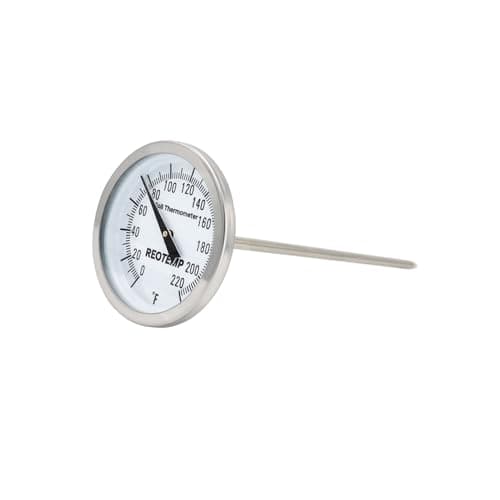
REOTEMP Waterproof Soil Thermometer, 5 inch Stem
A soil thermometer that explains most slow germination.

Diagnosing Slow Growth: When Your Lawn Is Behind Schedule
Even with good planning, you may reach day 21 or day 30 and feel like your lawn is behind compared to the timelines described earlier. Rather than guessing, use a simple diagnostic approach to figure out what is causing the delay and how to correct it.
Visual and Physical Checks
First, compare your actual days since seeding to the normal germination window for your grass type. If you planted Kentucky bluegrass and you are at day 10 with no visible shoots, that is still normal. If you planted perennial ryegrass and are at day 21 with no green, something is off.
Next, perform a small excavation test. Choose a representative area, gently scoop out the top 0.5 inch of soil, and examine seeds:
- If seeds are swollen and soft but not sprouted, soil temperatures are likely on the cool side, so germination is just slow. Check with a soil thermometer; if soil is still near the lower threshold (around 50°F for cool-season grass), be patient and ensure moisture stays consistent.
- If seeds are mushy, discolored, or covered with mold, you are likely overwatering or have poor drainage. Adjust watering to allow the surface to dry slightly between light applications and ensure water is not pooling.
- If seeds are still dry, hard, and unchanged, watering is insufficient or uneven. In hot, windy weather, you may need to increase frequency. Also check your spreader pattern for skips.
Also inspect the surface for crusting. In some soils, heavy rain or overwatering can create a hard surface layer that physically prevents shoots from emerging. Light raking between irrigation cycles can break this crust without disturbing too much seed.
Environmental and Soil Issues
If seed condition looks normal, consider environmental factors. Temperature extremes on either side slow growth. If daytime highs are above 85°F with intense sun, consider using a light straw mulch or erosion control blanket to shade the soil and retain moisture. If frosts are still occurring regularly, germination will not pick up until soil warms consistently.
Soil compaction is another hidden factor. If seedlings emerge but stay stunted and sparse, try a screwdriver test. If you cannot push a screwdriver 6 inches into the soil with firm pressure, compaction is likely. In that case, core aeration before seeding would have been ideal, but you can still plan for aeration and overseeding in the next optimal window to help long term.
Finally, consider shade. Grass in heavy shade takes longer to establish, grows more slowly, and remains weaker overall. If you notice that open sunny areas are on schedule but shaded zones are not, adjust your expectations and consider shade-tolerant varieties or reducing tree canopy over time.
What Other Guides Miss: Common Mistakes to Avoid
Many articles on growing grass from seed focus only on ideal timelines and basic steps, leaving out real-world complications that cause slow or failed projects. Avoiding a few common mistakes can save you from reseeding the same area twice in one year.
Missing the confirmation step. A lot of advice simply says "wait 10 to 14 days" without telling you how to check if your specific lawn is on track. Always combine a calendar check with a seed excavation test and a soil temperature reading. If you see swollen seed and soil at 52°F, you know germination is likely just slow. If seeds are rotten and soil is soggy, you know you must correct watering.
Overusing weed control too early. Applying pre-emergent herbicides or strong post-emergent weed killers in the seeding window can drastically slow or stop new grass. Many pre-emergents prevent grass seeds from rooting just like they stop weeds. If you must control weeds, use products specifically labeled as safe for new lawns and follow waiting periods, which are often 4 to 8 weeks after seeding.
Ignoring regional caveats. Advice that works in the Pacific Northwest may fail in the Southeast. For example, fall seeding is best for cool-season grasses in much of the North, but in areas dominated by warm-season grasses, fall is often too late for seed to establish before dormancy. Always match your seeding calendar to your grass type and USDA zone, not just the month.
Mowing incorrectly at first cut. Waiting too long or cutting too short at the first mow both cause problems. A common mistake is to let grass reach 6 or 7 inches then scalp it back to 2 inches. This shocks young plants and can destroy weeks of progress. Instead, start mowing earlier and follow the one-third rule consistently.
Skipping soil testing. Low pH, low phosphorus, or severe nutrient deficiencies can keep a seeded lawn weak for the entire first season, making you think the seed was bad or the timing was off. A basic soil test before major seeding projects helps you correct chronic issues that slow growth regardless of other care.
- NC State Extension notes that fall is the preferred time to seed tall fescue in North Carolina, with recommended seeding dates of mid-August through mid-October, because cooler temperatures and adequate rainfall improve establishment and reduce weed pressure.
Putting It All Together: Practical Timelines and Care Plan
To make this complete care guide actionable, it helps to see a sample timeline for a typical cool-season and warm-season seeding project. Adjust the calendar dates based on your region, but keep the sequence and timing relationships similar.
Example: Cool-Season Lawn Seeding (Tall Fescue/Kentucky Bluegrass Mix)
Week 0 (Late August to mid-September in many northern/transition areas):
Complete site prep, including debris removal, loosening topsoil, grading, and optional core aeration if renovating an existing lawn. Apply starter fertilizer if soil test indicates need. Seed at the recommended rate using a spreader, lightly rake, and begin light, frequent watering.
Week 1:
Maintain moist surface with 3 to 4 short watering sessions per day. Begin seeing ryegrass or fescue emergence around days 5 to 10. No mowing or foot traffic beyond what is necessary to water.
Week 2:
Most fescue and ryegrass seedlings should be visible by day 14. Continue frequent watering, but you may be able to reduce to 2 to 3 sessions per day if weather is mild. Perform a seed excavation test in any areas that still look bare to ensure seed is germinating and not rotting or staying dry.
Week 3 to 4:
Gradually shift watering to once per day, slightly deeper, as roots reach 1 to 2 inches. Grass approaches 3 inches in height. Plan your first mow when the driest part of the day aligns with grass at about 3 inches tall. Cut no lower than 2 to 2.5 inches.
Week 5 to 6:
Begin regular mowing on a 5 to 7 day schedule, always following the one-third rule. Apply a light nitrogen feeding around week 5 or 6 if growth looks pale or thin and you have mowed at least once or twice. Gradually decrease watering frequency and increase depth, targeting the long-term goal of about 1 to 1.5 inches of water per week from rain and irrigation combined.
Week 7 to 10:
Most areas should now appear like a real lawn with decent density. Light foot traffic is acceptable, but avoid concentrated wear in any one spot. Continue mowing and watering as a mature lawn, with some extra vigilance in hot or dry spells. Any obvious thin patches can be spot overseeded.
Months 3 to 6:
The lawn should now handle normal family use. Fall fertilization before winter in cool climates strengthens roots and improves winter survival. By the following spring, if care and fertility are adequate, the lawn will behave like an established turf. Problems that persist beyond this point suggest soil, shade, or compaction issues rather than slow seed alone.
Example: Warm-Season Lawn Seeding (Bermuda Grass)
Week 0 (Late spring to early summer after soil hits 65°F+):

Prepare site as above, focusing on good grading and drainage since heavy summer storms can erode bare soil. Broadcast Bermuda seed at label rates, rake lightly, and consider using a light mulch or erosion blanket on slopes. Start light, frequent watering.
Week 1 to 2:
Expect initial germination around days 7 to 14. Continue to keep the surface consistently moist with multiple daily irrigation cycles. Air temperatures may be hot, so mulch or shade cloth in extreme conditions can prevent seed and soil from overheating.
Week 3 to 4:
Seedlings begin to fill in, but coverage may still be sparse compared to cool-season lawns at this age. Gradually reduce watering frequency while keeping a close eye on wilting or dry spots. Plan the first mow when grass reaches about 2 to 3 inches, depending on your target height for Bermuda.
Week 5 to 8:
Bermuda starts to spread via stolons and rhizomes as temperatures stay warm. The lawn thickens, especially in full sun. Regular mowing and an appropriate fertilization program speed this lateral spread. Light use is possible by week 8 if growth is vigorous and coverage is solid.
Months 3 to 6:
The lawn continues to fill bare areas as stolons creep. Full, dense coverage may take the entire first growing season, especially if seeding began later in summer. Heavy play or traffic is better delayed until the second season, when roots are deeper and the turf has a stronger energy reserve.
Conclusion: Setting Realistic Expectations and Next Steps
Growing grass from seed is not an instant process, but when you understand each stage and the key factors affecting speed, the timeline becomes predictable instead of mysterious. Germination is only the first 1 to 3 weeks. The real work of thickening and rooting takes place over the next 2 to 6 months, and whether your lawn feels usable at 8 weeks or still fragile at 12 usually comes down to timing, site prep, and aftercare.
If your goal is to shorten the "how long" timeline as much as possible, focus on seeding in the correct seasonal window for your grass type, keeping soil temperatures and moisture in the ideal range, and following a disciplined plan for mowing and fertilization. For thinning or tired lawns, consider overseeding best practices instead of total renovation, and for small problem areas, follow a targeted approach like How to Repair Bare Patches in Your Lawn. When compaction or poor rooting are the main issues, use How to Aerate Your Lawn the Right Way before your next seeding window to build a better foundation.
For your next step, if you are still deciding which seed to use, check out a region-specific guide to choosing the best grass seed for your climate and lawn use. Look for products with high germination percentages, low weed seed content, and species suited to your sun, soil, and traffic levels. Matching the right seed to the right conditions will do more to speed up your results than any shortcut you can add later in the process.
Top Picks
- Outsidepride Maya (Blackjack II) Bermuda Grass Seed (5 lb)Check price on Amazon
- Jacklin Seed by Barenbrug Heisman Kentucky Bluegrass Blend (5 lb)Check price on Amazon
- Jonathan Green (10322) Black Beauty Ultra Grass Seed - Cool Season Lawn Seed (7 lb)Check price on Amazon
As an Amazon Associate we earn from qualifying purchases.
Free Lawn Care Tools
A key idea in any complete care guide is the difference between looking green and being ready for real use. The first "green haze" stage is purely visual. The grass at that point has shallow roots and very little stored energy. Footprints can crush it, and pets can uproot plants with a single sharp turn.
Most cool-season grass seeds start germinating and showing green shoots in about 5 to 21 days, while warm-season grasses usually take 7 to 30 days or more. At first you’ll see a thin “green haze” across the soil, not a thick lawn. This timing assumes soil temperatures are in the right range and the surface is kept consistently moist. If conditions are cooler or drier, visible shoots can take longer.
New grass is typically ready for its first mow about 3 to 8 weeks after seeding, once it reaches around 3 to 4 inches tall. Mowing at this stage, using a sharp blade and removing no more than one-third of the height, actually encourages tillering and thickening. The exact timing depends on grass type, weather, and how well watering and fertilizing have been managed.
Full lawn establishment can take 3 to 4 months for faster species like perennial ryegrass and tall fescue under good conditions. Slower types such as Kentucky bluegrass and Zoysia can need 6 to 12 months to develop deep roots and dense coverage. A fully established lawn holds color between mows, recovers quickly from footprints, and tolerates short dry spells.
If seeds haven’t sprouted by the end of the expected germination period but the soil has stayed moist, check soil temperature with a probe thermometer and dig up a small test area. Hard, dry seeds in cool soil usually mean it’s simply too cold and growth is delayed. Mushy, moldy, or decayed seeds in soggy soil point to rot and a need to improve drainage and reduce overwatering.
Under good conditions, most new lawns can handle light use at about 8 to 10 weeks after seeding. Many cool-season lawns feel ready for normal family activity around 90 days, while some warm-season lawns may still be filling in at that point. True durability for regular traffic typically develops by the end of the first full growing season, once roots are deep and the turf is dense.
Photos: Lucas Pezeta / Pexels, Khoa Võ / Pexels

Beat weeds and brown spots from your phone
Snap a photo, get the fix, and follow a plan timed to your soil and weather. Free on iPhone.
Related Articles
 Seeding/Overseeding & Establishment
Is It Too Late to Seed Your Lawn? Spring and Fall Deadlines by Region
Mar 27, 2026•7 min read Seeding/Overseeding & Establishment
Pennington Smart Seed Planting Guide: Step-by-step Instructions
Mar 29, 2026•7 min read Seeding/Overseeding & Establishment
Clover Seed: Identification & Removal Guide
Dec 18, 2025•12 min read

