Integrating Garden Beds with Lawns
Integrate garden beds and lawn into one cohesive system. Get expert, research-based guidance on design, edging, drainage, and maintenance for a low-hassle yard.
Floating flower beds surrounded by patchy turf, mower tracks gouged into the edges, and grass constantly invading your mulch all signal the same underlying issue: the lawn and garden beds are being managed as separate systems instead of a single, integrated landscape.
Integrating garden beds with lawns means designing and maintaining them as one coordinated unit. The lawn becomes the visual “carpet” and circulation area, while beds provide structure, color, and height. When these elements connect cleanly, curb appeal improves, day-to-day maintenance becomes easier, and both turf and plants grow in healthier conditions.
According to extension guidance from the University of Minnesota and Penn State, coordinated landscape design and clear transitions between turf and planting areas reduce mowing time, minimize edging work, and improve drainage around foundations when beds are placed and graded correctly. Poor integration, in contrast, creates chronic grass encroachment, unsafe mowing angles on slopes, and areas where water collects against the house or hardscapes.
This guide is written for homeowners with an existing lawn, anyone starting a new lawn from scratch, and DIY landscapers at an intermediate level who want a more intentional connection between lawn and garden beds. The focus is practical and research-based: you will see how to evaluate your site, plan functional bed shapes, choose edging and transitions, and maintain the whole system season by season.
Along the way, you will see where complementary resources such as Creative Lawn Edging Ideas, Pathway & Stepping Stone Ideas for Lawns, Common Lawn Care Mistakes Beginners Make, How to Start a Lawn from Scratch, and Essential Lawn Care Tools Every Homeowner Needs fit into a complete approach.
Garden beds function as the rooms, walls, and focal points of a yard. The lawn fills space, but beds define it. When you integrate the two, the lawn ceases to be a blank expanse and becomes the foreground that directs the eye toward intentional plantings.
Well planned flower beds add:
This contrast against the smooth, uniform texture of turf creates visual depth. NC State Extension notes that successful residential landscape design typically combines a limited plant palette in grouped beds rather than sprinkling individual plants in the lawn. Grouping plants in defined beds reduces maintenance and strengthens visual impact.
Garden beds also define specific functions:
Perimeter shrub borders visually and physically enclose the yard. Foundation plantings soften the transition from house to lawn. Flower beds at the entry frame walkways and doors, drawing visitors along specific routes. Beds around patios or play areas mark those spaces clearly, which is especially helpful in smaller yards where every square foot has a job.
If beds are the rooms, the lawn is the hallways and open floor. Turf provides “negative space,” an area where the eye can rest. Without enough lawn or other simple surfaces, a yard looks busy and chaotic, even when individual beds look attractive.
Lawns support integrated garden beds in several ways:
1. Visual framing and proportion
The smooth, even surface of grass sets off the more complex forms and colors in your beds. Purdue Extension emphasizes proportion as a key design principle: for most residential lots, 40 to 60 percent open lawn balanced with beds and hardscapes maintains legibility and avoids a cluttered feel. The exact ratio depends on your style and maintenance tolerance, but the principle holds: some area must stay open and simple.
2. Practical access and circulation
Lawns function as circulation routes for maintenance and daily use. You move mowers, wheelbarrows, hoses, and ladders across turf far more easily than across deep mulch or planting. Grass makes it possible to reach the back of a flower bed without compacting the soil in the bed itself. When beds are arranged with lawn “aisles” between them, maintenance becomes predictable and efficient rather than awkward and time-consuming.
3. Reflection and microclimate
A healthy lawn reflects light into adjacent beds. This slightly increases available light at lower foliage levels, which benefits sun-loving perennials placed near the front of beds. Turf also moderates soil temperature compared with bare soil, which reduces stress along the edge where bed roots and turf roots meet.
Integrating garden beds with lawns has three main goals: smoother transitions, more functional maintenance, and long-term adaptability.
1. Smooth visual transitions
Clean transitions do not mean rigid, ruler-straight lines in every case. In many residential landscapes, a broad, sweeping curve where a bed meets the lawn reads softer and more natural than jagged, wavy edges. The goal is a deliberate, legible line that feels intentional, not accidental. The lawn should appear to flow up to and around the beds, with plant height and density stepping down toward the turf.
2. Functional transitions for easy care
Integrated beds must be practical to maintain. Functional transitions include:
Ohio State University Extension emphasizes that difficult mowing angles, such as tight inside corners and narrow peninsulas of lawn, significantly increase mowing time and scalping risk. Eliminating these features when drawing bed outlines directly improves turf quality and reduces labor.
3. Long-term flexibility
Landscape needs change over time. Children grow up, trees mature and cast more shade, and your interest in vegetables or pollinator plantings may increase. Integrated beds should be expandable or adjustable without destroying large areas of lawn. Using edging methods and bed shapes that can shift a foot or two in or out, or extend along a curve, preserves flexibility as conditions change.
Planning integration starts with diagnosis. Before drawing new bed lines, evaluate the current lawn, existing beds, and hardscapes.
1. Assess lawn health
Walk the entire yard and note:
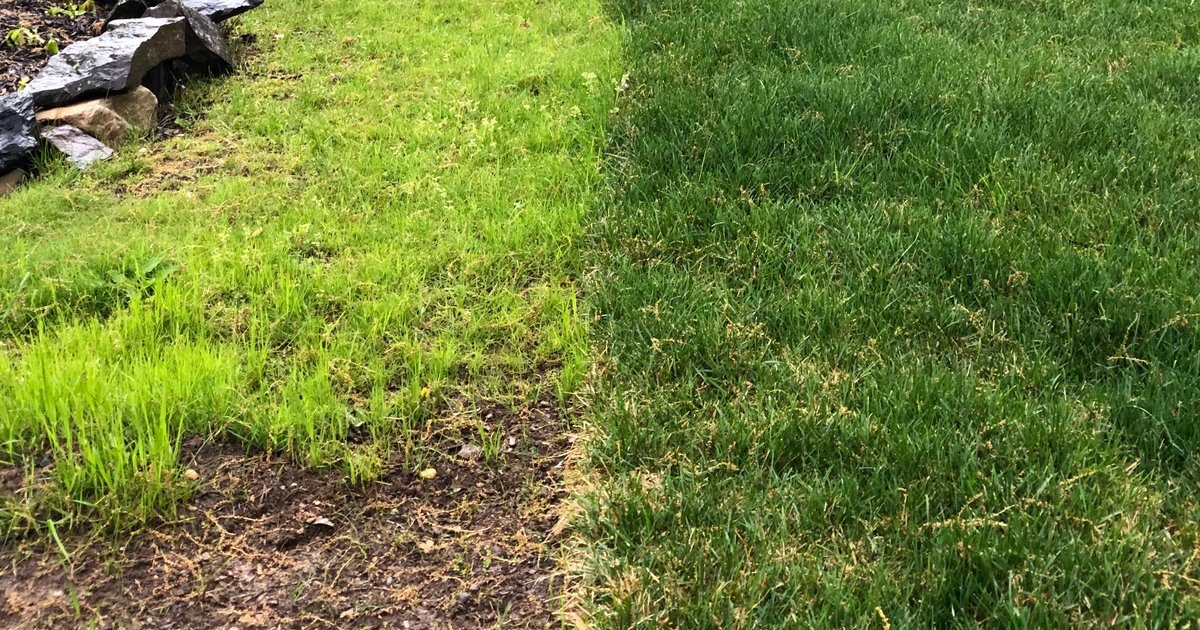
According to Penn State Extension, bare or thin turf that fails to recover by mid-spring usually signals underlying soil issues such as compaction, low fertility, or poor drainage. Those areas often make ideal spots to convert into garden beds, since lawn already struggles there. Integrating new beds into problem turf zones can solve lawn issues and improve overall design in one step.
2. Evaluate existing garden beds
Look at size, location, and soil condition:
Measure at least the major beds with a tape or measuring wheel. Note width at several points and how far beds extend into the lawn. This helps you correct proportions when redesigning.
3. Map hardscapes and structures
Sketch your property to scale as much as possible, including house footprint, driveway, patios, decks, sheds, fences, and existing paths. These immovable features anchor your design. Integrated beds should connect sensibly with them, rather than hovering a random distance away in the lawn.
4. Sun and shade mapping
University of Florida Extension recommends identifying sun exposure in 2 hour blocks: full sun (6 or more hours), part sun (4 to 6), part shade (2 to 4), and full shade (less than 2). Take notes at 9 a.m., noon, and 3 p.m. on a sunny day during the growing season. Repeat in early spring and late fall if mature trees are present, since leaf-on versus leaf-off conditions change light availability.
Mark these zones on your sketch. Bed placement should follow sunlight patterns, not fight them. Sunny beds near the lawn edge can support flowering perennials and ornamental grasses. Shadier beds under trees may function better as groundcover or shrub islands that reduce mowing in difficult spots.
5. Slope and drainage assessment
Observe after heavy rain or during snowmelt:
According to Iowa State University Extension, slopes steeper than 3:1 (about 33 percent) are difficult to mow safely and prone to erosion under turf. Those slopes are strong candidates for conversion to planting beds with deep-rooted shrubs and groundcovers. In flatter areas, properly shaped beds can intercept and slow runoff before it reaches low areas or structures.
Once you understand your site, clarify what you want your integrated landscape to accomplish. This guides how aggressive you are in reshaping lawns and beds, as well as what plantings you choose.
Key questions to answer
Write down concise answers to these questions:
These answers translate directly into design choices. For example, a low-maintenance goal suggests fewer, larger beds with shrubs and long-lived perennials, rather than numerous small annual flower beds that require replanting.
Common style approaches
Cottage-style beds around a traditional lawn
This style uses deep, layered flower beds along the house and property lines with a relatively open center lawn. Edges are typically curved, and plantings include a mix of perennials, self-seeding annuals, and small shrubs. Integration relies on repeated colors and plant types around the lawn so all sides feel connected.
Modern minimalism with bold beds
A modern approach keeps the lawn simple and rectilinear, framed by clean-edged, geometric beds. Plant palettes tend to be limited: repeating masses of ornamental grasses, evergreen shrubs, or one or two accent perennials. Beds often align directly with architectural lines of the house and patios, and transitions use crisp metal or concrete edging.
Native and wildlife-friendly designs
These landscapes often feature larger curving beds filled with native grasses, shrubs, and forbs, leaving a reduced but still intentional lawn area. The lawn may function as a clear pathway and firebreak around denser plantings. Repetition of native species and broad sweeps of turf create coherence. Integrated design prevents the yard from devolving into disconnected “wild” patches.
With goals and style choices in place, decide which types of garden beds belong in your integrated design and what each one does. Each bed should have a clear function.
Perennial flower beds vs annual display beds
Perennial beds form the backbone of most integrated landscapes. They contain plants that return year after year, with maintenance focused on seasonal cleanup and periodic division. According to University of Nebraska Extension, well designed perennial borders can remain structurally stable for 10 or more years with only moderate yearly work.
Annual display beds, in contrast, provide intense seasonal color but require replanting one or more times per year. Integrating annual beds along key sightlines, such as beside the front walk or at the mailbox, allows you to concentrate high-impact color where it is most visible while relying on perennials elsewhere.
Shrub borders along fences and property lines
Shrubs planted in deep borders against fences or property lines visually anchor the yard and dramatically reduce the amount of lawn that runs directly up to vertical barriers. This eliminates narrow strips of grass that are difficult to mow and edge. OSU Extension notes that backing beds with taller shrubs and stepping down to perennials and groundcovers toward the lawn provides both privacy and smooth visual transition.
Foundation plantings around the house
Foundation beds deserve special attention because they directly integrate the building with the lawn. Beds that are only 2 to 3 feet deep force shrubs against the siding and create constant pruning pressure. A more integrated approach uses 6 to 10 foot deep foundation beds, especially on front elevations, giving room for layered plantings and gentle curves that blend into adjacent lawn.
Island beds in the middle of the lawn
Island beds can effectively break up large expanses of turf and create focal points. However, poorly integrated islands cause many of the frustrations homeowners report: awkward mowing patterns, grass invasion from all sides, and “floating” features that feel disconnected from the house.
To integrate island beds successfully:
Vegetable and herb beds near the lawn
Edible gardens often sit adjacent to lawns for access, but poor integration leads to constant grass invasion and soil compaction. Two design decisions control this interface: whether beds are raised or in-ground, and how access paths are defined.
Raised beds framed with wood, metal, or masonry provide a physical barrier against turf roots. According to Washington State University Extension, raised beds 10 to 12 inches deep improve drainage on poorly drained sites and make soil preparation more precise. Position these raised beds so that mowers can run parallel to at least one side, and install mulched or stone paths around the rest.
In-ground vegetable beds should be grouped and separated from the lawn by a clear edging treatment and a non-turf border such as a 2 to 3 foot wide mulched path. This creates a defined transition zone and keeps mower wheels and feet off the planting soil.
Mixed beds for all-season structure
Mixed beds that contain shrubs, perennials, bulbs, and groundcovers provide the highest level of integration between lawn and planting. They deliver year-round structure from woody plants, seasonal color from perennials and bulbs, and weed suppression from groundcovers. These beds typically form the main interface with the lawn, so their edges, depth, and plant layering drive how natural and functional the lawn-bed transition feels.
Bed depth and shape strongly influence whether the lawn and beds feel like one composition or separate pieces. Poorly proportioned beds cause the “floating” effect many homeowners dislike.
Bed depth guidelines
As a rule of thumb:
These depths allow at least three planting layers: tall plants at the back, medium in the middle, and low at the front near the lawn. University of Missouri Extension notes that layered beds create a stronger visual edge and reduce the feeling of a hard “wall” of plants rising directly from the turf.
Smooth curves vs sharp angles
For most residential sites, broad, sweeping curves where beds meet lawn provide the smoothest transition. Curves should be generous enough that a mower deck fits along them without constant starting and stopping. A common guideline is that any inside curve should have at least a 6 foot radius, with 8 to 10 feet preferable for riding mowers.
Sharp angles and tight zigzags trap mowers and force string trimming, which damages turf edges. These angles also look visually busy and break the calming role the lawn should play. Use straight lines primarily where they align clearly with house or pavement edges in more formal or modern designs.
Plant height and density should step up gradually from the lawn edge toward the back of beds. This approach integrates turf and planting into a gradient instead of a sudden change.
Front edge: low groundcovers and edging plants
Choose plants 6 to 18 inches tall along the lawn edge. These might include groundcovers, low ornamental grasses, and compact perennials. Their job is to create a soft, textured boundary that visually ties into the fine texture of turf.
Middle layer: medium perennials and small shrubs
The middle of the bed supports plants in the 18 inch to 3 foot range. This layer carries most of the flower color and seasonal interest. It bridges the gap between low turf and taller structural shrubs.
Back layer: shrubs, taller grasses, and small trees
The rear of the bed holds your tallest plants, which provide backdrop and structure in winter. In foundation beds, back-layer plants should be spaced far enough from siding to reach mature size without constant shearing.
This layered structure also benefits plant health. According to Kansas State University Extension, mixed plant and root heights increase infiltration and reduce runoff compared with a uniform turf or bare soil edge. That improves moisture availability for both turf and ornamentals along the interface.
Integrated landscapes rarely rely on dozens of completely different plants scattered through many small beds. Consistency binds lawn and garden beds into a single composition.
Key strategies include:
This repetition allows the lawn to work as a unifying element. The eye recognizes repeated forms and colors across the turf, which signals intentional design rather than random planting.
Before cutting into turf, test new bed shapes on the ground. Two simple tools are most effective: a garden hose and marking paint or flour.
Step 1: Lay out hose lines
Place a flexible garden hose on the lawn to outline proposed beds. Adjust until curves feel generous and connections to corners of the house or hardscapes look natural. View from several vantage points: the street, primary indoor windows, and main outdoor gathering spots.
Step 2: Walk the mower path
Push or drive your mower along the hose line. If you must make constant micro-adjustments or back up, the curve is too tight. Smooth it until mowing feels like one continuous pass. This test directly integrates maintenance realities into design.
Step 3: Mark the final line
Once satisfied, trace along the hose with landscape marking paint or ground flour. Remove the hose and step back to confirm the lines before any turf removal begins.
Edging controls the physical and visual interface between lawn and garden beds. According to University of Illinois Extension, effective edging significantly slows turfgrass rhizomes and stolons from creeping into beds, reducing yearly bed cleanup time.
Common edging options include:
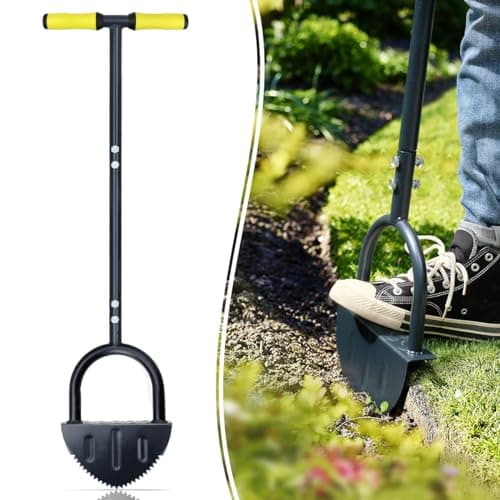
Natural cut edge
A natural edge is a simple V-shaped trench 4 to 6 inches deep cut along the bed line. The turf side remains slightly higher, and the bed side slopes down to meet it. This edge provides a clean visual line and a mild barrier to grass runners.
Advantages:
Disadvantages:
Steel or aluminum edging
Metal edging provides a slim, durable barrier buried 3 to 4 inches deep, with 0.5 to 1 inch visible above the soil line. It creates a crisp separation while still allowing easy mowing.
Advantages:
Disadvantages:
Paver, stone, or brick edging
These materials provide a wider hard edge that doubles as a mowing strip if set flush with turf. A paver edge should sit on a compacted base with slight slope toward the lawn to prevent water pooling in the bed.
Advantages:
Disadvantages:
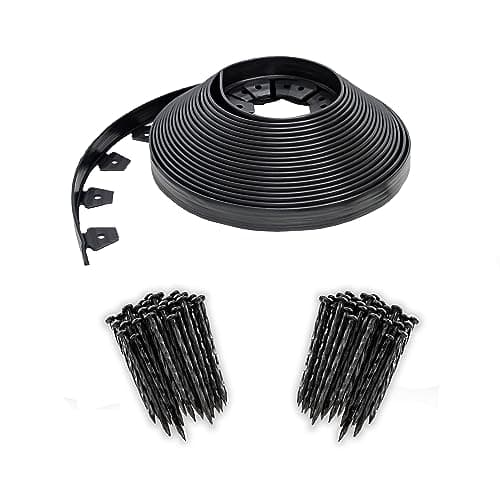
Plastic edging
Plastic edging is widely available but tends to heave and become uneven over time. It is less durable than metal and visually less refined. Where used, it must be installed with adequate depth and anchoring. For long-term integrated design, metal or masonry edges generally perform better.
If you want inspiration focused specifically on aesthetic edge options, Creative Lawn Edging Ideas provides a deeper look at materials and patterns that work well with integrated beds.
Paths and stepping stones connect beds and lawn physically and prevent wear patterns on turf. Repeated foot traffic across the same grass route compacts soil and thins turf. University of Maryland Extension identifies soil compaction in paths as a major cause of bare spots and weed invasion.
Integrate purposeful access by:
These elements should visually tie into existing hardscapes. For ideas on path layouts, spacing, and materials that work well with turf, refer to Pathway & Stepping Stone Ideas for Lawns.
Integrating or reshaping beds around an existing lawn is best approached over one to two growing seasons. The timing depends on your climate and whether your lawn is cool-season or warm-season turf.
General cool-season lawn timeline (fescue, bluegrass, ryegrass)
General warm-season lawn timeline (Bermuda, zoysia, St. Augustine)
Once the design and timeline are clear, follow a structured process to physically integrate beds and lawn.
Spring maintenance prepares both turf and beds for active growth and keeps transitions crisp.
Summer focuses on keeping both lawn and beds healthy under stress.
Fall is the ideal season for fine-tuning integration and making adjustments.
In colder climates, winter is primarily for planning. Evaluate structure from indoor views when leaves are off deciduous plants. Consider whether lawn pathways, island beds, and foundation plantings create a clear framework even without foliage. Use this information to refine integration plans for the coming season.
This issue indicates either insufficient edge depth, an ineffective edging material, or highly aggressive turf species.
Solutions:
Floating beds typically result from small, isolated plantings that lack visual connection to the house or other features.
Solutions:
Scalping occurs when mower decks tilt at tight curves or on narrow strips, cutting grass too short and exposing soil. This indicates that bed lines are too tight or lawn strips are too narrow.
Solutions:
Water that collects at the base of beds or against foundations indicates grading problems or soil compaction differences between lawn and beds.
Solutions:
Using the right tools improves accuracy and efficiency as you integrate beds and lawn.
Essential tools include:
For a more detailed look at basic and advanced equipment that supports lawn and bed integration, refer to Essential Lawn Care Tools Every Homeowner Needs. If your integration project involves significant turf repair or new seeding, the guide How to Start a Lawn from Scratch provides additional turf establishment details that can be applied at the new bed edges.
Finally, review Common Lawn Care Mistakes Beginners Make to ensure that new bed shapes and edges are paired with sound turf management. Overfertilizing, under watering, or mowing too short can undermine even the best designed lawn-bed transitions.
When lawns and garden beds are integrated, the yard functions as a single, coherent system. The lawn frames and supports the beds, and the beds give the lawn purpose, boundaries, and interest. Clear, mowable edges, layered plantings, and thoughtful proportions replace floating islands of plants and awkward strips of grass.
By assessing your existing site, clarifying goals, choosing appropriate bed types, and following a structured implementation and maintenance plan, you can convert disjointed turf and plantings into a landscape that is easier to care for and more visually effective. The next logical steps are to refine your edging approach using Creative Lawn Edging Ideas, explore path and access solutions in Pathway & Stepping Stone Ideas for Lawns, and confirm that your turf practices align with your new layout by reviewing Common Lawn Care Mistakes Beginners Make.
With these pieces in place, your lawn and garden beds operate as one integrated landscape that looks intentional in every season and responds predictably to your maintenance efforts.
Floating flower beds surrounded by patchy turf, mower tracks gouged into the edges, and grass constantly invading your mulch all signal the same underlying issue: the lawn and garden beds are being managed as separate systems instead of a single, integrated landscape.
Integrating garden beds with lawns means designing and maintaining them as one coordinated unit. The lawn becomes the visual “carpet” and circulation area, while beds provide structure, color, and height. When these elements connect cleanly, curb appeal improves, day-to-day maintenance becomes easier, and both turf and plants grow in healthier conditions.
According to extension guidance from the University of Minnesota and Penn State, coordinated landscape design and clear transitions between turf and planting areas reduce mowing time, minimize edging work, and improve drainage around foundations when beds are placed and graded correctly. Poor integration, in contrast, creates chronic grass encroachment, unsafe mowing angles on slopes, and areas where water collects against the house or hardscapes.
This guide is written for homeowners with an existing lawn, anyone starting a new lawn from scratch, and DIY landscapers at an intermediate level who want a more intentional connection between lawn and garden beds. The focus is practical and research-based: you will see how to evaluate your site, plan functional bed shapes, choose edging and transitions, and maintain the whole system season by season.
Along the way, you will see where complementary resources such as Creative Lawn Edging Ideas, Pathway & Stepping Stone Ideas for Lawns, Common Lawn Care Mistakes Beginners Make, How to Start a Lawn from Scratch, and Essential Lawn Care Tools Every Homeowner Needs fit into a complete approach.
Garden beds function as the rooms, walls, and focal points of a yard. The lawn fills space, but beds define it. When you integrate the two, the lawn ceases to be a blank expanse and becomes the foreground that directs the eye toward intentional plantings.
Well planned flower beds add:
This contrast against the smooth, uniform texture of turf creates visual depth. NC State Extension notes that successful residential landscape design typically combines a limited plant palette in grouped beds rather than sprinkling individual plants in the lawn. Grouping plants in defined beds reduces maintenance and strengthens visual impact.
Garden beds also define specific functions:
Perimeter shrub borders visually and physically enclose the yard. Foundation plantings soften the transition from house to lawn. Flower beds at the entry frame walkways and doors, drawing visitors along specific routes. Beds around patios or play areas mark those spaces clearly, which is especially helpful in smaller yards where every square foot has a job.
If beds are the rooms, the lawn is the hallways and open floor. Turf provides “negative space,” an area where the eye can rest. Without enough lawn or other simple surfaces, a yard looks busy and chaotic, even when individual beds look attractive.
Lawns support integrated garden beds in several ways:
1. Visual framing and proportion
The smooth, even surface of grass sets off the more complex forms and colors in your beds. Purdue Extension emphasizes proportion as a key design principle: for most residential lots, 40 to 60 percent open lawn balanced with beds and hardscapes maintains legibility and avoids a cluttered feel. The exact ratio depends on your style and maintenance tolerance, but the principle holds: some area must stay open and simple.
2. Practical access and circulation
Lawns function as circulation routes for maintenance and daily use. You move mowers, wheelbarrows, hoses, and ladders across turf far more easily than across deep mulch or planting. Grass makes it possible to reach the back of a flower bed without compacting the soil in the bed itself. When beds are arranged with lawn “aisles” between them, maintenance becomes predictable and efficient rather than awkward and time-consuming.
3. Reflection and microclimate
A healthy lawn reflects light into adjacent beds. This slightly increases available light at lower foliage levels, which benefits sun-loving perennials placed near the front of beds. Turf also moderates soil temperature compared with bare soil, which reduces stress along the edge where bed roots and turf roots meet.
Integrating garden beds with lawns has three main goals: smoother transitions, more functional maintenance, and long-term adaptability.
1. Smooth visual transitions
Clean transitions do not mean rigid, ruler-straight lines in every case. In many residential landscapes, a broad, sweeping curve where a bed meets the lawn reads softer and more natural than jagged, wavy edges. The goal is a deliberate, legible line that feels intentional, not accidental. The lawn should appear to flow up to and around the beds, with plant height and density stepping down toward the turf.
2. Functional transitions for easy care
Integrated beds must be practical to maintain. Functional transitions include:
Ohio State University Extension emphasizes that difficult mowing angles, such as tight inside corners and narrow peninsulas of lawn, significantly increase mowing time and scalping risk. Eliminating these features when drawing bed outlines directly improves turf quality and reduces labor.
3. Long-term flexibility
Landscape needs change over time. Children grow up, trees mature and cast more shade, and your interest in vegetables or pollinator plantings may increase. Integrated beds should be expandable or adjustable without destroying large areas of lawn. Using edging methods and bed shapes that can shift a foot or two in or out, or extend along a curve, preserves flexibility as conditions change.
Planning integration starts with diagnosis. Before drawing new bed lines, evaluate the current lawn, existing beds, and hardscapes.
1. Assess lawn health
Walk the entire yard and note:
According to Penn State Extension, bare or thin turf that fails to recover by mid-spring usually signals underlying soil issues such as compaction, low fertility, or poor drainage. Those areas often make ideal spots to convert into garden beds, since lawn already struggles there. Integrating new beds into problem turf zones can solve lawn issues and improve overall design in one step.
2. Evaluate existing garden beds
Look at size, location, and soil condition:
Measure at least the major beds with a tape or measuring wheel. Note width at several points and how far beds extend into the lawn. This helps you correct proportions when redesigning.
3. Map hardscapes and structures
Sketch your property to scale as much as possible, including house footprint, driveway, patios, decks, sheds, fences, and existing paths. These immovable features anchor your design. Integrated beds should connect sensibly with them, rather than hovering a random distance away in the lawn.
4. Sun and shade mapping
University of Florida Extension recommends identifying sun exposure in 2 hour blocks: full sun (6 or more hours), part sun (4 to 6), part shade (2 to 4), and full shade (less than 2). Take notes at 9 a.m., noon, and 3 p.m. on a sunny day during the growing season. Repeat in early spring and late fall if mature trees are present, since leaf-on versus leaf-off conditions change light availability.
Mark these zones on your sketch. Bed placement should follow sunlight patterns, not fight them. Sunny beds near the lawn edge can support flowering perennials and ornamental grasses. Shadier beds under trees may function better as groundcover or shrub islands that reduce mowing in difficult spots.
5. Slope and drainage assessment
Observe after heavy rain or during snowmelt:
According to Iowa State University Extension, slopes steeper than 3:1 (about 33 percent) are difficult to mow safely and prone to erosion under turf. Those slopes are strong candidates for conversion to planting beds with deep-rooted shrubs and groundcovers. In flatter areas, properly shaped beds can intercept and slow runoff before it reaches low areas or structures.
Once you understand your site, clarify what you want your integrated landscape to accomplish. This guides how aggressive you are in reshaping lawns and beds, as well as what plantings you choose.
Key questions to answer
Write down concise answers to these questions:
These answers translate directly into design choices. For example, a low-maintenance goal suggests fewer, larger beds with shrubs and long-lived perennials, rather than numerous small annual flower beds that require replanting.
Common style approaches
Cottage-style beds around a traditional lawn
This style uses deep, layered flower beds along the house and property lines with a relatively open center lawn. Edges are typically curved, and plantings include a mix of perennials, self-seeding annuals, and small shrubs. Integration relies on repeated colors and plant types around the lawn so all sides feel connected.
Modern minimalism with bold beds
A modern approach keeps the lawn simple and rectilinear, framed by clean-edged, geometric beds. Plant palettes tend to be limited: repeating masses of ornamental grasses, evergreen shrubs, or one or two accent perennials. Beds often align directly with architectural lines of the house and patios, and transitions use crisp metal or concrete edging.
Native and wildlife-friendly designs
These landscapes often feature larger curving beds filled with native grasses, shrubs, and forbs, leaving a reduced but still intentional lawn area. The lawn may function as a clear pathway and firebreak around denser plantings. Repetition of native species and broad sweeps of turf create coherence. Integrated design prevents the yard from devolving into disconnected “wild” patches.
With goals and style choices in place, decide which types of garden beds belong in your integrated design and what each one does. Each bed should have a clear function.
Perennial flower beds vs annual display beds
Perennial beds form the backbone of most integrated landscapes. They contain plants that return year after year, with maintenance focused on seasonal cleanup and periodic division. According to University of Nebraska Extension, well designed perennial borders can remain structurally stable for 10 or more years with only moderate yearly work.
Annual display beds, in contrast, provide intense seasonal color but require replanting one or more times per year. Integrating annual beds along key sightlines, such as beside the front walk or at the mailbox, allows you to concentrate high-impact color where it is most visible while relying on perennials elsewhere.
Shrub borders along fences and property lines
Shrubs planted in deep borders against fences or property lines visually anchor the yard and dramatically reduce the amount of lawn that runs directly up to vertical barriers. This eliminates narrow strips of grass that are difficult to mow and edge. OSU Extension notes that backing beds with taller shrubs and stepping down to perennials and groundcovers toward the lawn provides both privacy and smooth visual transition.
Foundation plantings around the house
Foundation beds deserve special attention because they directly integrate the building with the lawn. Beds that are only 2 to 3 feet deep force shrubs against the siding and create constant pruning pressure. A more integrated approach uses 6 to 10 foot deep foundation beds, especially on front elevations, giving room for layered plantings and gentle curves that blend into adjacent lawn.
Island beds in the middle of the lawn
Island beds can effectively break up large expanses of turf and create focal points. However, poorly integrated islands cause many of the frustrations homeowners report: awkward mowing patterns, grass invasion from all sides, and “floating” features that feel disconnected from the house.
To integrate island beds successfully:
Vegetable and herb beds near the lawn
Edible gardens often sit adjacent to lawns for access, but poor integration leads to constant grass invasion and soil compaction. Two design decisions control this interface: whether beds are raised or in-ground, and how access paths are defined.
Raised beds framed with wood, metal, or masonry provide a physical barrier against turf roots. According to Washington State University Extension, raised beds 10 to 12 inches deep improve drainage on poorly drained sites and make soil preparation more precise. Position these raised beds so that mowers can run parallel to at least one side, and install mulched or stone paths around the rest.
In-ground vegetable beds should be grouped and separated from the lawn by a clear edging treatment and a non-turf border such as a 2 to 3 foot wide mulched path. This creates a defined transition zone and keeps mower wheels and feet off the planting soil.
Mixed beds for all-season structure
Mixed beds that contain shrubs, perennials, bulbs, and groundcovers provide the highest level of integration between lawn and planting. They deliver year-round structure from woody plants, seasonal color from perennials and bulbs, and weed suppression from groundcovers. These beds typically form the main interface with the lawn, so their edges, depth, and plant layering drive how natural and functional the lawn-bed transition feels.
Bed depth and shape strongly influence whether the lawn and beds feel like one composition or separate pieces. Poorly proportioned beds cause the “floating” effect many homeowners dislike.
Bed depth guidelines
As a rule of thumb:
These depths allow at least three planting layers: tall plants at the back, medium in the middle, and low at the front near the lawn. University of Missouri Extension notes that layered beds create a stronger visual edge and reduce the feeling of a hard “wall” of plants rising directly from the turf.
Smooth curves vs sharp angles
For most residential sites, broad, sweeping curves where beds meet lawn provide the smoothest transition. Curves should be generous enough that a mower deck fits along them without constant starting and stopping. A common guideline is that any inside curve should have at least a 6 foot radius, with 8 to 10 feet preferable for riding mowers.
Sharp angles and tight zigzags trap mowers and force string trimming, which damages turf edges. These angles also look visually busy and break the calming role the lawn should play. Use straight lines primarily where they align clearly with house or pavement edges in more formal or modern designs.
Plant height and density should step up gradually from the lawn edge toward the back of beds. This approach integrates turf and planting into a gradient instead of a sudden change.
Front edge: low groundcovers and edging plants
Choose plants 6 to 18 inches tall along the lawn edge. These might include groundcovers, low ornamental grasses, and compact perennials. Their job is to create a soft, textured boundary that visually ties into the fine texture of turf.
Middle layer: medium perennials and small shrubs
The middle of the bed supports plants in the 18 inch to 3 foot range. This layer carries most of the flower color and seasonal interest. It bridges the gap between low turf and taller structural shrubs.
Back layer: shrubs, taller grasses, and small trees
The rear of the bed holds your tallest plants, which provide backdrop and structure in winter. In foundation beds, back-layer plants should be spaced far enough from siding to reach mature size without constant shearing.
This layered structure also benefits plant health. According to Kansas State University Extension, mixed plant and root heights increase infiltration and reduce runoff compared with a uniform turf or bare soil edge. That improves moisture availability for both turf and ornamentals along the interface.
Integrated landscapes rarely rely on dozens of completely different plants scattered through many small beds. Consistency binds lawn and garden beds into a single composition.
Key strategies include:
This repetition allows the lawn to work as a unifying element. The eye recognizes repeated forms and colors across the turf, which signals intentional design rather than random planting.
Before cutting into turf, test new bed shapes on the ground. Two simple tools are most effective: a garden hose and marking paint or flour.
Step 1: Lay out hose lines
Place a flexible garden hose on the lawn to outline proposed beds. Adjust until curves feel generous and connections to corners of the house or hardscapes look natural. View from several vantage points: the street, primary indoor windows, and main outdoor gathering spots.
Step 2: Walk the mower path
Push or drive your mower along the hose line. If you must make constant micro-adjustments or back up, the curve is too tight. Smooth it until mowing feels like one continuous pass. This test directly integrates maintenance realities into design.
Step 3: Mark the final line
Once satisfied, trace along the hose with landscape marking paint or ground flour. Remove the hose and step back to confirm the lines before any turf removal begins.
Edging controls the physical and visual interface between lawn and garden beds. According to University of Illinois Extension, effective edging significantly slows turfgrass rhizomes and stolons from creeping into beds, reducing yearly bed cleanup time.
Common edging options include:
Natural cut edge
A natural edge is a simple V-shaped trench 4 to 6 inches deep cut along the bed line. The turf side remains slightly higher, and the bed side slopes down to meet it. This edge provides a clean visual line and a mild barrier to grass runners.
Advantages:
Disadvantages:
Steel or aluminum edging
Metal edging provides a slim, durable barrier buried 3 to 4 inches deep, with 0.5 to 1 inch visible above the soil line. It creates a crisp separation while still allowing easy mowing.
Advantages:
Disadvantages:
Paver, stone, or brick edging
These materials provide a wider hard edge that doubles as a mowing strip if set flush with turf. A paver edge should sit on a compacted base with slight slope toward the lawn to prevent water pooling in the bed.
Advantages:
Disadvantages:
Plastic edging
Plastic edging is widely available but tends to heave and become uneven over time. It is less durable than metal and visually less refined. Where used, it must be installed with adequate depth and anchoring. For long-term integrated design, metal or masonry edges generally perform better.
If you want inspiration focused specifically on aesthetic edge options, Creative Lawn Edging Ideas provides a deeper look at materials and patterns that work well with integrated beds.
Paths and stepping stones connect beds and lawn physically and prevent wear patterns on turf. Repeated foot traffic across the same grass route compacts soil and thins turf. University of Maryland Extension identifies soil compaction in paths as a major cause of bare spots and weed invasion.
Integrate purposeful access by:
These elements should visually tie into existing hardscapes. For ideas on path layouts, spacing, and materials that work well with turf, refer to Pathway & Stepping Stone Ideas for Lawns.
Integrating or reshaping beds around an existing lawn is best approached over one to two growing seasons. The timing depends on your climate and whether your lawn is cool-season or warm-season turf.
General cool-season lawn timeline (fescue, bluegrass, ryegrass)
General warm-season lawn timeline (Bermuda, zoysia, St. Augustine)
Once the design and timeline are clear, follow a structured process to physically integrate beds and lawn.
Spring maintenance prepares both turf and beds for active growth and keeps transitions crisp.
Summer focuses on keeping both lawn and beds healthy under stress.
Fall is the ideal season for fine-tuning integration and making adjustments.
In colder climates, winter is primarily for planning. Evaluate structure from indoor views when leaves are off deciduous plants. Consider whether lawn pathways, island beds, and foundation plantings create a clear framework even without foliage. Use this information to refine integration plans for the coming season.
This issue indicates either insufficient edge depth, an ineffective edging material, or highly aggressive turf species.
Solutions:
Floating beds typically result from small, isolated plantings that lack visual connection to the house or other features.
Solutions:
Scalping occurs when mower decks tilt at tight curves or on narrow strips, cutting grass too short and exposing soil. This indicates that bed lines are too tight or lawn strips are too narrow.
Solutions:
Water that collects at the base of beds or against foundations indicates grading problems or soil compaction differences between lawn and beds.
Solutions:
Using the right tools improves accuracy and efficiency as you integrate beds and lawn.
Essential tools include:
For a more detailed look at basic and advanced equipment that supports lawn and bed integration, refer to Essential Lawn Care Tools Every Homeowner Needs. If your integration project involves significant turf repair or new seeding, the guide How to Start a Lawn from Scratch provides additional turf establishment details that can be applied at the new bed edges.
Finally, review Common Lawn Care Mistakes Beginners Make to ensure that new bed shapes and edges are paired with sound turf management. Overfertilizing, under watering, or mowing too short can undermine even the best designed lawn-bed transitions.
When lawns and garden beds are integrated, the yard functions as a single, coherent system. The lawn frames and supports the beds, and the beds give the lawn purpose, boundaries, and interest. Clear, mowable edges, layered plantings, and thoughtful proportions replace floating islands of plants and awkward strips of grass.
By assessing your existing site, clarifying goals, choosing appropriate bed types, and following a structured implementation and maintenance plan, you can convert disjointed turf and plantings into a landscape that is easier to care for and more visually effective. The next logical steps are to refine your edging approach using Creative Lawn Edging Ideas, explore path and access solutions in Pathway & Stepping Stone Ideas for Lawns, and confirm that your turf practices align with your new layout by reviewing Common Lawn Care Mistakes Beginners Make.
With these pieces in place, your lawn and garden beds operate as one integrated landscape that looks intentional in every season and responds predictably to your maintenance efforts.
Common questions about this topic
Integrating garden beds with a lawn means designing and maintaining them as one coordinated landscape instead of treating them as separate areas. The lawn acts as the visual “carpet” and circulation space, while the beds provide structure, color, and height. When they connect cleanly with clear lines and transitions, curb appeal improves and maintenance tasks like mowing and edging become easier. It also creates better growing conditions for both turf and plants.
A well-integrated layout eliminates awkward, hard-to-mow shapes and tight corners that slow you down. Clear transitions between turf and planting areas reduce the amount of edging needed and limit grass encroachment into mulch. When bed edges match mower deck widths and lawn “aisles” are planned for equipment access, mowing becomes more efficient and less labor-intensive. Over time, this setup also minimizes recurring problems like damaged edges and scalped turf.
For most residential lots, keeping roughly 40 to 60 percent of the yard as open lawn works well when balanced with garden beds and hardscapes. This amount of simple, open space prevents the yard from feeling cluttered while still allowing for generous planting areas. The exact ratio can shift based on your style and how much maintenance you want to handle. The key is to maintain enough lawn or other simple surfaces for the eye to rest and for easy movement around the yard.
Garden beds act like rooms and walls in the landscape, giving shape and purpose to what would otherwise be a blank green expanse. Grouped plantings add color, height, and texture, creating visual depth against the smooth turf. Beds can frame walkways and entries, define patios and play areas, and enclose the yard’s perimeter so every section has a clear role. This structure makes the lawn feel intentional rather than just leftover space.
Areas where turf is thin, bare, weed-dominated, or chronically soggy are often prime spots to convert to beds. These locations usually signal underlying issues like compaction, low fertility, or poor drainage that make it hard for grass to thrive. Turning such problem zones into planting beds can solve lawn troubles while improving overall design. Beds can also be expanded around foundations, along property lines, and near patios or play areas to clarify how each part of the yard is used.
Start by drawing deliberate, legible lines between lawn and beds, favoring broad, sweeping curves over tight zigzags or narrow peninsulas of turf. Size and shape bed edges so a mower deck can follow them in a smooth pass without awkward turns or unsafe angles, especially on slopes. Use clear barriers or edging methods that slow grass from creeping into mulch, and make sure grades shed water away from structures. This combination of shape, scale, and edging leads to cleaner cuts, less scalping, and fewer touch-up tasks.
Subscribe for monthly lawn care tips and expert advice
Loading product recommendations...