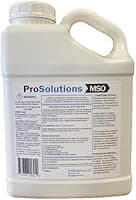
Methylated Seed Oil (MSO): Mixing Rates, Uses and Safety (2026)

Methylated Seed Oil: The Complete Guide
Brown or patchy results after spraying weeds usually come down to two issues: the wrong product mix or the wrong adjuvant. Methylated seed oil sits right at the center of that decision and can make the difference between barely singed weeds and a clean kill.
This guide explains what methylated seed oil is, when to use it, and how to mix it correctly so you get better weed control without torching your turf or ornamentals. If you manage a home lawn, small acreage, or landscape beds, understanding MSO is one of the fastest ways to tighten up your weed control program.
You will see several related terms used for the same concept: “methylated seed oil,” “MSO adjuvant,” “oil-based surfactant,” and “methylated seed oil surfactant.” You will also see “crop oil concentrate” or “non-ionic surfactant” on labels. This article will sort out what those mean, when each is appropriate, and how much to add to common herbicide mixes.
Methylated seed oil is an oil-based adjuvant that helps certain herbicides penetrate waxy leaves and work faster and more reliably. If your herbicide label calls for “MSO” or says “use a methylated seed oil adjuvant,” you should follow that direction, especially on tough, drought-stressed, or perennial weeds.
Confirm you actually need MSO by checking the “Adjuvants” or “Spray Additives” section of the herbicide label. If it lists MSO as required or preferred and you are spraying post-emergent weeds with waxy or thick leaves, MSO is likely the right choice. If it only lists “non-ionic surfactant” or warns about crop injury with MSO, stay with the milder non-ionic surfactant instead.
For homeowner concentrates, the most common rate is 0.5 to 1 percent volume/volume, which equals about 0.6 to 1.25 ounces of MSO per gallon of spray solution. Do not exceed the label rate of either the herbicide or the MSO, and avoid spraying with MSO during extreme heat above about 85 to 90 degrees Fahrenheit to reduce the risk of turf burn. Most visible weed response shows up in 3 to 7 days, with full dieback taking 2 to 3 weeks depending on the herbicide and weed size.
Understanding Methylated Seed Oil (MSO) Basics
What Is Methylated Seed Oil?
Methylated seed oil is a type of spray adjuvant, which is a product you add to a herbicide spray mix to improve performance. It is not a herbicide on its own. Instead, it is designed to help the herbicide you already chose stick, spread, and move into the plant more effectively.
Chemically, methylated seed oil is made by taking a vegetable-based oil, commonly soybean, canola, or other seed oils, and reacting it with methanol to form “methyl esters.” In plain language, the oil is chemically modified or “methylated” to make its molecules smaller and more suitable for penetrating the waxy coating on plant leaves. The result is thinner and more penetrating than straight vegetable oil.
It helps to distinguish between three related products:
- Raw vegetable oil: straight plant oil, thick and not very water compatible, not very effective alone as an adjuvant.
- Crop oil concentrate (COC): typically 80 to 85 percent petroleum or vegetable oil plus 15 to 20 percent surfactant. Better than raw oil but still relatively “coarse.”
- Methylated seed oil (MSO): based on methyl esters of seed oils and usually includes surfactants and emulsifiers designed specifically for herbicide compatibility and plant penetration.
Because of this chemistry, methylated seed oil blends more easily into water-based spray solutions and moves more easily across and through the leaf cuticle than unmodified oils. That is why many modern herbicide labels specifically call for MSO instead of generic crop oil concentrates.
How Methylated Seed Oil Works with Herbicides
Any herbicide application has three basic steps: the spray has to reach the leaf, stay on the leaf, and enter the leaf with enough active ingredient to do its job. Adjuvants are used to help with the second and third parts of that sequence.
Methylated seed oil assists herbicides in several ways:
First, it reduces the surface tension of spray droplets. Leaves, especially waxy broadleaf weeds like plantain or waterhemp, tend to repel pure water. MSO helps droplets flatten and spread over a larger area. More contact area means more opportunity for absorption.
Second, the oil component increases the solubility of oil-loving active ingredients and helps them partition into the waxy layer on the leaf surface. The methyl esters in MSO can move into that waxy cuticle more efficiently than plain oil, carrying the herbicide along with them. This improves penetration, especially in tough conditions like drought, low humidity, or older weeds with thicker cuticles.
Third, by helping the herbicide enter more quickly, MSO can tighten up the “rainfast” window for some products, meaning less product is lost if it rains a few hours after application. Always follow the specific herbicide label for rainfast times, but MSO often supports faster uptake than a non-ionic surfactant alone.
These characteristics make methylated seed oil especially useful with systemic and post-emergent herbicides, such as many ALS, HPPD, and some synthetic auxin herbicides used on broadleaf weeds and brush. The goal is to push the active ingredient into the plant quickly so it can move to growing points and roots before environmental factors dilute or wash it away.
Methylated Seed Oil vs Non-Ionic Surfactant vs Crop Oil Concentrate
Adjuvant selection is not one-size-fits-all. The herbicide label and the situation should drive whether you use MSO, a non-ionic surfactant, crop oil concentrate, or something more specialized.
MSO vs non-ionic surfactant (NIS)
Non-ionic surfactants are “soap-like” additives that mainly reduce surface tension and help spray droplets spread and stick. They do not have the oil portion that MSO brings. Because they are milder, they are often safer on sensitive turfgrass or crops and are less likely to cause leaf burn.
When labels prefer NIS, it usually means the herbicide is already formulated to penetrate well and only needs a wetter/sticker. In these cases, switching to MSO can increase the risk of injury without improving control.
MSO is preferred over NIS when the label says something like: “For improved control on tough or drought-stressed weeds, use MSO at X percent v/v.” That wording indicates the manufacturer has seen stronger performance with oil-based penetration in stress conditions where NIS alone is not enough.
MSO vs crop oil concentrate (COC)
Crop oil concentrate usually contains more straight oil and less sophisticated surfactants compared to MSO. COC was widely used with older herbicides and still works in many programs, but MSO tends to penetrate better, especially under cool or dry conditions.
A simple way to think of it: COC is heavier, more “blanket-like,” while MSO is finer and more “needle-like” for penetration. In cooler spring conditions below roughly 60 degrees Fahrenheit, MSO generally outperforms COC for systemic herbicides that need to move inside the plant. In very hot conditions, both MSO and COC can increase burn risk, so following label rates and temperature cautions is important.
MSO vs silicone surfactants and specialty adjuvants
Organosilicone surfactants and other specialty wetters create extremely low surface tension droplets that spread and “sheet” rapidly. They are excellent spreaders and are often used for fungicides or insecticides but can be too aggressive with some herbicides, leading to excessive droplet bounce or runoff.
MSO offers more balanced spreading plus penetration rather than the ultra-fast spreading of silicones. Some “blend” adjuvants combine MSO and silicone components, but you should only use those if the herbicide label specifically allows or recommends them.
Reading herbicide labels for adjuvant clues
When a herbicide label mentions “MSO,” “COC,” or “NIS,” treat that as a direct instruction, not a suggestion. Common label phrases and what they mean:
- “Use a non-ionic surfactant at 0.25 percent v/v” - choose NIS, not MSO, unless the label elsewhere gives an MSO option.
- “For improved performance on difficult species, use a methylated seed oil adjuvant at 1 percent v/v” - MSO is strongly preferred in those cases.
- “Use NIS or COC” - indicates the herbicide is flexible, but MSO might still be listed or discussed in a separate section for specific weeds or conditions.
- “Do not use MSO or COC on turf” - clear sign that MSO would be too hot for that particular product or grass species.
Benefits and Drawbacks of Methylated Seed Oil
Key Benefits of Using Methylated Seed Oil
The main reason applicators reach for MSO is better, more consistent weed control in challenging situations. If you are fighting mature or stressed weeds and your program with NIS has been only marginal, MSO is often the missing piece.
The key benefits include:
Improved efficacy on tough, waxy, or drought-stressed weeds Weeds like plantain, lambsquarters, some pigweeds, and many perennial broadleaves have thick, waxy leaf surfaces. When soil moisture is low and humidity drops below roughly 40 percent, that wax becomes even more of a barrier. MSO helps the herbicide cut through that layer so more active ingredient reaches the living tissues.
Better performance in low humidity or high heat In hot, dry conditions, spray droplets can evaporate quickly, leaving herbicide residues on the leaf surface. An oil component slows that evaporation and keeps the active ingredient in contact with the cuticle longer. This is why labels often emphasize MSO use during summer or in arid climates, but you still must respect temperature limits to avoid turf stress.
More consistent control across species and weed sizes When you spray a mixed stand of weeds of different ages and species, MSO can help even out performance. Smaller or more sensitive weeds may not need it, but the tougher ones usually do. For many homeowners, that consistency is the difference between one good pass and multiple frustrating repeat applications.
Potential for lower herbicide rates in documented cases Some herbicide labels include language like “reduced rates may be used when MSO is included” or provide rate ranges where the higher rate is recommended without MSO and the lower rate with MSO. You must follow those specific instructions, but where allowed, MSO can help maintain control at the low end of a rate range. Never reduce rates on your own without explicit label guidance.
Improved rainfastness for some programs Because MSO helps the active ingredient move into the leaf more quickly, it can shorten the window in which rainfall would wash off significant amounts of herbicide. For example, if a label lists 6 hours of rainfastness with NIS, it might list 4 hours with MSO. That does not mean you can ignore rain altogether, but it gives a little more security when scattered showers are in the forecast.
Potential Risks and Drawbacks
The same properties that make methylated seed oil effective also increase the risk of injury when used incorrectly. The goal is not to avoid MSO, but to reserve it for situations where its benefits outweigh its risks.
Increased risk of turf or crop injury Because MSO drives more herbicide into plant tissue, it can intensify herbicide activity on desirable grasses and ornamentals as well. On sensitive turf species or newly seeded areas, this can result in yellowing, stunting, or even stand thinning if the herbicide rate or conditions are marginal.
If you notice uniform bronzing or tip burn across the entire lawn within a few days of an application that included MSO, especially when temperatures were above 85 degrees Fahrenheit, the mix was probably too hot for your turf. Future applications should switch to NIS or skip adjuvants altogether if the label allows.
More foliar burn in hot, dry, or windy weather MSO can enhance “contact” like injury on leaves, especially with herbicides prone to causing burn. In practice, that means leaves may desiccate quickly, which sometimes slows movement to roots in systemic products. Labels that allow MSO often include cautions such as “Do not apply with MSO when temperatures exceed 85 F.” Pay attention to that threshold to avoid unnecessary stress.
Not suitable for every herbicide or lawn situation Many turf herbicides are formulated for safety on cool-season grasses and are intended to be used with NIS if any adjuvant is needed. Adding MSO to these mixes can void label directions and increase off-target damage, especially to ornamentals and trees in and around the turf.
Added cost and mixing complexity MSO products are typically more expensive than generic surfactants, and they add another jug and measurement step to your mixing routine. For smaller lawns, the extra cost per application is usually modest, but for larger acreages it can be significant. You also need to keep track of different adjuvants for different herbicides.
Higher risk if drift or misapplication occurs If spray droplets drift onto desirable plants, the presence of MSO makes that drift more potent. A small amount of off-target herbicide is more likely to cause visible injury when MSO is in the mix. This is another reason to respect wind speed thresholds, typically 3 to 10 miles per hour as a safe window, and use low-drift nozzles where possible.
Situations Where Methylated Seed Oil Shines
There are clear scenarios where MSO is often the right tool, as long as your herbicide label supports it.
Hard-to-kill broadleaf weeds with thick cuticles If you have repeatedly sprayed weeds like mature plantain, chicory, or certain pigweeds and seen only partial curling or slow response, that pattern usually points to poor penetration. With a herbicide that allows MSO, adding MSO at the labeled rate is often the fix. Confirm need by checking if the label specifically calls out those species and pairs them with an MSO recommendation.
Perennial weeds with deep root systems Perennials such as dandelion, Canada thistle, and some sedges require the herbicide to travel into the root system to provide long-term suppression. In those cases, rapid and thorough initial uptake is critical. MSO can help drive systemic herbicides into the plant before environmental factors degrade them on the leaf surface.
Brush and woody plant management For brush, vines, and woody seedlings along fencelines or natural areas, many brush-control herbicides specify MSO or COC. Woody leaves and stems are typically more heavily cutinized than turf weeds, and MSO’s penetration advantage is more noticeable. If you are spot-spraying brush, follow the herbicide label’s recommended MSO rate, which is often 1 to 2 percent v/v.
Reduced-till or no-till situations In no-till fields and unworked compacted soils, weeds often develop thicker wax layers to cope with surface stress and dryness. Many burndown programs in agriculture rely on MSO to help systemic herbicides like certain ALS or HPPD inhibitors work well under those conditions. For small-acreage owners with weedy gravel drives, fencelines, or field edges, the same logic applies.
Late summer on established weeds By late summer, many weeds are mature and have survived mowing or previous low-rate herbicide applications. They are also often drought stressed. MSO is frequently recommended on labels during this period to help overcome the stress barrier. Just be careful with cool-season lawns at this time; heat and MSO together can make turf more susceptible to injury.
When to Use Methylated Seed Oil in Lawn and Landscape Care
Matching MSO to Your Herbicide and Target Weeds
The first and most important step is reading the herbicide label thoroughly, especially the “Directions for Use,” “Spray Additives,” and “Restrictions” sections. The label is the legal authority on whether MSO is allowed, recommended, or prohibited.
Look for phrases like:
- “Use a methylated seed oil adjuvant at 0.5 to 1.0 percent v/v when treating tough or drought-stressed weeds.”
- “Use non-ionic surfactant or crop oil concentrate; MSO may also be used at equivalent rates.”
- “Do not use MSO or petroleum-based oil adjuvants on established turfgrass.”
If your label explicitly recommends MSO and you are facing mature or stress-hardened broadleaf weeds, MSO is usually a good match. If it only lists NIS or says “do not use” with MSO, respect that guidance and do not substitute MSO for NIS.
Consider your target weeds and your turf or landscape plants together. For example, if you are trying to control violets in a cool-season lawn, you might be tempted to reach for MSO to increase efficacy. However, if your chosen herbicide is a turfgrass product that recommends NIS only, it is telling you that the safety margin for the grass could be compromised by MSO.
As a rule of thumb for lawns:
- For general broadleaf weed control in cool-season turf, use NIS when the label calls for a surfactant.
- For non-turf areas, brush control, or field edges, follow the herbicide label and use MSO when it is listed, especially on perennial or woody species.
Environmental Conditions and Timing
MSO performance and safety are tightly linked to temperature, humidity, and plant stress levels. Optimizing those conditions reduces the chance of turf injury and improves weed control.
Temperature thresholds For most lawn and landscape situations, the upper safe temperature range for spraying herbicides with MSO is around 85 to 90 degrees Fahrenheit. If air temperatures are expected to exceed this within a few hours of application, delay spraying or switch to NIS if the label allows.
Humidity and leaf wetness Low relative humidity below roughly 40 percent, combined with strong sun, creates fast drying conditions. MSO can help in those situations by slowing evaporation, but it also increases the risk of foliar burn. Aim for morning or evening applications when humidity is higher and wind is calmer for best balance.
Plant stress level Weeds and turf under severe drought or heat stress are less predictable. They may not take up herbicides as efficiently and are more susceptible to injury. If your grass is wilting or has gone dormant, consider irrigating first and waiting a few days before treating with a hot mix that includes MSO.
For lawn applications, a practical timing window is late spring and early fall when daytime highs are between about 60 and 80 degrees Fahrenheit and the turf is actively growing. Many labels specify that the grass should not be drought stressed at the time of application.
How Much MSO Per Gallon: Mixing and Application Rates
Once you have confirmed that MSO is appropriate for your herbicide and situation, the next question is how much to add. Again, the herbicide label is the primary guide, but there are common ranges.
Most labels specify MSO rates as a percent volume/volume (v/v) of the final spray mix. Common ranges include:
- 0.5 percent v/v (milder) - 0.64 ounces MSO per gallon of spray solution.
- 1.0 percent v/v (standard) - 1.28 ounces MSO per gallon of spray solution.
- Up to 2.0 percent v/v for brush or severe conditions - 2.56 ounces MSO per gallon of spray solution, usually in non-turf areas.
For small lawn sprayers, homeowners often work with 1 or 2 gallon batches. A common turf-safe starting point, only if the label allows, is 0.5 percent v/v, which is roughly 2 teaspoons of MSO per gallon of finished mix. For more tolerant non-turf or brush applications, 1 percent v/v is more typical.
Mixing order matters. A basic sequence for a single-herbicide mix is:
- Fill the tank half to two-thirds with clean water.
- Start agitation if your sprayer has it.
- Add the measured amount of herbicide concentrate.
- Top up with water to near the final volume.
- Add MSO last while agitating, then finish filling to the final volume.
Adding MSO last helps prevent compatibility issues and ensures the oil disperses properly into the diluted spray solution.
- Purdue Extension recommends adding MSO at 1 percent v/v with certain post-emergent herbicides in dry conditions for improved control, but cautions to avoid exceeding label rates and to monitor for crop or turf injury at temperatures above 85°F.
Always do a small jar test if you are combining multiple herbicides, fertilizers, or biostimulants in one tank. Fill a quart jar half full with water, add your products in the planned order and ratios, then shake. If you see clumping, separation, or thick sludge, do not mix those products in your main tank.
Safety, Turf Tolerance, and Best Practices
Protecting Your Lawn When Using MSO
The main safety concern with MSO in lawn care is cosmetic or real injury to desirable turf from “hot” mixes or poor conditions. Turf safety hinges on grass species, growth stage, weather, and the specific herbicide used.
Cool-season grasses like Kentucky bluegrass, perennial ryegrass, and fine fescues are generally more sensitive to burn than warm-season grasses like Bermuda or zoysia. If you see patchy bronzing or yellowing following an application with MSO, particularly in sunny, exposed areas, that indicates the mix was at or beyond your grass’s tolerance threshold.
To reduce risk:
- Use the lowest effective MSO rate on the label, usually 0.5 percent v/v in turf situations where it is allowed.
- Avoid spraying with MSO during mid-day heat or on days forecast above 85 to 90 degrees Fahrenheit.
- Do not apply MSO-containing mixes to newly seeded areas until the turf has been mowed at least 2 to 3 times.
- Maintain mowing height in the recommended range for your grass, typically 2.5 to 4 inches for cool-season lawns, to keep plants vigorous and more tolerant of minor stress.
If you suspect you have slightly overdone it but the turf is still rooted firmly and not sloughing off, irrigate lightly over the next few days and avoid additional stress like heavy foot traffic or more herbicides. Recovery from mild burn typically takes 7 to 14 days in active growth.
Landscape Beds, Ornamentals, and Trees
MSO-enhanced sprays are more likely to injure desirable broadleaf ornamentals, shrubs, and trees if they contact leaves, green stems, or suckers. Even a light drift onto roses, hydrangeas, or young tree leaves can cause visible cupping or distortion when systemic herbicides are involved.
To protect non-target plants:
- Use shielding or a spray wand with a coarse pattern when spraying edges near landscape beds.
- Keep spray pressure moderate and avoid fine mist settings that are prone to drift.
- Observe a buffer distance of at least a few feet between spray zones and sensitive ornamentals, increasing that distance in windier conditions.
If you accidentally spray an ornamental plant, rinsing it within a few minutes with clean water can reduce, but not fully eliminate, injury, especially when MSO is present. Because MSO accelerates uptake, the window for washing off effective amounts is short, often less than 30 minutes.
Personal and Environmental Safety
MSO products are generally low in acute toxicity but can be irritating to skin and eyes like other oil-based products. They can also contribute to off-target movement of herbicides into non-target plants or water if misused.
Basic precautions include:
- Wear chemical-resistant gloves, long sleeves, and eye protection when mixing and spraying.
- Avoid inhaling mist; adjust nozzle size and pressure to reduce fine droplets.
- Always mix and rinse sprayers over turf or gravel, not on hard surfaces that drain directly into storm sewers.
- Store MSO products in a cool, dry place out of sunlight to prevent degradation.
- Contact your local extension office for turf-specific herbicide and adjuvant safety sheets tailored to your region and grass type.
What Other Guides Miss
Many quick online summaries of methylated seed oil skip over a few critical points that actually determine whether you get better results or cause more problems.
Lack of a confirmation step Some advice says “use MSO for better weed control” without a diagnostic process. In reality, you should confirm both a need and a label allowance. If you see repeated poor control on mature or waxy weeds despite correct herbicide rates and timing, and your herbicide label explicitly offers MSO as an option, that is your confirmation. Without both parts of that test, switching to MSO is guesswork.
Ignoring temperature and stress thresholds A common oversight is failing to mention temperature and stress limits. MSO can work well at 60 to 80 degrees Fahrenheit on actively growing plants, but at 90 degrees on droughty turf it is often too aggressive. Make a habit of checking the 24 hour forecast before mixing. If highs will exceed the label’s threshold, adjust by delaying treatment or sticking with NIS if appropriate.
Skipping tank mix compatibility checks Some guides assume you can throw MSO into any tank mix. In reality, heavy fertilizer loads, certain EC formulations, and MSO can sometimes separate or form gels. A simple jar test before filling a 25 or 50 gallon sprayer saves a lot of troubleshooting.
Not connecting adjuvant choice to other lawn practices Weed control does not exist in isolation. If your lawn is thin, compacted, or full of bare spots, even perfect herbicide and adjuvant choices will not give you a dense, healthy turf. Pair your chemical program with cultural practices such as those described in Overseeding Best Practices, How to Repair Bare Patches in Your Lawn, and How to Aerate Your Lawn the Right Way to improve long-term results.
Conclusion: Using Methylated Seed Oil Wisely
Methylated seed oil is not a magic ingredient, but used correctly it is a powerful tool for improving herbicide performance on tough, waxy, or drought-stressed weeds. It works by enhancing droplet spreading and, more importantly, by helping the active ingredient move through the waxy cuticle and into plant tissues more quickly.
The key is alignment: match MSO to herbicides that specifically allow or recommend it, use label-approved rates (often 0.5 to 1 percent v/v for lawn and landscape work), and respect environmental thresholds such as keeping application temperatures below roughly 85 to 90 degrees Fahrenheit to protect turf. When in doubt, start with the milder non-ionic surfactant if the label permits both and only step up to MSO when weed toughness and label guidance clearly support that move.
If your lawn is struggling with persistent weeds despite multiple sprays, do not assume more product is the answer. Review your herbicide label for adjuvant guidance, adjust your mixing accordingly, and pair chemical control with cultural improvements. For next steps, check out Overseeding Best Practices to thicken your turf and make your weed control, with or without methylated seed oil, far more effective in the long run.
Related Scotts Weed-and-Feed Guides
Free Lawn Care Tools
Common questions about this topic
Methylated seed oil is a type of spray adjuvant, which is a product you add to a herbicide spray mix to improve performance. It is not a herbicide on its own. Instead, it is designed to help the herbicide you already chose stick, spread, and move into the plant more effectively.
Choose methylated seed oil when the herbicide label specifically calls for “MSO” or says something like “for improved control on tough or drought-stressed weeds, use MSO at X percent v/v.” It is especially useful on post-emergent weeds with waxy or thick leaves and in stressful conditions like drought or low humidity. When the label only calls for a non-ionic surfactant or warns about crop injury with oil-based adjuvants, stick with the milder non-ionic surfactant instead.
For most homeowner herbicide concentrates, the common rate is 0.5 to 1 percent volume/volume. That works out to roughly 0.6 to 1.25 ounces of methylated seed oil per gallon of finished spray solution. Never exceed the label rate for either the herbicide or the MSO, and always confirm the exact rate in the “Adjuvants” or “Spray Additives” section of the herbicide label.
Methylated seed oil is more aggressive than a non-ionic surfactant and can increase the risk of turf burn if misused. To reduce injury, follow label rates closely and avoid spraying with MSO during extreme heat, typically above about 85–90°F. If the label warns about crop or turf injury with oil-based adjuvants, switch to a non-ionic surfactant instead of MSO.
Most visible weed response shows up within 3 to 7 days when MSO is used with compatible post-emergent herbicides. Full dieback often takes 2 to 3 weeks, depending on the herbicide, weed size, and growing conditions. MSO can help herbicides penetrate faster and may tighten the rainfast window, but overall control time still depends on the specific product and target weed.
Crop oil concentrate is usually 80–85% petroleum or vegetable oil with 15–20% surfactant and tends to be heavier and more “blanket-like” on the leaf surface. Methylated seed oil is made from methyl esters of seed oils with tailored surfactants and emulsifiers, so it is thinner and more penetrating. MSO generally outperforms crop oil concentrate for systemic herbicides in cool or dry conditions, while both can increase burn risk in very hot weather if overused.
For most lawn herbicide applications, the standard MSO mixing rate is 1 to 1.5 fluid ounces per gallon of spray solution (about 1% to 1.5% by volume). Many herbicide labels specify 0.5% to 2% MSO depending on the product and target weeds. Always check your specific herbicide label first because MSO rates higher than 1.5% can increase the risk of turf burn, especially during hot or stressed conditions. For a 2-gallon backpack sprayer, that means 2 to 3 ounces of MSO mixed with herbicide and water
Loading product recommendations...
Related Articles
- Roundup for Lawns vs Regular Roundup: Application Guide
Walk into any garden center and you will see two bottles sitting next to each other. They look almost identical and they do completely different things. Here is exactly what is in each bottle, when to...
- Tenacity Herbicide (Mesotrione) Application Guide for Cool-Season LawnsTenacity Herbicide (Mesotrione) Application Guide for Cool-Season LawnsMay 3, 2026•11 min read
Tenacity is the herbicide pro turf managers reach for when a 3-way is not enough. The active ingredient mesotrione kills weeds and tolerates new grass seedlings. Here is how to mix, spray, and avoid t...
- Scotts Weed and Feed: Free Printable Application Guide & InstructionsScotts Weed and Feed: Free Printable Application Guide & InstructionsMay 3, 2026•7 min read
If you’ve ever stared down at a patchy lawn riddled with stubborn weeds and wondered why your efforts aren’t paying off, you’re not alone. Even seasoned