St. Augustine Grass in Shade: Can It Grow? (varieties + Tips)
 Marcus GreenTurf Management Pro | 18 Years
As an Amazon Associate we earn from qualifying purchases.
Bare, thinning patches under your trees or beside your house can be the most frustrating part of lawn care-especially when the rest of your St. Augustine grass looks lush and green. St. Augustine is a homeowner favorite across the South for its thick, carpet-like texture and deep green color. But it also has a reputation: great in sun, not so easy in shade. So the question that comes up for countless homeowners and pros alike is simple-st. augustine grass in shade: can it grow? (varieties + tips) For the complete reference, see the St. Augustinegrass pillar guide.
This guide tackles that question head-on. I’ll break down the science of St. Augustine’s shade tolerance, the best-performing varieties for low light, and the practical steps you need to take to get real, lasting results in shaded lawns. We’ll go beyond the basics-covering advanced techniques, seasonal care, and the mistakes most people make. Whether you’re a homeowner or a lawn care professional, you’ll find actionable strategies here, drawn from nearly two decades managing championship-level turf in some of the toughest warm-season climates.
St. Augustine grass can survive and even thrive in partial shade, but only if you choose the right variety and adjust your maintenance. The best-performing cultivars like Palmetto, Seville, and ProVista handle 4-6 hours of filtered light per day, but no St. Augustine thrives in dense, deep shade. Confirm your light levels with a simple test: if you can read a book under your trees at midday, you likely have enough light for shade-tolerant St. Augustine.
Improve your odds by raising mowing height to 3-4 inches, fertilizing lightly (no more than 0.5 lbs nitrogen per 1,000 sq ft per application), and pruning trees to boost sunlight. Avoid overwatering-shaded soil stays damp longer, so water only when the top 2 inches are dry. With proper prep and ongoing care, expect to see improvement within one growing season, but full coverage in tough spots may take a year or more.
Understanding St. Augustine Grass and Shade Tolerance
St. Augustine Grass Basics
St. Augustine grass (Stenotaphrum secundatum) stands out for its broad, flat blades, blue-green color, and dense, carpet-like growth. Its stoloniferous (creeping stem) habit fills in gaps rapidly, making it ideal for high-traffic areas. Regional suitability is strongest in USDA zones 8-11-across the Southeast, Gulf Coast, and southern Texas-where hot, humid summers and mild winters prevail.
Compared to Bermuda or Zoysia, St. Augustine offers superior shade tolerance (for a warm-season grass), but it still prefers 6-8 hours of direct sunlight daily for peak growth. Bermuda will outpace it in pure sun, but Bermuda struggles in any significant shade. Zoysia sits between the two-slower to spread, but some cultivars match or exceed St. Augustine’s shade tolerance. Homeowners choose St. Augustine for its lush look, softer feel underfoot, and forgiving nature on sandy or coastal soils.
How Shade Impacts Augustine Grass
All turfgrasses depend on sunlight for photosynthesis-the process that produces energy for growth. Reduce available light, and St. Augustine’s growth rate, density, and color quickly drop. In practical terms, too little sunlight leads to thinning, yellowing, and a patchy, weak lawn. Shaded grass also becomes more susceptible to fungal diseases like brown patch and gray leaf spot due to trapped humidity and slower drying.
Understanding the degree of shade is crucial:
- Dappled shade: Sunlight filters through leaves, providing intermittent light-St. Augustine can often thrive here.
- Partial shade: 4-6 hours of direct or filtered sunlight-most shade-tolerant St. Augustine varieties can perform well.
- Dense shade: Less than 4 hours of light, or continuous shade from buildings or evergreen trees-St. Augustine will thin out and may eventually die back, regardless of variety or care.
Assessing Shade in Your Lawn
Before you select a grass or start troubleshooting, assess exactly how much usable light your shaded areas receive. Here’s my professional checklist:
- Observe light duration: On a sunny day, record the hours of direct and filtered sunlight hitting your problem areas. 4-6 hours is the minimum for most shade-tolerant St. Augustine.
- Check tree canopy density: Dense, low-hanging branches block more light than high, open canopies. Deciduous trees may provide more light in winter and early spring.
- Note building shadows: North-facing walls in the U.S. get little direct sun, especially in winter. Morning sun is more critical than late afternoon shade.
- Account for seasonal shifts: The sun’s angle changes through the year, so shaded areas in summer may receive much more light in winter or vice versa.
For a more detailed method, see How to Assess Your Lawn’s Sun Requirements. This step is non-negotiable-guessing rarely works.
Can St. Augustine Grass Grow in Shade? (The Evidence)
Research and Field Results
Multiple university trials confirm that St. Augustine grass is the most shade-tolerant common warm-season turfgrass. According to University of Florida research, most varieties maintain acceptable density with as little as 4-5 hours of sunlight per day, though performance drops sharply below that threshold.
- University of Florida Extension found that Palmetto and Seville cultivars sustained 70-80% ground cover with 4 hours of filtered sunlight, while standard Floratam thinned out below 6 hours.
From my time managing championship greens, shaded spots under large live oaks or on the north side of buildings were always the toughest. With aggressive tree pruning and the right cultivar, we could maintain healthy turf in 4-6 hours of filtered light. Anything with less-especially under dense evergreen canopies-eventually failed, no matter the maintenance.
In real-world residential yards, expect the following:
- Under mature live oaks: Dappled shade can support Palmetto or Seville with proper care.
- North-facing yards: Morning sun for 4+ hours allows for decent St. Augustine growth; deep shade in winter may still cause thinning.
- Dense evergreen shade: St. Augustine will not persist long-term-groundcover may be the better solution.
Comparing St. Augustine to Other Shade-Tolerant Turfgrasses
While St. Augustine leads warm-season grasses in shade tolerance, some cool-season grasses (like Fescue) and a few Zoysia cultivars outperform it in deep shade. Here’s how they compare:
- Zoysia: Certain cultivars (Emerald, Zeon) can match or slightly exceed St. Augustine’s performance in shade, but Zoysia is slower to spread and less forgiving on poor soils.
- Fescue: In cool climates, Tall Fescue outperforms St. Augustine in heavy shade, but it struggles in hot, humid Southern summers.
- Centipede: Slightly less shade-tolerant than St. Augustine; best in partial sun.
If you have areas with less than 4 hours of sun, overseeding with a compatible cool-season grass in fall, or switching to ornamental groundcovers, is often more successful than struggling with St. Augustine.
Does St. Augustine Grass Grow in Shade? How Much Sun It Actually Needs
If you are weighing St. Augustine grass for a sun or shade spot, here is the short version: yes, St. Augustine grass will grow in shade better than any other common warm-season grass, but it is not a true shade grass. So when people ask does St. Augustine grass grow in shade, or will St. Augustine grass grow in shade under their oaks, the honest answer is a qualified yes. It tolerates light shade well and partial shade with the right cultivar, but it still needs real sunlight to stay dense.
How Much Shade Can St. Augustine Tolerate?
On St. Augustine grass shade tolerance, the figure most often cited by turf programs is roughly 4 to 6 hours of sun per day, ideally direct morning sun or bright filtered light through a high canopy. That number varies with your climate, cultivar, soil, and how much heat and humidity drive disease pressure, so treat it as a working range rather than a hard line. Below about 4 hours of usable light, even the most shade tolerant St. Augustine grass tends to thin out and struggle no matter how carefully you mow, water, and feed it. So when you ask how much shade can St. Augustine tolerate, think in terms of hours of sun: 6 or more hours is comfortable, 4 to 6 hours is workable with a shade-friendly variety, and under 4 hours is where you should plan for a backup like groundcover or mulch.
Is St. Augustine Grass Sun or Shade Grass?
St. Augustine grass is fundamentally a sun grass that happens to be unusually shade tolerant for a warm-season turf. Is St. Augustine grass shade tolerant? Yes, more than Bermuda, centipede, or most zoysias, which is exactly why it is the go-to pick for Southern yards with scattered trees. But sun or shade is the wrong framing: it wants sun and merely puts up with some shade. The practical takeaway is to give it the sunniest spot you can and only lean on its shade tolerance where you have no other choice.
Which St. Augustine Grass Is Best for Shade?
Not every cultivar handles low light the same way, so which St. Augustine grass is best for shade matters a lot. The commonly cited shade tolerant St. Augustine grass varieties are Seville, Sapphire, Palmetto, and Bitter Blue, all of which tend to hold density in partial shade better than the standard sun-loving choice. Floratam is the cultivar to avoid in shade; it is bred for full sun and thins quickly under a canopy. If you are shopping for the most shade tolerant St. Augustine grass for a tree-covered yard, start with Seville, Sapphire, Palmetto, or Bitter Blue and confirm local availability with your sod supplier, since regional adaptation matters too. The full variety breakdown is in the section below.
One last point on shade and stress: thinning, low-light turf is far more disease-prone, so shade problems and disease problems usually show up together. If your shaded St. Augustine is thinning, yellowing, or developing spots, those symptoms can be hard to tell apart. Read up on the common culprits in our St. Augustine grass disease identification and treatment guide, and raise your cut height (our mowing height calculator helps you dial it in for shade). If you are not sure whether you are looking at shade stress or an actual disease, get a free photo diagnosis: snap a picture of the thinning or spotting and get an instant read on what is going on.
Best St. Augustine Varieties for Shade (Varieties Explained)
Most Shade-Tolerant Cultivars
The key most homeowners miss is that not all St. Augustine cultivars have the same shade tolerance. Here are the top-performing varieties for low-light lawns, with pros, cons, and best-use regions:
| Variety | Shade Tolerance | Pros | Cons | Best Regions |
|---|---|---|---|---|
| Palmetto | Very High | Dense, soft, semi-dwarf; handles 4 hrs filtered sun | Prone to brown patch in humid areas | Southeast, Gulf Coast |
| Seville | High | Fine-textured, low-growing; good color retention | Less cold-hardy; can be shallow-rooted | Florida, Coastal Texas |
| Raleigh | Moderate-High | Cold-tolerant; adapts to clay soils | Less shade-tolerant than Palmetto/Seville | Carolinas, Northern Gulf |
| Delmar | Moderate-High | Good color in partial shade; moderate thatch | Limited availability | Deep South, Gulf Coast |
| Sapphire | High | Excellent color; soft texture | Less drought-tolerant | Central/South Florida |
| ProVista | Very High | Dense, slow vertical growth, glyphosate-tolerant | Premium price; newer on market | Florida, Southeast |
Note: Avoid Floratam for shade-it’s bred for sun, and thins quickly in low light.
Choosing the Right Variety for Your Region
Match your St. Augustine selection to your climate and soil. In frost-prone areas, Raleigh’s cold tolerance wins out, while Palmetto or ProVista excel in the deep South’s humidity. If you have heavy clay, Raleigh and Delmar adapt better than Seville or Sapphire. High disease pressure (brown patch, gray leaf spot) calls for proactive management-some cultivars are more susceptible in humid, shaded environments.

See Best Grass Varieties for Southern Lawns for a comprehensive breakdown by region.
Tips for Growing St. Augustine Grass in Shade (Actionable Strategies)
Site Preparation for Shady Lawns
Success starts before you lay a single piece of sod. Here’s how to prep a shaded site for strong St. Augustine growth:
- Soil testing: Before planting, test pH and nutrient levels. St. Augustine prefers pH 6.0-6.5. Amend with lime or sulfur as needed.
- Amend soil: Incorporate 1-2 inches of organic matter (compost or peat) to improve drainage and nutrient retention-critical in shaded, compacted soils.
- Improve drainage: Shaded soil stays wetter longer. Aerate compacted areas and consider installing French drains if water pools after rain.
- Prune trees/shrubs: Raise canopies and thin branches to increase sunlight. Even gaining one extra hour of sun can make the difference between healthy turf and thin patches.
Planting and Establishment Techniques
Professional crews approach this differently-here’s how to adapt it for your lawn:
- Sod: Offers instant coverage, suppresses weeds, and is best for moderate shade. Lay sod tightly, water immediately, and avoid traffic for 2-3 weeks.
- Plugs: More cost-effective, but slower to fill in-expect 6-12 months for full coverage in shade.
- Sprigs: Least common for shade-slow to establish and more prone to weed invasion.
Step-by-Step Planting Process:
- Clear area of debris and weeds.
- Loosen soil to 4-6 inches depth; incorporate organic matter.
- Level the surface to avoid pooling water.
- Lay sod/plugs in staggered rows, pressing firmly for soil contact.
- Water thoroughly to settle roots-keep soil evenly moist but not saturated for the first 2-3 weeks.
Planting Timing: The best window is late spring to early summer (when soil temps reach 70°F or higher). Avoid planting late fall-new grass won’t root before winter.
Watering and Irrigation Adjustments
Shaded lawns dry out slower than sun-exposed areas. Overwatering is the most common mistake homeowners make in shade. Here’s how to dial it in:
- Frequency: Water only when the top 1-2 inches of soil are dry to the touch. This may mean every 4-7 days in shade, compared to every 2-3 days in full sun.
- Depth: Apply 0.5-0.75 inches per watering in shade; avoid saturating the root zone.
- Timing: Water early morning (before 9 AM) to allow foliage to dry and reduce disease risk.
Signs of overwatering: Mushy soil, algae, yellowing, fungal patches. Signs of underwatering: Wilting, folded blades, brown tips on new growth.
Fertilizing St. Augustine in the Shade
Grass in shade needs less fertilizer-growing slower and using less nitrogen. Over-fertilizing increases disease risk. Here’s the professional approach:
- Rate: Apply no more than 0.5 lbs nitrogen per 1,000 sq ft per application in shaded areas (vs. 1 lb in full sun).
- Type: Use a balanced, slow-release fertilizer with micronutrients.
- Frequency: 2-3 light applications per year-spring and early summer are best. Skip late summer/fall to avoid disease spikes.
Always sweep excess fertilizer off hard surfaces to prevent runoff and burning. For more specifics, see Lawn Fertilizer Safety Around Pets and Kids.
Mowing Practices for Shady Areas
Raise your mowing height for shaded St. Augustine-3.5 to 4 inches is optimal. This increases blade surface for photosynthesis and helps the grass outcompete weeds. Always mow with sharp blades-dull blades tear grass, leading to disease entry points. Mow only when grass is dry, and never remove more than one-third of the blade at a time.
Mowing frequency drops in shade; growth is slower. Every 10-14 days is typical, versus weekly in full sun.
Disease and Pest Management
Shade creates a humid, slow-drying environment ideal for fungal diseases. Watch for:
- Brown patch: Circular, brown or grayish spots, often in spring/fall.
- Gray leaf spot: Small, water-soaked lesions on blades, progressing to gray, fuzzy patches.
- Chinch bugs: While more common in sun, they can exploit stressed shaded turf.
Integrated pest management is best: improve airflow, avoid evening watering, and use resistant varieties. If fungicide or pesticide is needed, choose products labeled safe for pets and children-see Lawn Fertilizer Safety Around Pets and Kids for recommendations.
Seasonal Care Calendar for Shaded St. Augustine Lawns
Here’s a high-level timeline for a full year:
- Spring (March-May): Soil test, fertilize lightly, dethatch if needed, begin mowing at higher height. Plant new sod/plugs once soil is 70°F+.
- Summer (June-August): Monitor watering, prune trees for light, scout for disease, avoid excess nitrogen.
- Fall (September-November): Rake leaves promptly, reduce watering, watch for brown patch, avoid late fertilization.
- Winter (December-February): Grass goes dormant; minimize foot traffic, clear debris, consider overseeding with rye for green cover if desired.
Adjust this calendar based on your USDA zone and microclimate.
Recommended products
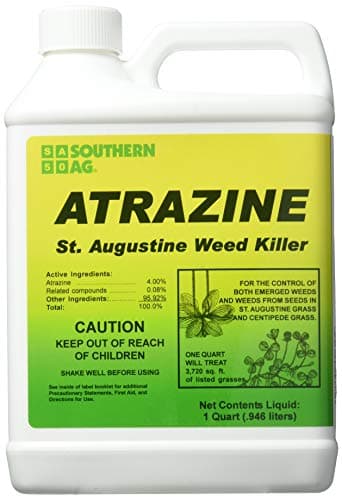
Southern Ag Atrazine St. Augustine Weed Killer (32 oz)
An atrazine concentrate labeled for St. Augustine, which tolerates very few selective herbicides.
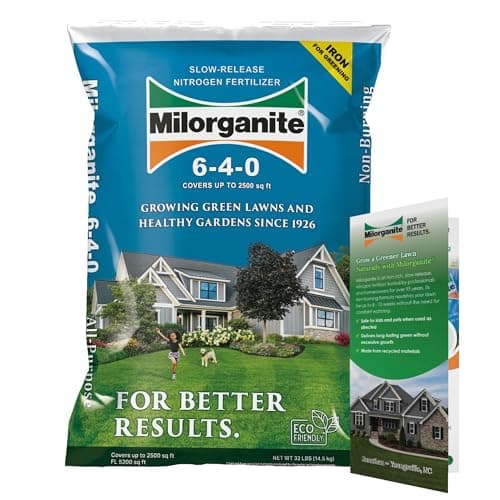
Milorganite 6-4-0 (32 lb)
A slow-release organic nitrogen with iron that gives shaded St. Augustine color without forcing weak, stretched growth.
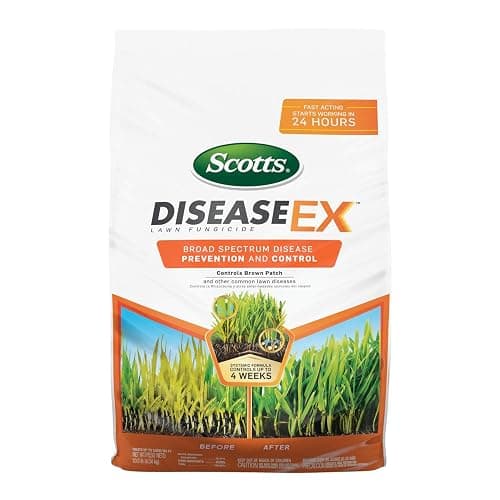
Scotts DiseaseEx Lawn Fungicide
A granular fungicide for the brown patch and gray leaf spot that shaded St. Augustine gets when dew sits on the blades all morning.
Advanced Insights: Optimizing Augustine Grass Growth in Difficult Shade
Using Shade Cloth or Temporary Light Boosts
For new plantings in tough shade, shade cloth (30-50% reduction) can help acclimate St. Augustine plugs or sod by reducing initial stress. Remove after 2-3 weeks to encourage adaptation to available light. In rare cases, temporary reflective surfaces (white boards, mirrors) can bounce sunlight into shadowed corners-effective in narrow side yards or urban lots.
Overseeding Strategies for Thin Shaded Spots
When even shade-tolerant St. Augustine struggles, overseeding with a cool-season grass like rye or fescue can provide winter/early spring color and erosion control. Here’s the process:
- In early fall (September-October), mow St. Augustine to 2.5-3 inches.
- Rake to expose soil, overseed at label rate (typically 5-10 lbs/1,000 sq ft for rye).
- Water lightly and frequently until germination, then reduce to normal shade schedule.
- Expect rye/fescue to fade by late spring as St. Augustine resumes growth.
This mixed approach is common on golf course roughs with heavy tree cover.
Soil Microclimate Modifications
Shaded soils benefit from improved airflow and organic content. Mulch tree rings and shrub beds to reduce competition for water/nutrients. Encourage beneficial microbes by topdressing with compost in spring and fall. This builds resilience against fungal disease and supports root health even in low light.
Troubleshooting: Diagnosing Problems in Shaded St. Augustine Lawns
Visual Symptoms and What They Mean
Here’s a quick diagnostic guide for common shade-related issues:
- Yellowing: Often signals nitrogen deficiency, poor drainage, or chronic low light. Check soil and light before adding fertilizer.
- Thinning: Indicates insufficient sunlight or root competition from tree roots. Confirm with a screwdriver test for compaction.
- Patchiness: May be a sign of disease (brown patch) or inconsistent watering.
- Fungal spots: Water-soaked, greasy, or fuzzy patches usually point to overwatering and poor airflow.
Photos of these symptoms are covered in Diagnosing Lawn Problems.
Confirmation Tests: Is It the Shade or Something Else?
- Soil compaction test: Push a screwdriver 6 inches into the soil. If you meet resistance, aerate within 2 weeks.
- pH/nutrient check: Test soil for pH (aim for 6.0-6.5) and deficiencies. Adjust as needed.
- Light meter test: Use a phone app or inexpensive light meter at midday. If you record 1,500+ foot-candles for 4+ hours, most shade-tolerant St. Augustine can thrive.
- Contact your local extension office for recommended soil/light testing services.
When to Rethink Your Lawn Strategy
If repeated efforts fail-especially in areas with less than 4 hours of light-consider switching to shade-loving groundcovers (like mondo grass or liriope), mulch beds, or hardscaping. Sometimes, the best lawn is one you don’t have to fight for every season.

For more, see How to Test Soil for Lawn Success and Selecting the Best Grass for Your Lawn.
Common Mistakes to Avoid with St. Augustine Grass in Shade
Many online guides gloss over critical details when it comes to shaded St. Augustine lawns. Here are the pitfalls most competitors miss-and how to avoid them:
- Overestimating shade tolerance: Not all St. Augustine varieties perform equally. Always confirm your light levels and choose a proven shade-tolerant cultivar.
- Poor timing: Planting too late (after August) or too early (before soil is warm) leads to weak roots and slow establishment.
- Regional mismatch: Using a Florida variety in the Carolinas or Texas can fail due to cold or soil differences. Reference your USDA zone before purchasing.
- Over-fertilizing/overwatering: Shaded lawns need less of both. Excess fertilizer and water are prime triggers for disease outbreaks.
- Skipping soil/light testing: Guessing at pH, compaction, or sunlight leads to repeated failure. Test first, then act.
- Ignoring safety: Applying non-pet-safe fungicides or herbicides in family yards is a common oversight. Always check product labels for safety.
For more on these topics, see Lawn Fertilizer Safety Around Pets and Kids and How to Assess Your Lawn’s Sun Requirements.
Conclusion
St. Augustine grass in shade: can it grow? (varieties + tips)-the answer is yes, but only with the right variety, preparation, and maintenance. Start by accurately assessing your shade, select a proven cultivar like Palmetto, Seville, or ProVista, and adapt your watering, mowing, and fertilizing for low light. Avoid common mistakes like overwatering or skipping soil tests, and don’t hesitate to rethink your strategy if light levels are simply too low for any turfgrass to succeed.
For a deeper dive into specific topics, check out Selecting the Best Grass for Your Lawn, Diagnosing Lawn Problems, and Year-Round Lawn Care Schedules. The next step? Run a sunlight test on your shaded areas, review your soil health, and plan your shaded lawn upgrade with confidence.
Free Lawn Care Tools
St. Augustine grass cannot thrive in full, dense shade. It requires at least 4 hours of filtered or direct sunlight per day to maintain healthy growth. For areas with less light, consider using shade-tolerant groundcovers instead.
Palmetto, Seville, and ProVista are the most shade-tolerant St. Augustine varieties. They perform well with as little as 4 hours of filtered sunlight and are suitable for many Southern regions.
Start by soil testing and amending for proper pH and nutrients. Improve drainage, aerate compacted soil, and prune trees or shrubs to maximize available sunlight before planting sod or plugs.
Water only when the top 1-2 inches of soil are dry, usually every 4-7 days in shaded spots. Avoid overwatering, as shade reduces evaporation and increases disease risk.
Raise your mowing height to 3.5-4 inches in shaded areas. Taller grass blades capture more light, supporting better photosynthesis and turf density.
With proper care and the right variety, expect noticeable improvement within one growing season. Full coverage in tough shaded spots may take up to a year or longer.
Yes. St. Augustine grass grows in shade better than any other common warm-season grass, but it is not a true shade grass. It does well in light to partial shade with the right cultivar, but it still needs real sunlight to stay dense and will thin out in deep shade.
St. Augustine grass generally needs roughly 4 to 6 hours of sun per day, ideally direct morning sun or bright filtered light through a high canopy. The exact figure varies with climate, cultivar, and soil, so treat it as a range. Below about 4 hours of usable light, even shade-tolerant varieties tend to struggle.
The St. Augustine cultivars most often cited as shade tolerant are Seville, Sapphire, Palmetto, and Bitter Blue. These tend to hold density in partial shade better than the sun-loving Floratam, which thins quickly under a canopy. Confirm local availability with your sod supplier, since regional adaptation matters too.
St. Augustine grass is fundamentally a sun grass that happens to be unusually shade tolerant for a warm-season turf. It is more shade tolerant than Bermuda, centipede, or most zoysias, but it still wants sun and merely puts up with some shade. Give it the sunniest spot you can and lean on its shade tolerance only where you have no other choice.

Your lawn plan, in your pocket all season
Grass ID, a season plan, soil-timed reminders, and a lawn journal that remembers what you did. Free on iPhone.