10-10-10 Fertilizer: When & How to Apply
 James ThorntonLawn Equipment & Maintenance Expert | 20 Years
As an Amazon Associate we earn from qualifying purchases.
Brown or thin turf after fertilizing usually points to a mismatch between what your soil needs and what you applied. 10-10-10 is a balanced fertilizer, but that does not mean it is the best choice for every lawn or every season. To use it effectively, you need to know what those numbers mean, when 10-10-10 makes sense, and how to apply it without burning your grass or overloading the soil with phosphorus.
Loading Fertilizer Calculator...
This guide explains 10-10-10 fertilizer: when & how to apply it to lawns, gardens, and shrubs, plus when a balanced product is the wrong choice. It is written for homeowners and DIY lawn care enthusiasts who already know the basics and want more precise timing, rates, and application techniques.
10-10-10 fertilizer is a balanced formula that works best when a soil test shows you are low in nitrogen, phosphorus, and potassium at the same time, or when you are establishing new beds and do not yet know your nutrient levels. If your lawn already has adequate phosphorus, using 10-10-10 repeatedly can cause buildup and run-off issues, especially near sidewalks, driveways, or waterways, so the first step is to test the soil before you decide.
For lawns, a typical single application rate is about 1 pound of nitrogen per 1,000 square feet, which equals 10 pounds of 10-10-10 per 1,000 square feet, applied no more than once per season unless your soil test specifically recommends more. Apply on actively growing grass, when soil temperatures are above 55°F, and water lightly afterward to wash the granules off the blades. Avoid fertilizing on frozen ground, right before heavy rain, or stacking 10-10-10 on top of other high-phosphorus products, and expect to see color and growth response within 7 to 14 days.
When Should You Apply 10-10-10 Fertilizer? (Quick Answer)
Apply 10-10-10 fertilizer to lawns in early spring when soil temperatures reach 55 degrees Fahrenheit and again in early fall, 6 to 8 weeks before the first expected frost. Skip mid-summer applications on cool-season lawns; the heavy nitrogen dose burns stressed grass. For gardens and landscape beds, apply 10-10-10 once at planting and again 6 to 8 weeks later if the season runs long. The 10-10-10 ratio is intentionally balanced (equal nitrogen, phosphorus, and potassium), which is ideal for new lawns, vegetable gardens, and unknown-soil situations, but it is rarely the right pick for an established lawn that already has plenty of phosphorus banked in the soil. If you have a soil test, switch to a higher-nitrogen ratio like 24-0-6 once the lawn is established.
Understanding 10-10-10 Fertilizer (What Those Numbers Really Mean)
What is 10-10-10 Fertilizer?
10-10-10 is a balanced, granular NPK fertilizer. The three numbers on the bag represent the percentage by weight of nitrogen (N), phosphorus (as P2O5), and potassium (as K2O). With 10-10-10, each nutrient makes up 10 percent, so 30 percent of the bag is actual nutrients.
The remaining 70 percent is filler or carrier material, which helps spread the nutrients evenly and keeps them from clumping. Some products also include small amounts of secondary nutrients like calcium, magnesium, or sulfur, and micronutrients like iron or zinc. These extras are not reflected in the 10-10-10 numbers but appear elsewhere on the label.
Each nutrient in 10-10-10 has a different job. Nitrogen drives leaf and blade growth, so it is the main engine behind lush green grass. Phosphorus supports root development and flowering, which matters more for new plantings, vegetable gardens, and flowering shrubs than for mature turf. Potassium improves overall plant health, including disease resistance and stress tolerance during heat, cold, and drought.
Compared with other common lawn fertilizers, 10-10-10 supplies less nitrogen and more phosphorus. For example, a 16-4-8 or 20-0-10 lawn fertilizer delivers more nitrogen per pound, usually with much less or zero phosphorus. Typical lawn formulas like 30-0-4 or 24-0-11 are designed to push top growth and color while keeping phosphorus low to match modern soil test data and environmental regulations.
Types of 10-10-10 Fertilizer Available
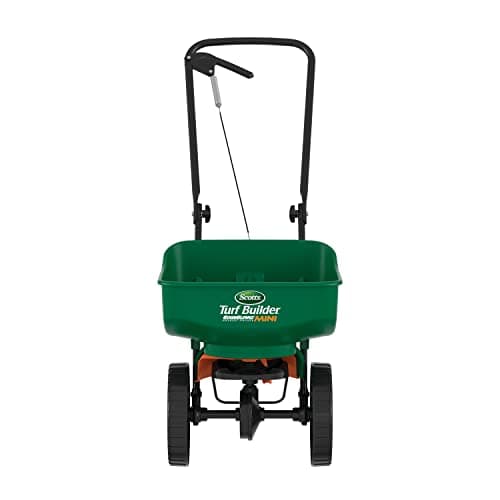
Most homeowners encounter 10-10-10 as a dry granular product, but there are liquid versions too. Granular 10-10-10 is usually the better fit for lawns and mixed landscape beds because it is easier to spread at a controlled rate with a broadcast or drop spreader. It also tends to be more cost effective for large areas.
Liquid 10-10-10 is often used for smaller gardens or foliar feeding. It acts more quickly because nutrients are in solution, but coverage can be uneven on large turf areas and it is easy to overapply if you are not careful with dilution rates. Liquids make sense when you want a faster response in containers, vegetables, or small beds, but they are not the primary choice for routine lawn fertilization.
Release speed matters too. Some 10-10-10 fertilizers are quick release, which means most of the nitrogen becomes available in the first 1 to 2 weeks. These give a rapid green-up but can cause surge growth and higher burn risk if overused. Slow-release or controlled-release 10-10-10 blends stagger the release over several weeks, which smooths out growth and reduces the risk of burning, but they usually cost more.
On the organic side, a true 10-10-10 organic fertilizer is rare. Most natural materials do not contain that high and balanced a ratio of N, P, and K. When a product is marketed as "organic-based 10-10-10," it typically means some nutrients come from natural sources like feather meal or bone meal, but synthetic nutrients are added to reach the 10-10-10 analysis. If you want a fully organic approach, you are more likely to use lower-analysis products plus compost, as discussed in Composting for a Healthier Lawn.
When a Balanced Fertilizer Makes Sense (and When It Does not)
A balanced fertilizer like 10-10-10 can be helpful when you genuinely need all three major nutrients in similar amounts. This is most likely in new garden beds where the soil history is unknown, or in older, unimproved soils that have never been fertilized or amended. In mixed planting beds that contain shrubs, perennials, and groundcovers, 10-10-10 can serve as a general-purpose feeding if a soil test supports its use.
10-10-10 is also reasonable in some vegetable gardens during pre-plant preparation, especially in sandy soils that are low in both phosphorus and potassium. Because vegetables remove a lot of nutrients in harvested crops, a balanced formula can help replace what was taken out, again assuming your soil test indicates deficits in all three nutrients.
There are also clear situations where 10-10-10 is not ideal. Many established lawns already have adequate or high phosphorus, especially if they have been fertilized for years or topdressed with compost. In regions with phosphorus restrictions, you may be legally required to use zero-phosphorus fertilizers unless a soil test shows deficiency. In that case, 10-10-10 is not appropriate for routine lawn use.
If your soil already has high phosphorus, additional P from 10-10-10 does not improve growth and can increase the risk of runoff into streams and lakes. In lawns that primarily need nitrogen for color and density, a high N, low or zero P fertilizer from a Best Fertilizers for Lawns style product list is usually more efficient and environmentally responsible. A widely used 16-4-8 example is The Andersons PGF Complete, which pairs higher nitrogen with humic DG for steadier feeding without the phosphorus load of 10-10-10.
This is why a soil test is so important before you commit to 10-10-10. A basic test will show your phosphorus and potassium levels and provide recommended N-P-K application rates. Our Soil Test Guide for Homeowners explains how to collect and submit a sample. As a rule of thumb, if your soil test puts phosphorus in the "optimum" or "high" range, you do not need 10-10-10 for routine feeding and should choose a low- or zero-phosphorus fertilizer instead.
- Penn State Extension recommends a soil test every 2 to 3 years for established lawns to prevent unnecessary phosphorus applications and to fine-tune nitrogen rates.
Is 10-10-10 Fertilizer Good for Lawns?
Short answer: 10-10-10 is good for a lawn only in specific cases, mainly a brand-new lawn or a soil test that shows nitrogen, phosphorus, and potassium are all low at the same time. For an established lawn that already has enough phosphorus, a higher-nitrogen, low- or zero-phosphorus fertilizer feeds the grass more efficiently and keeps you within local phosphorus rules. The table below shows how 10-10-10 stacks up against the ratios most homeowners actually reach for.
| Fertilizer ratio | What it is | Best for | Use on an established lawn? |
|---|---|---|---|
| 10-10-10 | Balanced NPK | New beds, severely depleted soil, soil test low in all three nutrients | Rarely |
| 16-4-8 or 12-4-8 | High N, low P | General-purpose lawn feeding | Yes |
| 24-0-6 or 30-0-4 | High N, zero P | Established lawns with adequate phosphorus | Yes |
| 10-0-10 | Nitrogen and potassium, zero P | Lawns that need N and K but already test high in phosphorus | Yes |
| 18-24-12 | Starter (high P) | Seeding or sodding a new lawn | New lawns only |
Cool-Season vs Warm-Season Grass Considerations
Before you decide if 10-10-10 is good for your lawn, confirm your grass type. Cool-season grasses include Kentucky bluegrass, tall fescue, and perennial ryegrass, typically grown in the northern half of the United States. Warm-season grasses include bermuda, zoysia, centipede, and St. Augustine, more common in the South and transition zones.
Cool-season grasses grow most actively in spring and fall, so that is when they use nitrogen most efficiently. For these lawns, 10-10-10 might be used once in early spring or early fall if a soil test shows low phosphorus and potassium. However, most cool-season lawns do better long term with fertilizers that have more nitrogen and little or no phosphorus, combined with soil pH adjustments described in How to Improve Soil pH for Grass.
Warm-season grasses grow best in late spring through summer when soil temperatures are 65°F or higher. They often need more potassium than cool-season grasses to handle heat and drought stress. On sandy coastal soils, warm-season lawns sometimes test low in both P and K, which is one of the few cases where a carefully timed 10-10-10 application can make sense. Even then, you typically apply it once around late spring green-up, then switch to high-nitrogen, balanced-K fertilizers for the remainder of the growing season.
10-10-10 can be useful for newly established lawns, especially after seeding or sodding on unimproved soil, or when a soil test documents low phosphorus. In that case, it acts similarly to a starter fertilizer. However, starter fertilizers for lawns usually have a higher phosphorus ratio, such as 18-24-12, because early root growth is the priority. That is why most lawn pros reach for a true starter fertilizer rather than 10-10-10 for seeding projects.
Pros and Cons of Using 10-10-10 on Your Lawn
The main advantage of 10-10-10 on lawns is simplicity. It delivers equal parts N, P, and K, which can be helpful when your soil test indicates that all three are deficient or when you are rehabilitating a very poor site. It is widely available at garden centers and farm stores, usually at a reasonable price per bag, and easy to apply with standard spreaders.
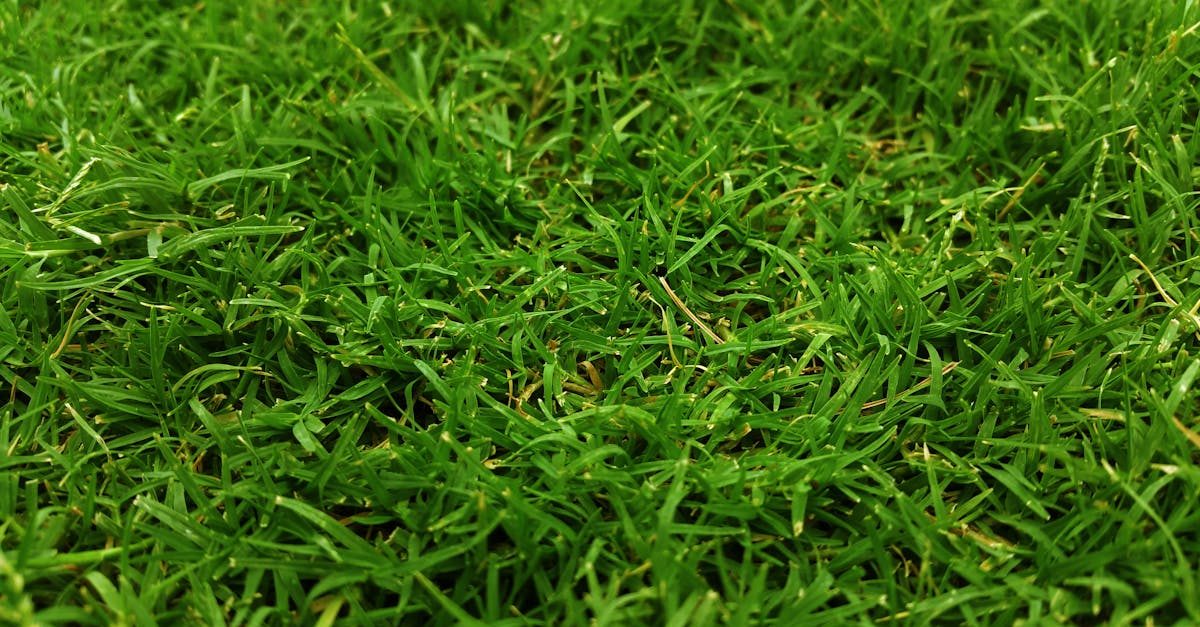
Balanced 10-10-10 also provides a safer starting point for homeowners who do not yet have a soil test but know they are dealing with neglected, low fertility soil. In these specific cases, a one-time, modest-rate application can give the lawn a push while you wait for soil test results, as long as you do not repeat that application blindly every month.
The downsides are significant if you ignore phosphorus levels. Because 10-10-10 includes 10 percent phosphorus, applying enough product to deliver 1 pound of nitrogen per 1,000 square feet also delivers 1 pound of phosphorus and 1 pound of potassium. Over multiple applications this can raise phosphorus to excessive levels, especially in clay soils with lower leaching potential. That, in turn, can lead to runoff problems when heavy rain washes fertilizer particles off hard surfaces into storm drains.
There is also a burn risk if you apply 10-10-10 at too high a rate or on stressed grass. Quick-release forms are more likely to cause tip burn or striping when the spreader overlaps. If you already applied a high nitrogen lawn fertilizer earlier in the season, stacking 10-10-10 on top increases the chance of excessive growth, thatch buildup, and disease pressure.
How to Apply 10-10-10 Fertilizer to Lawns (Step by Step)
Because 10-10-10 is 10 percent nitrogen, you need 10 pounds of product to put down 1 pound of actual nitrogen per 1,000 square feet, which is the standard single-application rate for a lawn. Use a lighter 5 pound rate (about 0.5 pound of nitrogen) on new or heat-stressed turf. The table below converts that into real bag amounts, or you can let our fertilizer calculator do the math for your exact lawn size.
| Lawn size | 10-10-10 at 0.5 lb N (5 lb per 1,000 sq ft) | 10-10-10 at 1 lb N (10 lb per 1,000 sq ft) |
|---|---|---|
| 1,000 sq ft | 5 lb | 10 lb |
| 2,500 sq ft | 12.5 lb | 25 lb |
| 5,000 sq ft | 25 lb | 50 lb |
| 7,500 sq ft | 37.5 lb | 75 lb |
| 10,000 sq ft | 50 lb | 100 lb |
Match the target rate and timing to your grass type before you spread:
| Grass type or scenario | Target nitrogen per application | 10-10-10 per 1,000 sq ft | Best timing |
|---|---|---|---|
| Cool-season (Kentucky bluegrass, tall fescue, ryegrass) | 0.5 to 1 lb N | 5 to 10 lb | Early spring or early fall |
| Warm-season (bermuda, zoysia, St. Augustine, centipede) | 0.5 to 1 lb N | 5 to 10 lb | Late spring green-up |
| New lawn (seed or sod, unimproved soil) | 0.5 lb N | 5 lb | At seeding or sodding |
| Garden and landscape beds | Per 100 sq ft, not 1,000 | 1 to 2 lb per 100 sq ft | At planting |
When you have confirmed that 10-10-10 is appropriate for your lawn, use a controlled approach. For most home lawns, the target is no more than 1 pound of nitrogen per 1,000 square feet at a single application. With a 10 percent nitrogen product, that means applying 10 pounds of 10-10-10 per 1,000 square feet.
Measure your lawn first by breaking it into rectangles and triangles and calculating the square footage. If you have 5,000 square feet of lawn and need 10 pounds of product per 1,000 square feet, multiply 10 by 5 for a total of 50 pounds. Do not guess at coverage, because that is one of the fastest ways to overfertilize.
Next, set your broadcast or drop spreader according to the bag instructions. If the bag does not list your spreader model, start with a conservative setting and test on a 500 to 1,000 square foot area. After spreading, check how much fertilizer remains in the hopper and adjust slightly if needed to hit the recommended rate across the full area.
Apply 10-10-10 on dry grass when no heavy rain is expected for 24 hours. Walk at a steady pace, overlapping wheel tracks slightly to avoid gaps but not so much that you double-dose the same strip. For more even coverage, many homeowners benefit from applying half the rate in one direction, then the other half at right angles, for example north-south and then east-west.
Once you finish, water the lawn lightly with about 0.25 inch of irrigation to wash granules off the blades and into the soil. Avoid heavy watering that might cause runoff. If you see fertilizer sitting on sidewalks, driveways, or patios, sweep it back onto the grass, do not hose it into the street.
As a timing rule, apply 10-10-10 only on actively growing turf: spring or early fall for cool-season grasses and late spring to midsummer for warm-season grasses. Do not fertilize on frozen or dormant turf. Most lawns do not need 10-10-10 more than once per year, and many will not need it at all if phosphorus is already adequate.
- NC State Extension recommends limiting total nitrogen on home lawns to about 3 to 4 pounds N per 1,000 square feet per growing season, split into 2 to 4 applications depending on grass type.
Using 10-10-10 on Gardens, Shrubs, and Landscape Beds
Outside of lawns, 10-10-10 is more often an appropriate general-purpose fertilizer. In ornamental beds with mixed shrubs and perennials, a spring application at a light rate can support new growth if soil tests show low to moderate nutrient levels. Typical garden rates range from 1 to 2 pounds of 10-10-10 per 100 square feet, tilled or scratched into the top few inches of soil before planting.
For established shrubs, sprinkle 10-10-10 evenly over the root zone, which generally extends to the dripline or slightly beyond. Keep fertilizer off the stem or trunk. Water thoroughly after application to move nutrients into the root area. For deep-rooted woody plants, one spring application is usually enough unless your soil test recommends more frequent feeding.
In vegetable gardens, 10-10-10 is sometimes used as a pre-plant fertilizer 1 to 2 weeks before sowing or transplanting. Work it into the top 4 to 6 inches of soil so roots will encounter nutrients as they grow. During the season, many crops prefer side-dress applications of nitrogen-only fertilizer, because excess phosphorus at that stage does little good and can tie up micronutrients.
As with lawns, the key is not to assume every garden needs 10-10-10. Some vegetables, like root crops and legumes, actually perform better with modest nitrogen and balanced but not excessive phosphorus and potassium. Refer to How to Test Your Lawn's Soil for sampling basics, which apply equally to garden beds.
What Other Guides Miss: Common Mistakes to Avoid
Many online guides about 10-10-10 fertilizer: when & how to apply focus only on how much and how often, but skip the confirmation steps that prevent wasted product and environmental issues. The first missed step is verifying phosphorus levels. If you see healthy root growth, good density, but pale leaves, that pattern usually points to nitrogen deficiency rather than a balanced NPK shortage. Confirm this by getting a soil test: if phosphorus and potassium are in the optimum range but nitrogen is low or unmeasured, a high-N, low-P lawn fertilizer is the better fix.
A second common omission is timing around weather and soil temperature. Applying 10-10-10 when soil is below roughly 50 to 55°F or when the grass is semi-dormant typically yields little benefit and increases loss risk. Confirm growth stage by watching your mowing frequency: if grass is not needing a cut at least every 7 to 10 days, it is usually too early or too late to fertilize heavily.

Another frequent mistake is stacking products. Homeowners sometimes apply 10-10-10 in early spring, then a crabgrass preventer with fertilizer a couple of weeks later, then a summer lawn food. This combination can push seasonal nitrogen above 4 pounds per 1,000 square feet and add unnecessary phosphorus. Before adding 10-10-10 on top of anything else, inventory what you have already applied that year and how much nitrogen and phosphorus it contained.
Finally, many guides underplay the role of organic matter. If your soil is sandy or low in organic matter, part of the solution is not just fertilizer choice, but adding compost or using practices from Composting for a Healthier Lawn. This improves nutrient holding capacity so fertilizers, including 10-10-10, work more efficiently and require lower doses over time.
Conclusion: When 10-10-10 Belongs in Your Program
10-10-10 fertilizer is a useful tool, not a universal answer. It works best when a soil test shows simultaneous deficits in nitrogen, phosphorus, and potassium, or when you are dealing with brand-new or severely depleted soil and need a one-time balanced boost. On established lawns with adequate phosphorus, a high-nitrogen, low- or zero-phosphorus fertilizer is usually a better long term choice.
To decide whether 10-10-10 fits your situation, start with a soil test, confirm your grass type, and map out your yearly nitrogen budget. Apply no more than 1 pound of nitrogen per 1,000 square feet per application, and never exceed 4 pounds per 1,000 square feet annually. When in doubt, less is more: you can always add another light application, but you cannot undo fertilizer burn.
Top Picks
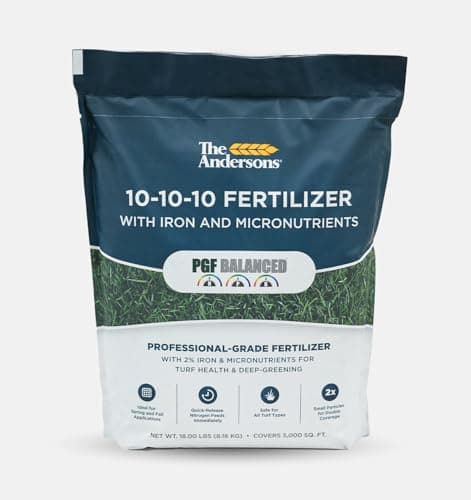
 The Andersons PGF Balanced 10-10-10 FertilizerCheck price on Amazon
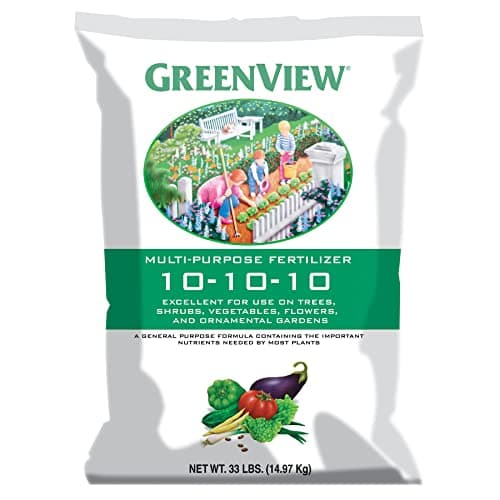
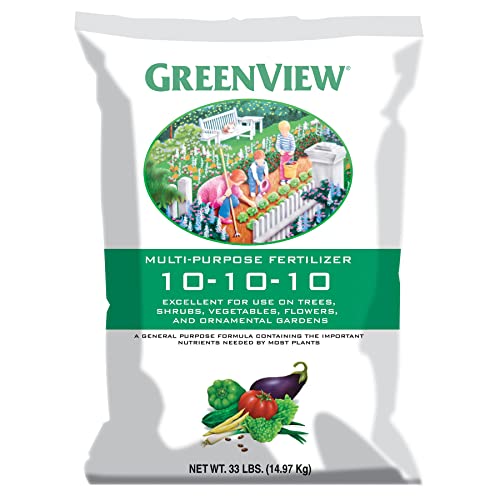 GreenView Multi-Purpose 10-10-10 Fertilizer, 33 lbCheck price on Amazon
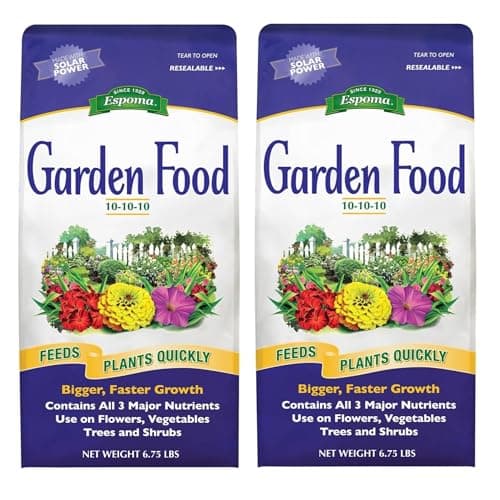
 Espoma 10-10-10 Garden Food, 6.75 lbCheck price on Amazon
As an Amazon Associate we earn from qualifying purchases.
Free Lawn Care Tools
The 10-10-10 label means the fertilizer contains 10% nitrogen, 10% phosphorus (as P₂O₅), and 10% potassium (as K₂O) by weight, for a total of 30% nutrients. Nitrogen drives green blade and leaf growth, phosphorus supports root development and flowering, and potassium boosts overall plant health and stress resistance. The remaining 70% of the bag is filler that helps spread the nutrients evenly. Understanding this helps you match the product to what your soil and plants actually need.
10-10-10 is most useful when a soil test shows you are low in nitrogen, phosphorus, and potassium at the same time. It also makes sense in new or unknown soils, such as new garden beds or mixed landscape beds, where you have not built up nutrients yet. Some vegetable gardens, especially in sandy soils, can also benefit from a balanced formula during pre-plant preparation when all three nutrients are deficient. In short, 10-10-10 is good for vegetable plots, ornamental beds, shrubs, and brand-new lawns on poor or depleted soil, while established lawns usually do better with a higher-nitrogen formula.
Only in specific situations, and a brand-new lawn on unimproved soil is the main one. For an established lawn that already has adequate phosphorus, a high-nitrogen, low- or zero-phosphorus fertilizer like 16-4-8, 24-0-6, or 30-0-4 feeds the grass more efficiently and keeps you within local phosphorus rules. If you do use 10-10-10 on a lawn, stick to 10 pounds of product per 1,000 square feet (1 pound of nitrogen), no more than once per season, applied on actively growing grass.
For lawns, a typical single application rate is 1 pound of nitrogen per 1,000 square feet. With a 10-10-10 product, that equals 10 pounds of fertilizer per 1,000 square feet. This rate should not be applied more than once per season unless a soil test specifically calls for additional nutrients. Staying within this range helps avoid burning the grass or overloading the soil with phosphorus.
Apply 10-10-10 only when the grass is actively growing and soil temperatures are above 55°F. Avoid fertilizing on frozen ground, during dormancy, or right before heavy rain, because those conditions increase the risk of runoff and wasted nutrients. After spreading, water lightly to wash the granules off the blades and into the soil. Under good conditions, you can expect to see a color and growth response within 7 to 14 days.
Yes, overusing 10-10-10 can cause problems, especially if your soil already has adequate or high phosphorus. Extra phosphorus does not improve growth and can build up in the soil, increasing the risk of runoff into streams, lakes, and storm drains. Applying too much at once or on stressed turf can also burn the grass, particularly with quick-release products. A soil test and proper timing greatly reduce these risks.
For most lawns and large landscape areas, granular 10-10-10 is usually the better option because it spreads more evenly and is easier to apply at a controlled rate. Liquid 10-10-10 acts faster and can work well for smaller gardens, containers, or foliar feeding, but it is harder to apply uniformly over big turf areas and easier to overapply if dilution rates are off. Granular products also tend to be more cost effective for large spaces. The best choice depends on the size of the area and how precise you can be with your application.
It works in a pinch, but it is rarely the best choice. Bermuda is a heavy nitrogen feeder that wants a high first number, so a 10-10-10 delivers unneeded phosphorus with every pound of nitrogen. Unless a soil test shows your lawn is genuinely low in phosphorus and potassium, a high-nitrogen formula like 29-0-10 or a 16-4-8 will feed Bermuda better for the same money.
Leave at least 6 to 8 weeks between full-rate applications, and only apply while the grass or garden is actively growing. Most lawns need just one or two balanced feedings per year at most, since repeated 10-10-10 use stacks up phosphorus the soil cannot use. If you feel the urge to feed more often, that is a sign to switch to a high-nitrogen turf formula instead.
For individual plants, shrubs, and vegetables, a common rate is about 1 to 2 tablespoons of 10-10-10 per plant, or roughly 1 pound (about 2 cups) per 100 square feet of garden bed worked into the top few inches of soil. For larger shrubs and young trees, use about a quarter to a half cup spread evenly around the drip line, never piled against the stem or trunk. Always water thoroughly after applying so the granules dissolve and do not burn the roots, and follow the specific product label whenever it lists a rate.
In a vegetable garden, work 10-10-10 into the soil before planting at about 1 to 2 pounds per 100 square feet, then side-dress heavy feeders like tomatoes, corn, and squash with a lighter second application once they are established. Keep the granules a few inches away from stems, water it in well, and avoid over-applying, since the phosphorus and potassium in a balanced 10-10-10 can build up in garden soil over time. For established beds, a soil test every couple of years tells you whether you still need the added phosphorus and potassium or can switch to a nitrogen-focused blend.
Photos: Digital Buggu / Pexels, Tom Fisk / Pexels

Beat weeds and brown spots from your phone
Snap a photo, get the fix, and follow a plan timed to your soil and weather. Free on iPhone.