Best Fertilizer for Bermuda Grass in Florida (2026 Top Picks)
 Marcus GreenTurf Management Pro | 18 Years
As an Amazon Associate we earn from qualifying purchases.
Fertilizing bermuda grass in Florida is not the same job as fertilizing it anywhere else in the country. The sandy soil that defines most of the state behaves like a strainer. Nitrogen you put down on Monday can be past the root zone by Friday after a typical afternoon thunderstorm. That alone changes which products work and which ones waste money. Then layer in the ordinances. Many Florida counties legally restrict nitrogen and phosphorus applications during the summer rainy season, and homeowners who skip that detail can end up with a fine in addition to a yellow lawn.
The good news is that bermuda thrives in Florida heat and humidity. South Florida bermuda barely goes dormant, and even the Panhandle gets a long growing window. Get the product type right, split the year into many small feedings instead of a few big ones, and the lawn will reward you. Get it wrong and you will either burn the lawn, leach the nutrients into groundwater, or violate a county rule.
This guide focuses entirely on Florida bermuda. For the broader picture of the species, the cultivars, and how bermuda compares to St. Augustine and zoysia, start with the bermuda grass pillar guide. From there, the picks and the schedule below are tuned to FL soil, FL weather, and FL law.
Fast answer: For Florida bermuda, use a slow-release nitrogen product with at least 50 percent of the N in slow or controlled-release form, split into six to eight small applications across the year rather than two or three heavy ones. Skip nitrogen and phosphorus applications between June 1 and September 30 if you live in Pinellas, Sarasota, Manatee, Charlotte, Lee, or other counties with a summer fertilizer ordinance.
Iron supplements often produce more visible color response than extra nitrogen in Florida because alkaline coastal soils tie up iron. Always check your county and city ordinance before applying anything in summer. Most violations come from homeowners who did not know the rule existed.
Why Florida Bermuda is Different (Sandy Soil + Ordinances)
Bermuda is a tough warm-season grass, but Florida puts it in a unique environment. The state sits on sand or sandy loam in most regions, and that soil drains so fast it has a low cation exchange capacity. CEC is the soil's ability to hold onto positively charged nutrients like ammonium, potassium, and calcium. Low CEC means a heavy fertilizer dose does not stick around long enough for the grass to use it. The cure is not a stronger product, it is a smaller and more frequent product. That single change in approach matters more in Florida than the brand you choose.
Below are the three picks Florida lawns reach for most often. The first is the all-around best, the second is the standout for sandy soils, and the third is the budget option for homeowners covering a large lot.
Recommended products
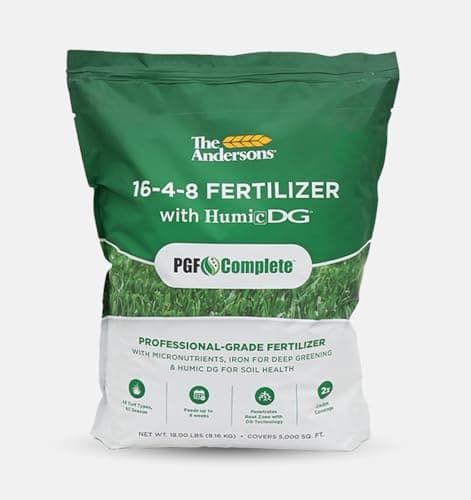
Andersons PGF Complete 16-4-8 with 7% Humic DG
The slow-release nitrogen and humic acid combination handles FL leaching better than almost anything else.
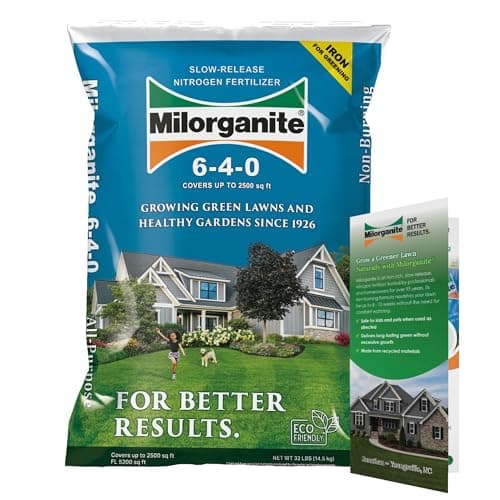
Milorganite 6-4-0
Organic slow-release biosolid that releases as soil microbes break it down, so it does not flush through sandy soil with the first rain.
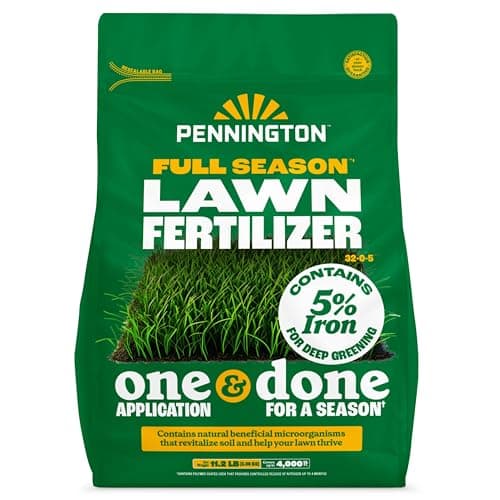
Pennington Full Season 32-0-5
High N with zero phosphorus, which is the right NPK shape for most Florida lawns that already have adequate soil P.
Sandy Soil and Nutrient Leaching
If your soil test report came back saying your CEC is somewhere between 2 and 6, you have classic Florida sand. A clay loam soil in the Midwest might have a CEC of 15 to 25. The practical difference is enormous. In clay, a single spring fertilizer application can feed the lawn for months because the soil holds the nutrients. In Florida sand, the same dose drops below the root zone within two to three weeks, especially during the rainy season.
That is why fast-release urea is a poor choice in Florida. It dissolves immediately, the grass takes up what it can in the first few days, and the rest leaches. Polymer-coated urea, methylene urea, sulfur-coated urea, and organic biosolids like Milorganite all release nitrogen gradually over weeks. That gradual release matches how Florida bermuda actually uses nitrogen, and it sharply reduces what ends up in the storm drain.
The other piece of the puzzle is application frequency. Two heavy spring and fall applications will not carry Florida bermuda. Six to eight smaller applications across the year, sometimes called spoon-feeding, lets the lawn pull from a steady supply instead of riding a spike-and-crash cycle. A practical target is half a pound of nitrogen per 1,000 square feet every four to six weeks during the growing season.
Florida Fertilizer Ordinances 2026
This is the part most national fertilizer guides skip, and it is the part Florida homeowners cannot afford to skip. Many Florida counties and municipalities have adopted summer fertilizer ordinances. The rules vary, but the pattern is consistent. From roughly June 1 through September 30, applying nitrogen or phosphorus to residential lawns is restricted or banned outright. The goal is to keep nutrients out of waterways during the heaviest rain months. Counties with formal ordinances include Pinellas, Sarasota, Manatee, Charlotte, Lee, and most of the Tampa Bay area. Individual cities within and outside those counties have their own rules too.
Most ordinances also restrict phosphorus year-round unless a current soil test shows a deficiency. That is one of the reasons a 15-0-15 or a 32-0-5 product is often more appropriate than a starter-style 16-4-8 in Florida, especially on established lawns. The few exceptions usually involve newly sodded or seeded lawns, where a starter fertilizer with phosphorus is permitted for a short window after installation.
Several ordinances carve out an exemption for slow-release nitrogen at very low rates, and some allow products with high enough slow-release percentages even in summer. Organic biosolids like Milorganite are commonly permitted because the nitrogen is bound up in the organic matter and releases slowly. Always confirm the rule for your specific address before applying anything in summer. A quick call to the county extension office or a search of the municipal code is enough.
FL Regional Differences
Florida is long. The Panhandle and Jacksonville behave a lot like coastal Georgia. Central Florida sits in a transition zone where bermuda grows almost year-round. South Florida and the Keys do not really see dormancy at all. That north to south gradient means the same fertilizer schedule does not work statewide.
North Florida bermuda goes semi-dormant in winter, greens up in late March, and follows a classic two-shoulder schedule with applications concentrated in spring and fall. Central Florida bermuda barely sleeps, with light winter growth and active growth from March through November. South Florida bermuda grows all twelve months but slows in the cooler weeks of January and February. Coastal lawns add salt tolerance and pH management on top of everything else.
NPK Targets for Florida Bermuda
For most established Florida bermuda lawns, the right NPK shape is a high-nitrogen, low-or-zero-phosphorus, moderate-potassium product. A 16-4-8 works well where soil tests show P is needed, especially on new lawns. A 15-0-15 or 32-0-5 is a better fit for established lawns and for any property in a county with a phosphorus restriction. Potassium matters more in Florida than in many other states because sandy soil leaches K just as readily as N, and adequate potassium helps with drought resilience, salt tolerance, and root health.
The slow-release percentage is more important than the headline numbers. Aim for 50 percent or more of the nitrogen in slow-release form. The bag will say something like "contains 8 percent slowly available nitrogen from polymer-coated urea" or "50 percent of the total nitrogen is from methylene urea." Anything below 30 percent slow-release is going to flash through Florida soil and leave you with a short green pulse and a long stretch of yellow.
Iron is the other lever that matters in Florida and is often overlooked. Coastal and south Florida soils tend to be alkaline, sometimes pushing above 7.5. At those pH levels, iron in the soil is chemically tied up and unavailable to the grass even when the soil contains plenty of it. The lawn turns pale or yellow not because it needs more nitrogen but because it cannot reach iron. A foliar iron application or an iron-fortified granular product can produce more visible color response than another round of N, without the risk of pushing top growth that the lawn does not need.
Top 5 Fertilizers for Florida Bermuda (2026)
Each of these has been chosen because it performs well in sandy soil and because the slow-release profile fits Florida's leaching reality. Ordinance compatibility depends on your specific county. Always verify before a summer application.
| Product | N-P-K | Release Type | Ordinance-Safe? | Best For | Buy |
|---|---|---|---|---|---|
| Andersons PGF Complete with Humic DG | 16-4-8 | Slow-release blend | Check locally (P content) | Overall best for FL bermuda | Check on Amazon |
| Milorganite | 6-4-0 | Organic slow-release biosolid | Often allowed (organic exemption) | Sandy soils, ordinance windows | Check on Amazon |
| Pennington Full Season | 32-0-5 | Slow-release N, zero P | Yes outside summer ban months | Budget pick, large lawns | Check on Amazon |
| Scotts Turf Builder Southern Lawn Food | 32-0-10 | Coated slow-release N | Outside summer ban months | Spring green-up and fall | Check on Amazon |
| Dark Matter 21-0-0 + Iron | 21-0-0 + Fe | Quick-release with iron | Outside summer ban months | Iron chlorosis, coastal pH | Check on Amazon |
If you are buying one bag and want the cleanest match for the average Florida bermuda lawn, the Andersons PGF Complete is the pick. If you want maximum safety during the summer ordinance window and your lawn is on pure sand, Milorganite is the more conservative choice and is often the only product you can legally put down between June and September. Pennington Full Season covers ground at the lowest cost per thousand square feet. Scotts is the easiest to find at any big-box store. Dark Matter solves a specific iron-deficiency problem that coastal lawns run into.
Application Schedule by Florida Region (2026)
Use the schedule for your region. Soil temperature trumps the calendar, so if a cool late winter pushes your green-up back two weeks, push your first application back too. The soil temperature tool shows current readings by ZIP, which is more accurate than guessing from the air temperature.
North Florida (Panhandle, Jacksonville, Tallahassee)
North Florida bermuda goes semi-dormant in winter. Green-up usually happens between late March and mid-April when soil temperatures climb past 65 degrees. The main fertilizer windows are March through May and again in October through November. Hold off through the summer months if you live in a county with an ordinance. Outside ordinance restrictions, light summer applications of slow-release N at four to six week intervals work well.
A typical Panhandle schedule looks like a starter or balanced application in late March or early April once the lawn is fully green, a follow-up in late April or May, light feedings through summer if allowed, a fall application in October, and a potassium-heavy winterizer in November to help the lawn harden off before the first frost. Skip the late summer N if the lawn is heading into dormancy stress.
Central Florida (Orlando, Tampa, Lakeland)
Central Florida bermuda grows year-round in most years with only a brief slowdown in January and February. The growing window is essentially March through November with active growth almost the entire stretch. Because so much of the Tampa Bay area is under a summer ordinance, the practical schedule has a notable mid-summer gap.
Apply in March or early April after green-up, again in late April or May, then stop nitrogen and phosphorus from June 1 through September 30 in ordinance counties. Resume with a fall application in late September or early October, and again in November. Iron applications are usually permitted during the summer window and can keep the lawn looking green without violating the ordinance. Always confirm with your local rule.
South Florida (Miami, Naples, Fort Lauderdale, Keys)
South Florida bermuda does not really go dormant. It just slows down in January and February. The growing season is essentially year-round, and the management challenge is feeding the lawn often enough to support that constant growth without overloading the sandy soil with leachable nutrients. Spoon-feeding with small frequent applications is the answer.
A common South Florida pattern is light slow-release applications every four weeks from February through May, then a switch to Milorganite or an organic equivalent during any summer ordinance window, then back to a granular slow-release product from October through December. Many lawns benefit from a winter iron application in December or January to maintain color through the cooler stretch.
Coastal Florida and Salt Tolerance
Coastal lawns face two extra challenges. Salt spray and salty irrigation water can cause leaf burn and stunted growth, and coastal soils are often alkaline with pH readings of 7.5 or higher. Salt-tolerant bermuda cultivars like Celebration and TifTuf handle coastal conditions better than common bermuda. Regardless of cultivar, leaching irrigation with a deep watering after a salt event helps move chloride below the root zone.
On alkaline coastal soils, iron deficiency is the most common reason a properly fertilized lawn still looks pale. Foliar iron sulfate or a chelated iron product fixes the color without adding more N. Lowering soil pH with elemental sulfur is a slow project that can pay off, but it takes months to register.
Florida-Specific Issues

Chinch Bugs
Chinch bugs are a perennial Florida pest, especially on lawns under drought stress or in sun-baked areas next to driveways and sidewalks. They are more commonly a St. Augustine problem but will hit weakened bermuda too. A healthy, well-watered, properly fertilized lawn is the best prevention. Avoid the temptation to push more nitrogen as a response, since excess N can actually worsen pest pressure.
Mole Crickets (Panhandle)
Mole crickets are most active in the Panhandle and North Florida. They tunnel under the surface, cutting roots and producing soft spongy patches in the lawn. Beneficial nematodes and targeted insecticide treatments in summer when nymphs hatch are the standard control. Fertilizer alone will not solve a mole cricket problem.
Tropical Sod Webworms
Tropical sod webworms show up in late summer and early fall and can chew a lawn down to stems in a week if you miss them. The first sign is usually small moths fluttering up when you mow. Scout in the early evening and treat at the first sign of caterpillar damage. A healthy lawn recovers faster, which is another reason to keep nitrogen steady but moderate through the year.
Iron Chlorosis from High-pH Coastal Soils
If your coastal lawn looks pale and yellow but you have been fertilizing on schedule, the issue is almost always iron, not nitrogen. A simple iron sulfate spray or an iron-fortified granular like the Dark Matter product above can green the lawn up within days without pushing top growth.
Take-All Root Rot
Take-all root rot is a fungal disease that thrives in alkaline soils with excessive thatch and overwatering. Bermuda is less susceptible than St. Augustine but can still be hit. Lowering soil pH slightly, reducing thatch with annual dethatching or aeration, and dialing back irrigation frequency are the levers. Fertilizer choice plays a supporting role by avoiding over-fertilization that stresses the root system.
Salt Damage (Coastal)
Salt buildup shows up as marginal leaf burn and overall poor growth in irrigated areas using brackish water. Deep periodic leaching irrigation moves chloride below the roots. Gypsum applications can help displace sodium from the soil cation sites. Salt-tolerant cultivars are the long-term answer for properties right on the water.
Application Tips for Florida Conditions

Water in granular fertilizer immediately after application. Florida sand drains so fast that a quarter inch of irrigation right after spreading helps move the prills to the soil surface where they can dissolve and begin releasing nitrogen. Without water-in, the prills sit on top of the canopy where mowers and foot traffic can scatter them.
Never apply before a tropical storm or hurricane forecast. A four-inch rain event will wash a fresh fertilizer application straight into the nearest waterway. Wait until after the storm has passed and the standing water has drained.
Apply only during your ordinance window. In counties with a June 1 through September 30 summer ban, the practical operating windows are roughly February through May and again from October through December. Outside ordinance counties you have more flexibility, but the small-and-frequent pattern still beats heavy applications. Use a calibrated rotary or drop spreader and walk in overlapping passes at half rate in two directions to avoid stripes.
Recommended products
Andersons PGF Complete 16-4-8 with Humic DG
Best overall choice for most Florida bermuda lawns outside of summer ordinance months.
Milorganite 6-4-0
The product to keep on hand for summer applications in ordinance counties.
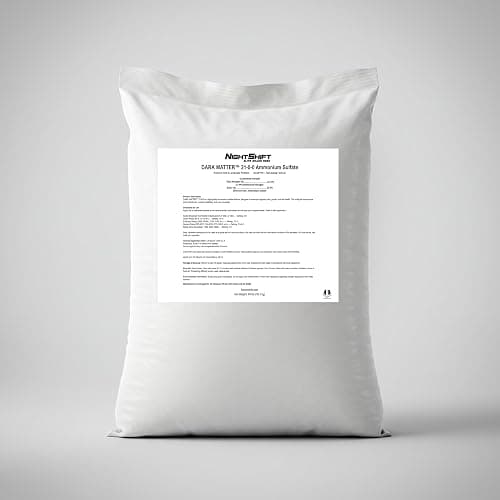
Dark Matter 21-0-0 + Iron
Pair with the above for coastal alkaline soils or any lawn showing iron chlorosis.
University of Florida IFAS Extension guidance: Apply 2 to 4 pounds of slow-release nitrogen per 1,000 square feet per year to established bermuda lawns, split across multiple light applications. Test soil before applying phosphorus and only add P when the test shows a deficiency. Always follow your local county or municipal fertilizer ordinance, including summer application restrictions in many coastal and central Florida counties. Contact your county extension office for site-specific recommendations and current ordinance details.
Conclusion
Florida bermuda is a great lawn when fertilized with sandy soil and summer ordinances in mind. The pattern is simple even if the rules feel complicated. Use slow-release nitrogen, split the year into many small applications instead of a few heavy ones, hold off in summer if your county requires it, and lean on iron for color rather than pushing extra nitrogen. The products above cover those needs from spring green-up through the fall hardening window.
For bermuda lawns outside Florida, the picks and the schedule shift. The Texas bermuda fertilizer guide covers the calcareous soils and the wider growing window across that state, and the Georgia bermuda fertilizer guide walks through the red clay, the milder summers, and the local mowing patterns. The North Carolina bermuda fertilizer guide covers the transition-zone conditions and clay soils further north. For the picks that hold up in any state, the best fertilizer for Bermuda grass roundup is the national guide. For everything else about the species, the bermuda grass pillar guide is the home base. To time any application against current soil readings rather than a calendar, the soil temperature tool is the fastest check.
Top Picks
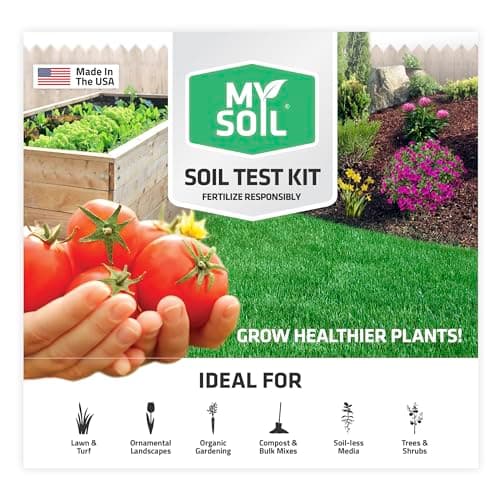
 MySoil Soil Test KitCheck price on Amazon
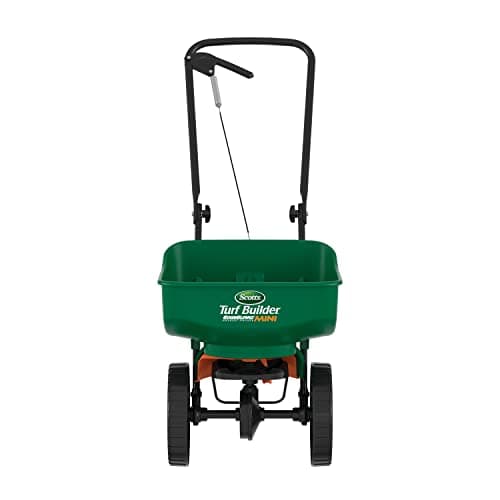
 Scotts Turf Builder EdgeGuard Mini Broadcast SpreaderCheck price on Amazon
As an Amazon Associate we earn from qualifying purchases.
Free Lawn Care Tools
Andersons Professional PGF Complete 16-4-8 with 7 percent Humic DG is the top pick for Florida bermuda. The humic acid component is critical for Florida's sandy soils because it boosts cation exchange capacity (CEC) and helps the soil actually hold nutrients between applications. Pair it with Milorganite for ordinance-compliant summer feeding.
Feed your Florida bermuda in spring (March through May) and fall (September through November) for the heaviest applications. Many Florida counties ban N and P applications during the summer rainy season (typically June 1 through September 30), so plan around your local ordinance. South Florida lawns can extend the season but should still keep applications light during summer thunderstorm months.
Yes, in many counties. Pinellas, Sarasota, Manatee, Charlotte, Lee, and most municipalities in the Tampa Bay region prohibit applying N and P fertilizer between June 1 and September 30 to protect waterways from runoff during the summer rainy season. Check your county code before any summer application. Some ordinances allow slow-release organic products like Milorganite even during the ban.
Use a spoon-feeding approach: 6 to 8 small applications per year instead of 4 large ones. Florida sandy soils leach nutrients within days, so frequent light feedings keep the lawn green without polluting groundwater. Target 2 to 4 pounds of slow-release nitrogen per 1,000 square feet per year total, never exceeding the per-application limit set by your county ordinance.
In coastal Florida, yellow bermuda is almost always iron chlorosis from high-pH alkaline soil, not nitrogen deficiency. Soil pH above 7.5 locks up iron and the lawn yellows even with adequate nitrogen. Apply a chelated iron supplement and you should see green-up within a week. Inland Florida lawns are more likely actually nitrogen-deficient because of the rapid leaching, in which case a slow-release feed fixes the color.
It depends on the county. Many Florida fertilizer ordinances exempt slow-release organic fertilizers (less than 2 percent quick-release nitrogen, and no phosphorus), which means Milorganite qualifies in jurisdictions like Pinellas County during the summer ban. Always read your specific county ordinance before applying anything between June 1 and September 30, since exemption rules vary by municipality.
Use slow-release products (50 percent or more slow-release N), feed lightly and frequently, and add humic acid amendments to boost the soil's CEC over time. Sandy Florida soil cannot hold nutrients the way clay does, so the goal is to keep a steady low level of available N rather than spike-feeding. Water in granular product the same day to wash it off blades and into the root zone.
16-4-8 with mostly slow-release nitrogen is the most common pick. Where county ordinances ban phosphorus or your soil test shows adequate P, a 15-0-15 or 32-0-10 ratio is the better choice. The middle number (P) should always come from a recent soil test, not a default assumption, since most Florida soils already test high in phosphorus and adding more contributes to algae blooms in nearby waterways.

Beat weeds and brown spots from your phone
Snap a photo, get the fix, and follow a plan timed to your soil and weather. Free on iPhone.