Best Fertilizer for Bermuda Grass in Georgia (2026 Top Picks)
 Marcus GreenTurf Management Pro | 18 Years
As an Amazon Associate we earn from qualifying purchases.
If you're managing a bermuda lawn in Georgia, you already know it dominates the southeast for good reason. From Atlanta down to Savannah, bermuda handles heat, traffic, and full sun better than any other warm-season grass available. But Georgia bermuda is not Texas bermuda or Florida bermuda. Red clay soil, summer humidity that lingers for weeks, and a hard line between North Georgia mountains and Coastal Plain sand mean the fertilizer that works for your cousin in Dallas can quietly wreck your Piedmont lawn.
I've been managing bermuda lawns across the southeast for years, and Georgia is the one state where I rework the feeding schedule every single time I cross a regional line. The amount of nitrogen, the release type, and the cutoff date all shift between Athens and Albany. Get those three right and bermuda repays you with a thick, dark green stand that crowds out weeds and shrugs off summer drought. Get them wrong and you're fighting brown patch in July and spring dead spot the following March.
This guide is the 2026 playbook for fertilizing bermuda specifically in Georgia. We'll walk through why the state is different from its neighbors, what NPK targets to hit, the top five products worth your money this year, and a region-by-region schedule from the mountains to the coast. For the full bermuda care picture beyond feeding, the bermuda pillar guide covers mowing, watering, and weed control in depth.
Fast answer: For most Georgia bermuda lawns, feed with a 16-4-8 slow-release granular like Andersons PGF Complete once the soil 4 inches down holds 65°F and rising, which a UGA Extension agent puts at late April in a typical year. Follow up every 4 to 8 weeks through summer, and rotate in Milorganite 6-4-0 once or twice on red clay. UGA's yearly target for bermuda is 2 to 5 pounds of nitrogen per 1,000 square feet, set by your soil test.
Make the last full feeding by early to mid August across most of the state, with only a light early-September feeding on the coast. After mid-September, UGA's spring dead spot guidance caps nitrogen at half a pound per 1,000 square feet. Muggy summers punish fast-release nitrogen, so lean slow-release from June on.
Why Georgia Bermuda Is Different
Bermuda is bermuda everywhere it grows, but the soil and weather around it changes the rules. Georgia sits in a unique spot. North of I-20 you're dealing with foothills, red clay, and a frost window that stretches into mid-April. South of Macon the soil turns sandy, the humidity climbs, and bermuda greens up six weeks earlier. Those differences mean a one-size-fits-all schedule fails somewhere in the state every season.
Three things separate Georgia from neighboring states. The Piedmont red clay is the most obvious. The humidity-driven fungal pressure is the most expensive. And the cultivar mix, heavy on Tifway 419 and TifTuf, responds to feeding patterns differently than the common bermuda you find in older Texas yards.
Before we get into the product list, here's the short-list of fertilizers that consistently perform across Georgia. Each fills a specific role.
Recommended products
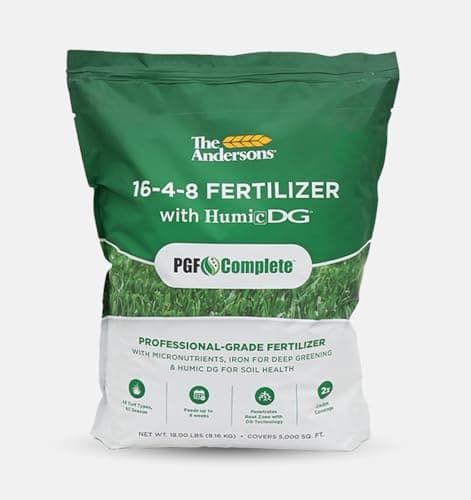
Andersons PGF Complete 16-4-8
The workhorse for most Georgia lawns.
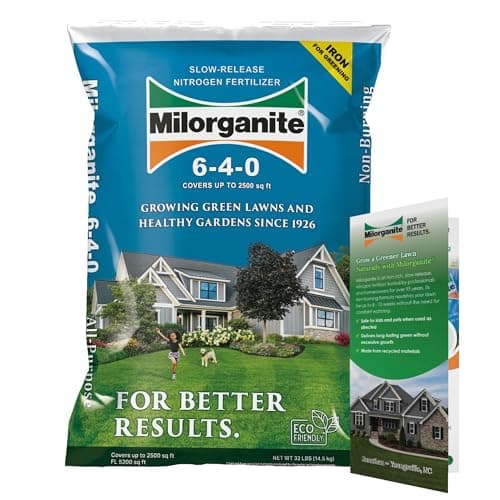
Milorganite 6-4-0
An organic soil-builder for red clay, with organic nitrogen, added iron, and the kind of slow feed that does not push fungal-friendly growth in humid Piedmont summers.
Climate Realities: Humid and Hot
Georgia summers run hot, but the bigger issue is humidity. Atlanta runs hot, still, and muggy for weeks at a stretch in July and August, and Savannah and Brunswick run muggier. That humidity creates the conditions for brown patch, dollar spot, large patch, and gray leaf spot, all of which feast on tender, nitrogen-flushed grass.
This is the single biggest reason I push slow-release fertilizers in Georgia harder than in any other southeastern state. Fast-release liquid nitrogen creates a surge of soft growth two days after application. In dry Texas conditions that growth hardens off fast. In humid Georgia it becomes fungal food. Slow-release products meter the nitrogen out over six to eight weeks, which keeps growth steady and disease pressure lower.
If you live in a humid pocket and have a history of brown patch, you can also drop summer feedings to the low end of the label rate and supplement with iron (Milorganite or a chelated iron foliar) for color without growth. That's a Georgia trick more than a Texas one.
Red Clay Soil and Drainage
Georgia Piedmont red clay is its own beast. The good news is clay holds nutrients well, so fertilizer applied to clay tends to feed the lawn for longer than fertilizer applied to sand. The bad news is clay also holds water, compacts under traffic, and runs slightly acidic at a pH that bermuda actually likes but that locks up phosphorus when applied without care.
Three practical implications for fertilizing Piedmont clay:
- Aerate once the lawn is growing. UGA's bermudagrass lawn calendar marks May through August as the best months to core aerate, with April and September as possible, because dormant bermuda can't fill the holes. Pair it with a summer feeding so fertilizer and water reach the root zone. Topdress with a thin layer of compost or sand after aerating if you want to improve drainage over time.
- Use granular over liquid on tight clay. Liquid fertilizers run off compacted clay easily. Granulars sit on the surface and feed as they dissolve.
- Lean toward slow-release nitrogen. Quick-release nitrogen on warm, wet clay can volatilize or leach into runoff during summer thunderstorms. Slow-release products avoid both losses.
For severely compacted lawns, plan two aeration passes per year (late spring and midsummer, both inside UGA's active-growth window) and combine with topdressing. Within two seasons the soil structure improves noticeably and fertilizer efficiency follows.
GA Regional Differences
Georgia covers more climate ground than people realize. North Georgia sits in USDA zone 7a-7b with cold winters that can drop bermuda hard. Middle Georgia (Macon and Augusta) is zone 8a and slightly milder. South Georgia (Albany, Valdosta) is zone 8b-9a and stays warm enough for bermuda to push growth into October most years. Coastal Georgia adds salt spray and year-round humidity to the equation.
That spread means the same calendar date does different things to bermuda in different parts of the state. April 1 in Valdosta is well into the growing season. April 1 in Blue Ridge might still see a hard frost. We'll get to the region-by-region schedule below, but keep this spread in mind when you read national bermuda guides that assume one start date for the whole southeast.
NPK Targets for Georgia Bermuda
The standard NPK target for established Georgia bermuda is 16-4-8 or something close to that ratio. That gives bermuda the nitrogen it craves, a small phosphorus dose for root maintenance, and the potassium that Georgia red clay almost always runs low on. Potassium is the unsung hero in Georgia. It hardens cell walls, improves drought tolerance, and increases disease resistance, all of which matter more here than in drier states.
For new sod or sprigged bermuda, shift to a 15-5-10 or similar starter blend with slightly more phosphorus to support root establishment. For high-traffic athletic-style lawns, push potassium higher with a 15-0-15 or supplemental potash application in late summer.
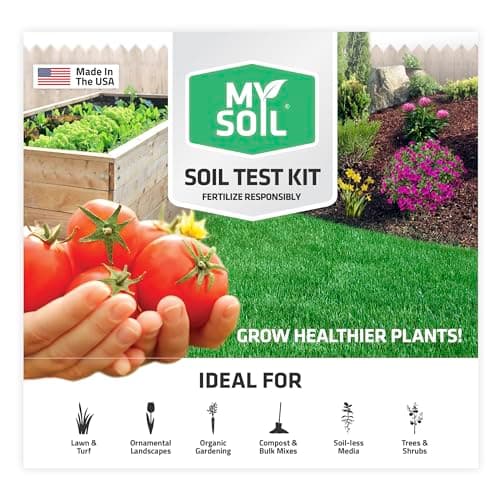
Pull a soil test through UGA Extension before guessing at phosphorus. UGA turf scientist Clint Waltz notes that southeastern soils carry less phosphorus than other regions, and a UGA county agent reported that the No. 1 problem in the lawn soil tests he'd been seeing was a lack of phosphorus. The other side of it is runoff: Waltz points out that most phosphorus reaching lakes and streams gets there on eroded soil. So feed phosphorus when the test asks for it and hold it back when the test says you're high. The basic S1 soil test runs $8 through the Gwinnett County office and $10 in Douglas County, and it reports pH, phosphorus, potassium, calcium, magnesium, zinc, and manganese. That's the cheapest answer in lawn care.
How Much Nitrogen Georgia Bermuda Needs
UGA's bermudagrass lawn calendar sets the yearly range at 2 to 5 pounds of nitrogen per 1,000 square feet and tells you to follow the recommendation on your soil test report. A UGA Extension article on spring fertilization says to split the feeding into small doses: four applications of 1 pound of nitrogen each for bermuda, not one 4-pound dose. The Dougherty County Extension quick guide turns that into bag math: about 6 pounds of 16-4-8 or 8 pounds of 12-4-8 per 1,000 square feet carries roughly 1 pound of nitrogen.
Where your lawn lands in that range is a call your soil test and your mower both weigh in on. A tight, dark Tifway 419 yard mowed twice a week runs toward the top. A common bermuda lawn you'd rather mow once a week runs toward the bottom. Pick the number first, then divide it into feedings.
Top 5 Fertilizers for Georgia Bermuda (2026)

These five products consistently perform across Georgia conditions in 2026. Each is rated for what it does best, not just overall scores.
| Product | N-P-K | Release Type | Best For GA | Buy |
|---|---|---|---|---|
| Andersons PGF Complete | 16-4-8 | Quick + slow-release, Humic DG | Workhorse feeding April through August, all regions | Check on Amazon |
| Milorganite | 6-4-0 | Organic slow-release | Red clay soil-building, low-disease summer feeding | Check on Amazon |
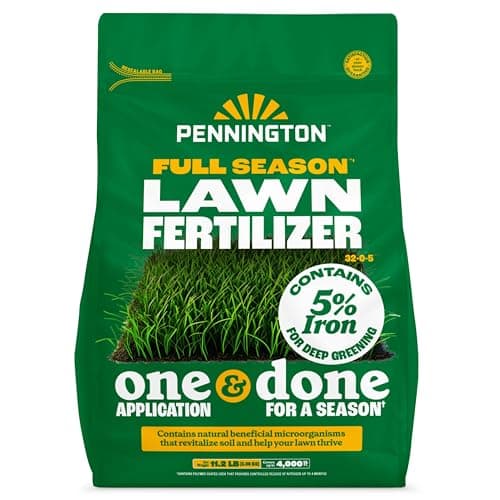
| Pennington Full Season | 32-0-5 | Polymer-coated slow-release | Budget mid-summer feeding when P is already adequate | Check on Amazon |
| Scotts Turf Builder Lawn Food | 32-0-4 | Mixed release, 6 to 8 weeks | Easy-to-find big-box option, broad coverage | Check on Amazon |
| Simple Lawn Solutions 16-4-8 Liquid | 16-4-8 | Liquid quick-release | Spot-feeding thin areas, between-granular touch-ups | Check on Amazon |
Andersons PGF Complete (16-4-8) earns the top spot because it nails the NPK ratio, blends quick- and slow-release nitrogen that Andersons says feeds for up to 8 weeks, and grinds down to a fine particle that disappears into tight-mown Tifway 419 without leaving a yellow halo. The downside is cost per bag: Andersons lists the 5,000 square foot size at $59.88 on its own store. Andersons also says to reapply every 6 to 8 weeks, which fits a Georgia schedule neatly.
Milorganite (6-4-0) is the product I rotate into every Georgia clay schedule at least once a season. The 6 percent nitrogen is gentle, the 2.5 percent iron on the label drives color without much growth, the company says a 32-pound bag covers 2,500 square feet and feeds for 8 to 10 weeks, and the organic matter actually improves soil structure over multiple seasons. It does have a smell for a day or two after application, but rain or irrigation knocks that down quickly.
Pennington Full Season (32-0-5) is the budget pick when you need to cover a lot of square footage and your soil test confirms phosphorus is already adequate. The high nitrogen number means you apply less product per thousand square feet, which stretches the bag. Pennington uses polymer-coated urea that it says releases for up to 4 months, and an 11.2-pound bag covers 4,000 square feet. Don't read "full season" as your whole bermuda season, though; the math in the table below shows why. Pass on this one if your soil test flags low phosphorus, because the formulation does not address that.
Scotts Turf Builder Lawn Food (32-0-4) is the Home Depot or Lowes pick. It is not the most efficient product on the list, but it is available everywhere in Georgia, the coverage is honest, and Scotts says to apply it every 6 to 8 weeks, up to four times a year, which lines up with a Georgia bermuda season.
Simple Lawn Solutions 16-4-8 Liquid is the spot-treatment tool. Simple Lawn Solutions rates the 32-ounce bottle at up to 3,200 square feet. Use it to push color in thin areas between granular feedings, or to nudge a struggling section back to health mid-season. Do not use it as your primary feeding strategy in humid Georgia conditions because the quick-release pattern works against you.
What One Bag Actually Delivers
Bags sell by square feet covered. Bermuda eats by pounds of nitrogen. The two numbers don't line up the way the front of the bag suggests, so here's the conversion, worked from each maker's own label numbers: bag weight times the nitrogen percentage, divided by the coverage.
| Product | Bag | Label coverage | Product per 1,000 sq ft | Nitrogen per 1,000 sq ft | Label feeding length |
|---|---|---|---|---|---|
| Andersons PGF Complete 16-4-8 | 18 lb | 5,000 sq ft | 3.6 lb | 0.58 lb | Up to 8 weeks |
| Milorganite 6-4-0 | 32 lb | 2,500 sq ft | 12.8 lb | 0.77 lb | 8 to 10 weeks |
| Pennington Full Season 32-0-5 | 11.2 lb | 4,000 sq ft | 2.8 lb | 0.90 lb | Up to 4 months |
| Scotts Turf Builder Lawn Food 32-0-4 | 12.5 lb | 5,000 sq ft | 2.5 lb | 0.80 lb | Reapply every 6 to 8 weeks |
| Simple Lawn Solutions 16-4-8 liquid | 32 fl oz | 3,200 sq ft | 10 fl oz | Light touch-up dose | Short, quick-release |
Every granular here lands between about half a pound and 0.9 pound of nitrogen per pass. Against UGA's 2 to 5 pound yearly range, that's three or four passes at the low end and six or more at the high end, whatever the name on the bag suggests. Reaching 3 pounds takes about four Scotts feedings or five Andersons feedings at bag rate, and Scotts caps its own label at four feedings a year. Count your passes against the range, and the schedule below writes itself.
Application Schedule by Georgia Region (2026)
This is where Georgia diverges from the rest of the southeast. The state's regional spread means start dates, peak feedings, and cutoff dates all shift depending on where you are. Every start date below hangs on one trigger from UGA: no nitrogen until the soil 4 inches down reads 65°F and rising. Treat the dates as the usual arrival of that number, and check the soil before the spreader comes out.
North Georgia (Atlanta, Athens, mountains)
North Georgia green-up runs early to mid April most years, with the mountain counties trailing the I-285 corridor by a week or two. The first feeding should hit when soil temperatures pass 65 degrees at a 4-inch depth, which is the point where bermuda is fully active.
- Late April to early May: First feeding with Andersons PGF Complete 16-4-8 at the label rate, once the soil reads 65°F. The mountain counties usually run a week or two behind Atlanta.
- Early June: Second feeding, same product or rotate in Milorganite for soil-building.
- Early July: Third feeding, slow-release. Drop to the low end of the label rate if the nights have been muggy and you see early brown patch.
- Early August: Final nitrogen feeding. Use a low-N product or pull the rate back.
- August 15: Stop nitrogen. UGA's spring dead spot circular warns that high nitrogen reduces bermuda's winter hardiness, and North Georgia has the fewest warm days left to harden off.
If you want fall color without nitrogen, a potassium-only application in September or October strengthens the lawn for winter without pushing tender growth. UGA's spring dead spot circular puts the fall total at 1 pound of K2O per 1,000 square feet, based on your soil test. With muriate of potash (0-0-60), that's about 1.7 pounds of product.
Middle Georgia (Macon, Augusta)
Middle Georgia greens up ahead of the north, and the soil usually warms to feeding temperature a week or two sooner. The schedule is similar to North Georgia with an extra feeding window in late summer.
- Mid to late April: First feeding once the lawn is mostly green and the soil reads 65°F. Andersons PGF Complete 16-4-8.
- Late May: Second feeding, rotate Milorganite.
- Early July: Third feeding.
- Early August: Fourth feeding, slow-release only. Watch for brown patch.
- August 30: Stop nitrogen. Middle Georgia gets a slightly later cutoff because the first frost typically arrives in early November.
South Georgia (Albany, Valdosta)
South Georgia bermuda is the longest-growing in the state, and it greens up first. Green grass and 65°F soil don't arrive the same week, though. A UGA Extension agent writing for South Georgia lawns puts the first feeding at late April in a typical year and says to avoid fall nitrogen to prevent winter damage.
- Early to late April: First feeding when the 4-inch soil holds 65°F. Andersons PGF Complete 16-4-8.
- Late May: Second feeding.
- Early July: Third feeding, slow-release. Be aware of fungal pressure during peak humidity.
- Mid August: Fourth and final feeding.
- After mid-August: Stop nitrogen. The same UGA agent says to skip fall applications, and UGA's spring dead spot circular caps anything after mid-September at half a pound per 1,000 square feet. South Georgia still gets frost.
Coastal Georgia (Savannah, Brunswick)
Coastal Georgia adds salt spray (in oceanfront properties), persistent humidity, and sandy soil to the equation. Bermuda greens up earliest here and stays active longest.
- Early to mid April: First feeding, once the soil reads 65°F. Use Andersons PGF Complete or a similar 16-4-8 slow-release.
- Mid May: Second feeding. Sandy coastal soil leaches nutrients fast, so you may need a slightly tighter feeding interval than inland.
- Late June: Third feeding.
- Late July: Fourth feeding. Coastal humidity is intense; lean slow-release hard.
- Early September: Fifth feeding, light.
- Mid-September: Stop nitrogen. Coastal frost comes latest in the state, but UGA's half-pound cap after mid-September applies here too.
Salt-spray properties should also add a chelated iron application twice per season to counter salt-induced chlorosis. Use the soil temperature tool to confirm your first feeding date locally rather than guessing from a calendar.
Georgia Feeding Dates at a Glance
| Region | First feeding (4-inch soil at 65°F) | Feedings per season | Last full feeding | Nitrogen stop |
|---|---|---|---|---|
| North Georgia (Atlanta, Athens, mountains) | Late April to early May | 4 | Early August | August 15 |
| Middle Georgia (Macon, Augusta) | Mid to late April | 4 | Early August | August 30 |
| South Georgia (Albany, Valdosta) | Early to late April | 4 | Mid August | Mid August, no fall feeding |
| Coastal Georgia (Savannah, Brunswick) | Early to mid April | 5 | Early September, light | Mid-September |
Bermuda Grass Care in Georgia: Mowing, Watering and Timing
Fertilizer is only one leg of the stool. If you searched for how to care for bermuda grass in Georgia and want the full picture, here is how mowing, watering, and seasonal timing fit alongside the feeding schedule above. Bermuda is forgiving, but Georgia humidity and red clay reward a little discipline.
Mowing
Most Georgia home lawns run Tifway 419 or TifTuf hybrid bermuda, and both look best cut short. UGA's bermudagrass lawn calendar sets hybrid bermuda at 1 to 1.5 inches and common bermuda at 1 to 2 inches, and says to raise the deck half an inch in hot weather. Whatever height you pick, UGA's rule is never to remove more than a third of the blade in a single pass, which in peak summer growth means mowing every 5 to 7 days. Scalping opens the canopy to weeds and disease, and a dull blade tears the leaf tip, which browns out and invites the same fungal pressure Georgia humidity already encourages. Keep the blade sharp.
Watering
UGA's calendar calls for 1 inch of water per week when it doesn't rain. Water deeply and infrequently rather than a little every day, which trains roots to chase moisture down into the clay instead of sitting shallow. Two soakings a week is usually plenty. Water in the early morning, not the evening, so the blades dry before nightfall, because wet grass overnight in humid Georgia is how brown patch and dollar spot get started. On sandy coastal and South Georgia soils you may need a third lighter session, since sand drains faster than Piedmont clay holds.
Seasonal Timing
Georgia bermuda care runs on the same regional clock as the feeding schedule above. In spring, after full green-up, scalp the lawn one notch lower than your normal height to clear dead winter thatch, then wait until the lawn is growing hard to core aerate compacted clay. Through summer, mow and water on the cadence above and hold nitrogen back during peak humidity. In fall, raise the mowing height a quarter inch to help the lawn store energy, stop nitrogen at your regional cutoff date, and resist the urge to overseed with ryegrass unless you are in South or Coastal Georgia and genuinely want winter color, since overseeding competes with bermuda the following spring. For the complete season-by-season breakdown including weed control and overseeding, the bermuda pillar guide goes deeper than we can here.
Georgia Bermuda Care Calendar, Month by Month
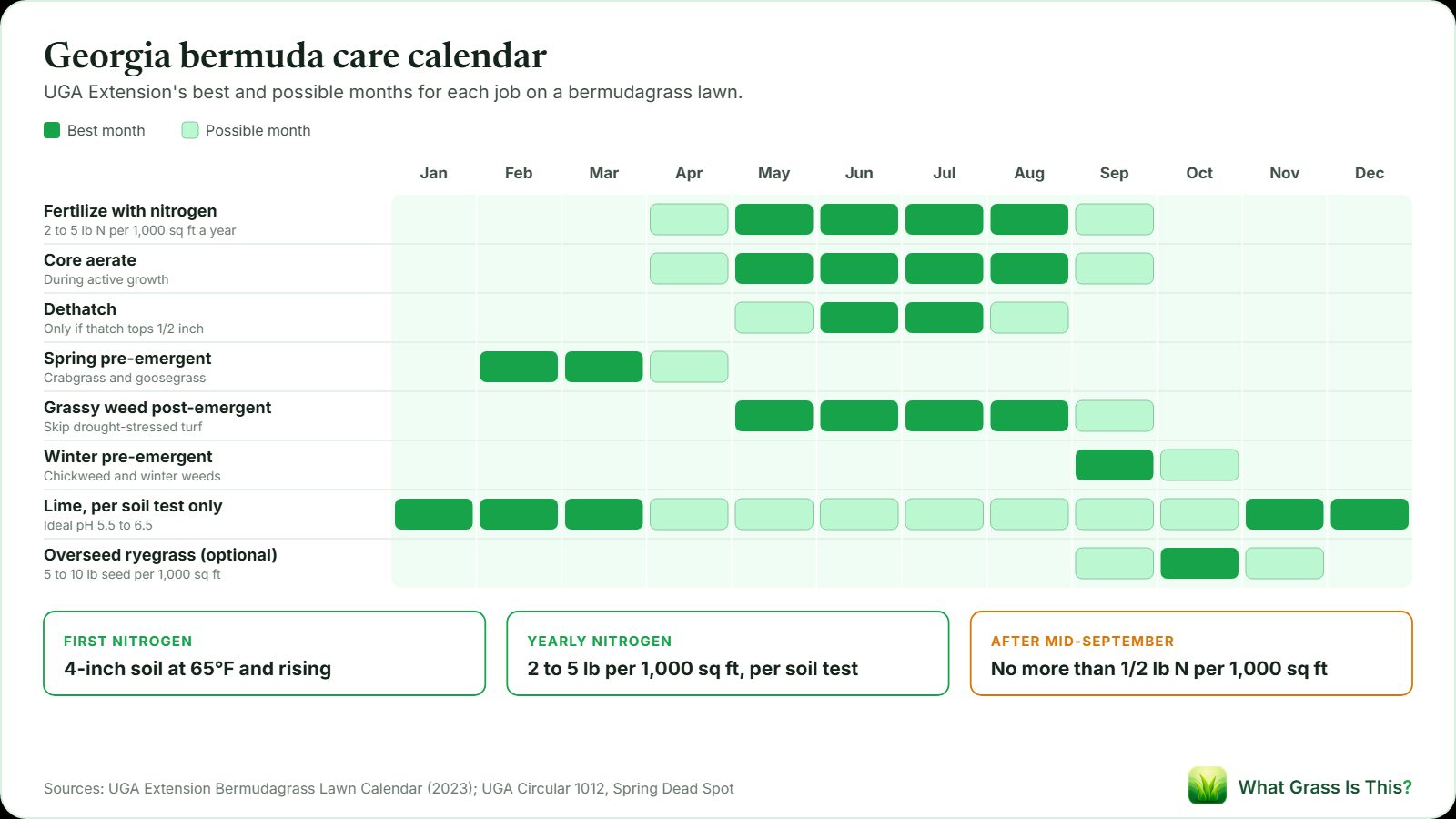
When I ran a crew, the fairway jobs went on a whiteboard by month, and nobody pulled the core aerator out in March because the weekend was nice. Dormant bermuda can't heal an aeration hole or use a feeding. It has to be growing. UGA's bermudagrass lawn calendar lays out the same logic for a home lawn, month by month, and it's the one I'd tape inside the garage door. Here it is with the fertilizer limits from UGA's spring dead spot circular folded in.
| Month | What to do on Georgia bermuda |
|---|---|
| January | Lime only if your soil test calls for it (a best month for lime). Spot spray broadleaf weeds as needed. |
| February | Spring pre-emergent for crabgrass and goosegrass (best month). Lime per soil test. |
| March | Spring pre-emergent (best month). Lime per soil test. No nitrogen yet. |
| April | Mowing season starts. First nitrogen once the 4-inch soil holds 65°F (possible month). Core aeration possible once growing. |
| May | Fertilize, core aerate, and treat grassy weeds (all best months). Dethatch only if thatch tops half an inch. |
| June | Fertilize, aerate, dethatch, and treat grassy weeds (best months). |
| July | Same as June. Skip grassy weed sprays on drought-stressed turf. |
| August | Last best month to fertilize and aerate. Last full feeding for most of the state. |
| September | Winter pre-emergent (best month). Light nitrogen early only; after mid-September, no more than half a pound per 1,000 sq ft. Fall potash per soil test. |
| October | Overseed ryegrass if you want winter color (best month). Winter pre-emergent possible. Last mowing month on UGA's calendar. |
| November | Lawn goes dormant. Lime per soil test (best month). |
| December | Dormant. Lime per soil test (best month). |
Common Georgia-Specific Issues
Four problems show up year after year on Georgia bermuda lawns. Each ties back to fertilizing in some way.
Brown Patch and Large Patch
Brown patch is a summer disease. Large patch is the spring and fall version of essentially the same fungus, Rhizoctonia solani. Both thrive in humid Georgia conditions, and both feed on tender, nitrogen-flushed grass. Circular yellow or brown patches expanding from 6 inches to several feet are the telltale sign.
The fertilizing fix is simple: pull back nitrogen during peak humidity (mid July through August), switch to slow-release products, and never push quick-release nitrogen into a stretch of hot, muggy nights. If brown patch is already active, do not feed at all until the symptoms subside, even if you fall behind schedule.
Spring Dead Spot
Spring dead spot is the Georgia bermuda nightmare. Circular dead patches appear in early spring during green-up, and the affected area can take months to recover or may not recover at all. UGA Circular 1012 names Ophiosphaerella korrae as the most common cause in the Southeast and says infection starts once soil temperatures drop below 70°F in fall, months before you see a single dead circle.
The fertilizing fix is preventive, and UGA spells it out in numbers. Apply no more than half a pound of nitrogen per 1,000 square feet after mid-September, because the circular says high nitrogen can reduce bermuda's winter hardiness. Put down fall potassium totaling 1 pound of K2O per 1,000 square feet in September or October, based on your soil test. Keep soil pH between 5.8 and 6.2, since the circular links neutral to slightly alkaline soil to worse outbreaks. Even then, UGA says full control typically takes two to four years. Start this fall.
Clay Soil Compaction
Compaction is the slow-motion disaster of Piedmont lawns. Compacted clay reduces fertilizer uptake, blocks root development, and creates standing water that fuels disease. By the time you notice bare spots, you've been fighting compaction for years.
Aerate annually (or twice per year if traffic is heavy), topdress lightly with compost or sand after aerating, and rotate organic fertilizers like Milorganite into the schedule to build soil over time. Fertilizing a compacted lawn without addressing the compaction wastes product.
Crabgrass and Pre-Emergent Timing
Georgia pre-emergent timing and fertilizer timing don't line up, and that matters. UGA's bermudagrass calendar marks February and March as the best months for spring pre-emergent, with April as possible. South Georgia sits at the earlier end and North Georgia at the later end.
A combination weed-and-feed puts nitrogen down on pre-emergent timing, which is weeks ahead of UGA's 65°F soil trigger for fertilizer. Run them as two separate jobs: straight pre-emergent in February or March, first feeding once the soil warms. Skipping pre-emergent altogether is the single most expensive mistake Georgia bermuda owners make because crabgrass and goosegrass take advantage of even small bare spots.
Application Tips for Georgia Conditions

A few practical reminders that come up specifically in Georgia conditions.
- Water in granular fertilizer within 24 hours. Georgia summer thunderstorms can be unpredictable, so if rain is not in the forecast, run your irrigation for 15 to 20 minutes after applying granular product. This drives the product off the leaves and into the soil where it works.
- Avoid hot afternoon applications. Apply fertilizer in the morning or early evening when temperatures are below 85 degrees. Hot midday applications increase volatilization losses and can scorch leaf tissue.
- Never fertilize when brown patch is active. If you see circular yellow or brown patches expanding, hold off on nitrogen entirely until the symptoms clear. Feeding into active disease feeds the disease.
- Aerate while the lawn is growing. On Piedmont clay, run a core aerator between May and August, the best months on UGA's calendar, and follow it with a feeding. The fertilizer reaches the root zone instead of sitting on top of compacted soil.
- Calibrate your spreader. Most issues with over-fertilizing come from miscalibrated spreaders dropping product unevenly. Walk a measured strip and weigh the product applied to confirm coverage matches the label rate.
- Soil test annually. UGA Extension takes soil samples through its county offices. The basic test runs $8 to $10 depending on the county, and it is the cheapest fertilizer-related investment you can make.
Recommended products
Andersons PGF Complete 16-4-8
Still the top pick for Georgia bermuda in 2026.
Pennington Full Season 32-0-5
Efficient ground coverage when your soil test shows phosphorus is already at or above adequate.
UGA Cooperative Extension Guidance
UGA's bermudagrass lawn calendar recommends 2 to 5 pounds of nitrogen per 1,000 square feet per year, following the recommendations on a soil test report, and no nitrogen in spring until the soil at a 4-inch depth is constantly 65°F and rising. It marks May through August as the best fertilizing months, with April and September as possible. The ideal pH range is 5.5 to 6.5, with dolomitic lime applied only per soil test. For lawns with a spring dead spot history, UGA Circular 1012 adds three limits: no more than half a pound of nitrogen per 1,000 square feet after mid-September, fall potassium totaling 1 pound of K2O per 1,000 square feet, and soil pH held at 5.8 to 6.2.
Conclusion
Georgia bermuda is one of the most rewarding lawns in the southeast when fed correctly. The 2026 playbook is straightforward: 16-4-8 slow-release as the workhorse, Milorganite rotated in for red clay soil-building, a regional schedule that respects the spread from Atlanta to Savannah, and a hard cutoff on late-season nitrogen to avoid winter kill and spring dead spot. Get a soil test through UGA Extension, wait for 65°F soil before the first feeding, aerate compacted clay while it's growing, and lean slow-release hard during humid summer months.
If you want to go deeper, the best fertilizer for Bermuda grass covers product picks beyond regional concerns, and the Texas bermuda fertilizer guide is the sister article for the same approach in different climate conditions. The North Carolina bermuda fertilizer guide applies the same approach to that state's transition-zone conditions. For the complete bermuda care picture including mowing, watering, weed control, and overseeding, the bermuda pillar guide ties everything together. And when you're trying to nail down the right green-up date for your specific location, the soil temperature tool beats guessing from a calendar every time.
Fertilize on Georgia's schedule, not somebody else's, and your bermuda will outperform every neighbor on the block by mid June.
Top Picks
 MySoil Soil Test KitCheck price on Amazon
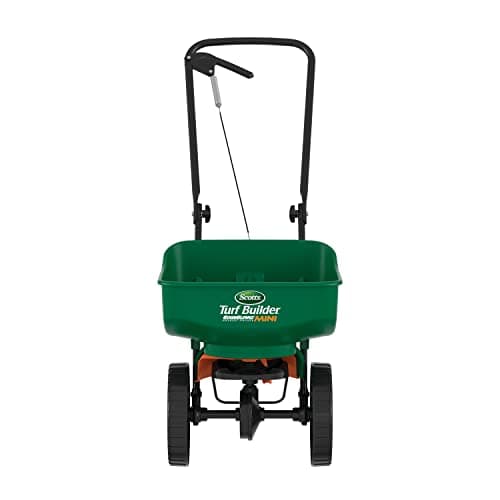
 Scotts Turf Builder EdgeGuard Mini Broadcast SpreaderCheck price on Amazon
As an Amazon Associate we earn from qualifying purchases.
Free Lawn Care Tools
For most Georgia lawns, a 16-4-8 NPK slow-release granular like Andersons PGF Complete is the top pick. It delivers the nitrogen bermuda craves without overwhelming red clay soil, and the slow-release pattern helps prevent the fungal flare-ups that humid Georgia summers encourage. Milorganite 6-4-0 is a strong organic alternative, especially for compacted Piedmont clay where soil-building matters as much as nutrients.
Plan to feed every 4 to 8 weeks while the lawn is actively growing. UGA's bermudagrass calendar marks May through August as the best fertilizing months, with April and September as possible, and sets the yearly total at 2 to 5 pounds of nitrogen per 1,000 square feet based on your soil test. Most granular bags deliver about half a pound to 0.9 pound of nitrogen per pass, so that works out to three or four feedings at the low end of the range and six or more at the high end.
Start when the soil 4 inches down is constantly 65°F and rising, which is UGA Extension's trigger for the first nitrogen of the year. A UGA agent writing for South Georgia lawns puts that at late April in a typical year, and North Georgia usually runs a week or two later. Check your local soil temperature before the spreader comes out, because feeding before that point wastes nitrogen.
Yes, especially for red clay lawns in the Piedmont. Milorganite is a slow-release organic with 6 percent nitrogen plus iron, so it greens up bermuda without forcing the lush, disease-prone growth that humid Georgia summers punish. The organic matter also helps loosen compacted clay over time. Most Georgia lawns benefit from rotating Milorganite into the schedule once or twice per season.
UGA's bermudagrass lawn calendar recommends 2 to 5 pounds of nitrogen per 1,000 square feet per year, following the recommendation on your soil test report. A high-maintenance hybrid lawn runs toward the top of that range and a low-input common bermuda lawn toward the bottom. Split the total across the growing season and stop at your regional cutoff.
Soil test first. UGA puts the ideal pH range for bermudagrass at 5.5 to 6.5 and says to apply dolomitic lime only per a soil test recommendation. If your lawn has a history of spring dead spot, UGA Circular 1012 recommends holding pH at 5.8 to 6.2, because neutral to slightly alkaline soil makes the disease worse. The basic county soil test costs $8 to $10.
Make the last full feeding by early to mid August in most of Georgia. Coastal lawns can take one light feeding in early September. UGA Circular 1012 says to apply no more than half a pound of nitrogen per 1,000 square feet after mid-September, because high nitrogen can reduce bermuda's winter hardiness and lawns with a spring dead spot history suffer most. A fall potassium feeding is the better late-season move.
Heat plus humidity plus excess nitrogen sets it up. Long stretches of muggy nights keep the grass wet, and any flush of tender growth becomes fungal food. Switch to slow-release fertilizers, water in the early morning so blades dry during the day, mow at the recommended height for your cultivar, and pull nitrogen back if circular brown patches appear.
Only if your soil test asks for phosphorus. UGA's Clint Waltz notes southeastern soils run lower in phosphorus than other regions, so some Georgia lawns do need it, but extra phosphorus on a lawn that tests high is wasted and can wash off on eroded soil. For routine feeding, a 16-4-8 or 12-4-8 matches the nitrogen-heavy ratio UGA's county guides use for bermuda.
Feed on UGA's schedule: 2 to 5 pounds of nitrogen per 1,000 square feet a year, starting once the soil holds 65°F and ending by mid-August to early September. Mow hybrid bermuda at 1 to 1.5 inches without removing more than a third of the blade, give it about 1 inch of water a week when it doesn't rain, and keep pH between 5.5 and 6.5 per your soil test. Use iron for extra color rather than more nitrogen.

Beat weeds and brown spots from your phone
Snap a photo, get the fix, and follow a plan timed to your soil and weather. Free on iPhone.