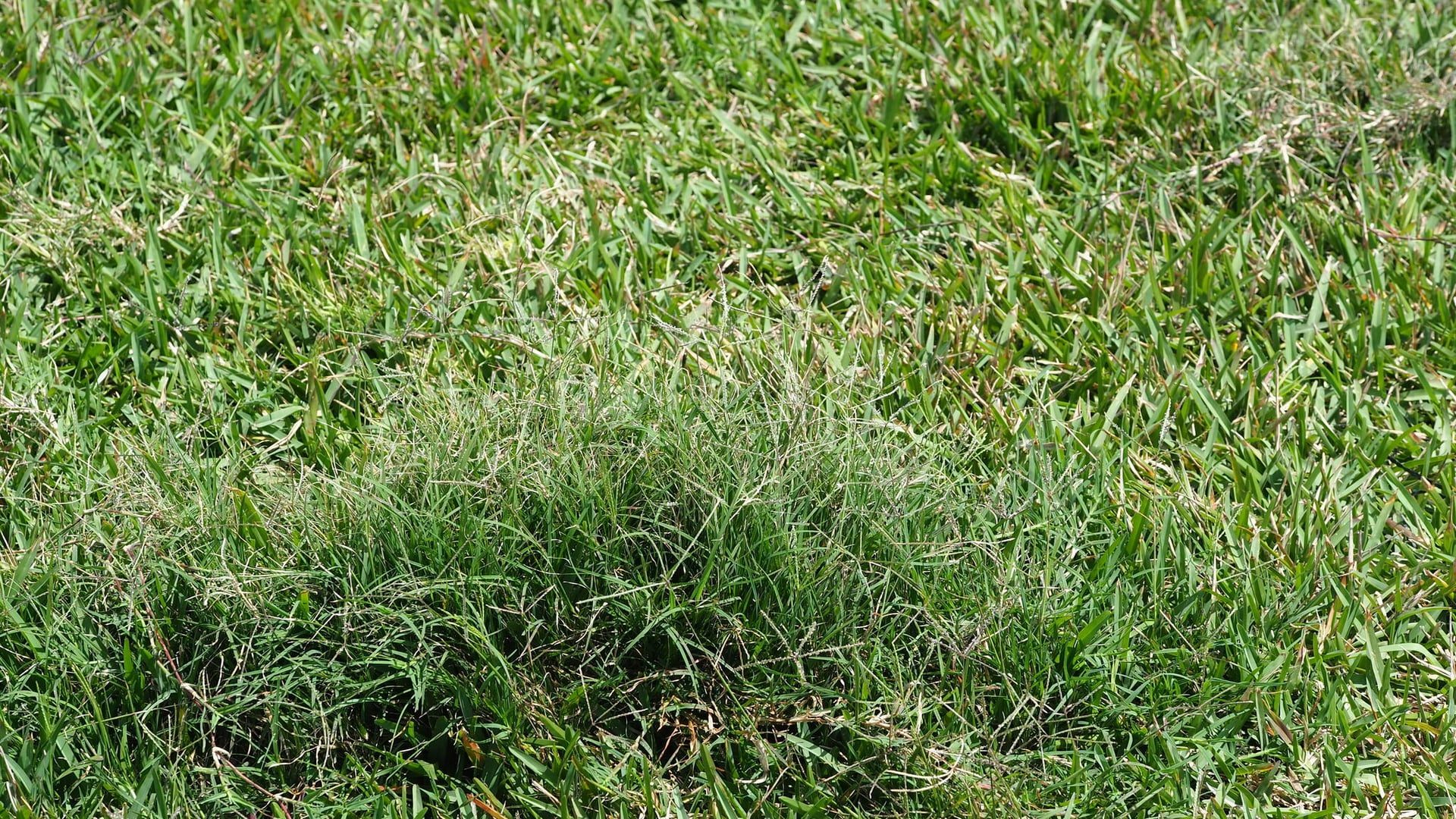
Best Fertilizer for Bermuda Grass in Texas (2026 Top Picks)
 Marcus GreenTurf Management Pro | 18 Years
As an Amazon Associate we earn from qualifying purchases.
Bermuda grass is the workhorse turf of Texas. From the clay flats around Dallas and Fort Worth to the sandy coastal pastures near Galveston, it shows up on more residential lawns and athletic fields than any other warm-season grass in the state. It tolerates the heat, recovers from foot traffic, and stays green deep into October most years.
But Texas is not one climate, and the fertilizer that keeps a TifTuf lawn lush in Houston is not the same one that pushes a Common Bermuda yard through a Lubbock summer. Soil pH swings from 5.8 in piney East Texas to 8.2 on the Edwards Plateau. Annual rainfall ranges from 12 inches in the far west to nearly 55 inches on the upper coast. A feeding strategy that ignores those differences will either burn the lawn or leave it yellow and hungry.
This guide walks through the top fertilizer picks for Texas bermuda in 2026, the NPK ratios that match local soil chemistry, and a region-by-region application schedule. If you are still nailing down your variety and basic care, start with our bermuda grass care pillar for the broader playbook.
Fast Answer: For most Texas bermuda lawns, a 16-4-8 slow-release granular fertilizer like The Andersons PGF Complete is the best base. Pair it with a chelated iron supplement (or an ammonium sulfate plus iron product like Dark Matter 21-0-0) to counter the iron chlorosis common in our high-pH soils west of I-35.
Split your annual nitrogen across the growing season between mid-March and early September. Texas A&M AgriLife guidance is 1 to 4 feedings a year at 0.5 to 1 lb of nitrogen per 1,000 square feet each (roughly 0.5 to 4 lb per year, and never more than 1 lb in a single application). High-maintenance hybrid bermuda kept at sports-turf or fairway level can take more, up toward 4 to 6 lb per year, but that is a top-end program, not the standard home-lawn number. Adjust timing by region: DFW starts in mid-March, Houston and the coast green up by early March, West Texas waits until late March or early April when soil temperatures hold above 65 degrees.
Why Texas Bermuda is Different
Bermuda grass is genuinely native-adjacent here. It has been the default turf choice across the state for sixty years because it tolerates everything Texas weather throws at it: 105 degree summers, flash droughts, week-long downpours, and the occasional January ice event that knocks back northern lawns. What changes is not whether bermuda will grow, but how hard it has to work to stay green and how much help you have to give it through the soil.
Most Texas bermuda fertilizer failures trace back to two things: ignoring soil pH and feeding on a generic national schedule. Texas soils run alkaline across most of the state, which locks up iron and makes leaves yellow even when nitrogen is plentiful. A bag of straight 32-0-4 from a big-box store works fine in Atlanta, but in Austin it produces a lawn that grows fast and stays pale.
Recommended products
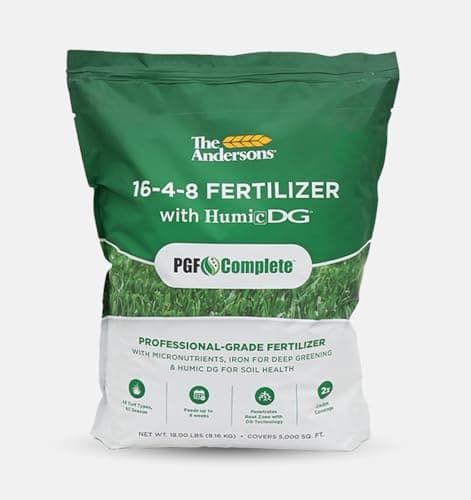
The Andersons PGF Complete 16-4-8
A slow-release 16-4-8 with about 3% iron (the 7% on the bag is Humic DG humic acid, not iron) and a fairway-grade prill that spreads evenly on Texas clay or sand.
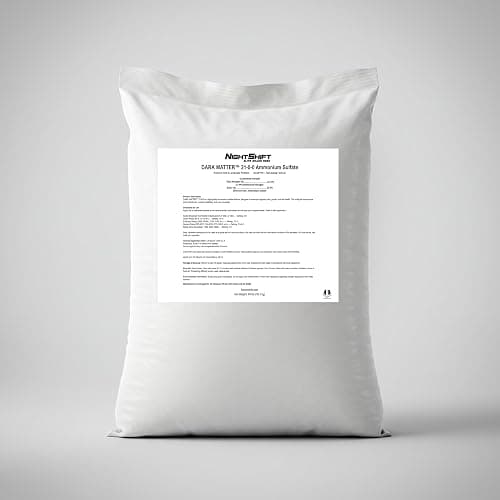
Dark Matter 21-0-0 Ammonium Sulfate + Iron
For fast green-up and acidifying alkaline Central and West Texas soils where chlorosis is chronic.
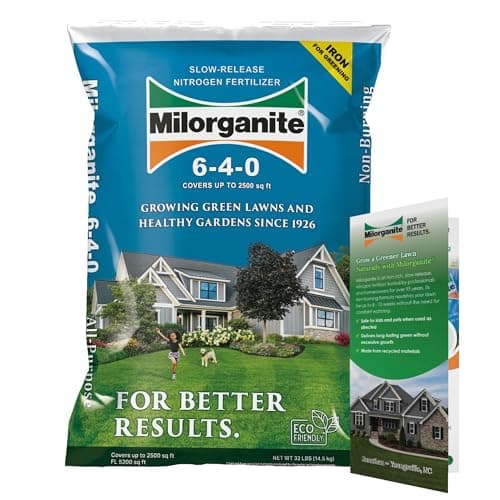
Milorganite 6-4-0 Slow-Release
Slow-release organic nitrogen with iron for steady Texas color, and it will not burn Bermuda even in August heat.
Climate Realities in Texas Bermuda Care
Bermuda actively grows when soil temperatures hold above 65 degrees and air temperatures stay in the 80s. In Houston and along the Gulf Coast, that window opens in early March and closes in mid-November. In Amarillo, it does not open until late April and slams shut by late October. In Dallas and Fort Worth, the working season runs roughly March 20 through October 25 in an average year.
Heat above 95 degrees actually shuts growth down, which is why mid-summer applications in Brownsville or Laredo need to lean on slow-release sources. Fast-release nitrogen on a 100-degree day will scorch the canopy without ever feeding the roots. Rainfall is the other variable that matters: 50 inches a year on the coast means more leaching, which means more frequent but lighter feedings. Twelve inches a year in El Paso means everything depends on irrigation and salts can build up if you over-apply.
Soil Types Across Texas
North Texas (Dallas, Fort Worth, Plano, Denton)
Heavy black clay, often with a pH between 7.3 and 8.0. Holds nutrients well but compacts hard, drains slowly, and locks up iron. Bermuda roots have trouble pushing through compacted clay, so annual core aeration is non-negotiable. Use a balanced 16-4-8 with iron and avoid heavy fall potassium since clay already holds plenty.
Central Texas (Austin, San Antonio, Round Rock, San Marcos)
The Blackland Prairie and Edwards Plateau both run highly alkaline, with pH commonly between 7.6 and 8.2. This is iron chlorosis country. Plain nitrogen products will green a lawn temporarily and then leave it pale within two weeks. Use ammonium sulfate based fertilizers or always pair granular feeds with a chelated iron application. A 15-5-10 or 16-4-8 with iron is the right base.
East Texas (Houston, Tyler, Beaumont, Lufkin)
Sandy or sandy-loam soils, mildly to moderately acidic (pH 5.8 to 6.8). Nutrients leach quickly with the region's heavy rainfall, so you need more frequent, lighter applications. Slow-release sources matter more here than anywhere else in the state. Iron chlorosis is rare. Standard 16-4-8 works well, or Milorganite if you want a slow organic feed that releases gradually through Houston's wet stretches.
West Texas (El Paso, Lubbock, Midland, Odessa)
Calcareous, high-pH soils (often 8.0 to 8.5), low organic matter, low rainfall, and frequent salt buildup. The combination makes iron chlorosis almost guaranteed and salt-tolerant feeding choices smart. Ammonium sulfate is a strong fit because it acidifies the soil profile slightly as it feeds. Avoid sodium-heavy products. Keep applications light and water-in thoroughly.
NPK Targets for Texas Bermuda
Nitrogen is the dominant driver of bermuda color and growth. Phosphorus and potassium matter less in most Texas soils because both are usually adequate or high already. Soil tests across the state routinely show phosphorus at "high" or "very high" ratings, which is why TX A&M Extension typically recommends low-phosphorus fertilizers for established lawns.
For most Texas yards, a 16-4-8 or 15-5-10 ratio is the safest base. These deliver the nitrogen bermuda wants without overloading the soil with phosphorus that will not get used. A 21-7-14 ratio is appropriate for spring green-up when you want a quick push or on newly established sod where the root system is still building.
Iron is the unsung hero in Texas bermuda care. On alkaline soils, iron sits in the soil but is chemically locked up and unavailable to the plant. Adding 0.5 to 1 pound of chelated iron per 1,000 square feet, or choosing a fertilizer with added iron, fixes the yellowing that even heavy nitrogen feeds cannot. This is the single biggest difference between a Texas bermuda fertilization plan and a Georgia or Florida one.
Top 5 Fertilizers for Texas Bermuda (2026)
| Product | N-P-K | Iron / Micros | Release Type | Coverage per bag | Best For | Buy |
|---|---|---|---|---|---|---|
| The Andersons PGF Complete | 16-4-8 | ~3% iron + Humic DG | Slow-release granular | 18 lb bag, ~5,000 sq ft | All-purpose Texas base feed, alkaline soils | Check on Amazon |
| Dark Matter 21-0-0 Ammonium Sulfate + Iron | 21-0-0 | Iron + sulfur | Fast-release granular | 25 lb bag, ~6,000 sq ft | Iron chlorosis fixes, Central and West Texas alkaline lawns | Check on Amazon |
| Milorganite | 6-4-0 | 2.5% iron, organic | Slow-release organic | 32 lb bag, ~2,500 sq ft | East Texas sandy soils, summer slow-feed, heat-safe | Check on Amazon |
| Pennington Full Season 32-0-5 | 32-0-5 | No added iron | Polymer-coated slow-release | Covers up to ~15,000 sq ft | Budget large-acreage lawns, single full-season feed | Check on Amazon |
| Simple Lawn Solutions 16-4-8 Liquid | 16-4-8 | Seaweed + fish micros | Fast-release liquid | 32 oz, ~3,200 sq ft | Spot greening, hose-end touch-ups, mid-summer color boost | Check on Amazon |
The Andersons PGF Complete is the most flexible single choice for the bulk of the state. The prill size spreads evenly through a standard broadcast spreader, the iron content addresses the alkaline soil problem in Central and North Texas, and the slow-release nitrogen profile fits the long Texas growing season. Dark Matter solves the iron chlorosis problem head-on for anyone west of I-35 who is tired of yellow lawns. Milorganite earns its slot on East Texas sandy soils where leaching makes slow-release organics shine, and Pennington Full Season is the call for two-acre lots where cost per thousand square feet matters more than perfection.
How Much Product to Put Down
Because each bag carries a different nitrogen percentage, the amount of product you spread for the same 0.5 to 1 lb of nitrogen per 1,000 sq ft changes a lot from one pick to the next. The table below converts a target nitrogen rate into pounds of product for each granular pick, so you are not guessing at the spreader. Plug your exact lawn size and target rate into our fertilizer calculator to get the total bags you need.
| Product | N-P-K | For 0.5 lb N | For 0.75 lb N | For 1 lb N |
|---|---|---|---|---|
| The Andersons PGF Complete | 16-4-8 | 3.1 lb | 4.7 lb | 6.25 lb |
| Dark Matter Ammonium Sulfate + Iron | 21-0-0 | 2.4 lb | 3.6 lb | 4.8 lb |
| Milorganite | 6-4-0 | 8.3 lb | 12.5 lb | 16.7 lb |
| Pennington Full Season | 32-0-5 | 1.6 lb | 2.3 lb | 3.1 lb |
| Simple Lawn Solutions (liquid) | 16-4-8 | Liquid, applied by volume per gallon, so follow the label dilution rather than a dry weight |
All figures are pounds of product per 1,000 sq ft. Milorganite takes the most product per pass because its nitrogen number is low, which is exactly why it is nearly impossible to burn a lawn with it in July.
Application Schedule by Texas Region (2026)
The calendar below consolidates the whole state into one month-by-region view so you can see at a glance what your zone should be doing in any given month. The prose sections underneath break down each region's exact windows and product choices. Tie your first feed to soil temperature (65 degrees at a 4-inch depth) and, as a field check, wait until you have mowed the lawn twice in spring before that first application.
| Month | North Texas (DFW) | Central Texas | South Texas | West Texas | Coastal Texas |
|---|---|---|---|---|---|
| Feb | Dormant, plan | Pre-emergent (late) | Pre-emergent | Dormant | Pre-emergent |
| Mar | Pre-emergent, no N | First feed + iron | First feed 0.75 lb N | Pre-emergent | First feed |
| Apr | First feed 0.75-1 lb N (after mowing twice) | Green-up bridge | Second feed | First feed + iron | Second feed |
| May | Second feed 0.5-1 lb N | Second feed + iron | Bridge | First feed carries | Second feed |
| Jun | Iron if pale | Third feed + iron | Third feed, slow-release | Second feed, water in salts | Third feed |
| Jul | Third feed, slow-release | Iron only, minimize N in heat | Fourth feed | Third feed, slow-release | Fourth feed, ease N |
| Aug | Fourth feed (late) | Fourth feed | Bridge | Bridge | Bridge |
| Sep | Bridge | Optional fifth light feed | Fifth feed | Fourth feed (last N) | Fifth feed |
| Oct | Potassium-only winterizer, no N | No N | Optional sixth light feed | No N | Optional sixth light feed, avoid heavy N |
| Nov | Dormant | Dormant | Taper to dormancy | Dormant | Dormant |
North Texas (DFW, Plano, Denton, Waco)
Average green-up: mid-March to early April once soil temperatures hold above 65 degrees at 4-inch depth. Use our soil temperature tool to track your zip code rather than guessing.
- March 15 to April 1: Pre-emergent (prodiamine or dithiopyr) when soil hits 50 to 55 degrees, typically the first week of March in DFW. Do not fertilize yet.
- April 10 to 20: First nitrogen feed at 0.75 to 1 lb N per 1,000 sqft, which is the per-application ceiling in TAMU guidance. Andersons PGF Complete 16-4-8 is the standard pick.
- May 25 to June 5: Second feed. Same product, same rate.
- July 10 to 20: Third feed. Switch to slow-release like Milorganite for the heat of mid-summer.
- August 25 to September 5: Fourth feed. Andersons PGF or similar.
- October 1 to 10: Optional potassium-rich winterizer to harden the lawn before dormancy. Skip if soil tests show high K.
Central Texas (Austin, San Antonio, Round Rock)
Average green-up: early to mid-March. Iron chlorosis is the dominant management issue.
- February 25 to March 10: Pre-emergent.
- March 25 to April 5: First feed. Pair Andersons PGF Complete with a chelated iron application, or use Dark Matter 21-0-0 plus iron at half rate.
- May 1 to 10: Second feed, same approach.
- June 15 to 25: Third feed. Iron supplement again.
- August 1 to 10: Fourth feed.
- September 15 to 25: Optional fifth light feed.
South Texas (Corpus Christi, Brownsville, Laredo, McAllen)
Average green-up: late February to early March. The growing season is the longest in the state, often 10 months active.
- February 15 to 25: Pre-emergent.
- March 10 to 20: First feed at 0.75 lb N per 1,000 sqft.
- April 25 to May 5: Second feed.
- June 10 to 20: Third feed. Switch to slow-release.
- July 25 to August 5: Fourth feed.
- September 10 to 20: Fifth feed.
- October 20 to November 1: Optional sixth light feed before the lawn slows for winter.
West Texas (El Paso, Lubbock, Midland, Odessa, Amarillo)
Average green-up: late April in Lubbock and Amarillo, early to mid-April in El Paso and Midland. Soil pH and salinity are the dominant constraints.
- March 15 to April 1: Pre-emergent.
- April 25 to May 5: First feed. Dark Matter 21-0-0 + iron is the most useful here for the alkaline soil.
- June 10 to 20: Second feed. Water in thoroughly to flush salts.
- July 25 to August 5: Third feed. Switch to lower-rate slow-release.
- September 10 to 20: Fourth feed.
Coastal Texas (Galveston, Houston, Beaumont, Port Arthur)
Average green-up: late February to early March. High humidity, salt spray near the coast, and 50 plus inches of rain per year.
- February 20 to 28: Pre-emergent.
- March 15 to 25: First feed. Milorganite is a strong choice on sandy soils.
- April 25 to May 5: Second feed.
- June 5 to 15: Third feed.
- July 20 to 30: Fourth feed.
- September 1 to 10: Fifth feed.
- October 10 to 20: Optional sixth light feed.
Common Texas-Specific Issues
Iron Chlorosis
The number one bermuda problem in Central, North, and West Texas. Symptoms: pale yellow leaves with green veins, especially on newer growth, despite recent nitrogen application. Cause: high soil pH locks iron out of plant-available forms. Fix: apply 0.5 to 1 lb of chelated iron per 1,000 sqft, or switch to a fertilizer that includes added iron. Repeat every 4 to 6 weeks during the growing season.
Chinch Bugs
Chinch bugs love hot, dry, sunny patches of bermuda and will hammer South and Central Texas lawns in July and August. Symptoms: irregular yellow then brown patches that expand outward, often along sidewalks and driveways where heat reflects. Fix: a bifenthrin or carbaryl drench treatment, plus deep watering to recover. Do not confuse chinch damage with drought stress; if the patch does not recover after a deep watering, suspect chinch.
Drought Stress vs Over-watering
Both look like a wilting, bluish-gray lawn at first. Drought stress: footprints stay in the grass after walking across it, soil is dry at 4 inches. Over-watering: lawn feels spongy, soil stays wet 24 hours after irrigation, and disease symptoms appear. The fix for drought is one deep watering (1 inch). The fix for over-watering is to stop and let the lawn dry out for 3 to 5 days.
Brown Patch Fungus
More common on the coast and in East Texas where humidity is consistently high. Bermuda is less susceptible than St. Augustine, but it still happens, especially in fall when temperatures cool and humidity stays up. Symptoms: circular brown patches 2 to 6 feet wide. Fix: apply azoxystrobin or propiconazole, reduce nitrogen during outbreaks, and stop evening watering. Avoid heavy fall nitrogen on coastal lawns; it feeds the fungus.
Pre-emergent Timing
The single most common Texas bermuda mistake is missing pre-emergent timing. Crabgrass and goosegrass germinate when soil temperatures hit 55 degrees at 4 inches deep. In Houston that is mid-February. In Dallas that is early to mid-March. In Lubbock that is mid-March to early April. Miss the window and you spend the summer fighting weeds rather than feeding turf. Apply pre-emergent two weeks before expected germination, never after weeds have sprouted.
Application Tips for Texas Conditions
Water granular fertilizer in within 24 hours. Texas wind and heat will volatilize urea-based nitrogen quickly. A quarter-inch of irrigation right after application drives the granules to the soil and protects them.
Avoid noon applications in summer. Apply early morning before 9 am or in the evening after 7 pm. Foliar contact with a hot grass blade in 100-degree heat will burn the canopy even with slow-release products.
Use slow-release in summer. Fast-release nitrogen above 90 degrees pushes the plant to grow when it is trying to conserve resources. Slow-release coated prills or organic sources like Milorganite let the plant take what it needs as conditions allow.
Mow before fertilizing, not after. A clean, freshly mowed lawn lets granules fall to the soil rather than catching on tall blades. Skip mowing for 2 to 3 days after application so foot traffic does not redistribute the granules.
Soil test every 2 to 3 years. An AgriLife soil test through the Texas A&M Soil, Water and Forage Testing Lab is available for a modest fee and tells you exactly what your phosphorus and potassium levels are. You may be over-applying P or K and wasting money. The lab also reports pH and micronutrient status, which guides iron and ammonium sulfate decisions.
Calibrate your spreader. A Scotts broadcast spreader on setting 5 with PGF Complete is not the same as it is with Milorganite. Always check the bag's spreader settings and verify by measuring out a known area and weighing what you applied.
Recommended products
The Andersons PGF Complete 16-4-8
The right answer for most Texas yards from DFW through Austin and San Antonio.
Dark Matter 21-0-0 + Iron
For West and Central Texas where pH above 7.8 makes chronic yellowing the norm.
Milorganite 6-4-0
For East Texas and the Gulf Coast where sandy soils leach fast and organic slow-release matches the rainfall pattern.
- Texas A&M AgriLife Extension's bermudagrass lawn management calendar recommends 1 to 4 nitrogen applications per year at 0.5 to 1 lb per 1,000 sqft each (roughly 0.5 to 4 lbs per year, and never more than 1 lb in a single application) for home lawns. The higher 4 to 6 lb per year range applies only to high-maintenance hybrid bermuda kept at sports-turf or fairway level.
- Supplemental iron is considered a standard input across Central, North, and West Texas due to the prevalence of high-pH soils and chronic iron chlorosis.
- Soil testing every 2 to 3 years through the AgriLife Soil Testing Lab is recommended to avoid over-applying phosphorus and potassium, which are commonly already adequate in Texas soils.
- Pre-emergent applications should be timed to soil temperature (50 to 55 degrees at 4 inches), not the calendar, with timing varying by 4 to 6 weeks across the state.
- Fall nitrogen should be limited or avoided on coastal lawns to reduce brown patch fungus risk.
Conclusion
Texas bermuda is a forgiving grass, but the difference between an average lawn and a great one is the willingness to adjust the basic plan to local soil and climate. Pick a 16-4-8 with iron as your base, add ammonium sulfate or chelated iron if you live west of I-35, and feed on a schedule that matches your region's green-up window rather than a national calendar.
If you want a deeper comparison of the same products in a national context, our best fertilizer for Bermuda grass walks through ratings without the Texas-specific layer. For the full bermuda care playbook (mowing heights, watering, seasonal care), check our bermuda grass pillar guide. And before you apply your first round of pre-emergent or fertilizer in spring, confirm your local soil temperature with our soil temperature tool so you hit the window rather than guess at it.
Top Picks
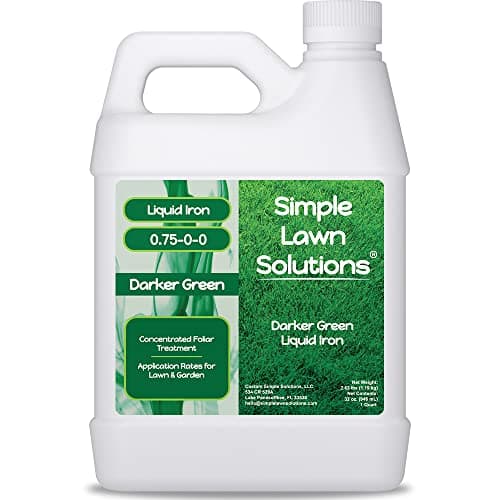
 Simple Lawn Solutions Liquid Iron Darker Green (32 oz)Check price on Amazon
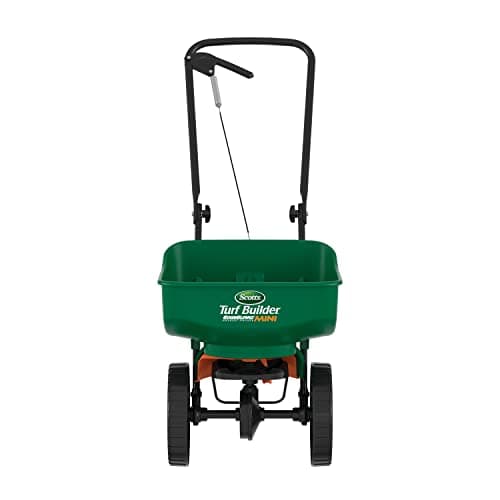
 Scotts Turf Builder EdgeGuard Mini Broadcast SpreaderCheck price on Amazon
As an Amazon Associate we earn from qualifying purchases.
Free Lawn Care Tools
Andersons Professional PGF Complete 16-4-8 is the top all-around pick for most Texas bermuda lawns. The slow-release nitrogen and humic acid stand up to Texas heat without burning, and the 16-4-8 ratio matches what bermuda actually pulls from the soil. For high-pH alkaline zones in central and west Texas, pair it with Dark Matter 21-0-0 + Iron to fight iron chlorosis.
Feed every 4 to 6 weeks during the active growing season, which runs March through September for most of Texas. Slow-release granular products extend the interval toward 6 weeks; faster-release products push toward 4. Home-lawn nitrogen runs roughly 0.5 to 4 pounds per 1,000 sq ft per year, applied as 1 to 4 feedings at no more than 1 pound per application. Only high-maintenance hybrid bermuda kept at sports-turf or fairway level needs the 4 to 6 pound range.
Wait until the lawn is 50 percent or more green and soil temperatures hold above 65 degrees at a 4-inch depth. South Texas (Corpus, Houston, RGV) typically hits that mark in mid-March. Central Texas (Austin, San Antonio) lands in late March. North Texas (DFW) and the Panhandle wait until early to mid-April. Feeding before green-up wastes nitrogen and pushes weeds.
Yes, Milorganite is an excellent rotation pick for Texas bermuda, especially in central and west Texas where high-pH soils cause chronic iron chlorosis. The 6-4-0 analysis with iron addresses both the nitrogen and the color issue without forcing the surge growth that can burn in summer heat. Plan on rotating Milorganite into 1 or 2 feedings per year alongside your primary slow-release.
Texas A heavy clay soils in north and central Texas hold nitrogen longer and do well toward the lower end. The higher 4 to 6 pound range applies only to high-maintenance hybrid bermuda kept at sports-turf or fairway level.
In most of Texas, yellow bermuda is iron chlorosis from alkaline soil pH, not nitrogen deficiency. Central Texas blackland clay and west Texas calcareous soils routinely test at pH 7.5 or higher, which locks up iron. Apply a chelated iron supplement or Dark Matter 21-0-0 + Iron and you should see green-up in 5 to 10 days. Adding more nitrogen to yellow grass often makes it worse.
16-4-8 is the workhorse ratio for most Texas bermuda lawns. The 4-to-1 nitrogen-to-phosphorus ratio matches what bermuda actually uses, and the 2-to-1 nitrogen-to-potassium ratio supports the heat and drought tolerance Texas summers demand. For high-traffic athletic-style lawns, 21-7-14 pushes faster recovery. Avoid 10-10-10 balanced fertilizers since Texas soils typically already test high in phosphorus.
Yes, a spring pre-emergent prevents crabgrass and goosegrass before they sprout. Apply when soil temperatures reach a consistent 50 to 55 degrees at a 4-inch depth: that means early February in south Texas, late February to mid-March in central Texas, and mid-March in north Texas. Andersons Barricade or a prodiamine-based product gives season-long control. Apply too late and the seeds are already up.
Skip any winterizer that contains nitrogen. Texas A&M AgriLife's bermudagrass calendar ends nitrogen well before dormancy, because late-fall nitrogen pushes tender growth into the first freeze and feeds fall brown patch on humid coastal lawns. The only defensible fall product is a potassium-only application about a month before your average first frost, which can help harden the turf for winter, and even that is optional. Skip it entirely if a soil test already shows adequate or high potassium, which is common across Texas clay soils.
Feed about 1 lb of nitrogen per 1,000 sq ft every 4 to 6 weeks from full green-up through August, mow low and frequently so the stolons spread sideways, and water deeply but infrequently. On high-pH Texas soils, add chelated iron for color instead of extra nitrogen. Thin, hard patches usually trace to compaction, so core aerate in early summer and the fed lawn fills the gaps itself.
You can, but most established Texas lawns do not need that much phosphorus, and Texas A&M recommends fertilizing based on a soil test. Unless the test shows a phosphorus deficiency, a nitrogen-forward ratio like 3-1-2 or a straight-nitrogen summer feeding serves Bermuda better than a balanced 10-10-10.
Yes, in the right spot. On Texas soils that only need nitrogen, which is common, a straight-nitrogen product like 20-0-0 or 21-0-0 works well for summer feedings. Keep each application at 0.5 to 1 lb of actual nitrogen per 1,000 sq ft and prefer a blend with slow-release nitrogen so it does not surge and wash out.
Epsom salt adds magnesium and sulfur, nothing else. It only helps if a soil test shows a magnesium deficiency, which is uncommon on most Texas lawns. It will not green up or thicken Bermuda the way nitrogen or iron will, so treat it as a targeted soil amendment, not a fertilizer.

Beat weeds and brown spots from your phone
Snap a photo, get the fix, and follow a plan timed to your soil and weather. Free on iPhone.