Best Fertilizer for St. Augustine Grass (2026 Guide)
 Marcus GreenTurf Management Pro | 18 Years
As an Amazon Associate we earn from qualifying purchases.
For most St. Augustine lawns, a 16-4-8 or 15-5-10 slow-release granular gives the best results, applied at the annual nitrogen rate your state extension service publishes. UF/IFAS puts St. Augustine at 2 to 4 pounds of nitrogen per 1,000 square feet per year in north Florida, 2 to 5 in central Florida, and 4 to 6 in south Florida; Texas A&M AgriLife publishes 3 to 5 pounds per year for Texas lawns. Split the annual total across enough feedings that no single application exceeds your state's per-application limit, never feed during dormancy, and in Florida never apply more than 0.7 pound of soluble nitrogen per 1,000 square feet at one time.
If your St. Augustine looks yellow despite feeding, the issue is usually iron chlorosis from high soil pH, not a nitrogen deficiency. Add a chelated iron supplement and back off the nitrogen until the color recovers. Always soil-test before adding phosphorus.
Top 16-4-8 pick: The Andersons Professional PGF Complete 16-4-8 - slow-release with humic acid, split into 3-4 seasonal feedings.
Best Fertilizer for St Augustine Grass: Our Top Pick
If you just want the short version, our top pick is The Andersons Professional PGF Complete 16-4-8. The 16-4-8 ratio matches what St. Augustine actually wants: enough nitrogen to drive that dense, blue-green growth, low phosphorus for southern soils that already test high in P, and potassium for heat and drought tolerance. The slow-release granules with humic acid feed steadily, so you split it into seasonal applications and stay inside your region's annual nitrogen guideline. Texas A&M AgriLife publishes 3 to 5 pounds of nitrogen per 1,000 square feet per year for Texas lawns, and UF/IFAS runs from 2 to 4 pounds in north Florida up to 4 to 6 pounds in south Florida. In Florida, keep any single application to 0.7 pound of soluble nitrogen per 1,000 square feet.
Two situations change the answer. If you want a pet-safe organic option, Milorganite 6-4-0 is safe for pets and kids when used as directed, meaning you keep pets off until it has been watered in and the lawn has dried, and it brings included iron along for the ride. And if you are in a Florida county with phosphorus restrictions, a 15-0-15 blend is the compliant pick. Either way, soil-test before adding any phosphorus.
St. Augustine grass sits in its own category among warm-season turfgrasses. It is denser and shadier-tolerant than bermuda, hungrier and faster-growing than centipede, and uniquely sensitive to herbicides that other southern grasses tolerate without a problem. If you fertilize St. Augustine the way you would fertilize bermuda you will burn it, and if you fertilize it the way you would fertilize centipede you will starve it. Deciding between the two big Southern grasses? See our Bermuda vs St. Augustine comparison.
The right approach lives in the middle. St. Augustine wants an annual nitrogen rate set by where you live: UF/IFAS publishes 2 to 4 pounds per 1,000 square feet in north Florida, 2 to 5 in central Florida, and 4 to 6 in south Florida, and Texas A&M AgriLife publishes 3 to 5 pounds for Texas. Pair that with a balanced N-P-K ratio around 16-4-8 or 15-5-10, and supplemental iron in the alkaline sandy soils common across Florida and the coastal Gulf states. Get those three things right and the grass takes care of the rest.
This guide pulls together the best 2026 fertilizer picks for St. Augustine, with regional notes for Florida, Texas, Georgia, the Carolinas, and Louisiana. For the broader picture of how fertilization fits into mowing, watering, pest control, and overseeding decisions, start with our St. Augustine pillar guide.
Understanding St. Augustine Grass Nutrition in 2026
St. Augustine is the most popular warm-season lawn grass in Florida and a leading choice across the Gulf Coast, coastal Texas, southern Georgia, and the Carolina low country. The reason is partly aesthetic (the broad blade and rich color set the standard for southern lawns) and partly practical: it tolerates shade better than bermuda or zoysia, handles salt spray near the coast, and chokes out weeds when it is healthy.
Fertilization is the single biggest lever you have on St. Augustine performance. Mowing height matters, irrigation matters, and pest control matters, but a well-fed St. Augustine lawn resists chinch bugs, recovers from disease faster, and outcompetes weeds that would otherwise take a foothold. An underfed St. Augustine lawn does the opposite, regardless of how perfect every other input is.
Recommended products
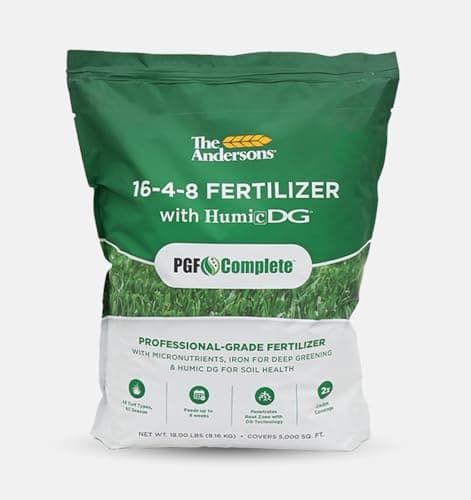
The Andersons Professional PGF Complete 16-4-8
Slow-release granular with humic acid.
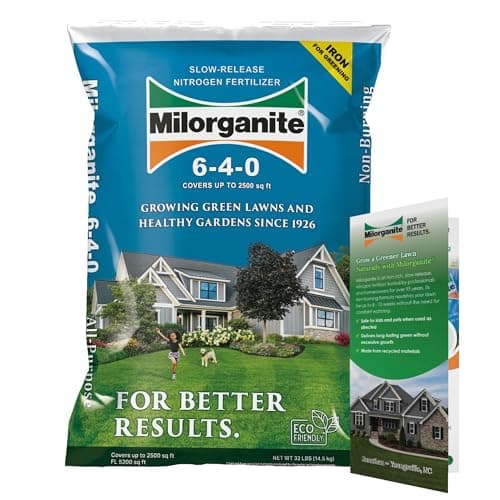
Milorganite 6-4-0 Nitrogen Fertilizer
Organic slow-release that will not burn.
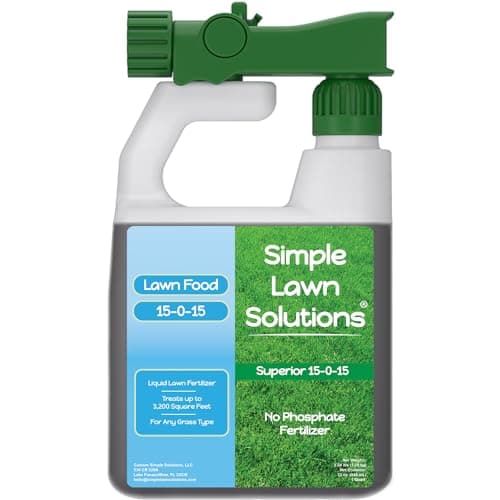
Simple Lawn Solutions Superior 15-0-15 Liquid Fertilizer
The 15-0-15 ratio this guide recommends: phosphorus-free with high potassium for heat and stress hardiness.
What Makes St. Augustine Unique
The simplest way to understand St. Augustine nutrition is to compare it to the other two big warm-season grasses. Centipede grass is the apex predator of low-maintenance lawns: it needs just 1 to 2 pounds of nitrogen per 1,000 sq ft per year and will yellow if you over-feed it. Bermuda grass sits at the opposite end, demanding 4 to 6 pounds of nitrogen and a regular cutting routine to handle the growth that feeding triggers.
St. Augustine lives between those two extremes, closer to bermuda than to centipede. Its annual nitrogen guideline rises as you move south, from 2 to 4 pounds per 1,000 square feet in north Florida to 4 to 6 pounds in south Florida, where growth continues year-round. Texas A&M AgriLife puts Texas lawns at 3 to 5 pounds per year. Cultivars like Floratam, Palmetto, Raleigh, Seville, ProVista, and Bitter Blue vary slightly in their preferences, but all sit inside that same nutritional window.
The other trait worth flagging: St. Augustine tolerates atrazine, the herbicide commonly bundled into southern weed-and-feed products. Centipedegrass tolerates it too, which is why those products are labeled for St. Augustine and centipede lawns. One exception matters: Texas A&M AgriLife notes that the Floratam cultivar is not tolerant of atrazine and will be injured, so confirm which cultivar you have before using one of those products. This is why weed-and-feed labels matter so much. A St. Augustine-specific product with atrazine works, while a generic product with 2,4-D or dicamba at typical rates can yellow or thin the lawn.
Essential Nutrients for St. Augustine Health
Nitrogen is the headline nutrient. It builds the chlorophyll that gives the blade its color and powers the vegetative growth that lets St. Augustine fill bare spots and crowd out weeds. The catch is that nitrogen is also the most water-soluble of the macronutrients, which means it leaches quickly through the sandy soils common across the St. Augustine range. Slow-release nitrogen sources solve this by metering out availability over 6 to 8 weeks instead of dumping a spike that runs off in the next rainfall.
Phosphorus (the middle number on a fertilizer bag) supports root development. The catch is that most southern soils already test high in phosphorus, and several counties in Florida have outright banned phosphorus applications on established lawns. Always soil-test before applying a fertilizer with anything higher than 4 in the middle position.
Potassium (the third number) is the stress-tolerance nutrient. It strengthens cell walls, improves drought resistance, and helps St. Augustine recover from heat, foot traffic, and chinch bug damage. The 2-to-1 nitrogen-to-potassium ratio you see in products like 16-4-8 and 32-0-10 is calibrated for this stress tolerance.
Iron is the secret fourth macronutrient for St. Augustine lawns. It is what makes the difference between a pale lime-green lawn and the deep blue-green that defines a healthy St. Augustine stand. In alkaline Florida and coastal soils, iron locks up in forms the grass cannot absorb, even when soil tests show iron is technically present. Foliar or chelated iron supplements bypass the soil chemistry entirely.
How Soil pH Affects Fertilizer
St. Augustine tolerates a wider pH range than most southern grasses, performing well anywhere from 6.0 to 7.5. The sweet spot is 6.5, where every major nutrient is most available. The problem is that Florida sandy soils and coastal soils across Texas and the Carolinas often drift above 7.5, into the alkaline range where iron and manganese become unavailable.
The instinctive fix when the lawn looks yellow is to add more nitrogen. That is usually wrong. Adding nitrogen to an iron-deficient lawn pushes growth that the chlorotic blades cannot photosynthesize, leading to weak, stretched-out turf that is more vulnerable to pests and disease. The right move is to test pH first, then either acidify the soil with sulfur (a slow process) or apply chelated iron (a fast workaround) before adjusting the nitrogen program.
Types of Fertilizer for St. Augustine: Pros, Cons & 2026 Product Picks

Granular vs Liquid
Granular fertilizers are the default choice for most St. Augustine lawns. They are easier to apply evenly across a large yard with a broadcast spreader, they are easier to handle slow-release, and they cost less per pound of nitrogen. The Andersons Professional PGF Complete, Milorganite, and Pennington Full Season are all granulars and all work well in a typical 5,000 to 10,000 sq ft yard.
Liquid fertilizers shine in two situations: small lawns where a sprayer is faster than a spreader, and corrective situations where you need nutrients absorbed through the leaf within hours rather than days. Simple Lawn Solutions 16-4-8 Liquid is a popular pick for both use cases. The trade-off is that liquid applications need to be repeated every 2 to 3 weeks instead of every 6 to 8. For a full comparison of the liquid options ranked by need, see our best liquid lawn fertilizer guide.
Organic vs Synthetic
Organic fertilizers (Milorganite, Espoma Organic Lawn Food, and similar) release nitrogen slowly as soil microbes break down the organic matter. This means almost zero burn risk, a longer-lasting feeding, and a side benefit of feeding the soil biology that supports healthy turf. The downsides are higher cost per pound of nitrogen, lower analyses that require more bags per application, and slower visible response.
Synthetic fertilizers (Andersons PGF, Scotts Turf Builder, Pennington Full Season) give faster greenup, higher nitrogen analysis per bag, and lower cost. The modern formulations with polymer-coated or sulfur-coated urea blend the speed of synthetic nitrogen with the metering of organic, so the burn risk that defined older synthetics is mostly gone.
The pragmatic answer for most St. Augustine lawns is a mix: synthetic granular as the workhorse, with Milorganite or another organic mixed in once or twice a year to keep soil biology happy. There is no rule that says you have to pick one. For a deeper comparison, see Organic vs Synthetic Fertilizers, and for picks beyond St. Augustine, see Best Fertilizers for Lawns.
Slow-Release vs Fast-Release
The fraction of slow-release nitrogen (sometimes labeled SRN, WIN for water-insoluble nitrogen, or SCU for sulfur-coated urea) is the single most important spec on a St. Augustine fertilizer bag. Look for at least 30 percent slow-release, with 50 percent or higher being ideal. Below that threshold and you are essentially applying fast-release nitrogen, which means more burn risk, more leaching, and a feeding that only lasts 2 to 3 weeks instead of 6 to 8.
Fast-release nitrogen still has a place. It is what you want in a corrective liquid spray when the lawn needs a quick green-up before a holiday or before sod ships in for a renovation. It is not what you want as your seasonal baseline.
Why 16-4-8 is the Best NPK
The 16-4-8 ratio is not arbitrary. The 4-to-1 nitrogen-to-phosphorus ratio reflects the actual nutrient draw of southern turfgrasses, which use roughly four times more nitrogen than phosphorus over a growing season. The 2-to-1 nitrogen-to-potassium ratio reflects the additional stress tolerance St. Augustine needs through hot, humid southern summers.
Other ratios work too. 15-5-10 is essentially the same product with slightly higher phosphorus, suitable when a soil test confirms phosphorus is actually needed. 32-0-10 is what you want when soil tests show high phosphorus, which is most Florida lawns. The pattern to look for is high N, low to zero P, moderate K, with iron and minor nutrients included.
Iron Supplements: When and Why
Even with the right NPK product, many St. Augustine lawns benefit from an iron supplement once or twice per growing season. The signs you need it: pale lime-green color despite recent fertilization, yellowing that starts at the leaf tips and works inward, or a pH test showing alkaline soil.
Chelated iron products like Southern Ag Liquid Iron and Pennington Ironite II are the fastest fix. The chelation protects the iron from soil pH, so it gets absorbed even in alkaline conditions. Apply on a cool morning, and you should see noticeable green-up within 5 to 10 days. Two applications per season is usually plenty for most yards.
Best NPK Ratios and Nutrients for St. Augustine Grass
When you shop for a St. Augustine grass fertilizer, the three numbers on the bag (the NPK ratio) tell you most of what you need to know before you even read the back label. St. Augustine wants a high first number for nitrogen, a low to zero middle number for phosphorus, and a moderate third number for potassium. Two ratios cover almost every lawn: a 16-4-8 style blend for general feeding, and a 15-0-15 blend for the phosphorus-restricted, potassium-hungry conditions common across Florida.
15-0-15 and 16-4-8: The Two Ratios That Matter
15-0-15 is the classic Florida St. Augustine maintenance ratio. It carries balanced nitrogen and potassium with zero phosphorus, which lines up with two realities at once: most southern soils already test high in phosphorus, and Florida law restricts how much phosphorus you can put down on an established lawn. The matched nitrogen and potassium feed steady color while reinforcing the stress tolerance St. Augustine leans on through a humid summer.
16-4-8 is the better all-around pick where phosphorus is not restricted and a soil test does not flag it as already high. The 4-to-1 nitrogen-to-phosphorus ratio matches the grass's real nutrient draw, and the 2-to-1 nitrogen-to-potassium ratio still delivers solid heat and drought tolerance. If you are unsure how to read these numbers, our guide to fertilizer numbers breaks down exactly what each position means.
Nitrogen, Potassium, and Why High-K Helps
Nitrogen is the engine behind steady green-up. It builds the chlorophyll and vegetative growth that let St. Augustine fill bare spots and crowd out weeds, which is why a nitrogen fertilizer for St. Augustine grass sits at the center of every feeding program. The catch is that nitrogen leaches fast through sandy soil, so a slow release source meters it out over six to eight weeks instead of spiking and running off.
Potassium is the stress-tolerance nutrient. It strengthens cell walls and improves cold, drought, and disease tolerance, which is exactly why a high-K or balanced-K product matters more for St. Augustine than for many other lawns. Potassium for St. Augustine grass is what helps the turf shrug off heat, foot traffic, and chinch bug pressure through the worst of the summer. A balanced 15-0-15 or a 2-to-1 NPK like 16-4-8 both supply enough potassium for most yards.
Liquid vs Slow-Release, and Feeding New Sod
A liquid fertilizer for St. Augustine grass is absorbed through the leaf within hours, which makes it ideal for small lawns and for a quick corrective green-up. The trade-off is that you reapply every two to three weeks. A slow release granular is the workhorse for seasonal feeding: fewer applications, less burn risk, and steadier color across the whole growing season. Most lawns do best with slow release granular as the baseline and a liquid only when you need a fast fix.
For new sod, hold off on a standard high-nitrogen feeding until the grass has rooted down, which usually takes a few weeks (gently tug a corner; resistance means roots have knit in). At that point a starter fertilizer with some phosphorus supports root establishment, then you transition to your normal 15-0-15 or 16-4-8 program. Always defer the exact rate and timing to the product label and your local extension office.
If your lawn is showing yellow St. Augustine grass despite regular feeding, do not just add more nitrogen. Yellowing is most often a nitrogen or iron shortfall, and in alkaline Florida soil it is usually iron chlorosis rather than a true nitrogen deficiency. You can diagnose the likely cause before you change your fertilizer program.
Top Fertilizer Products for St. Augustine (2026 Updated List)
The table below covers the nine fertilizers and supplements that perform best on St. Augustine across the Gulf Coast and southeast. Each product has been verified for current 2026 availability and labeled use on St. Augustine grass.
| Product | N-P-K | Release Type | Organic/Synthetic | Pet Safety | Best For | Buy |
|---|---|---|---|---|---|---|
| The Andersons Professional PGF Complete 16-4-8 | 16-4-8 | Slow-release granular | Synthetic | Safe once watered in | Editor's pick, balanced seasonal feeding | Check on Amazon |
| Milorganite 6-4-0 Nitrogen Fertilizer | 6-4-0 | Slow-release organic | Organic | Pet and kid safe immediately | Pet-safe lawns, soil biology, included iron | Check on Amazon |
| Scotts Turf Builder Southern Lawn Food 32-0-10 | 32-0-10 | Slow-release granular | Synthetic | Safe once watered in | Florida lawns, no-phosphorus formula, safe on St. Aug | Check on Amazon |
| Pennington Full Season Lawn Fertilizer 32-0-5 | 32-0-5 | Slow-release granular | Synthetic | Safe once watered in | Best budget, full-season coverage | Check on Amazon |
| Dark Matter 21-0-0 + Iron | 21-0-0 | Quick-release granular with iron | Synthetic | Safe once watered in | Color boost, no-P regions, iron rescue | Check on Amazon |
| Simple Lawn Solutions 16-4-8 Liquid | 16-4-8 | Fast-release liquid | Synthetic | Safe once dried | Small lawns, corrective feeding | Check on Amazon |
| Pennington Ironite II | 6-0-1 + Iron | Slow-release granular | Synthetic with iron | Safe once watered in | Iron chlorosis, deep greenup | Check on Amazon |
| Southern Ag Chelated Liquid Iron | Iron only | Liquid foliar | Synthetic chelated | Safe once dried | Fast color rescue, alkaline soil correction | Check on Amazon |
| Espoma Organic Lawn Food | 18-0-3 | Slow-release organic | Organic | Pet and kid safe immediately | Organic-only programs, soil biology | Check on Amazon |
The four products that cover most use cases: Andersons PGF Complete 16-4-8 for the baseline seasonal feeding, Milorganite for an organic pet-safe option, Scotts Southern 32-0-10 in counties with phosphorus restrictions, and Southern Ag Liquid Iron as the rescue product when chlorosis hits.
How to Choose the Best Fertilizer for Your St. Augustine Lawn
Step 1: Soil Testing
Every St. Augustine fertilization program should start with a soil test. Your county extension office (Florida UF/IFAS, Texas A&M AgriLife, LSU AgCenter, Clemson Extension, UGA Extension) will run a comprehensive panel for $10 to $20, with results back in about two weeks. Order a basic soil test with a recommendation report; do not bother with the inexpensive home test kits, which are wildly inaccurate for sandy southern soils.
The data points to look for are pH, phosphorus level, potassium level, organic matter percentage, and (if available) iron and magnesium. With pH in the 6.0 to 7.5 range and adequate P and K, you can use almost any St. Augustine fertilizer with confidence. Outside that range, you need to correct the soil first, or pick a fertilizer that compensates for the deficiency.
Step 2: Matching Fertilizer to Your Soil
If your soil tests high in phosphorus (most Florida and coastal lawns), choose a 0-phosphorus product like Scotts Southern 32-0-10 or Pennington Full Season 32-0-5. If your soil tests low in iron or your pH is above 7.5, plan on two iron supplement applications per season in addition to your N-P-K program. If your soil organic matter is below 2 percent (common in Florida sand), include one Milorganite application per year to feed the soil biology.
Heavy clay soils in central Texas, northern Louisiana, and the Carolina Piedmont hold nutrients much longer than coastal sand. On clay, you can stay toward the low end of your region's annual range and stretch the interval between feedings to 8 weeks. On sand, aim for the high end of that range and tighter 6-week intervals because the nitrogen leaches faster.
Step 3: Regional and Seasonal Considerations
Best Fertilizer for St. Augustine in Florida
Florida has the strictest fertilizer regulations of any state. The state Urban Turf Fertilizer Rule (5E-1.003(2), F.A.C.) limits phosphorus in lawn fertilizer to 0.25 pound of P2O5 per 1,000 sq ft per application and 0.5 pound per year, holds any single application to 0.7 pound of readily available nitrogen per 1,000 sq ft, and caps total nitrogen at 2 pounds per 1,000 sq ft per application in spring or summer and 1 pound per application in fall or winter. UF/IFAS notes that reaching the 2 pound spring or summer application takes a fertilizer with at least 65 percent controlled-release nitrogen, because the soluble share still cannot top 0.7 pound. Several counties layer additional restrictions on top: Pinellas, Sarasota, Manatee, Charlotte, Lee, and most of the Tampa Bay region ban N and P applications outright from June 1 through September 30, the rainy season when nutrients are most likely to run off into waterways.
If you are in one of those counties, plan your heavier feedings for May and October, with the summer months covered by an iron application. Milorganite is not a phosphorus loophole: the state Urban Turf Fertilizer Rule (5E-1.003(2), F.A.C.) has no exemption for organic sources, so its 6-4-0 analysis counts toward the 0.25 pound of P2O5 per 1,000 sq ft per-application limit like any other lawn fertilizer. Scotts Southern 32-0-10 and Pennington Full Season 32-0-5 are both labeled compliant with the Florida rule and are the easiest defaults for Florida lawns.
Best Fertilizer for St. Augustine in Texas
Coastal Texas (Houston, Beaumont, Corpus Christi, Brownsville) shares Florida's sandy soils, alkaline pH drift, and heat-stress patterns. The same 16-4-8 or 32-0-10 picks work, with the same iron supplement layered in for chlorosis. Texas does not have the statewide phosphorus ban Florida does, so you have more flexibility on NPK ratio if your soil test calls for it.
Inland Texas (Austin, San Antonio, Dallas) has more clay content and a shorter active growing season because of harsher winter weather. Stay at 3 pounds of N per year on clay, and stop nitrogen feeding by early September to avoid pushing growth into the first frost. Heat stress is the bigger summer challenge here, which is why a balanced potassium level matters more than in coastal Florida.
Best Fertilizer for St. Augustine Grass in Southern California
Southern California St. Augustine lawns face a different problem set than Gulf Coast lawns: alkaline soils that lock up iron, mild coastal weather that stretches the growing season from March through October, and water restrictions that punish fast, thirsty growth. A 16-4-8 or 15-0-15 slow-release formula still fits best, but plan on pairing it with a chelated iron supplement once or twice a season, since iron chlorosis is the usual culprit behind yellowing SoCal St. Augustine rather than a nitrogen shortage. Favor products with at least 50 percent slow-release nitrogen so growth stays steady on a reduced irrigation schedule, and stay at the low end of the annual nitrogen range (around 3 pounds per 1,000 square feet) if you water less than twice a week.
Step 4: Reading Fertilizer Labels
Three things matter on a St. Augustine fertilizer label. First: the NPK ratio, which should be high-first-number, low-middle-number, moderate-third-number. Second: the slow-release nitrogen percentage, which should be 30 percent minimum and 50 percent or higher for the best performance. Third: the listed crops or grass types, which should explicitly include St. Augustine.
The fourth thing to check if your product includes a herbicide: the active ingredient. Atrazine is safe on St. Augustine and is what you want in a weed-and-feed for this grass. 2,4-D, dicamba, MCPA, and triclopyr are all risky on St. Augustine, especially on Floratam, and should be avoided unless the label specifically says "safe on St. Augustine" at the listed application rate.
When and How to Fertilize St. Augustine - Month-by-Month (2026 Schedule)
Annual Calendar
March (south Florida only): Light first feeding if growth is already active and soil temperatures are above 65 F. North Florida, Texas, and the Carolinas should wait.
April (most of the range): First full feeding two to three weeks after spring green-up. Use a 16-4-8 or 15-5-10 product at the bag rate.
May: Second feeding in Florida counties with summer N bans (this is the last shot before the June 1 cutoff). Elsewhere, this is a normal calendar slot for the second of three to four annual feedings.
June: No N applications in Florida counties with the rainy-season ban. Elsewhere, use a Milorganite or iron supplement to maintain color without heavy nitrogen.
July through August: Iron supplement window in alkaline soil regions. If the lawn shows chlorosis or pale color, this is when foliar iron makes the biggest visual difference.
September: Late-summer feeding in most of the St. Augustine range. This is the most important feeding of the year north of central Florida because it sets the lawn up for winter dormancy.
October: First post-ban feeding window in restricted Florida counties. Use a balanced 16-4-8 or 32-0-10 product. Skip this feeding north of central Florida because the grass is heading into dormancy and excess nitrogen reduces cold tolerance.
November through February: No fertilization. The grass is dormant or semi-dormant, and added nitrogen leaches without being used. This is also the worst time to apply herbicides in a weed-and-feed product because the chemistry sits in the soil without being broken down by active root systems.
Best Fertilizer for St Augustine Grass in Summer
Summer feeding is where most St. Augustine programs go wrong. In Florida counties with the rainy-season nitrogen ban, June through September is off limits for N, so the best summer fertilizer there is not a fertilizer at all: reach for a chelated iron supplement to hold color with zero nitrogen (Milorganite is not a loophole here, since its 6-4-0 analysis still carries slow-release nitrogen). Elsewhere, July and August are the iron window, especially in alkaline soil regions where foliar iron makes the biggest visual difference on pale or chlorotic turf.
Late summer flips the script. September is the most important feeding of the year north of central Florida, because it sets the lawn up for winter dormancy. A 16-4-8 slow-release like the Andersons PGF Complete at the bag rate is the right call for that slot, watered in with half an inch to an inch if no rain is forecast.
Pre-Fertilization Checklist
- Soil testing: Start with a soil test, at least every 2 to 3 years, to confirm pH and nutrient levels. This prevents over- or under-application and targets real deficiencies.
- Mowing: Cut the lawn to its recommended height 1 to 2 days before fertilizing, so granules reach the soil and clippings do not block absorption. UF/IFAS puts standard St. Augustine cultivars at 3.5 to 4 inches and dwarf types at 2 to 2.5 inches, and Texas A&M AgriLife recommends 2 to 4 inches generally.
- Irrigation check: Make sure every zone works and that you can deliver 0.5 to 1 inch of water after application if no rain is forecast.
Calculating the Right Amount (Worked Example)
Say your lawn is 5,000 sq ft (measure your exact square footage if you are not sure) and you are using a 16-4-8 blend like The Andersons Professional PGF Complete. A 16-4-8 fertilizer is 16% nitrogen, so to apply 1 lb of nitrogen per 1,000 sq ft you need about 6.25 lbs of product per 1,000 sq ft (1 divided by 0.16). For a 5,000 sq ft lawn that works out to roughly 31 lbs of product per application. Keep the number of feedings low enough that the yearly total stays inside your regional guideline: 3 to 5 lbs of nitrogen per 1,000 sq ft per year for Texas lawns per Texas A&M AgriLife, or 2 to 4 lbs in north Florida, 2 to 5 in central Florida, and 4 to 6 in south Florida per UF/IFAS. In Florida no more than 0.7 lb of the nitrogen in any single application can be soluble, so a 1 lb application needs a product that is at least 30 percent controlled release.
Application Techniques
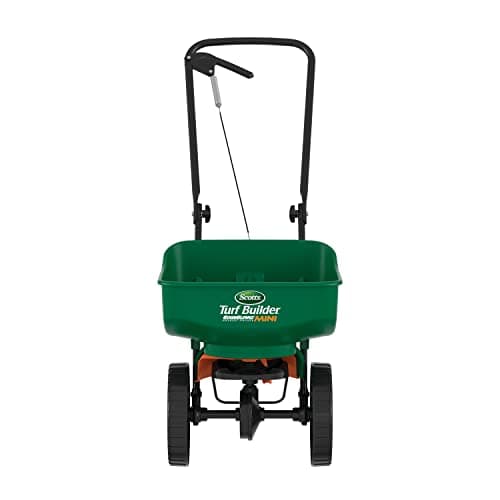
For granular fertilizers, use a broadcast spreader (Scotts Edgeguard or a Lesco-style commercial unit) and calibrate it to the bag rate. Walk in overlapping passes at 90-degree angles to each other for even coverage. Apply to dry grass, then water in with at least a quarter inch of irrigation immediately after to wash the granules off the blade and into the soil.
For liquid fertilizers, use a hose-end sprayer or a backpack sprayer, applying in early morning when winds are calm and temperatures are below 85 F. The leaf absorbs liquid nutrients within hours, so timing relative to rain matters less, but you still want about an hour of dry conditions for full uptake.
Iron supplements should be applied on a cool morning, ideally with overnight temperatures below 75 F. Iron compounds can stain concrete, so sweep granules off driveways and rinse spray drift off walkways immediately. The lawn should not be mowed for 24 hours after an iron application.
Specialized Picks for Unique Conditions
Some St. Augustine lawns need a more targeted choice:
- Drought-prone lawns: Lean on a slow-release granular with higher potassium to improve water-stress tolerance and root resilience.
- Heavily shaded areas: Iron-rich organics like Milorganite are gentler here, since shade reduces photosynthesis and raises the risk of burn from fast synthetics.
- Phosphorus-restricted regions: Choose a phosphorus-free blend (the middle N-P-K number is 0) to stay compliant with local ordinances.
- Pet- and kid-friendly lawns: Organic, low-toxicity options such as Milorganite and Espoma Organic Lawn Food are safe once watered in and dry.
Pro Tips for Problem Lawns
Iron chlorosis in alkaline soil shows up as pale yellow-green with darker green veins. The fix is chelated iron foliar spray (Southern Ag or Pennington Ironite II), not more nitrogen. Two applications per growing season usually keeps the color stable.
Chinch bug damage shows up as expanding patches of yellow to brown turf in sunny areas during hot weather. Fertilization alone does not solve a chinch bug problem, but a healthy, well-fed lawn resists chinch bugs much better than an underfed one. Treat with a labeled insecticide first, then feed once the population is controlled.
Gray leaf spot is a fungal disease triggered by excess nitrogen during hot, humid weather. If you see oval gray-tan lesions on the blades and the lawn was recently fertilized, cut back on N and improve air circulation through proper mowing. Skip the next feeding entirely and let the lawn recover.
Take-all root rot is the most serious St. Augustine disease, showing up as yellow patches that do not respond to fertilizer or water. The fix is soil pH adjustment (target 5.5 to 6.5 in affected areas), reduced nitrogen, and improved drainage. Fertilization alone will not solve take-all and may make it worse.
Advanced Strategies: Maximizing St. Augustine Health
Integrating Fertilizer with Mowing
The single biggest mistake on St. Augustine lawns (other than over-fertilizing) is cutting too short. St. Augustine wants a 3.5 to 4 inch mow height, with some cultivars like Floratam preferring the higher end of that range. Cutting below 3 inches stresses the grass, exposes the soil to weed seed germination, and reduces the leaf surface area available for the nitrogen you just applied to be put to work.
The right approach is to mow more frequently at the proper height, never removing more than a third of the blade in a single cut. Use the mowing calculator to dial in the frequency for your cultivar, climate, and growth rate. A well-mowed St. Augustine lawn uses fertilizer dramatically more efficiently than a scalped one.
Sustainable Practices
The most sustainable fertilization program for St. Augustine combines slow-release synthetic nitrogen with one or two annual organic feedings (Milorganite, Espoma, or compost topdressing). The organic component builds soil biology over time, which in turn improves the lawn's ability to extract nutrients from the soil and reduces the synthetic input requirement year over year.
Grass clippings should always be left on the lawn. They return about a third of the nitrogen back to the soil, which means a mulching mower effectively reduces your annual fertilizer requirement by 25 to 30 percent. Bagging clippings on St. Augustine throws away a meaningful fraction of every fertilizer dollar you spend.
Irrigation timing also matters. Water deeply and infrequently (about 0.75 inches per application, once or twice a week) rather than light daily watering. This trains roots to grow deeper, which both improves drought tolerance and gives the grass access to nutrients lower in the soil profile.
Common Mistakes to Avoid
Misreading Soil Tests
The most common soil test misread on St. Augustine lawns is interpreting "high" phosphorus as a reason to apply more phosphorus. "High" on the soil test report means the soil already has plenty, so adding more is unnecessary and (in Florida) often illegal. Apply phosphorus only when the report shows "low" or "very low" in that column.
The second common misread is acting on pH without understanding the iron situation. If pH is above 7.0 and the lawn is pale, the fix is iron supplementation, not heavy sulfur applications. Sulfur takes 6 to 12 months to meaningfully shift pH, while iron corrects color within a week.
Poor Timing
Fertilizing too early in spring (before the grass has actively greened up) pushes growth that the still-cool soil cannot support. Wait two to three weeks after full green-up, when overnight lows are consistently above 60 F. Premature feedings waste nitrogen and can trigger spring dead spot in some cultivars.
Fertilizing too late in fall is the opposite mistake. Anywhere north of central Florida, the last nitrogen feeding should land in early September. Late-fall N reduces winter hardiness and contributes to winterkill in cold snaps. South Florida has more flexibility here, but even there, the November through February window should be fertilizer-free.
Atrazine Timing Mistakes
Atrazine is the herbicide that makes weed-and-feed products safe on St. Augustine, but it has its own timing rules. Do not apply atrazine when air temperatures exceed 85 F (it volatilizes and can damage even St. Augustine). Do not apply within 30 days of seeding or sodding new St. Augustine. Do not apply within 30 feet of edible plants, ponds, or storm drains in Florida.
The best atrazine application windows are early spring (February through April depending on latitude) for winter annual broadleaves, and early fall (October) for cool-season weed germination. Mid-summer atrazine applications cause more lawn damage than they prevent weed problems.
Recommended products
The Andersons Professional PGF Complete 16-4-8
Best all-around seasonal feeding.
Milorganite 6-4-0 Nitrogen Fertilizer
Best for households with pets or kids.
Simple Lawn Solutions Superior 15-0-15 Liquid Fertilizer
Phosphorus-free 15-0-15, the high-potassium ratio this guide recommends for summer stress.
- University of Florida IFAS sets annual nitrogen for St. Augustinegrass by region: 2 to 4 pounds per 1,000 sq ft per year in north Florida, 2 to 5 in central Florida, and 4 to 6 in south Florida, applied in 2 to 6 applications from spring green-up through fall, or year-round in south Florida. Texas A&M AgriLife publishes 3 to 5 pounds per 1,000 sq ft per year for Texas lawns.
- Soil pH should test between 6.0 and 7.5; iron supplements (not lime) correct most yellowing in alkaline soils.
- Florida's Urban Turf Fertilizer Rule (5E-1.003(2), F.A.C.) allows no more than 0.7 lb of readily available nitrogen per 1,000 sq ft at any one time, no more than 2 lb of total N per 1,000 sq ft per application in spring or summer, and no more than 1 lb of total N per 1,000 sq ft per application in fall or winter.
- Texas A&M AgriLife and LSU AgCenter recommend stopping nitrogen feeding 6 weeks before the first expected frost to maintain winter hardiness.
Conclusion
Fertilizing St. Augustine grass well is mostly about getting four things right: the NPK ratio (16-4-8 or 32-0-10 for phosphorus-restricted regions), the annual nitrogen total (3 to 5 lbs per 1,000 sq ft for Texas lawns per Texas A&M AgriLife; 2 to 4 in north Florida, 2 to 5 in central Florida, and 4 to 6 in south Florida per UF/IFAS), the application timing (April through September, never in dormancy), and the iron supplementation in alkaline soils. Get those right and the rest of the program (mowing height, irrigation, pest control) becomes much easier.
The Andersons PGF Complete 16-4-8 is the best default product for a typical St. Augustine lawn. Milorganite is the best pet-safe organic option. Pennington Full Season 32-0-5 is the budget pick. Southern Ag Liquid Iron is the rescue product when chlorosis hits. Build your year around those four and adjust based on your soil test results, county fertilizer regulations, and seasonal weather.
For the full St. Augustine care picture across the year, including watering, mowing, weed control, and renovation, start with the St. Augustine pillar guide. To dial in your specific application rates, use the fertilizer calculator. And before you apply anything in early spring or late fall, check the soil temperature tool to make sure the grass is actively growing and ready to use what you put down.
Top Picks
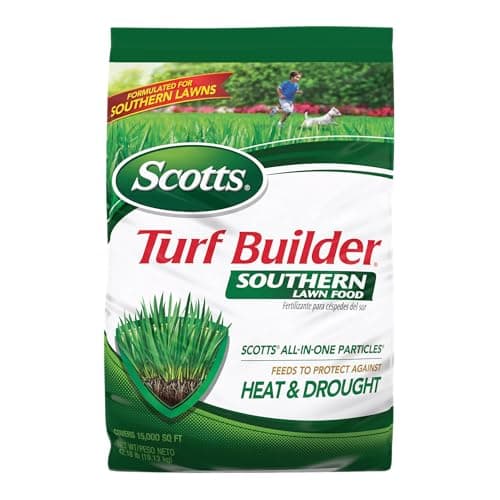
 Scotts Lawn Fertilizer - Southern Turf Builder for Southern Grass - 15,000 Sq. Ft. - GranulesCheck price on Amazon
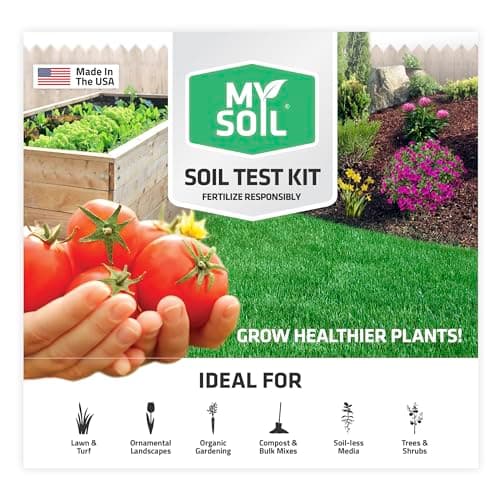
 MySoil Soil Test KitCheck price on Amazon
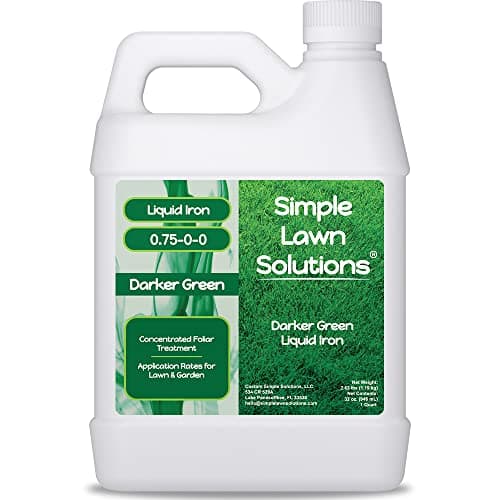
 Simple Lawn Solutions Liquid Iron Darker Green (32 oz)Check price on Amazon
As an Amazon Associate we earn from qualifying purchases.
Free Lawn Care Tools
For most lawns, The Andersons Professional PGF Complete 16-4-8 is the best overall fertilizer for St. Augustine grass. It is a slow-release granular with humic acid, and the 16-4-8 ratio delivers the nitrogen this grass needs while keeping phosphorus low for southern soils. Apply it in seasonal feedings that add up to your regional annual nitrogen guideline: Texas A&M AgriLife publishes 3 to 5 pounds of nitrogen per 1,000 square feet per year for Texas lawns, and UF/IFAS puts Florida at 2 to 4 pounds in north Florida, 2 to 5 in central Florida, and 4 to 6 in south Florida. Milorganite 6-4-0 is the pet-safe organic alternative, and a 15-0-15 blend is the pick in Florida counties with phosphorus restrictions.
A 16-4-8 or 15-5-10 NPK ratio works best for most St. Augustine lawns, and 15-0-15 is the classic choice across Florida because it pairs balanced nitrogen and potassium with zero phosphorus. The higher first number (nitrogen) drives the dense, blue-green growth this grass is known for. The middle number (phosphorus) stays low because most southern soils already test high in phosphorus, and the potassium supports heat and drought tolerance. Soil-test before using anything with a middle number above 4, since most southern soils already have plenty of phosphorus in the bank.
Apply the first feeding two to three weeks after full spring green-up, when soil temperatures hold above 65 degrees F. Continue with applications every 6 to 8 weeks through early September. Stop nitrogen feeding six weeks before your average first frost, which means no fall N anywhere north of central Florida. In Florida counties with summer nitrogen bans, get your second feeding down in May before the June 1 cutoff, then resume with a balanced feeding in the October post-ban window.
It depends on where you are. Texas A&M AgriLife publishes 3 to 5 pounds of nitrogen per 1,000 square feet per year for St. Augustine in Texas. UF/IFAS puts it at 2 to 4 pounds in north Florida, 2 to 5 in central Florida, and 4 to 6 in south Florida. Other states publish their own numbers, so check your local extension office. Where you land inside the range depends on shade, soil type, organic matter, whether you recycle clippings, and how long the lawn has been established. Spread the total across enough feedings that no single application goes over your local per-application limit. In Florida that means no more than 0.7 pound of soluble nitrogen per 1,000 square feet at a time, up to 2 pounds of total nitrogen in spring or summer when the product is at least 65 percent controlled release, and no more than 1 pound per application in fall or winter.
Only use a weed and feed labeled specifically for St. Augustine grass. Standard Scotts Weed and Feed contains 2,4-D at rates that can damage St. Augustine, especially Floratam. Look for products with atrazine instead, which is safe on St. Augustine but would kill bermuda or zoysia.
Yellow St. Augustine is usually iron chlorosis, not a nitrogen deficiency, especially in Florida soils above pH 7.0. Apply a chelated iron supplement like Southern Ag Liquid Iron or Ironite II and you should see green-up within 5 to 10 days. Adding more nitrogen to yellow grass often makes the problem worse by pushing growth the roots cannot support.
Yes, Milorganite is an excellent fit for St. Augustine because the slow-release organic nitrogen will not burn the leaf and the iron content addresses the chlorosis common in alkaline southern soils. The downside is the low analysis (6-4-0) means you need to apply more product to hit your annual nitrogen target. Plan on 4 to 5 applications per year at the bag rate.
In Florida, choose a fertilizer with mostly slow-release nitrogen and zero phosphorus unless a recent soil test shows you actually need it. The state Urban Turf Fertilizer Rule (5E-1.003(2), F.A.C.) caps any single application at 0.7 pound of readily available nitrogen per 1,000 sq ft, with up to 2 pounds of total nitrogen per application in spring or summer (which takes a product that is at least 65 percent controlled release) and 1 pound in fall or winter. Many counties (Pinellas, Sarasota, Manatee, and others in the Tampa Bay region) ban N and P applications from June through September, so plan your heavier feedings for May and October. Lawn fertilizer sold in Florida carries use directions written to that rule, so follow the label rate.
16-4-8 is one of the best NPK ratios for St. Augustine. The 4-to-1 nitrogen-to-phosphorus ratio matches the grass's actual nutrient draw, and the 2-to-1 nitrogen-to-potassium ratio supports the stress tolerance St. Augustine needs through southern summers. The Andersons Professional PGF Complete 16-4-8 is the most popular pick in this analysis.
10-10-10 is not ideal for St. Augustine. The equal NPK ratio applies far more phosphorus than southern soils need, which can pollute waterways and contribute to algae blooms. Florida limits lawn fertilizer two ways. Statewide, the Urban Turf Fertilizer Rule holds low-phosphate lawn products to 0.25 pound of P2O5 per 1,000 sq ft per application and 0.50 pound per year, which a 10-10-10 label cannot meet at any useful nitrogen rate, and many counties add their own phosphorus restrictions on top. Use a turf-specific fertilizer like 16-4-8 or 32-0-10 instead.
For seasonal feeding, a slow release granular is better for most St. Augustine lawns because it meters nitrogen out over six to eight weeks, lowers burn risk, and needs fewer applications. A liquid fertilizer for St. Augustine grass is absorbed through the leaf within hours, which makes it useful for small lawns or a quick corrective green-up, but it has to be reapplied every two to three weeks. Many homeowners use slow release as the baseline and a liquid only for a fast fix.
Wait until the new sod has rooted down before a standard feeding, which usually takes a few weeks after installation. Gently tug a corner; if it resists, the roots have knit into the soil. At that point a starter fertilizer with some phosphorus supports root establishment before you move to a normal 15-0-15 or 16-4-8 program. Always confirm the exact timing and rate on the product label or with your local extension office.
Wait until the sod has rooted, usually 2 to 3 weeks, confirmed by tugging a corner and feeling resistance. Where local rules allow phosphorus, a starter fertilizer with an analysis like 18-24-6 supports root establishment. In phosphorus-restricted areas, which includes many Florida counties, apply a standard 16-4-8 at half rate instead and move to the normal program after the second mowing.
Look for a liquid with a high-nitrogen, low-phosphorus analysis such as a 16-4-8 liquid, ideally one that includes iron for the quick color response. Liquids absorb through the blade within hours, which makes them ideal for small lawns or a fast corrective green-up, but they only last 2 to 3 weeks, so most St. Augustine owners use a slow-release granular as the base program and a liquid only for touch-ups.
Florida restricts lawn phosphorus under its Urban Turf Fertilizer Rule and many local ordinances, because most Florida soils already hold enough phosphorus and the runoff pollutes waterways. That is why the best fertilizer for St. Augustine grass in Florida is usually a zero-phosphorus, high-potassium blend like 15-0-15 rather than the 16-4-8 that works well in other regions. The extra potassium also improves heat and disease tolerance in Florida’s humid climate. Many South and Central Florida counties additionally ban nitrogen and phosphorus fertilizer during the summer rainy season, roughly June through September, so check your county blackout dates and use a slow-release nitrogen product outside that window.
Most St. Augustine fertilizers also work on zoysia and bermuda, but always confirm the N-P-K ratio suits the other grass and check for sensitive varieties or regional restrictions before you spread it.
Organic fertilizers build soil health and provide steady nutrition, but they act more slowly than synthetics. For rapid green-up or a severe deficiency, supplement with a synthetic or liquid product as needed.
Do not double up. Resume your normal schedule on the next recommended date. St. Augustine tolerates a missed feeding much better than an accidental overdose.
If a storm hits within 12 hours of application, some nutrients may wash away. Wait 2 to 3 weeks, watch for color loss, and reapply at half rate if needed.
Review your spreader calibration and overlap pattern. Water deeply to dilute any excess, and spot-treat pale areas with a light, balanced feeding.

Beat weeds and brown spots from your phone
Snap a photo, get the fix, and follow a plan timed to your soil and weather. Free on iPhone.