Best Soil Amendments to Transform Your Lawn Fast
 James ThorntonLawn Equipment & Maintenance Expert | 20 Years
As an Amazon Associate we earn from qualifying purchases.
Brown, thin, or patchy turf with no clear disease pattern usually traces back to soil problems, not the grass itself. If you are fertilizing, watering, and mowing correctly but the lawn still looks tired, the issue is often compaction, poor structure, or incorrect pH. Fixing those root causes with the right soil amendments is the fastest reliable way to transform your lawn.
Soil amendments are materials you add to improve the physical, chemical, or biological properties of soil. They are different from fertilizer (which mainly adds nutrients) and different from topsoil (which is more like a new soil layer). The best soil amendments to transform your lawn fast improve structure, water movement, and nutrient availability so your existing fertilizer and water suddenly start working a lot better.
Homeowners often ask if they can really fix a lawn quickly, whether compost alone is enough, or if they can skip a soil test. Some visible improvements, like color and surface softness, can change within 2 to 6 weeks if you target the right problem. Compost can be a key tool, but it is not a cure-all, and skipping soil testing slows everything down. In this guide you will see which amendments work best for different soil types, how to diagnose your actual issue, and how to apply amendments for quick, visible results in the right season.
If your lawn is thin, hard underfoot, or dries out quickly, the most likely cause is compacted or low-organic-matter soil. To verify this in two minutes, push a long screwdriver or soil probe into moist soil; if you struggle to get past 3 to 4 inches, compaction is limiting roots and water movement, and if the soil crumbles into dusty particles, organic matter is probably low.
The fastest fix in most home lawns is to combine core aeration with a topdressing of high quality compost, sometimes boosted with biochar or humic substances. Avoid simply dumping topsoil over the grass or repeatedly hitting the lawn with high-nitrogen fertilizer, since that hides symptoms without fixing soil structure or pH. For heavy clay, pairing aeration with gypsum and organic matter improves infiltration; for sandy soil, compost plus biochar greatly improves water and nutrient holding.
Expect color and thickness to improve in 3 to 6 weeks during active growth if you amend soil and follow with appropriate fertilization and watering. Structural changes like deeper rooting and better drought tolerance take longer, typically one growing season. Once you see improvement, maintain gains by adding 0.25 to 0.5 inch of compost every 1 to 2 years and by following regionally appropriate guidance from Best Fertilizers for Lawns and How to Test Your Lawn's Soil.
Understanding Soil Basics Before You Amend
The Role of Soil in Lawn Health
Soil is the main infrastructure that supports turf, not just a passive medium under the grass. Healthy soil provides enough pore space for air and water, supports deep and dense roots, and houses microbial life that cycles nutrients into usable forms. When that system is degraded, grass becomes shallow rooted, thirsty, and vulnerable to stress even if nutrients are present.
Root depth and density determine how much water and nutrient reserve your lawn can access. In compacted or poorly structured soil, roots are often confined to the top 1 to 2 inches, which means any short dry spell or heat event shows up as quick browning or wilt. In a well-structured loam with adequate organic matter, turf roots frequently reach 4 to 6 inches or more, which stabilizes color and reduces irrigation needs.
Nutrient availability is also a soil function. You can apply an excellent product from Best Fertilizers for Lawns, but if pH is off or the soil has low cation exchange capacity (CEC), much of that fertilizer stays unavailable or leaches away. Good amendments increase organic matter and active surfaces in the soil, which hold nutrients like a sponge and release them over time.
- Penn State Extension notes that lawns with 3 to 5 percent organic matter show significantly better moisture retention and nutrient use efficiency compared to soils below 2 percent.
- Michigan State University turf publications emphasize that correcting soil constraints like compaction and pH often improves turf density more than simply increasing nitrogen rates.
Microbial life, including bacteria and fungi, drives decomposition and nutrient cycling. These organisms need oxygen, moisture, and organic matter. When you improve soil conditions with compost, humic substances, or biochar, you are supporting a biological engine that will gradually reduce thatch, increase natural disease suppression, and make fertilizer programs more effective.
Soil Structure 101: Clay, Sand, and Loam
Clay, sand, and loam refer to the particle size makeup of your soil, which strongly influences which amendments will help the most and how fast they work. Clay soils have very small, plate-like particles that stack tightly. They hold nutrients well but often drain poorly and compact easily. Sandy soils have large particles with big pores between them, so they drain rapidly, lose nutrients quickly, and dry out fast. Loam is a balanced mix of sand, silt, and clay and is usually the easiest to manage for lawns.
A quick at-home jar test can help you estimate your soil texture. Collect soil from several spots 3 to 4 inches deep, remove roots and stones, and fill a clear jar about one-third full of soil. Add water and a small drop of dish soap, shake thoroughly, then let it settle for 24 hours. Sand settles first, then silt, then clay as the top layer. The relative thickness of each layer gives you a rough sand/silt/clay ratio.
A simple squeeze test also helps. Moisten a handful of soil and squeeze it. If it forms a sticky ribbon that holds shape and can be bent without breaking, it is likely clay dominant. If it will not form a ribbon and falls apart easily, it is sandy. A loam will form a crumbly ball but not a long ribbon. This matters because heavy clay soils benefit greatly from amendments that increase aggregation and porosity, while sandy soils benefit more from materials that increase water and nutrient holding capacity.
pH and Nutrient Availability
Soil pH is a measure of how acidic or alkaline your soil is. Most turfgrasses perform best in the range of about 6.0 to 7.0. Within this range, nutrients such as nitrogen, phosphorus, potassium, and key micronutrients remain available in balanced proportions. When pH drifts below roughly 5.5 or above roughly 7.5, several nutrients become chemically tied up or excessively available, and grass starts to show deficiency or toxicity symptoms.
Typical signs that suggest pH problems include pale or yellow turf that does not respond well to fertilizer, stunted growth, and patchy performance even when water and nutrients seem adequate. Very acidic soil can cause magnesium and calcium shortages, while high pH can lock up iron and manganese, often causing yellowing between the veins of leaves.
A lab soil test is the best tool for diagnosing pH and nutrient levels. DIY test kits can give a rough indication, but for accurate pH and amendment recommendations, a soil testing lab is preferred. The report will usually include pH, buffer pH (for lime requirement), phosphorus, potassium, sometimes micronutrients, and organic matter percentage. Before you invest in the best soil amendments to transform your lawn fast, verify pH so you are not trying to push grass to perform in an unfavorable chemical environment.
Before You Start: Diagnosing Your Lawn’s Real Problem
Step 1: Visual Lawn Assessment
Start with a structured look at how your lawn behaves, not just how it looks in one moment. Walk the entire area and note where turf is thin, where the soil feels hard, and how water behaves after irrigation or rain. Look for patterns: widespread thinness often indicates a broad soil issue, while localized problems may hint at traffic, shade, or drainage features.
Use a short checklist while you walk:
- Thinning turf or bare spots, especially in high use areas
- Very firm ground or a "brick-like" feel when you press with your heel
- Standing water that lingers more than 24 hours after a moderate rain
- Areas that dry out and wilt significantly faster than surrounding turf
- A thatch layer thicker than about half an inch when you cut a small plug
If you see heavy traffic zones with hard soil and poor turf, that typically points to compaction. Confirm with the screwdriver test: in moist soil, you should be able to push a screwdriver at least 6 inches deep with moderate force. If you cannot get past 2 to 3 inches, core aeration combined with organic amendments is indicated. Persistent standing water without a visible low spot suggests poor structure or very dense subsoil, where organic matter and, in some clays, gypsum can help.
Hydrophobic dry spots that resist wetting, where water beads and runs off, often occur in very sandy or thatchy lawns. These respond well to a combination of wetting agents, light compost topdressing, and temporarily more frequent, light irrigation cycles to rehydrate the profile.
Step 2: Basic Soil Testing
Before deciding which amendments to buy, obtain at least a basic soil test. At minimum, you want pH, organic matter percentage, and levels of phosphorus and potassium. Many labs will also provide estimated CEC and base saturation, which help interpret how your soil holds nutrients.
To collect samples correctly, use a soil probe or garden trowel to take small cores 3 to 4 inches deep from 10 to 15 locations throughout the lawn. Avoid sampling right after fertilizing. Mix these cores thoroughly in a clean bucket, remove stones and roots, then submit the composite sample according to the lab instructions. This composite sample gives a realistic average of your lawn soil conditions.
Read the test results with an "amendment mindset." Low organic matter, often below about 3 percent in many regions, points toward compost, biochar, and humic substances as key tools. Low calcium with high magnesium and poor structure may indicate that gypsum could help flocculate clay particles without raising pH, especially if pH is already near neutral. Very low CEC, which is common in sandy soils, signals that increasing organic matter and possibly adding biochar will be more valuable than just increasing fertilizer frequency.
Step 3: Setting Realistic “Fast” Transformation Goals
Fast transformation with soil amendments is relative. Certain visual qualities, like greener color, improved surface softness, and better moisture retention, can improve within weeks once roots can access air, water, and nutrients more effectively. Core aeration with compost topdressing, for example, often provides noticeable changes within 3 to 6 weeks during active growth.
Other changes are structural and take longer. Deep root development through previously compacted zones, decomposition of a thick thatch layer, and significant improvements in clay structure can take one or more growing seasons. When setting goals, match your expectations to your grass type and climate. Cool-season grasses like Kentucky bluegrass, perennial ryegrass, and fescue respond most rapidly in spring and early fall, while warm-season grasses like bermudagrass, zoysia, and St. Augustine respond faster in late spring and summer.
If you implement a targeted amendment plan in the proper season, expect a realistic timeline of about 4 to 8 weeks for obvious visual improvement, and roughly 6 to 12 months for fully matured root systems and structural changes. This is still significantly faster and more durable than repeatedly masking symptoms with high-nitrogen fertilizer or frequent watering.
The Best Soil Amendments to Transform Your Lawn Fast: Overview
Several soil amendments stand out for how quickly they can change lawn performance when used correctly. In practice, the best soil amendments to transform your lawn fast are not exotic products, but proven materials applied with accurate diagnosis and good timing. The most impactful categories for home lawns include high quality compost, biochar, gypsum, lime or sulfur for pH adjustment, and concentrated carbon sources such as humic and fulvic substances.
These materials work by improving three core soil functions: structure and porosity (which affects rooting and water movement), chemical balance and nutrient holding, and biological activity. Different amendments emphasize different functions. For example, compost is excellent for biology and structure, while gypsum targets soil structure and calcium supply in certain clays, and lime primarily corrects acidity.
In the following sections, we will break down how each major amendment works, when and where it is most effective, recommended application strategies and rates, and how to combine them with practices like core aeration and overseeding to speed up visible results. This will allow you to tailor a plan for clay, sandy, or loam soils instead of relying on one-size-fits-all products.
Compost: The Workhorse Amendment for Most Lawns
Why Compost Works So Well
Compost is partially decomposed organic matter that provides a broad spectrum of benefits at once. It improves soil structure by helping fine particles like clay form larger, stable aggregates and by binding sandy particles together into a more sponge-like matrix. It also adds organic carbon that supports microbial activity and increases CEC, so the soil holds onto nutrients and water more effectively.
For compacted or low-organic-matter lawns, compost is often the single best soil amendment to transform your lawn fast. It can increase infiltration rates, reduce surface crusting, and make the soil noticeably softer underfoot. Improved structure and water holding mean that roots can grow deeper within weeks, which is why lawns often respond with richer color and faster recovery from stress after a compost topdressing.
- Cornell University turf guidance suggests that 0.25 to 0.5 inch of high quality compost applied as a topdressing can significantly improve soil structure and organic matter over a few years without suffocating turf.
- Colorado State University Extension recommends keeping total annual compost additions below about 1 inch in established lawns to avoid excessive thatch and nutrient loading.
How to Choose and Apply Compost
Not all compost is equal. For lawns, you want a mature, stable compost that is dark, crumbly, and earthy smelling, without recognizable food scraps or a sour odor. Unfinished compost can tie up nitrogen temporarily as microbes complete decomposition, which may cause short-term yellowing. Screened compost with particle sizes under about 0.25 inch spreads more evenly and works better on existing turf.
Application rates for established lawns are usually in the range of 0.25 to 0.5 inch depth per application. At 0.25 inch, one cubic yard covers about 1,300 square feet; at 0.5 inch, one cubic yard covers about 650 square feet. For most home lawns, applying 0.25 inch annually or every other year is a solid baseline. For very depleted soils, two light applications in a year, spaced at least 4 to 6 months apart, can accelerate improvement without overwhelming the turf.
The most efficient schedule for quick gains is:
- Core aerate the lawn, pulling 2 to 3 inch deep plugs, ideally in early fall for cool-season grass or late spring for warm-season grass.
- Spread 0.25 to 0.5 inch of screened compost evenly, then drag it in with a level rake or drag mat so it settles into the aeration holes.
- Water lightly to settle the compost and help microbes reactivate.
Color and density improvements often appear in 3 to 6 weeks during active growth, especially if you coordinate compost topdressing with a balanced fertilizer application as outlined in Best Fertilizers for Lawns.
Biochar: Long-Term Boost to Structure and Nutrient Holding
What Biochar Does in Lawn Soil
Biochar is a stable, carbon-rich material produced by heating organic biomass in low oxygen. It contains a network of microscopic pores and a high surface area, which can dramatically increase a soil's ability to hold water and nutrients, particularly in sandy or low-organic-matter soils. Unlike fresh organic materials, biochar is highly resistant to decomposition and can persist in the soil for decades.
In lawn applications, biochar acts as a long-term sponge and habitat for beneficial microbes. It is especially effective when combined with compost or other organic sources, because it absorbs nutrients and microbial metabolites, reducing leaching and improving availability to turf roots. While some benefits are long term, many homeowners see improved water retention and more even turf color within a single growing season when using biochar correctly.
Application Strategies and Rates
On established lawns, biochar is best applied in relatively small amounts, blended with compost or soil during core aeration. Directly spreading loose biochar can be messy and difficult to incorporate into the root zone without disturbing turf. A practical approach is to mix biochar with compost at a ratio like 1 part biochar to 3 to 5 parts compost by volume, then use this blend as your topdressing.

Effective surface rates for established lawns are typically in the range of 1 to 5 percent by volume in the top few inches of soil over time. In practice, that might translate to about 0.5 to 1 cubic foot of biochar per 100 square feet, blended into compost and applied over one or several topdressing events. Always water thoroughly after application to settle dust and help begin the "charging" process where nutrients and microbes colonize the biochar pores.
Do not expect biochar to act like a quick fertilizer. It is a structural and biological amendment. Pairing biochar with compost and a balanced fertilizer will deliver both fast and durable results, especially in sandy soils where nutrients and water previously disappeared too quickly.
Gypsum: Targeted Help for Certain Clay Soils
When Gypsum Helps and When It Does Not
Gypsum (calcium sulfate) is often marketed as a cure for clay soil, but its benefits are specific. It supplies calcium without significantly raising pH and can help flocculate certain types of sodic or dispersive clays, improving aggregation and drainage. It is most useful where lab tests show high sodium levels or where the soil has poor structure despite adequate organic matter.
In many non-sodic clays with normal sodium levels, gypsum will not dramatically change structure on its own. If a soil test shows normal sodium and the main problem is low organic matter and compaction, compost and aeration will provide a better return. Gypsum is not a substitute for organic matter, and applying it blindly every year without a soil test is not efficient.
How to Use Gypsum Effectively
If a soil test and local extension guidance confirm gypsum is appropriate, typical application rates for lawns are in the range of 20 to 40 pounds per 1,000 square feet for a corrective treatment, sometimes repeated annually for several years. Apply it evenly using a fertilizer spreader, ideally after core aeration on moist but not saturated soil, then water it in thoroughly with at least 0.25 to 0.5 inch of irrigation.
Improvements in infiltration and reduced crusting may be noticeable within weeks in responsive soils, but full structural changes take time and must be supported with organic matter additions. Combine gypsum with compost topdressing to supply both calcium to help flocculation and organic carbon to stabilize new structure.
Lime and Sulfur: Adjusting pH for Faster Results
Why pH Adjustment Speeds Up Lawn Recovery
If soil pH is significantly off target, amendments like lime (to raise pH) or elemental sulfur (to lower pH) can be among the best soil amendments to transform your lawn fast from a nutrient availability standpoint. When you bring pH into the 6.0 to 7.0 range, previously unavailable nutrients become accessible, and your fertilizer program becomes more efficient. In some acidic soils, simply correcting pH with lime has produced dramatic turf improvements even without increasing fertilizer rates.
- NC State Extension recommends liming to raise soil pH into the 6.0 to 6.5 range for many cool-season turf species, based on laboratory buffer pH tests for accurate rates.
- University of Florida turf publications emphasize that elemental sulfur applications to lower pH should be based on soil test results and are generally limited to no more than about 10 to 15 pounds per 1,000 square feet per application to avoid root injury.
How to Apply Lime and Sulfur Safely
For lime, use the laboratory's recommended rate based on your specific soil type and buffer pH. Rates can range widely, from 20 to over 100 pounds per 1,000 square feet, depending on how acidic the soil is and how much it resists pH change. Apply lime evenly using a broadcast spreader, preferably in fall or early spring, and water it in with at least 0.5 inch of irrigation. Avoid stacking multiple full-rate lime applications in a short period; it is better to follow the lab schedule and retest every 2 to 3 years.
Elemental sulfur must be used more cautiously, as it can burn turf if overapplied. Common recommendations are in the range of 5 to 15 pounds per 1,000 square feet per application, with at least several months between treatments and with close adherence to lab guidance. Apply sulfur only when pH is truly high for your grass type, for example above about 7.5, and not just slightly above neutral. Always water in sulfur thoroughly and avoid applying in extreme heat.
pH changes are gradual. After a single lime or sulfur application, expect partial adjustment within 6 to 12 months. During that time, you may already see improved color and vigor as nutrient availability shifts, especially when paired with a well-chosen fertilizer. For a deeper dive on this topic, see How to Improve Soil pH for Grass.
Humic and Fulvic Substances: Concentrated Carbon Support
What These Products Do
Humic and fulvic substances are concentrated fractions of organic matter extracted from sources like leonardite. They do not supply significant macronutrients, but they can enhance CEC, chelate micronutrients, and stimulate microbial activity. In lawn soils that are already receiving compost or organic fertilizers, adding humic substances can fine tune nutrient availability and support better root function.
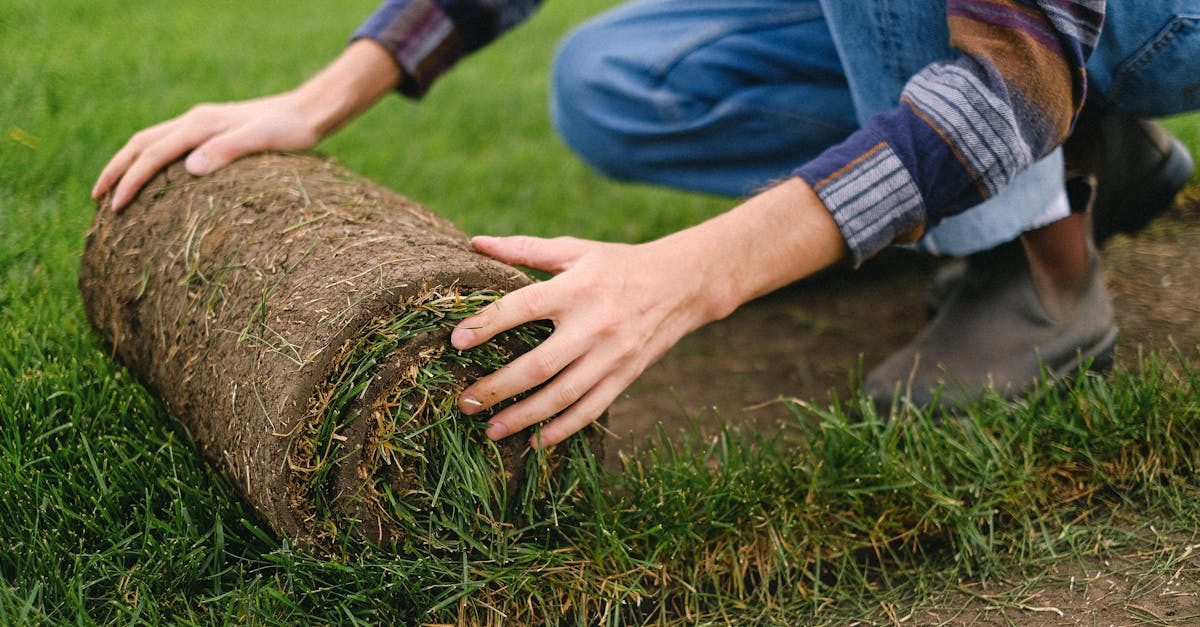
These materials are not a replacement for compost or good fertilization, but they can be a useful complement when you want to accelerate the benefits of organic matter without adding much bulk. They are often applied in liquid or granular form at relatively low rates, measured in ounces or a few pounds per 1,000 square feet.
Application and Expectations
Follow product-specific rates, which frequently fall around 2 to 10 ounces of liquid humic product or 1 to 5 pounds of granular material per 1,000 square feet per application, repeated several times per season. They can be tank-mixed or applied alongside fertilizers in many cases and should be watered in lightly.
Benefits are usually subtle rather than dramatic. You may notice improved response to fertilizer, slightly better color, and gradual improvements in soil tilth over one or more seasons. For very depleted soils, they are best used in conjunction with more substantial amendments like compost and biochar rather than as a stand-alone fix.
Practical Application Strategies and Seasonal Timing
Step-by-Step Plan for Fast Results
To turn diagnosis and amendment choices into a practical action plan, use a simple sequence:
- Late summer to early fall (cool-season) or late spring (warm-season): Conduct a soil test if you have not done one in the last 2 to 3 years.
- Within 2 to 4 weeks of receiving results: Address pH with lime or sulfur if required, following lab rates.
- During peak growth window: Schedule core aeration when soil is moist but not waterlogged, targeting soil temperatures above about 55°F.
- Immediately after aeration: Apply compost topdressing (0.25 to 0.5 inch) across the lawn, optionally blended with biochar and, where indicated, gypsum.
- Within a week of aeration: Apply a balanced fertilizer appropriate to your grass and soil, referencing Best Fertilizers for Lawns or Organic vs Synthetic Fertilizers for product selection.
Watering during this period should aim for about 1 to 1.5 inches per week from rain plus irrigation, applied in 2 to 3 deep sessions rather than daily shallow watering. This supports root growth through freshly opened aeration channels and into newly amended soil.
Cool-Season vs Warm-Season Grass Timing
Cool-season grasses respond best to soil amendments applied in early fall (roughly September to early October in many regions) or in early spring. Fall is often preferred because soil is still warm, roots are actively growing, and weed pressure is lower. If you integrate overseeding with your amendment work, fall timing also gives new seedlings a full cool season to establish.

Warm-season grasses like bermuda and zoysia respond strongly to amendments applied in late spring to early summer when they are fully out of dormancy and soil temperatures are consistently above about 65°F. Applying heavy amendments or aggressive aeration to warm-season turf in late fall can increase winter injury risk, so keep major soil work in the active growth window.
Recommended products
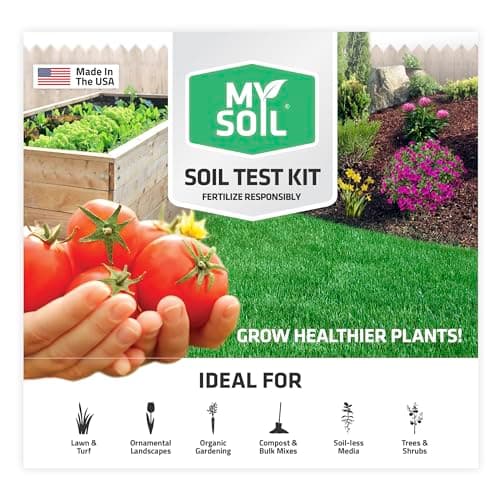
MySoil Soil Test Kit
A mail-in lab test reporting pH and 13 nutrients with target ranges.
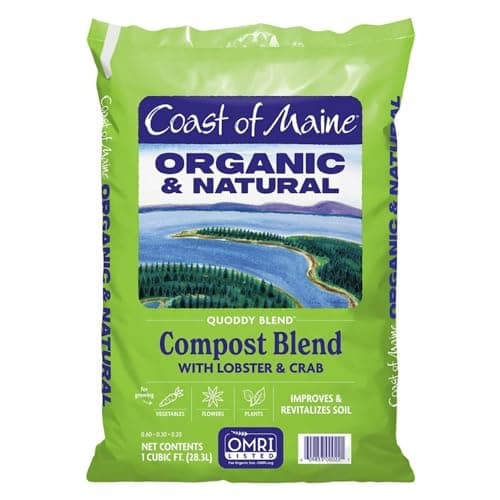
Coast of Maine Quoddy Blend Lobster Compost
A finished, screened compost for topdressing at a quarter inch after aeration.
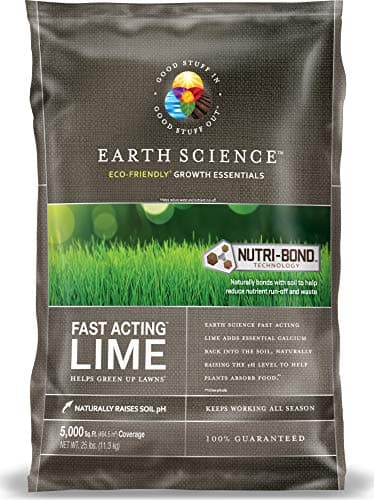
Encap Fast Acting Pelletized Lime
A pelletized lime that moves soil pH upward faster than ground agricultural lime.
What Other Guides Miss: Common Mistakes to Avoid
Many lawn care articles list amendments without addressing the confirmation and timing steps that determine whether they actually work. One common oversight is skipping a soil test and applying lime, gypsum, or sulfur based on generic advice. Without lab data, it is easy to raise pH too far, add unnecessary calcium, or fail to address the real issue, which might be low organic matter or compaction instead.
Another frequent gap is ignoring incorporation. Simply scattering compost or biochar on top of a dense, thatchy lawn and expecting rapid change is unrealistic. Combining core aeration with topdressing, and then lightly dragging or raking the material so it falls into the holes, is what connects amendments to the root zone where they are needed.
Timing errors are also common. Applying heavy amendments during peak heat or drought, when grass is barely growing, reduces visible benefit and increases stress. Similarly, some guides recommend very thick layers of compost or topsoil over existing turf. Once you exceed about 0.5 inch at a time on an established lawn, you risk smothering grass and creating a new layering problem instead of fixing the existing soil.
Conclusion: Build Better Soil for a Faster Lawn Turnaround
Most struggling lawns are symptoms of tired soil: compaction, poor structure, low organic matter, or off-target pH. The best soil amendments to transform your lawn fast are those that rebuild that foundation. Compost, often paired with biochar, provides structural and biological improvement. Gypsum, lime, or sulfur correct specific chemical issues when confirmed by soil testing. Humic substances and similar carbon inputs fine tune nutrient retention and root function.
Approach amendments as part of a system: diagnose with a visual assessment and soil test, confirm issues with simple field checks like the screwdriver test, then apply targeted materials in the right season, combined with aeration, proper watering, and a sound fertilizer plan. With that structure, you can expect visible improvements in color and density within several weeks and deeper, more resilient soil within a season or two.
Ready to take the next step? Check out How to Test Your Lawn's Soil and Composting for a Healthier Lawn to refine your amendment choices, then use our fertilizer calculator to align your new soil structure with an efficient, grass-specific feeding plan.
Top Picks
- Pennington Full Season Lawn Fertilizer 32-0-5Check price on Amazon
- Simple Lawn Solutions Liquid Soil LoosenerCheck price on Amazon
- Encap Fast Acting Pelletized Lime (25 lb)Check price on Amazon
As an Amazon Associate we earn from qualifying purchases.
Free Lawn Care Tools
Do a simple screwdriver or soil probe test in moist soil. If you struggle to push it deeper than 3 to 4 inches, compaction is restricting roots and water movement. Hard, resistant soil combined with turf that feels firm and bouncy instead of slightly cushioned is a strong sign that compaction is a major issue.
The quickest results usually come from combining core aeration with a thin topdressing of high-quality compost across the lawn. This relieves compaction, adds organic matter, and improves water and nutrient movement to the roots. For even better performance, compost can be boosted with biochar or humic substances.
Color and surface softness often improve within 2 to 6 weeks during active growing seasons when amendments are paired with proper watering and fertilizing. Deeper changes like stronger root systems and better drought tolerance typically develop over a full growing season. Consistent follow-up, such as light compost topdressing every 1 to 2 years, helps maintain and build on those gains.
Compost is a powerful amendment for increasing organic matter, supporting microbes, and improving structure, but it is not a cure‑all. Problems like severely incorrect pH, heavy compaction, or extremely sandy or clay‑dominant soil often need a combination approach. Pair compost with aeration, gypsum for heavy clay, or biochar in sandy soils for faster, more complete improvement.
Extra fertilizer can temporarily green up the lawn but does not solve compaction, poor structure, or pH issues, so the grass stays shallow‑rooted and vulnerable. Simply dumping topsoil over existing turf can smother grass and create layering problems that worsen drainage. Correcting the underlying soil with amendments like compost, gypsum, and biochar makes your existing fertilizer and water work far more effectively.
Heavy clay soils have tiny particles that compact easily and drain poorly, so they benefit most from aeration plus organic matter and, in many cases, gypsum to improve aggregation and infiltration. Sandy soils drain and dry out fast and lose nutrients quickly, so they respond best to compost combined with materials like biochar that increase water and nutrient holding capacity. Loam, being more balanced, usually needs lighter, maintenance‑level compost additions to stay in good condition.
Photos: นิรมล บุญเทพ / Pexels, Anna Shvets / Pexels, Karola G / Pexels

Beat weeds and brown spots from your phone
Snap a photo, get the fix, and follow a plan timed to your soil and weather. Free on iPhone.