7 Proven Ways to Improve Soil Quality for a Healthier Lawn
 James ThorntonLawn Equipment & Maintenance Expert | 20 Years
As an Amazon Associate we earn from qualifying purchases.
Patchy color, shallow roots, and constant disease flareups almost always trace back to one thing: weak soil. When the soil under your grass is compacted, unbalanced, or low in organic matter, fertilizer and extra watering only mask the problem for a few weeks at a time. Lasting, proven lawn improvement comes from fixing the soil itself.
Soil quality is simply how well your soil supports healthy turf: its texture, structure, organic matter, nutrient balance, drainage, and biological life. When those pieces are in line, you get darker color, thicker turf, deeper roots, and better drought and disease tolerance. The 7 proven ways to improve soil quality for a healthier lawn in this guide apply in every region, but the best timing will depend on your grass type and climate.
Many homeowners assume more fertilizer means a better lawn, that all dirt is basically the same, or that one miracle product can fix bad soil. Turf science shows the opposite. Over-fertilizing on poor soil leads to runoff, thatch, and disease, and different soils behave very differently under the same treatment. This guide is written for intermediate DIYers who already mow and water consistently and now want to level up by improving soil itself with proven, repeatable steps.
If your lawn is thin, pale, or constantly struggling despite regular fertilizer and watering, the underlying issue is usually poor soil structure, low organic matter, or incorrect pH. A quick way to confirm this is the screwdriver test: after normal watering, try pushing a screwdriver 6 inches into the soil. If it stops in the top 2 inches or you hit hard resistance, compaction and low-quality soil are very likely driving your lawn problems.
The quickest fix is to start with a lab soil test, then combine core aeration with organic material such as compost and correct pH with lime or sulfur based on results. Avoid guessing with high-nitrogen fertilizers, since they temporarily green the grass but make weak roots worse. Instead, follow the soil test recommendations, add 0.25 to 0.5 inches of screened compost once or twice a year, and mow higher so roots can grow deeper.
Most homeowners see noticeable color and density improvements within 4 to 8 weeks after correcting pH and adding organic matter, and deeper root growth within one growing season. Maintain progress by re-testing soil every 2 to 3 years, topdressing with compost annually, and aerating compacted areas at least every other year in the active growing season for your grass type.
Understanding Soil Basics Before You Start
What “Healthy Soil” Really Means for Lawns
Healthy lawn soil is not just dirt that holds the grass in place. It is a structured, living system that stores water, air, and nutrients in the right proportions so turf roots can function properly. The best lawn soils have a loam texture, which is a balanced mix of sand, silt, and clay. This balance provides both drainage and water holding, so the soil does not stay soggy or dry out too fast.
Structure is as important as texture. In high-quality soil, particles clump into small aggregates. These aggregates create pores of different sizes, which let water and oxygen move downward and allow roots to penetrate deeply. Adequate organic matter, typically in the 3 to 6 percent range for many lawn soils, binds these aggregates together and increases the soil’s cation exchange capacity (CEC). Higher CEC means the soil can hold onto positively charged nutrients such as potassium, calcium, and magnesium instead of letting them leach away.
Healthy soil also drains well but does not repel water. If water sits on the surface for more than an hour after a normal irrigation or rain, that usually signals either compaction or a heavy clay layer. On the other hand, if the top 2 inches dry out in a day despite an inch of water per week, your soil is likely sandy, low in organic matter, or both.
Biologically, high-quality lawn soil is full of microbial life and soil fauna, including earthworms, beneficial fungi, and bacteria that cycle nutrients and break down thatch. If you rarely see earthworms when you dig or if the subsoil smells sour or anaerobic, biology is probably suppressed by compaction, overwatering, or repeated heavy synthetic fertilizer use without organic inputs.
Common field signs of poor soil quality include:
- Standing water or very slow infiltration after average rainfall or irrigation
- Rock-hard soil that resists digging or screwdriver penetration beyond 2 to 3 inches
- Thin turf, bare patches, or roots that are mostly in the top 1 to 2 inches of soil
- Persistent thatch thicker than 0.5 inch and frequent fungal issues
- Pale, yellowing, or blotchy grass even when fertilizer is applied
- Penn State Extension notes that lawns generally perform best where organic matter in the topsoil is between 3 and 5 percent, which supports both structure and nutrient holding.
- Michigan State University turf publications indicate that a thatch layer thicker than 0.5 inch begins to restrict roots and water movement, especially on compacted soils.
Know Your Grass Type and Climate
Soil improvement methods are universal, but timing and expectations depend on grass type and climate. Cool-season grasses such as Kentucky bluegrass, tall fescue, and perennial ryegrass grow best where summers are moderate and winters are cold. They respond strongly to soil improvements in spring and fall when temperatures are between about 60 and 75 degrees Fahrenheit.
Warm-season grasses such as Bermuda, zoysia, St. Augustine, and centipedegrass are most active in late spring through early fall, typically when soil temperatures are above about 65 degrees Fahrenheit. Aeration, topdressing, and heavier nutrient corrections are best done when these grasses are in full growth so they can recover quickly.
Your USDA hardiness zone, typical rainfall pattern, and whether you primarily irrigate or rely on natural rainfall will influence how quickly soil amendments change conditions. For example, lime typically raises pH more slowly in dry, low-organic-matter soils than in moist, biologically active soils. In very hot-summer climates, soil biology slows when surface temperatures exceed about 90 degrees Fahrenheit, so compost applications are more effective in spring or fall than at peak heat.
Way #1: Test Your Soil and Fix Imbalances (The Non-Negotiable First Step)
Why Soil Testing Is the Most Proven Starting Point
A laboratory soil test removes guesswork and is the single most cost-effective step in any serious soil improvement plan. Without a test, it is easy to apply lime to a soil that is already alkaline, or to keep adding phosphorus where levels are already high, which can contribute to runoff and environmental issues. A basic lawn soil test typically costs less than one bag of premium fertilizer and can save years of trial and error.
A good soil test provides pH, organic matter percentage, and nutrient levels including phosphorus (P) and potassium (K). Many labs also report calcium (Ca), magnesium (Mg), sulfur (S), and micronutrients such as iron (Fe), manganese (Mn), zinc (Zn), and copper (Cu). Some will estimate CEC, which helps you understand how much nutrient storage capacity your soil has and how often you may need to apply fertilizer. When you know exactly what is deficient, excessive, or in balance, you can match fertilizer type, rate, and timing directly to those numbers.
- Purdue Extension recommends soil testing lawns every 3 to 5 years under stable management, and more often when major changes or repeated problems occur.
- University of Florida turf publications note that most warm-season turfgrasses perform best when soil pH is maintained roughly between 5.5 and 7.0, depending on species.
How to Properly Collect a Lawn Soil Sample
Accurate test results depend on how you collect your sample. Avoid shortcuts such as scooping one handful from a single spot, because that rarely represents an entire lawn. Instead, use the following method.
- Gather tools: a clean trowel or soil probe, a clean plastic bucket, and the lab’s sample box or bag. Avoid galvanized metal containers that can contaminate micronutrient readings.
- Identify representative areas. Separate obviously different zones, such as a low, wet area versus a dry, sloped area. Sample them separately if they behave differently.
- Scrape away surface debris, thatch, or mulch. Insert the trowel or probe 3 to 4 inches deep for established lawns, which captures the main root zone.
- Take 10 to 15 cores or slices from across a representative area, walking in a zigzag pattern. Place each core in the bucket.
- Break up and mix the cores thoroughly in the bucket, remove stones or large roots, and then fill the sample box or bag with this composite soil.
- Let wet soil air dry at room temperature before shipping, unless the lab instructs otherwise.
The best times to test are spring or fall when soil moisture is moderate and before you make major nutrient applications. Testing every 2 to 3 years is sufficient for most lawns, but if you are doing a full renovation or have ongoing problems, annual testing for a few seasons can be very helpful. For more step-by-step detail, see How to Test Your Lawn’s Soil and How to Read a Lawn Soil Test Report.
Interpreting Your Soil Test and Choosing Corrections
Most labs or extension offices provide an interpretation sheet with recommended lime or fertilizer rates. Start with pH. For most cool-season grasses, an ideal pH is roughly 6.0 to 7.0. For many warm-season grasses, acceptable pH may extend slightly lower, from about 5.5 to 6.5, though centipedegrass can tolerate even more acidic conditions. When pH drops much below your target range, nutrients such as phosphorus, calcium, and magnesium become less available; when pH is too high, micronutrients such as iron and manganese can become less available, leading to chlorosis.
Labs typically categorize nutrient levels as low, medium, high, or very high. For lawns, “low” usually means turf will likely respond to fertilizer, while “medium” indicates some response is possible but not dramatic. “High” or “very high” usually means additional fertilizer of that nutrient provides little or no benefit and may increase environmental risk. Use these categories along with the specific pounds-per-1,000-square-feet recommendations to calibrate your annual fertilization plan. For more context on matching products to these needs, see Best Fertilizers for Lawns and Organic vs Synthetic Fertilizers.
If your report shows extreme pH (below about 5.0 or above about 7.8), very high soluble salts, or unusual micronutrient imbalances, consulting a local extension office or turf professional is appropriate. These issues sometimes indicate drainage problems, historical contamination, or irrigation water quality problems that require more specialized strategies.
Action Plan Checklist
Once your soil test results arrive, use this checklist to convert data into action:
- Record your current pH and the recommended lime or sulfur rate per 1,000 square feet.
- Note your organic matter percentage; if it is below about 3 percent, plan to increase compost or other organic inputs (see Way 3).
- Highlight which nutrients are rated low or medium, especially phosphorus and potassium, and choose fertilizers that match those deficits (see Way 5).
- Plan application timing: schedule pH adjustments and major corrections in your grass’s active growing season, leaving at least 4 to 6 weeks between heavy applications when possible.
- Set a reminder to re-test in 2 to 3 years, or after a major renovation, to confirm progress.
Way #2: Adjust Soil pH for Maximum Nutrient Uptake
The Role of pH in Soil Quality and Lawn Health
Soil pH controls how available nutrients are to your grass. Even if a soil has adequate phosphorus and trace elements, an off-target pH can lock them up chemically so roots cannot use them. Most turfgrasses have evolved to perform best in slightly acidic to neutral soil, where the widest range of nutrients is soluble but not at toxic levels.
When pH is too low (strongly acidic), aluminum and manganese can become more soluble, sometimes to toxic levels, while phosphorus and molybdenum become less available. Lawns in these conditions often look stunted and may show purplish or dark green hues from phosphorus stress. When pH is too high (alkaline), iron, manganese, zinc, and sometimes phosphorus become less available, leading to yellowing between the veins on younger leaves, a classic sign of iron chlorosis.
Raising pH with Lime
If your soil test recommends raising pH, lime is the standard amendment. The report usually specifies the pounds of agricultural limestone needed per 1,000 square feet to move pH into the target range. Finer ground lime reacts faster than coarse material, and pelletized lime is easier to spread evenly with a broadcast spreader.
As a general practical threshold, applications over about 50 pounds of lime per 1,000 square feet are typically split into two or more treatments, 6 months apart, to avoid surface buildup and to allow time for incorporation. For example, if your test suggests 75 pounds per 1,000 square feet, you might apply 40 pounds in fall and 35 pounds the following spring. Water the lawn after spreading to wash particles off foliage and into the soil surface.
Apply lime in the growing season for your grass when the soil is moist but not saturated. Core aeration before lime applications can improve penetration, especially in compacted clay soils with low organic matter. Avoid applying lime at the same time as ammonium-based nitrogen fertilizers, because combined high pH and ammonium can lead to ammonia gas loss.
Lowering pH with Sulfur or Acidifying Products
If your soil test shows alkaline conditions and your turf species prefers more acidity, elemental sulfur is commonly used to lower pH. Soil bacteria convert sulfur to sulfuric acid over time, which gradually acidifies the root zone. This is a biological process, so it works faster in warm, moist, well-aerated soils with active microbial life.
Typical rates for modest pH adjustments might range from 5 to 10 pounds of elemental sulfur per 1,000 square feet, but always follow your lab’s specific recommendation and do not exceed those rates without professional guidance. Split treatments 3 to 6 months apart are safer for turf than a single heavy application, especially on sandy soils. Some specialized fertilizers use ammonium sulfate or other acidifying nitrogen sources, which can help maintain pH once you have brought it into range.
Where irrigation water is alkaline or high in bicarbonates, pH drift upward may be continuous. In those cases, regular, light acidifying inputs plus periodic soil tests help maintain balance rather than aiming to correct everything at once.
Confirmation Steps
If your grass is pale or chlorotic and you suspect pH issues, you can preliminarily confirm with a simple pH probe or home kit, although these are less accurate than lab tests. If the kit shows values below about 5.5 or above about 7.5, schedule a lab test to quantify the actual value and buffering capacity. After lime or sulfur is applied, wait at least 3 to 6 months before retesting pH, because changes occur gradually.
Way #3: Build Organic Matter with Compost and Topdressing
Why Organic Matter Is Central to Soil Quality
Organic matter is the foundation of almost every improvement you can make to lawn soil. It increases water holding capacity in sandy soils, improves drainage and structure in clay soils, feeds beneficial microbes, and boosts CEC so nutrients are stored rather than lost. When organic matter is too low, soils act rigid, either crusting on top or compacting easily, and nutrients must be supplied more frequently.
Most lawn soils benefit from raising organic matter into the roughly 3 to 6 percent range, though the exact ideal depends on soil texture and climate. Your soil test will usually report organic matter by percentage, which helps you track progress over several years as you topdress and mulch mow.
Topdressing with Compost
Topdressing with high-quality, finished compost is one of the most proven ways to improve soil quality for a healthier lawn. The goal is to add a thin, even layer that works down into the turf canopy without smothering the grass. Typical application depths are about 0.25 to 0.5 inch, which equates to roughly 0.75 to 1.5 cubic yards of compost per 1,000 square feet.
Apply compost when turf is actively growing so it can recover from temporary shading. For cool-season lawns, early fall and mid to late spring are ideal. For warm-season lawns, late spring through early summer works best, typically when soil temperatures are consistently above 65 degrees Fahrenheit. After spreading, drag a leveling rake or the back of a leaf rake across the lawn to work compost down between grass blades, then irrigate lightly to settle it.
Use only finished, screened compost that smells earthy, not sour or like fresh manure. Unfinished compost can tie up nitrogen as it continues decomposing, which can temporarily yellow your lawn. Screened compost with particle sizes under about 0.25 inch is easier to spread and less likely to create clumps that shade turf.
Other Organic Inputs
In addition to compost, you can build organic matter by:
- Mulch mowing clippings instead of bagging, which recycles nitrogen and carbon back into the soil
- Topdressing with finely screened leaf mold or well-aged manure once or twice per year
- Applying natural organic fertilizers such as composted poultry litter or biosolids at moderate rates
These inputs work slowly but steadily, and they are best viewed on a multi-year timeline. Most homeowners see improved moisture retention and easier digging within 1 to 3 seasons of consistent organic additions.
Recommended products
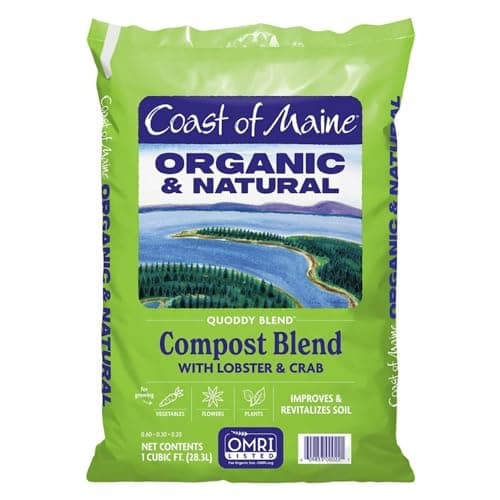
Coast of Maine Quoddy Blend Lobster Compost
A finished compost for the quarter inch topdressing that raises organic matter over several seasons.
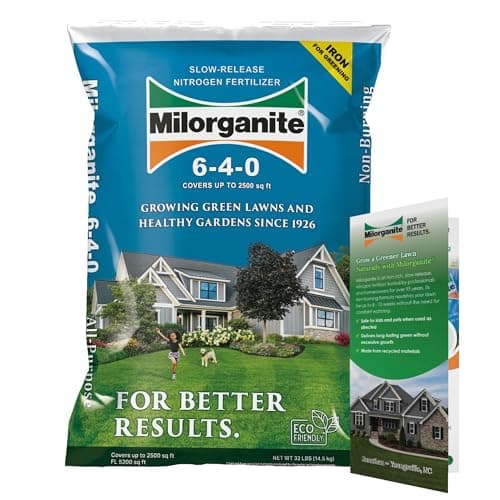
Milorganite 6-4-0
A slow-release organic nitrogen that feeds turf and soil biology at the same time.
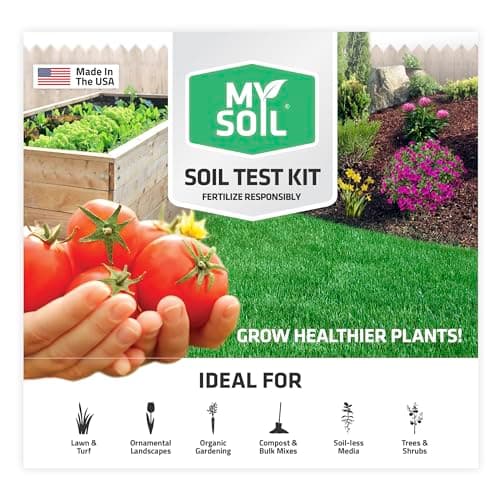
MySoil Soil Test Kit
A mail-in soil test that reports organic matter as a percentage alongside pH and nutrients.
Way #4: Relieve Compaction with Aeration
Why Compaction Destroys Soil Quality
Compaction compresses soil particles together, eliminating the air-filled pores that roots and beneficial microbes need. Lawns experience compaction from foot traffic, mowing equipment, pets, and repeated rainfall or irrigation on fine-textured soils. The result is shallow roots, standing water, and reduced nutrient uptake even when fertilizer is present.
A quick diagnostic is the screwdriver or soil probe test. After normal irrigation, attempt to push a screwdriver 6 inches into the soil. If it stops within the top 2 to 3 inches or requires heavy force, compaction is likely limiting root depth. Areas close to sidewalks, driveways, or play zones often show this pattern most strongly.
Core Aeration as a Proven Fix
Core aeration mechanically removes plugs of soil, usually 0.5 to 0.75 inch in diameter and 2 to 3 inches deep, leaving holes in the turf. These holes relieve surface compaction, increase water infiltration, and provide channels for oxygen and organic matter to move deeper into the profile. When combined with topdressing, aeration is one of the most effective ways to change the physical condition of a lawn’s root zone over time.
Aerate when your grass is in active growth. Cool-season lawns respond best to aeration in early fall or, secondarily, in spring; warm-season lawns respond best from late spring to mid-summer. A practical threshold is to aim for cores spaced 2 to 3 inches apart across the surface. That usually means making at least two passes in different directions with a rental core aerator. Avoid aerating during drought stress or extreme heat or cold, when turf recovery is slow.
After aeration, leave the soil plugs on the surface to dry, then break them up with a rake or by dragging a section of chain link fence across the lawn. If you topdress with compost immediately after aeration, the material falls into the holes and begins improving soil deeper down. Water lightly after the process to help turf recover.
Way #5: Fertilize Smarter, Not Heavier
Match Fertilizer to Soil Test and Grass Needs
Fertilizer is essential, but using more of it is not the same as improving soil quality. In fact, repeatedly applying high-nitrogen fertilizer to a compacted or unbalanced soil will often produce quick top growth, shallow roots, and increased disease pressure. The fix is to calibrate both product choice and application rate to your soil test, grass type, and seasonal growth pattern.
As a general guideline, many cool-season lawns perform well with 2 to 4 pounds of actual nitrogen per 1,000 square feet per year, split into 2 to 4 applications. Warm-season lawns often need 1 to 3 pounds per 1,000 square feet annually, depending on species and usage. Use your soil test to determine whether you should choose a fertilizer with added phosphorus or potassium or a zero-phosphorus product.
Use Slow-Release and Organic Sources Strategically
Slow-release nitrogen, whether from coated synthetic granules or natural organic materials, provides a steady nutrient supply without sudden growth spikes. This reduces mowing frequency and improves stress tolerance. Products that list at least 30 to 50 percent slow-release nitrogen on the label are typically appropriate for residential lawns.
Natural organic fertilizers add small amounts of organic matter along with nutrients, which supports microbial life. They release nutrients over weeks to months as microbes break them down. However, they still must be matched to soil-test results to avoid overapplying certain nutrients like phosphorus. See Organic vs Synthetic Fertilizers for a deeper comparison of pros, cons, and use cases.
Avoiding Common Over-Fertilization Patterns
If you see fast top growth, extra thatch, and disease outbreaks following fertilization, you are likely applying too much nitrogen at once or at the wrong time. As a practical rate limit, most cool-season lawns should not receive more than about 1 pound of nitrogen per 1,000 square feet in a single application under typical conditions, and warm-season lawns often do well with 0.5 to 0.75 pound per application. Use a spreader calibration test on a small area to confirm you are not exceeding labeled rates.
Way #6: Improve Drainage and Water Management
Why Water Behavior Reveals Soil Problems
How water moves into and through your soil is one of the clearest indicators of soil quality. Poor drainage leads to root rot, shallow rooting, and nutrient loss, while excessively fast drainage causes drought stress and difficulty maintaining consistent moisture. Most lawns perform best when they receive about 1 to 1.5 inches of water per week (from rain plus irrigation), applied in 1 or 2 deep soakings rather than frequent light sprinklings.
If water ponds on the surface for more than an hour after applying about 0.5 inch, compaction or a dense clay layer is likely. If you irrigate 1 inch and the top 3 inches are dry again within 24 hours under mild temperatures, low organic matter and coarse texture are probably the core issues.
Surface and Subsurface Fixes
On compacted or fine-textured soils, repeated core aeration plus compost topdressing gradually improves infiltration. In some cases, shallow surface grading to remove low spots can also help, but grading should be done carefully to avoid damaging existing turf or exposing subsoil. Avoid filling low spots with pure sand on top of clay; this can create a perched water table that worsens saturation.
Where high water tables or persistent saturation exist, subsurface drainage such as French drains may be necessary. These projects are more involved and often benefit from professional assessment. In milder situations, adjusting irrigation to apply no more than 0.5 to 0.75 inch per cycle and allowing the surface to dry between waterings can significantly reduce disease and compaction.
Watering Practices That Support Soil Health
Water deeply but infrequently. The goal is to wet the root zone to about 6 inches, then allow the surface to dry slightly to encourage roots to follow moisture downward. A simple confirmation step is to run sprinklers for 30 minutes, then use a trowel to check how deep moisture penetrated. Adjust run times so an entire week’s irrigation totals around 1 to 1.5 inches in moderate weather, and reduce or suspend irrigation when rainfall meets that threshold.
Way #7: Encourage Soil Biology
Why Living Soil Is More Resilient
Healthy soil biology is a multiplier for all other soil improvements. Microbes and fungi decompose organic matter, release tied-up nutrients, and create stable soil aggregates. Earthworms and other soil fauna mix organic residues into the mineral soil, improving structure and porosity. When biology is suppressed by compaction, chronic wetness, or repeated heavy salt-based fertilizer applications without organic inputs, soils tend to crust and lose resilience.
Practical Ways to Support Soil Life
You can improve soil biology by combining several practices:
- Maintain moderate moisture, avoiding both chronic saturation and extended severe dryness
- Topdress with compost to supply carbon and microbial inoculum
- Reduce unnecessary pesticide applications, particularly broad-spectrum insecticides applied on a calendar schedule without confirmed pest thresholds
- Include some natural organic fertilizer sources in your annual program
- Maintain a mowing height suitable for your grass type, which increases root mass and root exudates that feed microbes
If you currently see very few earthworms even in moist spring soil, expect it to take 1 to 3 years of improved management for populations to rebound. Avoid expecting instant changes from single biological products; they work best when combined with broader soil-healthy practices.
What Other Guides Miss: Common Mistakes to Avoid
Many online guides to lawn soil improvement overlook a few key points that determine whether your efforts succeed.
First, they often skip the confirmation step of a real soil test. Visual symptoms like yellowing or thin turf can come from multiple causes, including pH imbalance, compaction, or simple nitrogen deficiency. Without lab data, it is easy to apply lime to a soil that is already alkaline or to add phosphorus where it is already high. Always confirm with a soil test before making large pH or phosphorus changes.
Second, timing is frequently treated as optional. Aerating or topdressing at the wrong time for your grass type, such as heavy aeration of cool-season turf during summer heat, slows recovery and sometimes worsens stress. Align heavy interventions with active growth: fall and spring for cool-season grasses, late spring through mid-summer for warm-season species.
Third, many guides recommend one-time fixes instead of multi-year plans. In reality, improving organic matter, relieving compaction, and stabilizing pH are medium-term projects. Expect 1 to 3 growing seasons of consistent aeration, compost topdressing, and calibrated fertilization to transform a poor soil into a resilient, high-quality lawn base.
Putting It All Together: A Practical Timeline
To integrate the 7 proven ways to improve soil quality for a healthier lawn, use a seasonal plan rather than isolated actions.
In Year 1, start with a lab soil test in spring or fall. Within 2 to 4 weeks, apply recommended lime or sulfur at the specified rate, and adjust your fertilizer choice to match the nutrient recommendations. During the same active growing season, schedule core aeration and apply 0.25 to 0.5 inch of screened compost over the lawn, then water it in. Calibrate irrigation to deliver about 1 to 1.5 inches per week in total, checking soil depth with a trowel.
In Years 2 and 3, continue aeration at least every other year in compacted areas, topdress annually with compost, and maintain a fertilizer program that delivers appropriate nitrogen while avoiding excessive phosphorus or potassium. Monitor drainage, adjust watering frequency, and keep mowing at the correct height for your grass type. Re-test soil after roughly 2 to 3 years to confirm pH and organic matter trends, then fine tune from there.
Conclusion
Soil quality is the underlying engine of lawn health. When texture, structure, organic matter, pH, nutrients, and biology are in balance, turf becomes thicker, darker, and far more resilient to heat, drought, and disease. The 7 proven ways to improve soil quality for a healthier lawn - testing and correcting imbalances, adjusting pH, building organic matter, relieving compaction, fertilizing intelligently, improving drainage, and supporting soil life - work best when applied together over several growing seasons, not as one-time fixes.
By following a data-driven plan and watching for confirmation signs like deeper rooting, better water infiltration, and reduced need for rescue fertilizing, you can steadily transform weak soil into a stable, productive foundation for your lawn. Ready to take the next step? Check out Composting for a Healthier Lawn for detailed guidance on producing or choosing compost that accelerates your soil improvement program.
Top Picks
- Simple Lawn Solutions Liquid Soil LoosenerCheck price on Amazon
- MySoil Soil Test KitCheck price on Amazon
- HSLGOVE 7-in-1 Soil Test KitCheck price on Amazon
As an Amazon Associate we earn from qualifying purchases.
Free Lawn Care Tools
A simple way to check is the screwdriver test: after normal watering, try pushing a screwdriver about 6 inches into the soil. If it stops in the top 2 inches or you hit hard resistance, the soil is likely compacted and low quality. Other clues include standing water after rain, rock-hard ground, shallow roots, and thin or yellowing turf despite fertilizing.
Most homeowners notice better color and thicker turf within 4 to 8 weeks after correcting pH and adding compost or other organic material. Deeper, stronger root systems typically develop over one full growing season. Continued progress comes from re-testing every 2 to 3 years, annual compost topdressing, and periodic aeration.
Under stable conditions, lawn soil should be tested every 3 to 5 years to monitor pH, organic matter, and nutrient levels. If you are making big changes or fixing serious issues, more frequent testing early on can help you fine-tune amendments. A lab soil test is inexpensive compared to fertilizer and can prevent years of guesswork.
If water sits on the surface for more than an hour after normal rain or irrigation, that usually indicates compaction or a heavy clay layer. Rock-hard soil that resists digging, roots confined to the top 1–2 inches, and thatch thicker than 0.5 inch are also signs of poor structure. These conditions often lead to thin turf, frequent disease, and uneven color.
Organic matter in the 3 to 6 percent range helps soil particles form stable aggregates, which improve structure, drainage, and root penetration. It also increases the soil’s cation exchange capacity (CEC), allowing it to hold onto key nutrients like potassium, calcium, and magnesium instead of losing them to leaching. This combination supports thicker turf, deeper roots, and better drought and disease resistance.
The basic methods are the same, but timing depends on whether you have cool-season or warm-season grass. Cool-season lawns like Kentucky bluegrass, tall fescue, and perennial ryegrass respond best to aeration and topdressing in spring and fall when temperatures are around 60–75°F. Warm-season lawns like Bermuda, zoysia, St. Augustine, and centipedegrass recover fastest when soil work is done in late spring through early fall, once soil temperatures are above about 65°F.
Photos: David Brown / Pexels, Digital Buggu / Pexels, Matthias Cooper / Pexels

Beat weeds and brown spots from your phone
Snap a photo, get the fix, and follow a plan timed to your soil and weather. Free on iPhone.