Fix Patchy Lawn Spots After Winter Easy Solutions
 James ThorntonLawn Equipment & Maintenance Expert | 20 Years
As an Amazon Associate we earn from qualifying purchases.
Patchy lawn spots after winter usually trace back to a short list of culprits: winter kill and desiccation, snow mold, salt from de-icers, pet urine, vole runs, or grub damage that was hiding under the snow. The good news, after repairing thousands of these, is that almost every thin or bare spot can be brought back in a single growing season with the right diagnosis, some honest soil prep, the correct seed, and consistent water.
This guide walks you through diagnosing exactly why those bare spots appeared, then fixing them step by step: how to prep the soil, whether to seed or sod, how deep to plant, what soil temperature to wait for, and how to water so the patch fills in fast instead of washing out. It closes with the prevention moves that keep the same spots from coming back next spring. It works whether your damage showed up as classic winter patchiness or as bare spots you are only noticing now that the lawn has greened up around them.
To fix patchy lawn spots after winter, first confirm whether the grass is actually dead or just slow to wake up. Tug a handful of the brown turf. If it pulls up easily with few white roots, that area is dead and needs repair. If it resists and shows white roots, it is only dormant and will green up with time, a little nitrogen, and proper watering.
For dead patches: rake out the debris, loosen the top inch of soil, add a quarter inch of compost, then seed with a grass that matches your lawn at 1/8 to 1/4 inch deep. Keep the seedbed lightly and evenly moist until germination, then shift to about 1 to 1.5 inches of water per week. Cool-season repairs usually fill in within 4 to 8 weeks; warm-season grasses can run into early summer. Time it to soil temperature, not the calendar: seed cool-season grass when soil holds 50 to 65 F and warm-season grass at 65 to 70 F. Our soil temperature tracker tells you when your ZIP code gets there.
Step 1: Dead or Just Dormant?
Before you buy a single bag of seed, answer one question: is the brown grass dead, or is it alive and just slow to green up? Repairing turf that was going to recover on its own wastes seed and money, and seeding into living grass rarely takes.
Do the tug test. Grab a handful of the brown blades and pull firmly.
- Firm resistance, white or cream roots: the plant is alive and dormant. Leave it, feed lightly at green-up, and water. It will fill back in.
- Pulls up easily, roots short, dark, or absent: that turf is dead. This is the area you repair.
Give the whole lawn a little time first. In early spring, warm-season grass in particular can look completely dead while it is simply still dormant, and a repair rushed in before green-up just gets outcompeted later. If you are not sure whether the whole lawn is healthy or genuinely thinning, run through the checks in our guide on how to tell if your lawn is healthy before deciding how much to repair.
Step 2: Diagnose Why the Bare Spots Appeared
Different causes need different fixes, and skipping this step is the number one reason the same patches come back every March. Look at the color, shape, and location of each bare spot and match it to the table below.
| What you see | Likely cause | Fix |
|---|---|---|
| Gray or pink matted webbing right after snowmelt | Snow mold | Rake to dry and fluff the area; most turf recovers, reseed only truly dead spots |
| Straw-brown strips along sidewalks and driveways | Salt or de-icer damage | Flush the soil with water, amend with compost, then reseed |
| Bleached, brittle tips on wind-exposed areas | Winter desiccation (windburn) | Usually recovers; water on warm, dry winter days going forward |
| Turf lifts like a loose carpet, C-shaped larvae below | Grub damage | Confirm counts, treat if 10+ per square foot, then reseed |
| Winding surface tunnels or shallow runs | Vole activity under snow cover | Tamp the runs down, rake, and reseed; deter rodents next fall |
| Round dead spots with dark green rings | Dog urine | Flush heavily with water, reseed a urine-tolerant grass |
| Bare, hard, compacted paths | Foot or plow traffic on frozen turf | Loosen or aerate, reseed, and reroute winter traffic |
| Thin bare areas under trees or on the north side | Shade and root competition | Reseed a shade-tolerant mix or transition to groundcover |
| Uniformly brown but firmly rooted | Dormancy, not death | Do not repair; wait for green-up and feed lightly |
If you suspect grubs, peel back a one-square-foot flap of turf at the edge between healthy and damaged grass and count the white, C-shaped larvae. Sample a few spots and average them. A healthy lawn tolerates a handful, but an average of 10 or more per square foot justifies a targeted treatment; our guide on how to control grubs in your lawn covers timing and products.
- University of Wisconsin Extension recommends confirming grub damage by sampling several one-square-foot sections in both damaged and nearby healthy turf, then averaging the counts before deciding whether to apply an insecticide.
Step 3: Prep the Spot (Where Most Repairs Are Won or Lost)
Seed thrown onto hard, dead thatch is seed wasted. The prep is what separates a patch that blends in seamlessly from one that stays a visible scar all season.
Work each patch in this sequence:
- Rake out the dead material. Use a stiff or thatch rake to strip away dead grass, matted leaves, and debris until you expose bare soil. Seed has to touch soil, not sit on a dead mat.
- Loosen the top inch. Scratch up the top 0.5 to 1 inch with a hand cultivator or garden rake so new roots can push down and water can soak in.
- Fix compaction and salt. On hard, plow-packed, or salted strips, poke holes 2 to 3 inches deep with a fork and rock it to fracture the soil. Where de-icer was used, water heavily a few times first to flush the salt below the root zone.
- Amend and level. Add a quarter inch of compost or screened topsoil and rake smooth to grade. If a spot is sunken, build it up with a sand-and-compost mix, but never bury living grass at the edges more than half an inch or you will smother it.
Step 4: Seed, Plug, or Sod (and How Deep)
Match the repair to your existing grass so the patch blends instead of standing out as a different color or texture. If you do not know what you have, compare blade width and growth habit to the rest of the lawn, or take a plug to a garden center.
- Cool-season lawns (north and transition zones): tall fescue, Kentucky bluegrass, and perennial ryegrass blends repair from seed. Ryegrass sprouts fastest, bluegrass spreads slowly to knit thin edges together.
- Warm-season lawns (south): bermuda, zoysia, and St. Augustine are usually repaired with plugs or sod cut to fit, since the common varieties are vegetative and do not come true from seed.
Getting seed depth right matters more than people expect. Grass seed is small and wants to sit shallow, about 1/8 to 1/4 inch deep, with a thin topdress over it. Bury it an inch down and it never emerges.
Whichever route you take, follow through on the placement:
- Seeding rate: use the high end of the bag's range on bare soil, a lighter rate on merely thin spots. Piling on seed just gives you weak, crowded seedlings. Our seeding calculator converts your patch size and grass type into an actual amount.
- Seed-to-soil contact: rake the seed in lightly to 1/8 to 1/4 inch, then tamp or roll so it presses against soil. Contact drives germination.
- Thin mulch: a light scatter of clean straw or a seed mulch (leaving 50 to 60 percent of soil visible) holds moisture and hides seed from birds.
- Sod and plugs: cut pieces to fit snugly with no air gaps, stagger the seams like brickwork, and press or roll them into firm contact.
Recommended products

Jonathan Green Black Beauty Ultra Grass Seed
A tall fescue, bluegrass and ryegrass blend that blends into most northern lawns.
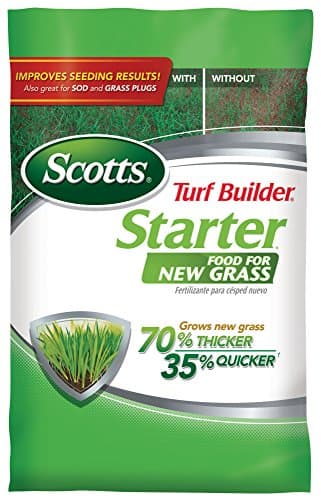
Scotts Turf Builder Starter Food for New Grass
A phosphorus rich starter fertilizer for the repaired patch only.
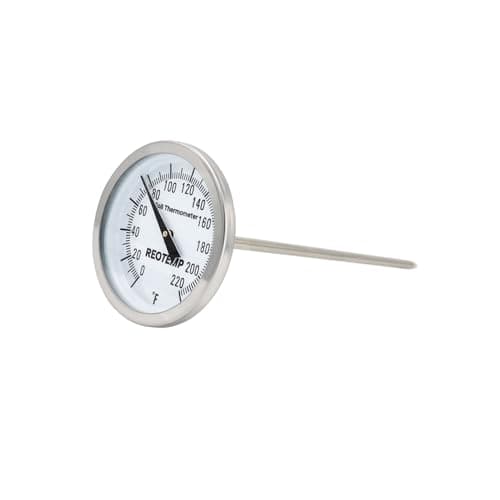
REOTEMP Waterproof Soil Thermometer
A waterproof dial thermometer with a 5 inch stem for checking soil at seed depth.
Step 5: Time It to Soil Temperature, Not the Calendar
The single biggest timing mistake is seeding by the date on the calendar instead of the temperature of the soil. Seed dropped into cold soil just sits there and rots or gets eaten. Wait for the soil, measured at a 2 inch depth, to reach the germination window for your grass.
| Grass category | Seed when soil holds | Notes |
|---|---|---|
| Cool-season (tall fescue, bluegrass, ryegrass) | 50 to 65 F | The spring window is short before summer heat; fall is ideal, but spring repair works if you water well |
| Warm-season (bermuda, zoysia, centipede) | 65 to 70 F and rising | Do not rush it; plugs or sod often beat seed for a fast blend |
| Not sure / mixed lawn | Match the grass you have | Identify the existing turf first so the repair blends |
Check it with a soil thermometer pushed 2 inches down in the morning, or skip the guesswork and use our soil temperature tracker for your ZIP code. For the wider question of when the whole lawn is ready for spring work, our guide on when to start mowing in spring by region and grass type lines up with these same temperature cues.
Step 6: Water, Mow, and Feed for a Fast Fill-In
Most patch repairs that fail do so here, not at seeding. New seedlings have almost no roots and die within hours of drying out, so the watering pattern flips completely from how you water an established lawn.
- Germination (weeks 1 to 3): keep the top half inch constantly moist, never soaked. That usually means light watering 1 to 3 times a day depending on heat and wind. Frequent and shallow beats one deep soak at this stage.
- Rooting (weeks 3 to 6): back off to deeper, less frequent watering, working toward 1 to 1.5 inches per week from rain plus irrigation. This pulls roots downward and readies the patch for summer.
Set a straight-sided container or rain gauge in the zone to measure real output instead of guessing. Mow only once the new grass is about one-third taller than your normal height. If you keep the lawn at 3 inches, make the first cut at roughly 4 inches, with a sharp blade, on a dry day, and no tight turns over the tender patch. Our mowing height calculator has the right height for your grass type.
Hold off on heavy fertilizer. A starter fertilizer at seeding is fine if a soil test says you need the phosphorus. Otherwise wait until the new grass has been mowed two or three times, then feed at label rate. Early nitrogen just pushes soft, disease-prone growth on plants that should be spending their energy on roots.
Step 7: Prevent New Bare Spots Next Winter
Once the patches fill in, the goal shifts to not doing this again. Most winter damage is set up by choices in the previous fall and by how you manage traffic and de-icers.
- Go into winter dense. A thick, fall-fertilized, deep-rooted lawn shrugs off winter stress that shreds thin turf. Overseed weak areas and aerate compacted soil in early fall.
- Rethink de-icers near turf. Swap high-salt products for sand or a calcium-based de-icer along lawn edges, and avoid piling salty snow onto the same strip of grass every storm.
- Keep traffic off frozen turf. Walking or driving repeatedly across frozen grass shears the crowns and prints bare spots that show up in spring. Set a clear path and stick to it.
- Stay ahead of grubs. If you counted 10 or more per square foot this spring, plan a preventive treatment in late spring or early summer rather than waiting for damage.
- Mow tall. Keeping your grass at the high end of its range all season grows deeper roots and shades the soil, which is your best long-term defense against winter desiccation and disease.
Fold these into a simple year-round rhythm. A monthly lawn care calendar keeps overseeding, aeration, and fertilizer timing on track, and our summer lawn care heat and drought strategies guide carries the freshly repaired lawn through its first hot stretch.
The Bottom Line
Fixing patchy lawn and bare spots after winter comes down to a repeatable sequence: confirm the grass is actually dead, diagnose why it died so it does not happen again, prep the soil properly, seed shallow with good contact, wait for the right soil temperature, and water like a seedling depends on it, because it does. Do that and the repair is a once-a-season chore, not a running battle.
Take 30 minutes this week to walk the yard, flag every bare spot, and start soil prep on at least one so you are ready to seed the moment the soil hits temperature.
Free Lawn Care Tools
Most cool-season lawn repairs fill in within 4 to 8 weeks if you prep the soil, match the seed to your existing grass, and keep the seedbed evenly moist. Warm-season lawns may take a bit longer, especially if you rely on plugs or stolon spread instead of seed.
Use seed for small or moderate patches and when the existing lawn is primarily seed-based cool-season grasses. Sod is better for high-visibility areas, large dead sections, or warm-season grasses like St. Augustine that are hard to match from seed.
Pre-emergent herbicides can inhibit grass seed germination, so avoid using them directly where you will be seeding. Either skip pre-emergent on repair spots or delay seeding those areas until the product's restriction window has passed, following label guidance.
If turf lifts like a loose rug and you find multiple white C-shaped grubs in the top few inches of soil, grubs are likely involved. Sample several 1-square-foot areas in and near damaged spots and if counts average 10 or more grubs per square foot, a targeted grub control treatment is typically justified.

Your lawn plan, in your pocket all season
Grass ID, a season plan, soil-timed reminders, and a lawn journal that remembers what you did. Free on iPhone.