

Best Fertilizer for Bermuda Grass in 2026: 7 Top Picks Ranked

As an Amazon Associate we earn from qualifying purchases.
Healthy Bermuda grass depends more on the right fertilizer program than almost any other common turf type. It grows aggressively in warm weather, spreads fast, and responds dramatically to nitrogen. Get the fertilizer right and you can have a dense, golf-fairway style lawn. Get it wrong and you invite thatch, disease, weeds, and wasted money. For the complete reference, see the Bermudagrass pillar guide.
Recommended products
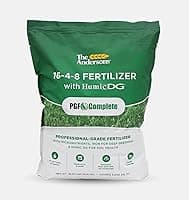
The Andersons PGF Complete 16-4-8
Professional-grade slow-release with humic acid.
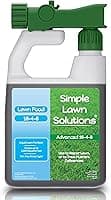
Simple Lawn Solutions Advanced 16-4-8
Hose-end liquid for fast green-up and spoon feeding.
The challenge is that the best fertilizer for Bermuda grass is not a single product or brand. The ideal choice depends on your climate zone, soil test results, how you use your lawn, and your budget and time. A front yard in Atlanta with compacted clay needs something different than a backyard in Orlando on sandy soil, even though both are Bermuda.
Wondering what a year of Bermuda lawn care actually costs? Use our lawn care cost calculator to get an annual estimate for your ZIP and lawn size.
Fertilizer technology has also changed. Many states limit phosphorus, coatings now control how fast nitrogen releases, and slow-release sources are more common. Some of the "classic" products you may have used ten years ago are hard to find or no longer legal, while newer blends are designed to feed longer with fewer applications and less runoff.
This guide covers three things in depth. First, specific product-style recommendations and reviews for different Bermuda lawn goals in 2026. Second, how to choose the right NPK ratio and formulation based on your soil, climate, and expectations. Third, pro-level application strategies, including timing, rates, and mistakes that keep showing up in other guides.
If your Bermuda grass looks pale green, thin, or has poor recovery after mowing, it usually points to low nitrogen or low potassium. Confirm by checking your last fertilizer date and rate, plus doing a simple soil test to see if potassium or pH is off. If growth is weak even in warm weather above 75°F and you have not fertilized in 6-8 weeks, nutrient shortage is the leading suspect.
The fastest safe fix is a balanced slow-release granular fertilizer in the 24-0-11 or 20-0-20 range at about 0.75-1.0 pound of nitrogen per 1,000 square feet, followed by light watering to move it into the soil. Avoid dumping high doses of quick-release fertilizer, especially in late summer or when temperatures exceed 95°F, because this spikes growth, raises mowing stress, and can burn turf. Expect deeper color in 5-10 days and noticeable density improvement within 3-4 weeks if temperatures stay warm and you mow correctly.
Understanding Bermuda Grass Nutrition in 2026
What Bermuda Grass Needs to Thrive
Bermuda is a warm-season grass, so its growth and fertilizer response are tightly driven by soil and air temperature. It is mostly dormant when soil temperatures are below about 60°F, begins to green up in spring as soils hit the low 60s, and grows aggressively between roughly 75 and 95°F. Fertilizing outside that active window wastes product and can stress the plant.
The three primary nutrients, nitrogen (N), phosphorus (P), and potassium (K), do different jobs:
Nitrogen (N) is the main driver of color and growth. Bermuda has a higher nitrogen appetite than cool-season grasses. Adequate nitrogen produces dark green color, tight density, and fast recovery from wear. Too little nitrogen leaves the lawn yellowish and thin. Too much, especially from fast-release urea, can cause excessive top growth, scalping, and thatch buildup.
Phosphorus (P) supports root growth and early establishment. Many soils already contain sufficient P, and in 2026 a lot of states and municipalities restrict phosphorus in lawn fertilizers, especially for established turf. That is why many of the best fertilizers for Bermuda grass will be low or zero in phosphorus and only used where a soil test shows a deficiency.
Potassium (K) is crucial for stress tolerance. It helps Bermuda handle heat, drought, traffic, and some diseases. Deficient potassium often shows as weak, drought-sensitive turf that browns out quickly in summer. In many southern and coastal regions, soil tests frequently show medium to low potassium, which is why high K fertilizers (like 15-0-15 or 20-0-20) are common in professional Bermuda programs.
Micronutrients, especially iron (Fe), manganese (Mn), magnesium (Mg), and zinc (Zn), fine-tune color and metabolic processes. Iron in particular is valuable when you want deeper green without pushing extra growth. Liquid or granular iron supplements can darken Bermuda noticeably in 3-7 days, often used in summer when you want color but do not want to increase mowing frequency.
How Bermuda Grass Differs From Other Turf Types
Bermuda behaves very differently from fescue, ryegrass, or St. Augustine, which is why a "general lawn fertilizer" rarely gives the best result. Compared to cool-season grasses like fescue or rye, Bermuda:
- Needs more nitrogen during its active season, often 2-3 times as much per year for a premium look.
- Tolerates low mowing heights, so it responds dramatically to balanced N and K, but also shows stress quickly if you overdo quick-release fertilizer.
- Goes fully dormant and brown in winter in the transition zone, so fall nitrogen timing is very different from cool-season lawns.
St. Augustine, by contrast, is more shade tolerant, less wear tolerant, and generally does not want as much nitrogen as high-performance Bermuda. Fertilizer recipes that are great for St. Augustine in shade would often push Bermuda too hard in full sun. That is why products labeled as "Southern lawn fertilizer" or "all-grass fertilizer" might be acceptable for a basic yard, but they rarely line up with the ideal nitrogen schedule for a dialed-in Bermuda lawn.
How Much Fertilizer Does Bermuda Actually Need?
Thinking in terms of pounds of nitrogen per 1,000 square feet per year is the simplest way to plan. For most home Bermuda lawns:
- Low-maintenance or utility lawn: about 2 to 3 pounds of N per 1,000 square feet per growing season.
- High-performance or golf-fairway look: about 4 to 6 pounds of N per 1,000 square feet per growing season.
Where you live changes this total. In the Deep South or coastal areas with a 9-12 month growing window, Bermuda stays active longer and can safely use more nitrogen. In the transition zone with a shorter season and cooler nights, pushing 6 pounds of N can cause thatch or disease, especially if you rely heavily on quick-release sources.
As a reference, 1 pound of nitrogen from a 25-0-5 fertilizer means applying 4 pounds of product per 1,000 square feet, because 25 percent of that 4 pounds is nitrogen. Always translate label percentages into pounds of N per 1,000 so you can match your seasonal target. Our fertilizer calculator does the math automatically for any bag NPK and lawn size.
Yearly Nitrogen Budget Examples
For a typical lawn in the transition zone, like Atlanta, GA, soil warms enough to start feeding around mid April and cools again by early October. A balanced moderate program might look like this:
- Mid April: 0.75 pound N per 1,000 sq ft (starter for green-up once 50-75 percent of lawn is naturally greening).
- Late May: 1.0 pound N per 1,000 sq ft.
- Early July: 1.0 pound N per 1,000 sq ft.
- Late August: 0.5 to 0.75 pound N per 1,000 sq ft if turf is healthy and not under heat drought stress.
Total: roughly 3.25 to 3.5 pounds of N for the season. That is enough for a dense, attractive home lawn without the intense maintenance of a sports field.
In a warmer, longer-season area like Houston, TX or Orlando, FL, you may feed from March through November. A high-performance Bermuda lawn there might follow:
- Early March: 0.5 pound N per 1,000 sq ft after green-up starts.
- Mid April: 0.75 pound N.
- Mid May: 0.75 pound N.
- Mid June: 0.75 pound N.
- Mid July: 0.75 pound N.
- Late August: 0.5 to 0.75 pound N.
- Early October (if still actively growing): 0.5 pound N.
Total: in the 4.5 to 5.25 pound N range. This works well when combined with proper mowing, irrigation, and maybe light spoon feeding with liquids between granular applications.
Key Factors to Consider Before Choosing the Best Fertilizer
1. Climate Zone and Sun Exposure
Your climate is one of the main reasons the best fertilizer for Bermuda grass looks different from yard to yard. Warm, humid coastal climates like Florida, southeast Texas, or coastal Carolinas give Bermuda a long growing season and frequent summer rains. Fertilizer programs there emphasize multiple smaller applications and attention to disease risk in humid periods.
Hot, dry inland regions like parts of Arizona or inland California have long warm seasons but less rain and more irrigation. The focus there is on efficient slow-release fertilizers and potassium support, since drought stress is common. Over-fertilizing in these areas can cause salt buildup and burn, especially in soils with poor drainage.
The transition zone, including cities like Atlanta, Charlotte, and parts of Oklahoma, has hot summers but cooler winters and more freeze events. Bermuda will fully brown out in winter there. You typically apply fertilizer from mid to late spring through late summer, with little or no fall nitrogen. Pushing nitrogen too late increases winter injury risk.
Best Fertilizer for Bermuda Grass in Texas
In Texas, the best fertilizer for Bermuda grass depends on which part of the state you are in. In South Texas and the Gulf Coast (Houston, Corpus Christi, San Antonio), Bermuda can be fed from March through October, and a high-nitrogen slow-release product like 24-0-11 or The Andersons PGF Complete 16-4-8 works well across a long season. In North Texas (Dallas, Fort Worth), the feeding window shrinks to mid-April through September, so target 3 to 4 pounds of nitrogen per 1,000 square feet for the season. West Texas (El Paso, Lubbock) has alkaline soils and low rainfall, so a product with added iron and potassium (such as Milorganite or a 15-0-15 blend) helps handle heat and salt stress. Avoid heavy fertilization during summer droughts when irrigation is restricted, and never push nitrogen past early October anywhere in Texas because it can reduce winter hardiness.
Best Bermuda Grass Fertilizer by Lawn Goal
The best Bermuda grass fertilizer for most home lawns is a slow-release granular product in the 16-4-8 or 24-0-11 range, such as The Andersons PGF Complete. For a golf-fairway look that prioritizes deep color, choose a high-nitrogen blend like Scotts Turf Builder Southern 32-0-10. For organic or pet-safe fertilization, Milorganite 6-4-0 is the proven choice with over 90 years of use. For quick green-up with minimal growth, a liquid iron product like Simple Lawn Solutions Advanced gives color in 3 to 7 days without triggering extra mowing.
Sun exposure also matters. Bermuda loves full sun and thins in shade. In partial shade (say 4-6 hours of direct sun), you generally use a lighter nitrogen rate because the grass cannot photosynthesize enough to use high doses. If a partly shaded area stays pale or disease-prone, lowering N and improving airflow often helps more than adding stronger fertilizer.
2. Your Soil Test: The Non-Negotiable Starting Point
Soil testing is the one step most homeowners skip, and it is the main reason many "best fertilizer" programs underperform. Without a test, you are guessing on phosphorus, potassium, and pH. Two neighboring yards can have completely different P and K levels, which means the best NPK blend will differ too.
A basic soil test report will show:
- pH: Bermuda typically prefers a pH between 6.0 and 7.0. Below 5.8, nutrient availability, especially phosphorus, drops sharply. Above 7.5, iron and manganese lock up, often causing yellowing even when N is fine.
- Phosphorus and potassium levels: These determine if you should choose a high P, balanced, or high K fertilizer. If P is already high, a 0 in the middle number is beneficial to comply with regulations and avoid runoff.
- Organic matter and CEC (Cation Exchange Capacity): Higher CEC soils (often heavier clays with more organic matter) can hold more nutrients and support less frequent fertilization. Sandy, low CEC soils leach nutrients quickly, so smaller, more frequent applications are safer.
If your soil test shows very low potassium and a pH of 5.5, the best fertilizer for your Bermuda is not the same as someone with balanced K and a pH of 6.8. In the low K case, a product like 15-0-15 or 20-0-20 becomes top tier, and you might also use sulfate of potash. For a low pH, you may need lime to raise it before you see full benefit from fertilizer.
When soil pH is below about 5.5, correcting pH with lime often has more impact on Bermuda health than adding more NPK. Likewise, if pH is above 7.8, elemental sulfur or acid-forming fertilizers plus improved organic matter may be required. For details on testing procedures and interpretation, see a dedicated guide like How to Test Your Lawn Soil the Right Way, and for pH correction strategies refer to How to Fix Lawn Soil pH for Better Growth.
- NC State Extension recommends soil testing every 2-3 years for warm-season lawns and targeting pH 6.0-6.5 for Bermuda to optimize nutrient availability.
3. Granular vs Liquid Fertilizer for Bermuda Grass
Granular and liquid fertilizers both work on Bermuda, but they shine in different roles. Most homeowners use granular as the backbone of their program because it is easier to spread evenly, lasts longer, and can deliver a predictable amount of nitrogen over 4-8 weeks.
Granular benefits include:
- Beginner friendly application using a broadcast or drop spreader.
- Slow-release options that reduce burn risk and provide steady feeding.
- Cost efficiency for delivering several pounds of N per 1,000 square feet over a season.
Liquid fertilizers, applied with hose-end sprayers or pump sprayers, give precise control and very quick response. They are excellent for spoon feeding high-performance Bermuda lawns, correcting minor deficiencies, or applying micronutrients like iron.
Liquid benefits include:
- Fast visual response, often within 3-7 days.
- Fine-tuned rates such as 0.1 to 0.25 pound N per 1,000 sq ft per application for advanced programs.
- Foliar uptake for micronutrients when soil conditions limit availability.
Many experienced Bermuda owners combine both: granular for core feedings every 4-8 weeks and light liquid feedings or iron applications in between. This dual approach gives excellent color and density without the growth spikes of heavy quick-release applications.
4. Quick-Release vs Slow-Release Nitrogen
When comparing the best fertilizers for Bermuda grass, look at how much of the nitrogen is quick release (water soluble) versus slow release (controlled or coated). This has a bigger effect on lawn performance than brand name in many cases.
Quick-release nitrogen sources, such as urea or ammonium sulfate, dissolve rapidly and are immediately available to the grass. They give fast green-up within 5-10 days but can burn if overapplied or left on dry leaf blades, and they only feed for 3-4 weeks in warm weather.
Slow-release nitrogen sources, such as sulfur-coated urea, polymer-coated urea, methylene urea, or organic-based sources, release over longer periods, commonly 6-12 weeks depending on coating technology and temperature. They greatly reduce burn risk and growth surges, and are much better suited for summer applications when temperatures are above 85°F.
On the label, look for wording like "X percent slow release nitrogen" or "controlled release". For Bermuda, a fertilizer with at least 30-50 percent slow-release nitrogen is very helpful during late spring and summer. Highly quick-release formulas can still play a role for early spring green-up or correcting color quickly, but they should be used carefully and at lower rates.
Top Fertilizer Types and Use Cases for Bermuda in 2026
Best All-Purpose Granular Fertilizer for Most Bermuda Lawns
For the average homeowner who wants a thick, green lawn without complicated mixing, an all-purpose slow-release granular fertilizer with a moderate nitrogen content and good potassium is usually the best choice. Typical examples include NPK ratios like 24-0-11, 25-0-5, or 20-0-10 with at least 30 percent slow release.
What makes this "best" for general use is the balance of safety, performance, and flexibility. A product in the 24-0-11 range at 0.75-1.0 pound N per 1,000 sq ft every 6-8 weeks from late spring to late summer gives most Bermuda lawns consistent color and density without demanding constant attention. The zero phosphorus middle number aligns with many state regulations and soil test realities, while the elevated potassium supports summer stress tolerance.
Look for features such as uniform prill size for even spread, labeled percentage of slow release nitrogen, and added micronutrients like iron. If your soil test shows medium to high potassium, a lower K version like 24-0-6 may still be excellent.
Best High-Performance Fertilizer for Golf-Fairway-Style Bermuda
If you mow Bermuda at or below 1 inch, use a reel mower, and want that dense, striped, sports turf look, your fertilizer needs are more specific. High-performance bermudagrass programs typically use:
- Lower rates per application, around 0.25 to 0.5 pound N per 1,000 sq ft, applied more frequently.
- A blend of high-quality slow-release nitrogen plus a small quick-release portion for response.
- Consistent potassium support and regular micronutrient feeding, especially iron.
In 2026, many pro-style ferts for Bermuda sport turf are in the 18-0-18, 16-0-8, or 20-0-20 range, often with 50-75 percent slow release N. These are frequently applied every 2-4 weeks in the core summer months, sometimes supplemented with liquid spoon feeding in between.
For homeowners, it is realistic to approximate this with a quality 18-0-18 or 20-0-20 granular every 4 weeks at 0.5 pound N per 1,000 sq ft, plus a liquid 0.1-0.25 pound N application mid cycle if needed. The key is that no single application exceeds about 0.75 pound N, which keeps growth manageable and reduces scalping risk at low mowing heights.
Best Starter Fertilizer for New Bermuda Sod or Seed
New Bermuda lawns, whether from seed, sprigs, or sod, benefit from a different fertilizer approach than established yards. Here phosphorus often matters more, because root establishment is the priority. A typical starter fertilizer might have an NPK ratio like 18-24-12 or 16-22-8.
Because phosphorus regulations vary, you should only use a higher-P starter when allowed and when your soil test confirms low to medium phosphorus. If soil P is already high, use a more balanced or P-free starter, and focus on improved seedbed preparation and proper watering.
Apply starter fertilizer at seeding or right after sod installation, usually at 0.5-0.75 pound N per 1,000 sq ft. Avoid exceeding 1.0 pound N at establishment because new roots are sensitive. Once the lawn begins to fill in and you are mowing regularly, transition to your normal Bermuda fertilizer program for the rest of the season.
Best Organic or Hybrid Fertilizers for Bermuda
Some homeowners prefer organic or hybrid (organic plus synthetic) fertilizers to reduce environmental impact or improve soil health. Purely organic products like composted poultry manure, biosolids, or plant-based meals typically have low N analysis, often in the 4-2-3 to 10-2-4 range, and rely on soil microbes to release nutrients.
For Bermuda, which has a fairly high nitrogen demand, fully organic programs can work but usually require:
- Larger application amounts due to lower N percentage.
- More patience because response is slower and tied to soil temperature and microbial activity.
- Good irrigation and mowing practices to fully realize the benefits.
Hybrid fertilizers pair organic matter and slow-release mineral nitrogen, providing a middle ground. They increase soil biological activity and organic content while still delivering enough nitrogen for a quality Bermuda lawn. These can be excellent choices on sandy or low organic matter soils. For more context on the pros and cons, see a broad overview like Organic vs Synthetic Fertilizers.
How to Choose the Right NPK Ratio for Your Bermuda Lawn
Reading the Bag: What the Numbers Mean for Bermuda
The three numbers on any bag, such as 24-0-11, show the percentage by weight of nitrogen, phosphorus (as P2O5), and potassium (as K2O). For Bermuda:
- The first number (N) controls color and growth rate.
- The second number (P) is usually low or zero unless a soil test shows deficiency or you are establishing new turf.
- The third number (K) supports toughness and summer stress resistance.
The ideal ratio depends mainly on your soil test levels for P and K. On a soil test that rates P and K as "high," you can use a high N, low P and low K fertilizer, like 30-0-5, and rely on existing reserves. If K is low but P is fine, something like 18-0-18 or 20-0-20 makes more sense.
Matching NPK to Soil Test and Lawn Goals
Use this simple framework:
- Soil test shows low phosphorus and low potassium: Consider a more balanced starter style product early on, like 16-22-8 at establishment, then switch to a higher K product like 20-0-20 for ongoing feeding.
- Soil test shows sufficient phosphorus but low potassium: Choose a no or low P fertilizer with strong K, such as 15-0-15, 18-0-18, or 20-0-20 for most feedings.
- Soil test shows high P and K: Use a high N, low P, low K fertilizer like 29-0-5 or 32-0-4, focusing mainly on nitrogen throughout the growing season.
- High-performance, low-mow Bermuda: Typically favor medium N with high K, for example 18-0-18, applied more frequently at lower rates.
Always remember that nitrogen rate per application is more important than the exact ratio in most established Bermuda lawns. Even with a perfect ratio, applying 1.5 pounds N per 1,000 sq ft in one shot can cause problems. Staying within 0.5-1.0 pound N per application, matched to your goals, is the safer strategy.
Micronutrients and Iron for Deep Green Color
If your Bermuda is growing well but looks light green or yellowish between the veins while the veins stay greener, it often points to micronutrient issues, especially iron or manganese, rather than nitrogen deficiency. This is particularly common in high pH soils above 7.5.
You can confirm by reviewing your soil test micronutrient section. When iron is low or soil pH is high, adding more nitrogen alone will not fully darken the lawn. Instead, use a product that includes iron and possibly manganese, either in granular form blended with your main fertilizer or as a separate liquid application.
Liquid iron supplements often show color response within 3-5 days and may last 2-4 weeks. They are ideal when you want to improve color without increasing mowing load. Just avoid spraying iron on concrete, stone, or wood because it can stain.
Bermuda Grass Fertilizer Comparison: Top Products for 2026
5–20| Product | NPK Ratio | Type | Best For | Coverage | Price Range | Buy | |||
|---|---|---|---|---|---|---|---|---|---|
| The Andersons PGF Complete | 16-4-8 | Granular, slow-release | Spring & summer maintenance | 10,000 sq ft | $40–50 | Check on Amazon | |||
| Simple Lawn Solutions Advanced | 16-4-8 | Liquid, quick-release | Fast green-up, foliar feeding | 12,800 sq ft | $40–50 | Check on Amazon | |||
| Milorganite Slow-Release | 6-4-0 | Granular, organic | Safe year-round feeding | 2,500 sq ft | 6-4-0 | Granular, organic | Safe year-round feeding | Check on Amazon | |
| Scotts Southern Turf Builder | 32-0-10 | Granular, slow-release | Southern lawns, heat & drought | 10,000 sq ft | $25–35 | Check on Amazon | |||
| Down to Earth Bio-Turf | 8-3-5 | Granular, OMRI organic | Organic lawn care | 3,000 sq ft | $40–50 | Check on Amazon | |||
| Preen One LawnCare Weed & Feed | 24-0-6 | Granular, slow-release | Fertilizing + weed control | 5,000 sq ft | $40–50 | — |
Prices are approximate and may vary by retailer. Always check the label to confirm your grass type is listed before applying.
Application Strategy: Timing, Rates, and Technique
When to Fertilize Bermuda in 2026
For timing, soil temperature and lawn growth are better guides than calendar dates. Use these windows:
- Spring: Begin fertilizing when at least 50 percent of the lawn has naturally greened up and soil temperatures at 4 inches are consistently above about 60°F. This is often late March to early May depending on region.
- Summer: Continue applications every 4-8 weeks while Bermuda is actively growing and you can mow at least weekly. The core feeding window is usually May through August.
- Late summer / early fall in warm climates: In deep South or coastal areas, light feeding can continue into September and even October if new growth remains vigorous and frost risk is low.
A key threshold is to avoid heavy nitrogen if the lawn is not actively growing. If soil temperatures drop below the mid 50s or you are no longer mowing regularly, it usually indicates that the major fertilization period should end, especially in the transition zone.
How Much to Apply: Safe Nitrogen Rates
On each fertilizer application, calculate the nitrogen dose, not just pounds of product. For Bermuda, a commonly recommended maximum is about 1.0 pound N per 1,000 sq ft per single application, with 0.5-0.75 pound N safer for routine feedings.
To calculate product amount, use:
Required product (lb/1000) = Desired N rate (lb/1000) ÷ Nitrogen percentage (as decimal).
For example, if you want 0.75 pound N per 1,000 sq ft from a 24-0-11 fertilizer:
0.75 ÷ 0.24 = 3.125 pounds of product per 1,000 sq ft.
Make sure your spreader is calibrated so that you deliver close to this rate. Overapplying by 50 percent or more increases burn risk and growth surges, especially with quick-release nitrogen. Underapplying consistently can leave Bermuda thin and more vulnerable to weeds.
How to Apply Granular Fertilizer Correctly
Good technique matters just as much as choosing the best fertilizer for Bermuda grass. Follow this basic process:
- Measure your lawn area in square feet so you know how much product is needed.
- Weigh or measure the correct amount of fertilizer for that area based on your target N rate.
- Set your spreader to a conservative setting and test on a small, inconspicuous section, checking coverage patterns.
- Apply half the product walking in one direction (north-south), then the other half walking perpendicular (east-west) to improve uniformity.
- Blow or sweep granules off hard surfaces back into the lawn.
- Water lightly, usually 0.25-0.5 inch, within 24 hours to move the fertilizer into the soil and reduce leaf burn risk.
If you are using a combination fertilizer that includes herbicide, follow label timing and watering instructions carefully, since pre-emergent and post-emergent actives need specific conditions to work correctly.
Liquid Fertilizer and Spoon-Feeding Bermuda
For advanced programs, spoon feeding small, frequent doses of nitrogen and micronutrients via liquid applications can produce extremely uniform color and growth. A common pattern is applying 0.1-0.25 pound N per 1,000 sq ft every 7-14 days during the main growing season.
To use liquids effectively:
- Mix according to label rates for turf, never guessing concentrations.
- Apply in calm conditions to avoid drift and uneven coverage.
- Use overlapping spray patterns, similar to painting, to avoid streaks.
- Follow the label regarding whether to water in, or allow foliar uptake before any irrigation or rainfall.
Liquid applications are especially useful for iron, manganese, and other micros when high pH or soil factors limit uptake. They also allow you to back off granular N if growth is getting too aggressive while still keeping color strong.
- Texas A&M AgriLife Extension suggests limiting single nitrogen applications on warm-season grasses to 1 pound N per 1,000 sq ft and spacing them at least 4 weeks apart for typical home lawns.
What Other Guides Miss: Common Mistakes to Avoid
Many articles on the best fertilizers for lawns gloss over issues that matter a lot for Bermuda. Paying attention to these common gaps will keep you ahead of the curve.
Ignoring Soil Tests and pH
A frequent oversight is recommending a one-size-fits-all NPK ratio without mentioning soil tests. If your pH is 5.2, you can apply the highest rated fertilizer on the market and still see mediocre results, because phosphorus and some micronutrients are not available. Similarly, if your soil potassium is very low, a high N, low K fertilizer will leave Bermuda more prone to drought and disease.
Fix: Do a soil test at least every 2-3 years, build your fertilizer plan around that data, and correct pH problems with lime or sulfur before you keep increasing NPK. See How to Test Your Lawn's Soil and How to Improve Soil pH for Grass for stepwise guidance.
Overfeeding in Spring or Late Summer
Some guides recommend early spring fertilization as soon as grass starts to show green. For Bermuda, feeding too early, before consistent warmth, encourages top growth while soil is still cold. This often leads to weak roots and more susceptibility to late cold snaps. On the other end of the season, heavy nitrogen in late August or September in the transition zone promotes lush growth that is vulnerable to winter injury and disease.
Fix: Wait until at least 50 percent of the lawn has naturally greened up and soil temperatures are near 60°F before the first full feeding. In cooler climates, taper off nitrogen by late August. In the deep South, you can extend a bit later, but still keep late season rates modest.
Using High-Phosphorus Fertilizer Without Justification
Older advice often suggests high-phosphorus products to "boost roots" on established lawns every year. In 2026, this is not only unnecessary for most Bermuda lawns but often illegal or discouraged. Excess phosphorus contributes to water quality problems and does not improve turf in soils that already test high.
Fix: Use phosphorus only when a soil test shows deficiency or when establishing new sod or seed in low P soils. Most established Bermuda lawns do best with low or zero P formulas as their primary fertilizer.
Neglecting Organic Matter and Compost
Another common blind spot is focusing entirely on synthetic NPK while ignoring soil structure. In sandy soils, nutrients leach quickly, and in heavy clays, compaction limits root growth. Integrating organic matter through topdressing with compost can dramatically improve water holding, nutrient retention, and root development.
Fix: Consider topdressing 0.25-0.5 inch of quality compost over Bermuda every 1-2 years, particularly on poor soils, coupled with your fertilizer program. For a deep dive into methods and benefits, refer to Composting for a Healthier Lawn.
Putting It All Together: Sample Bermuda Fertilizer Programs for 2026
Moderate-Maintenance Home Lawn (Transition Zone)
Goal: Dense, attractive Bermuda cut at 1.5-2 inches with a rotary mower, low risk of problems.
- Late April: 0.75 pound N per 1,000 sq ft using a 24-0-11 or similar, at about 3 pounds of product per 1,000 sq ft.
- Early June: 1.0 pound N with the same or a slightly higher K formula like 20-0-20, at 5 pounds of 20-0-20 per 1,000 sq ft.
- Mid July: 0.75 pound N with 24-0-11 or 18-0-18, watching for heat or drought stress, possibly reducing to 0.5 pound N if conditions are harsh.
- Late August: Optional 0.5 pound N if turf is healthy and you want to maintain color into early fall.
Season total: about 3.0 pounds N per 1,000 sq ft. Supplement with liquid iron in mid summer if color fades but you do not want extra growth.
High-Performance Bermuda (Warm Climate, Reel Mowed)
Goal: Golf-fairway style density at 0.5-1 inch mowing height, long growing season with irrigation.
- Early March: 0.25-0.5 pound N with an 18-0-18 or 16-0-8 containing 50 percent or more slow release.
- April through August: Every 3-4 weeks, 0.5 pound N with 18-0-18 or 20-0-20, plus light liquid spoon feedings at 0.1-0.2 pound N every 10-14 days when growth or color lags.
- September-October (if frost free): Reduce to 0.25-0.5 pound N every 4-6 weeks, focusing on products with strong potassium and micronutrients.
Season total: commonly in the 5-6 pound N per 1,000 sq ft range, backed by excellent mowing, irrigation, and occasional topdressing with sand or compost. Monitor for thatch, and plan for periodic core aeration if the turf gets too spongy.
Organic-Forward Bermuda Program
Goal: Reasonable performance while emphasizing soil health and lower synthetic input.
- Early May: Apply an organic or hybrid fertilizer around 0.5 pound N per 1,000 sq ft. With a 10-2-4 product, that may mean 5 pounds of product per 1,000 sq ft.
- Early July: Repeat 0.5-0.75 pound N with the same product.
- September (warm climates only): Optional 0.25-0.5 pound N if growth remains strong.
- In addition, topdress with 0.25-0.5 inch compost once during the season and use a liquid iron product as needed for color.
This program will not push ultra-premium color and density but can maintain a healthy, durable Bermuda lawn while steadily improving soil structure.
Conclusion: Choosing the Best Fertilizer for Bermuda Grass in 2026
In 2026, the best fertilizer for Bermuda grass is not defined by a single label, but by how well a product's nitrogen release profile, NPK ratio, and micronutrient package match your soil test, climate, and expectations. A moderate slow-release 24-0-11 or 20-0-20 will fit most established lawns with balanced soils. High-performance setups do better with frequent, smaller applications of high K and slow-release formulas, while new lawns and deficient soils need targeted phosphorus or potassium support.
Start with a soil test and confirm pH and nutrient levels, then build a yearly nitrogen budget around 2-3 pounds N per 1,000 sq ft for typical lawns or 4-6 pounds for premium turf in long-season regions. Use granular fertilizer for core feedings, liquids for fine tuning, and consider integrating compost to gradually upgrade your soil. For next steps on building a complete program, including mowing and watering, check out our broader overview in Best Fertilizers for Lawns so you can align your Bermuda plan with the rest of your landscape.
Related Bermuda Fertilizing Guides
Free Lawn Care Tools
Common questions about this topic
Thinking in terms of pounds of nitrogen per 1,000 square feet per year is the simplest way to plan. For most home Bermuda lawns:
For most established Bermuda lawns, a fertilizer with higher nitrogen and moderate to high potassium and little or no phosphorus works best, such as 24-0-11, 20-0-20, or 15-0-15. These blends support strong color, dense growth, and better stress tolerance while staying within modern phosphorus restrictions. Always match the ratio to a recent soil test so you’re not adding nutrients your soil already has in excess.
Begin fertilizing when soil temperatures are in the low 60s and 50–75% of the lawn is naturally greening up, not at the first hint of color. For a transition-zone lawn like Atlanta, this is often around mid April, while warmer coastal areas may start earlier. Fertilizing too early when the grass is still mostly dormant wastes product and can stress the turf.
Slow-release fertilizer feeds Bermuda more steadily, avoiding the growth spikes and scalping risk that come with heavy doses of quick-release nitrogen like straight urea. Modern coated products release over weeks, which improves color and density with fewer applications and less runoff. This approach also reduces thatch buildup and mowing stress, especially in hot weather.
Potassium deficiency often shows up as turf that browns out quickly under heat or drought and struggles with traffic and summer stress, even when nitrogen is adequate. In many southern and coastal regions, soil tests commonly show medium to low potassium levels, which is why high-K fertilizers such as 15-0-15 or 20-0-20 are frequently used. A simple soil test is the most reliable way to confirm if potassium is low.
General “all-grass” or “Southern lawn” fertilizers can keep a basic Bermuda yard alive, but they rarely match Bermuda’s higher nitrogen needs and specific seasonal timing. Bermuda behaves very differently from fescue, ryegrass, and St. Augustine, and a one-size-fits-all product often underfeeds or overpushes growth at the wrong times. For a dense, golf-fairway look, it’s better to choose a fertilizer program tailored to Bermuda’s warm-season growth pattern.
The best fertilizer for Bermuda grass in Texas depends on your region. In South Texas and along the Gulf Coast, a high-nitrogen slow-release product like 24-0-11 or The Andersons PGF Complete 16-4-8 performs well through a long March-to-October season. In North Texas, aim for 3 to 4 pounds of nitrogen per 1,000 square feet spread over April through September. In West Texas with alkaline soil and low rainfall, choose a product with added iron and potassium such as Milorganite or a 15-0-15 blend to handle heat and salt stress. Stop nitrogen by early October statewide to avoid winter injury.
The best Bermuda grass fertilizer for most home lawns is a slow-release granular product with high nitrogen and moderate potassium, such as The Andersons PGF Complete 16-4-8. It delivers steady color and density over 6 to 8 weeks per application without the scalping risk of quick-release urea. For organic options, Milorganite 6-4-0 is a safe, proven choice. For a golf-fairway look, use a higher-nitrogen blend like Scotts Turf Builder Southern 32-0-10. Always translate the N-P-K percentages into pounds of nitrogen per 1,000 square feet to match your seasonal target.
Yes, 16-4-8 is one of the most widely recommended ratios for Bermuda grass, especially products like The Andersons PGF Complete. The 16% nitrogen drives the dense, dark-green growth Bermuda is known for, the 4% phosphorus supports root development without exceeding modern phosphorus regulations, and the 8% potassium improves heat and drought tolerance. A 40-pound bag covers about 12,500 square feet at standard rates, and the slow-release form feeds the lawn for 6-8 weeks per application. It is a strong choice for new lawns, recovering lawns, or any Bermuda program that wants a balanced single-product approach.
Yes, 20-0-10 is an excellent choice for established Bermuda lawns, particularly in regions with phosphorus runoff restrictions like Florida, the Chesapeake Bay watershed, and parts of the Midwest. The high 20% nitrogen pushes the deep green color and aggressive growth Bermuda thrives on, while the 10% potassium boosts heat, drought, and traffic tolerance. The zero-phosphorus formulation is also a good match if your soil test already shows adequate or high phosphorus, which is common on lawns that have been fertilized for years. Apply roughly 5 pounds of product per 1,000 square feet per application to deliver 1 pound of nitrogen.
The best high-nitrogen fertilizers for Bermuda grass are slow-release products in the 20-0-10, 24-0-11, or 32-0-10 range, which deliver the heavy nitrogen Bermuda needs without burning the turf. Top picks include Scotts Turf Builder Southern Lawn Food (32-0-10) for fast green-up, The Andersons PGF Complete (16-4-8) for a balanced slow-release program, and Lesco 24-0-11 for commercial-grade results. For organic high-nitrogen options, Milorganite (6-4-0) applied at heavier rates works well. Aim for 1 pound of actual nitrogen per 1,000 square feet per application and stay under 4-5 pounds of total nitrogen per growing season.
Loading product recommendations...
Related Articles
- Scotts Weed and Feed: Types, Reviews & Which One to Buy (2026)
Scotts makes six different weed and feed products, and the wrong one can burn your lawn. Here is which one to buy based on your grass and weeds.
- Best Fertilizer for Bermuda Grass in Texas (2026 Top Picks)
Texas bermuda thrives, but heat, alkaline soil, and regional rainfall mean a one-size-fits-all feeding plan falls short. Here is the 2026 fertilizer picks list and a region-by-region schedule from DFW...
- Best Fertilizer for Bermuda Grass in Florida (2026 Top Picks)
Florida bermuda grass faces sandy soil that leaches nutrients fast and county ordinances that ban summer fertilizing. Here are the best slow-release picks for 2026, with an FL region-by-region schedul...