Organic vs Synthetic Fertilizers
 James ThorntonLawn Equipment & Maintenance Expert | 20 Years
As an Amazon Associate we earn from qualifying purchases.
Picture two neighbors with the same grass type, same climate, and the same mowing schedule. One lawn is thick, dark green, and resilient. The other looks patchy and tired by midsummer. Often, the difference comes down to one key decision: choosing organic fertilizer vs synthetic fertilizer, and how each is used.
More homeowners are typing searches like "organic vs chemical fertilizer" and "best fertilizer for lawns" because they want great results without harming their soil, their family, or the environment. There is a lot of conflicting advice out there, and many products are labeled in confusing ways.
In simple terms, an organic fertilizer is made from natural materials like compost, manure, or plant and animal byproducts that must be broken down by soil life. A synthetic fertilizer (often called a chemical fertilizer) is manufactured in a factory as concentrated nutrient salts that are immediately available to plants.
Most people want to know: Which is better for my lawn? Which is safer for kids and pets? Which works faster? Which is more affordable in the long run? The honest answer is that both organic and synthetic fertilizers have a place, depending on your goals, soil type, and how hands-on you want to be.
In this guide, we will walk through how each fertilizer type works, the pros and cons, and practical ways to match a fertilizer strategy to your yard. You will also see where related topics like How to Test Your Lawn's Soil, Composting for a Healthier Lawn, Best Fertilizers for Lawns, and How to Improve Soil pH for Grass fit into the bigger picture of lawn care.
If you're wondering whether your lawn needs organic or synthetic fertilizer, start by assessing the current state of your grass. Check for signs like patchiness or a dull color, which may indicate nutrient deficiencies. Use a soil test kit, which typically costs around $15, to determine the nutrient levels and pH of your lawn, ensuring you choose the right fertilizer type.
For a quick green-up, synthetic fertilizers often show results within a week, providing an immediate boost. However, for long-term health and sustainability, consider organic fertilizers, which release nutrients slowly and improve soil health over time. Plan to apply organic fertilizers every 6-8 weeks and expect a gradual improvement in your lawn's appearance over a season.
Understanding Fertilizers: The Basics (Beginner-Friendly Foundation)
What Fertilizers Actually Do for Your Lawn
Fertilizers supply nutrients that grass needs to grow. The three main ones, known as N-P-K, are always listed on the bag as three numbers, such as 24-0-10.
Nitrogen (N) drives green color and leaf growth. It is the powerhouse nutrient for lawn density and recovery from traffic or damage. Too little nitrogen gives you pale, thin turf. Too much can cause excessive growth, thatch, and even burn the lawn.
Phosphorus (P) supports root development and early establishment. It is most important when seeding or sodding a new lawn, and in very phosphorus-poor soils. Because of environmental concerns, many states limit phosphorus in lawn fertilizers unless a soil test shows a deficiency.
Potassium (K) helps with stress tolerance. It improves disease resistance, cold hardiness, and drought tolerance. Lawns in harsh climates or on sandy soils often respond very well to adequate potassium levels.
Beyond N-P-K, lawns also need secondary nutrients and micronutrients like calcium, magnesium, sulfur, iron, manganese, and zinc. These support chlorophyll production, enzyme functions, and overall plant health. Deficiencies often show up as yellowing, striping, or weak growth.
There is an important distinction between feeding the plant directly and feeding the soil. Synthetic fertilizer mainly feeds the plant by delivering immediately available nutrients. Organic fertilizer tends to feed the soil first, by feeding microorganisms and building organic matter. A healthy soil food web, in turn, feeds the grass continuously and improves structure and water retention over time.
Types of Fertilizers: Organic vs Synthetic vs “Hybrid”
Organic fertilizer comes from naturally occurring materials. Common sources include compost, aged manure, bone meal, feather meal, blood meal, kelp, and poultry litter. Nutrients in these materials are tied up in complex organic molecules, so soil microbes must break them down before the grass can use them. This leads to slower, more gradual nutrient release.
Synthetic fertilizer, sometimes called chemical fertilizer, is manufactured using industrial processes. Typical ingredients include urea, ammonium nitrate, ammonium sulfate, monoammonium phosphate, and potassium chloride. These nutrients are present as simple salts that dissolve quickly in water, so they are immediately available to the plant. Synthetic fertilizers can be quick-release or formulated as slow-release using coatings or special nitrogen sources.
There are also hybrid or “bridge” fertilizers that blend organic and synthetic ingredients in one product. For example, a fertilizer might include urea for quick green-up plus feather meal and composted manure for longer-term feeding and soil improvement. These can be a good fit for homeowners who want some of the soil-building benefits of organic fertilizer without giving up the quicker response of synthetic fertilizer.
Understanding these categories makes it easier to evaluate labels when you are comparing products listed in Best Fertilizers for Lawns or when you are building your annual lawn care plan.
Organic Fertilizer: How It Works and When It Shines
What Is Organic Fertilizer? Common Sources and Forms
Organic lawn fertilizers are derived from natural, carbon-based materials. Instead of being chemically purified, they are processed in relatively low-tech ways, such as composting, drying, or grinding.
Common organic fertilizer sources for lawns include:
- Compost made from yard waste and kitchen scraps, screened for a fine texture that can be spread thinly over turf.
- Composted manure from cows, horses, or poultry, which supplies nitrogen, phosphorus, and organic matter.
- Poultry-based fertilizers (chicken or turkey litter) that are dried and pelletized for easier spreading and more predictable nutrient content.
- Alfalfa meal, a plant-based fertilizer that adds nitrogen and potassium and can stimulate beneficial microbes.
- Kelp or seaweed products that supply small amounts of nutrients plus natural growth hormones and trace minerals.
- Fish emulsion or fish hydrolysate, usually used as a liquid organic fertilizer for foliar feeding or spot applications.
- Biosolids (Milorganite-type products) that are heat-treated sewage sludge, commonly used as a slow-release nitrogen source and organic matter builder.
These products are available in several formats. Granular or pelletized organic fertilizers are the easiest for most homeowners to spread using a broadcast spreader. Compost is often applied as a thin topdressing. Liquid organic fertilizers are used with hose-end sprayers or backpack sprayers, often as supplements rather than the only nutrient source.
You might notice that organic fertilizers often list "low" N-P-K numbers compared to synthetics. For example, a poultry-based fertilizer might be 4-3-2, while a synthetic lawn fertilizer might be 24-0-10. This does not mean organics are weak or ineffective. It simply reflects that organic fertilizers contain a lot of carbon and other materials in addition to nutrients. Their strength is in slow, steady feeding and soil enrichment, not high-dose, instant results.
How Organic Fertilizer Feeds the Soil First
The heart of organic fertilizer is its relationship with soil biology. When you apply organic material to your lawn, soil organisms such as bacteria, fungi, and earthworms get to work. They break down complex proteins, carbohydrates, and minerals into simpler forms that grass roots can absorb.
This process has several benefits:
First, nutrient release is naturally paced. As soil temperatures warm and microbial activity increases, more nutrients are released. This tends to match the lawn's growth curve, especially in spring and early summer. It also reduces the risk of sudden nutrient surges that can burn the grass or wash away during a heavy rain.
Second, organic inputs increase soil organic matter. Organic matter acts like a sponge, holding water and dissolved nutrients in the root zone. It improves soil structure by helping soil particles stick together into stable aggregates. This creates better pore spaces for water infiltration and air exchange, so roots can grow deeper and healthier.
Third, as you steadily add organic fertilizer over seasons, you support a more diverse and robust soil food web. Beneficial fungi, bacteria, nematodes, microarthropods, and earthworms all contribute to nutrient cycling and disease suppression. Healthy soil life can even help make native minerals more available, which reduces the need for purchased fertilizers over time.
If you want to lean into this approach, learning about Composting for a Healthier Lawn can help you create your own high-quality amendment. Pairing that with How to Test Your Lawn's Soil will show you which nutrients are truly lacking, so you can choose the right organic materials instead of guessing.
Pros of Organic Fertilizer for Lawns
Organic fertilizer offers several clear advantages, especially for homeowners focused on long-term soil health and overall yard ecology.
1. Lower risk of burning the lawn
Because nutrients are bound in complex organic molecules, organic fertilizers release nitrogen much more slowly than most synthetic quick-release products. This makes it hard to "burn" your lawn, even if your spreader calibration is not perfect. It is especially forgiving in hot weather when synthetic fertilizers are more likely to cause damage.
2. Less nutrient leaching and runoff
Nutrients in organic fertilizers are not all water-soluble at once. They transition gradually from organic forms to plant-available forms. On sandy or compacted soils, this means less nitrogen washing below the root zone or running off into storm drains during heavy rains, provided you apply at reasonable rates.
3. Improved soil health and long-term fertility
Over time, regular organic fertilization tends to increase earthworm populations, improve soil aggregation, and build a more resilient root zone. Lawns on organically managed soils often handle drought better because the soil holds more moisture and roots explore deeper layers.
4. Often safer around kids, pets, and pollinators
Most organic fertilizers, when used as directed, pose lower toxicity risks to humans and animals than highly concentrated synthetic salts. There can still be concerns, such as pathogens in poorly composted manure or heavy metals in some biosolids, but reputable products are tested and regulated. Always read labels and keep pets off the lawn until granules have been watered in.
Pro tip: If you are transitioning from a heavily synthetic fertilizer program to an organic approach, expect a one to three year adjustment period. Combine modest amounts of synthetic fertilizer for quick green-up with organic fertilizers and compost topdressing. This hybrid strategy supports soil biology while still delivering the cosmetic results you expect, especially in the first seasons.
Organic fertilizer is only half the picture. Before you can decide what belongs in your spreader, you need to know how synthetic fertilizer behaves in the soil, where it beats organics outright, and what it costs you when you get the rate wrong.
Synthetic Fertilizer: How It Works and Where It Wins
What Is Synthetic Fertilizer?
Synthetic fertilizer is manufactured. Nitrogen is fixed from the air into ammonia, then processed into urea, ammonium nitrate, or ammonium sulfate. Phosphorus and potassium are mined and refined into monoammonium phosphate, potassium chloride, or potassium sulfate. What ends up in the bag is a concentrated salt.
That concentration is the whole point. A synthetic lawn fertilizer is commonly 24-0-10 or 32-0-4, while an organic product is closer to 4-3-2. As the University of Minnesota Extension notes, natural organic fertilizers carry a lower nutrient concentration, so you need considerably more product to supply the same amount of nutrients. One bag of synthetic replaces several bags of organic.
Because these salts dissolve in water, the grass does not wait on soil microbes. Roots take the nitrogen up as soon as it is watered in. That is why a synthetic application shows color in three to seven days while an organic one takes three to six weeks.
Quick-Release vs Slow-Release Nitrogen
Not all synthetic nitrogen behaves the same way, and this is the single most useful thing on the bag that most homeowners never read.
Quick-release nitrogen is straight urea, ammonium sulfate, or ammonium nitrate. It dissolves immediately, greens the lawn within a week, and is largely used up in two to four weeks. It is cheap, and it is the easiest way to burn a lawn.
Slow-release nitrogen is the same nutrient coated or chemically bound so it meters out over six to twelve weeks. Common forms are sulfur-coated urea, polymer-coated urea, IBDU, and urea formaldehyde. On the label it shows up as "slowly available nitrogen" or "water insoluble nitrogen" in the guaranteed analysis.
Skip the marketing claims on the front of the bag and read that line instead. NC State Extension recommends that one quarter to one half of the nitrogen in a lawn fertilizer be in slow-release form, in a 3-1-2 or 4-1-2 analysis such as 12-4-8 or 16-4-8. A bag that meets that spec behaves much more like an organic product in the soil while keeping the price and predictability of a synthetic.
When Synthetic Fertilizer Shines
After maintaining thousands of lawns, the pattern is clear. Synthetic wins in four situations.
You need color on a deadline. A listing photo, a graduation party, a wedding in the backyard. Nothing organic moves that fast.
You need to correct one specific deficiency. A soil test says potassium is low. A 0-0-50 or a 12-0-24 fixes exactly that, in a known amount, without adding anything else. Organic materials deliver a bundle of nutrients you may not want.
You are feeding cool-season grass in late fall. Soil biology has largely shut down by then, so an organic product mostly sits there. Soluble nitrogen still gets taken up while the grass is green and building roots.
The budget is tight. Per pound of nitrogen delivered, synthetic is the cheapest nutrient on the shelf, and it is not close.
The Real Risks: Burn, Leaching, and Runoff
Fertilizer burn is a salt problem, not a poison problem. Concentrated salts sitting on wet leaf blades pull moisture out of the plant tissue, and you get yellow or brown streaks that trace your spreader pattern exactly. It happens most on hot days, on dry soil, when granules are never watered in, and when a spreader is left open through a turn. Water in every synthetic application, and stop applying quick-release nitrogen in high summer heat.
Leaching is the second risk, and it is worst on sand. Colorado State University Extension advises using slow-release nitrogen sources such as sulfur-coated urea, IBDU, and natural organic-based fertilizers on sandy soils throughout the year to reduce leaching losses, and warns against fertilizing very sandy turf after late September because nitrogen can leach into groundwater over the winter months.
Runoff is the third. Granules that land on a driveway or sidewalk do not feed anything. They wash into a storm drain and then into a creek. Sweep hard surfaces back onto the lawn before you water. It takes two minutes, and it is the difference between a nutrient and a pollutant.
One claim gets overstated online: synthetic fertilizer does not sterilize your soil. What it does is remove the grass's reliance on microbial nutrient cycling, so a lawn fed on soluble nitrogen alone tends to build organic matter slowly, if at all. That is a real long-term cost, but it is a drift, not a kill.
Organic vs Synthetic Fertilizer: Head-to-Head
Here is the comparison stripped down to what actually changes your decision. Costs are typical retail figures for one application delivering roughly 1 pound of nitrogen per 1,000 sq ft, and they move with brand and bag size.
| Factor | Organic | Synthetic |
|---|---|---|
| Cost per 1,000 sq ft | Roughly $8 to $20 per application. Low analysis means far more product per pound of nitrogen, plus more bags to haul and store. | Roughly $3 to $6 per application. Coated slow-release blends land at the top of that range. |
| Speed of visible response | 3 to 6 weeks, and slower in cold soil because microbes do the work. | 3 to 7 days for quick-release. 1 to 2 weeks for coated slow-release. |
| How long one application lasts | 8 to 12 weeks of gradual feeding. | 2 to 4 weeks quick-release. 6 to 12 weeks slow-release. |
| Burn risk | Very low. Hard to burn a lawn even with a sloppy spreader pass. | Moderate to high for quick-release, especially in heat or on dry soil. Low for coated products watered in properly. |
| Effect on soil | Builds organic matter, feeds the soil food web, improves structure and water holding over seasons. | Feeds the plant, not the soil. Neutral at sane rates, but organic matter stays flat without other inputs. |
| Best use | Long-term soil building, lawns with kids and pets, sandy or compacted soil, anyone who wants forgiveness over precision. | Fast green-up, correcting a tested deficiency, late fall feeding, tight budgets, and precise nutrient control. |
Two things never show up in a table. Organic products are bulkier and smell for a day or two after application, which matters more than people admit. Synthetic products demand that you actually calibrate the spreader, because the margin between feeding and burning is real.
Blending or Choosing: Three Real Scenarios
You do not have to pick a side. Most of the best lawns I have maintained run both, in a specific order. Here is how that plays out.
A Brand New Lawn From Seed or Sod
Lead with a synthetic starter fertilizer. New seedlings need available phosphorus for root development right now, and they cannot wait six weeks for microbes to release it. Use a starter blend at seeding, then feed again six to eight weeks after emergence. Follow your soil test for the phosphorus rate, since many states restrict phosphorus without one.
Then switch. Once the lawn has been mowed three or four times and is knitting together, move to an organic or hybrid program and topdress with compost. You bought establishment speed with synthetic, and now you spend the next two seasons building the soil that keeps the lawn alive.
An Established Cool-Season Lawn
This is the classic hybrid case, and the split is seasonal.
Feed organic in spring and early summer. Soil is warming, microbes are active, and gradual release matches the growth curve without pushing the surge of top growth that a spring shot of soluble nitrogen creates. That surge feels like progress and mostly means more mowing and more disease pressure.
Feed synthetic in fall. Early September is the most valuable application of the year for Kentucky bluegrass, tall fescue, and perennial ryegrass, and a slow-release synthetic delivers it reliably. The late fall application, made while the grass is still green, should be synthetic outright, because soil biology is too cold to release much from an organic product.
Three applications a year on that pattern beat five applications made without thinking about timing.
Sandy Soil That Will Not Hold Nutrients
Sand is where quick-release synthetic fails hardest. Water moves straight through, and soluble nitrogen goes with it, past the roots and toward groundwater. This is the exact case Colorado State University Extension flags for slow-release sources year round.
Run organic as your base program here, and lean on compost topdressing. Organic matter is the only thing that meaningfully raises a sandy soil's ability to hold water and nutrients, and it compounds season over season. Where you need a boost, use a coated slow-release synthetic at a reduced rate applied more often, rather than one heavy application. Split a 1 pound nitrogen application into two half pound passes three weeks apart, and skip fertilizer entirely after late September.
How to Decide in Under a Minute
Answer three questions. Do you need results in under two weeks? If yes, synthetic. Is your soil sandy, compacted, or low in organic matter? If yes, organic base with slow-release synthetic support. Are you feeding cool-season grass in October or November? If yes, synthetic, whatever you use the rest of the year.
Everything else is preference. Either program grows a good lawn if you get the rate and the timing right. You don't need to spend more to get this right, you need to read the guaranteed analysis and calibrate the spreader.
To round out your lawn care toolkit, be sure to explore Essential Lawn Care Tools Every Homeowner Needs, How to Improve Soil pH for Grass, How to Test Your Lawn's Soil, and Best Fertilizers for Lawns. When combined with a thoughtful choice between organic and synthetic fertilizers, these practices can help you build a greener, thicker, and more sustainable lawn year after year.
Recommended products
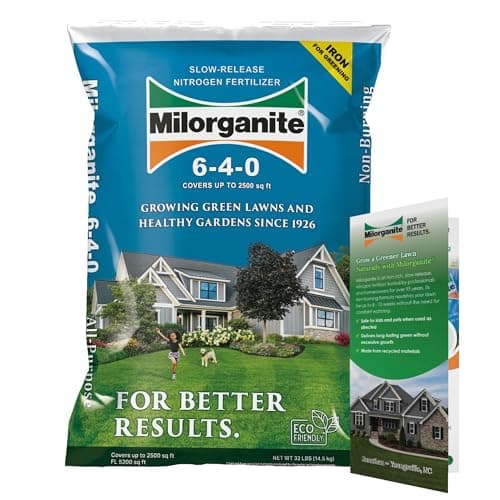
Milorganite 6-4-0 (32 lb)
A slow-release organic nitrogen with iron and almost no burn risk on any grass type.
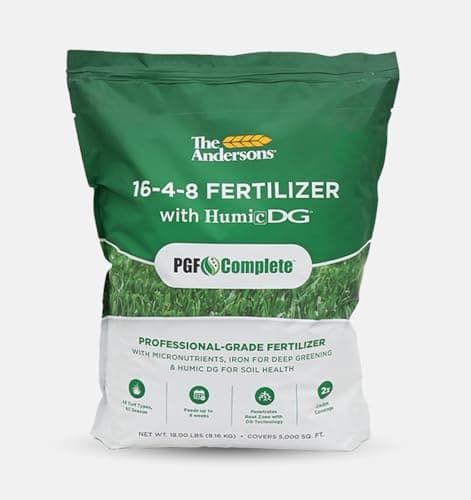
The Andersons PGF Complete 16-4-8
A fine-particle synthetic with humic acid that delivers a predictable, measurable nitrogen rate.
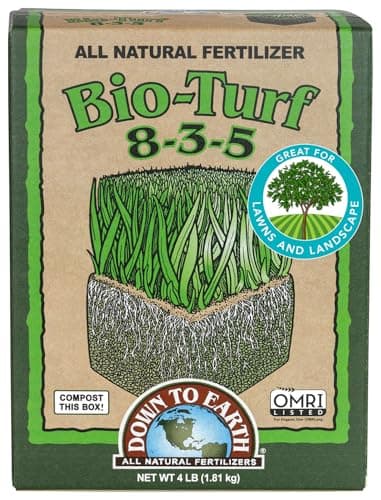
Down to Earth Bio-Turf 8-3-5
A dry organic blend of feather meal, fish bone meal, and kelp for feeding soil biology.
Free Lawn Care Tools
Organic lawn fertilizers are derived from natural, carbon-based materials. Instead of being chemically purified, they are processed in relatively low-tech ways, such as composting, drying, or grinding.
Organic fertilizers are made from natural materials like compost, manure, and plant or animal byproducts that must be broken down by soil microbes before the grass can use them. Synthetic fertilizers are manufactured nutrient salts that dissolve quickly in water and are immediately available to plants. Organic products tend to feed the soil first, while synthetic products mostly feed the plant directly. This difference affects how fast results appear and how nutrients behave in the soil over time.
For fast results and quick green color, synthetic fertilizers usually work better because their nutrients are immediately available to the grass. Organic fertilizers release nutrients more slowly as microbes break them down, so the response is more gradual. If you want quick cosmetic improvement, a synthetic or hybrid product is often the best choice. For long-term soil health, organic fertilizers offer more benefits.
Organic fertilizers add carbon-based materials that feed soil microorganisms and increase organic matter. This improves soil structure, water retention, and the overall soil food web that supports healthier grass. As soil life breaks down these materials, nutrients are released gradually and more naturally. Over time, this can lead to a thicker, more resilient lawn with fewer nutrient swings.
Hybrid fertilizers combine synthetic nutrient sources with organic materials in one product. They can provide the fast green-up of a synthetic fertilizer while also delivering some of the soil-building benefits of organic ingredients like feather meal or composted manure. This makes them a practical option for homeowners who want better soil health without giving up quick results. They also simplify planning, since one product can cover both short-term and long-term feeding.
The best choice depends on your goals, soil type, and how involved you want to be in lawn care. If you value long-term soil health, improved structure, and a more gradual feeding, organic fertilizers are a strong fit. If you need predictable, fast results and precise nutrient control, synthetic fertilizers may be preferable. Many homeowners blend approaches—using organics for baseline soil health and synthetics or hybrids when they need a targeted boost.

Beat weeds and brown spots from your phone
Snap a photo, get the fix, and follow a plan timed to your soil and weather. Free on iPhone.