Spectracide Weed Stop Instructions: How to Use for Best Results
 Sarah MitchellLawn Diagnostics Specialist | 12 Years
As an Amazon Associate we earn from qualifying purchases.
Quick answer: the rate on the current Spectracide Weed Stop for Lawns Concentrate2 label depends on your grass. For Kentucky bluegrass, fescue, perennial ryegrass, and zoysia, mix 2 fl oz per gallon of water (4 fl oz in 2 gallons treats 1,000 sq ft). For bahia, bent, Bermuda, and centipede, the label drops to 1 fl oz per gallon, and for St. Augustine it drops to 0.75 fl oz per gallon, with Floratam and Bitterblue excluded. Weed Stop for Lawns Plus Crabgrass Killer uses its own rate: 6.4 fl oz in 1 gallon of water per 1,000 sq ft, and it is off-label on St. Augustine, bahia, centipede, and bentgrass. Spray between 45°F and 90°F, and skip any day with rain in the forecast.
Here is the Spectracide Weed Stop timing at a glance, straight from the two current labels:
| Step | Weed Stop for Lawns Concentrate2 | Plus Crabgrass Killer Concentrate |
|---|---|---|
| Temperature | Daytime 45°F to 90°F | Daytime 45°F to 90°F |
| Mow before | 2 to 3 days before | Hold off mowing for 2 days before |
| Mow after | No number on the label; university extension advice is to wait a few days | Wait 2 days, and leave the clippings from the first three mowings on the lawn |
| Rain | Don't spray when rain is expected that day; a 24-hour dry forecast is the label's target | Don't spray right before rain or irrigation; a 24-hour dry forecast is the label's target |
| Watering after | "Watering immediately after treatment may wash away effectiveness" | No irrigation for 24 hours |
| People and pets | Off the lawn until the spray has dried | Off the lawn until the spray has dried |
| Reseeding | 3 to 4 weeks after spraying | 4 weeks after spraying |
| Repeat interval | At least 2 weeks apart, 2 broadcast applications per year | 14 days apart, 2 broadcast applications per year |
Which bottle is on your shelf, and what grass is it going on? Those two answers set every number that follows. If the grass is the part you're unsure about, a photo ID of your lawn takes less time than mixing a tank, and it tells you which row of the rate tables below applies.
When I'm diagnosing a lawn that got worse after a weed spray, the cause is usually one of three things: the wrong rate for that grass, the wrong product for that grass, or the wrong weather. Each one is easy to rule out before you pour anything, and the sections below walk through them in that order.
Weed Stop for Lawns Concentrate2 kills 460+ listed weeds, including dandelion, clover, and yellow nutsedge, and its rate runs from 0.75 to 2 fl oz per gallon depending on your grass, per the current Spectracide label. The Plus Crabgrass Killer version adds quinclorac for young crabgrass and foxtail, mixes at 6.4 fl oz per gallon for 1,000 sq ft, and is off-label on St. Augustine, bahia, centipede, and bentgrass. Both labels say to spray only when daytime temperatures sit between 45°F and 90°F.
Identify the grass before you measure. The St. Augustine rate is under half the fescue rate, so using the familiar "4 fl oz in 2 gallons" on a southern lawn more than doubles the dose. Mow two to three days ahead, keep people and pets off until the spray dries, and wait at least two weeks before judging the result or spraying again.
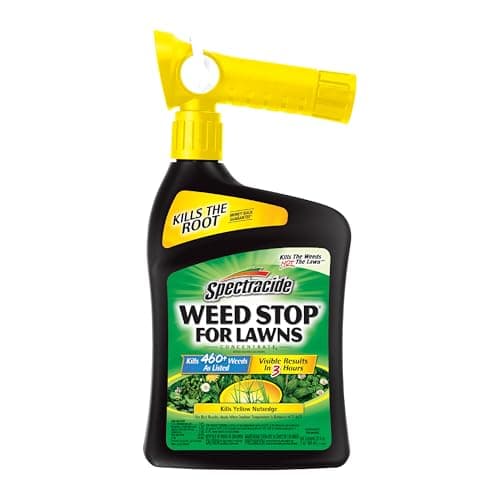
Which Spectracide Weed Stop Do I Have?
Same brand, different chemistry. The Weed Stop line includes several formulations that look almost identical on the shelf but carry different active ingredients, rates, and grass restrictions. Match the bottle in your hand to a row below before you measure anything.
| Variant | Active Ingredients | Rate | Labeled Grasses | Off-Label |
|---|---|---|---|---|
| Weed Stop for Lawns Concentrate2 (current standard) | 2,4-D, mecoprop-p, dicamba, sulfentrazone | 0.75 to 2 fl oz per gallon (500 sq ft), by grass | Kentucky bluegrass, fescues, perennial ryegrass, zoysia, bahia, bentgrass, Bermuda, centipede, St. Augustine | Floratam and Bitterblue St. Augustine, carpetgrass, dichondra, lawns with clover you want to keep |
| Weed Stop for Lawns Plus Crabgrass Killer Concentrate | 2,4-D, quinclorac, dicamba, sulfentrazone (no mecoprop-p) | 6.4 fl oz in 1 gallon per 1,000 sq ft | Kentucky bluegrass, fescues, perennial ryegrass, zoysia, Bermuda, buffalograss | St. Augustine, bahia, centipede, bentgrass, carpetgrass, dichondra |
| Weed Stop for Lawns Ready-to-Spray (hose-end) | Same as Concentrate2 | No mixing; one quart covers up to 21,333 sq ft of St. Augustine, 16,000 sq ft of other warm-season grass, or 8,000 sq ft of cool-season grass | Same as Concentrate2 | Same as Concentrate2 |
| Large Plot Weed Stop for Lawns Concentrate (1 gallon) | 2,4-D, mecoprop-p, dicamba (no sulfentrazone) | Per its own label; one gallon covers up to 32,000 sq ft of northern grass or 42,500 sq ft of southern grass | Per its label | Per its label |
How to tell the current formula from an older bottle
Is there a small "2" after the word Concentrate on the front? That subscript, plus "Kills 460+ weeds" and "Kills Yellow Nutsedge" on the front panel, marks the current standard formula. A bottle that says "200+ weeds" with only three active ingredients is the Large Plot product or an older formula, and its rates, rain window, and weed list differ. If the front panel doesn't match any row above, trust the directions printed on that bottle, since the label is the legal instruction for the product you actually bought.
Spectracide Weed Stop Mix Ratio (Per Gallon)
Every Weed Stop variant mixes differently, and grabbing the wrong number is the most common way people end up with a weak kill or injured turf. Here is what each current label lists, side by side:
| Product and Grass | Pump Sprayer Mix | Per 1,000 sq ft | 32 oz Bottle Covers |
|---|---|---|---|
| Weed Stop for Lawns Concentrate: Kentucky bluegrass, fescue, perennial ryegrass, zoysia | 2 fl oz (4 Tbsp) per gallon, sprays 500 sq ft | 4 fl oz in 2 gallons | 8,000 sq ft |
| Weed Stop for Lawns Concentrate: bahia, bentgrass, Bermuda, centipede | 1 fl oz (2 Tbsp) per gallon, sprays 500 sq ft | 2 fl oz in 2 gallons | 16,000 sq ft |
| Weed Stop for Lawns Concentrate: St. Augustine (not Floratam or Bitterblue) | 0.75 fl oz (1.5 Tbsp) per gallon, sprays 500 sq ft | 1.5 fl oz in 2 gallons | 21,333 sq ft |
| Weed Stop for Lawns Plus Crabgrass Killer Concentrate: bluegrass, fescue, ryegrass, zoysia, Bermuda, buffalograss | 6.4 fl oz in 1 gallon, sprays 1,000 sq ft | 6.4 fl oz | 5,000 sq ft |
| Hose-end Ready-to-Spray | No mixing; the sprayer meters itself | Set by the nozzle | 8,000 to 21,333 sq ft, by grass |
| Ready-to-Use trigger bottle | No mixing; spray weeds until wet | Spot treatment only | Spot treatment only |
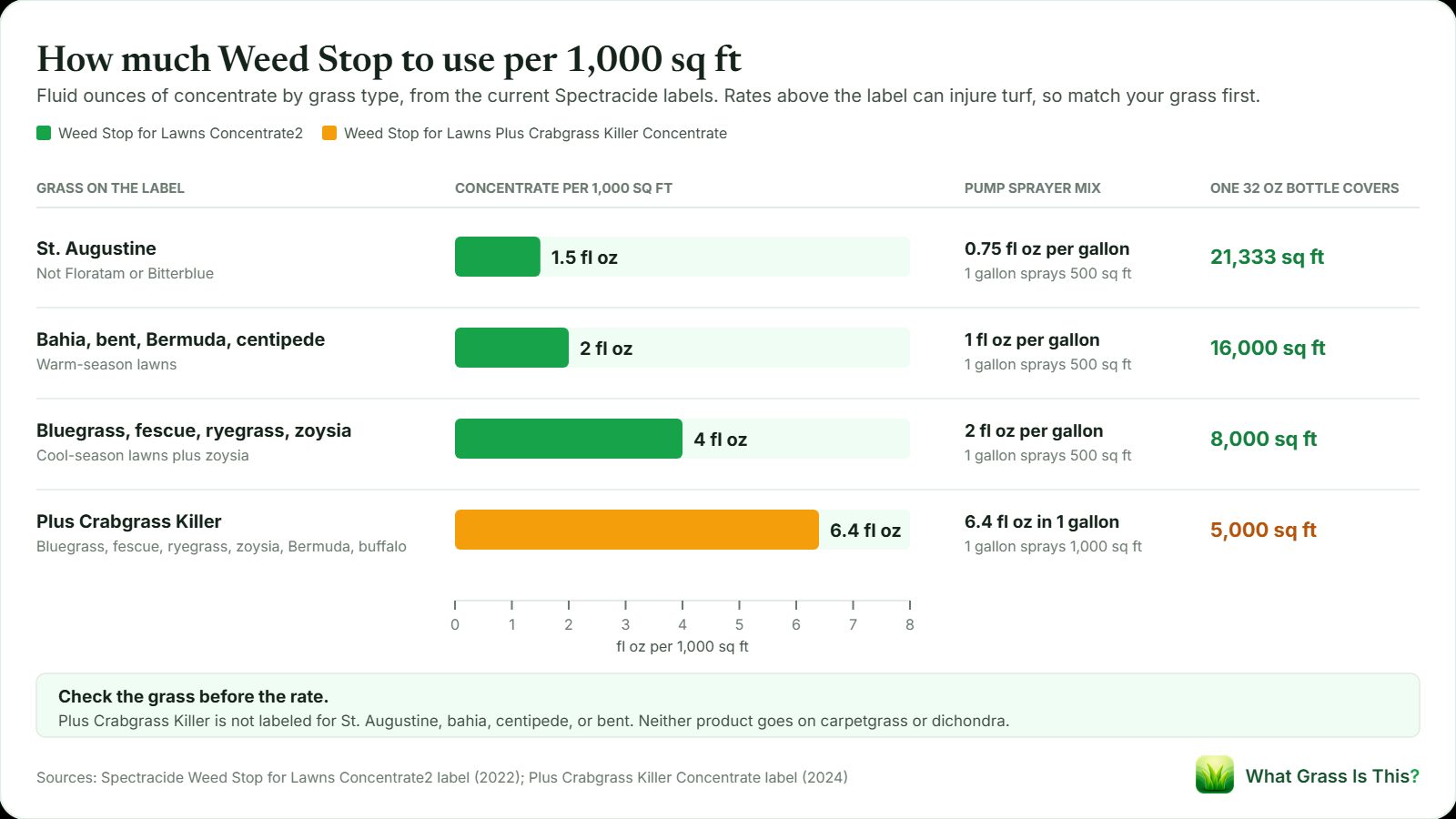
So if you're asking how many ounces of Spectracide Weed Stop per gallon: 2 fl oz per gallon on cool-season lawns, 1 fl oz on bahia, bent, Bermuda, and centipede, and 0.75 fl oz on St. Augustine, with each gallon sprayed over 500 sq ft, per the Concentrate2 label. The label caps a single broadcast application at 4 fl oz per 1,000 sq ft and the season at 8 fl oz per 1,000 sq ft, so the cool-season rate is already the ceiling. Measure with a graduated cup or measuring spoons you keep only for garden chemicals.
How much to mix for your lawn size
Do you know your square footage? Multiply length by width for each section, or use the lawn size calculator, then read across. These rows come from the Concentrate2 label's own chart:
| Lawn Area | St. Augustine | Bahia, Bent, Bermuda, Centipede | Bluegrass, Fescue, Ryegrass, Zoysia | Water |
|---|---|---|---|---|
| 1,000 sq ft | 1.5 fl oz | 2 fl oz | 4 fl oz | 2 gallons |
| 5,000 sq ft | 7.5 fl oz | 10 fl oz | 20 fl oz | 10 gallons |
| 8,000 sq ft | 12 fl oz | 16 fl oz | 32 fl oz (the whole bottle) | 16 gallons |
For any other size or tank, the tank mix calculator scales the per-gallon rate to your sprayer. Handy conversions from the label: 1 fl oz is 2 Tbsp (6 tsp), 2 fl oz is 4 Tbsp, and 4 fl oz is half a cup.
Warning: Weed Stop for Lawns is not Weed & Grass Killer. Spectracide also sells Weed & Grass Killer Concentrate2 for driveways, patios, and fence lines. It is non-selective: diquat, fluazifop-p-butyl, and dicamba kill every green plant they touch, lawn grass included. Its label rate is 5 oz (10 Tbsp) per gallon of water to treat 300 sq ft, or 7 oz (14 Tbsp) per gallon for heavy or hard-to-kill growth, and it is rainproof in 15 minutes. Only products with "For Lawns" on the label belong on turf.
Weed Stop for Lawns Plus Crabgrass Killer: Mix Ratio
The Plus Crabgrass Killer concentrate is a different blend built for grassy weeds. It combines 2,4-D, quinclorac, dicamba, and sulfentrazone, with no mecoprop-p, and it mixes at its own rate. The label's broadcast direction for a pump sprayer is 6.4 fl oz of concentrate in 1 gallon of water to treat 1,000 sq ft of Kentucky bluegrass, fescue, perennial ryegrass, zoysia, Bermuda, or buffalograss. A 32 oz bottle treats up to 5,000 sq ft.
Why do people see "5 oz per gallon" quoted for the same bottle? That is the label's spot-treatment rate: 5 fl oz (10 Tbsp) in 1 gallon of water for each 500 sq ft of weedy patches, sprayed with a pump sprayer only. The broadcast rate and the spot rate are separate lines on the label, so check which job you're doing before you pour.
| Sprayer | Plus Crabgrass Killer Label Direction |
|---|---|
| Pump sprayer, whole lawn | 6.4 fl oz in 1 gallon of water per 1,000 sq ft |
| Pump sprayer, spot treatment | 5 fl oz (10 Tbsp) in 1 gallon of water per 500 sq ft |
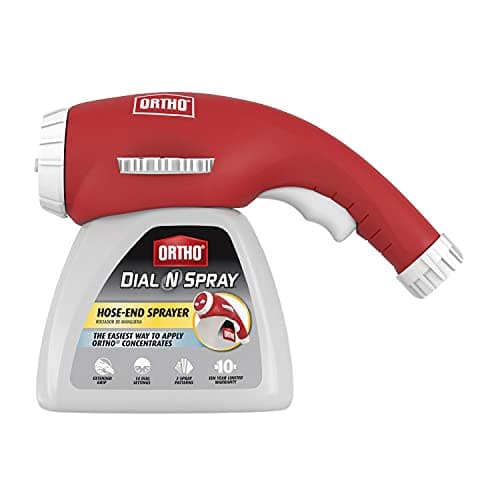
| Dial hose-end sprayer | Concentrate only in the jar, dial on 5 Tbsp (2.5 fl oz); 20 fl oz covers 3,000 sq ft |
| Pre-mix hose-end sprayer | 8 fl oz to the 3 gal mark for 1,250 sq ft; 12 fl oz to 5 gal for 1,875 sq ft; 16 fl oz to 6 gal for 2,500 sq ft; 24 fl oz to 9 gal for 3,750 sq ft |
A few label rules specific to this variant. Timing matters more here than with the broadleaf formula: the label targets crabgrass from emergence to the six-leaf stage (two tillers) or before it reaches 3 to 4 inches tall, foxtail at 1 to 4 inches, and yellow nutsedge at 3 to 6 inches. Yellow nutsedge always takes two applications 14 days apart, and dense crabgrass or foxtail gets a second application at the same rate 14 days after the first. Broadcast applications are capped at two per year and 13 fl oz per 1,000 sq ft per season. Don't spray it on Bermuda when daytime highs pass 90°F, and expect some temporary yellowing on Bermuda even at normal temperatures, which the label says it recovers from. Visible results show up in as little as 5 hours, per Spectracide. This formulation is off-label on St. Augustine, bahia, centipede, and bentgrass, so on those lawns the standard Concentrate2 is the Weed Stop option that fits.
What Is Spectracide Weed Stop for Lawns? Product Overview & Key Benefits
Spectracide Weed Stop is a post-emergent, selective herbicide. It kills weeds that are already up and growing, and when used at the label rate it leaves the listed turfgrasses alone. The current Concentrate2 lists four active ingredients: 2,4-D (6.31% acid equivalent), mecoprop-p (2.25%), dicamba (0.59%), and sulfentrazone (0.18%). The first three are growth-regulator herbicides aimed at broadleaf weeds, and the current label adds yellow nutsedge to the weed list. The Plus Crabgrass Killer version swaps mecoprop-p for quinclorac, which is what lets it control young crabgrass and foxtail.
Spectracide offers several product types to fit different jobs:
- Ready-to-Use (RTU) sprays: For spot-treating small areas or individual weeds.
- Concentrate: For mixing with water in a pump or backpack sprayer, ideal for larger lawns.
- Hose-end Ready-to-Spray: Connects to your garden hose for broadcast coverage of large areas.
- For Lawns vs. Plus Crabgrass formulas: "For Lawns" targets broadleaf weeds and yellow nutsedge, while "Plus Crabgrass Killer" adds quinclorac for grassy weeds.
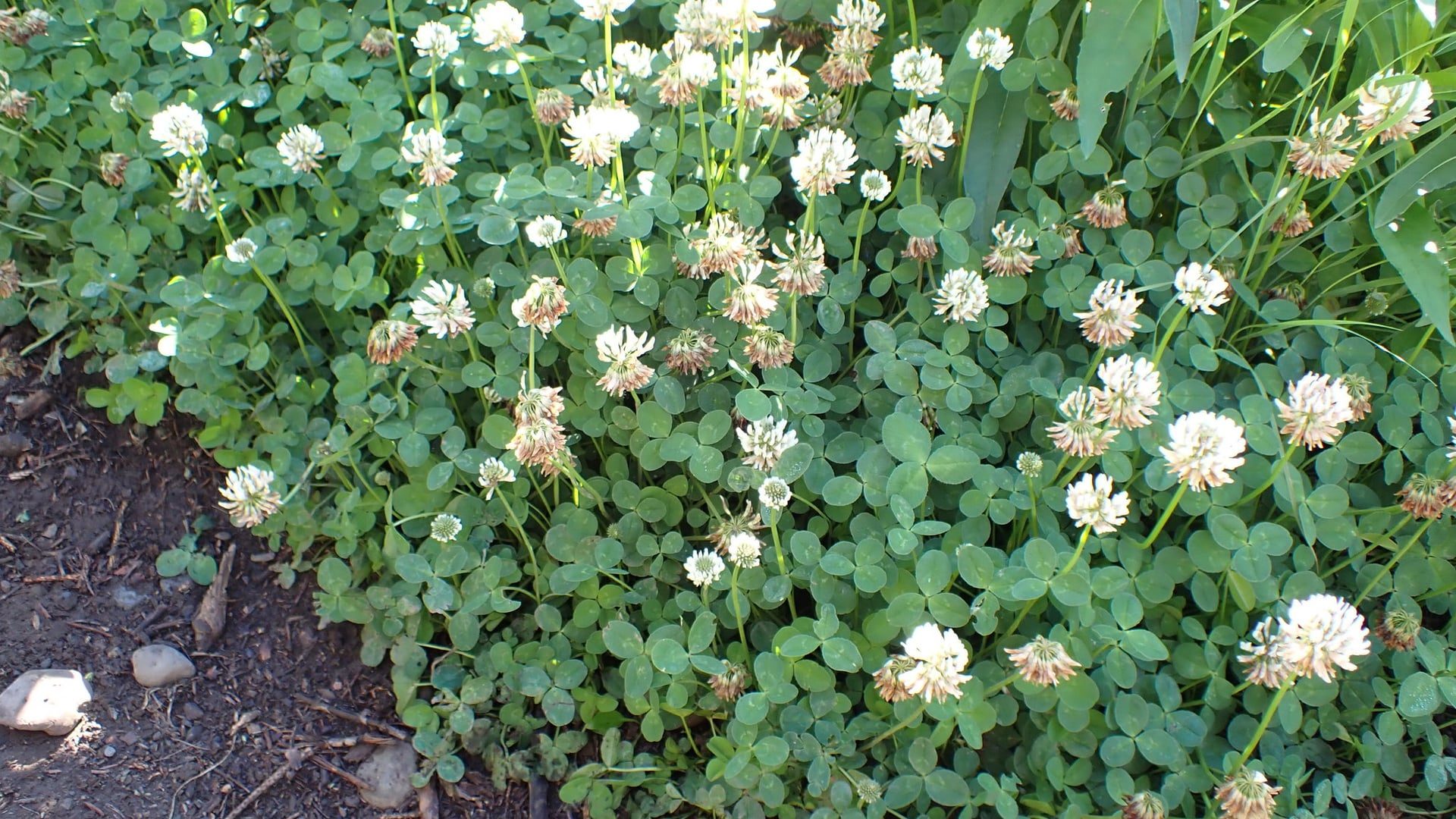
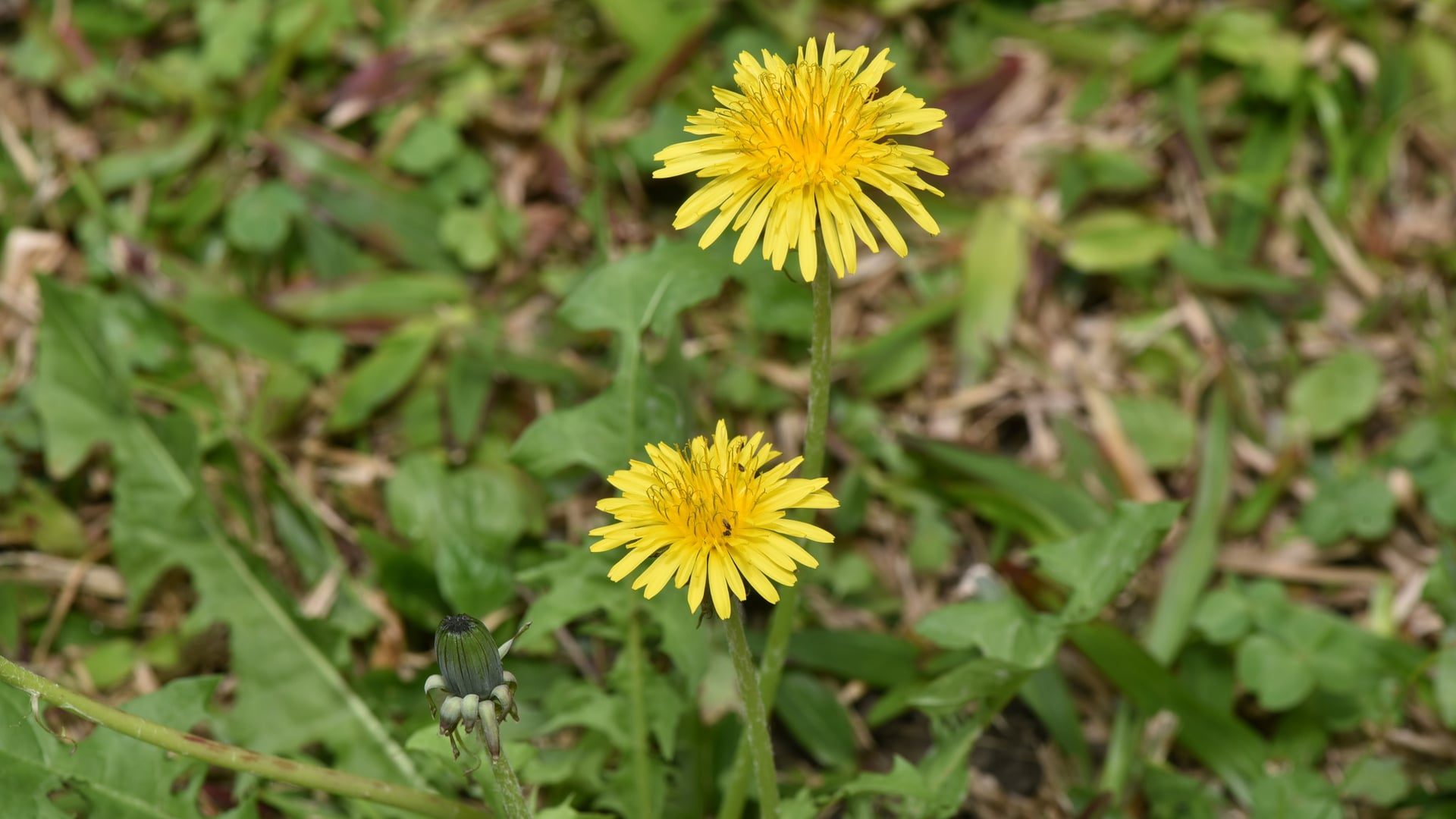
What does it actually kill? The Concentrate2 label lists 460+ weeds and the Plus Crabgrass Killer label lists 470+, including dandelion, white clover, chickweed, plantain, oxalis, spurge, henbit, and yellow nutsedge. Both labels also list ground ivy (creeping Charlie) and wild violet, though both are hard-to-kill perennials. The label warns that hard-to-kill weeds may need re-treatment, and Purdue research found ground ivy control improved when broadleaf herbicides went down between October 1 and November 1 instead of in September. The Plus Crabgrass Killer version adds young large and smooth crabgrass and foxtail. Neither version is labeled to stop crabgrass that hasn't sprouted yet, since both work only on weeds that are already up. If you want to compare it against a similar option, our guide to another selective broadleaf weed killer covers overlapping weed lists and application timing. For specific weeds, see Common Lawn Weeds and How to Remove Them, our creeping Charlie guide, or how to get rid of wild violet.
Choosing Spectracide over other weed killers makes sense if you want a product that is easy to use, covers a broad range of weeds, and is labeled for the major lawn grasses, from Kentucky bluegrass and fescue to Bermuda, centipede, and most St. Augustine. Compared to granular weed and feed, a liquid spray lets you treat only the weedy areas and skip fertilizer timing entirely.
So is Spectracide Weed Stop for Lawns any good? For the job it is built for, yes. It gives reliable control of dandelions, clover, chickweed, and the usual broadleaf weeds at a homeowner price, and the Concentrate2 formula now covers yellow nutsedge too. It asks more of you on the tough perennials: wild violet and ground ivy often need a second pass two weeks later and fall timing. And if the lawn is thick with crabgrass that is already past 3 to 4 inches tall, the Plus Crabgrass Killer label's window has closed for this season, and a pre-emergent next spring is the fix that fits.
How to Mix Spectracide Weed Stop for Lawns (Concentrate, Hose-End, and Ready-to-Use)
If you just need the mixing steps for a pump sprayer, here they are, per the Concentrate2 label. Measure the lawn in square feet. Pour the concentrate for your grass into the sprayer: 2 fl oz per gallon for cool-season grass and zoysia, 1 fl oz per gallon for bahia, bent, Bermuda, and centipede, or 0.75 fl oz per gallon for St. Augustine. Add the water, shake before and during spraying, and cover 500 sq ft with each gallon. Mix only enough for the area you measured. You can pull the official label PDFs for each formulation from the manufacturer's product pages at Spectracide.com.
The Weed Stop for Lawns Plus Crabgrass Killer concentrate mixes at 6.4 fl oz in 1 gallon per 1,000 sq ft, so double check the section above rather than reusing the standard rate. The Ready-to-Use trigger bottle needs no mixing at all: spot spray weeds until wet.
Spectracide Weed Stop Hose-End Sprayer Instructions
Which hose-end sprayer do you have? The answer changes the steps.
- Ready-to-Spray bottle: The nozzle meters itself, so there is no mix rate. Turn the water on, work from the far end of the lawn back toward the faucet with a steady sweeping motion, and slightly overlap your passes. Use the sight gauge to pace yourself: when the bottle is half empty, you should have covered half the area. One quart covers up to 21,333 sq ft of St. Augustine, 16,000 sq ft of other warm-season grass, or 8,000 sq ft of cool-season grass.
- Dial sprayer (concentrate only): Put straight concentrate in the jar with no water. The Concentrate2 label's example for Kentucky bluegrass is 4 fl oz in the jar with the dial on 4 Tbsp to treat 1,000 sq ft, and its directions assume the sprayer puts out about 2 gallons of mix per 1,000 sq ft. Dial markings vary by brand, so check your sprayer's own directions.
- Pre-mix jar sprayer: Pour concentrate to the fl oz line and water to the gallon line from the lawn-size table above, for example 4 fl oz to the 2 gallon mark for 1,000 sq ft of fescue.
One rule applies to all three: the label says not to spot-treat with a hose-end sprayer. For a handful of weeds, use a pump sprayer or the Ready-to-Use bottle.
What should you check before you spray?
Before you reach for the sprayer, rule out the conditions that make a good product fail. I run the same four checks on every lawn: the weeds, the weather, the grass's condition, and what went down on the lawn recently.
Are the weeds broadleaf, grassy, or sedge?
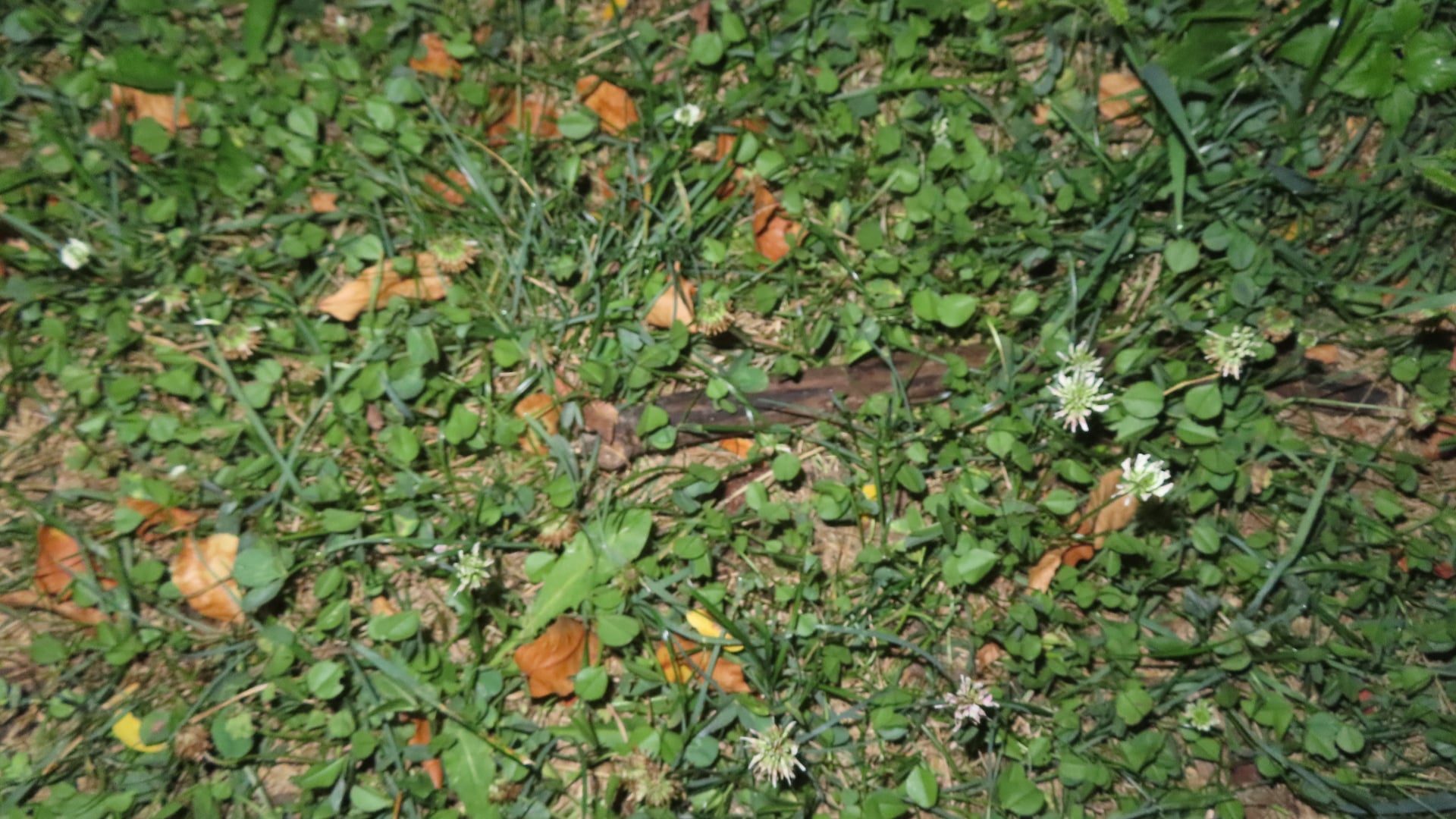
Look at the leaf. Broadleaf weeds like dandelion, clover, and plantain have wide leaves with a net of veins, and both Weed Stop formulas cover them. Grassy weeds like crabgrass and foxtail have narrow, grass-like blades, and only the Plus Crabgrass Killer version lists them, while they're young. Roll a stem between your fingers: a triangular, solid stem points to a sedge such as yellow nutsedge, which both current labels treat with two applications 14 days apart. Then count the weeds. A few scattered weeds call for spot treatment; weeds across the whole lawn call for a broadcast pass.
Is today a spray day?
What does the forecast say for the next 24 hours, and how warm will it get? Both labels set the window at 45°F to 90°F daytime temperatures and ask for calm weather with no rain predicted for the next 24 hours. The University of Illinois Extension recommends a tighter 55°F to 85°F window for fall broadleaf sprays, and Purdue's turf program advises a dry, sunny day above 55°F. Use this matrix to decide:
| Condition | What to Do |
|---|---|
| Below 45°F | Wait. Both labels set 45°F as the low end, and weeds absorb little herbicide in cold weather. |
| 45°F to 55°F | Allowed by the label, but control is slower. Illinois Extension and Purdue both point to 55°F and up for better results. |
| 55°F to 85°F | Best window. Weeds are growing and uptake is strong. |
| 85°F to 90°F | Spot-treat only if you must. Heat raises drift risk, and Bermuda may yellow temporarily. |
| Above 90°F | Do not apply. Both labels warn of lawn damage above 90°F. |
| Windy | Do not apply. The Concentrate2 label forbids spraying in wind because drift injures nearby plants. |
| Rain expected that day | Wait for a dry day. The label says not to spray when rain is expected that day. |
| Dry, drought-stressed lawn | Water first and spray later. The Concentrate2 label warns against spraying drought-stressed lawns, and the Plus Crabgrass Killer label suggests watering 24 hours before spraying in dry weather. |
The heat cap protects more than the grass. Purdue Extension notes that growth-regulator herbicides like 2,4-D and dicamba are more prone to volatilize and drift onto non-target plants as temperatures climb, which is another reason to spray in the cooler part of the label range (see Purdue Extension).
What supplies do you need?
- Chemical-resistant gloves and protective eyewear; the Plus Crabgrass Killer label also calls for a long-sleeved shirt, long pants, socks, and shoes
- The correct Spectracide Weed Stop formulation for your grass and weeds: the Weed Stop for Lawns Concentrate for broadleaf weeds and nutsedge, or the Weed Stop for Lawns Plus Crabgrass Killer Concentrate when young crabgrass is in the mix on a labeled grass
- A clean pump sprayer, backpack sprayer, or hose-end sprayer (for concentrates)
- Mixing and measuring cups kept only for garden chemicals
Is the lawn ready for it?
Is the grass new, stressed, or just waking up? Each of those changes the answer. The Concentrate2 label says to wait until newly seeded grass is well established or has been mowed three times, and the Plus Crabgrass Killer label puts that at about six weeks after the seedlings emerge. Skip drought-stressed turf, and skip zoysia that is just coming out of winter dormancy, which both labels flag for injury. Mow your lawn two to three days before spraying so the weeds have leaf surface to absorb the spray. If you recently put down a weed and feed or another herbicide, read both labels for their yearly limits before you add another pass, since the Weed Stop limits count every broadcast application.
Spectracide Weed Stop Instructions: Step-by-Step Application Guide
Reading the label is your first step, since the label is the legal instruction for that bottle. Different Spectracide formulations carry different rates, yearly limits, and grass lists, and the steps below follow the current Concentrate2 and Plus Crabgrass Killer labels.
- Measure the area. Multiply length by width for each section and add them up. Mix only enough for that area.
- Mix for your grass. Use the rate table above: 0.75, 1, or 2 fl oz per gallon for the standard concentrate, or 6.4 fl oz per gallon for Plus Crabgrass Killer. Shake the sprayer before and during spraying.
- Set a coarse spray. The label asks for a coarse spray pattern with no fine mist, because fine droplets drift onto flowers, shrubs, and gardens.
- Test your pace. Spray water on a driveway first. If you see puddles or runoff, walk faster or reduce the flow.
- Spray evenly. For a broadcast pass, walk the lawn in straight lines and slightly overlap each pass so you don't leave untreated strips. For spot treatment, wet each weed until it is covered but not dripping.
- Work back toward the exit. Start at the far end so you never walk through wet, treated grass.
- Clean up. Rinse the sprayer over the treated lawn, never into a drain.
After you spray, keep people and pets off the lawn until the spray has dried, which is the re-entry rule on both labels. Hold off on watering: the Concentrate2 label warns that watering right away may wash away effectiveness, and the Plus Crabgrass Killer label says no irrigation for 24 hours. The Plus Crabgrass Killer label also says to wait two days before mowing, and Illinois Extension advises waiting a few days after any broadleaf spray.
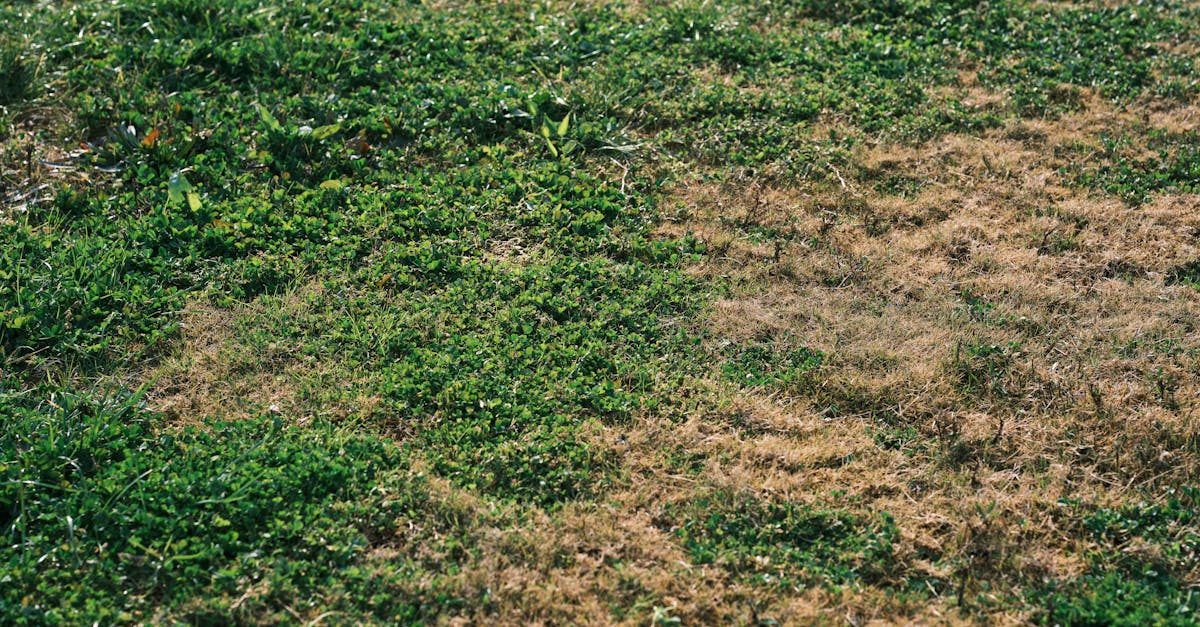
How long does Spectracide take to dry, and how long before rain?
On a warm, sunny day the spray dries to the touch in a few hours, and that dry spray is the point when both labels let people and pets back on the lawn. What about rain? Neither current label prints a rainproof hour count. The Concentrate2 label says not to spray when rain is expected that day, and both labels say calm weather with no rain predicted for the next 24 hours keeps the product on the weeds.
Where does the "rainproof in 6 hours" number you may have seen come from? It is printed for Spectracide's Large Plot Weed Stop for Lawns Concentrate, a separate three-ingredient formula, which says rain or watering 6 hours after application will not wash away its effectiveness. That is a different product, so if your bottle says Concentrate2 or Plus Crabgrass Killer, plan around a full dry day.
If a shower hits within the first few hours anyway, don't spray again right away. Both labels require at least two weeks between applications, and they cap you at two broadcast applications per year. Wait two weeks, check which weeds are still healthy, and spot-treat only those.
How long does Spectracide Weed Stop take to work?
Spectracide says visible results can show in as little as 3 hours for Concentrate2 and 5 hours for Plus Crabgrass Killer. A complete kill takes longer. The label notes that time to kill depends on weed type, temperature, and rate, and that some weeds can take two weeks to die. That is why the two-week wait before re-treating matters: a weed that looks alive at day 5 may still be dying.
When is the best time to spray: spring or fall?
Which weeds are you after, and what season is it? The labels answer the timing question weed by weed, and extension research adds a clear preference for fall on perennial broadleaf weeds.
| Season | Target Weeds on the Label | Timing Detail |
|---|---|---|
| Spring | Dandelion, plantain, buttercup, speedwell, knotweed | When the weeds are young and actively growing with adequate soil moisture |
| Spring to early summer (Plus Crabgrass Killer) | Large and smooth crabgrass; green, giant, and yellow foxtail | Crabgrass from emergence to the six-leaf stage or before 3 to 4 inches tall; foxtail at 1 to 4 inches |
| Early summer | Yellow nutsedge | Two applications 14 days apart when plants are 3 to 6 inches tall |
| Fall | Henbit, chickweed, white clover, ground ivy, lawn burweed | While the weeds are actively growing; the label notes fall sprays control weeds that would otherwise resprout the next spring |
Why does fall work so well? The University of Illinois Extension calls fall "the ideal time to control broadleaf weeds in turfgrass," because winter annual and cool-season perennial weeds are getting ready for winter. Purdue research found that fall sprays applied from October 1 through November 1 improved long-term ground ivy control compared to September sprays. Purdue also cites Nebraska research in which 2,4-D or dicamba applied 1 to 10 days after the first frost was far more effective on dandelions than sprays made before it. The label's 45°F floor still applies, so pick a mild afternoon after that first frost.
For cool-season lawns, that makes early to mid fall the window for dandelion, clover, and ground ivy, with spring as the follow-up. For warm-season lawns, spray when the grass and weeds are both actively growing and the forecast stays under 90°F, and avoid zoysia just coming out of dormancy. Enter your ZIP code below to find your exact timing:
Loading Herbicide Timing Calculator...
Spraying and seeding in the same season
Planning to overseed this fall? Then the order matters. The Concentrate2 label allows reseeding three to four weeks after spraying, the Plus Crabgrass Killer label says four weeks, and Illinois Extension recommends waiting at least 30 days after any post-emergent broadleaf herbicide. Spray first, wait the month, then seed. For seed rates and timing, see how to overseed a lawn in fall or the overseeding calculator. If you seed first, wait until the new grass is well established: after the third mowing on the Concentrate2 label, or about six weeks after emergence on the Plus Crabgrass Killer label.
Spot treatment or the whole lawn?
How much of the lawn is actually weedy? Walk it and estimate. If the weeds are in a few patches, spot-treat them with a pump sprayer or the Ready-to-Use bottle, which uses a fraction of the product and exposes less turf to injury. If weeds are spread across most of the lawn, a broadcast pass makes sense, and it counts toward the two-per-year limit. Thin, shaded, or compacted areas invite weeds back, so pair the spray with aeration and overseeding in those spots.
Why are the weeds still green two weeks later?
Even when you follow the Spectracide Weed Stop instructions closely, some weeds survive. Wait the full two weeks the label asks for, then run through the likely causes in order. Four things produce this result, and each has a check:
- Weather at spraying: Was it below 45°F, above 90°F, windy, or did rain or the sprinkler hit that day? Check your weather app's history for the spray date. If any of those fit, the product likely never got absorbed, and a careful second pass on a good day should work.
- Rate or coverage: Did you use the rate for your grass, and did the sprayer run out before the lawn did? If you mixed the St. Augustine rate for a fescue lawn, or if surviving weeds line up in strips, the dose or coverage was short.
- Wrong product for the weed: Are the survivors crabgrass or foxtail? Only the Plus Crabgrass Killer version lists them, and only while young. Mature crabgrass past 3 to 4 inches is outside the label window for this season.
- Hard-to-kill perennials: Are they wild violet or ground ivy? Both are on the labels, but they often need the second application two weeks later, and fall timing helps most, per Purdue. Still green after that second pass? Spot-treat the survivors with T-Zone SE Broadleaf Herbicide, a triclopyr, sulfentrazone, 2,4-D, and dicamba blend sold for tough perennial broadleaf weeds. Check that its label lists your grass first, the same check you ran for Weed Stop.
If none of those checks fit, get an ID on the survivor before you try another product. A photo through the weed identifier will narrow it, and Common Lawn Weeds and How to Remove Them covers the other options.
Is the grass yellow or thin after spraying?
Does the damage follow your spray pattern, show up only on Bermuda, or cover a lawn that was dry when you sprayed? Temporary yellowing on Bermuda is something both labels mention, and both say full recovery can be expected. Stripes of brown grass that match your passes point to overlap or a rate above the label. Damage across a whole St. Augustine lawn points to the wrong product or the wrong cultivar, since Floratam and Bitterblue are off both labels and Plus Crabgrass Killer is off-label on all St. Augustine. To recover, water deeply, hold off on more herbicide, and reseed bare spots after the label's three to four week wait. How to fix bare spots before winter covers the repair.
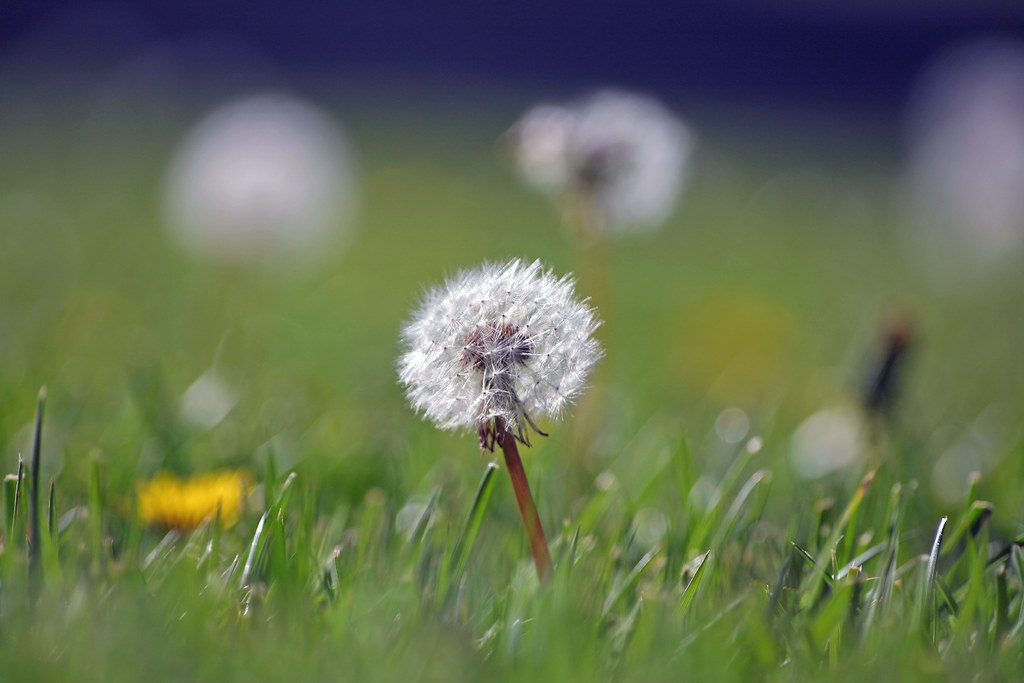
Weeds that come back months later are usually new seedlings from seed in the soil or weeds you missed. Spot-treat those no sooner than two weeks after the last spray, and thicken the turf with mowing at the right height and overseeding so fewer weeds find open soil.
Safety, Environmental, and Legal Considerations
Applying Spectracide Weed Stop responsibly protects your family, pets, and the water downstream. These rules come straight from the labels:
- Keep people and pets out of the area while you spray, and off the lawn until the spray has dried.
- Pick up pet toys, food bowls, and play equipment before spraying.
- Wear rubber gloves, a long-sleeved shirt, long pants, socks, and shoes, which the Plus Crabgrass Killer label requires, and wash your hands and exposed skin afterward.
- Do not spray within 25 ft of rivers, ponds, lakes, streams, or marshes (the Concentrate2 setback), and never into storm drains, gutters, or ditches.
- Do not use on vegetable gardens, fruits, flowers, or shrubs, or on lawns with clover you want to keep.
- If spray gets in eyes or is swallowed, both labels list Spectracide's line at 1-800-917-5438 and say to call a Poison Control Center or doctor.
Both labels note that these herbicides are toxic to fish and aquatic invertebrates, and the Concentrate2 label adds that its chemistry has properties linked to chemicals found in groundwater. That is the reason for the 24-hour dry-weather window and for rinsing the sprayer over the lawn instead of down a drain.
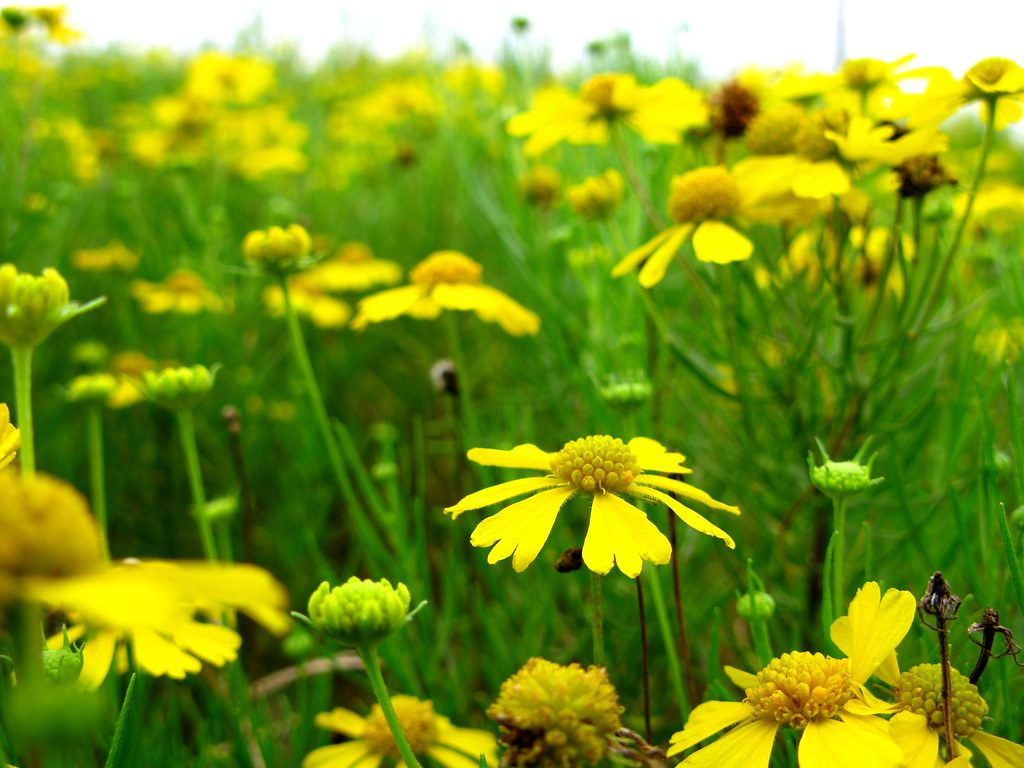
- The University of Illinois Extension recommends spraying broadleaf herbicides when air temperatures are between 55°F and 85°F, skipping days when rain is expected within 24 hours, not mowing for a few days before or after, and waiting at least 30 days before seeding treated areas.
Some states and cities restrict certain herbicide ingredients or require buffer zones near water. If you're unsure what applies where you live, your county extension office can tell you.
- Contact your local extension office
What other guides get wrong about Weed Stop
Much of the Spectracide advice online was written for older bottles or the wrong product. Here is what to check against your own label:
- One rate for every lawn: The "4 fl oz in 2 gallons per 1,000 sq ft" rate is the cool-season rate. On St. Augustine the Concentrate2 label's rate is 1.5 fl oz per 1,000 sq ft, and on bahia, bent, Bermuda, and centipede it is 2 fl oz.
- "Rainproof in 6 hours": That line comes from the Large Plot formula. The current Concentrate2 label asks for no rain that day.
- "It doesn't touch nutsedge": The current Concentrate2 and Plus Crabgrass Killer labels both list yellow nutsedge, with two applications 14 days apart.
- "Safe on St. Augustine": Only the standard formula, only at its reduced rate, and never on Floratam or Bitterblue. Plus Crabgrass Killer is off-label on all St. Augustine.
- Weed Stop and Weed & Grass Killer mixed up: Weed & Grass Killer mixes at 5 to 7 oz per gallon and kills the lawn. It is for driveways and fence lines only.
- Re-spraying after a few days: Both labels require at least two weeks between applications, and some weeds take that long to die.
Not sure your grass is on the label? That is the one check worth doing before anything else. Our St. Augustine weeds guide covers the southern-lawn cases in more depth.
Your Weed Stop checklist
- Identify the grass, including the St. Augustine cultivar if that's what you have.
- Match the bottle: Concentrate2, Plus Crabgrass Killer, Ready-to-Spray, or Large Plot.
- Mix the rate for that grass with a measuring cup.
- Spray on a calm, dry day between 45°F and 90°F, ideally 55°F to 85°F.
- Mow two to three days before, and keep people and pets off until it dries.
- Wait two weeks, then spot-treat only the survivors.
- Wait three to four weeks before seeding, and plan the next broadcast pass within the two-per-year limit.
Name the weed, match the product and rate to your grass, and spray in the right window. If the same weeds keep coming back, the thin turf that let them in is the next thing to check.
Top Picks
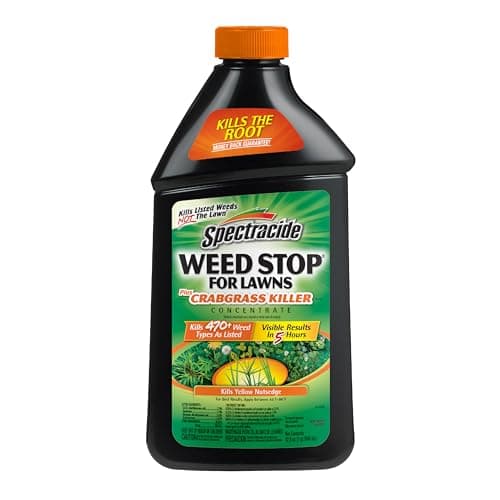
 Spectracide Weed Stop For Lawns Concentrate (32 oz)Check price on Amazon
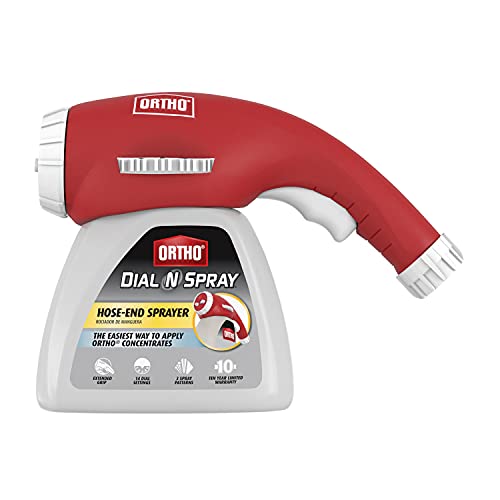 Ortho Dial N Spray Hose-End Sprayer (14 Dilution Settings)Check price on Amazon
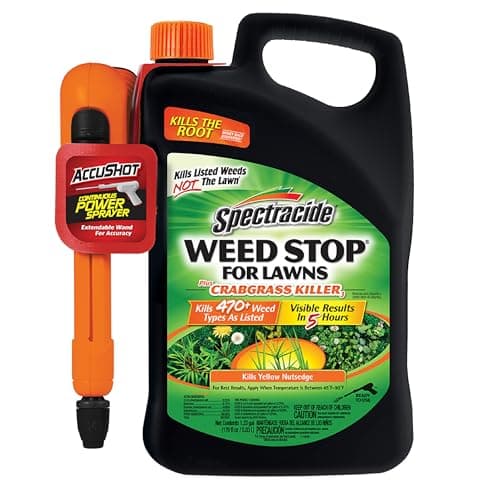
 Spectracide Weed Stop For Lawns Plus Crabgrass Killer Concentrate (32 oz)Check price on Amazon
As an Amazon Associate we earn from qualifying purchases.
Free Lawn Care Tools
It depends on your grass. The current Weed Stop for Lawns Concentrate2 label calls for 2 fl oz per gallon on Kentucky bluegrass, fescue, perennial ryegrass, and zoysia, 1 fl oz per gallon on bahia, bent, Bermuda, and centipede, and 0.75 fl oz per gallon on St. Augustine, with each gallon sprayed over 500 sq ft. The Plus Crabgrass Killer concentrate uses 6.4 fl oz in 1 gallon per 1,000 sq ft, and the Ready-to-Use and hose-end Ready-to-Spray bottles need no mixing.
For a whole-lawn pass with a pump sprayer, the label lists 6.4 fl oz of concentrate in 1 gallon of water per 1,000 sq ft of Kentucky bluegrass, fescue, perennial ryegrass, zoysia, Bermuda, or buffalograss. For spot treatment it lists 5 fl oz (10 Tbsp) in 1 gallon per 500 sq ft. A 32 oz bottle treats up to 5,000 sq ft, and the product is off-label on St. Augustine, bahia, centipede, and bentgrass.
The spray dries to the touch in a few hours on a warm day, and both labels let people and pets back on once it has dried. Neither the current Concentrate2 nor the Plus Crabgrass Killer label prints a rainproof hour count; they ask for calm weather with no rain predicted for 24 hours. The "rainproof in 6 hours" claim comes from Spectracide's Large Plot formula, a different product.
Both current labels limit you to two broadcast applications per year, spaced at least two weeks (14 days) apart. The Concentrate2 label caps the season at 8 fl oz per 1,000 sq ft and the Plus Crabgrass Killer label at 13 fl oz per 1,000 sq ft, not counting spot treatments. Wait the full two weeks before re-spraying, since some weeds take that long to die.
Spray when weeds are young and actively growing and daytime temperatures sit between 45°F and 90°F, per the label, with no rain expected that day. The University of Illinois Extension calls fall the ideal time for broadleaf weed control, and Purdue research found October sprays controlled ground ivy better than September sprays. Yellow nutsedge and crabgrass are early-summer targets, while they're small.
Both current labels say to apply when daytime temperatures are between 45°F and 90°F and warn of lawn damage above 90°F. Within that range, Illinois Extension recommends 55°F to 85°F for the best broadleaf control. Bermuda may yellow temporarily when sprayed at 90°F or higher, and it recovers, per the label.
No, and mixing them up can kill your lawn. Weed Stop for Lawns is selective and spares listed turfgrasses. Weed and Grass Killer is non-selective, meant for driveways, patios, and fence lines, and kills any green plant it touches, grass included. Only spray products with For Lawns on the label over turf.
For broadleaf weeds on a labeled grass, yes. The Concentrate2 label lists 460+ weeds, including dandelion, clover, chickweed, and yellow nutsedge, and the Plus Crabgrass Killer version adds young crabgrass and foxtail. Tough perennials like wild violet and ground ivy are on both labels but often need a second application two weeks later and fall timing.
The Concentrate2 label lists 460+ weeds, including dandelion, white clover, chickweed, plantain, oxalis, spurge, henbit, ground ivy, wild violet, and yellow nutsedge. The Plus Crabgrass Killer label lists 470+, adding young large and smooth crabgrass and green, giant, and yellow foxtail. Crabgrass is only covered from emergence until it is 3 to 4 inches tall.
The Plus Crabgrass Killer label says to wait two days after spraying, and to leave the clippings from the first three mowings on the lawn. The Concentrate2 label only asks you to mow two to three days before spraying, and Illinois Extension advises waiting a few days after any broadleaf spray so the weeds keep their leaf surface.
Both labels say to keep people and pets out of the area during application and off the lawn until the spray has dried. Pick up toys and food bowls before you spray, and follow the re-entry rule on your specific bottle.
Wait the full two weeks the label requires, then check the likely causes: weather on the spray day, the rate for your grass, whether the survivor is on the label, and whether it is a hard-to-kill perennial like wild violet. If those checks fit, spot-treat the survivors. If none fit, get a photo ID of the weed before you try another product.
Only the standard Weed Stop for Lawns Concentrate2, and only at its reduced St. Augustine rate of 0.75 fl oz per gallon (1.5 fl oz per 1,000 sq ft). The label excludes the Floratam and Bitterblue varieties, and the Plus Crabgrass Killer version is off-label on all St. Augustine. If you're not sure what grass you have, get a photo ID first at whatgrassisthis.com so you can match the product to your lawn.
Photos: Engin Akyurt / Pexels, John-Morgan / Openverse, OakleyOriginals / Openverse

Beat weeds and brown spots from your phone
Snap a photo, get the fix, and follow a plan timed to your soil and weather. Free on iPhone.