When to Start Mowing in Spring (By Region and Grass Type)
 Marcus GreenTurf Management Pro | 18 Years
As an Amazon Associate we earn from qualifying purchases.
The first mow of spring sets the tone for your whole lawn season. Start too early and you risk shearing roots or compacting soggy soil. Wait too long and you invite scalping, weeds, and disease. The date on the calendar is the wrong trigger. Your grass responds to soil temperature and actual growth, and both swing by weeks from one year and one region to the next. Get the timing right and the lawn greens up faster, thickens, and shrugs off spring weeds.
This guide covers exactly when to start mowing in spring: the soil-temperature and growth cues that signal readiness, how the timing shifts by region and grass type, how early in the day you should actually run the mower, and how long to wait before cutting new grass or fresh sod. Confirm your local conditions with our soil temperature tracker as you read.
Start mowing when your grass shows steady new growth and soil temperatures reach the range for your lawn type, roughly 45 to 55°F for cool-season grasses and 55 to 65°F for warm-season grasses, not just because a warm week arrived. Confirm the ground is firm underfoot, not soggy, and that blades have grown about 0.5 to 1 inch above your target height. Then sharpen the blade, set the highest recommended height for the first cut, and never remove more than one third of the blade.
For the time of day, mow mid-morning to early evening once the dew has dried, usually after 8 to 10 a.m. Avoid cutting wet, dew-soaked grass and avoid the hottest part of a summer afternoon. For newly seeded lawns, wait until the grass reaches about 3 to 3.5 inches, usually 3 to 4 weeks. For new sod, wait about 2 weeks and until it resists a gentle tug.
The Science Behind Spring Mowing Timing
Grass leaves winter dormancy with depleted energy reserves, and those first blades are what rebuild the roots and push new shoots. Cut too soon and you stress young tissue that has barely woken up. Wait too long and the canopy mats, traps moisture, and hands weeds an open seedbed. The trick is reading when the plant is genuinely growing, not just when it looks a little greener.
Three environmental factors drive that timing:
- Soil temperature: Roots respond to soil warmth far more than to air temperature. Cool-season grasses (Kentucky bluegrass, fescue, ryegrass) start active growth once soil holds around 45 to 55°F. Warm-season grasses (bermuda, zoysia, St. Augustine, centipede) need soil consistently at 55 to 65°F before true green-up.
- Air temperature and daylight: Longer days and milder air help trigger growth, but soil warmth is the real switch for root activity. A 70°F afternoon over 45°F soil is not a green light.
- Moisture: Snowmelt and spring rain can keep soil too wet to mow even when the temperature is right. Firm, dry footing is a hard requirement.
Your lawn is ready for its first mow when you see consistent green shoots standing 0.5 to 1 inch above the dormant layer, the soil is firm enough that your shoes do not sink in, and the blades stand upright instead of matting down. A simple soil thermometer, pushed 2 to 3 inches deep in a few spots, confirms you are in the window. If you feed in spring, time it to green-up too; our guide on when to fertilize your lawn covers the thresholds.
When to Start Mowing by Region
Region is the single biggest factor in your start date. Microclimates, elevation, and local weather can shift the window by weeks, so treat these as starting points and confirm with soil temperature and visible growth.
| Region | Typical First Mow | Soil Temp Trigger | Watch For |
|---|---|---|---|
| Northeast (cool-season) | Late March to early April | 45 to 50°F | Slow thaw, snow mold |
| Upper Midwest (cool-season) | Late April to early May | 45 to 50°F | Short season, late frosts |
| Transition zone | Early to mid April | 50 to 55°F | Mixed turf; watch both cues |
| Southeast (warm-season) | Late March to mid April | 55 to 65°F | Late frost, staggered green-up |
| Pacific Northwest | Late March to mid April | 45 to 50°F | Wet soils, moss |
| Mountain / high elevation | Late April to May | 45 to 50°F | Variable snowmelt, delayed growth |
In the North, wait for consistent green-up, not a few scattered blades. Mowing soggy soil or cutting during a late frost risk causes compaction and root shearing, the classic early-season mistake. In the transition zone, warm spells can trigger growth right before a cold snap sets it back, so on a mixed lawn wait until both cool- and warm-season grasses are growing. In the South, warm-season lawns green up earlier but hate late frost; wait until at least half the lawn shows new blades and soil holds above 55°F for several days before cutting. In the Pacific Northwest and mountains, the limiter is usually wet ground, so confirm firm footing before you start.
When to Start Mowing by Grass Type
Your dominant grass species sets the temperature trigger and the first-cut height. If you are not sure what you have, our free grass identifier will tell you from a photo.
| Grass type | Season | Soil temp for green-up | First-mow height |
|---|---|---|---|
| Kentucky bluegrass | Cool | 45 to 55°F | 2.5 to 3.5 in |
| Tall fescue | Cool | 45 to 55°F | 3 to 4 in |
| Perennial ryegrass | Cool | 45 to 55°F | 2 to 3 in |
| Bermudagrass | Warm | 55 to 65°F | 1 to 2 in |
| Zoysia | Warm | 60 to 65°F | 1 to 2 in |
| St. Augustine | Warm | 55 to 65°F | 2.5 to 4 in |
| Centipede | Warm | 60 to 65°F | 1.5 to 2 in |
Cool-season grasses break dormancy once soil reliably reaches the mid 40s to mid 50s. Mow when new shoots stand 0.5 to 1 inch above the dormant thatch and the ground is firm. Cutting at the correct height early helps the turf thicken and outcompete spring weeds.
Warm-season grasses take patience. Green-up follows only after soil holds 55 to 65°F and nighttime lows stay above 50°F. Do not be fooled by one warm week; wait for uniform green-up across most of the lawn. The first cut can sit at the low end of the summer range to clear dormant tissue, but never scalp into the crown. This decision is close cousin to spring scalping, which is a deliberate warm-season practice covered in our guide on whether to scalp your lawn in early spring. From my seasons managing warm-season turf, waiting even one extra week for full green-up noticeably improves recovery and color.
For a mixed or unknown lawn, watch which areas green up first and match your start to the slowest species. As a rule, begin once 60 to 70 percent of the lawn shows new growth, using the higher recommended height.
How Early in the Day Should You Mow?
Time of day matters almost as much as time of season, and it is the question people ask most: how early is too early? The answer balances dew, heat, and your neighbors.
The best window is mid-morning to early evening. Here is why the edges are bad:
- Too early (before about 8 a.m.): Grass is still coated in dew. Wet blades bend away from the mower, tear instead of slicing, clump under the deck, and spread disease. Wet soil also compacts under the wheels. On top of that, most towns have noise ordinances that prohibit power equipment before 7 to 9 a.m., and neighbors notice.
- Mid-morning to early evening (about 10 a.m. to 6 p.m.): Dew has burned off, blades are dry and standing, and the grass has hours of daylight to seal its cut ends before night. This is the ideal window. In peak summer heat, favor the earlier or later end of it so you are not cutting stressed grass at the hottest point of the day.
- Late evening (after about 7 p.m.): Dew returns and cut grass sits wet overnight, which invites fungal disease. Finish with enough daylight left for the lawn to dry.
How Long to Wait to Mow New Grass or Sod
New lawns are the other big timing question, and rushing the first cut is a common way to undo a fresh seeding.
- New seed: Wait until the new grass reaches about 3 to 3.5 inches tall, then mow it back by no more than one third. That usually takes 3 to 4 weeks for cool-season seed and can be faster for warm-season grasses in warm soil. Let the surface dry first so the mower does not uproot shallow seedlings, and use a sharp blade so it slices rather than tugs.
- New sod: Wait about 2 weeks, and confirm the sod has rooted by tugging gently on a corner. If it lifts, it is not ready; if it resists, it is anchored enough to mow. Keep the first cut high and the mower light.
To dial in seeding rates and timing in the first place, our seeding calculator and the soil temperature tracker work together well.
Prepare for the First Spring Mow
A clean first cut is as much about preparation as timing. Walk the lawn and clear branches, leaves, and any hidden rocks or toys left from winter, then check for soggy spots; if your shoes sink or leave deep prints, wait for the ground to firm up. A sharp blade is non-negotiable, because a dull one tears the grass and leaves brown, disease-prone tips. Our guide on how to sharpen lawn mower blades walks through it, and if your mower is past saving, our best lawn mowers roundup covers replacements.
If your lawn is thin or you are seeding this spring, a starter fertilizer and, for a thatch-heavy lawn, a dethatcher round out the early-season kit:
Recommended products
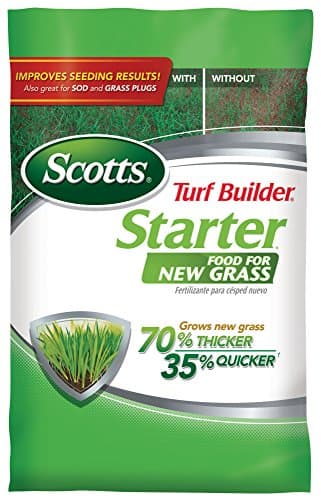
Scotts Turf Builder Starter Food for New Grass
Starter lawn food that gives seed, overseeding, or new sod the planting-time phosphorus boost the guide calls for.
Greenworks 10 Amp 14 inch Corded Electric Dethatcher
Corded electric dethatcher for clearing matted thatch; use it in early spring for cool-season lawns and in late spring after the second mowing for warm-season lawns.
Then set the mower to the highest recommended height for your grass type, mow a small test section, and check the result. If the clippings are clean and the wheels leave no ruts, finish the lawn. If not, wait a few days and test again. Professional crews test moisture and blade sharpness before committing to a full mow, and the habit pays off at home too.
- NC State Extension recommends mowing cool-season lawns as soon as consistent growth resumes and soil temperatures reach 45 to 50°F, never removing more than one third of the blade at a time.
What If You Missed the Ideal Window?
If travel, weather, or a dead mower pushed your first mow late and the grass is overgrown, do not fix it in one pass. Wait for firm ground, then lower the height in steps of 0.5 to 1 inch per mow, spacing cuts 3 to 5 days apart, until you are back to your target. Removing too much at once stresses the turf and weakens the roots. Overgrown, unmown grass can also shelter weeds and pests, so resume a regular schedule as soon as conditions allow and spot-treat problems after the lawn recovers. Timing the rest of your spring tasks around this is easier with a spring lawn preparation checklist, and aeration timing is covered by our aeration timing tool.
Common Mistakes to Avoid
- Trusting color over growth: A green tint is not the same as active growth. Confirm with soil temperature and new shoots standing above the thatch, not just a color change.
- Mowing too early: Cutting dormant grass on cold, wet soil shears roots and thins the turf for months. Wait for firm, dry ground.
- Waiting too long: A delayed first mow leads to thatch buildup, scalping, and weeds going to seed.
- Cutting wet grass: Dew-soaked or rain-soaked blades tear and clump, and the wet soil compacts. Wait for the surface to dry.
- Ignoring microclimates: Shaded, north-facing, and low areas green up later and stay damp longer. Start with the sunniest, firmest spots and treat each area on its own readiness.
- Dull blade, wrong height: A dull blade and an unadjusted deck do more damage than most people realize. Both are quick to fix and non-negotiable for a healthy cut.
Conclusion
The right time to start mowing in spring comes down to your region, your grass type, and current conditions, not the date. Let soil temperature and consistent new growth lead, mow mid-morning once the dew is gone, give new seed and sod time to establish, and prep the mower before the first cut. Nail the timing and the rest of the season gets easier. For equipment and technique from here, our roundup of the best lawn mowers and the guide to robotic lawn mowers help you optimize the tools.
Top Picks
- Scotts Turf Builder Starter Fertilizer for New GrassCheck price on Amazon
- Scotts Halts Crabgrass and Grassy Weed PreventerCheck price on Amazon
- Scotts Turf Builder Triple Action (4,000 sq. ft., 11.31 lb)Check price on Amazon
As an Amazon Associate we earn from qualifying purchases.
Free Lawn Care Tools
Start when your grass shows steady new growth and soil temperatures reach about 45 to 55°F for cool-season grasses or 55 to 65°F for warm-season grasses. Confirm the ground is firm, not soggy, and that blades have grown 0.5 to 1 inch above your target height. Do not start just because a warm week arrived.
Wait until the morning dew has dried, usually after 8 to 10 a.m. Wet grass tears and clumps instead of cutting cleanly, and wet soil compacts under the wheels. Most towns also have noise ordinances that prohibit power equipment before 7 to 9 a.m. Mid-morning to early evening is the ideal window.
It is too early if the soil is still soggy, the grass is not actively growing, or you only see a faint green tint rather than new shoots standing above the dormant thatch. Push a soil thermometer 2 to 3 inches deep; if you are below your grass type’s growth threshold, wait.
Wait until newly seeded grass reaches about 3 to 3.5 inches tall, then cut no more than one third off. That usually takes 3 to 4 weeks for cool-season seed. Let the surface dry first and use a sharp blade so the mower slices the seedlings instead of uprooting them.
About 2 weeks, and only once the sod has rooted. Tug gently on a corner; if it lifts, it is not ready, and if it resists, it is anchored enough to mow. Keep the first cut high and the mower light.
Set the mower to the highest recommended height for your grass type and never remove more than one third of the blade. For warm-season lawns you can cut at the low end of the summer range to clear dormant tissue, but never scalp into the crown.

Beat weeds and brown spots from your phone
Snap a photo, get the fix, and follow a plan timed to your soil and weather. Free on iPhone.