Grass Cutting Height Chart: Mowing Height by Grass Type
 Marcus GreenTurf Management Pro | 18 Years
As an Amazon Associate we earn from qualifying purchases.
Every grass type has an ideal mowing height range, and cutting at the right height is one of the most impactful things you can do for your lawn's health. Bermuda performs best at 1 to 1.5 inches, tall fescue at 3 to 4 inches, and Kentucky bluegrass at 2.5 to 3.5 inches. Always follow the one-third rule: never cut more than one-third of the grass blade in a single mowing. Use our Mowing Height Calculator to find the exact height for your grass type and season. Mowing height is set by species, identify your grass type first if you do not already know it.
Grass Cutting Height Chart
Here is the full grass cutting height chart: the ideal range for each species, the height that should trigger a mow under the one-third rule, and how to adjust in summer heat.
| Grass Type | Ideal Height | Mow When It Reaches | Summer Adjustment |
|---|---|---|---|
| Bermuda (common) | 1 - 1.5 in | 2 in | Raise to 2 in during drought stress |
| Bermuda (hybrid) | 0.5 - 1 in (reel mower) | 1.5 in | Raise slightly; keep reel blades sharp |
| Zoysia | 1 - 2 in | 2.5 - 3 in | +0.5 in in heat or shade |
| St. Augustine | 3 - 4 in | 4.5 - 5 in | Stay at 4 in; never cut below 3 in |
| Centipede | 1.5 - 2 in | 2.5 - 3 in | Up to 2.5 in during stress |
| Buffalograss | 2 - 3 in | 3 - 4 in | Minimal mowing needed |
| Kentucky bluegrass | 2.5 - 3.5 in | 3.5 - 4.5 in | Raise to 3.5 - 4 in |
| Tall fescue | 3 - 4 in | 4.5 - 5 in | Stay at 4 in; taller is better |
| Perennial ryegrass | 2 - 3 in | 3 - 4 in | +0.5 in in heat |
| Fine fescue | 2.5 - 3.5 in | 3.5 - 4.5 in | +0.5 in; tolerates shade well |
Print this, tape it inside the garage, and set your mower deck once per season instead of guessing every weekend. If you are not sure which grass you have, identify your grass type first; every row on this chart depends on it.
Why Mowing Height Matters More Than You Think
From my time managing championship greens, I can tell you that mowing height is the most underrated factor in lawn health. Homeowners spend hundreds of dollars on fertilizer, seed, and weed control, then mow their grass too short and undo all of that investment in a single afternoon.
Here is what happens when you cut too low. The grass blade is the plant's solar panel. Cut it too short and the plant cannot photosynthesize enough energy to maintain strong roots, fight off disease, or outcompete weeds. This is called "scalping," and it is the number one mowing mistake I see in residential lawns.
On the flip side, letting grass grow too tall creates its own problems. Tall grass flops over, shades itself out, and creates a humid microclimate at soil level that encourages fungal disease. The sweet spot is specific to your grass type, and getting it right makes everything else easier.
The One-Third Rule: The Only Mowing Rule You Absolutely Must Follow
Before we talk about specific heights, you need to understand the one-third rule. Never remove more than one-third of the grass blade height in a single mowing. If your target height is 3 inches, you should mow before the grass reaches 4.5 inches.
Why does this matter? Removing more than one-third of the blade shocks the plant. It diverts energy from root growth to blade recovery, weakens the turf, and leaves clippings that are too long to decompose quickly. Those heavy clippings smother the grass underneath and contribute to thatch buildup.
In practical terms, this means you might need to mow twice a week during peak growth in spring. I know that is not what anyone wants to hear, but it is the price of a genuinely healthy lawn.
Ideal Mowing Heights by Grass Type
Warm-Season Grasses
Bermuda Grass: 1 to 1.5 inches for common bermuda, 0.5 to 1 inch for hybrid bermuda. This is one of the lowest-cut lawn grasses. Bermuda thrives when cut short because it grows laterally through stolons and rhizomes. However, you need a reel mower to cut below 1 inch cleanly. A rotary mower will tear the blades at that height.
Zoysia Grass: 1 to 2 inches. Zoysia's dense growth habit allows for a relatively low cut. Empire and Palisades varieties do well at 1.5 to 2 inches with a rotary mower.
St. Augustine Grass: 3 to 4 inches. This is the tallest-cut warm-season grass. St. Augustine has wide blades and a coarser texture that looks best and performs best at higher heights. Cutting below 3 inches weakens the turf and invites chinch bugs.
Centipede Grass: 1.5 to 2 inches. Centipede is a low-maintenance grass that does not respond well to aggressive mowing. Keep it in this range and avoid the temptation to cut it shorter for a manicured look.
Buffalo Grass: 2 to 3 inches. Buffalo grass is drought-tolerant and low-growing naturally. Many homeowners mow it only a few times per month during the growing season.
Cool-Season Grasses
Kentucky Bluegrass: 2.5 to 3.5 inches. KBG looks its best and develops the strongest root system at around 3 inches. During summer heat, raise the height to 3.5 or even 4 inches to help the grass cope with stress.
Tall Fescue: 3 to 4 inches. Tall fescue is a bunch-type grass that depends on deep roots for drought tolerance. Mowing high encourages those deep roots. This is one grass where taller is almost always better.
Perennial Ryegrass: 2 to 3 inches. Ryegrass germinates quickly and establishes fast, but it needs consistent mowing at moderate heights to look its best.
Fine Fescue: 2.5 to 3.5 inches. Fine fescues (creeping red, chewings, hard fescue) perform well in shade and at moderate heights. They are often mixed with KBG in northern lawn blends.
Quick Answers: The Most-Searched Mowing Heights
If you came here for one number, here it is. The ideal bermuda grass mowing height is 1 to 2 inches for common bermuda, or 0.5 to 1.5 inches for hybrid varieties with a reel mower. The best height to mow tall fescue is 3 to 4 inches, and Kentucky bluegrass does best at 2.5 to 3.5 inches. Zoysia likes 1 to 2.5 inches, St. Augustine wants 2.5 to 4 inches, and centipede stays happiest at 1.5 to 2 inches. When in doubt, mow at the top of your grass type's range; taller grass shades out weeds and grows deeper roots.
Recommended products
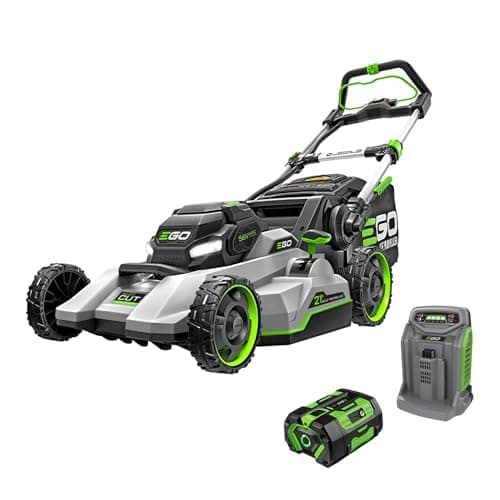
EGO POWER+ Self-Propelled Mower with Select Cut (LM2135SP)
A 21 inch battery self-propelled mower with a precise single-point height adjustment from 1.5 to 4 inches.
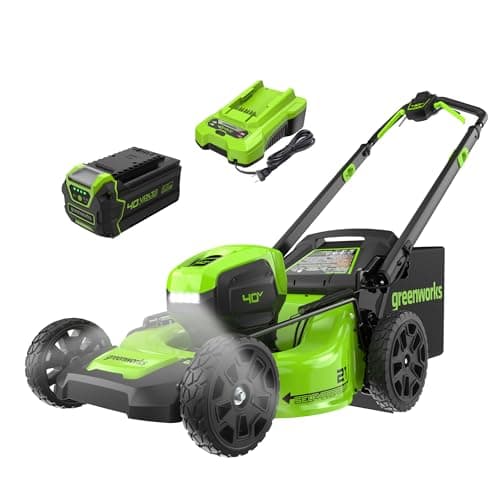
Greenworks 40V 21 inch Self-Propelled Cordless Mower
A lighter self-propelled cordless mower with seven cutting heights and a battery and charger included.

The Andersons PGF Complete 16-4-8
A slow-release 16-4-8 with humic acid and a fine particle size that spreads evenly on any grass type.
Seasonal Mowing Adjustments
Your mowing height should not stay the same all year. Seasonal adjustments are one of the easiest ways to improve your lawn's health.
Spring
For the first mow of the season, drop your height by about half an inch below your target. This removes dead tips and lets sunlight reach the crown of the plant, encouraging new growth. After that first cut, raise back to your normal height.
Summer
Raise your mowing height by 0.5 to 1 inch during the hottest months. Taller grass shades the soil, reduces water evaporation, and keeps root-zone temperatures cooler. This is especially important for cool-season grasses that are under heat stress.
Fall
Return to your standard mowing height. Fall is prime growing season for cool-season grasses, and consistent mowing at the right height helps the turf thicken up before winter.
Late Fall (Last Mow)
For your final mow before winter, lower the height by about half an inch. This reduces the risk of snow mold, which thrives in tall, matted grass under snow cover. Do not scalp the lawn, just take it down slightly.
Mowing Tips From 18 Years on the Course
- Sharpen your blades regularly. Dull blades tear grass instead of cutting it cleanly. Torn tips turn brown and create entry points for disease. Sharpen your mower blade at least every 20 to 25 hours of use.
- Mow when the grass is dry. Wet grass clumps, clogs your mower, and cuts unevenly. Morning dew usually dries by mid-morning.
- Alternate your mowing pattern. Mowing in the same direction every time creates ruts and trains the grass to lean one way. Change direction each time you mow.
- Leave the clippings. Grass clippings return nitrogen to the soil. As long as you are following the one-third rule, the clippings will be small enough to decompose quickly without contributing to thatch.
Find Your Perfect Mowing Height
If you are not sure what height to set your mower, our Mowing Height Calculator takes the guesswork out of it. Enter your grass type and season, and it will give you the exact height recommendation along with a mowing frequency suggestion.
For more on building a thick, healthy lawn, check out our guide on how to get thick grass. If your lawn sees a lot of foot traffic, read about the best grasses for high-traffic areas. And if you are just getting started with lawn care, our list of common lawn care mistakes beginners make will help you avoid the most frequent pitfalls.
Free Lawn Care Tools
Cutting grass too short, called scalping, removes too much of the leaf blade that the plant needs for photosynthesis. This weakens the root system, makes the lawn more susceptible to weeds and disease, and causes the grass to turn brown. It also exposes soil to sunlight, which helps weed seeds germinate.
Mow based on growth rate rather than a fixed schedule. Follow the one-third rule: mow before the grass exceeds one-third above your target height. During peak spring growth, this may mean mowing twice per week. During summer heat or drought, you may only need to mow every 10 to 14 days.
Leave them. Grass clippings return valuable nitrogen and other nutrients to the soil, reducing your fertilizer needs by up to 25 percent. As long as you follow the one-third rule, clippings will be small enough to decompose quickly. Only bag clippings if the grass was excessively tall and the clippings are clumping on the lawn surface.
If you want to maintain bermuda below 1 inch (common for hybrid bermuda varieties), yes, a reel mower is strongly recommended. Rotary mowers cannot cut cleanly at that height. For common bermuda maintained at 1 to 1.5 inches, a quality rotary mower set to its lowest setting can work, but a reel mower will still give a cleaner cut.
Common bermuda grass does best mowed at 1 to 2 inches, while hybrid bermuda varieties like TifTuf or Tifway can be cut as low as 0.5 to 1.5 inches if you use a reel mower. The lower you mow bermuda, the more often you need to cut to obey the one-third rule, so most homeowners with rotary mowers should stay near the 2 inch mark.
Raise your mower in summer regardless of grass type. Cool-season grasses like fescue and bluegrass should sit at the top of their range, 3 to 4 inches, to shade the soil and protect roots from heat. Warm-season grasses like bermuda and zoysia can stay near their normal height since summer is their peak growth season, though adding a quarter to half inch during drought helps them too.
Most lawn grasses top out between 12 and 24 inches if never mowed, then go to seed and flop over. Tall fescue and ryegrass can push 2 feet or more, while low growers like buffalograss and centipede stay under a foot. The problem is not height itself: unmowed turfgrass shades itself out, mats down, invites voles and fungal disease, and violates the one-third rule so badly on the first cut back that recovery takes weeks. If you want a no-mow look, use a grass selected for it rather than letting a conventional lawn go.
It depends entirely on species: Bermuda wants 1 to 1.5 inches, zoysia 1 to 2, centipede 1.5 to 2, St. Augustine and tall fescue 3 to 4, and Kentucky bluegrass 2.5 to 3.5. Two rules apply to every lawn: never remove more than one-third of the blade in one mow, and raise the deck about half an inch during summer heat. Identify your grass type first if you are not sure which range applies.

Your lawn plan, in your pocket all season
Grass ID, a season plan, soil-timed reminders, and a lawn journal that remembers what you did. Free on iPhone.