Should You Scalp Your Lawn in Early Spring? (Yes for Bermuda, No for Fescue)
 Marcus GreenTurf Management Pro | 18 Years
As an Amazon Associate we earn from qualifying purchases.
Should you scalp your lawn in early spring to jump start that green-up, or can it set your grass back for months? The answer is not the same for a bermuda lawn in Georgia and a fescue lawn in Ohio, and that is exactly where most of the confusion starts.
If you have walked through big box store flyers or browsed a few online articles, you have probably seen conflicting instructions. Some say to scalp every spring, others say never scalp at all. The truth is that "scalping" means something very specific in professional turf management, and it is very different from simply mowing a little shorter than usual.
In turf terms, scalping means mowing extremely low and removing most of the brown, dormant leaf tissue so that stems and sometimes soil are exposed. That is not the same as a routine low cut. Done correctly and at the right time on the right grass, a controlled spring scalp can speed up green-up and clean up a warm-season lawn. Done incorrectly, it can thin the stand, invite weeds, and stress the lawn heading into summer.
The right decision depends on three things: your grass type, your climate, and what "early spring" really is in your yard from a temperature standpoint, not the calendar. In this guide I will give you a clear decision framework so you know whether you should scalp your lawn in early spring, when to do it, and exactly how to do it in a way your grass can recover from.
Before you drop your mower all the way down, you need to know what grass you are working with and how your local weather patterns drive its growth cycle. That is our first step.
If you have a warm-season lawn like bermudagrass or some zoysia in the South, you can scalp in early spring, but only when soil temperatures are consistently around 55-60°F and green shoots are just starting to appear. The goal is a one-time, very low mow that removes most of the brown dormant material without shaving off the crowns, followed by bagging or blowing off the debris.
If your lawn stays mostly green in winter, or you live in a northern or cool-season region, you should not scalp your lawn in early spring at all. For cool-season grasses like Kentucky bluegrass or tall fescue, scalping in spring strips away healthy leaf tissue right as the plant is using it to recover from winter, which leads to thinning and weeds instead of a nicer lawn. Focus instead on a proper mowing height, light raking, and core aeration if the soil is compacted.
Expect a properly timed scalp on a healthy bermuda lawn to look rough for 7-10 days, then begin visible green-up within 2-3 weeks as temperatures warm. If you scalp too early while the lawn is fully dormant or when a cold snap is still likely, recovery can stall for a month or longer and you may see bare areas that need repair. The fix is all about timing, grass type, and following up with correct watering and a light spring fertilization once the lawn is 50% green.
Scalp or Not? Quick Reference by Grass Type
Before we get into the details, here is the whole decision in one table. Find your grass, and you have your answer.
| Grass Type | Scalp in Spring? | When | Normal Height | Scalp Height |
|---|---|---|---|---|
| Common bermuda | Yes | Soil 55-60°F, 10-20% green at base | 1-2 in | 0.75-1.0 in |
| Hybrid bermuda | Yes | Soil 55-60°F, 10-20% green at base | 0.5-1.5 in | 0.5-1.0 in |
| Zoysia | Light scalp only | Same window, be conservative | 1-2.5 in | 25-30% below normal |
| St. Augustine | No | Never | 3-4 in | Do not scalp |
| Centipede | No | Never | 1.5-2 in | Do not scalp |
| Bahiagrass | No | Never | 3-4 in | Do not scalp |
| Tall fescue | Never | Never | 3-4 in | Do not scalp |
| Kentucky bluegrass | Never | Never | 2.5-3.5 in | Do not scalp |
| Perennial ryegrass | Never | Never | 2-3 in | Do not scalp |
Understanding Lawn Scalping: What It Is (and Isn't)
What “Scalping Your Lawn” Actually Means
In professional turf management, "scalping" is not a vague term. It describes mowing so low that you remove almost all of the existing foliage, usually right down to just above the plant crowns. You are cutting deep into the dormant or semi-dormant canopy, not just giving it a close trim. In warm-season turf like bermuda, that often means dropping the mowing height to 0.5-1.0 inch for a one-time pass at spring green-up.
It is helpful to separate three different situations that often get lumped together:
- Routine low mowing: Regular cutting at the lower end of the recommended height range. For common bermuda in a home lawn that might be 1-1.5 inches. The grass stays mostly green after mowing, and you are taking off no more than one third of the leaf blade.
- Accidental scalping: You hit a high spot or bump, the mower dips, and you shave off all the green tissue in that patch. You might see tan stems, crowns, or even bare soil in a streak.
- Intentional spring scalping: A planned, uniform, very low cut done across the whole lawn to remove dormant brown leaf tissue on warm-season grasses as they transition out of dormancy.
Visually, an intentionally scalped warm-season lawn right after cutting will be mostly tan with very little green on top. You may see runners and stems, and in thin areas you may see soil peeking through. Compare that to a properly mowed lawn at normal height, where the top looks uniformly green (or uniformly brown if fully dormant) with the crowns safely below the cut line.
From my time managing championship greens, scalping is used as a tool when we want to reset the canopy height or remove accumulated growth before a peak growing period. It is always done with a recovery plan in place and never as a routine cut. Home lawns should be treated the same way: scalping is a specific renovation step, not just "mow short because it is spring."
Why People Scalp in Early Spring
The idea behind scalping your lawn in early spring on warm-season grass is rooted in several sound agronomic goals, as long as it is applied correctly.
First, removing excess dormant leaf tissue and light thatch allows sunlight to reach the soil more quickly. Soil that is exposed to sun and air will warm faster than soil shaded by a mat of dead leaves. Warmer soil means the grass breaks dormancy sooner and starts pushing new shoots. On bermuda in the Deep South, this can translate to green-up 1-2 weeks earlier under the right conditions.
Second, scalping removes the brown top growth that keeps a warm-season lawn looking dingy in early spring. Once new leaves emerge, you see green foliage rather than a mix of green tips on brown stalks. On golf course fairways we relied on this to sharpen appearance for spring tournaments, but we also used precise height-of-cut adjustments and aggressive fertility and irrigation schedules to support recovery.
Third, a spring scalp can help keep thatch and organic build-up in check on dense, stoloniferous grasses like hybrid bermuda and fine-textured zoysias. You are temporarily resetting the canopy height and removing some of the older tissue from the upper layer. This is not a substitute for mechanical dethatching or verticutting when thatch is excessive, but it can be part of an overall program to keep the canopy from getting spongy.
The key difference between professional turf and most home lawns is the support system. Golf course turf is usually on sand-based soils with excellent drainage, gets 0.1-0.25 pound of nitrogen per 1,000 square feet every 2-3 weeks in the growing season, and is irrigated very precisely. That means it can bounce back from an aggressive spring scalp quickly. A home lawn on native clay soil with limited irrigation and infrequent fertilization will recover more slowly and is more vulnerable to damage if scalped at the wrong time or to the wrong depth.
When Scalping Is Just “Too Short Mowing”
Not every low cut counts as scalping. Understanding the difference helps you adjust your mowing height without overreacting whenever the lawn looks a bit lighter after a cut.
Most home lawn grasses have a recommended mowing height range. For example:
- Common bermudagrass: 1-2 inches
- Hybrid bermuda: 0.5-1.5 inches (with reel mowers)
- Zoysia: 1-2.5 inches, depending on type
- St. Augustine: 3-4 inches
- Tall fescue: 3-4 inches
- Kentucky bluegrass: 2.5-3.5 inches
If you normally mow at the top of the range and drop down to the bottom of the range on one cut, that is low mowing, not scalping. The grass may look lighter because you removed more leaf tissue, but you are still above the crowns and the plant has enough foliage left for photosynthesis. You might remove 30-40% of the leaf blade and still be fine.
A true scalp removes most of the existing leaf tissue in a single pass, often 60-80% or more. You will see tan stems, sometimes with the crowns (the growing points near the soil surface) exposed. If you can see more tan tissue than green, and especially if you see patches of soil, you are in scalp territory.
One useful test: after mowing, kneel down and part the grass with your fingers.
- If you still see a dense mat of green leaves above the stems, it was just a low cut.
- If the stand is open, mostly tan, and you can see the soil surface in more than about 25% of the area, you have scalped.
This distinction matters because a light low cut in early spring can be a good way to tighten the lawn and encourage lateral growth, while an uncontrolled scalp can thin the stand and stress the grass right before the heat of summer. That is why a one-size-fits-all answer to "should you scalp your lawn in early spring" is misleading - you have to consider how low, on what grass, in what conditions.
Step 1: Identify Your Grass Type and Region
Warm-Season vs Cool-Season Grasses: The Critical Fork in the Road
The first and most important step is knowing whether you have warm-season or cool-season turf. This alone changes the answer from "often yes, with care" to "almost never."
Common warm-season grasses in home lawns include:
- Bermudagrass (common and hybrids) - Very common in the Southeast, spreads by stolons and rhizomes, goes tan-brown in winter.
- Zoysia - Dense, fine to medium texture, slow to spread, also goes brown in winter in cooler regions.
- St. Augustine - Coarse, wide blades, typically stays semi-green in frost free or near-frost-free regions, but can go brown with hard freezes.
- Centipede - Apple green color, low maintenance, mostly in the Southeast coastal and sandier soils.
- Bahiagrass - Coarse, open habit, tall seedheads, common in utility and rural lawns in the Deep South.
Common cool-season grasses include:
- Kentucky bluegrass - Fine to medium texture, rhizomatous, common in the Midwest and Northeast.
- Perennial ryegrass - Very fine, glossy leaves, used in mixes or as overseed in the South.
- Tall fescue - Coarse, clump-forming, common in the transition zone and Mid-Atlantic.
- Fine fescues - Very fine leaves, shade-tolerant, often mixed with bluegrass.
For warm-season grasses, especially bermuda and some zoysias, a properly timed spring scalp is a standard practice in many professional programs. For cool-season lawns, the answer to "should you scalp your lawn in early spring" is almost always no. Cool-season grasses rely on their existing foliage in early spring to drive photosynthesis and rebuild roots. Strip that away and you get stress, disease risk, and bare spots.
Here is a quick mini-checklist to get oriented:
- If your lawn turns fully tan or straw colored in winter and only starts greening up in late spring, you almost certainly have a warm-season grass.
- If your lawn stays mostly green all winter, even if it looks a bit tired, you have a cool-season grass or a winter overseed mix.
- If your lawn is brown on top in winter but you see a few scattered green blades mixed in when you look closely, you probably have warm-season grass with some cool-season weeds or overseeded rye.
- If you live in Florida, the Gulf Coast, or deep South Texas in a non-overseeded lawn, you are almost certainly dealing with warm-season grasses.
- If you live in Minnesota, Michigan, New York, or similar northern states, you are almost certainly dealing with cool-season grasses.
Bermuda and many zoysias respond well to spring scalping when done at the right time and followed by sound cultural practices. St. Augustine, centipede, and bahiagrass are special cases that I will touch on later - they generally do not like aggressive scalping and require a much gentler approach.
Understanding Your Climate Zone and “Early Spring” Timing
The second part of the equation is what "early spring" actually means where you live. The calendar is a blunt tool. Your grass responds to soil temperature much more than to dates.
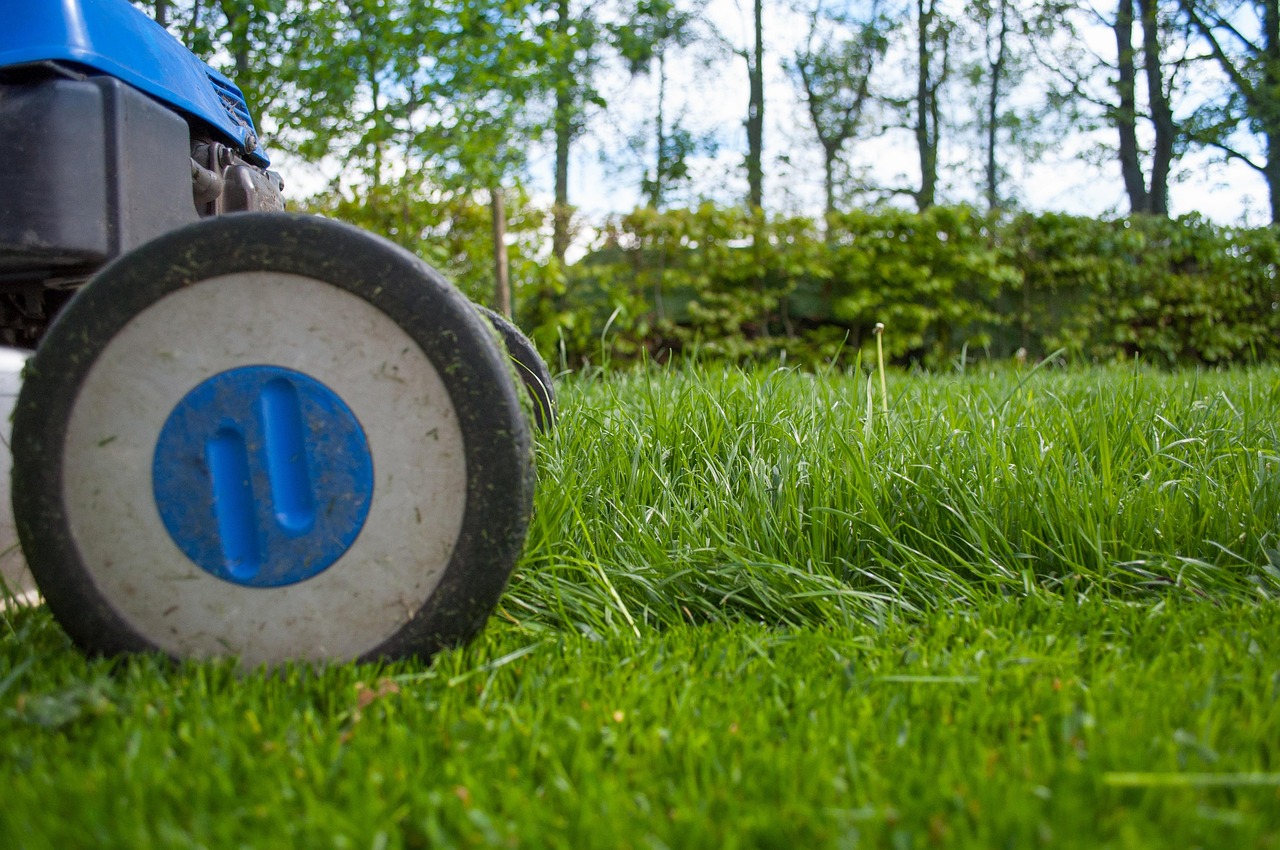
Broadly, we can group regions like this:
- Deep South / Gulf Coast: Coastal Texas across to Florida and up into southern Georgia, Alabama, Mississippi, and Louisiana. Winters are mild, and warm-season grasses may only go fully dormant for a short period or stay semi-green.
- Transition Zone: Roughly from Oklahoma/Tennessee/Virginia across to parts of North Carolina. Both warm-season and cool-season lawns exist here, and weather patterns are more variable.
- Mid-Atlantic / Midwest: Predominantly cool-season turf, with some warm-season in pockets.
- Northern states: Almost entirely cool-season turf, long winter dormancy.
For warm-season grasses, the right "early spring" window for a scalp is usually when soil temperatures at 2 inches are consistently in the 55-60°F range and the long-term forecast shows low risk of a hard freeze. That is your trigger threshold. For many parts of the Southeast, that lands sometime between late February and late March, but it can be earlier on the Gulf Coast and later in the upper transition zone. If you are mapping out the rest of your mowing season too, our guide on when to start mowing in spring by region and grass type pairs naturally with this decision.
You can verify soil temperature by using a simple soil thermometer, inserting it 2 inches deep in the morning, and checking several spots in the lawn. If you are consistently reading 55°F or higher for several days in a row, the lawn is starting to wake up. If you are still seeing readings in the 40s, it is too early to scalp. Scalping while the grass is fully dormant delays recovery and leaves soil exposed during a period where erosion and weed germination are high.
For cool-season lawns, the best early spring window for major work like core aeration, light dethatching, and the first fertilizer tends to be when air temperatures are in the 50-65°F range and the lawn has started to grow again. That is exactly when you do not want to scalp. Instead, you maintain the appropriate mowing height and gently clean up any winter debris. Cool-season lawns have different seasonal needs, and a good overview is usually laid out in resources like a Spring Lawn Preparation Checklist or a Monthly Lawn Care Calendar tailored to your region.
- NC State Extension recommends delaying aggressive cultural practices like scalping or dethatching warm-season lawns until soil temperatures are consistently 55°F or higher at a 2 inch depth.
If your grass is mostly brown and brittle on top, you have no new green shoots at the base, and your soil temperatures are still below 50°F, it is not time to scalp a warm-season lawn yet, regardless of what the calendar says.
How to Confirm
If you are still not sure what you have or when your grass is waking up, a simple on-site inspection can give you clarity.
Pick a sunny patch of your lawn and get down at eye level. Part the grass with your fingers and look right at the soil surface:
- If you see new, bright green shoots emerging from the crowns or from stolons, your lawn is beginning to break dormancy. That is a potential window for a scalp on bermuda or some zoysias, assuming soil temperatures and forecasts line up.
- If everything from the tip of the leaves down to the base is the same straw brown color, you are still in full dormancy. Wait.
- If the top 1-2 inches of the plant are green and you have a dense canopy, that is typical of a cool-season lawn in spring. Do not scalp.
You can also run a "tug test." Gently pull on a small handful of grass:
- If it pulls up easily with roots attached and you see rotted crowns, you are dealing with winter kill or disease, not a scalping decision.
- If the plants are firmly anchored and only the leaf tips are brittle, the grass is dormant but alive.
Once you have confirmed grass type and growth stage, you can move to the actual decision of whether to scalp and how aggressively.
Step 2: When Should You Scalp Your Lawn in Early Spring?
Ideal Timing for Warm-Season Grasses
For a healthy bermuda lawn in the Southeast, the best timing to scalp your lawn in early spring is a narrow window when dormancy is ending but growth has not taken off yet. In practice, the best approach is to wait until you see roughly 10-20% green tissue at the base of the plants and soil temperatures at 2 inches are in the 55-60°F range on a stable upward trend.
At that point, the plant has begun to activate its carbohydrate reserves and is ready to push new growth after you remove the old foliage. If you scalp too early, while the plant is still fully dormant, you are removing insulation and protection without giving the plant any chance to respond. If you scalp too late, after green-up is already well underway, you may remove a lot of new, valuable foliage and set the lawn back.
In my experience on golf course bermuda fairways in Georgia, a typical sequence looked like this:
- Late winter: Leave the grass at its winter height, usually 0.75-1.0 inch on fairways, no scalping yet.
- Soil temp around 55°F, first signs of green at the base: Drop the height of cut for 1-2 mowings to remove most of the dormant leaf tissue. This is the "scalp" in golf course terms.
- Immediately after scalp: Blow or vacuum up debris, then resume a normal mowing height slightly above the target summer height and let the turf grow back into it.
For home bermuda lawns that have been kept at 1.5-2 inches in winter, a spring scalp might mean dropping the mower down gradually over 2-3 cuts, ending with a one-time low cut around 0.75-1.0 inch, depending on how level the yard is and the mower you use. You do not need to hit putting green height to get the benefits. Your goal is to remove the brown top growth and expose the crowns and soil to light and warmth, not to shave it to the dirt.
Zoysia is trickier. Some zoysias, particularly coarse varieties or lawns on marginal soils, do not respond as well to an aggressive scalp. A light spring low cut, just below your normal height, is often enough to clean up the lawn without risking slow green-up.
Why You Should Not Scalp Cool-Season Lawns
If you have cool-season turf like tall fescue, bluegrass, or rye, scalping in early spring fights the grass's biology instead of helping it.
Cool-season grasses have two growth peaks: one in spring and one in fall. Early spring growth is driven by stored carbohydrates in the crown and roots, but the plant very quickly starts using new leaf tissue to photosynthesize and replenish that energy. That is why you will often see recommendations to avoid mowing more than one third of the leaf blade and to keep mowing heights higher, typically 2.5-4 inches, depending on species.
If you scalp a cool-season lawn in early spring, you are removing almost all of the functional leaf area just when the plant needs it most. This leads to:
- Slower recovery from winter.
- Reduced root growth just as soil starts to warm.
- Higher susceptibility to spring diseases like leaf spot and brown patch when the weather turns warm and wet.
- Thinning, which opens the door for crabgrass and broadleaf weeds.
Cool-season lawns do sometimes get "scalped" accidentally when an uneven area or dull blade strips the leaves down to the crowns. When that happens, the fix is to immediately raise the mowing height back to the proper range, keep the lawn evenly watered at about 1 inch per week including rainfall, and avoid heavy fertilization until you see recovery. But you should never plan scalping as a spring lawn preparation step for cool-season turf.
Reading Weather Patterns and Forecasts
Even within the same region, year to year weather swings matter. You want to avoid scalping right before a strong cold front or extended cool, cloudy period.
Here is a practical decision sequence:
- Check soil temperatures at 2 inches three mornings in a row. If they are consistently 55-60°F or higher, proceed to the next check. If they are 45-50°F, wait.
- Look at your 10 day forecast. If you see several nights in the low 30s or below, or a cold rain pattern, it is better to delay.
- Inspect the turf. If you see roughly 10-20% green at the base on a bermuda or warm-season lawn, that indicates the plant is primed to respond.
When soil temperatures, forecast, and plant cues all line up, you have your timing window. In a typical season, that window might only be a 1-2 week stretch. Outside of that, scalp-like cuts are more risky.
Step 3: How to Safely Scalp a Warm-Season Lawn
Prepare Your Equipment and Lawn
The way professional crews approach scalping is deliberate. You should take the same mindset at home, scaled to your equipment.
First, ensure your mower blade is sharp. A dull blade tears and shreds leaf tissue, which increases stress and disease risk. Sharpen or replace the blade before your scalp cut. Also check your mower deck height adjustments so you know what each setting corresponds to in actual cutting height. If possible, measure your current height by cutting a small test strip and measuring the leaf length from soil to cut tip.
Second, clear the lawn of sticks, rocks, toys, and debris. A scalp cut runs the deck lower than normal, so you have less margin for hitting obstacles. If your yard is uneven with noticeable humps and dips, you may not be able to go as low as a golf fairway without gouging the crowns. Respect the contours of your yard.
Third, if the lawn is very tall or has a lot of winter growth, plan to work down in stages rather than all at once. Taking a bermuda lawn from 3 inches to 0.75 inch in a single cut is a recipe for clumps, mower bogging, and uneven scalping.
Step-by-Step Scalping Process
Here is a homeowner friendly version of the process I used on fairways, adjusted for rotary mowers and less-than-perfect grading:
- Initial cleanup cut: Set the mower at your normal winter height or just slightly lower, and give the lawn a clean cut. Bag if you have a heavy layer of leaves or debris.
- Second pass at a lower setting: Drop the deck one notch and mow again, preferably at a 45 degree angle to your normal mowing pattern. This begins to lower the canopy and lifts more of the dormant material.
- Final scalp pass: For bermuda, drop the deck to the lowest setting that your yard can tolerate without the wheels dropping into scalps. For many residential rotary mowers, that might be in the 0.75-1.0 inch range in reality, even if the setting number is lower. Make a final pass, going slowly so the mower can process the material.
- Debris removal: Bag the clippings if your mower has a bag. If not, use a leaf blower or rake to remove as much of the loose brown material as possible. Leaving a thick layer of debris on the surface defeats the purpose of exposing the soil and can smother new shoots.
You will know you are done when most of the tan, dormant leaf tips have been removed and you can see greenish crowns or stolons just above the soil surface. Avoid going so low that you are clearly shaving into the crowns across large areas.
On zoysia, be more conservative. Often you can stop after the second pass, just a notch or two lower than your normal height, and still achieve a cleaner canopy without full scalping.
Post-Scalp Recovery Plan
The scalp is only half the job. Recovery is where you actually see the benefit, and it depends on supporting the grass properly.
Right after scalping:
- Water the lawn lightly, about 0.25-0.5 inch, to settle any loose material and reduce dust. Do not soak it to mud.
- If crabgrass has been a problem, apply your pre-emergent right after the scalp and cleanup. Crabgrass germinates when soil temperatures reach about 55°F, the same range that opens the scalp window, so the two jobs pair naturally and the freshly cleaned surface puts the product in direct soil contact.
- If your soil is compacted, plan to core aerate within the next 2-4 weeks as green-up progresses. Aeration after scalping but before full growth can help roots expand into the loosened soil.
As the lawn starts to green:
- Apply a light spring fertilizer once the lawn is about 50% green. For bermuda, 0.5-0.75 pound of nitrogen per 1,000 square feet is a good starting rate in spring. Avoid heavy doses over 1 pound at this stage, which can push excessive top growth at the expense of roots.
- Maintain consistent moisture. Aim for about 1 inch of water per week, including rainfall, applied in deep, infrequent soakings rather than daily sprinkles.
- Raise your mowing height slightly above your eventual summer target for the first couple of cuts after green-up. Let the grass rebuild leaf area, then gradually bring it down into your desired range over several weeks.
If you scalp at the right time on a healthy bermuda lawn and follow this recovery plan, you should see visible green-up within 7-10 days and a mostly green lawn within 2-3 weeks, depending on temperatures. If temperatures stall or a cold snap hits, that timeline can stretch, but the lawn will generally catch up once conditions improve.
Recommended products
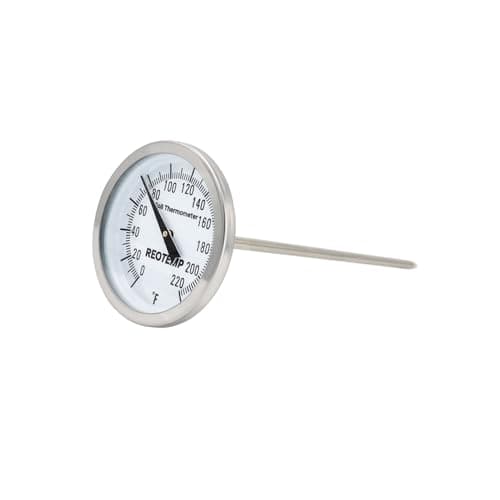
REOTEMP Waterproof Soil Thermometer
A five-inch stem thermometer for confirming soil temperature is rising before you cut low.
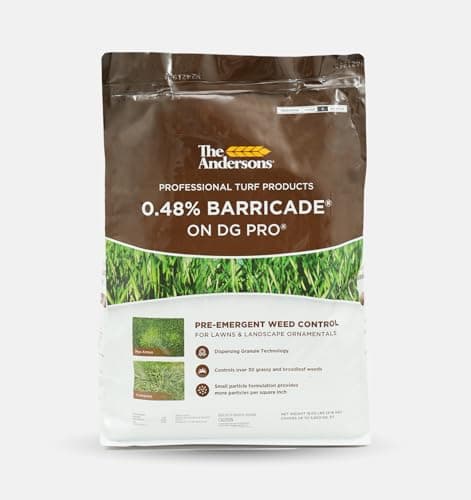
The Andersons Barricade Professional-Grade Prodiamine
A granular prodiamine that keeps crabgrass out of a freshly opened bermuda canopy.
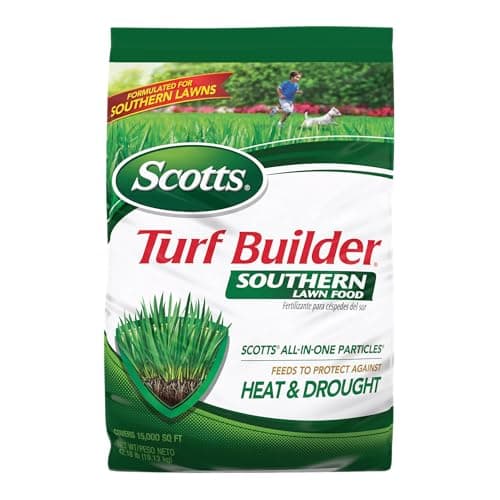
Scotts Turf Builder Southern Lawn Food
A nitrogen-forward feed for bermuda, zoysia, and other southern grasses pushing out of dormancy.
Grass-Specific Guidance: Bermuda, Zoysia, St. Augustine, and More
Bermudagrass: The Prime Candidate for Spring Scalping
Bermudagrass, both common and hybrid, is the species most often managed with intentional spring scalping. It responds aggressively to light, heat, and nitrogen, and its vigorous stolons and rhizomes allow it to recover from low cuts when managed well.
On a bermuda home lawn, I recommend:
- Target scalp height: 0.75-1.0 inch for most rotary mowers, assuming the yard is reasonably level.
- Timing: Soil temps 55-60°F, 10-20% green at the base, low risk of hard frost.
- Frequency: Once per year in early spring. Do not scalp multiple times per season.
The key most homeowners miss is the follow-through. Scalping without adjusting your fertilization and irrigation around that event leaves the grass weakened. If you do not plan to water and fertilize appropriately afterward, you are better off skipping a deep scalp and just doing a light low mow.
Zoysia: Proceed with Caution
Zoysia varieties can act quite differently. Fine textured zoysias in full sun on well drained soil can handle a mild spring scalp or a low mow. Coarser varieties or shade stressed lawns often respond poorly to aggressive scalping, with very slow green-up.
For zoysia:
- Err on the side of a light cleanup cut rather than a full scalp. Drop the height 25-30% below your normal mowing height for one cut, remove debris, and then return to normal height.
- Watch the lawn year to year. If a previous scalp led to slow green-up or bare areas, back off in future springs.
Zoysia is slower growing than bermuda. It simply does not have the same capacity to rebound from being shaved down too low. When in doubt, a Spring Lawn Preparation Checklist tailored to zoysia should emphasize height consistency more than scalping.
St. Augustine, Centipede, and Bahiagrass: Generally Do Not Scalp
These three warm-season grasses are far less tolerant of low heights.
- St. Augustine prefers a height of 3-4 inches. Cutting it to 1 inch in a scalp will severely thin the lawn and can kill stolons, especially in shade. Do not scalp. Instead, in early spring, mow at the lower end of the recommended range (around 3 inches), lightly rake out leaves, and let the lawn green naturally.
- Centipede is a low maintenance grass with a relatively shallow root system and slower growth. Aggressive scalping often leads to long term thinning and bare spots. A gentle early spring cleanup mow at 1.5-2 inches, with debris removal, is as far as you should go.
- Bahiagrass is rough, open, and tends to be used in low input settings. Scalping does not offer significant cosmetic benefit and can encourage erosion on sloped sites. Stick with a consistent mowing height, usually 3-4 inches, and manage seedheads with regular cuts.
If you have one of these grasses and are tempted to scalp because the lawn looks brown in early spring, the better strategy is patience and proper seasonal care. Focus on correct height, slow release fertilization at the right time, and good weed control as covered in broader resources like Summer Lawn Care: Heat & Drought Strategies.
- Texas A&M AgriLife Extension advises against low mowing or scalping St. Augustinegrass, recommending a maintained height of 3-4 inches to protect the stolons and promote a dense canopy.
What Other Guides Miss: Common Mistakes to Avoid
Many quick answers online about whether you should scalp your lawn in early spring gloss over some important nuances. Here are the big ones I see on home visits and from questions I get.
Mistake 1: Ignoring Soil Temperature
A lot of advice says "scalp in March" or "scalp when you see the first warm days." Without checking soil temperature, that can easily push you into scalping too early in a cool spring.
The confirmation step is simple: get a 5-6 inch soil thermometer, insert it to a 2 inch depth in the morning, and record the reading for three consecutive days. If you are not consistently at 55°F or higher, wait. This threshold is more reliable than the calendar.
Mistake 2: Applying Cool-Season Advice to Warm-Season Lawns (and Vice Versa)
Many national guides are written for a broad audience and default to cool-season recommendations. That leads to blanket statements like "never scalp your lawn" which are correct for tall fescue in Ohio but not for bermuda in Alabama.

Conversely, advice that is perfect for bermuda golf fairways in Florida gets copied to blogs read by homeowners in Illinois. Always anchor the recommendation to your actual grass type and region. If you are not sure, identifying your grass is step one before you follow any "should you scalp your lawn in early spring" advice.
Mistake 3: No Recovery Plan After Scalping
Scalping is often presented as a one-off task: drop the mower, mow low, and you are done. What is missing is the follow-up schedule.
Without proper watering, a timely light fertilization, and a sensible mowing progression back to your normal height, scalping simply stresses the grass. Professional crews plan the scalp as part of a 4-6 week early season program. Homeowners should do the same, at a simpler level. If you do not have time or resources to support recovery, you are better off not scalping in the first place.
Putting It All Together: A Simple Decision Framework
To close the loop, here is a concise framework you can walk through each spring:
- Identify your grass type. If it stays green in winter or you are in a northern state, assume cool-season and do not scalp. If it goes tan-brown and you are in the South or transition zone, you likely have a warm-season grass.
- Check your region and soil temperature. Use a soil thermometer at 2 inches. For bermuda and some zoysias, wait until soil is consistently 55-60°F with 10-20% green at the base. For cool-season grasses, skip scalping regardless of temperature.
- Assess your lawn condition. If the lawn is weak, thin, or has winter damage, a heavy scalp may do more harm than good. Opt for a lighter low mow and focus on recovery.
- Plan and execute. If all signs point to yes for a bermuda scalp, sharpen the blade, work down in 2-3 cuts to around 0.75-1.0 inch, clean up debris, and then support recovery with water and 0.5-0.75 pound of nitrogen per 1,000 square feet once you are 50% green.
- Monitor results. If you get quick, dense green-up, that confirms your timing and method. If green-up is slow or you see thin areas, adjust by going less aggressive or later in future years.
If you like mapping out the whole year, pairing this scalp decision with a Monthly Lawn Care Calendar and planning around other seasonal tasks like core aeration, preemergent herbicide, and fall overseeding will give you a much smoother, healthier turf cycle.
Conclusion: Should You Scalp Your Lawn in Early Spring?
When you strip away the conflicting sound bites, the answer looks like this: you should scalp your lawn in early spring only if you have a healthy warm-season grass like bermudagrass, your soil temperatures are in the right range and rising, and you are prepared to support recovery with proper mowing, watering, and nutrition. In that setting, a controlled scalp can clean up the lawn and accelerate green-up.
If you have cool-season grass, or warm-season species that dislike low heights like St. Augustine, centipede, or bahiagrass, scalping in early spring does more harm than good. Keep to the recommended mowing heights, clean up debris, manage weeds, and use the growth surges of spring and fall to thicken the turf instead. For a broader seasonal plan around that decision, check out our spring lawn preparation checklist and, to map the whole year, a monthly lawn care calendar so your mowing strategy fits into a complete program instead of a one-off gamble with the mower deck.
Top Picks
- Pennington Full Season Lawn Fertilizer 32-0-5Check price on Amazon
- Pennington Ironite All-Purpose 1-0-1 Lawn & Garden FertilizerCheck price on Amazon
- Milorganite Lawn and Garden Nitrogen Fertilizer 6-4-0Check price on Amazon
As an Amazon Associate we earn from qualifying purchases.
Free Lawn Care Tools
Yes, you can scalp bermuda grass in early spring, but only when soil temperatures at 2 inches are consistently around 55-60°F and you see 10-20% green at the base. Drop the mowing height gradually, finish with a one-time cut around 0.75-1.0 inch, remove debris, then water and apply a light fertilizer after the lawn is about 50% green.
You should not intentionally scalp cool-season lawns such as tall fescue or Kentucky bluegrass. In early spring these grasses rely on existing leaf tissue to rebuild roots and recover from winter, so scalping strips away their energy source, leading to thinning and more weeds. Instead, maintain the recommended height of 2.5-4 inches and focus on aeration and proper fertilization.
Use a soil thermometer at a 2 inch depth and check three mornings in a row. When readings are consistently 55-60°F or higher and you see new green shoots at the base of the grass, it indicates the lawn is breaking dormancy and can recover from a scalp. Also confirm the 10 day forecast does not show a hard freeze before you mow low.
Scalp first, then apply pre-emergent. Scalping and debris cleanup disturb the surface, so applying pre-emergent afterward puts the product in direct contact with the soil where it forms its protective barrier. The timing lines up naturally: crabgrass germinates when soil temperatures reach about 55°F, the same range that opens the bermuda scalp window.
A properly timed scalp on healthy bermuda typically looks rough for about 7-10 days, then shows clear green-up within 2-3 weeks as temperatures warm. Recovery depends on correct watering of about 1 inch per week, including rainfall, and a light spring fertilizer application of 0.5-0.75 pound of nitrogen per 1,000 square feet once the lawn is 50% green.
Scalping can remove some of the older surface tissue and light organic buildup in warm-season grasses like bermuda, which helps reduce the appearance of thatch. However, it is not a substitute for mechanical dethatching or core aeration when thatch exceeds about 0.5 inch thick. If a screwdriver or pocket knife pushed into the turf hits a spongy, fibrous layer thicker than half an inch, you should combine scalping with aeration or verticutting for best results.
Photos: Alexas_Fotos / Pixabay, TANAKA Juuyoh (田中十洋) / Openverse, Dominic's pics / Openverse

Beat weeds and brown spots from your phone
Snap a photo, get the fix, and follow a plan timed to your soil and weather. Free on iPhone.