

Prodiamine vs Dithiopyr: Which Pre-Emergent Should You Use?
Updated June 5, 2026
As an Amazon Associate we earn from qualifying purchases. Disclosure.
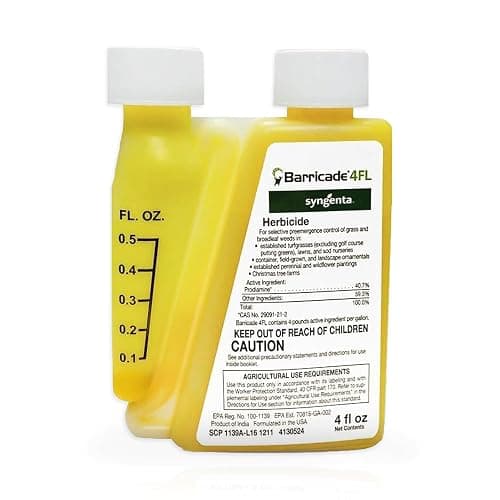
Prodiamine and dithiopyr are two of the most widely used pre-emergent herbicides for stopping crabgrass and other annual weeds, and homeowners often want to know which one to put down. Both are applied before weeds take hold and both form a barrier in the top layer of soil, but they are not identical tools. Prodiamine (sold as Barricade and generics) is a pure pre-emergent with the longest soil residual of the common options, up to about 6 months per season at higher labeled rates, and it is usually the cheapest per 1,000 square feet.
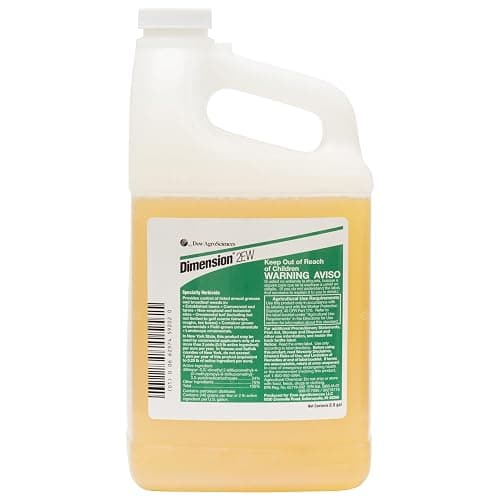
Dithiopyr (sold as Dimension and generics) does something prodiamine cannot: alongside its pre-emergent action it has early post-emergent activity, meaning it can still kill young crabgrass that has already germinated, up to roughly its early tiller stage. That forgiveness comes at the cost of a shorter residual, so it generally protects for a few months rather than most of the season.
The real decision is about timing and forgiveness. If you can get a single application down early, before soil temperatures push crabgrass to germinate, prodiamine gives you the longest, cheapest season-long barrier. If you think you may have already missed that window, dithiopyr buys you a second chance on weeds that are just coming up. Whichever you choose, follow the product label for rates, timing, and any seeding restrictions.
Quick verdict
Prodiamine wins for the longest soil residual and lowest cost per 1,000 sq ft, making it the best single early-spring application for season-long crabgrass prevention. Dithiopyr wins when you may have missed the pre-emergent window, because it can also kill young crabgrass that has already emerged, in exchange for a shorter residual.
Prodiamine (Barricade and generics) vs Dithiopyr (Dimension and generics): at a glance
Chemical class
Mode of action
Post-emergent crabgrass reach
Soil residual
Application window forgiveness
Best use
Cost per 1,000 sq ft
Seeding safety
Common formulations
Common brands
Target weeds (per label)
APick prodiamine (Barricade) if...
- You can apply early, before soil temperatures push crabgrass to germinate, and want one application to last the whole season.
- You want the longest soil residual available from a single pre-emergent, up to about 6 months at higher labeled rates.
- You want the lowest cost per 1,000 sq ft; prodiamine's very low use rate makes it the most economical option.
- You only need prevention and have no weeds up yet, so early post-emergent activity is not a factor.
- You are not seeding this season, since prodiamine is not for use at seeding and has label wait intervals before and after.
BPick dithiopyr (Dimension) if...
- You think you may have missed the strict pre-emergent window and want forgiveness, because dithiopyr can still kill young crabgrass that has already emerged.
- You want both pre-emergent prevention and early post-emergent control of crabgrass through its early tiller stage (per label).
- A slightly shorter residual is an acceptable trade for that wider application window.
- You prefer a product also sold on fertilizer or as a granular crabgrass preventer for an easy spreader application.
- You understand it will not control crabgrass once it has tillered and matured, so timing still matters.
Where to buy


As an Amazon Associate we earn from qualifying purchases. Disclosure.
Prefer other options? Browse pre-emergent herbicide (dinitroaniline, long residual) and pre-emergent herbicide with early post-emergent activity in our catalog.
Get your seasonal lawn care calendar for your ZIP
Every task, from feeding to weed control to aeration, has a window that shifts by region. Add your ZIP and we will email your 12-month lawn calendar right away, starting with this month.
Seasonal reminders and tips. No spam. Unsubscribe anytime.
Frequently asked questions
What is the main difference between prodiamine and dithiopyr?
The main difference is that prodiamine is a pre-emergent only with the longest soil residual, while dithiopyr is a pre-emergent that also has early post-emergent activity on young crabgrass. Prodiamine must be applied before crabgrass germinates and then prevents it for up to about 6 months at higher labeled rates. Dithiopyr can be applied slightly later and still kill crabgrass that has already emerged, up to its early tiller stage, but its residual is shorter. Always follow the product label for rates and timing.
Can dithiopyr kill crabgrass that has already come up?
Yes, but only young crabgrass. Dithiopyr has early post-emergent activity and can control crabgrass that has germinated up to roughly its early tiller stage, which many labels describe as before it reaches about the 3- to 4-leaf stage. Once crabgrass has tillered and matured, dithiopyr will no longer control it and you would need a dedicated post-emergent crabgrass herbicide. Prodiamine has no post-emergent activity at all and will not kill any weed that is already up. Check the specific product label for the exact growth stage it controls.
Which is cheaper, prodiamine or dithiopyr?
Prodiamine is generally the cheaper of the two per 1,000 square feet. Its very low use rate and long residual mean a single early-spring application covers a lot of area for a small amount of product, which is why prodiamine (Barricade) is often the most economical pre-emergent available. Dithiopyr usually costs a bit more per 1,000 sq ft, and granular or on-fertilizer dithiopyr products cost more still. If pure cost per area is the priority and you only need prevention, prodiamine wins.
How long does each pre-emergent last?
Prodiamine lasts the longest, up to about 6 months per season at higher labeled rates, which is why it is popular for a single early-spring application. Dithiopyr has a shorter residual, commonly cited around 3 to 4 months. Actual barrier life for both depends on the rate you apply, soil temperature, rainfall, and irrigation, so use the label rate that matches the protection window you want. Higher labeled rates generally extend residual within the allowed range.
Can I use prodiamine or dithiopyr when seeding a new lawn?
No, neither prodiamine nor dithiopyr is meant for use at seeding. Both work by stopping seedlings from establishing roots, so they will prevent your desirable grass seed from establishing just as they prevent weeds. Each label specifies wait intervals before and after seeding, and prodiamine in particular requires waiting until new grass is well established. If you are seeding this season, use a seeding-safe pre-emergent such as mesotrione or siduron per its label, or wait out the residual before applying either of these.