

Scotts Weed & Feed vs Milorganite: Which One Should You Use?
Updated June 14, 2026
As an Amazon Associate we earn from qualifying purchases. Disclosure.
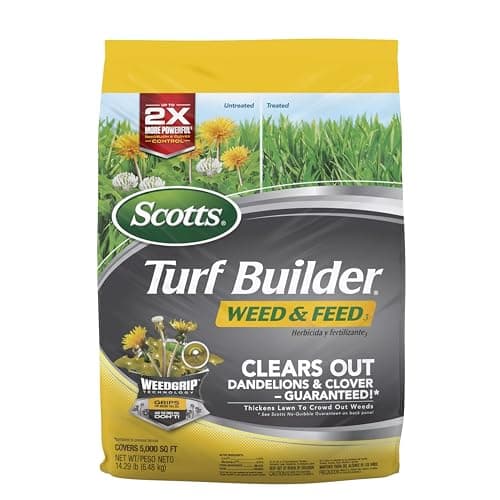
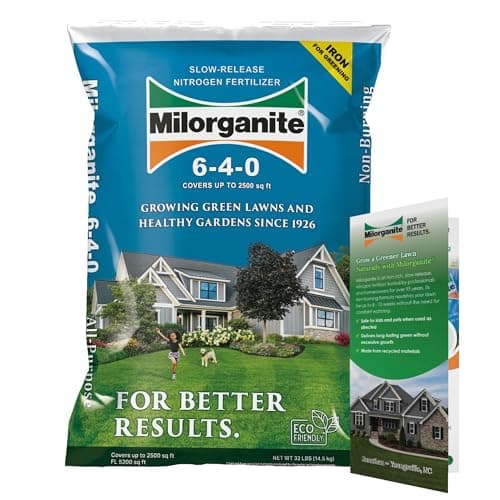
Scotts Turf Builder Weed & Feed and Milorganite are two of the most-Googled lawn products in America, and homeowners often ask which one they should buy. The truth is they are not really competitors; they are different tools for different jobs. Scotts Weed & Feed is a synthetic combo product that kills broadleaf weeds (dandelions, clover, chickweed) while feeding the lawn with a fast-acting nitrogen blast. Milorganite is an organic, slow-release nitrogen fertilizer derived from heat-dried microbes; it feeds the lawn steadily over 8 to 10 weeks but does nothing to weeds.
The real decision is which problem you have right now. If your lawn has active broadleaf weeds that need killing in the spring or fall growing season, Scotts Weed & Feed is the right pick. If your lawn is already weed-free and you just want a steady, low-burn feeding program through summer, Milorganite is the better choice. Many homeowners use both in the same year: Scotts Weed & Feed once in spring for the weed knockdown, Milorganite three times across summer and fall for routine feeding.
Quick verdict
Scotts Weed & Feed wins when you have active broadleaf weeds and want one product to handle both feeding and weed control. Milorganite wins for routine summer feeding, organic preference, and zero burn risk.
Scotts Turf Builder Weed & Feed vs Milorganite Organic Nitrogen Fertilizer: at a glance
Product type
NPK ratio (typical)
Weed control
Nitrogen source
Slow-release fraction
Burn risk
Feeding duration
Application rate
Best time to apply
Effect on overseeding
Grass type restrictions
Organic certification
Smell at application
Price per 1,000 sq ft application
Best for
APick Scotts Weed & Feed if...
- Your lawn currently has visible broadleaf weeds (dandelions, clover, chickweed, plantain).
- You want one product to handle both feeding and weed control in a single application.
- You can apply during the spring or fall growing season when weeds are actively growing (not during summer heat above 85 degrees).
- You are not planning to overseed for at least 6 weeks after application.
- You are comfortable with synthetic chemistry and standard 2,4-D-based herbicides.
BPick Milorganite if...
- Your lawn is already weed-free and you only need to feed.
- You want zero burn risk and the freedom to apply during summer heat without damage.
- You prefer organic-certified products and slow-release nutrient delivery.
- You are overseeding or just laid new sod and need a fertilizer that will not block seed germination.
- You have pets or kids and want a product safe to walk on immediately after watering in.
Where to buy


As an Amazon Associate we earn from qualifying purchases. Disclosure.
Prefer other options? Browse synthetic combo herbicide + fertilizer (granular) and organic slow-release nitrogen fertilizer (granular) in our catalog.
Get your seasonal lawn care calendar for your ZIP
Every task, from feeding to weed control to aeration, has a window that shifts by region. Add your ZIP and we will email your 12-month lawn calendar right away, starting with this month.
Seasonal reminders and tips. No spam. Unsubscribe anytime.
Frequently asked questions
Can you use Scotts Weed & Feed and Milorganite together?
Yes, you can use Scotts Weed & Feed and Milorganite in the same growing season, but not in the same application. The typical rotation is Scotts Weed & Feed once in early spring (March or April) when broadleaf weeds are actively growing, then Milorganite three times across summer and fall (June, August, October) for routine feeding without weed pressure. Do not apply both within 4 weeks of each other; the lawn cannot use that much nitrogen at once and you waste the second application.
Is Milorganite better than Scotts fertilizer?
Milorganite is better than Scotts as a routine slow-release fertilizer, but Scotts is better when you also need weed control. Milorganite's 6-4-0 NPK delivers ~8 to 10 weeks of steady feeding from a single application, has near-zero burn risk, and is OMRI-listed organic. Scotts Turf Builder (the non-weed-and-feed variant) at 28-0-3 delivers more nitrogen faster but is synthetic and carries some burn risk. For routine feeding alone, Milorganite wins. For weed knockdown plus feeding, Scotts Weed & Feed wins.
Does Milorganite kill weeds like Scotts Weed & Feed?
No, Milorganite does not kill weeds. Milorganite is a pure fertilizer; it contains no herbicide active ingredients. A common myth is that Milorganite's iron content somehow suppresses weeds, but the iron is at a level that helps grass color, not weed control. If you have active broadleaf weeds, you need a herbicide like Scotts Weed & Feed, Ortho Weed-B-Gon, or a selective post-emergent. Milorganite plus a separate weed control is also a valid combination.
How long after Scotts Weed & Feed can you apply Milorganite?
Wait 4 to 6 weeks after Scotts Weed & Feed before applying Milorganite. Both products contain nitrogen, and stacking them within a few weeks gives the lawn more nitrogen than it can use; the excess leaches into groundwater or runs off as waste. The Scotts Weed & Feed nitrogen pulse lasts about 4 to 6 weeks, after which the lawn is ready for the next feeding. This timing also lets the broadleaf herbicide in Scotts finish its work before adding more nitrogen pressure.
Which is cheaper, Scotts Weed & Feed or Milorganite?
Milorganite is cheaper per 1,000 square feet applied. Milorganite costs about $4 to $6 per 1,000 sq ft per application; Scotts Weed & Feed runs $8 to $12 for the same coverage. Over a typical 4-application growing season on a 5,000 sq ft lawn, Milorganite costs about $100 to $120 while Scotts comparable program runs $200 to $250. If you only need to feed (no weed pressure), Milorganite is significantly cheaper.
Can you put down Milorganite and Scotts Weed & Feed at the same time?
You should not put Milorganite and Scotts Weed & Feed down in the same application. Both add nitrogen, and applying them together gives the lawn far more than it can absorb, so the excess is wasted or runs off as pollution. There is also no reason to mix them: the herbicide in Scotts works best applied on its own to a dry lawn, while Milorganite is a slow-release feed for a weed-free lawn. Space them out instead. Apply Scotts Weed & Feed first when broadleaf weeds are actively growing, then wait 4 to 6 weeks before your first Milorganite feeding.
How does Milorganite compare to Scotts Green Max and Scotts Natural Lawn Food?
Scotts Green Max is a fast-release synthetic fertilizer with added iron for a quick green-up, so it colors the lawn faster than Milorganite but feeds for a shorter window and carries more burn risk. Scotts Natural Lawn Food is Scotts' organic, slow-release option and is the closest match to Milorganite; both are low-burn and feed steadily, though Milorganite's 6-4-0 adds a little phosphorus and its well-known iron content for color. For steady, low-risk feeding all three work. Choose Milorganite or Scotts Natural Lawn Food if you want organic slow-release, and Green Max only when you want a fast cosmetic green-up.
Does Milorganite contain PFAS?
Milorganite is made from heat-dried microbes (biosolids), and like most biosolid-derived products it can contain trace levels of PFAS. The Milwaukee Metropolitan Sewerage District, which produces Milorganite, publishes testing data and reports levels that fall within applicable guidance. If trace PFAS is a concern for you, a plant-derived organic fertilizer or a synthetic slow-release product avoids biosolids entirely. For most homeowners applying a few times per year, the exposure risk is considered low.