

Tenacity vs Quinclorac: Which Herbicide Should You Use?
Updated June 5, 2026
As an Amazon Associate we earn from qualifying purchases. Disclosure.
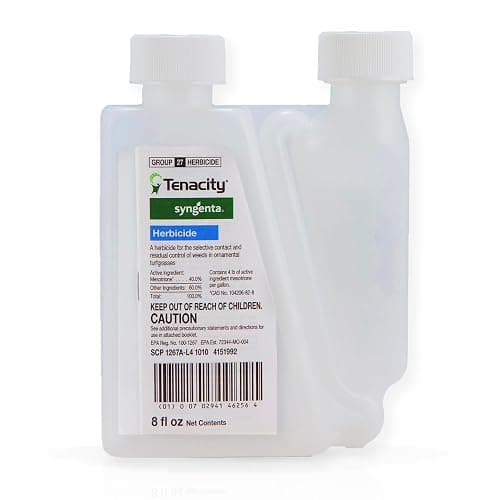
Tenacity and quinclorac are two of the most popular do-it-yourself lawn herbicide actives, and they often get compared because both can take on crabgrass. They are not the same tool, though. Tenacity is the brand name for mesotrione, a selective systemic herbicide with both pre-emergent and post-emergent activity. It controls a broad list of broadleaf and some grassy weeds, and its standout feature is that the label allows application at the time you seed many cool-season grasses, which almost no other herbicide can claim. Its signature side effect is temporary white bleaching of treated weeds (and sometimes the lawn), which grows out over a few weeks.
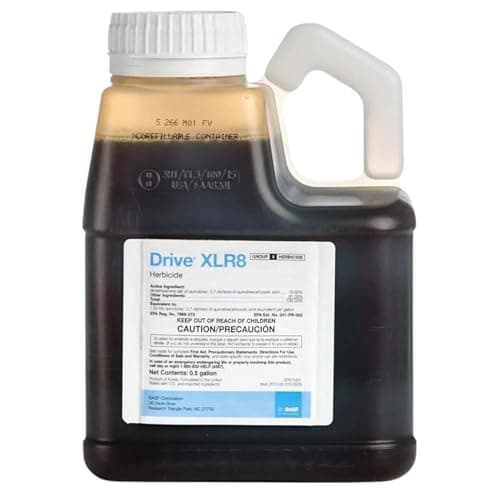
Quinclorac is a post-emergent specialist and one of the most reliable crabgrass killers homeowners can buy. It controls crabgrass at multiple growth stages and also handles some broadleaf weeds like clover and dandelion, but it has no pre-emergent activity and is not labeled for application at seeding. The two also differ on surfactant: Tenacity is paired with a nonionic surfactant (NIS) for post-emergent sprays, while quinclorac needs methylated seed oil (MSO) to work on crabgrass.
The short version: reach for Tenacity when you want broad-spectrum control or you are seeding a cool-season lawn at the same time, and reach for quinclorac when crabgrass has already emerged and killing it is the whole job. Both are real pesticides with grass-safety and timing restrictions that vary by product, so always read and follow the label on the jug you actually buy.
Quick verdict
Tenacity wins for broad-spectrum control and the unique ability to spray at cool-season seeding, with temporary bleaching as the trade-off. Quinclorac wins when crabgrass has already emerged and you want a proven crabgrass killer. Always follow the product label for rates and grass restrictions.
Tenacity Herbicide (mesotrione) vs Quinclorac Post-Emergent Herbicide: at a glance
Active ingredient
Weed timing
Best target weeds
Crabgrass control
At-seeding use
Surfactant needed
Grass safety
Signature effect
Speed of kill
Mode of action
Application rate
Best for
APick Tenacity (mesotrione) if...
- You are seeding or overseeding a cool-season lawn and want to control weeds at the same time, which the Tenacity label uniquely allows for many grasses.
- You need broad-spectrum control across both broadleaf weeds and several grassy weeds (crabgrass, nimblewill, creeping bentgrass) rather than just crabgrass.
- You want some pre-emergent activity in addition to post-emergent knockdown from one product.
- You are comfortable with temporary white bleaching on treated weeds and possibly the lawn, knowing it grows out.
- Your lawn is a labeled cool-season grass (not bermudagrass, which Tenacity injures) and you will read the grass list on the label first.
BPick Quinclorac if...
- Crabgrass has already emerged and killing it is the main job; quinclorac is one of the most reliable crabgrass killers available to homeowners.
- You need to control crabgrass that is past the seedling stage, since quinclorac works across multiple growth stages.
- You do not want bleaching on your lawn and prefer a weed killer that works without the white cosmetic effect.
- You also have some broadleaf weeds like clover or dandelion to clean up alongside the crabgrass.
- You are not seeding right now and your grass type is on the quinclorac label (it can injure some grasses such as certain fine fescues, St. Augustine, and centipede).
Where to buy


As an Amazon Associate we earn from qualifying purchases. Disclosure.
Prefer other options? Browse selective systemic herbicide, pre- and post-emergent (liquid concentrate) and selective post-emergent herbicide, crabgrass specialist (liquid or dry concentrate) in our catalog.
Get your seasonal lawn care calendar for your ZIP
Every task, from feeding to weed control to aeration, has a window that shifts by region. Add your ZIP and we will email your 12-month lawn calendar right away, starting with this month.
Seasonal reminders and tips. No spam. Unsubscribe anytime.
Frequently asked questions
What is the main difference between Tenacity and quinclorac?
The main difference is breadth versus specialization. Tenacity (mesotrione) is a broad-spectrum, selective herbicide with both pre-emergent and post-emergent activity, and its label uniquely allows application when seeding many cool-season grasses. Quinclorac is a post-emergent specialist focused on crabgrass, with some broadleaf control, and it is not labeled for use at seeding. Tenacity also causes temporary white bleaching of treated weeds, while quinclorac does not. Choose Tenacity for broad control or seeding situations, and quinclorac when emerged crabgrass is the problem. Follow the label on the product you buy.
Which one is better for crabgrass, Tenacity or quinclorac?
Quinclorac is generally regarded as the stronger crabgrass killer, especially once crabgrass has emerged and grown past the seedling stage, because it stays effective across multiple growth stages. Tenacity also controls crabgrass and usually does so over two applications, and it has the advantage of some pre-emergent activity plus broad-spectrum control of other weeds. If crabgrass is the entire problem and it is already up, quinclorac is the more targeted choice. If you want one product for crabgrass plus a range of other weeds, Tenacity is more versatile. Use the rates on the label.
Can I apply Tenacity or quinclorac when I seed new grass?
Tenacity is labeled for application at the time of seeding for many cool-season grasses, which is one of its signature advantages and why people use it on new lawns. Quinclorac is not labeled for use at seeding and carries reseeding interval restrictions, so applying it around new seed can interfere with establishment. If you are starting or overseeding a cool-season lawn, Tenacity is the one designed for that job. Always confirm your specific grass type and timing on the product label before applying either one.
What surfactant does each herbicide need?
Tenacity calls for a nonionic surfactant (NIS) when used as a post-emergent spray; the surfactant helps the mesotrione stick to and penetrate the weed foliage. Quinclorac is typically mixed with methylated seed oil (MSO) for crabgrass control, which improves uptake on tough grassy weeds. Using the wrong surfactant, or skipping it, is a common reason these products underperform. Check the label for the exact surfactant type and rate, since requirements can vary by formulation and by the weed you are targeting.
Will Tenacity or quinclorac hurt my lawn?
Both are selective and safe on the grasses listed on their labels, but neither is safe on every lawn. Tenacity is labeled for many cool-season grasses but will injure bermudagrass, which is actually why some people use it to remove bermuda from cool-season turf. Quinclorac is tolerated by many lawn grasses but can injure some, including certain fine fescues and warm-season grasses like St. Augustine and centipede. Tenacity also causes temporary white bleaching of the lawn that grows out. Before spraying, read the grass-safety list on the label and confirm your grass type is approved.