
What clover is telling you about your soil
White clover is a legume, which means it partners with root bacteria to pull nitrogen straight out of the air. Grass cannot do that. So in a lawn that has not been fed, grass slowly starves while clover feeds itself, and the balance tips a little more toward clover every season. Heavy clover is less an invasion than a diagnosis: your soil is telling you it is low on nitrogen.
It spreads two ways at once. Creeping stolons root at every node and expand each patch outward, while the pom-pom flowers set hard seed that survives in soil for years. That combination is why scalping a patch out of the middle of the lawn rarely holds: the stolons refill the edge, and the seed bank refills the middle.
Check the leaflets before you act on any of this, because the other three-leaflet weed in most lawns needs a different plan. Our clover vs oxalis comparison splits them on leaflet shape and flower color in a few seconds.
Feed the grass or spray the clover (or keep it)
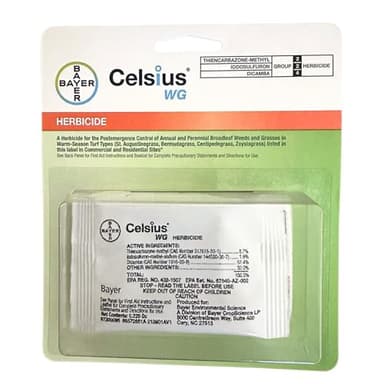
Decide what you actually want first. If a uniform grass stand is the goal, start with the fertilizer program, not the sprayer: two to four feedings a year removes clover's core advantage, and many lawns watch it recede over two seasons with no herbicide at all. Where you do spray, use a product with triclopyr or fluroxypyr in fall, and bag clippings for a couple of mows so stolon fragments cannot re-root.
The other legitimate answer is to keep it. Clover stays green through drought that browns everything around it, supports bees, and quietly fertilizes neighboring grass. Some owners now overseed micro-clover on purpose. If that shady, thin corner is always going to struggle as pure turf, a grass-clover mix can look better year-round than a losing battle.
Clover lawn vs grass: which belongs in your yard
The question most people actually have is not how to kill every last plant, it is whether a clover yard is a problem at all. A pure grass lawn gives you one uniform surface, and it takes fertilizer, water, and regular mowing to hold. A clover lawn, or a clover and grass mix, stays green longer through many dry spells, feeds itself, and needs far less nitrogen, but it blooms, draws bees, and wears a little differently underfoot. Neither is wrong. The right call depends on how you actually use the yard.
If kids and pets play barefoot and you want to avoid bee stings, lean toward grass and treat the clover. If you are tired of feeding and watering a patch that struggles anyway, a deliberate grass-clover mix or a micro-clover overseed often looks better across a full season than turf that browns every August. What you rarely want is the accidental middle: scattered clover in a hungry lawn, which is usually a sign the grass is underfed.
How to identify white clover
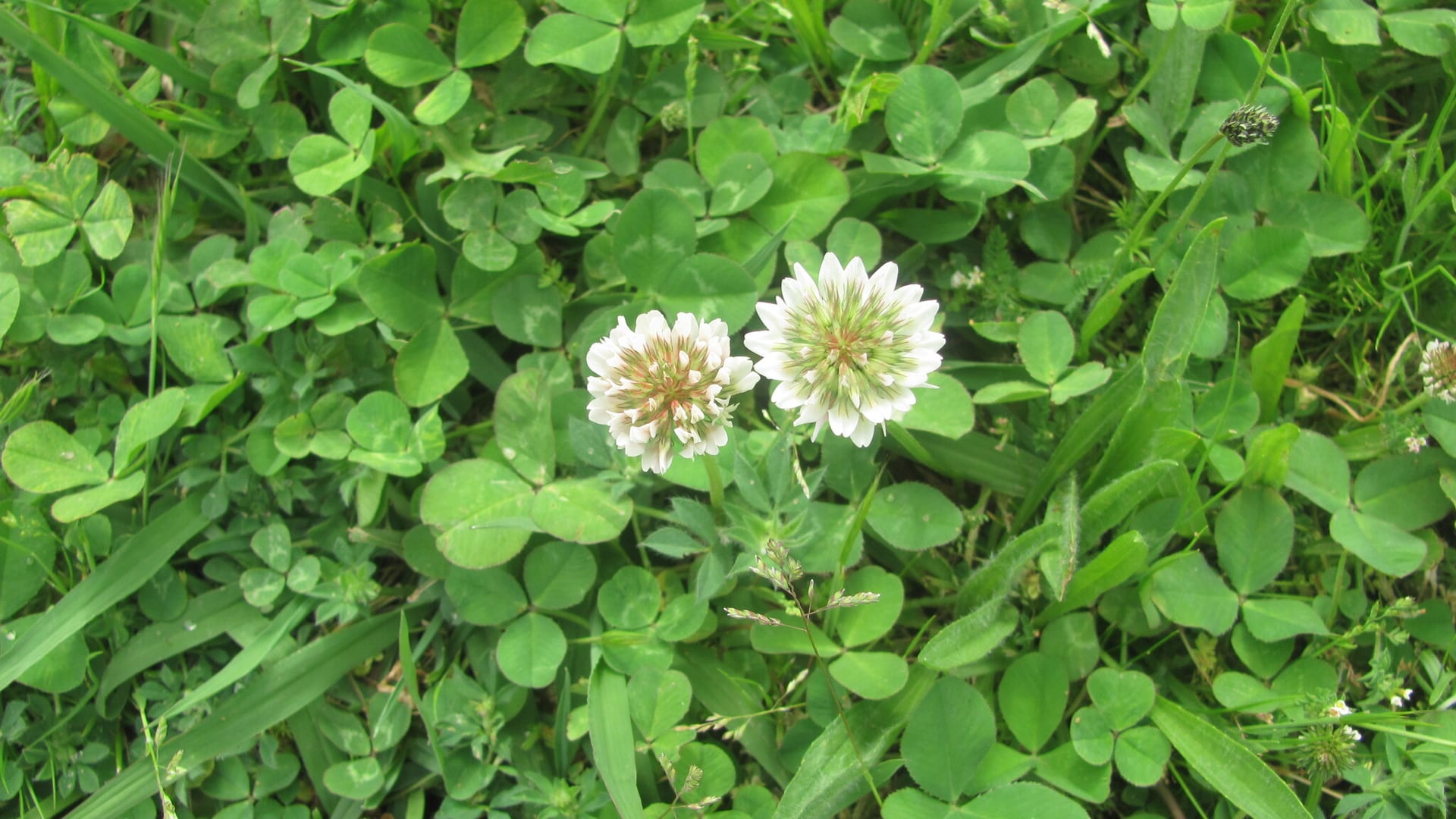
- Three round leaflets, often with a pale crescent watermark
- White to pinkish globe flowers from late spring through summer that draw bees
- Creeping stems (stolons) that root at nodes and form expanding patches
- Stays green through drought that browns the surrounding grass
Don't confuse it: Oxalis (wood sorrel) has similar trifoliate leaves but they are heart-shaped and it has small yellow flowers.
Not sure this is white clover? Snap a photo and our AI will identify the weed with treatments matched to your grass type.
When to treat white clover
Treatment (post-emergent)
Best time: Spring or fall
Target stage: Actively growing
Conditions: Apply when weeds are dry · No rain for 24 hours · Temps 60-75°F
Germination starts around 45°F soil temperature (optimal 60°F). Track your ZIP's live soil temperature or get an exact plan from the herbicide timing calculator.
How to control white clover
- 1Increase nitrogen fertilization to outcompete clover
- 2Use selective herbicides in spring or fall
- 3Improve lawn density through proper care
- 4Consider that clover can be beneficial to soil health
Good to know
- • Fixes nitrogen, can actually benefit soil
- • Indicates low nitrogen in soil
- • Can be controlled with selective herbicides
- • Often appears in thin or stressed lawns
Weed control quotes
Get matched with local weed control pros on Angi. Free quotes, no obligation.
Angi is a partner; we may earn a commission if you request quotes there.
Products that work on white clover
These picks are not filtered to your lawn. Some herbicides damage certain grasses (atrazine is for warm-season lawns; Trimec harms St. Augustine). Verify your grass type on the product label before applying, or use the herbicide timing calculator for grass-filtered recommendations.
Recommended Products
- 1Check price
 Top pick
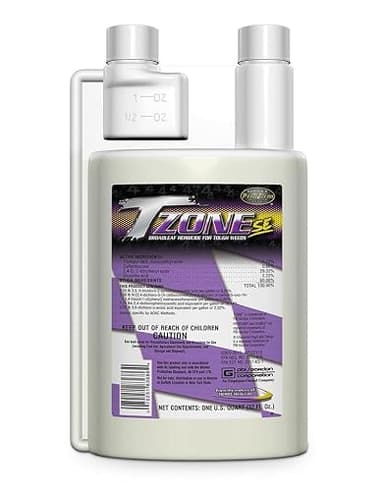
T-Zone SE Broadleaf Herbicide
Pro-grade broadleaf herbicide for tough weeds including clover, ground ivy, wild violet, and oxalis. 1 quart. T-Zone is the stronger option for clover and other stubborn broadleaf weeds.
- 2Check price
 Best value
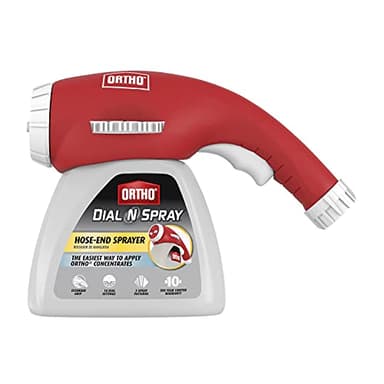
Ortho Dial N Spray Hose-End Sprayer (14 Dilution Settings)
Adjustable metered hose-end sprayer for liquid herbicides, iron, wetting agents, and foliar recovery products. Celsius and T-Zone are both concentrates; a metered hose-end sprayer keeps the rate even across the lawn.
As an Amazon Associate we earn from qualifying purchases.
Where white clover shows up
Most common in these regions: