Soil Amendment Results and Their Typical Timeline
 James ThorntonLawn Equipment & Maintenance Expert | 20 Years
As an Amazon Associate we earn from qualifying purchases.
Most soil problems show up above ground as thin grass, bare patches, or water that refuses to soak in. In many of these cases, the underlying issue is not lack of fertilizer but soil that is compacted, out of balance, or low in organic matter. That is why one of the most common questions from homeowners is about soil amendment results and their typical timeline: how long it actually takes for lime, compost, gypsum, or other products to make a visible difference.
Soil amendments work through physical, chemical, and biological processes, which all move on different clocks. Some effects, like a small pH correction from lime or a bit better water infiltration after aeration plus compost, can show up within a few weeks. Others, such as building organic matter or fully correcting acidic soil, take many months or even years of consistent management. This guide breaks down those timelines so you know what to expect and how to judge whether your amendments are doing their job.
Below, you will find short-term versus long-term expectations, specific timelines for common amendments like lime, sulfur, compost, gypsum, and biochar, guidance on how to tell if amendments are working, and seasonal timing strategies. For deeper background, pair this with How to Test Your Lawn's Soil, How to Improve Soil pH for Grass, Composting for a Healthier Lawn, and Lime vs Gypsum: Which Soil Amendment Do You Actually Need, as well as Best Fertilizers for Lawns and Organic vs Synthetic Fertilizers.
If you applied a soil amendment and your lawn still looks the same after a week, that is normal. Most amendments change the soil slowly, not overnight. A quick check is to push a screwdriver or thin stake into the soil; if it stops within 2 to 3 inches or takes strong force, compaction is still a major issue and aeration plus compost would help more than just pouring on fertilizer.
The best way to verify that amendments are working is to combine this simple “screwdriver test” with a soil test before and 6 to 12 months after treatment. For lime or sulfur, you are looking for pH to move closer to the 6.0 to 7.0 range. For compost and other organic materials, watch for easier digging, fewer standing water spots, and roots reaching deeper than 3 to 4 inches. Avoid stacking different strong amendments at once, such as heavy lime plus sulfur, because they can cancel each other out and waste money.
In most home lawns, expect 2 to 4 weeks for minor changes like slightly better color or less surface pooling after aeration with compost, 2 to 4 months for partial lime or sulfur effect, and 6 to 12 months to see full pH shifts and significant organic matter gains. Consistent watering at about 1 to 1.5 inches per week, correct mowing height, and annual soil testing will keep those improvements moving in the right direction.
Understanding Soil Amendments and How They Work
What Is a Soil Amendment? (And How It Differs from Fertilizer)
A soil amendment is any material added to soil to improve its physical condition, chemical balance, or biological activity. The goal is to create a better environment for roots, not just to “feed” plants directly. Fertilizers, in contrast, are primarily sources of nutrients, especially nitrogen, phosphorus, and potassium, listed as N-P-K on the bag.
This distinction matters because it drives timelines. Fertilizers can change lawn color in 3 to 10 days if moisture and temperature are favorable. Soil amendments usually act more slowly, because they change the soil itself. Mulch is yet another category; it sits on top of the soil to conserve moisture and control weeds, but is not necessarily designed to change soil properties unless it breaks down over time.
- Penn State Extension notes that soil pH strongly influences nutrient availability, with most turfgrasses performing best between pH 6.0 and 7.0.
- NC State Extension recommends soil testing every 2 to 3 years for established lawns to guide lime and other amendment needs.
Common soil amendments for lawns and gardens include:
- Lime to raise pH in acidic soils.
- Sulfur to lower pH in alkaline or calcareous soils.
- Gypsum (calcium sulfate) to add calcium and improve structure in some clay or sodic soils.
- Compost, manure, and leaf mold to increase organic matter and biological activity.
- Peat moss or coco coir to improve water holding and structure, often in seedbed preparation.
- Sand and topsoil used in leveling mixes or topdressing for drainage and surface smoothness.
- Biochar and humic substances to increase cation exchange capacity (CEC) and support microbial life.
Each of these has a different mode of action and therefore a different typical timeline for results, which we will detail later.
Three Core Ways Amendments Change Soil (And Affect Timelines)
Soil amendments change soil in three main ways. Understanding which one you are targeting helps set realistic expectations for soil amendment results and their typical timeline.
Physical changes include loosening compaction, improving aggregation, and increasing or decreasing water holding. Aeration combined with compost topdressing can slightly improve surface structure within weeks, but significant changes in bulk density and deep compaction often take repeated treatments over 1 to 3 years. Sand added in heavy layers behaves differently; in clay soils, small amounts of sand mixed into the top few inches can actually worsen compaction, so careful planning is required.
Chemical changes include pH shifts, changes in CEC, and improved nutrient availability. Lime and sulfur are classic examples. Agricultural and pelletized lime usually start reacting in a few weeks once soil stays moist and above roughly 50 degrees Fahrenheit, but full pH adjustment commonly takes 6 to 12 months. Sulfur used to acidify alkaline soil can take a similar or longer period, especially in cooler or drier conditions.
Biological changes involve microbial activity, earthworms, and thatch breakdown. These processes are gradual but powerful. When you add compost or biochar, or reduce excessive pesticide use, microbial populations can start shifting in a few weeks, yet measurable improvements in thatch breakdown, root mass, and organic matter often appear in the 3 to 12 month window.
Factors That Control How Fast You See Results
The same amendment applied at the same rate can work very differently from yard to yard. Several site factors largely control soil amendment results and their typical timeline.
Soil texture and type. Sandy soils respond quickly because water and amendments move through them easily, but they also lose nutrients and organic matter faster. Clay soils change more slowly, since their fine particles and high CEC resist rapid shifts, but improvements tend to be more durable once you build structure and organic content.
Starting organic matter. A soil already at 4 to 5 percent organic matter will show diminishing returns from heavy compost additions, and visual changes may be modest. A depleted soil at 1 to 2 percent organic matter can show clear gains in moisture retention and plant vigor within one or two seasons of regular organic amendments.
Current pH and distance to target. Moving pH from 5.5 to 6.5 usually takes less lime and less time than moving from 4.8 to 6.5, especially in clay soils. The farther you have to move pH, the longer the timeline and the more important accurate soil testing and correct lime or sulfur rates become.
Moisture and irrigation. Almost every amendment works only when enough moisture is present. Lime and sulfur require moisture to dissolve and react with soil particles. Microbes that decompose compost or generate acidity from elemental sulfur need moist conditions, but not waterlogged soil. Maintaining about 1 to 1.5 inches of water per week from rain or irrigation is a good target for active soil improvement.
Soil temperature. Biological and many chemical processes slow sharply when soils drop below roughly 50 degrees Fahrenheit. That is why fall and spring are the most effective times for many amendments. In cold climates, an amendment applied late fall may not show strong results until late spring when soils warm.
Amendment form. Finer materials generally react faster. For example, powdered agricultural lime reacts faster than large chunky limestone, and finely ground elemental sulfur acts faster than coarse pellets, within the same product type. Pelletized lime is easier to spread, but often works slightly slower than finely ground lime because pellets must break down first. Finished compost is more stable and safer but may act more slowly than fresh manure, which can release nutrients quickly but also burn plants if misused.
Setting Realistic Expectations: Short-Term vs Long-Term Results
What You Can and Cannot Fix Quickly
Homeowners often hope a single application of an amendment will “fix the soil” in a few weeks. In reality, some issues respond quickly, while others are fundamentally long term.
Within a few weeks, you might see:
- Slight relief of surface compaction after core aeration followed by a light compost topdressing at about 0.25 to 0.5 inches deep.
- Improved water infiltration in localized low spots after that same aeration and organic topdressing, especially in soils that were sealed on the surface.
- Minor visual improvements in turf color if compost or other organics released some nitrogen or improved nutrient availability.
Issues that nearly always take months or years include:
- Major pH shifts, particularly in dense clay or subsoils. Expect 6 to 12 months for a full response to lime or sulfur, and sometimes multiple years if a very large change is needed.
- Building organic matter in the top 4 to 6 inches. Raising organic matter by 1 percentage point might require many applications of compost or multiple years of returning clippings and leaves.
- Correcting deep compaction or a hardpan layer, especially one below 4 to 6 inches. This often takes repeated aeration or even mechanical deep-tine equipment over several seasons.
- Long term drought tolerance and resilience, which depend on both deeper rooting and higher organic matter. These are cumulative results from good soil care, not a single product.
Visual Results vs Measurable Results
Homeowners naturally focus on what they can see: turf color, thickness, and bare spots. However, many soil improvements show up in test results before they appear in the lawn’s appearance.
Typical visual indicators include greener grass, denser turf, fewer muddy or bare areas, and less runoff during heavy rain. These may lag behind chemical and physical measurements. A soil test might show pH moving from 5.2 to 6.0 within 4 months of lime application, but the lawn may not look dramatically different until the following growing season when roots and nutrient uptake catch up.
Soil scientists measure parameters such as pH, CEC, organic matter percentage, bulk density, infiltration rate, and in more advanced settings, microbial respiration or diversity. For homeowners, the most practical metrics are pH, organic matter percentage, and a simple infiltration or screwdriver test. If pH is trending toward the ideal range and it is easier to push a screwdriver 6 inches into the soil than it was 6 to 12 months ago, the amendments are working even if color changes are modest.
Quick-Reference: Typical Timelines at a Glance
The following are general ranges for soil amendment results and their typical timeline under average conditions:
- Lime: Partial pH effect in 2 to 4 months, full shift in 6 to 12+ months, depending on rate and soil type.
- Sulfur: Noticeable pH change in 3 to 6 months, full effect often 6 to 12+ months, especially in high pH soils.
- Compost topdressing: Minor infiltration and color improvements in 2 to 6 weeks, measurable organic matter gains within 6 to 18 months with repeated applications.
- Gypsum: In non-sodic clays, limited or slow visible effect; in sodic or dispersive soils, structure and infiltration improvements may appear in 3 to 12 months.
- Biochar: Little immediate visual change, but improved nutrient retention and biology over 6 to 24 months when applied with compost or fertilizer.
- Humic substances: Potentially small improvements in nutrient efficiency and root growth within 1 to 3 months, but often subtle and best verified over a season or more.
Timelines for Specific Soil Amendments
Lime: Raising Acidic Soil pH
Lime is one of the most common amendments in cool-season turf regions because many native and long-used soils become acidic over time. The primary function of lime is to neutralize acidity and raise soil pH, which in turn improves nutrient availability and microbial activity.
- Michigan State University Extension notes that lime can take 6 months or longer to fully react in the soil, especially in heavier textures.
- Cornell University turf guidelines emphasize applying lime based on soil test recommendations, not more than about 50 pounds of finely ground lime per 1,000 square feet in a single application on established turf.
Typical timeline for lime results:
- 1 to 4 weeks: Little visible change. In some cases, slight improvement in color if nutrient availability improves quickly, but this is not guaranteed.
- 2 to 4 months: Partial pH shift detectable by soil test. For example, pH might move from 5.5 to around 6.0 in that window under good moisture and temperature.
- 6 to 12+ months: Full effect as lime fully reacts in the soil profile. Measured pH should be close to the target given correct rates.
Confirmation steps: If your soil test showed pH below about 6.0 and called for lime, retest 6 to 12 months after application. If pH has not budged, this often indicates either insufficient lime rate, poor incorporation in very compacted soil, or prolonged dry or cold conditions that slowed reactions. In that case, recheck the lab’s recommended application rate and consider a follow-up application within the recommended annual limit.
Seasonal timing: Fall is typically ideal because soils are still warm and moist, and turf is actively growing. Spring can also work, especially if you missed fall. Avoid applying lime just before seeding with species that prefer slightly acidic conditions unless a soil test clearly indicates a problem.
Sulfur: Lowering Alkaline Soil pH
Sulfur is used to acidify soils with high pH, which is common in arid and some Midwestern or Western regions, especially where irrigation water is alkaline. Elemental sulfur is converted by soil microbes into sulfuric acid, which lowers pH gradually.

Typical timeline for sulfur results:
- 0 to 2 months: In cool or dry conditions, almost no effect. In warm, moist soil, microbial activity begins, but pH may not change much yet.
- 3 to 6 months: Noticeable pH movement on soil tests, especially if soil temperature stayed above about 55 degrees Fahrenheit for extended periods.
- 6 to 12+ months: Full reaction, especially at moderate rates. Heavier alkaline or calcareous soils may require repeated applications over several years to reach target pH.
Confirmation steps: For lawns with chlorosis (yellowing) on high pH soils, start with a soil test. If pH is above roughly 7.5 and you have applied sulfur at a recommended rate, retest at 6 to 12 months. Expect incremental movement rather than dramatic drops. If pH remains extremely high, free lime in the soil may buffer the effect, and a more modest target, such as pH 7.2, may be realistic.
Seasonal timing: Apply sulfur when soil temperatures support microbial activity, typically late spring through early fall. Avoid very heavy rates on existing turf in a single application because localized burning can occur.
Compost and Organic Matter: Building a Living Soil
Compost and similar organic amendments are central to long term soil health. They help aggregate soil particles, increase water holding in sandy soils, improve drainage in clay soils, and fuel a diverse microbial community.
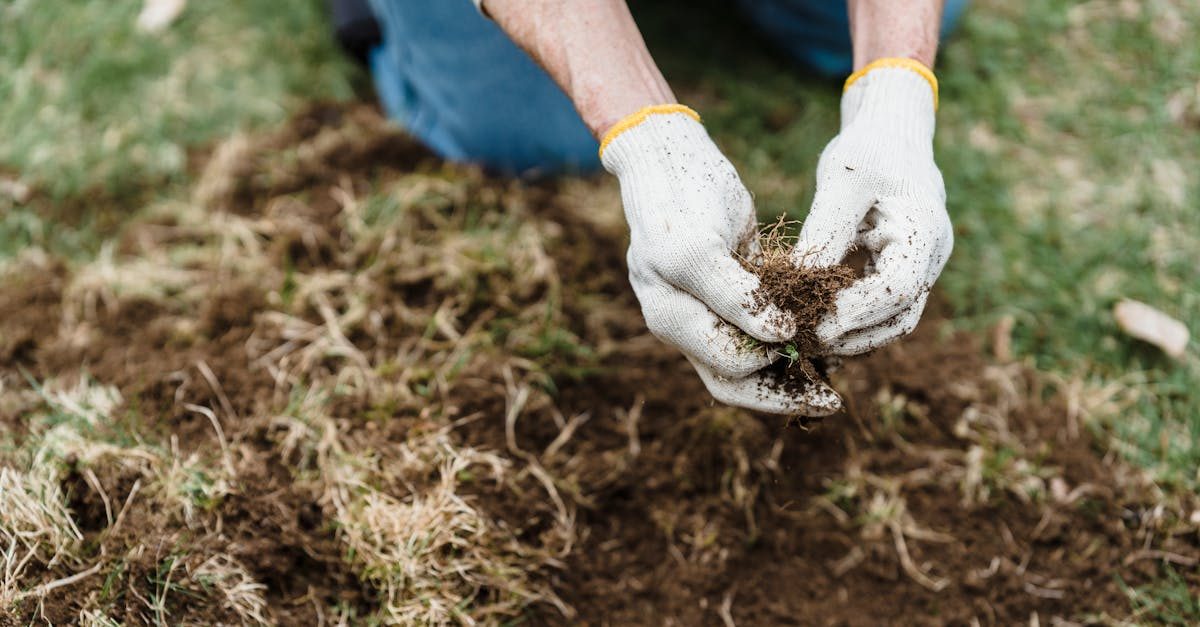
Topdressing compost over established turf at about 0.25 to 0.5 inches, often after core aeration, is one of the most effective homeowner strategies. Thicker layers can smother grass, so depth control is critical.
Typical timeline for compost results:
- 2 to 6 weeks: Slight improvement in water infiltration and surface softness. Some lawns show a mild color boost if compost provides available nutrients.
- 3 to 6 months: Noticeably better rooting depth and fewer puddles after rain in previously compacted areas, provided aeration and traffic management are combined with compost.
- 6 to 18 months: Measurable increase in soil organic matter percentage when using repeated annual topdressings or when incorporating compost during renovation.
Confirmation steps: Use a soil test that reports organic matter percentage before starting regular compost applications, then retest after 12 to 24 months. Additionally, repeat the screwdriver test at least twice a year. If you can push to 6 inches with moderate effort in more of the yard than before, structure is improving.
Seasonal timing: Early fall is ideal for cool-season lawns because temperatures and moisture favor microbial activity and turf recovery. In warm-season regions, late spring or early summer topdressing, when grass is actively growing, gives the best results.
Gypsum: Structure Help in Specific Situations
Gypsum (calcium sulfate) is often marketed as a cure for clay soils, but its benefits are specific. It supplies calcium without changing pH and can help improve structure in sodic or sodium-affected soils by replacing sodium on exchange sites, which then allows sodium to leach out.
In non-sodic clays, gypsum is not a magic de-compactor and its visible effects are usually modest. Where sodium levels are high, as confirmed by a soil test with sodium or ESP (exchangeable sodium percentage) reported, gypsum can support aggregation and drainage.
Typical timeline for gypsum results:
- 1 to 3 months: In sodic soils with adequate leaching irrigation, some improvement in surface crusting and infiltration can appear.
- 3 to 12 months: Gradual improvement in structure deeper in the profile, especially if gypsum is combined with deep watering to move sodium out of the root zone.
Confirmation steps: Only use gypsum after a soil test identifies elevated sodium or specific recommendations for your region. Retest sodium levels after 12 to 24 months of gypsum plus appropriate leaching. In non-sodic soils, focus on organic matter and compaction management instead.
Biochar and Humic Products: Long-Term Soil Conditioning
Biochar is a stable, carbon-rich material intended to improve CEC and water holding and to provide habitat for beneficial microbes. Humic substances, such as humic and fulvic acids, are complex organic compounds that may improve nutrient retention and root growth.
Neither product is likely to produce dramatic short term visual changes on its own. Biochar, in particular, is long lived, with benefits building over time as it becomes charged with nutrients and colonized by microbes.
Typical timeline for biochar and humic products:
- 1 to 3 months: Subtle or no visible effects. Some homeowners report slightly better color or stress tolerance with humic products combined with fertilizer.
- 6 to 24 months: Incremental improvements in nutrient efficiency, soil structure, and water holding, especially when biochar is applied with compost or fertilizer rather than alone.
Confirmation steps: Because changes are subtle, rely on soil testing, careful record keeping of fertilizer amounts, and observation of stress responses. If, over one or two seasons, your lawn maintains color on slightly less nitrogen or handles short dry spells better, these products may be contributing.
Recommended products

MySoil Soil Test Kit
A mail-in lab test that sets the baseline every amendment timeline is measured against.
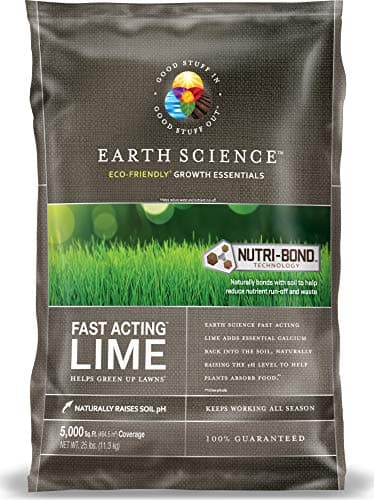
Encap Fast Acting Pelletized Lime
A pelletized fast-acting lime for raising pH on acidic soil.
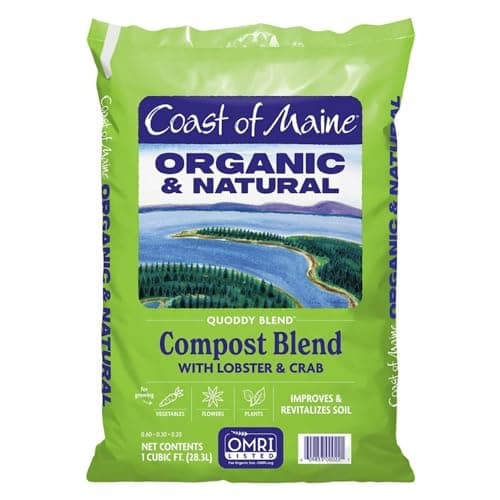
Coast of Maine Quoddy Blend Lobster Compost
A finished compost for topdressing, the amendment with the slowest and most durable payoff of the three.
How to Tell if Your Soil Amendments Are Working
Simple Field Checks You Can Do Without a Lab
While soil tests are the gold standard for measuring chemical changes, several quick checks can help you gauge soil amendment results and their typical timeline in between lab tests.
Screwdriver or probe test: Use a long screwdriver, soil probe, or thin stake and push it straight into the soil. If you cannot reach 6 inches without significant force, compaction is still a problem. Repeat this test in the same spots every 3 to 6 months after aeration, compost, or gypsum treatment to track progress.
Water infiltration test: Mark out a 1 foot by 1 foot area with a low border (a bottomless coffee can or short piece of PVC works well). Gently pour in a known volume of water, for example 0.5 inches measured in a rain gauge, and time how long it takes to soak in. If it still stands after 30 minutes or more, infiltration is poor. Repeat the test seasonally after amendments. A reduction in standing time indicates improvement.
Root depth observation: Use a hand trowel to carefully dig a small wedge of turf in a discrete area. Measure root depth. Over 1 to 2 years of proper soil amendment and good cultural practices, cool-season grass roots should reach at least 4 to 6 inches in many soils, often deeper in well managed sites.
Using Soil Tests to Track Progress
For pH, nutrients, and organic matter, a professional soil test remains the most reliable tool. When dealing with long term amendment strategies, timing is key.
- Test before applying major amendments like lime, sulfur, or large compost loads.
- Retest 6 to 12 months after lime or sulfur to verify pH movement. For organic matter tracking, retest every 1 to 2 years.
- Use the same lab for consistency, since methods and interpretation can vary.
If a soil test after 12 months shows that pH has not moved at all, and you applied the recommended lime rate and maintained reasonable moisture, confirm that you spread evenly and did not exceed recommended single-application limits. Contact your local extension service if results are puzzling. Their staff can explain regional quirks, such as high buffering capacity in some clay soils.
Seasonal Timing for Best Results
Cool-Season Lawns (Tall Fescue, Kentucky Bluegrass, Perennial Ryegrass)
For cool-season grasses, the most effective windows for many amendments are fall and early spring when roots are active and soil moisture is favorable.
- Fall (September to November in many regions): Apply lime or sulfur if soil tests call for it. Aerate and topdress with compost. Overseed thin areas. Soil temperatures are usually above 50 degrees Fahrenheit long enough for initial reactions.
- Spring (March to May): Another good time for lime or sulfur if you missed fall. Light compost applications and spot aeration can help recover from winter compaction.
- Summer: Limit major amendments that could stress turf, except in irrigated lawns and specific situations. Focus on correct watering and mowing.
Warm-Season Lawns (Bermudagrass, Zoysia, St. Augustine, Centipede)
Warm-season grasses are most active in late spring through summer, so that is when many soil amendments will show their fastest response.
- Late spring to early summer: Ideal for compost topdressing, especially after aeration, because warm-season grasses spread aggressively and recover quickly.
- Fall: Lime or sulfur can still be applied based on soil tests, even as warm-season grasses slow down, as long as soils remain warm for several weeks.
- Winter: In mild climates, some amendments can be applied, but biological activity slows, so expect delayed results until spring.
Regardless of grass type, avoid applying large amounts of any amendment right before heavy rain is forecast, since this can lead to runoff or uneven distribution.
What Other Guides Miss: Common Mistakes to Avoid
Many online guides discuss products but skip the diagnostic steps and realistic timelines that determine success. Several common oversights can delay or mask soil amendment results and their typical timeline.
Skipping soil testing. Applying lime or sulfur without a recent soil test often leads to overcorrection or wasted effort. For example, adding lime to a lawn that is already near pH 7.0 can lock up micronutrients and worsen yellowing, while sulfur on an already acidic soil can stress turf. Always confirm pH and nutrient status before major amendments.
Expecting fertilizer-like speed. Some guides imply that lime or gypsum will fix compaction or color issues in a few weeks. In reality, most of the benefits unfold over months, with full pH shifts usually taking 6 to 12 months. If you want immediate visual impact while soil changes slowly, coordinate amendments with an appropriate fertilizer program, guided by topics like Best Fertilizers for Lawns and Organic vs Synthetic Fertilizers.
Stacking incompatible amendments. Applying high rates of lime and sulfur within the same season can neutralize each other’s chemical effects and create salt stress. Likewise, using raw manure and heavy nitrogen fertilizer together can cause excessive growth and disease pressure. Spread out strong amendments, follow soil test recommendations, and prioritize one major correction at a time.
Ignoring compaction and water management. Many guides focus on chemistry alone. If a screwdriver cannot penetrate 3 inches, roots are limited regardless of pH. In that case, aeration, traffic management, and organic matter additions are just as important as chemical amendments.
Putting It All Together: A Practical 12-Month Timeline
Example Plan for a Compacted, Slightly Acidic Cool-Season Lawn
To see how these pieces fit, here is a sample 12-month structure for a lawn with pH 5.6, moderate compaction, and low organic matter.

- Month 1 (Early fall): Perform core aeration. Topdress with 0.25 to 0.5 inches of finished compost across the lawn. Apply lime at the rate recommended by your soil test, not exceeding the lab’s single-application maximum. Water to provide about 1 inch in the first few days to help settle compost and start lime reactions.
- Months 2 to 3 (Late fall): Continue mowing at the correct height and water 1 to 1.25 inches per week if rainfall is lacking. You may see slightly better infiltration and softer soil underfoot.
- Months 4 to 5 (Late winter to early spring): As soils begin to warm above 50 degrees Fahrenheit, lime reactions speed up. Perform a screwdriver test in several locations and compare to initial resistance. Begin a balanced fertilization program based on soil test nutrient recommendations.
- Months 6 to 8 (Late spring to early summer): Root growth deepens in improved areas. You may notice fewer puddles, slightly better color, and slower drying between waterings. Maintain consistent irrigation at roughly 1 to 1.5 inches per week.
- Months 9 to 12 (Next fall): Retest soil pH and organic matter. If pH has moved toward 6.2 to 6.5, continue with maintenance lime if recommended. Repeat aeration and a lighter compost topdressing if compaction persists. Organic matter should start to trend upward, often by 0.2 to 0.5 percentage points after a year of good practices.
This kind of structured approach keeps expectations aligned with how soil actually changes, while giving you clear checkpoints to confirm progress.

Conclusion
Soil amendments are not instant cures; they are long term tools to shift the physical, chemical, and biological conditions beneath your lawn. Lime and sulfur generally need 2 to 4 months for partial impact and 6 to 12 months for full pH change. Compost, biochar, and similar organics begin improving infiltration and biology in weeks, but measurable organic matter gains usually require a year or more of consistent use. Gypsum and humic products offer benefits mainly in specific conditions, verified by soil tests rather than marketing claims.
If you match the amendment to a confirmed problem, apply at research-based rates, and give the soil the time and moisture it needs, you can steadily build a healthier, more resilient lawn. Ready to take the next step? Check out How to Test Your Lawn's Soil so you can target each amendment precisely and track your soil’s improvement season by season.
Top Picks
- The Andersons HumiChar Organic Soil AmendmentCheck price on Amazon
- MySoil Soil Test KitCheck price on Amazon
- HSLGOVE 7-in-1 Soil Test KitCheck price on Amazon
As an Amazon Associate we earn from qualifying purchases.
Free Lawn Care Tools
A soil amendment is any material added to soil to improve its physical condition, chemical balance, or biological activity. The goal is to create a better environment for roots, not just to “feed” plants directly. Fertilizers, in contrast, are primarily sources of nutrients, especially nitrogen, phosphorus, and potassium, listed as N-P-K on the bag.
Agricultural and pelletized lime usually start reacting within a few weeks once the soil stays moist and above about 50°F, but full pH adjustment typically takes 6 to 12 months. Sulfur used to lower pH in alkaline soils can take a similar or even longer period, especially in cooler or drier conditions. Partial effects may be noticeable in 2 to 4 months, with the bulk of the shift showing up closer to the one-year mark.
Minor improvements like slightly better color, less surface water pooling, and easier digging may appear within 2 to 4 weeks after aeration plus compost. Measurable gains in organic matter, deeper roots, and better moisture retention usually fall in the 6 to 12 month range with consistent management. Severely depleted soils can show noticeable improvements within one or two growing seasons of regular organic additions.
A simple way is to combine the “screwdriver test” with follow-up soil testing. If a screwdriver or thin stake still stops within 2 to 3 inches or requires a lot of force, compaction is still a major issue and more physical correction like aeration plus compost may be needed. For lime or sulfur, look for pH moving toward the 6.0 to 7.0 range, and for compost, check for easier digging, fewer standing water spots, and roots extending deeper than 3 to 4 inches.
Fertilizers mainly supply nutrients and can change lawn color within 3 to 10 days if moisture and temperature are favorable. Soil amendments work more slowly because they alter the soil’s physical structure, chemical balance, or biological activity rather than just feeding the grass blades. Those physical, chemical, and biological processes move on different timelines, often requiring months or even years of consistent management to reach their full effect.
For established lawns, testing every 2 to 3 years is a good baseline to guide lime and other amendment needs. When you make a significant change, such as a major lime or sulfur application, it is smart to re-test in about 6 to 12 months to check progress toward your target pH. Regular testing helps avoid overcorrecting and prevents stacking strong amendments that could cancel each other out or waste money.
Photos: Alexas Fotos / Pexels, Adarsh Bhimani / Pexels, Fabricio Trujillo / Pexels

Beat weeds and brown spots from your phone
Snap a photo, get the fix, and follow a plan timed to your soil and weather. Free on iPhone.