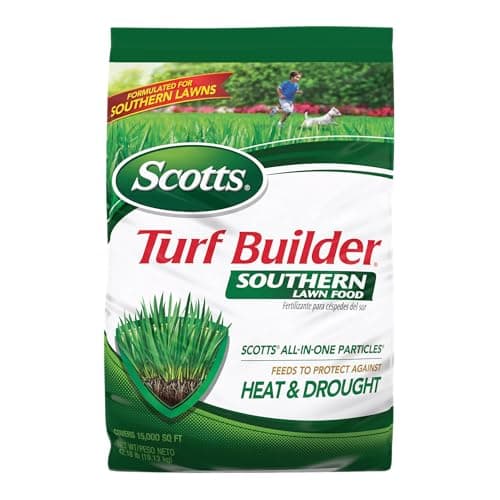
Scotts Southern Turf Builder Instructions
 James ThorntonLawn Equipment & Maintenance Expert | 20 Years
As an Amazon Associate we earn from qualifying purchases.
Are you frustrated with patchy, thin, or weed-infested Southern lawns despite using top-rated fertilizers? You’re not alone. Many homeowners run into the same issue, putting their faith in the bag but missing critical application steps that make all the difference. Scotts Southern Turf Builder is engineered for Southern warm-season grasses, but simply spreading it on the lawn is not enough. Precise timing, correct technique, and understanding your grass’s needs are what separate a lush, green lawn from a struggling yard. This expert guide covers everything you need: from exact application timing and spreader settings to advanced troubleshooting. Let’s get your Southern turf thriving with clear, science-backed, step-by-step Scotts Southern Turf Builder instructions.
If your Southern lawn is still thin or full of weeds after fertilizing, the issue is usually timing or technique, not the product itself. Confirm by checking your soil temperature (65°F+ for warm-season grasses) and inspecting for missed strips or fertilizer burn. The fix: Mow and lightly water your lawn a day before, then apply Scotts Southern Turf Builder with a calibrated spreader, using the correct setting for your grass and bag size, and water it in immediately after spreading.
Avoid applying if heavy rain is forecast within 24 hours or if daytime highs exceed 90°F, as this can cause runoff or stress the turf. Results typically appear within 7-14 days as the lawn greens up and thickens. If you see streaks, yellowing, or burned patches, check for overlap or missed areas and adjust your approach next application. Patience pays off-healthy Southern turf responds quickly when you follow the right steps.
One quick check before we start: this guide covers the plain Southern Turf Builder lawn food. If your bag says Bonus S, you are holding the weed and feed version with atrazine, which follows different rules; see our Scotts Bonus S instructions and timing guide instead.
Understanding Scotts Southern Turf Builder
What Is Scotts Southern Turf Builder?
Scotts Southern Turf Builder is a granular fertilizer specifically formulated for warm-season grasses such as Bermuda, Zoysia, St. Augustine, and Centipede. These grass types dominate lawns across the Southern United States, from Texas to the Carolinas and down to Florida. The product’s purpose is to deliver the right blend of nutrients Southern grasses need to thrive in heat, humidity, and sandy or clay soils.
Key benefits include enhanced drought resistance, thicker turf growth, and improved weed suppression-even in challenging Southern conditions. The formula is designed to feed grass roots for up to 2 months, helping lawns recover from stress and crowd out weeds naturally. Unlike the original Scotts Turf Builder, the Southern formula is tailored to resist high temperatures and the unique nutrient demands of warm-season lawns. Some versions also include weed control (“weed & feed”), targeting broadleaf weeds common in the region.
How Scotts Southern Turf Builder Works
The main nutrients in Scotts Southern Turf Builder are nitrogen (N), phosphorus (P), and potassium (K)-often listed as the N-P-K ratio on the bag. Most Southern Turf Builder blends provide a high nitrogen percentage (typically 29-0-10 or similar), which powers leaf growth and the dense, green look Southern homeowners expect. The “0” in phosphorus is intentional-most Southern soils already have enough, and overuse can cause runoff problems.
Scotts uses a mix of slow-release and quick-release nitrogen sources. The quick-release portion gives an almost immediate green-up, while the slow-release component feeds your turf steadily for weeks, reducing the risk of fertilizer burn and minimizing the number of applications needed. The weed & feed versions include selective herbicides to tackle dandelions, clover, and dollarweed. For weed control, timing is critical-always match the formula to your lawn’s needs and read the label closely before combining products.
When to Apply Scotts Southern Turf Builder
Best Time of Year for Application
The timing for applying Scotts Southern Turf Builder depends on your grass type and local climate. For warm-season grasses like Bermuda, Zoysia, St. Augustine, and Centipede, the prime window is when soil temperatures reach 65°F and the lawn is actively growing. This usually means late spring through early summer in the South, but can vary by region.
Here’s a general breakdown by season:
- Spring: Apply after your first or second mowing, once the lawn is 50% greened up and soil temps are consistently above 65°F.
- Summer: Apply only if the lawn is actively growing and not under heat or drought stress. Avoid application during periods of high temperatures (above 90°F) or drought.
- Fall: In the South, fall feeding can help recovery, but never fertilize right before your grass goes dormant (usually October-November for most warm-season types).
- Dormant/Winter: Never apply fertilizer to dormant warm-season grasses. It wastes product and increases disease risk.
According to our Regional Climate Data, the optimal spring application window for the Deep South is typically March 15 to May 1, but always check your soil temperature for precision.
Weather and Lawn Conditions
The best conditions for applying Scotts Southern Turf Builder are:
- Soil and air temperatures between 65°F and 85°F
- Grass is dry to the touch, but soil has some moisture (not waterlogged or bone dry)
- No heavy rain forecast for 24 hours after application
- No drought or extreme heat stress on the lawn
If you apply right before rain, much of the fertilizer can be washed away, wasting product and polluting runoff. Conversely, spreading on a parched lawn can burn the grass. Check the weather forecast and aim for a 24-48 hour dry window after spreading, then irrigate with 0.5 inch of water if no rain falls.
Frequency and Application Schedule
For established Southern lawns, Scotts recommends feeding every 6-8 weeks during the active growing season. For most homeowners, this means:
- 2-3 applications per year (spring, early summer, and optionally late summer/early fall)
New lawns (seeded or sodded within the past 12 months) can benefit from lighter, more frequent applications-every 4-6 weeks at half the standard rate until established. Overseeded or high-traffic areas may also need a slightly adjusted schedule depending on wear and recovery needs.
| Grass Type | First Application | Subsequent Applications | Stop Fertilizing |
|---|---|---|---|
| Bermuda | Soil 65°F+ (Mar-Apr) | Every 6-8 weeks | Sept 1 |
| Zoysia | Soil 65°F+ (Apr-May) | Every 8 weeks | Sept 15 |
| St. Augustine | Soil 65°F+ (Mar-Apr) | Every 8 weeks | Sept 1 |
| Centipede | Soil 65°F+ (Apr-May) | Every 8-10 weeks | Aug 15 |
This table summarizes the optimal timing for main Southern grass types based on soil temperature and seasonal windows.
Step-by-Step Scotts Southern Turf Builder Instructions
Pre-Application Checklist
Preparation is critical for professional-looking results. Here’s what to do before you open the bag:
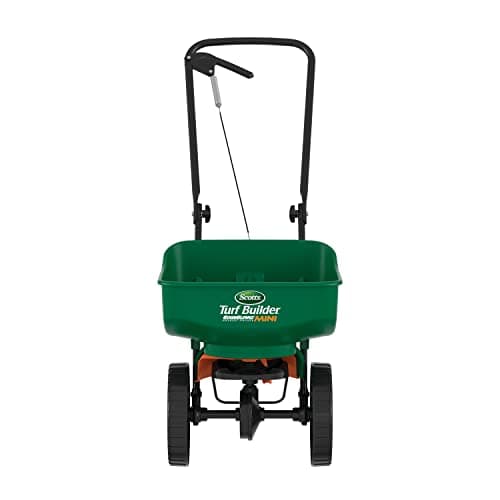
- Tools & Supplies: Use a quality broadcast (rotary) or drop spreader, gloves for handling fertilizer, and a measuring cup if needed. Handheld spreaders are fine for small lawns but less precise for larger areas.
- Mowing: Mow your lawn 1-2 days before application to 1/3 below its typical height (for example, mow Bermuda to 1.5 inches if you usually keep it at 2 inches). This allows fertilizer to reach the soil, not just sit on top of long blades.
- Watering: Water lightly (0.25 inch) the day before, so the soil is moist but not soggy. Applying to dry, stressed grass increases burn risk.
- Lawn Assessment: Check for excessive thatch (over 0.5 inch), compaction (do the screwdriver test-if you can’t push it in 6 inches, aerate first), and weed presence. Bare spots may need separate seeding or patching after fertilizing.
After maintaining thousands of lawns, the pattern is clear: skipping prep is the #1 reason for uneven results.
Calculating the Correct Coverage
The next step is to determine your lawn’s square footage. Measure length x width (in feet) for each section and add them up. Exclude driveways, patios, and landscape beds. Most Southern homes have lawns ranging from 2,000 to 10,000 sq ft, but don’t guess-precision saves money and avoids over-application.

Check your bag size and coverage:
- 14.06 lb bag covers up to 5,000 sq ft
- 28.12 lb bag covers up to 10,000 sq ft
Divide your lawn area by the coverage of your bag to determine how much product you’ll need. Any leftover should be stored in a dry, sealed container for future use.
Spreader Settings for Scotts Southern Turf Builder
Use a spreader for even application-hand spreading is never precise. Scotts publishes recommended spreader settings on their bags and website, but here’s a quick reference for common spreader types:
| Spreader Type | Setting (Southern Turf Builder) | Coverage per Pass |
|---|---|---|
| Scotts EdgeGuard Broadcast | 4.5 | 5,000 sq ft/bag |
| Scotts Drop Spreader | 7 | 5,000 sq ft/bag |
| Ortho/Chapin Broadcast | Adjust to match output | Test with 1,000 sq ft pass |
| Handheld Spreader | 3-4 | Small areas only |
If you’re using a non-Scotts spreader, calibrate it by measuring out 1,000 sq ft, filling with product, and walking at a steady pace. Adjust the setting so you use roughly 1/5 of a 5,000 sq ft bag per 1,000 sq ft.
Skip the marketing claims-here’s what I’ve seen actually work: always do a 100 sq ft “test pass” on the driveway to check your spread width and rate before you hit the lawn.
How to Apply: Step-by-Step
- Fill the Spreader Safely: Pour the fertilizer into your spreader on a hard surface (driveway or sidewalk), not on the grass, to avoid spills and burns. Wear gloves and close the spreader when moving to the lawn.
- Apply Around the Perimeter First (“Edge Guard”): With the spreader set to the correct setting, walk the perimeter of your lawn. This creates a buffer and prevents overspreading into beds or driveways.
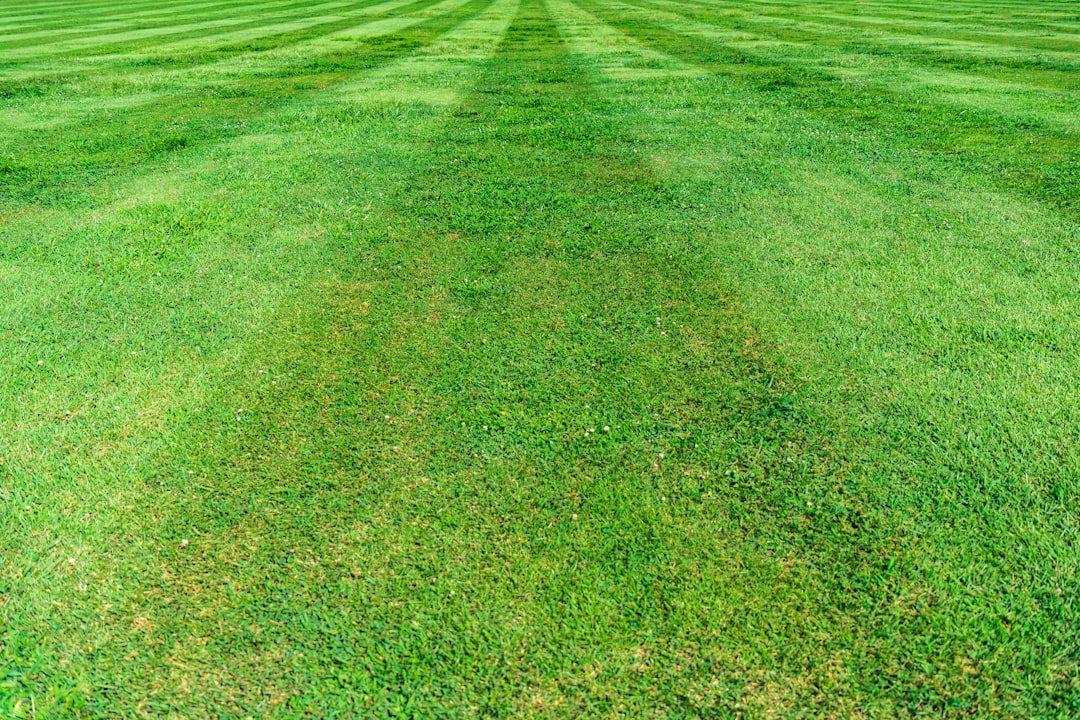
- Fill in the Center with Overlapping Passes: Walk back and forth in straight lines, overlapping passes by about 1/3 of the spreader width. This ensures even coverage and avoids missed strips. For large lawns, split into manageable sections.
- Proper Walking Speed and Pattern: Aim for a steady pace (about 3 feet per second). Going too slow dumps excess product, while rushing leaves thin spots. If your spreader doesn’t have a shield, be extra careful near beds and pavement.
- Avoid Overlap and Missed Strips: Always close the spreader when turning or stopping. If you see double-dark stripes or pale patches after a week, it’s a sign of overlap or missed areas.
Post-Application Care
Once you’ve finished spreading, water the lawn with 0.5 inch of irrigation (or let a light rain do the job within 24 hours). This activates the fertilizer and moves nutrients into the root zone. If using a weed & feed version, don’t water for 24 hours-this lets the herbicide stick to broadleaf weeds before being watered in the next day.
Delay mowing for 2-3 days post-application to allow nutrients to absorb and avoid picking up granules. Limit foot traffic and keep pets and kids off the lawn until the grass is dry after watering-usually 24 hours for safety. Monitor the lawn for a visible green-up within 7-14 days. If you see rapid growth or weed dieback, you’re on the right track. Yellowing, streaks, or burned patches indicate a calibration or watering error-see the troubleshooting section for fixes.
Optimizing Results: Advanced Tips for Southern Lawns
Pairing with Other Lawn Care Practices
Fertilizer works best when combined with other good lawn care habits. Aerate your Southern lawn at least once per year, ideally 1-2 weeks before your first spring feeding. This relieves compaction and opens up the root zone for better nutrient uptake. Dethatch if you have more than 0.5 inch of thatch buildup, but avoid aggressive dethatching right before fertilization-wait 2-3 weeks for recovery.
Overseeding is less common with warm-season grasses but can help fill bare spots, especially with Bermuda or Zoysia. Fertilize after seed germinates and is mowed once. Weed control is best handled with pre-emergent herbicides in late winter (see Best Pre-Emergent Weed Killers for Lawns) and post-emergent spot treatments as needed. Never combine multiple herbicides and fertilizers in a single pass unless the label specifically allows it.
Customizing Instructions for Specific Grass Types
Each Southern grass type has unique requirements:
- Bermuda: Aggressive growth, tolerates more nitrogen (up to 4 lbs N per 1,000 sq ft per year). Mow short (1-2 inches) and fertilize up to 3 times per season.
- Zoysia: Dense, slow-growing. Requires less nitrogen (2-3 lbs N per 1,000 sq ft per year). Fertilize only when actively growing, as excess can cause thatch.
- St. Augustine: Wide blades, prefers moderate nitrogen (2-4 lbs N per 1,000 sq ft). Avoid fertilizing during extreme heat or stress-this grass is sensitive to burn.
- Centipede: Low nutrient needs, easily over-fertilized. Limit to 1-2 lbs N per 1,000 sq ft per year and avoid high-nitrogen products.
For high-traffic zones, increase feeding frequency slightly, but don’t exceed the annual nitrogen maximum. Shaded areas require less fertilizer and may need special attention to reduce disease risk.
Adjusting for Soil Health and pH
Southern soils vary widely-some are sandy and acidic, others clay-heavy and alkaline. Test your soil every 2-3 years (see How to Test Lawn Soil pH) using a mail-in kit or your local extension service. Ideal pH for Southern grasses is 5.5-6.5; nutrient uptake drops sharply outside this range.
If your pH is below 5.5, add lime before or after fertilizing. If above 7.0, use sulfur or organic matter to lower it. Apply amendments at least 2 weeks apart from fertilizer for best results. Check your soil test for phosphorus and potassium-if levels are low, use a starter fertilizer with a balanced N-P-K ratio before switching to Scotts Southern Turf Builder. Our Grass Database recommends annual nitrogen rates based on grass type-always match your feeding plan to these numbers to avoid long-term damage.
Eco-Friendly and Pet-Safe Application Tips
To minimize runoff and protect waterways, never apply fertilizer within 10 feet of storm drains or surface water. Sweep excess granules off driveways and sidewalks back onto the lawn. Consider organic options or slow-release products if you’re especially concerned about environmental impact.
For kids and pets: keep them off the lawn until it’s dry after watering in the fertilizer (usually 24 hours). For weed & feed versions, extend this to 48 hours to avoid accidental ingestion. See Is Lawn Fertilizer Safe for Dogs and Children? for more detailed safety guidance.
- University of Florida Extension recommends applying no more than 1 lb of nitrogen per 1,000 sq ft per application to reduce runoff and lawn stress. Wait at least 6 weeks between applications for St. Augustine and Centipede lawns.
Troubleshooting Scotts Southern Turf Builder Application
Signs of Over- or Under-Application
Over-application symptoms include yellow or brown stripes, “burned” patches, and rapid, excessive growth followed by dieback. Under-application shows up as thin, pale, or uneven turf with little response after two weeks.
If you see streaking (alternating green and yellow lines), check your spreader calibration and walking pattern. Fertilizer burn usually means too much product in one spot or a failure to water in quickly. Deficiency is less common with Scotts products but can occur if your soil is severely depleted-verify with a soil test.
Correction: For burn, water the area deeply (1 inch) daily for 3-5 days to dilute salts. For missed areas, reapply at half rate after 2 weeks, being careful to overlap properly.
Dealing with Weeds and Pest Issues
If weeds are still present two weeks after weed & feed, either the timing was off or the weed type isn’t controlled by that herbicide. Spot-treat remaining weeds with a targeted post-emergent product. For severe infestations, consider a pre-emergent herbicide in late winter or early spring-see Best Pre-Emergent Weed Killers for Lawns for optimal timing.
Common Southern lawn pests like grubs or chinch bugs can flare up after fertilization, especially in St. Augustine and Zoysia lawns. If you see spongy turf or brown patches, confirm by pulling back sod and counting grubs-10+ per sq ft means it’s time for treatment. See How to Get Rid of Lawn Grubs for a full action plan.
Reviving a Lawn After Application Errors
If you applied too much fertilizer and the lawn is showing signs of burn, irrigate deeply and often to flush excess salts. For missed patches or uneven growth, wait two weeks, then spot-fertilize thin areas at half rate. Avoid further stress (no mowing or heavy traffic) until the lawn recovers its color and density. Severe damage may require overseeding or patching in the next growing season.
Common Mistakes to Avoid
Skipping Confirmation Tests
Soil testing before fertilizing is often skipped, but it’s the most critical step for long-term lawn health. Without it, you risk over- or under-applying key nutrients. Always check your spreader calibration with a test pass before every application, even if you’ve used the spreader before-settings can drift, and different products flow at different rates.
- Contact your local extension office
Poor Timing and Regional Caveats
Applying too early (when soil is below 60°F) wastes fertilizer and can stunt spring green-up. Fertilizing too late (within 4 weeks of dormancy) increases disease risk and reduces winter hardiness. Southern lawns go dormant later than Northern ones-adjust your schedule based on your region, not the calendar. Dormant or heat-stressed lawns should never be fertilized; wait until active growth resumes and temperatures are in the optimal range.
Application and Safety Errors
Overlapping passes is the fastest way to cause fertilizer burn-always close the spreader before turning. Under-watering post-application leaves granules sitting on the blades, which can burn the grass and fail to deliver nutrients. Allowing pets or children onto the lawn before it’s dry (or before the herbicide window closes, if using weed & feed) is a safety hazard. Follow the label’s re-entry recommendations strictly.
Conclusion
Getting the most from Scotts Southern Turf Builder comes down to following the instructions with precision-right timing, correct rate, and proper spreader technique. After maintaining thousands of Southern lawns, I’ve seen that skipping steps or guessing at rates leads to disappointment every time. Remember: test your soil, calibrate your spreader, apply when the grass is actively growing, and water in promptly. Monitor your results and adjust as needed each season. For a complete lawn care strategy, check out How to Fertilize a Lawn for Beginners, Best Lawn Watering Practices, and Lawn Maintenance Calendar for the South.
Related Scotts Guides
Top Picks
 Scotts Turf Builder Southern Lawn FoodCheck price on Amazon
 Scotts Turf Builder EdgeGuard Mini Broadcast SpreaderCheck price on Amazon
As an Amazon Associate we earn from qualifying purchases.
Free Lawn Care Tools
Apply every 6-8 weeks during the active growing season for most Southern lawns, but never more than 3 times per year. Always allow at least 6 weeks between applications and stop fertilizing 4-6 weeks before grass dormancy.
The ideal time is when soil temperatures reach 65°F and the lawn is actively growing—typically March to May for spring, with additional applications in early and late summer as needed.
Check the spreader setting listed on the bag for your specific spreader, or do a test pass over 100 sq ft to ensure even coverage. Adjust settings so you use the correct amount per 1,000 sq ft, and always double-check before treating the entire lawn.
Yes, once the fertilizer is watered in and the grass is dry (usually 24 hours), it's safe for pets and children. For weed & feed versions, wait 48 hours after watering before allowing re-entry.
Streaks or burn usually mean uneven application or insufficient watering. Water deeply for several days to dilute excess fertilizer, and correct your spreader calibration for future applications.
Use at half the normal rate for new or overseeded lawns, and wait until the new grass has been mowed at least once before fertilizing. Avoid using weed & feed on new seedlings.
Photos: Macleay Grass Man / Openverse, koocbor / Openverse, Engin Akyurt / Pexels

Your lawn plan, in your pocket all season
Grass ID, a season plan, soil-timed reminders, and a lawn journal that remembers what you did. Free on iPhone.
Related Articles
 Lawn Care Tips
Scotts Turf Builder Triple Action Instructions: Complete Application Guide
Mar 29, 2026•6 min read Lawn Care Tips
When to Apply Scotts Turf Builder & Pre-Emergent: 2026 Schedule
Apr 30, 2026•6 min read Lawn Care Tips
Scotts Halts Crabgrass Preventer Instructions: How to Apply, Water, and Time It
Mar 29, 2026•6 min read