Grass Types That Need Minimal Fertilizer
 Sarah MitchellLawn Diagnostics Specialist | 12 Years
As an Amazon Associate we earn from qualifying purchases.
Most homeowners dream of a lush, green lawn that doesn’t require constant fertilizing or weekend maintenance. The truth is, not all grass types are created equal when it comes to fertilizer needs. Some varieties thrive with minimal feeding, saving you both money and time, while reducing the risk of runoff and the environmental footprint of your yard.
Over-fertilizing lawns isn’t just wasteful; it can lead to nutrient runoff, water pollution, and unhealthy grass that’s more susceptible to disease. If you’re aiming for a sustainable, low-maintenance landscape, choosing grass types that need minimal fertilizer is one of the smartest decisions you can make. This comprehensive guide will walk you through which grasses truly require less fertilizer, how to select the right one for your climate and needs, step-by-step establishment and care instructions, and advanced insights for maintaining a thriving, low-input lawn.
If your goal is a lawn that needs little fertilizer, focus on grass types like fine fescues (creeping red, hard, chewings, sheep), buffalo grass, centipede grass, and select zoysia or bahia varieties. These grasses naturally thrive with one or fewer fertilizer applications per year, thanks to slow growth and deep root systems. To confirm if your current lawn is a low-fertilizer type, compare blade width and growth habit or get a professional ID-don’t reduce feeding unless you’re sure of your grass type.
For new lawns, remove old turf and test your soil’s pH and nutrient levels. Seed or sod in the recommended season (spring for warm-season, fall for cool-season types). Use a starter fertilizer only if needed, then switch to a once-per-year, slow-release organic product. Avoid overwatering or mowing too short, as both increase stress and fertilizer demand. Expect a healthy, established low-input lawn in 1 growing season, with reduced care needs after the first year.
Understanding Fertilizer Needs in Grass Types
Let’s diagnose this step by step: What actually determines how much fertilizer any grass needs? It comes down to three main factors-soil nutrient levels, how well the grass is adapted to your local climate, and the grass’s inherent growth habits.
Soil that’s rich in organic matter and nutrients will naturally support grass with less supplemental feeding. Grasses bred or evolved for your region (or native to it) are usually more efficient at extracting what they need from local soils. Finally, growth rate matters: Slow-growing grasses simply don’t require as much nitrogen or other nutrients as fast-growing, high-maintenance types.
The benefits of choosing grass types that need minimal fertilizer go far beyond convenience. Fewer fertilizer applications mean less risk of runoff into waterways, which reduces pollution and protects aquatic life. You’ll also save money and time by fertilizing less-and your lawn may actually be healthier and more resilient, as low-input grasses often develop deeper roots and require less water.
Key Characteristics of Grass Types That Need Minimal Fertilizer
The symptom you’re seeing-lawns that stay green and dense with little feeding-usually points to grasses with a few important traits. First, adaptation to local soils and climates is key. Native and regionally adapted grasses have evolved to make the most of your area’s rainfall, temperatures, and soil nutrient levels. They often outperform exotic species that require heavy feeding to stay green.
Deep root systems are another hallmark. Grasses like fine fescues, buffalo grass, and centipede grass send roots deep into the soil, accessing water and nutrients that shallow-rooted species miss. This reduces the need for frequent fertilizer and watering, especially during drought.
Growth rate also plays a big part. Slow-growing grasses need less frequent mowing and don’t demand as much nitrogen to fuel rapid leaf production. This not only saves you labor but also means fewer fertilizer applications per year-sometimes just one light feeding in early spring or fall is enough.
Top Grass Types That Need Minimal Fertilizer
Cool-Season Grasses
Fine Fescues (Creeping Red, Chewings, Hard, Sheep)
Fine fescues are the undisputed champions of low-fertilizer, cool-season lawns. With fine, needle-like blades and a naturally slow growth habit, they thrive in poor soils and partial shade. Hard fescue and sheep fescue, in particular, excel on dry, infertile sites where other grasses fail. Creeping red and chewings fescue work well in low-input mixes for home lawns.
Fine fescues need as little as 0.5 to 1 pound of nitrogen per 1,000 square feet per year-compared to 2-4 pounds for Kentucky bluegrass. A single spring or fall feeding is often plenty. They’re best suited to the Northern US, Pacific Northwest, and Upper Midwest, especially in areas with cool summers and partial shade.
Downsides include lower tolerance for heavy foot traffic and heat. Fine fescues can thin out in hot, humid climates but recover well with fall overseeding.
Buffalo grass is a native warm-season grass that’s well adapted to the Great Plains and drier regions of the Midwest. It requires almost no fertilizer-0 to 1 pound of nitrogen per 1,000 square feet per year is typical. Its deep roots and drought tolerance make it ideal for low-maintenance lawns, but it does best in full sun and well-drained soils.
Buffalo grass greens up in late spring and goes dormant in fall. It has a soft, fine texture and grows only 6-8 inches high if left unmowed. Minimal mowing and feeding are needed. However, it struggles in heavy clay, shade, or wet soils and isn’t suited for high-traffic lawns.
Colonial Bentgrass
Colonial bentgrass is a cool-season grass sometimes used in low-input, fine-textured lawns in the Pacific Northwest and coastal New England. It requires less nitrogen than common turf types, thriving on 1 to 2 pounds per 1,000 square feet per year. However, it needs regular mowing and is prone to thatch buildup if not managed carefully.
This grass excels in cool, moist climates and is sometimes used for ornamental or golf course lawns. Its main caveat is disease susceptibility in hot, humid conditions and its need for careful mowing (never remove more than 1/3 of the blade at a time).
Warm-Season Grasses
Zoysia Grass
Zoysia is a favorite for warm regions seeking a dense, low-fertilizer lawn. It requires just 1 to 2 pounds of nitrogen per 1,000 square feet per year-often applied as a single feeding in late spring or early summer. Zoysia forms a thick mat that crowds out weeds, tolerates moderate drought, and thrives in full sun. Some cultivars even perform well in partial shade.
It’s best suited to the southern transition zone, Southeast, and southern Midwest. Downsides include slow establishment (seed or sod may take a full season to fill in) and a tendency to go dormant and brown with the first cold snap.
Bermuda Grass (Certain Varieties)
While standard Bermuda grass is a fertilizer hog, several newer cultivars-like ‘Celebration’ and ‘TifTuf’-are bred for lower input needs. These varieties can thrive with just 1-2 pounds of nitrogen per 1,000 square feet per growing season, especially if clippings are left on the lawn. Bermuda is extremely drought and heat-tolerant, making it a solid choice for the Deep South and arid Southwest.
However, Bermuda requires full sun and is aggressive-it can invade garden beds if not edged. Choose low-input cultivars and avoid overfeeding, as excessive nitrogen encourages thatch and disease.
Centipede Grass
Centipede grass is often called “lazy man’s grass” for good reason: it thrives on poor, acidic soils with virtually no fertilizer. One light application per year-0.5 to 1 pound of nitrogen per 1,000 square feet, ideally in late spring-is usually enough. It forms a medium-textured, apple-green lawn that needs little mowing and tolerates moderate drought.
Centipede grass is best for the Southeast (USDA zones 7-9) and coastal regions. Its main limitation is low cold and traffic tolerance. Avoid over-fertilizing, as this can cause iron deficiency and yellowing.
Bahia Grass
Bahia grass is a coarse-bladed, deep-rooted warm-season type that excels on sandy, infertile soils in the Deep South and Florida. It requires minimal fertilizer (1 to 2 pounds of nitrogen per 1,000 square feet per year) and is highly drought-tolerant. Bahia’s main strengths are low maintenance, strong weed resistance, and resilience under harsh conditions.
It does produce seed heads if not mowed regularly and can look coarse compared to finer grasses, but for utility lawns, roadside, or large properties, it’s an excellent low-input choice.
Emerging and Alternative Low-Input Grasses
No-Mow Blends
“No-mow” lawn seed mixes, often based on fine fescues or eco-lawn blends, are gaining popularity in areas where minimal mowing and feeding are priorities. These blends are designed to thrive on 0.5 to 1 pound of nitrogen per year, and many require mowing only once or twice each season. They’re best for low-traffic, shady, or sloped sites where a traditional lawn isn’t needed.
Native Prairie Grasses
For ornamental or naturalized areas, native prairie grasses like little bluestem, side-oats grama, and blue grama are nearly self-sustaining once established. They need no fertilizer beyond initial establishment and provide excellent habitat for pollinators. While not traditional turf, they can be mowed once or twice a year for a meadow look or left to grow naturally in transition spaces.
- Penn State Extension recommends fine fescues for low-input lawns, noting that as little as 1 pound of nitrogen per 1,000 sq ft per year is sufficient for good color and density.
Recommended products
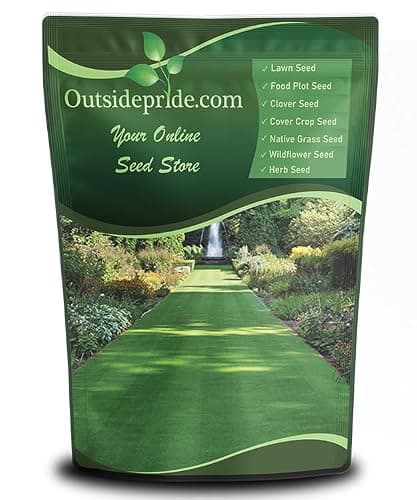
Outsidepride Legacy Fine Fescue Blend
A fine fescue blend that holds color on roughly one pound of nitrogen per 1,000 square feet per year.
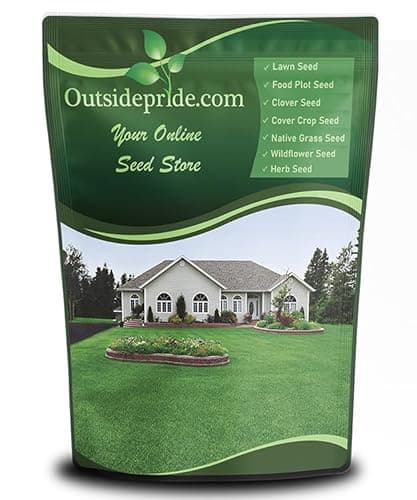
Outsidepride Perennial Buffalo Grass Seed
A native Plains grass that survives on rainfall and almost no fertilizer.
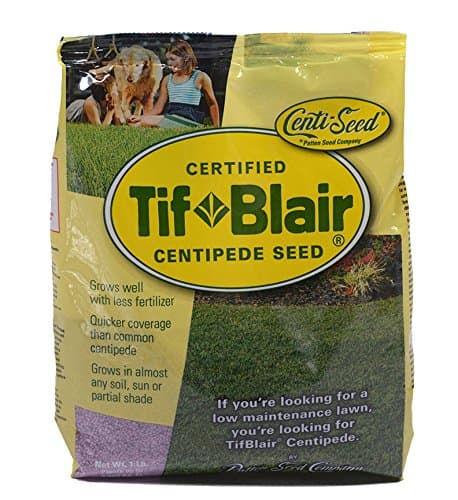
TifBlair Centipede Grass Seed
The lowest-input warm-season lawn grass for the Deep South, prone to decline if overfed.
How to Choose the Right Low-Fertilizer Grass for Your Lawn
Choosing the right grass type starts with a clear-eyed assessment of your growing conditions. Begin by noting your USDA hardiness zone, average annual rainfall, and temperature swings. Cool-season grasses like fine fescues thrive in northern climates with cold winters and moderate summers, while warm-season types like centipede and zoysia are best for southern zones with hot summers and mild winters.
Sun and shade tolerance also matter. Fine fescues, for example, tolerate partial shade better than most warm-season grasses-which generally need full sun (6+ hours daily) for best performance. Check for mature trees, fences, or buildings that create shady areas when making your choice.
Soil testing is non-negotiable. Use a home soil test kit or send a sample to your local extension service to determine pH and nutrient levels. Most low-fertilizer grasses prefer soils in the 5.5-7.0 pH range, but centipede grass, for example, prefers slightly acidic soil (5.0-6.0). If your soil needs adjustment, refer to How to Improve Soil pH for Grass for step-by-step guidance. Interpreting your soil test will also help you decide if any starter fertilizer is needed at planting, or if your lawn’s soil is already nutrient-rich.
Finally, factor in how the lawn will be used and your visual preferences. High-traffic lawns (kids, pets, sports) may not be suited to fine fescues or buffalo grass, which can thin under wear. If you prefer a fine-bladed, dark green lawn, fine fescue or zoysia might be your best bet. For utility areas or naturalized plantings, consider bahia or native prairie species.
Step-by-Step Guide: Establishing a Low-Fertilizer Lawn
Site Preparation
Start by removing any existing turf, weeds, or debris. For small lawns, a sod cutter or shovel works; for larger areas, consider renting equipment. If the soil is compacted, aerate to a depth of 3-4 inches. Adjust pH and nutrients based on your soil test results. If organic matter is low, mix in 1 inch of compost to boost fertility naturally before planting.
Seeding or Sodding Techniques
Seeding is usually best for fine fescues, buffalo grass, and most no-mow blends. Broadcast seed at the recommended rate (typically 3-5 pounds per 1,000 square feet for fine fescue, 1-2 pounds for buffalo grass). For sod, stagger seams and press sod firmly into contact with soil.
Timing is crucial: Seed cool-season grasses in early fall (mid-August to late September), and warm-season types in late spring to early summer (soil temps above 60°F). This allows roots to establish before harsh weather hits.
Initial Watering and Establishment
Water newly seeded areas lightly but frequently-just enough to keep the top 1 inch of soil moist until germination (usually 7-21 days, depending on grass type and temperature). Once seedlings are 2 inches tall, switch to deeper, less frequent watering to encourage deep roots. For sod, water daily for two weeks, then taper off.

First-Year Fertilizer Schedule
Apply a minimal starter fertilizer only if your soil test indicates deficiency. For most low-input grasses, a single application of 0.5 to 1 pound of slow-release nitrogen per 1,000 square feet at seeding or sodding is sufficient. Avoid overfeeding in the first year-excess nitrogen can weaken roots and encourage weeds.
- Contact your local extension office for region-specific seeding rates, planting dates, and soil test interpretation.
Pro Tips for Maintaining Grass Types That Need Minimal Fertilizer
Mowing Best Practices
Mow at the correct height for your chosen grass: 2.5-4 inches for fine fescues, 1-2 inches for buffalo grass, 1.5-2 inches for centipede and zoysia, and 2-3 inches for bahia. Never remove more than one-third of the blade at a time, as scalping stresses grass and increases fertilizer needs. Mow regularly so clippings return nutrients to the soil (mulch, don’t bag).
Watering Efficiently
Water deeply but infrequently to a depth of 4-6 inches, encouraging roots to grow deep and access more nutrients. For established low-input lawns, watering once every 7-10 days during dry spells is often enough. Overwatering dilutes soil nutrients and increases disease risk.
Natural Fertility Boosters
Leave clippings on the lawn to recycle nitrogen and organic matter. Topdress with 0.25-0.5 inch of compost each spring to boost fertility and soil health. Organic amendments, like composted manure or leaf mold, feed beneficial microbes that help release nutrients to your grass over time. For more, see Composting for a Healthier Lawn.
Overseeding and Lawn Renovation
If your lawn thins or bare spots appear, overseed with your chosen low-input grass in the optimum season (fall for cool-season, late spring for warm-season). Prep by mowing low and raking to expose soil, then broadcast seed and keep moist until established. Annual overseeding keeps lawns dense and reduces weed invasion.
Integrated Pest and Weed Management
Dense, healthy low-input lawns naturally crowd out weeds and resist most pests. Spot-treat problem areas with organic or selective products only if needed. Avoid broad-spectrum herbicides or insecticides that can harm soil microbes and beneficial insects. Regular monitoring and early intervention are key-see Best Fertilizers for Lawns for product options and Organic vs Synthetic Fertilizers for safer alternatives.
Seasonal Care Calendar for Minimal-Fertilizer Lawns
Spring Tasks
Test your soil every 2-3 years in early spring to catch any pH or nutrient changes. Apply a thin layer (0.25 inch) of compost if organic matter is low. Overseed thin spots in cool-season lawns in early fall or late spring for warm-season types. Light topdressing supports soil microbes and gradual nutrient release.
Summer Management
Monitor for drought stress-grass blades folding lengthwise and dull color are signs to water. Mow at the upper end of the recommended height to reduce stress and shade out weeds. Scout for pests and treat only if thresholds are exceeded (for example, 10+ grubs per square foot for action). Avoid fertilizing during peak summer heat, as this can burn roots and increase disease risk.
Fall Prep
For cool-season lawns, aerate in early fall to relieve compaction and improve water infiltration. Overseed as needed and topdress with compost. Apply a light, slow-release fertilizer if soil tests indicate a deficiency-otherwise, skip it.
Winter Considerations
Low-input grasses typically go dormant in winter. Keep lawns clear of leaves and debris to prevent smothering. Avoid heavy foot traffic on frozen or dormant turf to prevent damage. Prepare for spring by cleaning and sharpening mower blades.
Advanced Insights: Soil Health and Microbial Support
One of the main reasons grass types that need minimal fertilizer perform so well is their partnership with soil microbes. Mycorrhizal fungi form symbiotic relationships with grass roots, extending their reach for water and nutrients-especially phosphorus. Earthworms and other soil life break down organic matter, releasing nutrients plants can use.
To build a self-sustaining lawn ecosystem, feed your soil with organic matter (compost, clippings, leaf mulch), and avoid practices that harm beneficial microbes (like overuse of synthetic chemicals or frequent tilling). Over time, your lawn will become more resilient, with nutrients recycled naturally and less need for supplemental feeding.
When should you fertilize at all? The answer is: only when your lawn or soil test tells you it’s needed. If grass is pale, thin, or slow to recover from mowing, check blade color and density. If clippings are yellow and growth is stalled, test for nitrogen. Use a soil test to confirm before applying any fertilizer-applying “just in case” does more harm than good.
Common Mistakes to Avoid with Minimal-Fertilizer Grass Types
Most guides on low-input lawns miss a few critical details. First, not all grass is low-input-Kentucky bluegrass, perennial ryegrass, and tall fescue often require 2-4 pounds of nitrogen per 1,000 square feet per year for optimal color and density. Reducing fertilizer on these types without confirming your grass species can lead to thin, weedy, or disease-prone lawns. Always identify your grass before changing fertilizer routines-see How to Test Your Lawn’s Soil for help in matching grass to soil.
Second, timing matters. Cool-season grasses respond best to fall and early spring feeding, while warm-season types grow most in late spring and summer. Fertilizing at the wrong time wastes product and can harm the grass. Local rainfall and soil fertility also affect how much, and when, to feed-always adjust based on weather and soil test results.
Third, neglecting soil health is a hidden pitfall. Compacted or acidic soils limit nutrient uptake, so even minimal-fertilizer grasses may suffer without occasional aeration or pH correction. For pet owners, choose fertilizer products labeled as safe for use around children and animals, and store unused products securely. See Best Lawn Care Practices for Pet Owners for more on safe, effective options.
Conclusion
Choosing grass types that need minimal fertilizer is one of the most effective steps toward a low-maintenance, sustainable landscape. Fine fescues, buffalo grass, centipede grass, zoysia (select cultivars), bahia, and innovative blends all offer dense, green lawns with just one or fewer fertilizer applications per year. The key to success is matching your region and soil with the right grass, preparing your site, and following low-input best practices-minimal mowing, deep watering, and natural fertility boosters.
Remember: always confirm your grass type, test your soil, and fertilize only when your lawn truly needs it. With the right approach, you’ll enjoy a beautiful, resilient lawn that saves you time, money, and environmental impact for years to come.
For your next step, check out How to Reduce Lawn Fertilizer Use Safely or Understanding Soil Health for Lawns for more in-depth strategies and diagnostics.
Free Lawn Care Tools
The top grass types include fine fescues (creeping red, hard, chewings, sheep), buffalo grass, centipede grass, select zoysia cultivars, and bahia grass. These grasses thrive with one or fewer fertilizer applications per year.
Identify your grass by blade width, color, and growth habit, or consult a local extension office or turf specialist. Fine fescues have fine, needle-like blades, while buffalo and centipede grass have unique textures and growth patterns.
Yes, if you have a low-input grass type and maintain healthy soil. Confirm with a soil test and only fertilize when needed—monitor for pale color or thin growth as signs for feeding.
Plant cool-season grasses like fine fescue in early fall, and warm-season types like centipede or zoysia in late spring to early summer when soil temperatures are above 60°F.
Most low-input grasses need 0.5 to 1.5 pounds of nitrogen per 1,000 square feet per year, applied in a single feeding or split into two light applications, depending on soil test results.
Expect visible results in 6 to 12 weeks after seeding or sodding, with full establishment and reduced maintenance needs within the first growing season if properly watered and cared for.

Your lawn plan, in your pocket all season
Grass ID, a season plan, soil-timed reminders, and a lawn journal that remembers what you did. Free on iPhone.