Do Earthworms Eat Grass? How Worms Help (or Hurt) Your Lawn
 Sarah MitchellLawn Diagnostics Specialist | 12 Years
As an Amazon Associate we earn from qualifying purchases.
Quick answer: Yes, earthworms are good for your lawn. A healthy lawn supports 25 to 50 earthworms per square foot, and they aerate soil, improve drainage, cycle nutrients, and reduce thatch at no cost. Their castings can make a lawn bumpy, but that is a management question, not a pest problem; fixes are below.
Soft, spongy soil that drains well and supports deep grass roots almost always signals strong earthworm activity. Understanding how earthworms help lawn soil explains why some yards thrive with less fertilizer, fewer problems, and better drought tolerance while others struggle despite regular care.
This article explains exactly how earthworms help lawn soil, when they seem like a problem, and how to manage your yard to encourage a healthy worm population without creating a bumpy, messy surface. It also addresses common questions, including whether earthworms are good or bad for lawns, whether they cause bumps, and whether you need to add worms to your yard.
Extension research from universities such as Ohio State, Penn State, and the University of Minnesota demonstrates that earthworms improve soil structure, increase nutrient availability, and boost biological activity that supports turfgrass. When you understand that biology, you can often reduce inputs like fertilizer and mechanical aeration while improving long term lawn performance.
Every healthy lawn depends on what happens in the top 6 to 8 inches of soil. In that zone, earthworms, microbes, and grass roots interact constantly. Earthworms are among the most visible members of that soil community, and their tunnels and castings leave clear evidence on the surface.
Homeowners frequently ask three questions:
- Are earthworms good or bad for lawns?
- Do earthworms cause bumpy, uneven lawns?
- Do I need to buy and add earthworms to my yard?
The short answers are:
- Earthworms are strongly beneficial for lawn soil health.
- They can contribute to surface bumps in some conditions, but this is manageable.
- Most lawns do not need added worms; they need better habitat for existing populations.
In the sections below, this guide covers basic worm biology, how earthworms help lawn soil structure and fertility, how to diagnose whether you have enough worms, how to address worm castings and bumps, and how to adjust your lawn care program so worms do more of the work for you.
To determine if earthworms are benefiting your lawn, look for soft, spongy soil and visible worm castings on the surface. These signs indicate strong earthworm activity which improves soil aeration and drainage. If your lawn shows bumpy areas, it's likely due to an abundance of beneficial worm activity, which can be confirmed by digging a small 6-inch deep hole to observe worm presence.
To support earthworm populations, maintain a moist lawn and apply a thin layer of organic compost twice a year to enrich the soil. This encourages worm activity, which in turn promotes healthier grass growth. Expect noticeable improvements in soil structure and lawn health within a few months as worms work to naturally fertilize and aerate your lawn.
Do Earthworms Eat Grass? (No, and Here's What They Actually Eat)
No, earthworms do not eat grass, and they do not eat live grass roots either. This is the single most common worry behind a lawn full of worms, so it is worth settling up front: the worms crawling through your soil are not the reason for any brown patch you are seeing. Earthworms feed on dead and decaying organic matter, not living plants. Their diet is grass clippings, fallen leaves, old decomposing roots, thatch, and the organic bits already mixed into the soil, all of which they grind up and return to the earth as nutrient-rich castings.
The confusion usually comes from mistaking worms for white grubs. Grubs, the C-shaped larvae of beetles, genuinely do chew live grass roots, and when you dig into a dying patch to investigate, you often find earthworms in the same soil and assume they are the culprit. They are not. The tell is simple: grub-damaged turf peels back like a loose carpet because the roots are severed, while turf over a healthy worm population stays firmly anchored and green. So if worms are all you find and the sod holds tight, your grass is not the meal, and the worms are quietly doing you a favor. The next sections cover exactly how that free labor pays off.
Understanding Earthworms and Lawn Soil Health
What Are Earthworms and How Do They Live?
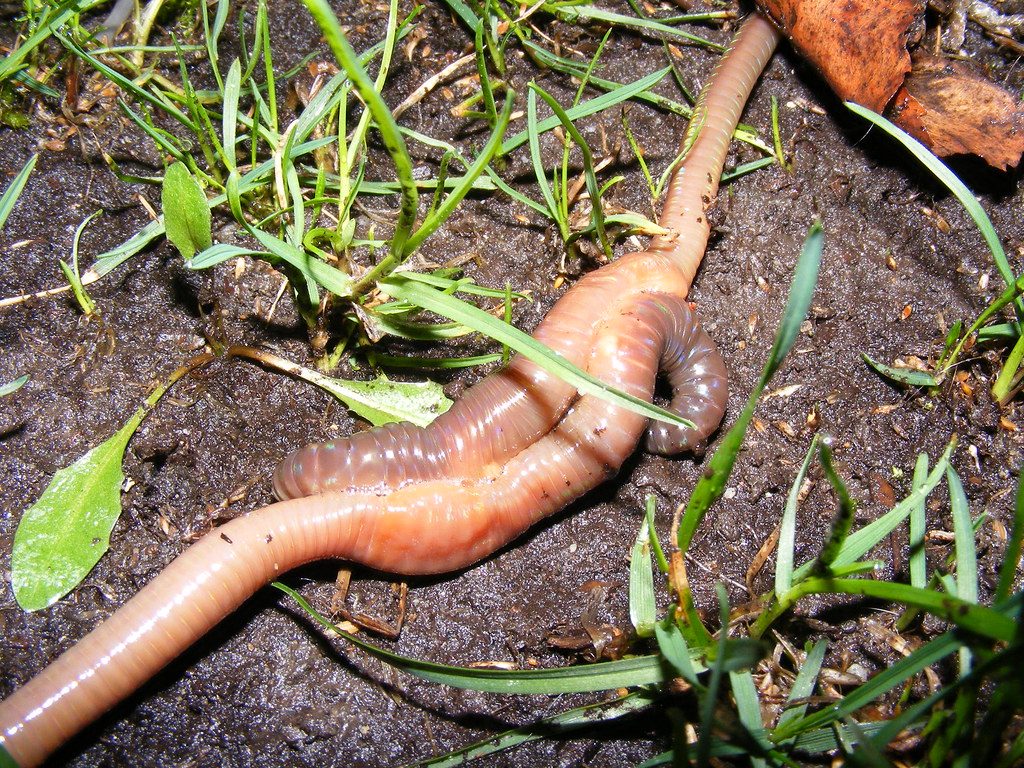
Earthworms are segmented invertebrates that live in moist soil and feed on organic matter. For lawn care, three ecological groups matter most, as defined by USDA and multiple university extension programs:
- Anecic earthworms (for example, Lumbricus terrestris) create deep vertical burrows that can reach 3 to 6 feet. They come to the surface to feed on leaves and other debris, then pull that material down into their burrows. Their middens, or piles of castings and debris at burrow entrances, are the most visible on turf.
- Endogeic earthworms live in the upper 2 to 12 inches of soil. They construct horizontal burrows and feed on soil rich in organic matter. They seldom appear on the surface, so homeowners rarely see them even when populations are high.
- Epigeic earthworms live right at the soil surface and in litter layers. They are common in forests and compost piles but less important in closely mowed lawns where surface residue is limited.
Earthworms move by contracting muscles along their segmented bodies and by using tiny bristles, called setae, to anchor against soil particles. They require moist conditions for gas exchange through their skin, which is why they are most active at night and on cool, damp days.
Seasonally, earthworms in cool-season grass regions are most active in spring and fall when soil temperatures are roughly 50 to 70 degrees Fahrenheit and moisture is adequate. In summer heat or winter cold, many species move deeper or form resistant cocoons, which is why surface activity can drop for weeks even though the population is still present.
Why Earthworms Are a Key Indicator of Lawn Soil Health
Earthworm populations correlate strongly with soil organic matter, moisture, and aeration. According to Penn State Extension, lawns with higher organic matter and neutral to slightly acidic pH often support 25 to 50 earthworms per square foot in the upper 6 inches of soil. Heavily compacted or chemically stressed soils can drop below 5 worms per square foot.
Indicators of a healthy earthworm population in a lawn include:
- Occasional worms visible when you remove a soil plug or dig 4 to 6 inches.
- Small casts or pellets of soil on the surface, especially in spring and fall.
- Good water infiltration with minimal puddling after a moderate rainfall event of 0.5 to 1 inch.
Ideal conditions for earthworms include:
- Soil moisture near field capacity, not waterlogged and not bone dry.
- pH between about 6.0 and 7.0, which also aligns with turfgrass needs. See How to Improve Soil pH for Grass for practical adjustment steps.
- Moderate organic matter (2 to 5 percent for many lawn soils) supplied by clippings, leaves, and compost.
- Minimal disturbance from deep tillage or frequent heavy traffic.
Conditions that drive worms away include chronic soil saturation, severe compaction from vehicle traffic, very low organic matter, and overuse of certain pesticides. Michigan State University Extension notes that repeated use of some broad-spectrum insecticides for grub or surface insect control can reduce non-target insect and earthworm populations for a season or more, depending on product and rate. Choosing targeted products and using integrated pest management protects worm populations.
How Earthworms Interact With Lawn Roots and Soil Structure
Soil structure describes how individual particles of sand, silt, and clay form larger aggregates. Good soil structure creates a network of pores that hold air and water and allow roots to penetrate. In lawns, this structure determines how easily roots can access water and nutrients and how quickly water infiltrates instead of ponding.
Earthworms modify soil structure in three main ways:
- Their burrowing creates continuous channels that connect the surface with deeper layers.
- Their castings, which are excreted soil and organic matter, form stable aggregates rich in nutrients and microbes.
- Their feeding pulls surface organic material into the soil, where it decomposes and binds particles together.
Extension research from Ohio State University demonstrates that earthworm casts often have aggregate stability 30 to 50 percent higher than surrounding bulk soil. That stability makes the soil more resistant to crusting and compaction, so grass roots maintain access to oxygen and water even under moderate traffic.
The relationship between earthworms, microbes, and grass roots is symbiotic. Worms feed on partially decomposed organic matter that microbes have softened. In turn, worm casts provide surfaces and nutrients that support larger microbial populations. Grass roots then exploit the improved structure and nutrient-rich microsites. As roots die and regrow, they add more organic matter to the system, which feeds the worms and microbes again.
The Main Ways Earthworms Help Lawn Soil
1. Improving Soil Structure and Aeration
The clearest answer to how earthworms help lawn soil is their role in natural aeration. Each worm creates a network of burrows that act as permanent or semi-permanent air channels. Anecic species in particular build vertical shafts that connect the surface to deeper zones where roots and microbes need oxygen.
Compared with mechanical core aeration, which removes plugs 2 to 4 inches deep once or twice per year, earthworm aeration is:
- Continuous: Worms move and burrow throughout the growing season when moisture is adequate.
- Three dimensional: Burrows extend both vertically and horizontally, far beyond the coverage of aerator tines.
- Self adjusting: Worms concentrate in areas with higher organic matter and adequate moisture, which tend to be the zones where soil life is already active and beneficial.
Mechanical core aeration still plays a crucial role in heavily compacted lawns, especially on clay soils or sports fields. Purdue University Extension recommends core aeration once or twice per year for compacted lawns, typically in early fall and again in late spring if needed. However, as earthworm populations increase and soil loosens, the need for frequent mechanical aeration often declines because the worms maintain macropores on their own.
Improved aeration from worm burrows supports:
- Deeper root penetration, often shifting roots from the top 1 to 2 inches to 3 to 6 inches or more.
- Higher oxygen levels in the root zone, which drives root respiration and nutrient uptake.
- Better diffusion of carbon dioxide out of the soil, which reduces stress on roots.
As a result, lawns with active earthworm populations tolerate drought and heat better, because their root systems access a larger reservoir of water deeper in the profile. University of Minnesota Extension reports that turf on soils with strong structure and adequate macroporosity can survive 2 to 3 weeks longer without irrigation compared with similar turf on compacted soil, under the same weather conditions.
2. Enhancing Water Infiltration and Drainage
Water infiltration depends on both soil texture and structure. In compacted or crusted soils, rainfall or irrigation often runs off after the first 0.1 to 0.2 inches, leading to puddles, erosion, and inefficient watering. Earthworm channels change this pattern.
According to Ohio State University Extension, earthworm burrows can increase saturated hydraulic conductivity, which is a measure of how fast water moves through soil when fully wet, by 2 to 10 times compared with similar soil without worms. Burrows act as vertical drains that quickly move water downward, then distribute it horizontally through smaller pores.
For heavy clay or compacted urban lawns, this has several practical benefits:
- Less standing water after heavy rainfall, which reduces root suffocation and thin spots.
- Reduced surface runoff, which means more of your irrigation reaches the root zone instead of flowing into sidewalks and streets.
- Less crusting at the soil surface, especially when combined with organic matter inputs.
Improved drainage also reduces disease pressure. Many turf diseases, such as Pythium blight and leaf spot, thrive when grass stays wet for extended periods. By moving water into the soil profile faster, worm burrows shorten leaf wetness periods after rainfall and irrigation. Better drainage also discourages moss growth, which Penn State Extension notes is common in compacted, poorly drained, and shady turf.
Practically, homeowners often notice that, after a few seasons of improved organic management, water infiltrates more easily and ponding areas shrink. This is a direct result of both earthworm and root activity changing the physical structure of the soil.
3. Boosting Nutrient Cycling and Fertility
Earthworms do not add nutrients to the soil out of thin air. Instead, they accelerate the breakdown and redistribution of existing organic material. They are essential recyclers in the lawn ecosystem.
Worms feed on a mix of soil and organic residues, including:
- Grass clippings left after mowing.
- Fallen leaves, especially when mulched finely.
- Old roots and stems as they decompose.
- Compost or organic fertilizers applied to the surface.
Material passes through the worm's digestive system where it is ground and mixed with mucus and microbial populations. The result is a casting, a small pellet or granular mass that has distinctive chemical and biological properties.
Extension research from the University of Nebraska-Lincoln reports that earthworm castings often contain:
- Approximately 2 times as much available nitrogen as surrounding soil.
- 1.5 to 3 times as much available phosphorus.
- Higher concentrations of exchangeable potassium, calcium, and magnesium.
- Significantly higher microbial biomass and enzyme activity.
On a lawn, this means that nutrients locked in slowly decomposing thatch or leaf litter are processed faster and returned to forms that grass roots can use. The effect is especially strong when clippings are returned instead of bagged. Research summarized by Michigan State University Extension shows that returning clippings to the lawn can supply the equivalent of 1 to 2 pounds of nitrogen per 1,000 square feet per year. Earthworms help incorporate and process those clippings efficiently.
Earthworm activity complements organic fertilizers and compost. When you topdress a lawn with compost, worms rapidly mix that material into the top few inches, increasing the contact between compost, soil, and roots. For more detail on product choices and timing, see Best Fertilizers for Lawns and Composting for a Healthier Lawn. Using organic forms that feed soil organisms often produces more sustained benefits than quick release synthetic nitrogen alone.
4. Supporting Beneficial Microorganisms in Lawn Soil
Beneficial bacteria, fungi, and other microorganisms drive decomposition, nutrient mineralization, and disease suppression. Earthworms act as ecosystem engineers for these microbes.
Inside the earthworm gut, partially digested organic matter mixes with a dense microbial community. As castings emerge, they inoculate the soil with these microbes and provide a moist, nutrient rich environment for further growth. University of California Cooperative Extension notes that microbial biomass in fresh earthworm castings can be several times higher than in surrounding soil, particularly for bacteria involved in nitrogen cycling.
Worm burrows also create distinct microhabitats:
- The walls of burrows are lined with mucus and compacted soil, which supports microbial films that interact with percolating water and root exudates.
- Beneath middens and concentrated casting areas, nutrient levels and biological activity are elevated compared with the bulk soil.
These hot spots of biology support turfgrass in several ways:
- More efficient conversion of organic nitrogen into nitrate and ammonium.
- Increased formation of stable soil organic matter, which improves cation exchange capacity and nutrient holding ability.
- Enhanced populations of beneficial fungi, including some that associate with turfgrass roots and can improve nutrient uptake.
This microbial support explains why lawns managed with regular organic matter inputs and minimal disruptive practices often show richer color and steadier growth using less synthetic fertilizer.
5. Reducing Thatch and Surface Organic Buildup
Thatch is a tightly interwoven layer of living and dead stems, crowns, and roots that accumulates between the green leaves and the soil surface. According to Kansas State University Extension, a thatch layer thicker than about 0.5 inch restricts water infiltration, harbors pests and diseases, and makes turf more prone to drought stress.
Earthworms help manage thatch by feeding on decaying plant material and dragging it into the soil where microbes finish the decomposition process. Their effect is strongest when:
- Grass clippings are left on the lawn rather than removed.
- Leaves are mulched in fall instead of raked away.
- The soil pH and fertility levels support active microbial communities.
Not all thatch disappears just because worms are present. Heavy thatch layers in high input lawns with frequent fertilization and irrigation can still require mechanical dethatching or core aeration. However, Extension research from the University of Wisconsin indicates that lawns with robust worm and microbial activity accumulate thatch substantially more slowly and can maintain a stable thickness below the 0.5 inch concern threshold, even with regular clipping return.
Over several seasons, worm activity can reduce a moderate thatch layer without aggressive mechanical removal. A practical strategy is:
- Late summer to early fall: Core aerate compacted areas to open the thatch-soil interface.
- Immediately after aeration: Topdress lightly with compost (about 0.25 inch) to introduce additional microbes and organic matter.
- Fall and spring: Leave clippings and mulch fallen leaves to feed worms and microbes.
- Year 2 and beyond: Reassess thatch depth; in many lawns, it stabilizes or declines slowly under this program.
This approach usually reduces the need for aggressive vertical mowing, which can damage turf crowns if misused.
6. Increasing Root Growth and Overall Lawn Vigor
All the benefits described above, from aeration to nutrient cycling, converge on one outcome: stronger roots and more resilient turf. Grass with deeper and denser roots accesses more water, stores more carbohydrates, and recovers faster from stress.
Extension bulletins from Rutgers University on turfgrass management highlight that root depth is one of the best predictors of a lawn's ability to withstand drought and traffic. Soils with abundant worm channels and stable aggregates allow roots to penetrate several inches deeper than similar soils without biological structure.
Homeowners typically see several visible differences in lawns with active earthworm populations:
- More uniform green color with fewer localized yellow patches, especially during moderate stress.
- Faster recovery after heavy use, such as children playing or pet traffic.
- Less need for frequent watering because the lawn stays turgid longer between irrigation cycles.
Over a 3 to 5 year period, a lawn managed to support worms and soil biology usually shifts from shallow, dependency driven growth (frequent watering and fertilization) to deeper, self regulated growth. That transition requires adjusting other practices, as covered later in the management and encouragement sections.
When Earthworms Seem Like a Problem: Castings, Bumps, and Misconceptions
Are Earthworms Bad for Lawns?
Earthworms do not eat live grass roots in the way that white grubs do. They consume dead or decaying organic matter. Confusion arises because both earthworms and grubs live in soil, and homeowners sometimes see worms while investigating brown patches.
The diagnostic difference is clear:
- Grub damage shows as irregular brown patches where the sod peels back easily like a carpet and roots are missing. According to Ohio State University Extension, finding 10 or more white grubs per square foot in late summer or early fall signals a damaging population.
- Earthworm presence, even at high densities, does not cause root severing or peeling sod. Turf remains anchored firmly.
Most negative issues attributed to earthworms are aesthetic, not harmful. Castings can create a messy appearance on putting greens or low mowed turf, and surface bumps can interfere with mowing. However, from a plant health perspective, those same castings indicate enhanced fertility and biological activity.
Understanding Earthworm Castings on the Lawn Surface
Castings are the small, granular mounds or pellets of soil that worms excrete after digesting organic matter. On lawns, they appear as:
- Dark, crumbly piles about the size of a quarter or smaller, often clustered in moist areas.
- Small, twisted or tower like deposits forming miniature columns.
Castings usually appear most heavily in spring and fall during peak worm activity, particularly following rain or irrigation. They can create a muddy or lumpy look before they dry and crumble.
Despite the messy appearance, castings are extremely valuable. As noted earlier, they concentrate nutrients and microbes and improve aggregate stability. Over time, castings spread by rainfall and mowing integrate into the surface layer, gradually building a looser, more fertile topsoil.
On high cut home lawns (2.5 to 4 inches for many cool season grasses), castings typically do not cause functional problems once regular mowing resumes and they are dispersed. On low cut turf, such as sports fields or ornamental lawns maintained below 2 inches, castings can affect ball roll and mowing quality. Management strategies for those situations are covered later.
Earthworm Infestation in Your Lawn: When Worms Become a Nuisance
If you searched for "earthworm infestation," you are probably looking at a lawn covered in little soil piles, pencil-sized holes, or a surface that has turned lumpy and rough under the mower. First, a reframe: a lawn full of earthworms is not an infestation in the pest sense. It is a sign that your soil is doing exactly what healthy soil does. But a heavy spring or fall flush of worm activity can absolutely be a nuisance, and it is fair to want the surface back under control.
Here is what heavy worm activity looks like, and what to do about each symptom:
- Castings and mounds everywhere: Wait for the piles to dry for a day or two, then break them up with a stiff broom, leaf rake, or drag mat and spread them back into the turf. They are free fertilizer once dispersed.
- Small holes in the lawn: Pencil-thin vertical holes are burrow entrances. They function like free aeration channels and need no treatment. Larger holes with torn soil point to animals digging for worms, which is a different problem.
- Bumpy, uneven surface: Raise your mowing height so the mower rides over the roughness, and level gradually with light compost or sand topdressing over a season or two rather than in one heavy pass.
- Constant surface activity: Water deeply but less often. A surface that is always damp keeps worms feeding at the top; letting it dry between waterings pushes activity deeper.
What about an earthworm killer for lawns? There is not one, and that is by design. No pesticides are labeled for earthworm control in home lawns in the United States, so any product applied to kill worms is an off-label use that can be illegal and can harm the soil life your grass depends on. University extension programs, including NC State and Nebraska, are consistent on this point: manage the castings, keep the worms. Killing off the population that aerates, drains, and fertilizes your soil for free would trade a cosmetic annoyance for a real problem.
Give the cultural fixes one full season. In almost every home lawn, the combination of drying cycles, higher mowing, and topdressing turns a "worm infestation" back into what it really is: a fertile lawn with a briefly messy surface in spring and fall.
Managing Earthworm Castings and Bumpy Lawns
Those small, crumbly soil piles worms leave on the surface are castings, and while they signal healthy soil, a heavy spring or fall flush can make a lawn feel lumpy and rough to mow. The short version: manage the surface mess, never try to kill the worms. Let castings dry for a day or two after rain, then break them up and spread them with a stiff broom, leaf rake, or drag mat. Raise your mowing height, water deeply but less often so the surface is not constantly damp, and use light compost topdressing plus aeration over a season or two to even out the grade. Skip any pesticide aimed at worms; it is ineffective, often illegal for that use, and costs you the soil benefits.
For the full diagnostic-to-fix walkthrough, including bumpy-lawn leveling, severity thresholds, and sports-turf tactics, see our dedicated guide on how to deal with earthworm castings.
Earthworm Damage to Lawns: What's Real and What's Misdiagnosed
Search "earthworm damage" and you will find a lot of worry that does not match the biology. Earthworms almost never damage a lawn. What people call damage is usually either their harmless castings or a completely different pest that happens to share the soil. Here is how to tell what you are actually looking at before you spend money on the wrong fix.
| What you see | Most likely cause | Harmful? | What to do |
|---|---|---|---|
| Small crumbly soil pellets or coils on the surface, worst after rain | Earthworm castings | No, a sign of healthy soil | Let dry, then rake or drag to spread them back in |
| Larger soil piles or mounds with no open holes beside them | Earthworm middens (castings piled at burrow entrances) | No | Break up when dry; raise mowing height |
| Irregular brown patches where the sod peels back like carpet | White grubs eating roots | Yes | Confirm 10+ grubs per square foot, then treat for grubs |
| Raised tunnels or ridges snaking across the lawn | Moles (often hunting worms and grubs) | Yes, to the surface | Address the moles, not the worms |
Dirt mounds in your yard but no holes? That's castings
This is the exact question a lot of homeowners land on, so here is the clean answer: if you have small dirt mounds scattered across the lawn but no open holes or tunnels next to them, you are looking at earthworm castings, not a digging animal. Worms push digested soil up to the surface as they feed near the top few inches, and those little piles are the result. They are harmless and actually mildly fertilizing. When castings dry and crumble, you may notice pencil-thin vertical holes underneath, which are just the worm burrows, and they help air and water reach the roots. Torn-up soil, volcano-shaped mounds with a central hole, or raised tunnels point to ants, moles, or other diggers instead.
Do You Need to Add Earthworms to Your Yard?
Why Importing Earthworms Is Usually Unnecessary
Many garden centers sell earthworms, and some homeowners consider adding them directly to lawns. In most established yards, this step is unnecessary and ineffective for several reasons:
- Existing worms are usually present but inactive near the surface during hot or dry periods. When conditions improve, their activity returns without imports.
- Store bought worms are often compost or fishing species that do not thrive long term in typical lawn soil conditions.
- Without improving soil structure, moisture, and organic matter, introduced worms have little chance of survival.
Extension publications from the University of Minnesota and Washington State University explain that the correct approach is to improve habitat rather than import worms. When you adjust organic matter, moisture, and pH, native or already present species rapidly increase to match the improved conditions.
Exceptions and Cautions About Introducing Worms
There are limited situations where introducing worms can play a role, such as:
- Newly created lawns on fill material that lacks any biological activity.
- Enclosed raised turf areas where natural colonization is slow.
Even in these cases, worms should be added only after soil has been amended with compost, pH has been corrected, and moisture is managed appropriately. Imported worms should be species appropriate for your region and not invasive in local ecosystems.
In some northern forested regions of North America, non native earthworms are considered ecological pests because they alter forest floor structure. Lawn owners in these regions should consult local extension offices before releasing worms outdoors. However, in already developed residential areas with long histories of European earthworm introduction, adding more typically has little additional ecological impact but still seldom improves lawn performance compared with habitat management alone.
How to Encourage a Healthy Earthworm Population in Your Lawn
1. Adjust Mowing and Clipping Management
Returning clippings to the lawn is one of the most reliable ways to feed earthworms. Grass clippings are about 3 to 4 percent nitrogen on a dry weight basis and decompose relatively quickly, especially in the presence of an active worm population.
Practical mowing guidelines to support worms include:
- Maintain appropriate cutting height for your grass species, often 3 to 4 inches for cool season lawns and 1.5 to 3 inches for many warm season species.
- Follow the one third rule: never remove more than one third of the leaf blade at a time to avoid heavy clump formation.
- Use a mulching mower or standard rotary mower that distributes clippings evenly rather than windrowing them.
Over a growing season of 25 to 30 mowings, returning clippings consistently adds significant organic matter that worms and microbes can process. As clippings decompose, they also contribute to the slow build up of soil organic matter and cation exchange capacity, making your fertilizer program more efficient. For guidance on nutrient balancing, see Best Fertilizers for Lawns and Organic vs Synthetic Fertilizers.
2. Manage Watering to Maintain Moist, Not Saturated, Soil
Worms require moisture to survive but also need oxygen. Chronic overwatering or poor drainage suffocates them, while chronic drought drives them deep or kills them.

University of Massachusetts Extension recommends the following irrigation pattern for most established lawns on mineral soils:
- Apply about 1 to 1.5 inches of water per week, including rainfall, during active growth.
- Water deeply and infrequently, for example, 0.5 inch every 3 to 4 days in hot weather, rather than shallow daily applications.
- Water early in the morning to reduce evaporation and leaf wetness duration.
This schedule maintains a moist root zone for both turf and worms while allowing the surface to dry between cycles, which reduces disease pressure. If you notice cracked, powder dry soil between events, you can shorten intervals slightly. If you see persistent puddles several hours after watering, you should reduce run times and address compaction or drainage issues, potentially with core aeration to reconnect worm channels to the surface.
3. Improve Soil Organic Matter with Compost and Leaves
Soil organic matter is the primary long term food source for worms. Many urban and suburban lawn soils test below 2 percent organic matter after years of construction disturbance, removal of clippings and leaves, and heavy synthetic fertilization.
To raise organic matter and support earthworms:
- Topdress with compost: Apply about 0.25 inch of high quality, finished compost once per year in fall or spring. Rake or drag it into the turf so it contacts the soil surface. Over 3 to 5 years, this can raise organic matter by 0.5 to 1 percentage point, depending on starting conditions.
- Mulch fall leaves: Instead of raking leaves off, make multiple passes with a mulching mower when leaves are dry, reducing them to confetti sized pieces. Michigan State University Extension research shows that lawns can handle the equivalent of up to 6 inches of leaf accumulation per fall season when mulched over several mowings, without harming turf. Worms quickly pull and process this material.
If you are unsure of your starting organic matter, see How to Improve Soil pH for Grass for guidance on sampling and interpretation. Soil tests usually report organic matter as a percentage by weight for the top 6 inches.
4. Protect Worms When Using Fertilizers and Pesticides
Most common lawn fertilizers, both synthetic and organic, do not directly harm earthworms when used at recommended rates. The larger risk comes from broad spectrum insecticides and some fungicides that impact soil organisms.
To protect worms:
- Use integrated pest management for insects, treating only when scouting or monitoring indicates threshold levels. For example, treat white grubs when counts exceed about 8 to 10 per square foot, as indicated by Ohio State University Extension, rather than applying grub control every year by default.
- Select targeted insecticides with low toxicity to non target organisms when possible, and follow label directions carefully.
- Avoid repeated use of older, highly persistent chemistries in favor of more selective and lower impact options recommended by your local extension service.
- Balance your fertilizer program so that turf is not forced into excessively lush, succulent growth, which can increase disease and insect pressure.
When choosing between organic and synthetic nutrient sources, see Organic vs Synthetic Fertilizers. Organic products often supply carbon sources that feed worms and microbes, while synthetic products provide precise nutrient amounts. Many lawns perform best with a hybrid approach that supports both plant needs and soil biology.
5. Adjust pH and Compaction for Long Term Habitat
As noted earlier, earthworms thrive in neutral to slightly acidic soils. Strongly acidic soils below pH 5.5 limit both worms and turf growth. If a soil test shows low pH, applying lime according to recommendations gradually corrects acidity over 6 to 18 months. The guide How to Improve Soil pH for Grass explains how to interpret lime recommendations and timing.
Compaction presents a physical barrier. Even a dense worm population cannot fully overcome severe surface compaction from vehicles or heavy use. In those cases:
- Schedule core aeration during peak root growth, typically early fall for cool season lawns and late spring to early summer for warm season lawns.
- Aerate at least 2 to 4 weeks before overseeding or topdressing to allow time for recovery and mixing of cores.
- After aeration, topdress with compost to introduce more organic matter into the newly opened channels, then allow worms to further process that material.
Over several years, this combination of mechanical relief and biological activity changes the soil profile from dense and blocky to granular and porous.
Seasonal Action Plan to Build Earthworm Populations
A practical 12 month timeline looks like this for a cool season lawn:
- Early spring (March to April): Test soil if not done within 3 years, adjust pH if required. Begin mowing with clippings returned.
- Late spring (May to early June): Address compaction with core aeration if needed. Lightly topdress with compost immediately after. Water deeply as temperatures rise, maintaining moist but not saturated soil.
- Summer (June to August): Maintain deep, infrequent watering. Avoid unnecessary insecticide or fungicide applications. Monitor for signs of grub activity.
- Early fall (September to October): Perform another core aeration if traffic is heavy. Overseed thin spots. Apply 0.25 inch compost topdressing. Continue returning clippings.
- Late fall (October to November): Mulch leaves into the turf through several mowings. Apply a final fertilizer application based on soil test recommendations, often a nitrogen only product at 0.5 to 1 pound N per 1,000 square feet.
- Winter (December to February): Minimize traffic on frozen or saturated soil to prevent compaction. Plan next season's soil improvements.
Following this program for 2 to 3 years typically increases both measured organic matter and observable worm activity, which then supports ongoing soil improvement.
Recommended products

Milorganite 6-4-0
A slow-release organic nitrogen that feeds soil biology instead of forcing a growth surge.
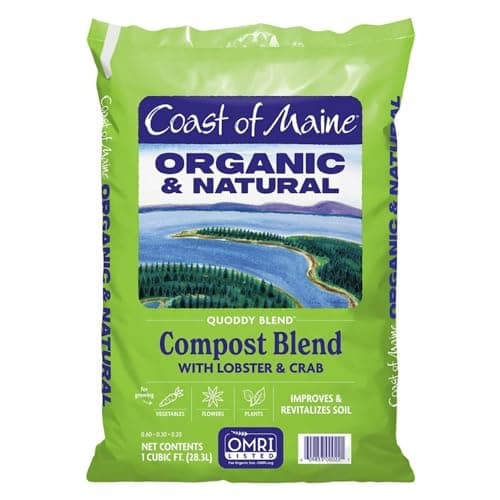
Coast of Maine Quoddy Blend Lobster Compost
A finished compost for topdressing thin or compacted areas with organic matter worms can process.

MySoil Soil Test Kit
A mail-in lab test that reports pH and 13 nutrients with lawn specific rates.
Conclusion: Let Earthworms Do More of the Work in Your Lawn
Earthworms are a central part of how lawns build and maintain healthy soil. Their burrows improve aeration and drainage, their castings enhance nutrient availability and microbial life, and their feeding habits help control thatch and surface organic buildup. When you manage mowing, watering, fertility, and soil amendments to support worms, you shift much of the hard work of soil improvement from your equipment to these natural tillers.
To capitalize on how earthworms help lawn soil, start by testing your soil, adjusting pH and organic matter, and adopting practices like returning clippings and mulching leaves. Over the next 2 to 3 seasons, monitor worm activity, infiltration, and turf response. For more detailed guidance on dialing in your program, explore related resources such as How to Test Your Lawn's Soil, Best Fertilizers for Lawns, Organic vs Synthetic Fertilizers, How to Improve Soil pH for Grass, and Composting for a Healthier Lawn. With a soil focused plan, you can let earthworms quietly build the foundation of a thicker, more resilient lawn.
Top Picks
- HSLGOVE 7-in-1 Soil Test KitCheck price on Amazon
- Simple Lawn Solutions Liquid Soil LoosenerCheck price on Amazon
- MySoil Soil Test KitCheck price on Amazon
As an Amazon Associate we earn from qualifying purchases.
Free Lawn Care Tools
Yes. Earthworms are one of the best free resources a lawn can have. Their burrows aerate the soil and improve drainage, their castings concentrate nutrients and beneficial microbes, and their feeding reduces thatch buildup. A healthy lawn typically supports 25 to 50 worms per square foot in the top 6 inches of soil. The only downsides are cosmetic: castings and mounds can make the surface look messy or feel bumpy in spring and fall, and both are easy to manage without harming the worms.
Earthworms do not eat live grass roots in the way that white grubs do. They consume dead or decaying organic matter. Confusion arises because both earthworms and grubs live in soil, and homeowners sometimes see worms while investigating brown patches.
No. Earthworms do not eat living grass blades or grass roots. They feed on dead and decaying organic matter such as grass clippings, fallen leaves, thatch, and old roots, which they convert into nutrient-rich castings. If your grass is dying and the sod peels back easily, the culprit is almost always white grubs chewing live roots, not the earthworms you happen to find in the same soil.
Manage the surface, not the worms. Let castings and mounds dry for a day or two, then break them up and spread them with a stiff broom, rake, or drag mat. Raise your mowing height, water deeply but less often so the surface dries between waterings, and level bumpy areas gradually with light compost or sand topdressing. Do not reach for a pesticide: no products are labeled for earthworm control in home lawns, so killing worms is an off-label use that can be illegal and would destroy the free aeration and fertility they provide.
A healthy worm population usually shows up as occasional worms when you dig 4 to 6 inches into the soil, plus small soil castings or pellets on the surface in spring and fall. Lawns with good worm activity also tend to drain well, with little puddling after a 0.5 to 1 inch rainfall. In many cases, you can expect 25 to 50 worms per square foot in the upper 6 inches of soil when organic matter, pH, and moisture are in a good range. Very compacted or chemically stressed lawns may have fewer than 5 worms per square foot.
Earthworms thrive in moist but not waterlogged soil, with moisture close to field capacity rather than bone dry or saturated. They prefer a pH between about 6.0 and 7.0 and moderate organic matter in the 2 to 5 percent range, supplied by grass clippings, leaves, and compost. Minimal deep tillage and reduced heavy traffic also help maintain their burrows and habitat. When these conditions are in place, worm numbers and activity usually increase on their own.
Overuse of certain broad-spectrum insecticides can reduce earthworm and other non-target insect populations for a season or longer, depending on the product and rate. Repeated applications for grub or surface insect control are especially risky for worm numbers. Choosing more targeted products and following integrated pest management practices helps protect beneficial soil life. Limiting pesticide use to clearly needed situations is one of the best ways to keep worm populations strong.
Most lawns do not need worms added; they already have some present even if you rarely see them. In many cases, improving habitat with better moisture management, organic matter, and pH will naturally increase existing populations. Bought worms often do not survive long-term if conditions are not right, so money is better spent on improving soil health. When the environment is favorable, worms will multiply and do more of the aeration and nutrient cycling work for you.
Small dirt mounds with no open holes beside them are earthworm castings, the digested soil worms push to the surface as they feed near the top few inches. They show up most after rain in spring and fall and are harmless, even mildly fertilizing. Let them dry, then rake or drag a broom across them to smooth the surface. Volcano-shaped mounds with a central hole, or raised tunnels, point to ants or moles instead. For a full plan, see our guide on how to deal with earthworm castings.
Photos: Rachel Claire / Pexels, Ale Alianza / Pexels

Beat weeds and brown spots from your phone
Snap a photo, get the fix, and follow a plan timed to your soil and weather. Free on iPhone.