Pre-Emergent Timing: When to Apply by ZIP Code and Soil Temperature
 Sarah MitchellLawn Diagnostics Specialist | 12 Years
As an Amazon Associate we earn from qualifying purchases.
Apply pre-emergent herbicide when soil temperatures at a 4-inch depth reach 55°F for 3 to 5 consecutive days. For most regions, that's late February to early April for the first application. A second split application goes down 6 to 8 weeks later. Use our Herbicide Timing Calculator to get the exact timing for your ZIP code.
Stop Looking at the Calendar. Start Checking the Soil.
Every year, I see the same question pop up in lawn forums around February: "When should I put down pre-emergent?" And every year, the most common answers are calendar dates. "Put it down around St. Patrick's Day." "Wait until the forsythia blooms." "Tax Day is pre-emergent day."
These rules of thumb aren't terrible, but they're imprecise. And with pre-emergent herbicides, precision matters. Apply too early and the product breaks down before crabgrass actually germinates. Apply too late and the weeds are already growing beneath the surface where pre-emergent can't touch them.
The answer is soil temperature. Specifically, 55°F at a 4-inch depth, sustained for 3 to 5 consecutive days. That's the trigger point for crabgrass germination, and that's when your pre-emergent barrier needs to be in place.
Why 55°F Is the Magic Number
Crabgrass seeds start germinating when soil temperatures reach 55°F and hold there consistently. This has been confirmed by decades of university research across turfgrass programs at Purdue, Penn State, Michigan State, and others.
Here's what's important to understand: crabgrass doesn't germinate all at once. It germinates in waves over several weeks as soil temperatures continue to rise. That first flush at 55°F is just the beginning. Seeds in shadier spots, north-facing slopes, or areas with heavier mulch will germinate later as their microclimate warms up.
This is exactly why timing and product selection both matter. You need a pre-emergent that's in place before that 55°F threshold and that provides long enough residual control to catch the later germination waves too.
Regional Timing Guide
Soil temperatures don't follow state lines perfectly, but here's a general framework to get you in the ballpark:
Southern States (FL, Gulf Coast, South TX, Southern CA)
Soil temps hit 55°F early, sometimes as early as mid-January to February. In South Florida, you might need pre-emergent year-round because crabgrass never truly stops germinating. First application: late January to mid-February.
Mid-South and Transition Zone (GA, SC, NC, TN, AR, OK, North TX)
The 55°F threshold typically arrives in late February to mid-March. This is where forsythia bloom timing actually correlates pretty well with soil temperature. First application: early to mid-March.
Mid-Atlantic and Lower Midwest (VA, MD, DE, KY, MO, southern IN, southern OH)
Mid-March to early April is typical. Urban areas with more concrete and asphalt tend to warm faster than rural areas. First application: late March to early April.
Northern States (PA, NJ, NY, New England, MI, WI, MN, IA)
Late April to early May for many northern locations. Don't let a warm March week fool you. Wait for sustained warmth at the 4-inch depth. First application: mid-April to early May.
These are guidelines, not gospel. Your specific location could be a week or two earlier or later. That's why checking actual soil temperature (or using a tool that does it for you) is so much more reliable.
The Split Application Strategy
Most pre-emergent products provide 8 to 12 weeks of weed control. Crabgrass can germinate over a period of 12 to 16 weeks as soil temperatures rise through spring and into early summer. See the problem?
A single application might not last long enough to catch those later germination waves. That's where split applications come in.
Instead of putting down the full rate in one shot, you apply half the rate at the initial 55°F trigger, then apply the second half 6 to 8 weeks later. This extends your total window of protection and catches both early and late germinators.
Split Application Timeline Example
- First application: When soil temps first hit 55°F consistently (e.g., mid-March in the transition zone)
- Second application: 6 to 8 weeks later (e.g., early to mid-May)
Not every product label supports split applications, so always read the label. Products containing prodiamine (Barricade) and dithiopyr (Dimension) are commonly used in split application programs.
What Happens If You Apply Too Early?
Pre-emergent herbicides work by creating a chemical barrier in the top layer of soil. As weed seeds germinate and send out their first roots and shoots, they contact this barrier and die.
But that barrier doesn't last forever. Rain, irrigation, microbial activity, and UV exposure all break it down over time. If you apply in early February and crabgrass doesn't germinate until late April, your barrier might be mostly gone by the time it's needed.
The result? You spent money on a product that gave you a false sense of security while crabgrass quietly moved in anyway.
What Happens If You Apply Too Late?
This is actually worse than applying too early. Once crabgrass has germinated and pushed through the soil surface, pre-emergent herbicides can't kill it. The word "pre-emergent" is literal. It only works before emergence.
If you're seeing crabgrass plants in your lawn, you've missed the pre-emergent window and need to switch to a post-emergent strategy. Products containing quinclorac or fenoxaprop can target crabgrass after it's already growing, but they're less effective and more work than prevention.
For more on weed control strategies, our guide on Common Lawn Weeds and How to Remove Them covers both pre-emergent and post-emergent approaches.
Pre-Emergent and Seeding: The Conflict
Here's a common frustration: pre-emergent herbicides don't distinguish between weed seeds and grass seeds. If you apply pre-emergent and then try to overseed, your grass seed won't germinate either.
General rules to navigate this:
- If you plan to overseed in spring, skip the pre-emergent in that area. Accept that you'll have some weed pressure and manage it with post-emergent products later.
- If you seeded in fall, most pre-emergent products are safe to apply the following spring as long as the new grass has been mowed at least 2 to 3 times.
- Mesotrione (Tenacity) is an exception. It can be applied at seeding time for certain grass types because it works differently than traditional pre-emergents.
Choosing the Right Product
The two most common pre-emergent active ingredients for residential lawns are:
- Prodiamine (Barricade): Longest residual control (up to 6 months at full rate). Great for single applications. Yellow granular form is widely available.
- Dithiopyr (Dimension): Slightly shorter residual but offers a small window of early post-emergent activity. Can kill crabgrass that has just germinated (up to the first tiller stage).
Both are effective. Prodiamine is generally preferred for split applications because of its longer residual. Dithiopyr gives you a bit of forgiveness if you're slightly late.
For a deeper look at product options, check out our Weed and Feed Application Guide and our detailed Granular Pre-Emergent Herbicide Guide.
Recommended products
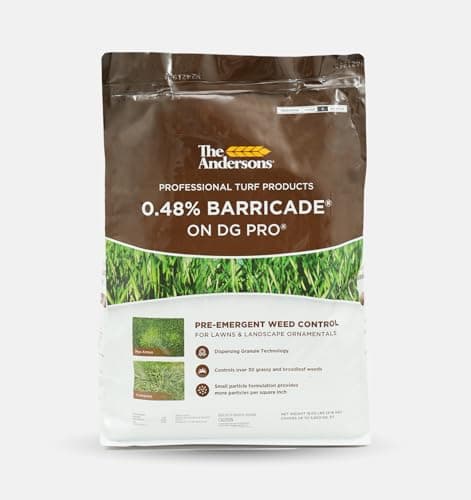
The Andersons Barricade Professional-Grade Prodiamine
A granular prodiamine with the longest residual of the common residential actives, often three to four months per application.
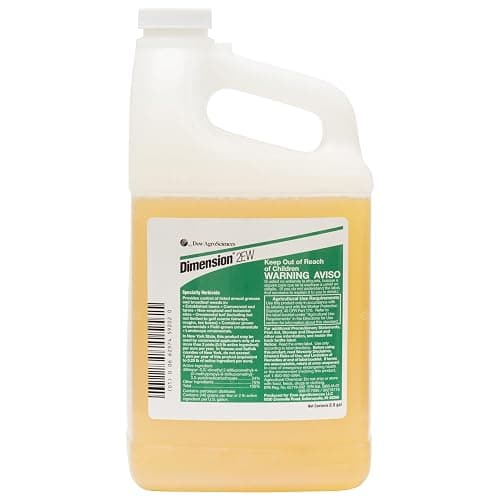
Dimension 2EW Herbicide
A dithiopyr concentrate with limited early post-emergent activity on crabgrass seedlings.
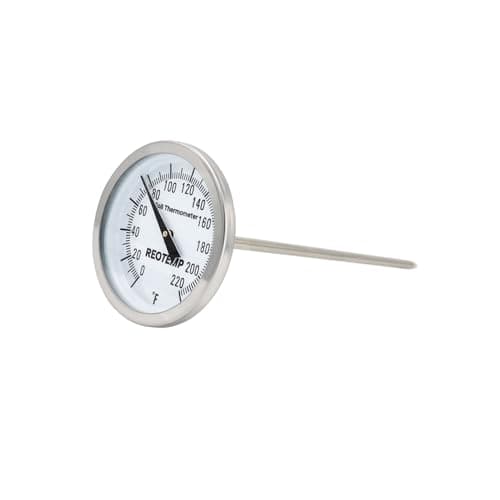
REOTEMP Waterproof Soil Thermometer
A five-inch stem thermometer for checking the 55 degree threshold at two inches deep.
Common Mistakes to Avoid
- Applying based on air temperature. Air temps can swing 20°F in a day. Soil temperature at 4 inches is much more stable and is what actually triggers germination.
- Forgetting to water it in. Most granular pre-emergents need 0.5 inches of water or rain within 24 to 48 hours of application to activate. Skip this step and the product sits on top of the grass doing nothing.
- Skipping fall pre-emergent. Poa annua (annual bluegrass) germinates in fall when soil temps drop below 70°F. A September application handles this common weed, and our fall pre-emergent timing guide gives the window by region.
- Not calibrating your spreader. Too little product leaves gaps in coverage. Too much can stress your lawn or exceed label rates (which is illegal).
Get Your Exact Application Date
Instead of guessing, plug your ZIP code into our Herbicide Timing Calculator. It tracks real-time soil temperature data for your area and tells you exactly when the 55°F threshold is approaching. You'll get a recommended first application date and a second application date for split treatments.
Pre-emergent timing is one of those things where being a week early is fine, but being a week late can mean crabgrass all summer. Take the guesswork out of it and let the data guide your decision.
Free Lawn Care Tools
Crabgrass begins germinating when soil temperatures at a 4-inch depth reach 55°F and hold there consistently for 3 to 5 days. This is the threshold you should use to time your pre-emergent application, rather than relying on calendar dates which vary by region and year.
Generally no. Pre-emergent herbicides prevent all seeds from germinating, including grass seed. If you need to overseed, skip pre-emergent in that area or use mesotrione (Tenacity), which is one of the few products that can be applied at seeding time for certain grass types.
If crabgrass has already germinated and emerged from the soil, pre-emergent herbicides will not kill it. You would need to switch to a post-emergent herbicide containing quinclorac or fenoxaprop to treat actively growing crabgrass.
Split applications generally provide better season-long coverage. Apply half the labeled rate when soil temps first reach 55°F, then apply the second half 6 to 8 weeks later. This extends your protection window to cover the full crabgrass germination period, which can span 12 to 16 weeks.

Your lawn plan, in your pocket all season
Grass ID, a season plan, soil-timed reminders, and a lawn journal that remembers what you did. Free on iPhone.
Related Articles
 Weed Control
Is Scotts Weed and Feed a Pre-Emergent? (Short Answer: No)
Mar 31, 2026•7 min read Weed Control
Tenacity Herbicide (Mesotrione) Application Guide for Cool-Season Lawns
May 3, 2026•11 min read Weed Control
Scotts Weed and Feed: Free Printable Application Guide & Instructions
May 3, 2026•7 min read