Buffalograss Guide
 Sarah MitchellLawn Diagnostics Specialist | 12 Years
As an Amazon Associate we earn from qualifying purchases.
Patchy, thirsty lawns in hot, dry summers usually point to a simple mismatch between grass type and climate. Buffalograss solves that problem in many warm, dry regions because it is adapted to heat, drought, and low-input care, instead of fighting against them. For the full pillar reference covering identification, zones, characteristics, and year-round care, see the complete Buffalograss guide.
This buffalograss guide explains where it thrives, how it behaves through the year, and what it realistically looks like when managed with minimal water, mowing, and fertilizer. By the end, you should be able to diagnose whether buffalograss fits your yard and choose the right way to install and maintain it with far less guesswork than most homeowners face.
If you live in a sunny, warm-summer area where cool-season lawns constantly brown out or need heavy irrigation, buffalograss is likely a better match. Confirm suitability by checking three basics: you should get at least 6 hours of direct sun, have reasonably well-drained soil, and experience hot summers where warm-season grasses like bermudagrass or zoysiagrass are already common.
The quickest way to start a buffalograss lawn is with sod or plugs in late spring once soil temperatures are consistently above 60°F, especially if you want full coverage within a few months. Seed is cheaper but slower, and it demands strict weed control and consistent light irrigation during the first 4 to 6 weeks. Avoid heavy nitrogen fertilization or frequent watering after establishment, because buffalograss performs best under lean, low-input conditions.
Under good conditions, a sodded or plugged buffalograss yard usually fills in within one growing season, while seeded lawns often take most of the first summer to knit together. From there, routine mowing every 2 to 4 weeks at 3 to 4 inches, one or two light fertilizations per year, and deep, infrequent irrigation (or sometimes no irrigation at all) are usually enough to keep the lawn functional and attractive.
Understanding Buffalograss: Basics, Benefits, and Drawbacks
What Is Buffalograss?
Buffalograss (Bouteloua dactyloides) is a warm-season, perennial grass native to the shortgrass prairies of North America. Its native range runs through the Great Plains, from parts of Canada down into Mexico, which means it evolved under conditions of intense summer heat, periodic drought, and grazing pressure.
As a warm-season grass, buffalograss grows most actively when soil temperatures are roughly 65 to 90°F. In most regions this means it greens up in late spring, peaks in summer, and then goes naturally dormant and brown after the first hard frosts or when soil temperatures drop below about 50°F. This dormancy is normal and is one of the main visual differences homeowners notice if they are used to cool-season grasses that stay greener longer into fall.
Compared with other turfgrasses, buffalograss forms a relatively fine to medium-textured turf with narrow blades and a soft feel when well maintained. It spreads by stolons (above-ground runners) and can create a dense, carpet-like surface. However, it generally has a more relaxed, natural appearance than intensively managed bluegrass or bermudagrass lawns.
Here is how it compares to some common turf species:
- Buffalograss vs Kentucky bluegrass: Kentucky bluegrass offers a darker green, more uniform appearance in cool climates, but it is far more water- and fertilizer-hungry and struggles in sustained summer heat. Buffalograss uses significantly less water, tolerates heat far better, and prefers low nitrogen, but it will go fully dormant and tan in cold winters.
- Buffalograss vs bermudagrass: Bermudagrass is more aggressive, has higher traffic tolerance, and recovers faster from damage. Buffalograss is less invasive, easier to keep in bounds, and generally needs less mowing and fertilization, but it is not as tough for sports or heavy play areas.
- Buffalograss vs zoysiagrass: Zoysia can create a dense, carpet-like lawn with good wear tolerance, but it often needs more fertility and can be slow to green up. Buffalograss thrives under lean conditions and is more drought efficient, with a lighter green color and a softer, prairie-style look.
- Kansas State University turf publications note that buffalograss can survive on as little as 25 to 50 percent of the irrigation required by cool-season grasses in the central Great Plains.
- Colorado State University research indicates that buffalograss maintained at 2 to 3 inches with 1 to 2 pounds of nitrogen per 1,000 square feet per year can form an acceptable low-maintenance turf in many semi-arid regions.
Key Benefits of Buffalograss Lawns
The main reason homeowners and property managers consider buffalograss is its efficiency under stress. Several benefits stand out when compared with traditional cool-season lawns.
Water efficiency and drought resistance
Buffalograss develops a deep, fibrous root system that allows it to access moisture well below the surface. In its native range, it survives prolonged dry periods that would severely damage or kill many turf species. In a residential setting, this translates into much lower irrigation needs.
- In many semi-arid or central Great Plains climates, a buffalograss lawn can remain functional with as little as 0.5 inch of supplemental water per week in summer, or sometimes no irrigation beyond natural rainfall once established.
- Cool-season grasses in the same environment often need 1 to 1.5 inches of water per week to stay green through peak summer heat.
This difference can cut outdoor water use dramatically, especially during drought restrictions.
Low mowing and lower inputs
Buffalograss grows more slowly in height than aggressive warm-season grasses like bermuda. Under typical home-lawn fertility, mowing every 2 to 4 weeks at 3 to 4 inches is often sufficient. In very low-input situations, some homeowners even mow only once a month and accept a more natural look.
Fertilizer needs are modest. Many cultivars perform well with 1 to 2 pounds of nitrogen per 1,000 square feet per year, applied in late spring or early summer. Over-fertilizing tends to increase thatch and weeds rather than improving turf quality. This low-input requirement reduces both cost and environmental impact.
Environmental and ecological benefits
Because buffalograss is native to much of North America, it fits naturally into local ecosystems. It supports native insects and soil organisms, and it is adapted to local climate extremes. With its low nutrient requirements and general tolerance of pests, it often needs fewer pesticide and herbicide inputs than demanding cool-season lawns.
In landscapes focused on sustainability, buffalograss can function as a living groundcover that uses limited water and fertilizer while still providing erosion control and a usable lawn surface.
Aesthetic flexibility
Buffalograss can be managed in two main style directions:
- A more manicured look with regular mowing at 2.5 to 3 inches, light fertilization, and occasional irrigation.
- A natural prairie style, where mowing is infrequent, fertility is minimal, and the grass forms a soft, gently flowing surface that blends with native plantings.
This flexibility makes it a good fit for homeowners who do not need a golf-course aesthetic but still want a cohesive, intentional appearance.
Potential Drawbacks and Limitations
Buffalograss is not a universal solution. Several limitations need to be considered before you commit to a full-lawn conversion.
Climate limitations
Buffalograss performs best in regions with hot summers and relatively dry conditions. It struggles in cool, humid, or very wet climates because extended leaf wetness and fungal pressure can degrade turf quality. In far northern areas with short growing seasons, it may not fully establish or may green up very late in spring.
Shade is another limiting factor. Buffalograss typically needs at least 6 to 8 hours of direct sun per day. Under trees, between buildings, or in narrow side yards with high fences, it often thins out or fails completely.
Seasonal dormancy and winter color
Because it is a warm-season grass, buffalograss will go dormant and tan in winter. In many climates this occurs from late fall through early to mid-spring. For homeowners used to the year-round green of some cool-season species, this seasonal color shift can be a drawback. It is not a sign of death, but it does require an adjustment in expectations.
Weeds and competition during establishment
Especially when seeded, buffalograss establishes slowly compared with aggressive annual weeds. If pre-plant weed control is not thorough and post-plant management is not carefully timed, broadleaf and grassy weeds can outcompete the young buffalograss seedlings.
This means you need a dedicated establishment plan, including soil preparation, weed suppression, and proper seeding or planting timing. Once mature and dense, buffalograss resists weed invasion better, but the first year is critical.
Limited shade and traffic tolerance
Buffalograss is not ideal for heavily used sports fields, dog runs, or intensely trafficked play areas. While it can handle moderate use, it does not recover as quickly from wear as bermudagrass or some zoysia varieties. In significant shade it usually fails, so mixed landscapes often combine buffalograss in sunny sections with shade-tolerant groundcovers under trees.
Managing expectations
A buffalograss lawn is best seen as a low-input, climate-appropriate groundcover rather than a high-input showpiece. If your goal is a perfect, dark green, uniformly clipped surface similar to a cool-season golf fairway, buffalograss will likely disappoint. If your priority is a functional, durable, low-maintenance lawn that stays alive through heat and drought with minimal care, it is often an excellent choice.
Is Buffalograss Right for Your Yard?
Ideal Climate Zones for Buffalograss
Climate fit is the first and most important filter. Buffalograss performs best in areas with warm to hot summers and moderate to low humidity.
General climate suitability
In terms of USDA hardiness, buffalograss is generally suitable from about Zone 4 to Zone 8, depending on cultivar, but hardiness alone is not enough. You also need enough summer heat for strong growth. In regions with cool, cloudy summers, buffalograss may survive but will not perform as a quality lawn.
Where warm-season grasses like bermudagrass, zoysia, or St. Augustine are common, buffalograss usually fits well from a temperature perspective, especially in the central and interior western United States.
Regional notes
- Great Plains and central U.S.: This is the natural stronghold for buffalograss. From Texas and Oklahoma north through Kansas, Nebraska, and into parts of the Dakotas and Colorado, buffalograss aligns with the native climate and often delivers excellent results with minimal irrigation.
- Transition zone: In states where both warm-season and cool-season grasses are used (for example, Missouri, Kentucky, parts of Virginia), buffalograss can be a good low-input option on sunny sites, although winter dormancy color needs to be accepted.
- Humid coastal and far-northern climates: In the Southeast and Gulf Coast with intense humidity and disease pressure, or in far northern states and Canada with short summers, buffalograss tends to be less reliable. Disease, excessive thatch, and slow spring green-up are common complaints in these regions.
- Texas A&M turf specialists note that buffalograss is best suited to low-input lawns in full sun across much of central and western Texas, but it is less reliable in the humid eastern part of the state.
- Colorado State University publications caution that buffalograss lawns in shade or high traffic areas often fail, recommending at least 6 hours of direct sun and limited heavy wear.
Site Conditions: Light, Soil, and Drainage
Even in the right climate region, on-the-ground site conditions determine how well buffalograss will perform.
Sunlight requirements
Buffalograss generally needs a minimum of 6 hours of direct sun per day, with 8 hours preferred for dense, high-quality turf. If you see existing turf or weeds struggling in shade, buffalograss is unlikely to do better there. You can verify this by tracking sun exposure on a typical summer day and noting when full sun hits each portion of the yard.
Soil preferences
Buffalograss is relatively tolerant of different soil textures, from sandy loams to clays, provided the site drains reasonably well. It tends to perform best in soils with moderate to low fertility, where aggressive weeds are less dominant.
- Soil pH: Buffalograss typically grows well in a pH range of about 6.0 to 8.0, which covers most neutral to slightly alkaline soils in the Great Plains and interior West.
- Salinity: Some cultivars show moderate tolerance to saline conditions compared with more sensitive cool-season species.
A soil test before planting helps determine if any major nutrient or pH corrections are needed. For more detail on this step, see How to Test Your Soil.
Drainage and compaction
Buffalograss does not perform well in waterlogged or persistently saturated soils. Poor drainage favors diseases and root decline. If puddles persist for more than 24 hours after a heavy rain, or if a screwdriver cannot be pushed 4 to 6 inches into the soil without significant effort, compaction and drainage issues are likely.
In these cases, core aeration and soil amendment may be needed before establishment. Our Lawn Aeration Guide and How to Improve Clay Soil for Lawns provide step-by-step options for improving infiltration and root penetration.
Buffalograss vs Other Low-Maintenance Lawn Alternatives
Buffalograss is one of several low-maintenance lawn strategies. Choosing between them requires matching your priorities with each option's strengths.
Buffalograss vs no-mow fescue mixes
No-mow or fine fescue mixes are cool-season grasses that prefer cooler, often shadier environments. They are often used in northern climates and can tolerate partial shade. They usually stay greener into fall and early spring but require more water in hot, dry summers than buffalograss.
If you live in a cool, shady region, a no-mow fescue mix may be better suited. In hot, sunny, drought-prone climates, buffalograss usually has the advantage.
Buffalograss vs native meadow or wildflower lawns
Meadow or wildflower lawns maximize biodiversity and visual variety. However, they are not typically walkable in the same way as turf, and they have different mowing and management patterns. Buffalograss offers a more traditional lawn function with lower species diversity but higher usability and easier footing.
Buffalograss vs clover or microclover lawns
Clover lawns and microclover blends offer nitrogen fixation, pollinator habitat, and a soft, green appearance, often with less mowing. They still usually need more water in hot climates than buffalograss and are better suited to temperate regions. Clover also tends to thin in heavy foot traffic.
Decision checklist
You can narrow your choice with a few questions:
- Is your top priority lowest possible maintenance, deep green color, barefoot feel, or maximum biodiversity?
- Will the lawn be irrigated regularly, lightly supplemented, or rely almost entirely on rainfall?
- Do you need a dense, walkable surface across most of the yard, or can some areas be ornamental or meadow style?
- How much winter-green color is truly important to you, and are you comfortable with seasonal dormancy?
If you want the lowest water use, accept seasonal browning, and have a sunny site, buffalograss usually ranks near the top of the list.
Buffalograss Types and Cultivars: Choosing the Right Variety
Seeded vs Vegetative (Sod/Plugs)
Once you decide buffalograss fits your site, the next step is choosing how to establish it. There are two primary options: seeded varieties and vegetative types (sod or plugs).
Seeded buffalograss
Seeded cultivars are generally more affordable for large areas and allow for do-it-yourself installation. They are typically unisex (female) or mixed-gender selections bred for turf quality and density. However, seed establishment is slow and sensitive to weed competition.
- Best for: Budget-conscious projects, larger open areas, and patient DIY installers.
- Requirements: Thorough seedbed preparation, strict weed control, and consistent light irrigation for 4 to 6 weeks after seeding.
Vegetative buffalograss (sod or plugs)
Vegetative cultivars are often higher quality, selected for improved density, color, or cold tolerance. They are installed as sod or plugs because they do not produce viable seed that matches parental traits.
- Best for: Homeowners who want faster coverage, more uniform turf, and less weed pressure in the first season.
- Requirements: Higher up-front cost and careful watering in the first few weeks to root the sod or plugs.
In practice, many homeowners choose sod or plugs for front yards where appearance matters most and use seed in backyards or low-visibility areas to control cost.
Common Buffalograss Cultivars and Selection Factors
Specific cultivar suitability varies by region. When comparing varieties, consider:
- Cold tolerance for northern or higher-elevation sites.
- Color and density where aesthetics are important.
- Leaf texture, which influences barefoot comfort and visual fineness.
- Growth habit, which affects mowing frequency and thatch accumulation.
Because new cultivars are introduced periodically and local trials differ, it is best to consult local extension recommendations or reputable sod farms for current, region-tested varieties. Ask specifically which cultivars are used most often in your county and why.
How to Establish a Buffalograss Lawn
Timing: When to Plant
Timing is one of the most critical factors in successful buffalograss establishment. As a warm-season grass, it needs warm soil to germinate and root.
- Ideal soil temperature: At least 60°F at a 2-inch depth, preferably 65 to 70°F for seeding, which often corresponds to late spring to early summer.
- Typical calendar window: In many regions, this means May through July, but local conditions matter more than the calendar.
If you plant too early, seed germination is slow and vulnerable to disease and rot. If you plant too late, the grass may not develop enough root depth before fall cool-down to survive the first winter well.
Site Prep and Weed Control
Thorough site preparation is non-negotiable, especially for seeded buffalograss.

- Test the soil 4 to 8 weeks before planting to identify pH or nutrient issues. Adjust lime or major deficiencies based on recommendations in How to Test Your Soil.
- Kill existing vegetation using either repeated shallow tillage or a non-selective herbicide according to label directions. The goal is to remove aggressive perennials and annuals that will compete with young buffalograss.
- Prepare the seedbed by lightly tilling or power raking to loosen the top 2 to 3 inches, then rake smooth and remove debris. Avoid leaving large clods, which reduce seed-to-soil contact.
- Address compaction with core aeration in heavily trafficked areas if a screwdriver test shows resistance at less than 4 inches depth.
For sod or plugs, the same basic preparation applies, but weed pressure is less critical because the vegetative material covers or outruns many weed seedlings.
Seeding, Sodding, or Plugging Rates and Steps
Seeding buffalograss
Seeding rates vary by cultivar and seed quality, but a common range is 1 to 3 pounds of pure live seed per 1,000 square feet. Higher rates provide faster coverage but increase cost.
- Broadcast seed evenly using a drop or rotary spreader set for the appropriate rate.
- Lightly rake or drag the area so that seed is incorporated into the top 0.25 to 0.5 inch of soil.
- Roll with a lawn roller or simply walk over the area to firm the seedbed and improve seed-to-soil contact.
- Apply a light mulch, such as clean straw at about 1 bale per 1,000 square feet, to reduce erosion and moisture loss.
Installing buffalograss sod
Sod installation is similar to other turf species but is best done on a well-prepared, lightly moistened seedbed.
- Lay sod in a brickwork pattern, staggering joints, and butt edges tightly without stretching.
- Trim edges with a knife or spade, avoiding gaps or overlapping.
- Roll the sod to ensure contact with the soil and eliminate air pockets.
- Water immediately so soil beneath the sod is moist to a depth of 4 to 6 inches.
Planting plugs
Plugs are small pieces of vegetative buffalograss spaced across the lawn area.
- Use a plugger or small shovel to plant plugs 6 to 18 inches apart, depending on desired fill-in speed and budget.
- Firm soil around each plug and water well.
- Expect 1 full growing season for close spacing, or 1 to 2 seasons for wider spacing, to achieve full coverage.
Watering and Early Care
Initial watering is different from long-term irrigation.
- First 2 to 3 weeks (seed): Keep the top 0.5 to 1 inch of soil consistently moist with light, frequent watering 2 to 4 times per day, avoiding puddling.
- Weeks 3 to 6 (seed): Gradually reduce frequency and increase depth, aiming for 0.5 inch of water per application, 2 to 3 times per week, depending on weather.
- First 2 to 3 weeks (sod/plugs): Water enough so soil stays evenly moist to a depth of 4 to 6 inches. Typically this means daily irrigation early on, tapering as roots establish.
After the first 6 to 8 weeks, begin transitioning to deep, infrequent irrigation. The long-term goal is to water only when the lawn shows early drought stress signs such as slight bluish color or footprints that linger, then irrigate 0.5 to 1 inch in a single session.
Recommended products
Outsidepride Perennial Buffalo Grass Seed
A seeded buffalograss for large areas where plugs would be impractical.
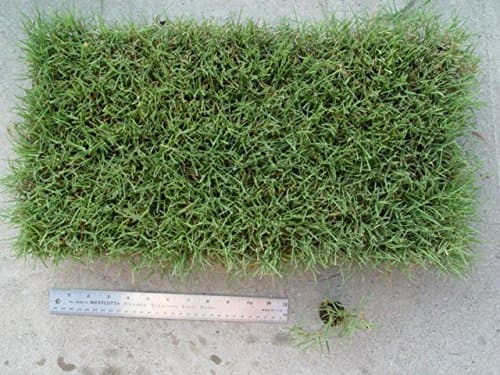
UC Verde Buffalograss Plugs
Vegetative plugs of a finer, denser cultivar than most seeded types.
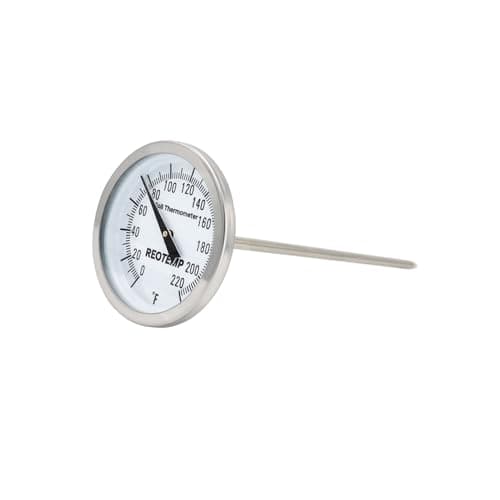
REOTEMP Waterproof Soil Thermometer
A 5-inch probe for confirming soil temperature before you seed or plug.
Maintaining Buffalograss Year-Round
Mowing Practices
Proper mowing keeps buffalograss healthy and manageable without turning it into a high-input lawn.
- Height of cut: For most home lawns, 3 to 4 inches is ideal. Some cultivars can be maintained slightly lower, but very low mowing (below about 2 inches) increases stress and weed invasion.
- Frequency: During peak summer growth, mowing every 2 weeks is often enough. In low-input situations, you may stretch to 3 or even 4 weeks, accepting a more natural look.
- Clipping management: Leave clippings on the lawn if they are short and spread evenly; they recycle nutrients and organic matter without contributing significantly to thatch when mowing height and fertility are in range.
Fertilizing Buffalograss
Over-fertilization is a common mistake that leads to excessive top growth, thatch buildup, and weed issues. Buffalograss is adapted to lean conditions.
- Annual nitrogen rate: 1 to 2 pounds of nitrogen per 1,000 square feet per year is sufficient for most home lawns.
- Timing: Apply fertilizer once or twice in late spring to mid-summer when the grass is actively growing. Avoid late summer or fall applications because they can push tender growth before dormancy.
- Product selection: Use slow-release or natural-source fertilizers where possible to reduce surge growth. A balanced product with modest nitrogen percentage is usually adequate.
Base phosphorus and potassium on your soil test results rather than guessing. Too much phosphorus can contribute to environmental issues, while potassium supports stress tolerance.
Watering Strategy After Establishment
Once buffalograss is established, the goal is to encourage deep rooting and drought resilience.
- Water only when signs of drought stress appear, such as dulling of color, minor leaf rolling, or footprints that remain visible for several minutes.
- When you do irrigate, apply enough water to soak the soil 6 inches deep. In many soils, this translates to about 0.75 to 1 inch of water per irrigation.
- In many semi-arid climates, this may mean irrigating once every 7 to 14 days in summer, or even less often, especially if rainfall contributes.
If you prefer a more natural, semi-dormant summer look, you can reduce irrigation further and let the lawn partially brown. Buffalograss usually recovers well once rain returns.
Weed, Pest, and Disease Management
A dense, healthy buffalograss stand resists many problems, but some issues can arise.
Weeds
Broadleaf weeds are the most common concern, especially in thin or newly established turf. If you see scattered broadleaf weeds in an otherwise healthy buffalograss stand, a post-emergent herbicide labeled for use on buffalograss can usually control them. Always confirm product compatibility, because some herbicides safe on cool-season grasses can injure warm-season species.
For pre-emergent control of annual weeds like crabgrass, choose products and application timing that do not interfere with seeding or seedling growth. In seeded lawns, many pre-emergents cannot be used until after the grass has been mowed at least two or three times. Check label directions carefully.
Pests and diseases
Compared with many turf species, buffalograss tends to have relatively few serious pest or disease problems in its adapted regions. Occasional insect or disease issues can occur, but they are less frequent under low-input management.
If you notice unusual patches of yellowing, thinning, or dead turf that cannot be explained by drought or traffic, confirm the cause before treating. This might involve digging small sections to inspect roots for grubs or consulting local extension diagnostics for disease identification.
Seasonal Calendar for Buffalograss Care
A rough annual schedule helps you plan maintenance efficiently.
- Spring (soil temps rising above 50°F): Rake debris, assess winter injury, plan any overseeding or plug infill, and complete soil testing if needed.
- Late spring to early summer: Primary planting window for new lawns; first fertilizer application; begin regular mowing as growth accelerates.
- Mid to late summer: Maintain mowing, apply deep, infrequent irrigation as needed, and spot-treat weeds if present.
- Fall: Gradually reduce mowing frequency as growth slows; avoid heavy nitrogen; allow the lawn to harden off for winter dormancy.
- Winter: Turf will be tan and dormant; avoid heavy traffic on frozen or saturated soil to minimize compaction and crown damage.
What Other Guides Miss: Common Mistakes to Avoid
Many buffalograss resources cover the basics but skip several practical details that determine success or failure.
Planting at the wrong temperature window
Some guides only mention calendar dates and ignore soil temperature. If you seed when soil is below about 60°F, germination is slow and uneven, which gives weeds a head start. Confirm by using a simple soil thermometer at 2 inches depth over several mornings. Wait until you consistently read 60 to 65°F before seeding for best results.

Overwatering and over-fertilizing
Homeowners accustomed to cool-season turf often continue high irrigation and fertilization habits with buffalograss. This typically leads to lanky growth, thatch, and more weeds, not a healthier lawn. A simple confirmation step is to measure your irrigation with catch cups; if you are putting out more than about 1 inch per week in summer on an established buffalograss lawn, you can usually cut back.
Ignoring shade thresholds
Guides sometimes understate how sun-loving buffalograss is. If you are unsure whether an area is too shady, track sunlight with a simple threshold test: on a clear day, note how many hours any part of the area receives full, unfiltered sun. If it is less than 6 hours, buffalograss will most likely thin over time, and you should plan for an alternative groundcover there.
Expecting cool-season lawn color and density
Another gap in many articles is managing expectations about appearance. Buffalograss will go brown in winter and may not match the dark green of fertilized bluegrass even at its peak. This is not a sign of poor health but a reflection of its genetics and low input nature. Comparing it mentally to a prairie-adapted, resilient groundcover rather than a golf green makes it easier to judge success accurately. For the full pillar reference covering identification, zones, characteristics, and a year-round care schedule, see the complete Buffalograss guide.
Conclusion: Is Buffalograss Right for Your Lawn?
If your lawn gets 6 or more hours of full sun, you live in a hot, dry climate, and you would rather mow twice a month than twice a week, buffalograss is one of the best low-input choices you can make. Just go in with the right expectations: a soft blue-green color, winter dormancy, and prairie-level toughness rather than golf-course density. Match the grass to the site, skip the heavy water and fertilizer, and buffalograss will quietly solve the patchy, thirsty lawn problem for good.
Top Picks
- Pennington Full Season Lawn Fertilizer 32-0-5Check price on Amazon
- Scotts Turf Builder Weed and Feed 3 (5,000 sq. ft.)Check price on Amazon
- Jonathan Green (10322) Black Beauty Ultra Grass Seed - Cool Season Lawn Seed (7 lb)Check price on Amazon
As an Amazon Associate we earn from qualifying purchases.
Free Lawn Care Tools
Buffalograss (Bouteloua dactyloides) is a warm-season, perennial grass native to the shortgrass prairies of North America. Its native range runs through the Great Plains, from parts of Canada down into Mexico, which means it evolved under conditions of intense summer heat, periodic drought, and grazing pressure.
Buffalograss is well suited to hot, dry regions because it evolved under intense summer heat and periodic drought. It can often stay functional with as little as 0.5 inch of supplemental water per week in summer, and in some semi-arid climates it can get by on natural rainfall once established. This makes it a strong option where cool-season lawns brown out or require heavy irrigation.
Buffalograss needs at least 6 hours of direct sunlight per day to perform well. It thrives in open, sunny sites and is not a good choice for heavily shaded yards. In full sun with well-drained soil and hot summers, it can form a dense, attractive turf with relatively low inputs.
Under good conditions, a lawn installed with buffalograss sod or plugs usually fills in within one growing season. Seeded buffalograss is slower and often takes most of the first summer to knit together, especially if weed control and light irrigation are not consistent during the first 4 to 6 weeks. Once established, the stolons help it spread and create a more continuous carpet.
Sod or plugs are the quickest ways to get a buffalograss lawn, especially when installed in late spring after soil temperatures reach at least 60°F. Sod offers almost instant coverage, while plugs are slower but still faster than seed. Seed is less expensive but requires strict early weed control and consistent light watering during establishment, and it typically takes longer to achieve full coverage.
Buffalograss generally only needs mowing every 2 to 4 weeks at a height of about 3 to 4 inches, and some low-input lawns are mowed as little as once a month. Fertilizer needs are also modest, with many lawns performing well on 1 to 2 pounds of nitrogen per 1,000 square feet per year, applied in late spring or early summer. Over-fertilizing or mowing too frequently tends to increase thatch and weeds rather than improving the lawn.
Photos: Engin Akyurt / Pexels, Tamara Elnova / Pexels

Beat weeds and brown spots from your phone
Snap a photo, get the fix, and follow a plan timed to your soil and weather. Free on iPhone.