

Mixed Cool-Season Blend vs Kentucky Bluegrass: Mix or Single Species?
Updated July 11, 2026
As an Amazon Associate we earn from qualifying purchases. Disclosure.
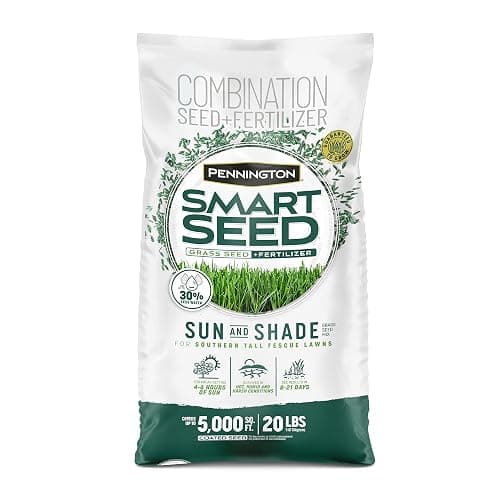
Walk the seed aisle in any northern state and this is the actual choice on the shelf: a bag labeled sun and shade mix, which is Kentucky bluegrass plus perennial ryegrass plus fescue in one blend, or a bag of straight Kentucky bluegrass. The mix is how most northern lawns get planted, and for good reason. The ryegrass is up in a week and holds the soil, the fescues carry the shady and dry corners, and the bluegrass slowly knits the whole thing together with its underground rhizomes.
Pure bluegrass is the specialist play. Seeded alone it takes two to four weeks just to germinate and a full season to fill in, and it wants more water, more fertilizer, and more sun than a mix. The payoff is the thing no blend can match: a single-species stand with perfectly uniform color and texture, the deep blue-green carpet lawns are judged against. The real question is whether you are planting a lawn to live on or a lawn to show off. Most people want the first and assume they want the second.
Quick verdict
The mixed blend wins for most northern lawns: faster establishment, built-in insurance across sun, shade, and drought, and less demanded of you. Pure Kentucky bluegrass wins when uniform showpiece appearance is the goal and you will pay for it in water, fertilizer, and patience.
Personalize for your ZIP
Enter a 5-digit ZIP and we'll highlight which grass fits your climate zone.
Mixed Cool-Season Blend vs Kentucky Bluegrass: at a glance
Climate zone (USDA)
What is in the bag
Sun requirement
Shade tolerance
Traffic tolerance
Drought tolerance
Cold tolerance
Uniformity of look
Germination speed
Establishment time
Mowing height
Annual nitrogen need
Water need (peak)
Spreading habit
Seeding risk
Maintenance level
APick the mixed blend if...
- Your lawn has a bit of everything: sunny stretches, tree shade, a dry slope. One bag covers all of it.
- You want visible grass within two weeks and a usable lawn within a month, not a season-long dirt patch.
- You are a first-time seeder and want the forgiving option that still looks great.
- You want lower water and fertilizer bills than a pure bluegrass lawn demands.
- Your lawn is for kids, dogs, and cookouts more than for admiring from the curb.
BPick pure Kentucky bluegrass if...
- You want the single most uniform, postcard-perfect cool-season lawn possible and will trade effort for it.
- Your whole lawn gets 6+ hours of direct sun with little or no shade.
- You can commit to regular irrigation and 4 or more fertilizer applications a year.
- You value self-repair: a pure KBG stand fills its own bare spots through rhizomes.
- You are patient enough for a slow first season in exchange for a decade of dense turf.
Top pick to grow each grass

As an Amazon Associate we earn from qualifying purchases. Disclosure.
Get your seasonal lawn care calendar for your ZIP
Every task, from feeding to weed control to aeration, has a window that shifts by region. Add your ZIP and we will email your 12-month lawn calendar right away, starting with this month.
Seasonal reminders and tips. No spam. Unsubscribe anytime.
Frequently asked questions
Is a grass seed mix better than pure Kentucky bluegrass?
For most northern lawns, yes. A mixed cool-season blend spreads risk: the perennial ryegrass establishes fast and takes traffic, the fescues handle shade and drier soil, and the Kentucky bluegrass fraction slowly adds density and self-repair. Pure bluegrass beats the mix on one axis only, perfectly uniform appearance, and it costs more water, more fertilizer, more sun, and a much slower start to get it. Choose the mix for a living lawn, pure KBG for a showpiece.
What is actually in a sun and shade grass seed mix?
A typical northern sun and shade mix is 30 to 50 percent fine fescue (the shade worker), 20 to 40 percent perennial ryegrass (the fast establisher), and 10 to 30 percent Kentucky bluegrass (the spreader that knits the stand together). Ratios vary by brand and price. Check the seed label on the back of the bag: it lists exact percentages by weight, plus germination rates and weed seed content, and it is the only honest part of the packaging.
Will a mixed lawn look patchy compared to pure bluegrass?
A quality mix looks uniform from the curb but shows subtle texture and shade variation up close, because ryegrass, fescue, and bluegrass have different blade widths and greens. Whether that bothers you is the real test of which seed to buy. Over the years the mix also self-sorts: bluegrass thickens in the sunny areas while fescue takes over the shade, which reads as a healthy lawn, not a patchy one. Only a single-species stand delivers true one-texture uniformity.
How much faster does a mix establish than Kentucky bluegrass?
Dramatically faster. The perennial ryegrass in a mix germinates in 5 to 10 days and is mowable in about three weeks, while pure Kentucky bluegrass takes 14 to 28 days just to germinate and often a full season to form a dense stand. That speed is not only cosmetic: the fast rye canopy shades out weeds and holds soil against rain while the slower bluegrass develops underneath it. A pure KBG seeding spends weeks as open dirt inviting crabgrass.
Can I overseed my mixed lawn with Kentucky bluegrass to make it more uniform?
You can push a mixed lawn toward bluegrass over several seasons by overseeding with KBG each fall, feeding at the higher rate bluegrass likes, and keeping the lawn well watered, since those conditions favor bluegrass over the fescues. But you will never fully convert it: the existing rye and fescue persist wherever conditions favor them, especially shade. If you truly want a pure bluegrass look, a renovation (kill, then reseed) is the honest path.
Does a cool-season mix need less water than Kentucky bluegrass?
Yes, moderately less. A mix gets by on about 1 to 1.5 inches of water per week in summer versus a steady 1.5 inches for pure bluegrass, because the fescue fraction has deeper roots and better drought tolerance. Just as important, a mix degrades more gracefully when you underwater: the fescues stay green after the bluegrass has gone brown and dormant. A pure KBG lawn is all-or-nothing, which is why it browns first on unirrigated lawns in July.
Why is Kentucky bluegrass seed more expensive than a mix?
Bluegrass seed is slower and costlier to produce, and pure KBG bags often carry multiple named cultivars bred for color and disease resistance. Mixes dilute that cost with cheaper ryegrass and fescue seed. Per pound the difference looks small, but bluegrass seed is also much finer, so a pound goes further; compare price per 1,000 square feet of coverage on the label, not per pound. Establishment cost tells the same story: the mix needs less water to get going.
Which should I use to repair bare spots, a mix or straight bluegrass?
Use a mix for repairs in almost every case, even on a mostly bluegrass lawn. Bare spots need fast cover before weeds claim them, and the ryegrass in a mix germinates in a week while bluegrass seed sits for three. If the surrounding lawn is bluegrass, the KBG in the repaired patch plus the rhizomes creeping in from the edges will blend it in within a season or two. The exception is a showpiece pure-KBG lawn where texture match matters more than speed.