

Bermuda Grass vs Kentucky Bluegrass: Warm-Season vs Cool-Season
Updated August 5, 2026
As an Amazon Associate we earn from qualifying purchases. Disclosure.
Bermudagrass and Kentucky bluegrass almost never belong in the same yard, and that is exactly why people search for the comparison. They sit on opposite sides of the warm-season versus cool-season divide. Bermuda is a heat-loving southern grass that thrives at 85 to 95 degrees and goes completely brown all winter. Kentucky bluegrass is a cold-hardy northern grass that greens up early, holds color into late fall, and struggles in summer heat without regular watering. The only place the two genuinely compete is the transition zone (roughly Kansas east to Virginia), where summers are hot enough to stress bluegrass and winters are cold enough to risk bermuda winterkill.
Outside that band the climate makes the decision for you: bermuda for the South and lower transition zone, bluegrass for the North. Inside it, the choice comes down to which season you care about most. Want a green lawn in July with minimal watering? That is bermuda. Want green in spring and fall and you are willing to irrigate through summer? That is bluegrass. We break down sun, water, winter color, maintenance, and cost below, and clear up the common mix-up between Kentucky bluegrass and "Kentucky 31," which is actually a tall fescue.
Quick verdict
Bermuda wins for hot southern summers, full sun, drought tolerance, and a green July lawn; it is the easier pick from Zone 7 south. Kentucky bluegrass wins for cold northern winters, early spring green-up, and a fine self-repairing carpet, but it needs more summer water. In the transition zone, choose by the season you most want green.
Personalize for your ZIP
Enter a 5-digit ZIP and we'll highlight which grass fits your climate zone.
Bermudagrass vs Kentucky Bluegrass: at a glance
Season type
Climate zone (USDA)
Best region
Sun requirement
Shade tolerance
Traffic tolerance
Drought tolerance
Heat tolerance
Cold tolerance
Winter color
Peak green season
Mowing height
Mowing frequency in peak season
Annual nitrogen need
Water need (peak)
Blade texture
Establishment from seed
Maintenance level
APick Bermudagrass if...
- You live in the South or lower transition zone (Zone 7 and warmer) with long, hot summers.
- Your lawn gets 6+ hours of direct sun with little to no tree cover.
- You want a lawn that stays green through July and August on less water.
- You have heavy foot traffic, kids, or dogs and need the fastest recovery from wear.
- You can accept a fully brown, dormant lawn from late fall through early spring.
BPick Kentucky bluegrass if...
- You live in the northern tier with cold winters and mild summers (Zones 3 to 6).
- You want the earliest spring green-up and color that holds into late fall.
- You want a fine-bladed, postcard carpet that self-repairs worn spots through rhizomes.
- You are willing to irrigate through summer heat to keep it from going dormant.
- You would rather have a green shoulder-season lawn than a green midsummer one.
Top pick to grow each grass


As an Amazon Associate we earn from qualifying purchases. Disclosure.
Get your seasonal lawn care calendar for your ZIP
Every task, from feeding to weed control to aeration, has a window that shifts by region. Add your ZIP and we will email your 12-month lawn calendar right away, starting with this month.
Seasonal reminders and tips. No spam. Unsubscribe anytime.
Frequently asked questions
Can you grow bermuda and Kentucky bluegrass together?
No, growing bermuda and Kentucky bluegrass together does not work well because they peak in opposite seasons. Bermuda thrives in summer heat and goes brown all winter; bluegrass thrives in cool weather and stresses in summer. In a mixed lawn, one grass is always struggling or dormant while the other grows, so the lawn never looks uniform. Bermuda is also aggressive and will invade and overtake bluegrass in the sunny areas during summer. The only climate where mixing is ever considered is the transition zone, and even there it is better to pick one grass for the season you care about most.
Is Kentucky 31 the same as Kentucky bluegrass?
No, Kentucky 31 is not the same as Kentucky bluegrass. Kentucky 31 (often written K-31) is a cultivar of tall fescue, a completely different species. It is a coarse-bladed, deep-rooted, drought-tolerant bunch grass. Kentucky bluegrass is a fine-bladed cool-season grass that spreads by underground rhizomes. People confuse the two because both have "Kentucky" in the name, but they look and behave nothing alike. If you are comparing bermuda to "Kentucky 31," you are really comparing bermuda to tall fescue, not to Kentucky bluegrass.
Which is better in the transition zone, bermuda or Kentucky bluegrass?
In the transition zone neither grass is perfect, which is why this comparison is so common there. Bermuda survives the hot summers easily but goes brown for roughly 5 months in winter and risks winterkill in the colder pockets. Kentucky bluegrass survives the winter but needs heavy summer irrigation to avoid going dormant in the heat. For the warmer, lower half of the transition zone, lean toward bermuda. For the cooler, upper half, lean toward bluegrass or a bluegrass blend. Many transition-zone homeowners ultimately choose turf-type tall fescue instead, since it splits the difference better than either of these two.
Which grass stays green longer, bermuda or Kentucky bluegrass?
It depends entirely on your climate. In the South, bermuda stays green far longer because the warm season is long and bluegrass would not survive the heat at all. In the North, bluegrass stays green far longer; it greens up early in spring, holds color into late fall, and only browns in deep winter cold, while bermuda is not even viable. In the transition zone, bluegrass usually delivers more total green weeks per year because bermuda spends about 5 months brown and dormant, but bluegrass only achieves that with regular summer watering.
Does bermuda or Kentucky bluegrass need more water?
Kentucky bluegrass needs more water than bermuda. Bluegrass has a relatively shallow root system and requires about 1.5 inches per week in peak summer, and more than that during heat waves or it goes dormant. Bermuda is more drought tolerant, getting by on 1.0 to 1.25 inches per week thanks to deeper roots and warm-season efficiency. In the transition zone where the two actually compete, bermuda is the clearly lower-water choice through the hot months, while bluegrass front-loads its biggest water demand into exactly the time of year water is most scarce.
How do you tell bermuda from Kentucky bluegrass?
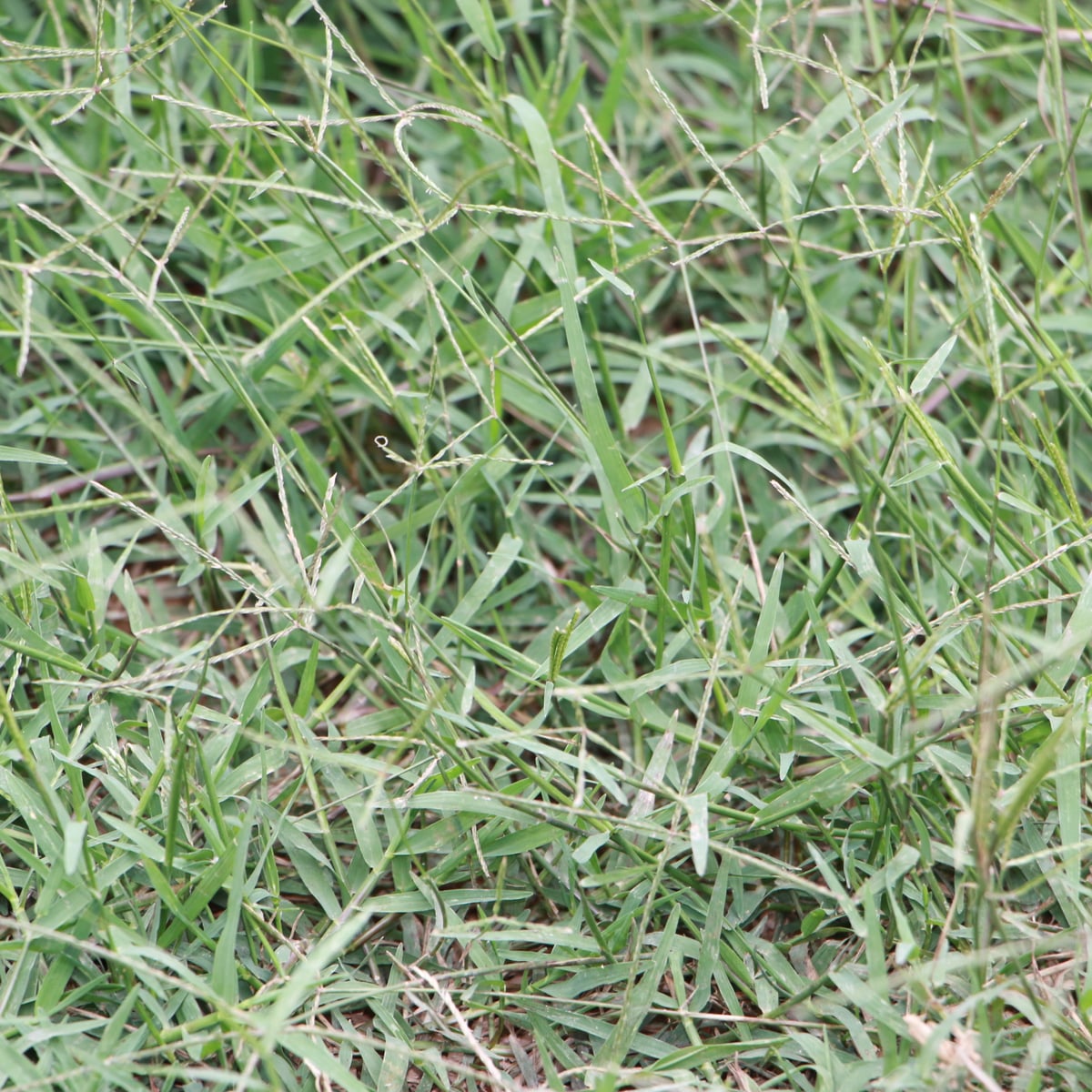
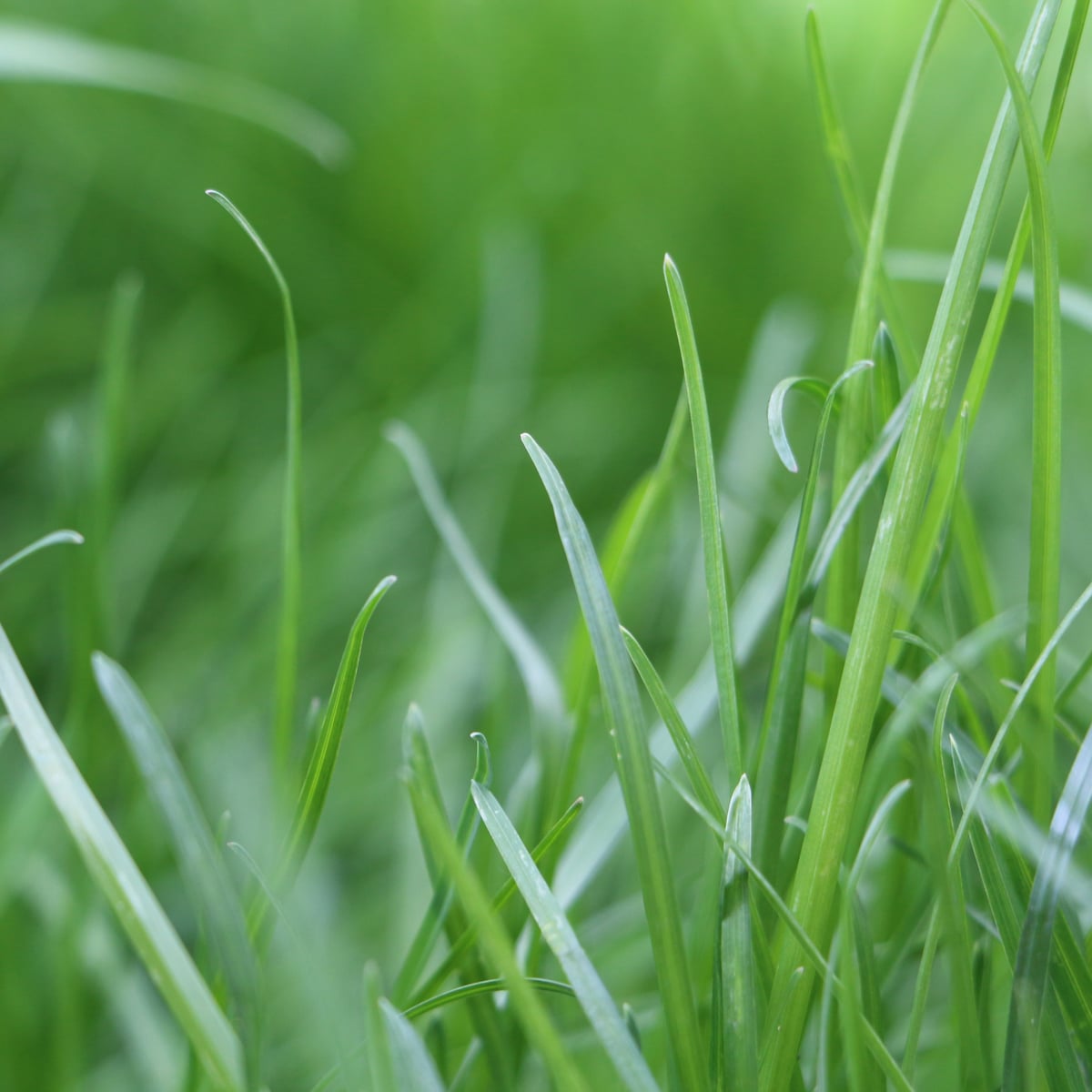
Season and growth habit make it obvious. Bermuda is brown and dormant all winter and explodes with growth in summer heat, throwing visible above-ground runners (stolons) and a seed head with finger-like spikes that splay out like a bird's foot. Kentucky bluegrass is green in cool weather, has fine blades with a distinctive boat-shaped tip that looks like the prow of a canoe, and spreads by underground rhizomes with no surface runners. The simplest test: if the lawn is brown in January in a cold climate but lush in July, it is bermuda; if it is green in spring and fall but stressed in midsummer, it is Kentucky bluegrass.