Ortho GroundClear vs Roundup: Which to Use (and How to Apply GroundClear)
 James ThorntonLawn Equipment & Maintenance Expert | 20 Years
As an Amazon Associate we earn from qualifying purchases.
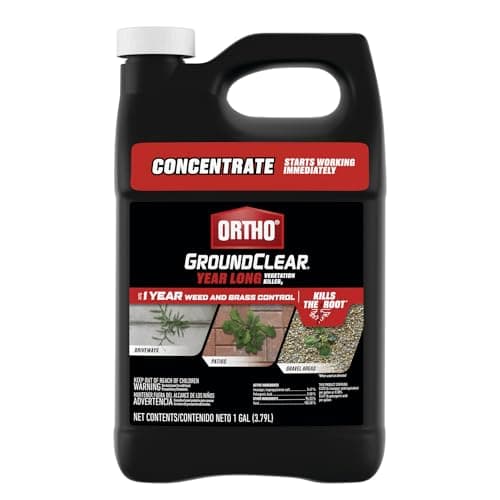
Every spring I get some version of the same email: "I sprayed Ortho GroundClear on the weeds in my lawn and now there's a dead brown stripe where my grass used to be. Did I get a bad batch?" No. You got exactly what the bottle promised. GroundClear is a non-selective vegetation killer. It can't tell crabgrass from Kentucky bluegrass, and the Year Long version keeps the ground bare for up to a year. Great on a gravel driveway. A disaster on dandelions in the front yard.
So before comparing GroundClear and Roundup head to head, the most important sentence of this article: never spray Ortho GroundClear on a lawn you want to keep. Everything else below is detail.
Not sure if that ugly patch is a weed worth killing or your own grass dying from something else? Snap a photo and run it through our free AI lawn diagnosis before you spray anything. Killing a fungus patch with herbicide fixes nothing and costs you a reseed.
Fast Answer: Use Ortho GroundClear Year Long only where you want nothing to grow for a year: driveways, gravel paths, patio cracks, and fence lines with no plants on the other side. Its imazapyr stays active in the soil for up to one year, per the label. Use glyphosate when you plan to replant: a generic 41% concentrate lets you seed lawn grass 7 days after spraying. And know that today's Roundup Weed & Grass Killer contains no glyphosate at all. It's triclopyr, fluazifop, and diquat, with a label replant wait of 1 to 30 days.
Weeds in your lawn? Neither. Every product here kills grass. You need a selective product like Ortho WeedClear, which kills broadleaf weeds and leaves the turf alone.
What Ortho GroundClear Actually Is
GroundClear is a product line. Three jugs, three different chemistries, and the differences matter more than the brand name. Here's what the current labels list.
GroundClear Super Weed & Grass Killer
The fast burn-down spray. Diquat, fluazifop, and dicamba. Diquat works on contact, so weeds start to wilt within hours; the label says complete kill takes days to 1 to 2 weeks. Rainfast in 15 minutes. No year-long residual. The concentrate label even covers lawn renovation: wait 7 days after the last application, then rake, till, and reseed or sod.
GroundClear Year Long Vegetation Killer
The one people get in trouble with. Two actives: pelargonic acid for the fast burn, imazapyr for the soil residual. The label says it prevents regrowth for up to one year and that it "remains active in soil for up to one year." That residual is the point. Spray a gravel driveway once and stay weed-free all season. It also means that ground is off-limits for grass, flowers, or vegetables until the residual breaks down. Spray it along a lawn edge and the dead zone can creep past your spray line as water moves it.
GroundClear Poison Ivy & Tough Brush Killer
The brush formula. Triclopyr plus pelargonic acid, aimed at poison ivy, poison oak, kudzu, wild blackberry, and vines that shrug off regular weed spray. Visible results in about an hour, rainproof in 2 hours, and the label wants 28 days between applications. It'll still damage grass and ornamentals it touches. Same respect.
Formulas get revised. The numbers here come from the labels Ortho and Roundup publish as of September 2026. Read the label on the exact jug in your hand. It's the law, and it's the only source guaranteed to match what you bought.
Where to Use GroundClear (and Where You Never Should)
Good GroundClear territory:
- Gravel and dirt driveways
- Sidewalk and patio cracks
- Fence lines you're tired of string-trimming, as long as nothing you like grows on the other side
- Around sheds, propane tanks, and utility boxes
- RV and boat parking pads
- Under decks where you want nothing green, ever
Never GroundClear territory:
- Your lawn. Any part of it. The Year Long label says "DO NOT use on lawns."
- Anywhere you plan to seed, sod, or plant within the next year (for the Year Long formula)
- Near trees and shrubs you want to keep. The label says to stay back twice the distance from the trunk to the drip line, because roots may be within that area.
- Slopes above lawns or gardens. The label bans slopes outright, since movement on the soil surface can damage plants downhill.
- Next to a fence with plants on the other side, or where future planting is intended. Also straight off the label.
- Near wells, ponds, or storm drains
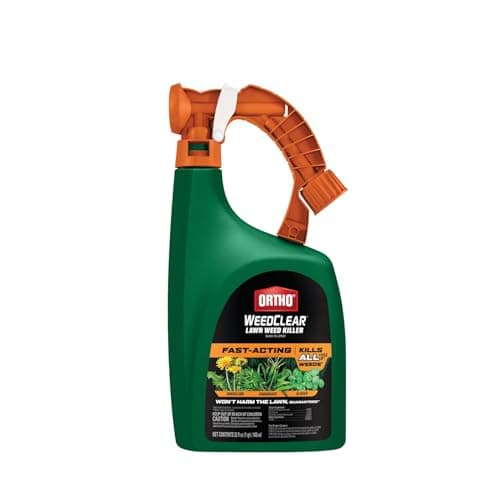
If your weed problem is inside the turf, close the shopping cart and read our guide to Ortho WeedClear instead. WeedClear is Ortho's selective lawn herbicide: it targets dandelions, clover, and other broadleaf weeds while leaving the grass alone. Same company, opposite mission.
GroundClear vs Roundup: The Real Comparison
Both kill everything green. The difference is what's in the jug and what happens to the soil after the kill. And the Roundup jug changed.
Roundup isn't glyphosate anymore
Most people comparing these two still picture Roundup as glyphosate. That's out of date. NC State Extension spelled it out in 2024: Roundup Weed and Grass Killer "has replaced glyphosate with the active ingredients triclopyr, fluazifop, and diquat." The same article names Roundup Brush Killer as the only formulation the author still saw on shelves with glyphosate in it.
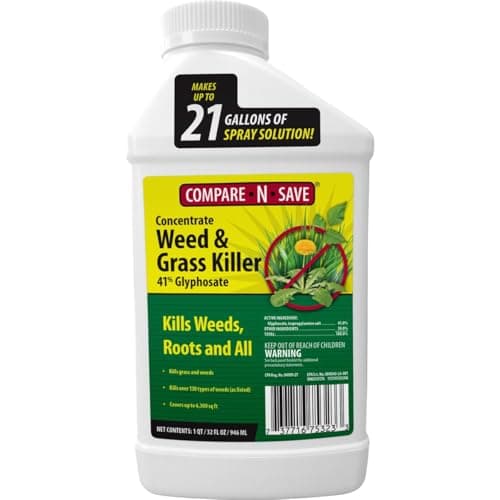
That changes the replant math. Glyphosate doesn't move in soil. The Compare-N-Save 41% label says it "will not move in or on the soil to untreated plants." The new Roundup's label gives a plant-back window of 1 to 30 days instead. Want glyphosate? Buy a generic 41% concentrate. Check the actives box on any Roundup jug before you assume.
Side by side: what's in each jug
| Product | Active ingredients | Visible results | Rainproof | Replant wait (label) |
|---|---|---|---|---|
| GroundClear Year Long Vegetation Killer | Imazapyr 0.47%, pelargonic acid 5% | Starts immediately | 1 hour | Up to 1 year |
| GroundClear Super Weed & Grass (concentrate) | Diquat, fluazifop, dicamba | Wilting within hours | 15 minutes | Seed or sod: 7 days |
| Roundup Weed & Grass Killer (current formula) | Triclopyr 2.5%, fluazifop 2%, diquat 1.5% | As fast as 6 hours | 30 minutes | 1 to 30 days |
| Roundup Dual Action 365 | Triclopyr, fluazifop, imazapic, diquat | Within hours | 30 minutes | 12 months |
| Generic 41% glyphosate (Compare-N-Save) | Glyphosate 41% | 2 to 4 days | 2 hours | Lawn grass: 7 days |
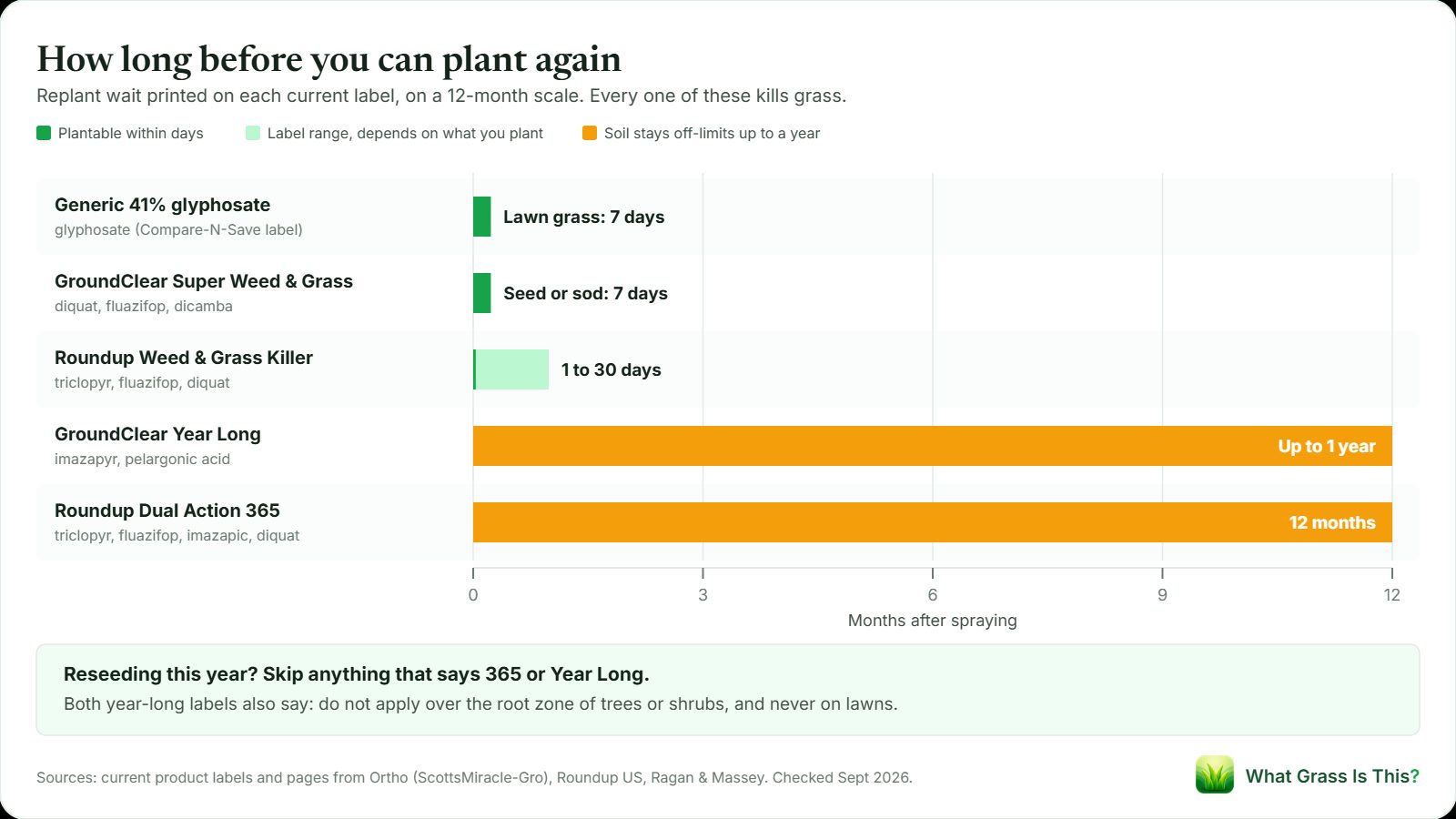
Notice the twins. GroundClear Super and the new Roundup Weed & Grass Killer both run diquat for the fast burn and fluazifop for grasses. The third ingredient differs: dicamba in the Ortho jug, triclopyr in the Roundup. Same job, same aisle. Pick on price.
How they kill
Glyphosate is absorbed through the leaves, moves down to the roots, and kills the whole plant over one to two weeks. It has no soil activity once it's down, which is why you can seed lawn grass a week later. The new Roundup and GroundClear Super pair a contact burner (diquat) with actives that travel to the roots. The year-long products add a soil residual on top: imazapyr in GroundClear Year Long, imazapic in Roundup's 365 products.
Speed
Diquat and pelargonic acid are fast. GroundClear Year Long starts working immediately, the Poison Ivy formula shows results in about an hour, and the new Roundup claims visible results in as fast as 6 hours. Glyphosate is slow: 2 to 4 days to see anything and 1 to 2 weeks for a complete kill, per Ragan & Massey. Slow isn't worse. That root kill is why glyphosate handles perennial weeds that regrow from below.
Residual
The deciding factor. Glyphosate: none, lawn grass in 7 days. GroundClear Super: none, reseed in 7 days. New Roundup: 1 to 30 days. GroundClear Year Long and Roundup Dual Action 365: up to 12 months of bare ground. Answer one question: do you want anything to grow here again this year? That picks the jug.
Shop math: how far a 32 oz bottle goes
Coverage per bottle, straight from each label's mix rate. Your area comes from a tape measure.
| Concentrate | Label mix rate | Covers per gallon of spray | 32 fl oz covers about |
|---|---|---|---|
| Generic 41% glyphosate | 1.5 fl oz per gal (general), 2.5 fl oz (tough weeds) | 300 sq ft | 6,300 sq ft general (label), about 3,800 sq ft tough |
| GroundClear Super Concentrate | 5 fl oz per gal (weeds), 10 fl oz (established weeds) | 350 sq ft | 2,240 sq ft at 5 oz, 1,120 sq ft at 10 oz |
| Roundup Dual Action 365 | Per label; 32 oz makes up to 5.3 gal | 300 sq ft | Up to 1,600 sq ft |
| GroundClear Year Long Concentrate | 24 fl oz per gal | 300 sq ft | About 400 sq ft |
Generic glyphosate goes furthest per ounce by a wide margin. A 10 by 40 foot gravel pad is 400 square feet. That's one full 32 oz bottle of Year Long, and the label caps it at one application per year. Measure first.
GroundClear Year Long vs Roundup Max Control 365
This is the matchup most people actually mean when they compare the two brands for driveways and gravel. Both are kill-plus-prevent products with up to 12 months of bare ground on the label. Roundup Max Control 365 pairs glyphosate with imazapic and diquat. GroundClear Year Long pairs pelargonic acid with imazapyr. Wisconsin DNR puts it bluntly: "Unlike glyphosate, imazapyr can move in the soil."
One wrinkle. Roundup also sells a newer kill-plus-prevent jug, Roundup Dual Action 365: triclopyr, fluazifop, imazapic, and diquat, no glyphosate. Same 12-month claim, same rules: "DO NOT USE in lawns" and not over the root zone of trees or shrubs.
Practical difference: both brands will keep a gravel driveway or fence line bare for a season. Neither belongs near tree roots, garden beds, or ground that drains toward plants you like. Need to clear weeds and replant soon? Skip both year-long versions. Use plain glyphosate.
Use cases at a glance
- Kill weeds in driveway cracks, stay bare all season: GroundClear Vegetation Killer
- Kill a patch of weeds, reseed grass there next month: glyphosate, never residual GroundClear
- Kill poison ivy climbing the fence: GroundClear Poison Ivy & Tough Brush Killer or a comparable brush killer
- Full lawn renovation (kill everything, reseed): glyphosate, then seed lawn grass 7 days later per the label
- Weeds IN a lawn you're keeping: neither; use a selective product like WeedClear
One more branding landmine: Roundup for Lawns is a selective lawn weed killer sold under the Roundup name. Used correctly, it won't kill your grass. The confusing product line gets its own breakdown in our Roundup for Lawns vs regular Roundup guide. If you've been comparing "GroundClear vs Roundup" with the Roundup for Lawns bottle in hand, you've been comparing two completely different categories.
How to Apply Ortho GroundClear
Step 1: Measure the area
Concentrate coverage is quoted per square foot. Eyeballing a driveway is how people end up with a half-mixed jug or triple-strength spray. Measure the strip with our Lawn Size Calculator. It works on driveways and fence lines as well as turf.
Step 2: Ortho GroundClear concentrate mix ratio
"How much Ortho GroundClear concentrate per gallon of water?" Depends on the jug. Two concentrates, two very different rates. Here's what Ortho's current directions say.
| Concentrate | Mix per gallon of water | Kitchen measure | One gallon covers | Rainfast |
|---|---|---|---|---|
| GroundClear Super Weed & Grass Killer, general weeds | 5 fl oz | 1/2 cup + 2 tablespoons | 350 sq ft | 15 minutes |
| GroundClear Super Weed & Grass Killer, established or tough weeds | 10 fl oz | 1 1/4 cups | 350 sq ft | 15 minutes |
| GroundClear Year Long Vegetation Killer | 24 fl oz | 3 cups | 300 sq ft | 1 hour |
Rates from Ortho's directions for GroundClear Super Concentrate and GroundClear Year Long Concentrate. The fine print that changes how you mix:
- Super: tank sprayer only, in plastic, aluminum, or stainless steel. The directions say no backpack sprayer. Rinse the tank three times over bare soil or gravel when you're done.
- Year Long: once a year, max. Ortho allows a repeat every 6 to 8 months only in areas of heavy rainfall.
- Ready-to-use jugs: no mixing. The sane choice for small jobs.
Measure first, then mix only what that area needs. Ortho revises formulas between versions. If your jug's label says something different, the jug wins.
Step 3: Pick a calm, dry, warm day
Actively growing weeds. No rain inside the rainfast window: 15 minutes for Super, 1 hour for Year Long. Little to no wind. Drift is the silent lawn killer. A light breeze carries non-selective spray onto turf, and with the residual formula the damage lasts more than one season.
Step 4: Spray deliberately, low, and coarse
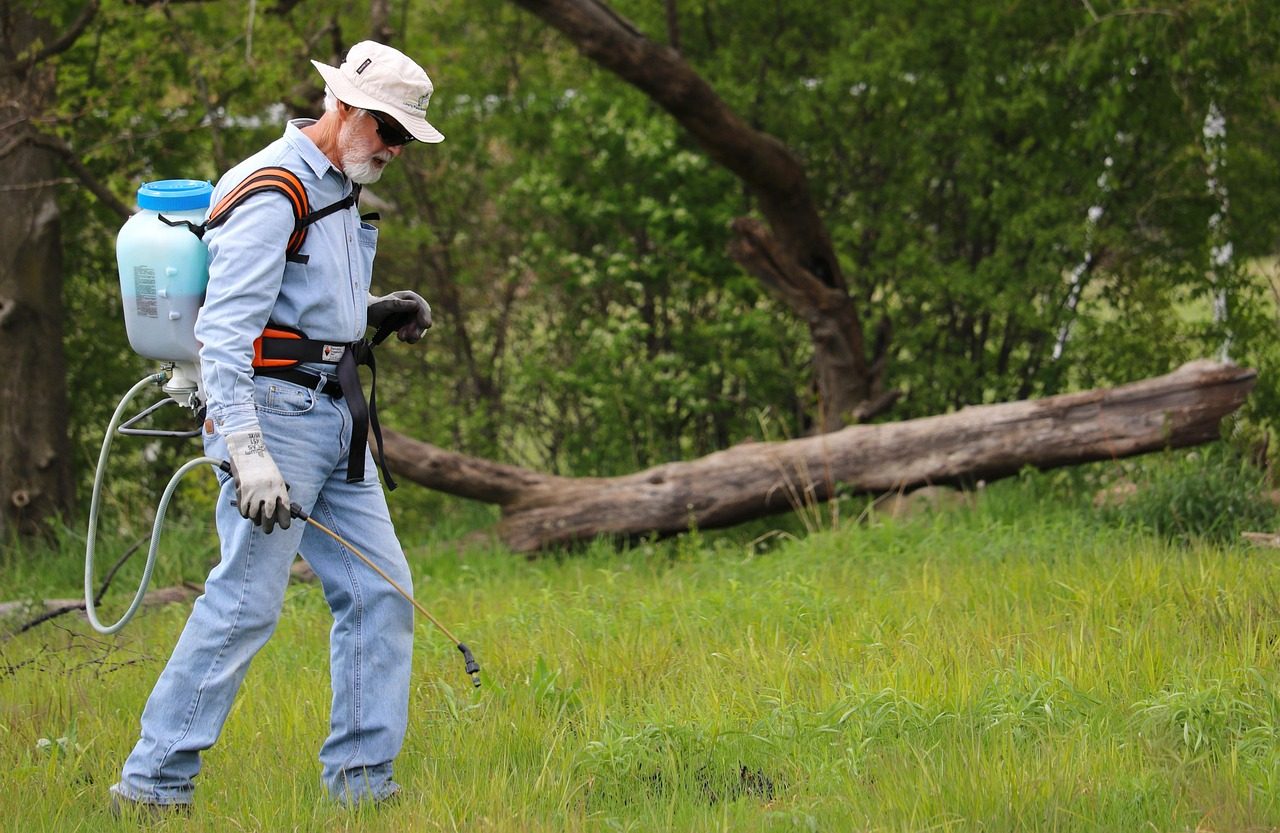
Use a dedicated sprayer. Label the tank "KILLS EVERYTHING" with a marker and never use it for lawn products. Keep the nozzle low, use a coarse droplet setting, and wet the foliage without runoff. Along lawn edges, shield the grass with cardboard or keep the spray a few inches inside the line you actually want dead.
Step 5: Leave it alone
Don't pull, mow, or rake the dying weeds. The Super label says don't mow, cut, or disturb treated vegetation for at least 7 days. Systemic actives need intact leaves to reach the roots.
How Long Does GroundClear Take to Work?
Fast formulas show wilting within hours. GroundClear Super's label puts complete kill at days to 1 to 2 weeks. The Poison Ivy & Tough Brush formula shows results in about an hour, but woody plants take longer to die and may need a second pass, 28 days apart per the label. Nothing looks sick after the label's window? Usual culprits: dusty or drought-stressed foliage, rain before the rainfast time, or a mix measured with the "glug" method instead of a measuring cup.
Is GroundClear Safe for Pets?
Keep pets and people out until the spray has completely dried. All four labels in the safety table below say the same thing. Humid or cool weather slows drying, so give it longer. A few practical additions: don't let pets chew dying vegetation in treated areas, rinse paws if your dog walks through a spot that might still be wet, and store the jug where a curious animal can't puncture it. The concentrate is far more hazardous than the dried spray.
Is Ortho GroundClear safer than Roundup?
Short version: no clean winner. The signal word on the front of each label rates short-term hazard of the product as sold. Here's what the current labels print.
| Product | Signal word | Label hazard statement | Pets back in |
|---|---|---|---|
| GroundClear Year Long | WARNING | Substantial but temporary eye injury | After spray dries |
| GroundClear Super Concentrate | CAUTION | Avoid contact with skin or clothing | After spray dries |
| Roundup Weed & Grass Killer Concentrate | CAUTION | Eye irritation; repeated skin contact can cause allergic reactions | After spray dries |
| Generic 41% glyphosate | WARNING | Eye injury; harmful if inhaled | After spray dries |
CAUTION means slightly toxic or slight eye or skin irritation. WARNING means moderately toxic or moderate irritation. That's the National Pesticide Information Center's definition, and it notes signal words describe acute, short-term toxicity. Wear the goggles either way. For your yard, the bigger safety gap is residual. A year-long product can still hurt a tree months later. A fast formula is done once it dries.
Extension guidance: The Nebraska Forest Service notes that "glyphosate is generally inactive in soils; however, some Roundup products contain different or additional active ingredients," and that tree damage can come through root uptake from herbicides that move through soil. Wisconsin DNR documented a homeowner who used GroundClear Year Long on trails: runoff carried the imazapyr into tree root zones, and trees "more than 50 feet from the trail were being affected." If you're unsure whether a residual product fits your site, your county extension office will tell you for free.
When Can I Reseed or Replant After GroundClear?
This is the question that separates the formulas. Label numbers:
- GroundClear Super Weed & Grass (concentrate): wait 7 days after the last application to rake, till, and reseed or sod. Perennials, trees, and shrubs can go in after 1 day.
- GroundClear Year Long Vegetation Killer: the soil stays hostile to plant growth for up to 12 months, and the label warns that in heavy clay soil, growth may be prevented for more than one year. It also says not to use it before planting lawns, flowers, or vegetables. There's no rinse, gypsum trick, or activated charcoal hack reliably endorsed for homeowner-scale reversal. Your realistic options are waiting out the residual or physically removing and replacing the top layer of soil, and even then results vary.
- For comparison: generic glyphosate allows lawn grass after 7 days; the new Roundup Weed & Grass Killer, 1 to 30 days depending on what you plant.
The single most expensive GroundClear mistake is using the year-long formula on ground you'll change your mind about. A fence line is forever. The strip where you might extend the lawn next spring isn't.
Planning to reseed an area you killed off with glyphosate instead? Timing matters as much as product choice, and the right seeding window depends on your grass type and region. A free photo diagnosis will identify what's actually growing there, and the premium plan turns that into a 12-month care plan with the exact reseed window for your zip code, so you're not dropping expensive seed two weeks before a heat wave kills it.
What Other Guides Miss
The tree root trap. Most GroundClear articles warn you off the lawn and stop there. Trees are the quieter casualty. The Year Long label draws the line: stay back twice the distance from the trunk to the drip line. Wisconsin DNR's case had trees more than 50 feet from the treated trail taking damage. The damage shows up months later and looks like disease. Nobody connects the yellowing maple in September to the driveway spraying in April. Before using a year-long formula, look up. Find every tree and shrub nearby, pace off twice its trunk-to-drip-line distance, and keep the spray outside that circle.
The "I'll reseed it anyway" trap. Search forums and you'll find people who sprayed Vegetation Killer on a weedy lawn area, waited a month, seeded, watched nothing germinate, seeded again, and only then read the residual claim on the jug. Two rounds of quality seed plus water costs more than the herbicide did. Any chance you'll want plants there within a year? Use glyphosate.
The runoff wedge. Residual herbicide ignores your spray line. On a sloped driveway, rain moves it downhill, and the kill zone slowly wedges outward into lawn below the pavement edge. That's why the Year Long label bans slopes. If your hardscape drains toward turf or beds, skip the residual formula on that section.
The brand-name trap. "Roundup" on the jug used to mean glyphosate. Today the standard Roundup Weed & Grass Killer is triclopyr, fluazifop, and diquat, and Dual Action 365 adds imazapic, a soil residual. Read the actives box. The brand tells you nothing about how long the ground stays dead.
Your GroundClear Action Plan
- Identify the problem first. Run a photo of the weeds through the free AI diagnosis. If the "weeds" are in your lawn, stop here and go selective (WeedClear or similar).
- Decide the future of that ground. Bare for a year or more? GroundClear Year Long. Replanting soon? Glyphosate, lawn grass in 7 days. Woody vines or poison ivy? The brush formula.
- Measure the area with the Lawn Size Calculator so you mix the right amount once.
- Read the label on your exact jug for mix rate, rainfast window, re-entry, and replant interval. It varies by formula and revision.
- Spray on a calm, dry day, low and coarse, in a dedicated sprayer, outside twice the trunk-to-drip-line distance of every tree you want to keep.
- Keep pets off until fully dry, and longer if the label says so.
- Wait out the labeled interval before judging results or replanting. With the year-long formula, mark the treated area on your calendar so future-you doesn't seed into poisoned ground next spring.
GroundClear has one narrow job: keeping hardscapes and fence lines bare. Glyphosate is the renovation and spot-kill tool. Selective herbicides are the only thing that goes on living turf. Keep those three lanes straight and you'll never write me the dead-stripe email.
Top Picks
 Ortho GroundClear Year Long Vegetation Killer2 Concentrate, 1 gal.Check price on Amazon
 Compare-N-Save Concentrate Glyphosate Grass & Weed Killer, 32 ozCheck price on Amazon
 Ortho WeedClear Lawn Weed Killer Ready-To-Spray (32 oz, covers 5,000 sq ft)Check price on Amazon
As an Amazon Associate we earn from qualifying purchases.
Free Lawn Care Tools
Neither is better; they do different jobs. GroundClear Year Long pairs pelargonic acid with imazapyr, which keeps soil bare for up to a year, so it fits driveways, gravel, and fence lines. Today's Roundup Weed & Grass Killer uses triclopyr, fluazifop, and diquat, and its label allows planting 1 to 30 days after application. Pick GroundClear Year Long for ground that stays bare, and glyphosate or the fast formulas for kill-and-replant. None of them belongs on a lawn you want to keep.
Yes. Every GroundClear formula is non-selective and kills grass as thoroughly as weeds, and the Year Long label says not to use it on lawns because it stays active in soil for up to one year. For weeds growing in turf, use a selective lawn herbicide such as Ortho WeedClear, which targets broadleaf weeds while sparing grass.
It depends on the formula. The GroundClear Super Weed & Grass Killer concentrate label calls for 5 fl oz per gallon for general weeds or 10 fl oz for established weeds, with each gallon covering 350 sq ft. The Year Long Vegetation Killer concentrate calls for 24 fl oz per gallon to treat up to 300 sq ft, once per year at most. If your jug's label lists a different rate, follow the jug.
Keep pets off the treated area until the spray has dried completely; that is the re-entry rule on every GroundClear label. Drying takes longer in humid or cool weather. Don't let pets chew dying vegetation in treated zones, and store the concentrate securely, since it is far more hazardous than dried spray.
The fast formulas show wilting within hours, and the GroundClear Super label puts complete kill at days to 1 to 2 weeks. The Poison Ivy & Tough Brush Killer shows results in about an hour, but woody plants may need a second application 28 days later. Rain before the rainfast window (15 minutes for Super, 1 hour for Year Long) or drought-stressed foliage are the usual reasons for a weak result.
It depends on the formula. The GroundClear Super Weed a generic 41% glyphosate label allows lawn grass 7 days after spraying.
Not in any blanket way. On the current labels, GroundClear Year Long carries a WARNING signal word for eye injury, while GroundClear Super concentrate and Roundup Weed & Grass Killer concentrate carry CAUTION. Signal words only rate short-term hazard, and all of these allow people and pets back once the spray dries. The bigger difference for your yard is residual: year-long products like GroundClear Year Long and Roundup Dual Action 365 can still damage nearby trees months later.
Both are kill-plus-prevent products that claim up to 12 months of bare ground. Roundup Max Control 365 combines glyphosate, imazapic, and diquat, while GroundClear Year Long pairs pelargonic acid with imazapyr, which Wisconsin DNR notes can move in soil. Roundup's newer Dual Action 365 drops glyphosate for triclopyr, fluazifop, imazapic, and diquat with the same 12-month claim. Keep all of them away from lawns, tree root zones, and slopes that drain toward plants you want to keep.
The current GroundClear formulas do not list glyphosate. GroundClear Year Long uses imazapyr and pelargonic acid, GroundClear Super uses diquat, fluazifop, and dicamba, and the Poison Ivy & Tough Brush Killer uses triclopyr and pelargonic acid. Formulas change over time, so check the active ingredients box on older jugs.

Beat weeds and brown spots from your phone
Snap a photo, get the fix, and follow a plan timed to your soil and weather. Free on iPhone.