Best Weed and Feed for Centipede Grass (2026)
 Sarah MitchellLawn Diagnostics Specialist | 12 Years
As an Amazon Associate we earn from qualifying purchases.
If you have searched for the best weed and feed for centipede grass, here is the honest truth most product labels will not tell you: the majority of weed and feed bags on the shelf are the wrong choice for centipede, and a few of them can quietly kill your lawn over a season or two. Centipede is a slow-growing, low-feeding grass that thrives on neglect, and the same high-nitrogen, herbicide-heavy formulas that green up a Bermuda lawn can push centipede straight into "centipede decline."
That does not mean you are stuck pulling weeds by hand. There is a small set of centipede-safe products that genuinely work, plus a smarter "feed and weed separately" approach the pros use. This guide breaks down exactly what is safe, what to avoid, and which 2026 products earn a spot in your shed. For the full agronomy behind centipede care, see the complete Centipede Grass Care Guide.
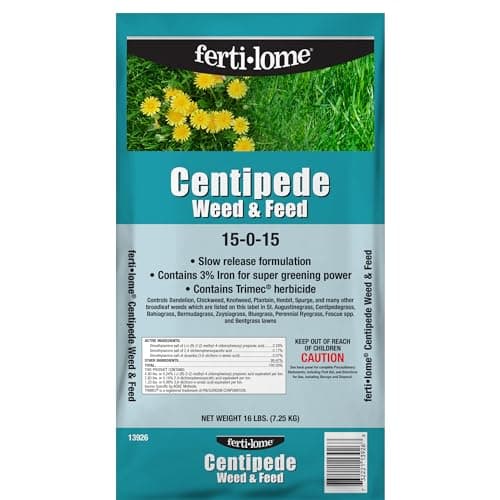
The short answer: The safest one-bag option is a centipede-specific weed and feed with a 15-0-15 ratio (low nitrogen, zero phosphorus, plus iron) such as Fertilome Centipede Weed & Feed. For tougher weeds, an atrazine-based herbicide labeled for St. Augustine and centipede is the centipede-safe gold standard. Skip any generic high-nitrogen "lawn weed and feed."
The safest weed and feed for centipede grass is a centipede-specific 15-0-15 with iron, such as Fertilome Centipede Weed & Feed, because it uses atrazine instead of heavy 2,4-D. Check the bag: if the first number is in the high 20s, it is built for Bermuda and can push centipede into decline.
Centipede needs only about 1 pound of nitrogen per 1,000 square feet per year and prefers soil pH 5.0 to 6.0. Apply roughly 3.2 to 4.0 pounds of product per 1,000 square feet after full green-up in late spring, and never in heat above the mid-80s.
The Honest Answer: Why Most Weed and Feed Hurts Centipede Grass
Centipede grass earned its nickname, the "lazy man's grass," for a reason. It needs only about 1 pound of nitrogen per 1,000 square feet per year, compared to the 4 to 6 pounds a Bermuda lawn craves. It prefers acidic soil (pH 5.0 to 6.0), wants little to no phosphorus, and gets its color from iron rather than heavy feeding. Centipede is genetically built to run lean.
Most weed and feed products are built for the opposite kind of lawn. A typical "lawn weed and feed" carries a nitrogen number in the high 20s and a hefty dose of 2,4-D herbicide. Dump that on centipede and two things go wrong at once. The excess nitrogen forces lush, soft growth that the grass cannot sustain, setting up the classic spring-greenup-then-summer-collapse pattern known as centipede decline. At the same time, centipede is unusually sensitive to 2,4-D, especially in hot weather, so the herbicide meant to kill your weeds can scorch your turf.
This is not a fringe opinion. University extension programs across the Southeast and our own centipede care guide say the same thing: over-fertilizing is the number one cause of centipede decline, and standard weed and feed is a common culprit. So the goal is not to find the "strongest" weed and feed. It is to find the gentlest one that still controls weeds, or to skip the combo entirely. Before you spend a dollar, it is worth knowing your soil, because high pH and excess phosphorus do as much damage to centipede as the wrong herbicide.
What Makes a Weed and Feed Safe for Centipede Grass
A centipede-safe weed and feed has to clear two separate bars: the "feed" half has to match centipede's lean nutrition, and the "weed" half has to use a herbicide centipede tolerates. Here is the checklist that separates the safe products from the lawn-killers.
- Low nitrogen. Look for a first number around 15 or lower, not the high 20s. Centipede cannot use a big nitrogen hit and will decline if you force it.
- Zero or very low phosphorus. The middle number should ideally be 0. Centipede is prone to phosphorus toxicity, and most southern soils already hold enough.
- Iron included. Iron, not nitrogen, is what gives centipede a healthy green color without pushing dangerous growth.
- A centipede-tolerant herbicide. Atrazine is the centipede-safe standard for broadleaf weeds and works as both a pre-emergent and post-emergent. Three-way 2,4-D blends are only safe at low rates and never in high heat.
The table below sorts the common product categories into safe and not-safe for centipede so you can read a label and know instantly whether it belongs on your lawn.
| Product Type | Example | Safe for Centipede? | Why |
|---|---|---|---|
| Centipede weed & feed (15-0-15 + iron) | Fertilome Centipede Weed & Feed | Yes | Low nitrogen, zero phosphorus, atrazine herbicide, iron for color |
| Atrazine standalone herbicide | Southern Ag Atrazine | Yes (apply separately) | Labeled for centipede; controls broadleaf weeds and some grasses without harming turf |
| High-nitrogen lawn weed & feed (28-0-3 type) | Generic "lawn" weed & feed | No | Too much nitrogen forces growth centipede cannot sustain, leading to decline |
| 2,4-D heavy three-way blends | Many broadleaf weed & feeds | Risky | Centipede is sensitive to 2,4-D; high rates or hot weather cause turf injury |
| Quinclorac crabgrass formulas | Crabgrass weed & feed | No | Quinclorac is not labeled safe for centipede grass |
The Best Centipede-Safe Weed and Feed for 2026
If you want a single bag that genuinely fits centipede, the standout is a centipede-formulated 15-0-15 weed and feed. The Fertilome Centipede Weed & Feed 15-0-15 was built around centipede biology: the 15-0-15 ratio delivers a light dose of nitrogen and potassium with zero phosphorus, it includes iron for color, and its atrazine-based herbicide controls more than 200 listed broadleaf weeds while staying gentle on the turf. That combination is rare, which is exactly why a generic bag from the same shelf is so risky.
Apply it at the labeled rate (roughly 3.2 to 4.0 pounds of product per 1,000 square feet) only after your lawn has fully greened up in late spring. Because the herbicide is atrazine, you also get some pre-emergent activity against weed seeds, which is a bonus you will not find in most centipede-safe options. If your weed pressure is light and you want the convenience of one product, this is the pick. For heavier or grassy-weed problems, read on, because a separate-product approach will serve you better.
The Smarter Approach: Feed and Kill Weeds Separately
Here is the dirty secret of weed and feed on centipede: even the safe combo products force a timing compromise. The "feed" half wants to go down in late spring after green-up, but pre-emergent herbicide works best in late winter or early spring before weed seeds sprout. You cannot perfectly time both from one bag. That is why experienced centipede owners, and our care guide, recommend treating feeding and weed control as two separate jobs.
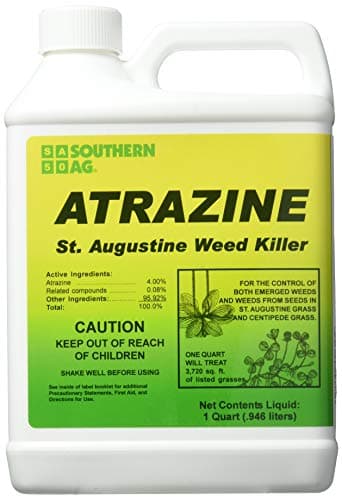
For weeds, an atrazine-only herbicide such as Southern Ag Atrazine (labeled for St. Augustine and centipede lawns) lets you hit weeds on their schedule without dumping nitrogen on the grass. It controls common centipede invaders like henbit, dollarweed, chickweed, and clover, and you can apply it in late winter as a pre-emergent or to actively growing weeds in spring. One quart treats roughly 3,700 square feet, so a small bottle covers most yards.
One important caveat: atrazine is a restricted product in some states and counties, and it should never be applied near water or above about 85 to 90 degrees. Always read the label and check local regulations first. Not sure which weeds you are even fighting? Our free photo diagnosis tool can help you identify the problem and get a centipede-specific plan, and you can dial in application windows with the herbicide timing tool.
How to Apply Weed and Feed to Centipede Grass (Step by Step)
Timing and technique matter more on centipede than on any other southern grass. Get the season wrong and even a safe product can backfire. Follow these steps for a clean, damage-free application.
Step 1: Wait for full green-up
Never apply weed and feed to dormant, browning, or stressed centipede. Wait until the lawn is fully green and actively growing, which in most of centipede's range means mid-to-late spring (often May). Applying too early is a leading cause of injury.
Step 2: Mow one to two days ahead
Mow at your normal height (1 to 2 inches for centipede) a day or two before you apply. This exposes the weeds and helps granules reach the soil.
Step 3: Water lightly, then apply to damp foliage
Granular weed and feed needs to stick to weed leaves to work. Water the lawn lightly the day before, or apply to morning dew, so the herbicide granules cling to the weeds.
Step 4: Spread evenly with a calibrated spreader
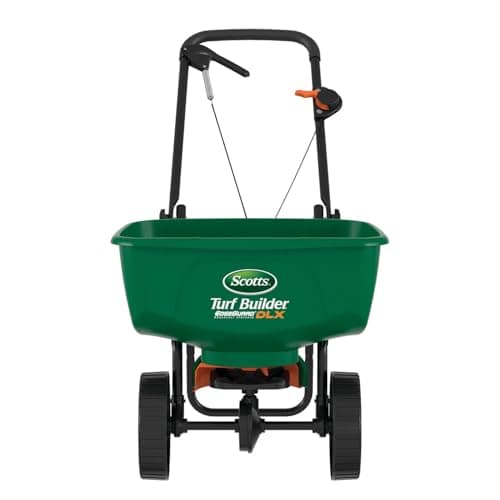
Use a broadcast spreader set to the product's labeled rate and make even, overlapping passes. Uneven application means missed weeds in some spots and over-application (and possible burn) in others.
Step 5: Hold off on watering for 24 to 48 hours
Do not water or mow for 24 to 48 hours after applying so the herbicide has time to absorb into the weeds. Then resume normal watering.
Matching the Right Product to Your Centipede Weeds
No single product handles every weed, so match the treatment to the invader. Centipede-safe choices break down by weed type:
- Broadleaf weeds (clover, dollarweed, henbit, chickweed): Atrazine is the workhorse and is centipede-safe. A 15-0-15 atrazine weed and feed handles light pressure.
- Grassy weeds (crabgrass, goosegrass): Use a centipede-labeled pre-emergent like prodiamine or pendimethalin in late winter. For escaped grassy weeds, sethoxydim (Vantage) is labeled for centipede.
- Sedges (nutsedge): Spot-treat with halosulfuron (Sedgehammer), which is safe on centipede.
- What to avoid entirely: MSMA, DSMA, quinclorac, and high-rate 2,4-D can all damage centipede. When in doubt, leave it on the shelf.
Common Mistakes That Trigger Centipede Decline
Most dead centipede lawns are not killed by weeds. They are killed by well-meaning owners treating centipede like Bermuda. Avoid these:
- Using a high-nitrogen weed and feed. The single most common mistake. Match the 15 (or lower) nitrogen rule.
- Fertilizing in fall or winter. Late-season nitrogen pushes tender growth that winterkills. Stop feeding by early September.
- Ignoring soil pH. Above pH 6.0, centipede develops iron chlorosis (yellowing). Test and keep soil acidic. See our centipede fertilizer guide for the full feeding schedule.
- Applying in extreme heat. Atrazine and 2,4-D both risk turf injury when temperatures climb above the mid-80s.
- Over-applying "to be safe." More product is not better on centipede. Stick to labeled rates.
The Bottom Line
Centipede rewards restraint. The best weed and feed for centipede grass is the one that respects how little this grass actually wants: a centipede-specific 15-0-15 formula for light weed pressure, or, better yet, a standalone atrazine herbicide paired with a light feeding so you can time each job right. Skip the generic high-nitrogen bags, watch your soil pH, and your centipede will outlast the weeds. Not sure what is invading your lawn or whether you even have centipede? Start with a free photo diagnosis and get a care plan built for your exact grass and zip code.
Top Picks
 MySoil Soil Test KitCheck price on Amazon
 Fertilome Centipede Weed & Feed 15-0-15 (16 lbs)Check price on Amazon
 Southern Ag Atrazine Weed Killer for St. Augustine & Centipede (32 oz)Check price on Amazon
As an Amazon Associate we earn from qualifying purchases.
Free Lawn Care Tools
The best one-bag option is a centipede-specific weed and feed with a 15-0-15 ratio and iron, such as Fertilome Centipede Weed & Feed, which uses an atrazine herbicide that centipede tolerates. For heavier weed pressure, a standalone atrazine herbicide applied separately from your fertilizer gives better control and timing.
No. Standard all-purpose lawn weed and feed products are high in nitrogen and built for grasses like Bermuda or fescue, not centipede, so they can trigger centipede decline. Only use a product whose label specifically lists centipede grass as safe, such as a centipede-formulated 15-0-15 blend, and always read the label before applying.
Yes. Atrazine is one of the few herbicides labeled as safe for centipede and works as both a pre-emergent and post-emergent for many broadleaf weeds. Apply in late winter or early spring, avoid temperatures above the mid-80s, keep it away from water, and check local regulations since atrazine is restricted in some areas.
Most weed and feed products contain far more nitrogen than centipede can handle and often use 2,4-D, which centipede is sensitive to. Together these cause centipede decline: a flush of weak growth followed by thinning and dead patches. Centipede needs only about 1 pound of nitrogen per 1,000 square feet per year.
Apply only after the lawn has fully greened up in late spring, usually around May, when centipede is actively growing. Never apply to dormant, stressed, or browning grass, and stop all nitrogen feeding by early September to avoid winter injury.
For most lawns, yes. Combo weed and feed forces a timing compromise because pre-emergent herbicide works best before green-up while fertilizer should go down after. Treating them as two jobs, a standalone atrazine herbicide on the weeds and a light 15-0-15 feeding on the lawn, gives you better control and a healthier lawn.

Your lawn plan, in your pocket all season
Grass ID, a season plan, soil-timed reminders, and a lawn journal that remembers what you did. Free on iPhone.