

Bermuda vs Centipede Grass: Which Is Right for Your Lawn?
Updated November 26, 2026
Pick bermudagrass for a sunny lawn that takes kids, dogs, or salt spray and needs to bounce back fast. Pick centipedegrass for a low-traffic lawn on acidic Southeast soil where you want the least feeding and fuss.
As an Amazon Associate we earn from qualifying purchases. Disclosure.
Both are warm-season Southern grasses, and both go brown after the first heavy frost. The split is effort. Bermuda is the full-sun athlete that wants feeding and frequent mowing, and pays you back with a lawn that shrugs off wear. Centipede is the low, slow grower that does best when you leave it alone, and gets worse when you feed it like bermuda. Every number below comes from a university extension guide, listed at the bottom of the page.
Quick verdict
Bermudagrass wins on wear, recovery, drought, and salt in full sun. Centipedegrass wins on low inputs: about 1 to 2 lbs of nitrogen a year, little lime, and fair tolerance of partial shade on acidic soil.
Personalize for your ZIP
Enter a 5-digit ZIP and we'll highlight which grass fits your climate zone.
Bermudagrass vs Centipedegrass: at a glance
Where it grows best
Sun requirement
Shade tolerance
Traffic tolerance
Drought tolerance
Salt tolerance
Freeze tolerance
Soil pH
Mowing height
Annual nitrogen need
Establishment
Time to a full lawn from seed
How it spreads
Color
Maintenance level
APick bermudagrass if...
- The lawn gets full sun with no tree canopy or building overhang over it.
- Kids, dogs, or games wear paths into the yard and you need grass that grows back quickly.
- You live near the coast, where Clemson calls bermuda a good choice for oceanfront property.
- You are fine mowing once or twice a week in summer and feeding several times a season.
- You want to start the lawn from seed, which works with common bermuda.
BPick centipedegrass if...
- Your soil is naturally acidic, around pH 5.0 to 6.0, as on much of the Southeast Coastal Plain.
- You want to feed the lawn about once a year and mow a slow-growing grass.
- Part of the yard gets some shade during the day, but not heavy shade.
- The lawn sees light foot traffic, not daily play.
- You live away from salt spray, since centipede has poor salt tolerance.
Top pick to grow each grass


As an Amazon Associate we earn from qualifying purchases. Disclosure.
Get your seasonal lawn care calendar for your ZIP
Every task, from feeding to weed control to aeration, has a window that shifts by region. Add your ZIP and we will email your 12-month lawn calendar right away, starting with this month.
Seasonal reminders and tips. No spam. Unsubscribe anytime.
How to Tell Bermuda From Centipede
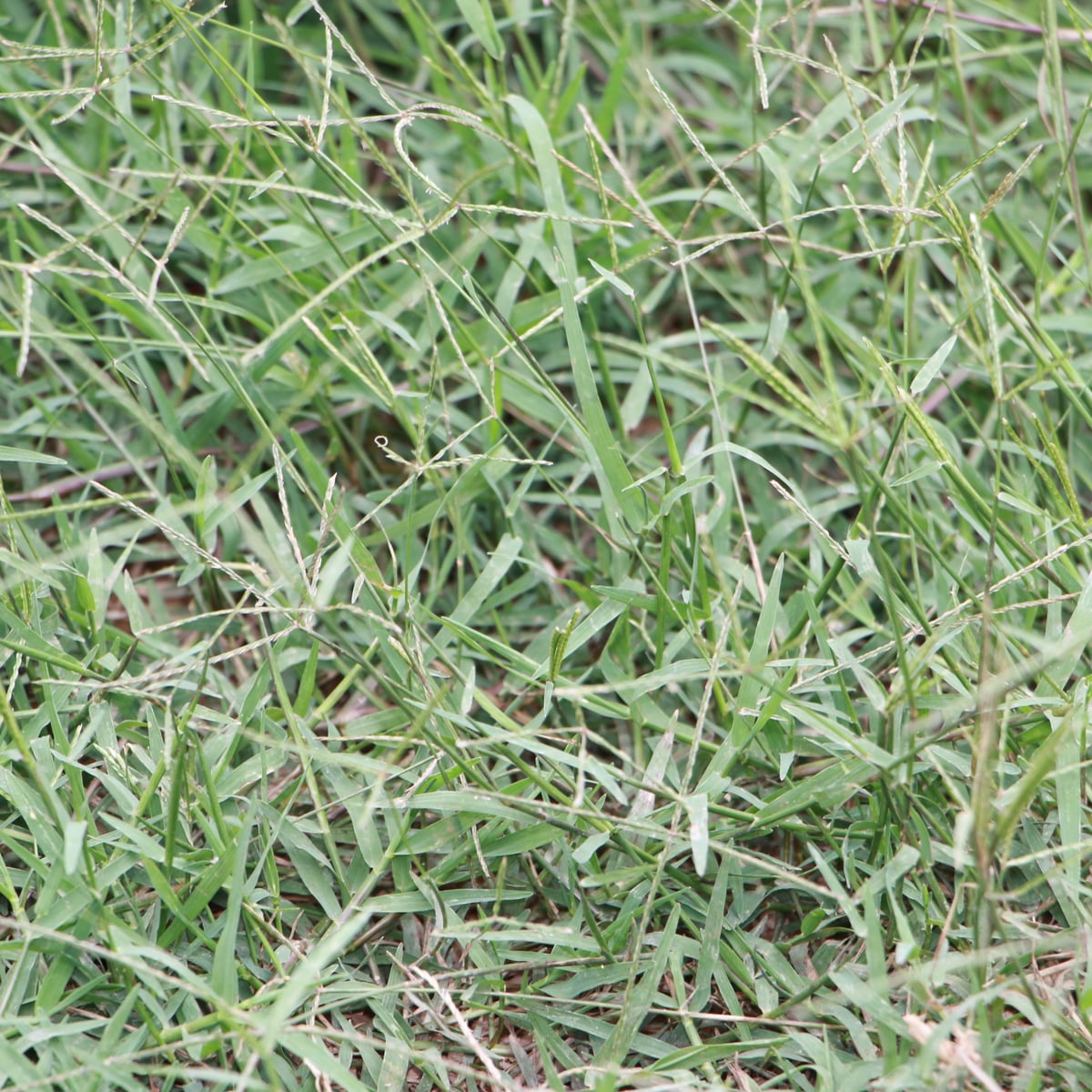
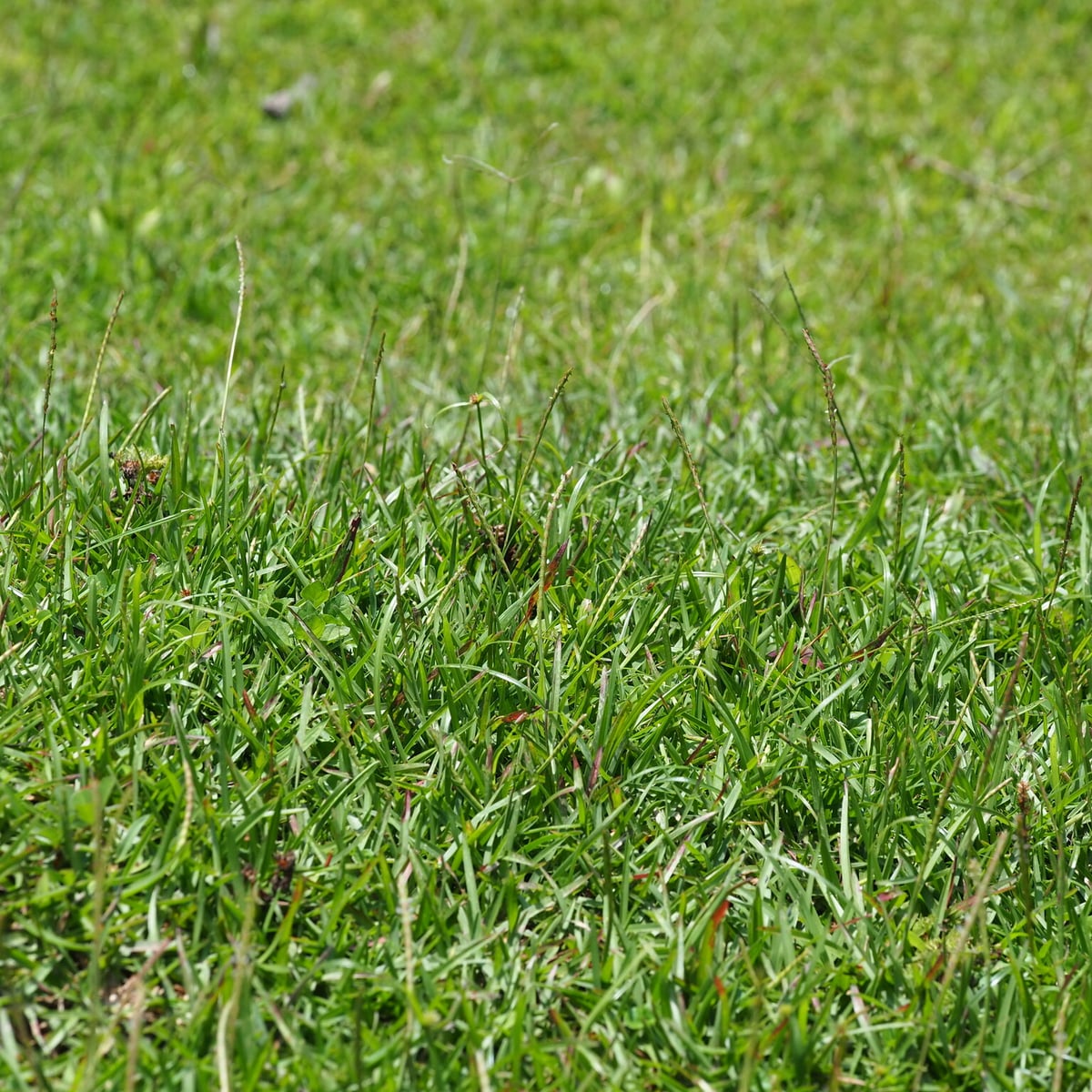
Start with color. NC State and Clemson both describe centipede as apple green, a lighter, yellower green than the medium to dark green UF/IFAS gives for bermuda. Then look at the runners. Bermuda spreads by stolons on top of the soil and by rhizomes under it, and UF/IFAS says it can rapidly invade flower and landscape beds. Centipede spreads only by stolons above ground, with no rhizomes to dig up.
Growth speed is the other clue. UF/IFAS says bermuda kept at 1 to 2 inches may need mowing once or twice a week. UGA calls centipede a low and slow-growing grass.
Feeding: The Mistake That Hurts Each One
The two grasses want very different amounts of fertilizer, and the wrong program hurts both. UGA's bermuda calendar puts the yearly need at 2 to 5 lbs of nitrogen per 1,000 sq ft, and NC State's summer program adds 1 lb every four to six weeks. UF/IFAS goes as high as 5 to 7 lbs a year in South Florida, where the season runs all year.
Centipede is the opposite. UGA says 1 lb of nitrogen per 1,000 sq ft a year is ample for most established lawns, and 2 lbs only on sandy soil in high rainfall. Clemson warns that pushing centipede for a dark green color causes heavy thatch and centipedegrass decline, the dead patches that show up in early spring. If a centipede lawn turns yellow, test the soil before you feed it. UGA says iron becomes less available as pH climbs above 6.0, and NC State recommends an iron spray, which greens the grass without more nitrogen.
Sources
- Clemson Cooperative Extension HGIC, Bermudagrass (HGIC 1208)
- Clemson Cooperative Extension HGIC, Centipedegrass (HGIC 1209)
- University of Georgia Extension, Centipedegrass Decline (C 1003)
- University of Georgia Extension, Bermudagrass Lawn Calendar
- NC State Extension, Carolina Lawns (AG-69)
- NC State Extension, Bermudagrass Lawn Maintenance Calendar (AG-431)
- NC State Extension, Centipedegrass Lawn Maintenance Calendar (AG-381)
- UF/IFAS Extension, Bermudagrass for Florida Lawns (ENH19)
- UF/IFAS Extension, Centipedegrass for Florida Lawns (ENH8)
Frequently asked questions
Which is better, bermuda or centipede grass?
Bermuda is better for a sunny, busy lawn, and centipede is better for a quiet lawn on acidic soil. UF/IFAS rates bermuda excellent for wear and recovery from wear, and centipede only fair on both. The same guide rates bermuda medium to high for maintenance and centipede low. If the yard gets daily use, choose bermuda. If you want the least work and the soil is acidic, choose centipede.
Is centipede or bermuda better for Georgia?
Both grow well in much of Georgia, so the deciding factors are your soil, sun, and traffic. Clemson says centipede is well adapted to the Coastal Plain and lower Piedmont of the southern United States, and UGA says it prefers an acid soil pH of 5.0 to 6.0. Bermuda adapts to most Southern soils and climates, according to Clemson, and UGA gives it an ideal pH of 5.5 to 6.5. For a shady or low-traffic yard on acidic soil, lean centipede. For full sun and heavy use, lean bermuda.
Which needs less mowing and fertilizer?
Centipede needs less of both. UGA says 1 lb of nitrogen per 1,000 sq ft a year is enough for most centipede lawns, while its bermuda calendar calls for 2 to 5 lbs. UF/IFAS says bermuda mowed at 1 to 2 inches may need cutting once or twice a week, and UGA describes centipede as a low, slow-growing grass. Mow centipede at 1.5 to 2 inches, as Clemson recommends.
Which grass handles shade better?
Centipede handles shade better, though neither is a true shade grass. Clemson says bermuda has very poor shade tolerance and should not be grown under tree canopies or building overhangs. Clemson and UF/IFAS both rate centipede fair, and UF/IFAS says it needs more sun than St. Augustinegrass but less than bermuda. NC State adds that centipede does not tolerate heavy shade.
Can you mix bermuda and centipede in one lawn?
It rarely works well, because the two want opposite care. Bermuda needs 2 to 5 lbs of nitrogen a year, according to UGA, while Clemson warns that over-feeding centipede causes thatch and centipedegrass decline. Bermuda also spreads by rhizomes and stolons, and Clemson says its runners are very difficult to control. A feeding program built for the bermuda will push the centipede toward decline. Pick one grass for each area of the yard.
Can I grow bermuda or centipede from seed?
Yes, both, with limits. Common bermuda can be seeded at 1 to 2 lbs of hulled seed per 1,000 sq ft, but NC State says most fine-textured hybrid bermudas must go in as sod, sprigs, or plugs. Centipede seed goes down at only 1/4 to 1/2 lb per 1,000 sq ft. UF/IFAS says it can take 2 to 3 weeks to germinate, and NC State says a seeded centipede lawn can take up to three years to fill in. Sod is the fast route for either.
Is bermuda or centipede more cold hardy?
Neither is a cold-climate grass. NC State says both go dormant and turn brown at the first heavy frost, then green up slowly in spring. UF/IFAS rates centipede poor for freeze tolerance and says over-feeding with nitrogen lowers its cold tolerance further. Clemson lists bermuda cultivars bred for sites where winterkill is common, and NC State suggests raising bermuda 1/2 inch in fall for extra winter protection.