

Bahia vs Bermuda Grass: Which Is Right for Your Lawn?
Updated August 5, 2026
As an Amazon Associate we earn from qualifying purchases. Disclosure.
Bahiagrass and bermudagrass are both warm-season grasses built for the heat of the Gulf Coast and Deep South, but they sit at opposite ends of the maintenance scale. Bahia is the tough, deep-rooted survivor that thrives on sandy, acidic, low-fertility soil and asks for almost nothing from you once it is established. Bermuda is the fine-textured, dense, aggressive turf that rewards heavy feeding, frequent mowing, and full sun with a manicured carpet that handles hard wear.
The decision usually comes down to what kind of lawn you actually want and how much soil you are working with. Bahia is the practical pick for large, rural, or sandy Florida and Gulf-Coast lots where you want green ground cover that resists drought and poor soil without a sprinkler system or a fertilizer schedule. Bermuda is for the homeowner who wants a tight, golf-course-style lawn in full sun and is willing to put in the hours to keep it that way.
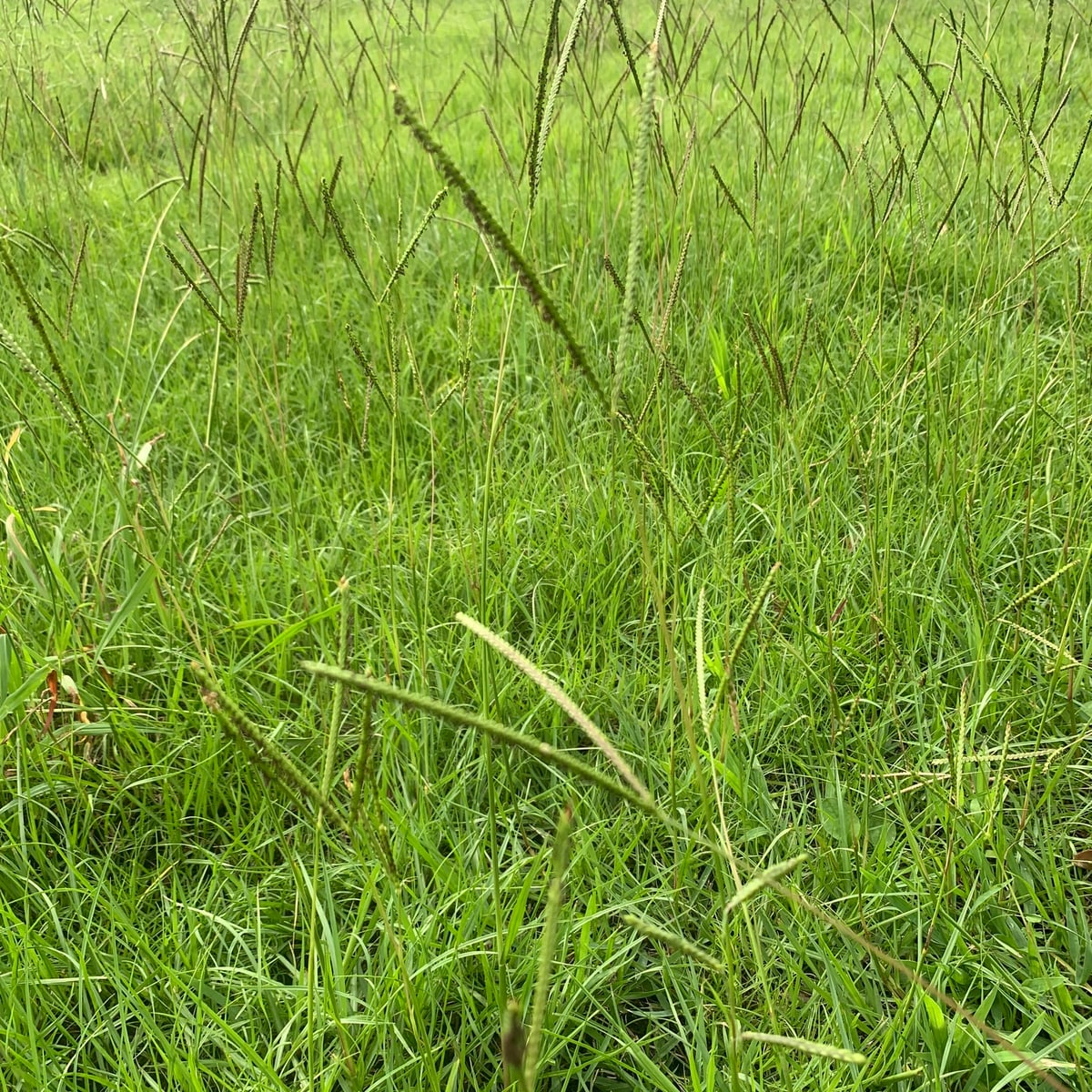
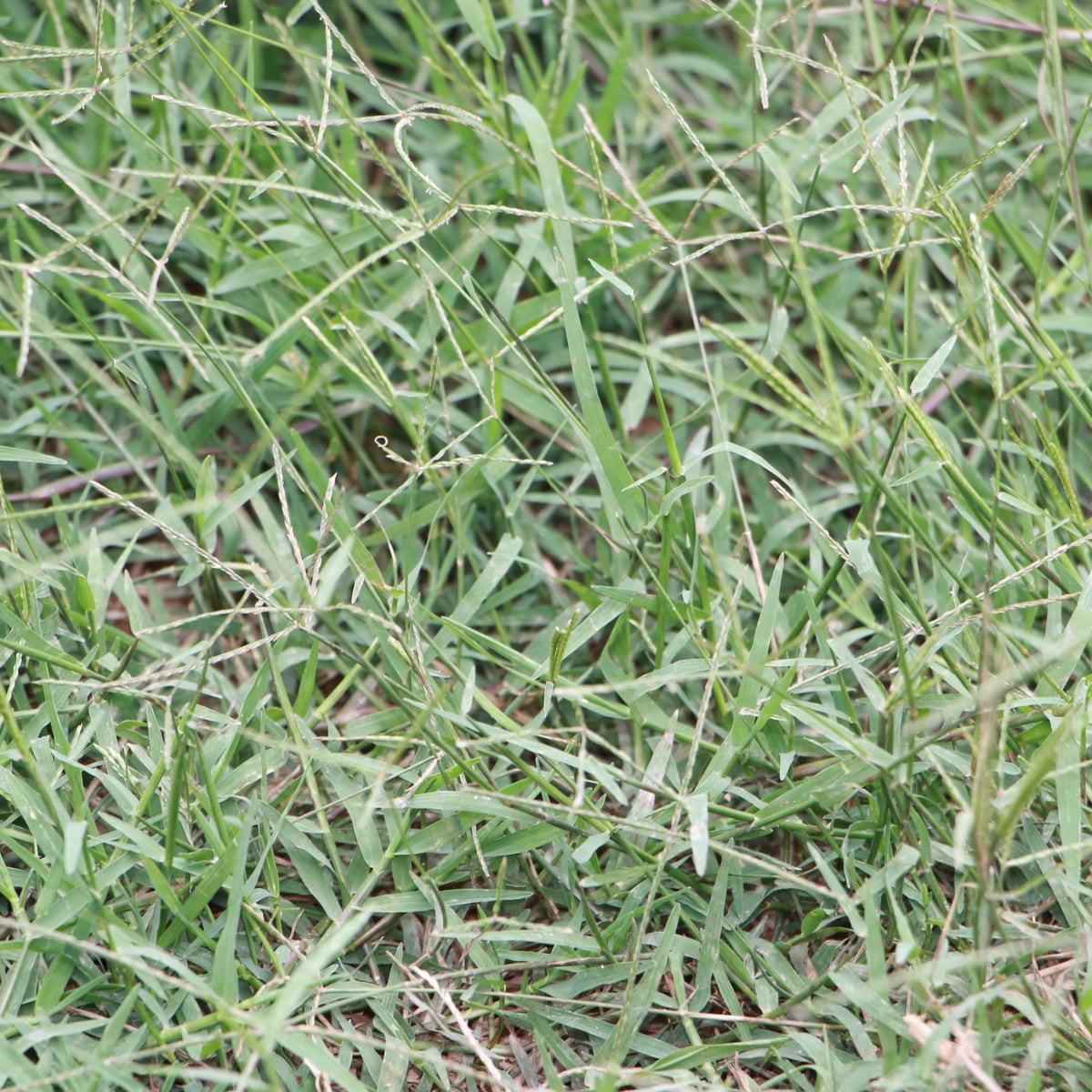
Texture is the other tell. Bahia is coarse and open with a V-shaped seed stalk that shoots up fast in summer; bermuda is fine and dense. If you run your hand across each, the difference is obvious. We break down every dimension below.
Quick verdict
Bahia wins for large, sandy, or low-input lawns where drought tolerance and minimal maintenance matter most. Bermuda wins for manicured, high-traffic, full-sun lawns where you want a fine, dense turf and will do the work to keep it.
Personalize for your ZIP
Enter a 5-digit ZIP and we'll highlight which grass fits your climate zone.
Bahiagrass vs Bermudagrass: at a glance
Climate zone (USDA)
Sun requirement
Shade tolerance
Traffic tolerance
Drought tolerance
Mowing height
Mowing frequency in peak season
Annual nitrogen need
Water need (peak)
Winter dormancy
Green-up speed in spring
Establishment from sod
Establishment from seed
Cost per pallet of sod (500 sq ft)
Maintenance level
APick Bahiagrass if...
- You have sandy, acidic, or low-fertility soil where most turf struggles. Bahia is one of the few grasses that genuinely thrives in poor ground.
- Your lawn is large, rural, or unirrigated and you want drought-tolerant ground cover without installing a sprinkler system.
- You want the lowest-input lawn possible: minimal fertilizer, infrequent watering, and no reel mower.
- You plan to establish from seed (bahia is one of the easiest warm-season grasses to seed, unlike most bermuda lawns sold as sod).
- You are in Florida or the lower Gulf Coast (Zone 8b to 11) and a coarse, functional lawn beats a high-maintenance manicured one.
BPick Bermudagrass if...
- You want a fine-textured, dense, manicured lawn and are willing to mow every 3 to 5 days to keep it that way.
- Your lawn gets 6+ hours of full sun with no meaningful shade.
- You have kids, dogs, or heavy backyard traffic and need turf that recovers from wear in days through stolons and rhizomes.
- You can commit to a real fertilizer and irrigation routine (4 to 5 lbs of nitrogen and about an inch of water per week in peak season).
- You want a tight, low-mowed surface for sports or a golf-course look rather than a coarse, open canopy.
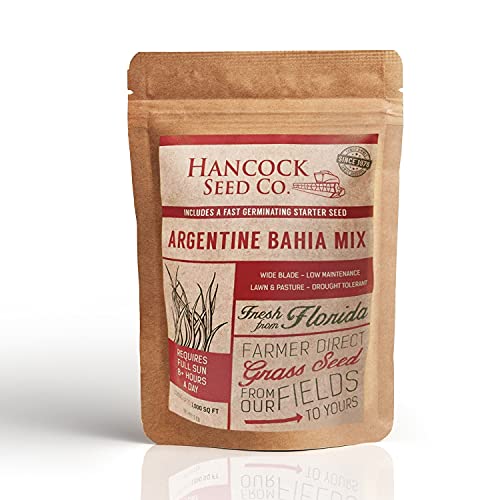
Top pick to grow each grass

As an Amazon Associate we earn from qualifying purchases. Disclosure.
Get your seasonal lawn care calendar for your ZIP
Every task, from feeding to weed control to aeration, has a window that shifts by region. Add your ZIP and we will email your 12-month lawn calendar right away, starting with this month.
Seasonal reminders and tips. No spam. Unsubscribe anytime.
Frequently asked questions
Is bahia or bermuda better for sandy soil?
Bahiagrass is the better choice for sandy soil. It evolved on the sandy, acidic, low-fertility soils of the Gulf Coast and develops a deep, extensive root system that pulls water and nutrients from ground where bermuda would struggle without irrigation and feeding. Bermuda can grow in sand, but it needs far more water and fertilizer to look good there. If your soil is sandy and you do not want to amend or irrigate heavily, choose bahia.
Which grass needs less maintenance, bahia or bermuda?
Bahiagrass needs much less maintenance than bermuda. Bahia gets by on 2 to 3 pounds of nitrogen per 1,000 square feet per year, tolerates drought with little supplemental water, and is mowed high with an ordinary rotary mower. Bermuda wants 4 to 5 pounds of nitrogen, about an inch of water a week in summer, and mowing every 3 to 5 days to stay dense and tidy. The trade-off is appearance: bahia is coarse and open, while bermuda gives you a finer, denser turf in exchange for the extra work.
Can you grow bahia and bermuda together in the same lawn?
Growing bahia and bermuda together rarely stays balanced. Bermuda is aggressive and spreads quickly through both rhizomes and stolons, so in a sunny, well-fed, well-watered lawn it tends to crowd out bahia over a few seasons. Bahia holds its own better on poor, dry, unirrigated ground where bermuda is weaker. In practice most lawns drift toward one or the other based on how they are managed, so it is better to commit to a single grass than to try to maintain a blend.
Why does my bahia lawn have so many tall seed stalks?
Those tall, V-shaped stalks are bahiagrass seedheads, and they are normal. Bahia produces them prolifically through the summer, and they grow back fast after mowing, which is the main reason bahia lawns need cutting every 7 to 10 days in peak season even though the grass itself grows slowly. There is no way to stop seedheads entirely without growth regulators, so most homeowners just mow more often during summer to keep the lawn looking neat. The seedheads are also tough and dull mower blades faster than fine-textured grasses do.
Is bahia or bermuda better for a Florida lawn?
It depends on the lawn. Bahiagrass is the better fit for large, rural, sandy, or unirrigated Florida properties because it tolerates poor soil and drought with minimal input, which is why it is so common on Gulf-Coast acreage and roadsides. Bermudagrass is the better fit for smaller, full-sun Florida lawns where the owner wants a fine, dense, manicured surface and is set up to fertilize and irrigate regularly. One caveat for bahia: it can yellow from iron deficiency in high-pH soils, so it performs best on the naturally acidic sandy soils it is suited to.