

Ironite vs Milorganite: Iron for Color or Food for the Lawn?
Updated October 14, 2026
As an Amazon Associate we earn from qualifying purchases. Disclosure.
Ironite and Milorganite both promise a greener lawn, so they end up in the same cart. They get there in different ways. Ironite Mineral Supplement is an iron and mineral product with almost no nitrogen (sold as 1-0-1). Iron helps grass make chlorophyll, so a pale lawn colors up without being pushed to grow. Pennington, which makes Ironite, says grass looks greener within a week when it is used as directed.
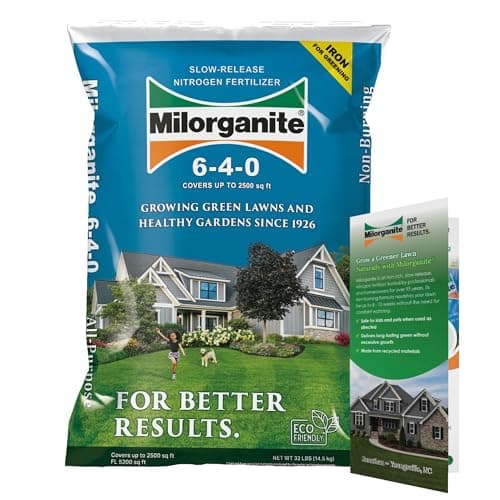
Milorganite is a fertilizer first. It is a 6-4-0 organic made from heat-dried microbes, with at least 2.5% iron, and it feeds the lawn for up to 8 to 10 weeks per application. That makes the choice simple: if the grass is dense and healthy but washed out, Ironite is the color tool. If it is thin, slow, or hungry, Milorganite fixes the cause. Our Ironite application guide covers staining and centipede in depth, and the Ironite calculator and Milorganite calculator turn your lawn size into pounds and bags.
Quick verdict
Ironite wins when a healthy lawn just needs color fast without more mowing. Milorganite wins when the lawn needs feeding, since its 6% slow-release nitrogen fixes thin, slow growth and still brings 2.5% iron. Milorganite already carries iron, and its maker advises against adding an iron supplement on top, so pick one for the job.
Ironite Mineral Supplement 1-0-1 vs Milorganite 6-4-0: at a glance
Product type
NPK on the bag
Iron
What it fixes
How fast it works
Growth push
Coverage
Burn risk
Watering in
Staining
Pets and kids
When to use
Best for
APick Ironite if...
- The lawn is dense and growing fine but looks pale or yellow-green.
- You grow centipede or another grass that does poorly with heavy nitrogen.
- You want color for an event or a sale without a week of extra mowing.
BPick Milorganite if...
- The grass is thin, slow to grow, or has not been fed this season.
- You want an organic, slow-release feed that will not burn in heat.
- You want iron in the same bag as your fertilizer instead of a separate product.
- You are building a regular feeding schedule (up to 4 applications a year in most states).
Where to buy

As an Amazon Associate we earn from qualifying purchases. Disclosure.
Prefer other options? Browse iron and mineral supplement (granular) and organic slow-release nitrogen fertilizer (granular) in our catalog.
Get your seasonal lawn care calendar for your ZIP
Every task, from feeding to weed control to aeration, has a window that shifts by region. Add your ZIP and we will email your 12-month lawn calendar right away, starting with this month.
Seasonal reminders and tips. No spam. Unsubscribe anytime.
Frequently asked questions
Is Ironite or Milorganite better for a yellow lawn?
It depends on why the lawn is yellow. If the grass is already fed and growing well but looks pale, the problem is often iron, and Ironite colors it up within about a week without pushing growth. If the lawn is thin and slow, it needs nitrogen, and Milorganite (6-4-0 with at least 2.5% iron) feeds it for up to 8 to 10 weeks. Yellowing can also come from disease, drought or compaction, which neither product fixes, so check the cause first.
Can I use Ironite and Milorganite together?
Milorganite does not recommend it. Its FAQ says not to apply an iron supplement after Milorganite, because every application already carries at least 2.5% iron and over-fertilizing can stress the grass and invite disease. Pennington also advises against pairing Ironite with high-phosphorus fertilizers, since phosphorus can tie up iron in the soil. Pick the one that matches the problem: Ironite for color on a lawn that is already fed, Milorganite for a lawn that needs feeding.
Does Milorganite have iron in it?
Yes. Milorganite guarantees a minimum of 2.5% iron, down from the 4% it listed in the past. That iron is part of why it darkens grass, but its main job is feeding the lawn with 6% slow-release nitrogen.
How fast does Ironite work compared to Milorganite?
Ironite is the faster color fix: Pennington says grass looks greener within one week when used as directed. Milorganite is slow-release, so it feeds gradually over up to 8 to 10 weeks instead of producing an overnight change. Watering speeds up both.
Will Ironite stain my driveway?
Pennington sells Ironite as non-staining when used as directed. Stray iron granules that sit on wet concrete can still leave rust-colored marks, so close the spreader over hard surfaces and sweep or blow granules back onto the grass before you water.
Is Ironite safe for dogs?
Pennington says children and pets may go back on the lawn once the application area has dried. For Milorganite, the maker says a dog eating some is not life-threatening or an emergency, suggests calling your vet, and recommends keeping an interested dog off the lawn for about 24 hours.