Ironite for Lawns: Application Guide (Plus Ironite vs Milorganite)
 James ThorntonLawn Equipment & Maintenance Expert | 20 Years
As an Amazon Associate we earn from qualifying purchases.
You fed the lawn last week, the color barely moved, and now you are standing in the garage holding a bag of Ironite wondering if it is the missing piece or just one more product the store talked you into. Fair question. Iron supplements get sold as a cure-all for any yellow lawn, and that reputation is half right and half marketing.
Ironite for lawns is an iron and micronutrient supplement, not a primary fertilizer. It greens grass fast because it delivers iron with only a small amount of nitrogen, so you get color without forcing the heavy top-growth a high-nitrogen feed produces. Use it when a lawn looks pale but is otherwise healthy and you do not want a growth surge, which is exactly why it is a favorite for centipede and other low-nitrogen, iron-loving grasses.
To apply it, spread the granular product with a broadcast or drop spreader at the bag's labeled rate, water it in lightly, and keep it off concrete, brick, and siding because the iron stains hard. It will not fix compaction, disease, grubs, or a true nitrogen deficiency, so figure out the cause first and treat the color second.
What Ironite actually is (and what it is not)
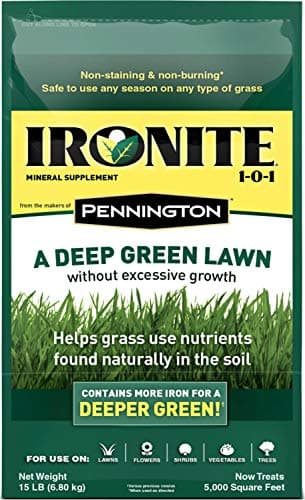
Strip away the label and Ironite is an iron-heavy micronutrient supplement. The classic mineral version carries a very low N-P-K, often in the neighborhood of a 1-0-1, paired with a meaningful percentage of iron plus trace minerals. Compare that to a starter or summer fertilizer where the first number is doing most of the work. With Ironite, the iron is the headline and nitrogen is barely a footnote.
If those three numbers on the bag are a mystery to you, that is worth fixing before you buy anything, because it is the fastest way to tell a color product from a feeding product at a glance. I walk through exactly what each number means in how to read fertilizer numbers. The short version: a low first number means the bag was never designed to feed your lawn. It was designed to color it.
So when someone says Ironite did not green up their thin, struggling lawn, this is usually why. They reached for a color tool to solve a feeding problem.
How Ironite greens a lawn without the growth spurt
Grass needs iron to build chlorophyll, the pigment that makes blades green and runs photosynthesis. When iron is short, the grass cannot produce enough chlorophyll and the blades pale out even while the plant is otherwise alive and the roots are fine. Hand the plant iron and the green comes back quickly, often in a couple of days.
Here is the part that makes iron useful: color and growth are two different levers. Nitrogen pushes both, which is why a heavy feed gives you a dark lawn and a mowing chore three days later. Iron pushes color almost on its own. You get the deep green without the explosion of top-growth, which means less mowing, less stress on the grass during heat, and no surge you have to clean up. For anyone trying to look good without creating extra work, that is the whole appeal.
Ironite vs Milorganite: which one do you actually need?
This is the comparison that trips people up, because the two products get shelved next to each other and both promise a greener lawn. They get there completely differently. One feeds, one colors. Here is the honest side-by-side.
| Factor | Ironite | Milorganite |
|---|---|---|
| What it is | Iron and micronutrient supplement | Slow-release nitrogen fertilizer |
| Primary job | Fast color, minimal growth | Steady feeding and growth |
| N-P-K profile | Very low (often around 1-0-1) | Moderate nitrogen, slow release |
| Iron content | High | Moderate |
| Growth push | Minimal | Steady over weeks |
| Speed of green-up | Fast (days) | Slower (one to two weeks) |
| Staining risk | High | Low |
| Best for | Quick green-up, centipede, iron chlorosis | Regular feeding, organic-minded programs |
The takeaway: these are not competitors so much as different tools. If the lawn is pale but otherwise dense and healthy and you just want color without growth, Ironite. If the lawn is thin, slow, and genuinely underfed, you need a nitrogen source, and Milorganite is a solid slow-release option. On the synthetic side, a slow-release complete 16-4-8 fertilizer fills the same feeding role with a faster color response. Plenty of lawns get both across a season, just for different reasons. I go deeper on the feeding side in the Milorganite application guide, and if you are weighing Milorganite against its newer competitors, the Bio-Nite vs Milorganite breakdown covers what is actually in each bag.
When to use Ironite
Iron earns its spot in a few specific situations rather than as a routine every-bag-on-the-shelf purchase. The clearest cases:
- The lawn is pale despite adequate nitrogen. You have fed it, growth is fine, but the color is washed out. That is a classic iron response.
- You run a low-nitrogen grass like centipede. More on this below, but these grasses yellow easily and resent heavy feeding, so iron is the safer way to chase color.
- High-pH or alkaline soil is locking out iron. In some soils the iron is physically present but the grass cannot take it up, which shows as iron chlorosis. A supplement gets around the lockout.
- Summer, when you do not want to push growth. Feeding heavy nitrogen in peak heat stresses cool-season turf. Iron gives you color without telling the grass to grow when it is already struggling.
- Before an event. Wedding, photos, listing the house. Iron is the fastest honest way to deepen color in a few days.
If the yellowing has you stumped, it is worth ruling out the other usual suspects first. I broke down the full list of reasons turf goes pale, including true iron chlorosis versus nitrogen versus disease, in why your lawn is turning yellow. Match the symptom to the cause before you reach for any bag.
Is Ironite good for centipede grass?
Yes, and centipede might be the single best use case for an iron supplement. Centipede is a low-input, low-nitrogen grass that yellows readily and is genuinely easy to damage with too much fertilizer. Push nitrogen on centipede and you risk what people call centipede decline, where the lawn thins and dies back in patches. Iron sidesteps that entirely: you get the green-up without telling a grass that hates being fed to grow harder. Apply at the labeled rate, keep your overall nitrogen program light, and let the iron do the cosmetic work. If a centipede lawn keeps yellowing no matter what, that is a signal to diagnose rather than to keep dumping product on it.
How to apply Ironite (step by step)
The granular version is the most common, and the process is simple if you respect the staining issue. Liquid and foliar formulas also exist and act even faster because the iron goes straight onto the leaf, but they are easier to streak and need more care, so most homeowners are better served by granular.
- Read the bag and set your spreader. Match the setting to your spreader model and the labeled rate. Do not eyeball it.
- Apply on a dry lawn, calm day. Dry blades and low wind keep the product where you put it and reduce the odds of granules bouncing onto hardscape.
- Spread in even, overlapping passes. Steady walking pace, consistent overlap. This is where streaks come from, so do not stop and start over the same strip.
- Close the hopper over hard surfaces. Shut the spreader gate before you cross the driveway, sidewalk, or patio every single time.
- Sweep or blow stray granules off hardscape immediately. Any iron left on concrete becomes a stain the moment it gets wet.
- Water it in lightly. A short watering moves the granular iron into contact with the soil and grass. Heavy flooding is not the goal.
- Wait and watch. Color shows in days. Resist the urge to re-apply early.
- Exact application rates vary by formula and are printed on the bag. Granular iron products commonly land somewhere in the range of a few pounds per thousand square feet, but the label is the authority, not a number from a blog.
- Iron source matters in high-pH soils. Chelated iron tends to stay available where sulfate forms can lock out, but which chelate and what rate depends on your soil. Your local cooperative extension office can point you to the right chemistry for your region.
- If you suspect iron chlorosis from soil pH, a real soil test is worth more than guessing. Most state extension services run inexpensive tests and will read the iron and pH results back to you with local recommendations.
- Application timing windows and how many treatments are safe per season differ by grass type and climate. Confirm the specifics for centipede, St. Augustine, or your cool-season lawn with your extension office before stacking applications.
What Ironite does NOT do
This is the section the marketing skips. Iron is narrow. It greens grass that is short on iron. That is the whole job. It will not:
- Feed a hungry lawn. If the grass is thin and slow because it is underfed, iron paints it green for a couple of weeks while the actual nitrogen shortfall keeps it weak.
- Cure disease. Fungal problems can look like yellowing. Iron does nothing for them and can waste the window where a real fix would have worked.
- Kill grubs or fix root damage. If something is eating the roots, color products are a distraction.
- Solve compaction or drought. Grass starved for air or water will not be rescued by iron.
- Erase dog spots or scalping. Physical damage needs repair, not a color rinse.
Every one of those shows up as a less-than-green lawn, which is precisely why diagnosing before treating saves you money. If you are not certain the cause is iron, that is the moment to run a free photo diagnosis instead of guessing at the store.
Staining: the part the label whispers
Iron stains, and it stains the things you care about most: the driveway, the walkway, the brick veneer, the white garage door, the bottom of your shoes, and the wheels of the spreader. The stains are rust-colored and stubborn, and a pressure washer does not always win. The rule is simple. Keep iron on the grass and off everything else. Sweep stray granules back onto the lawn before you water, close the spreader over every hard surface, and hose down spills fast before they set. If you only remember one caution from this entire guide, make it this one.
What Other Guides Miss
Most Ironite write-ups treat green color as the goal. It is not. Color is a symptom, and iron is very good at hiding symptoms. That distinction is where homeowners get burned.
When a lawn yellows from low nitrogen, disease, or root trouble, a shot of iron makes it look fixed for one to two weeks. The owner relaxes. Meanwhile the real problem keeps progressing under a green coat of paint, and by the time the color fades again the lawn is in worse shape than when it first went pale. Iron bought time and spent it on the wrong thing. The smart move is to use iron only after you know the cause is iron, not as a first reflex against any yellow.
The second thing guides gloss over is the more-is-better trap. Iron greens up so fast that people assume a double rate means double the green. What it actually produces is a near-black, blue-green color and, worse, dark stripes wherever the spreader passes overlapped. Those streaks can last for weeks because you cannot un-apply iron. Restraint reads as skill here. One labeled application, then patience.
Third, almost nobody connects iron to heat-stress masking. In high summer, a lawn can look pale because it is dialing back under heat, not because it is deficient. Iron will green it anyway, which can fool you into thinking the lawn is thriving when it is actually stressed and would rather you backed off the inputs entirely. Green is not always the same as healthy, and iron is the product most likely to blur that line.
Where the real plan comes from
Iron is a tactic. It is not a program. A lawn that stays green without you chasing it every few weeks is running on the right feeding, watering, and mowing schedule for its grass type and climate, with iron used only when it actually helps. That schedule is the thing worth getting right.
This is exactly where the free diagnosis earns its keep, then hands off to something bigger. Start by confirming what you are looking at: upload a photo and get a free AI read on whether you are dealing with iron chlorosis, a feeding gap, or a disease wearing a yellow disguise. From there, a personalized 12-month care plan tells you the exact week to fertilize, when to apply iron, and when to leave the lawn alone, all dialed to your zip code and your specific grass type. That is the difference between reacting to a pale lawn in June and never letting it go pale in the first place.
Your Ironite action plan
- Diagnose before you buy. Confirm the yellowing is iron-related and not nitrogen, disease, or roots. Guessing is the expensive option.
- Rule out a feeding problem. If the grass is hungry and not just pale, fix that with a real nitrogen source first and treat color second.
- Match the product to the grass. For centipede and other low-nitrogen lawns, iron is the safer route to color than more fertilizer.
- Read the bag and set the spreader correctly. Use the labeled rate, not a number you remember.
- Apply on a dry, calm day in even passes. Overlap consistently to avoid streaks.
- Protect every hard surface. Close the hopper over concrete, sweep stray granules onto the grass, and rinse spills before they stain.
- Water it in lightly, then wait. Expect color in a few days and resist re-applying early.
- Build the schedule, not the habit of reacting. Get a plan tied to your grass type and zip so iron becomes an occasional touch-up instead of a monthly rescue.
Used the right way, iron is one of the most satisfying products in the shed: cheap, fast, and dramatic. Used as a substitute for diagnosis or feeding, it is just expensive green paint. Know the difference and it will never let you down.
Top Picks

As an Amazon Associate we earn from qualifying purchases.
Free Lawn Care Tools
Not in the way most people mean. Ironite is an iron and micronutrient supplement that usually carries only a small amount of nitrogen, so it greens the grass without feeding it the way a standard lawn fertilizer would. Think of it as a color product, not a growth product. If your lawn is genuinely hungry, you still need a real nitrogen source on top of it.
Yes, centipede is one of the best use cases for it. Centipede is a low-nitrogen grass that yellows easily and can be damaged by too much fertilizer, so an iron supplement greens it up without pushing the heavy growth that leads to centipede decline. Apply at the bag's labeled rate and avoid stacking it on top of a heavy nitrogen program. When in doubt, confirm the yellowing is iron-related and not a deeper problem before you treat it.
Iron works fast. Most people see a noticeable color change within two to five days, sometimes sooner in warm, actively growing turf. That speed is exactly why it is easy to over-apply, because the result is visible long before the grass has actually used everything you put down. Wait at least a couple of weeks before deciding you need more.
They do different jobs, so it depends on the problem. Ironite is an iron supplement for fast color with almost no growth push, while Milorganite is a slow-release nitrogen fertilizer that actually feeds the lawn over several weeks. If the grass is pale but otherwise healthy and you do not want a growth surge, reach for Ironite. If the lawn is thin, slow, and underfed, Milorganite is the better tool, and the two can be used in the same season for different reasons.
Yes, the iron in it will stain concrete, pavers, brick, stone, and siding, and the stains are stubborn. Keep the granules on the grass, sweep or blow any stray product off hardscape before you water, and rinse spills quickly. Wet iron on porous masonry is the worst case, so close the spreader hopper before you cross the driveway.
Follow the bag, but most homeowners only need it a few times during the growing season to maintain color, not every couple of weeks. Re-applying too soon chasing a deeper green is the most common mistake and leads to dark streaks where the spreader overlapped. If color keeps fading fast after each application, that is a sign the real issue is something other than iron and worth diagnosing properly.

Your lawn plan, in your pocket all season
Grass ID, a season plan, soil-timed reminders, and a lawn journal that remembers what you did. Free on iPhone.