

Sunday vs Scotts: Mailed Subscription or a Retail Program You Buy Yourself?
Updated August 18, 2026
Sunday mails you the products and the timing for one annual price. Scotts costs less per pound and sits on every big-box shelf, but you own the spreader, the calendar, and the call on which step goes down when.
As an Amazon Associate we earn from qualifying purchases. Disclosure.
Sunday and Scotts are the same job packaged two completely different ways: Sunday decides what your lawn needs and mails it to you on a schedule, while Scotts sells you the products and leaves the plan, the timing, and the spreader work to you. Sunday builds its plan from satellite imagery and a mailed-in soil test, then ships 1 to 4 seasonal pouches of all-natural liquid nutrients you spray on with a hose. Most lawns land at $129 to $229 a year, and larger lawns can run up toward $450.
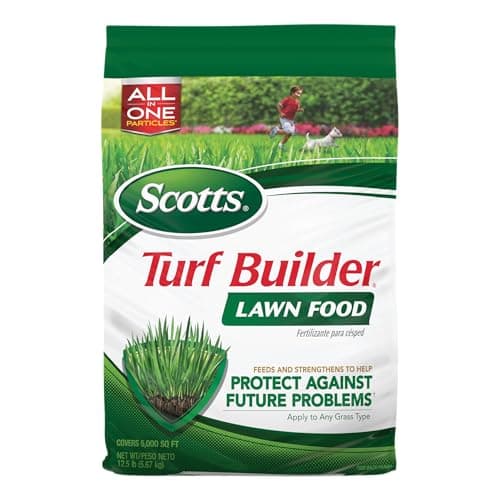
Scotts is the opposite trade. You buy granular bags off a shelf, you own a spreader, and you decide when each step goes down. There is no recurring charge and no lock-in, and the products are widely available and easy to replace, but nothing arrives to remind you and the program does not know anything about your soil. Scotts publishes plans rather than a single price, and what a season costs depends entirely on your lawn size and which steps you buy, so check the current plan page rather than budgeting from a number someone quoted you. The real question is whether you want a decision made for you or a cheaper shelf you control.
Where these figures come from: the Sunday prices are from our 16 May 2026 competitor pricing snapshot, and there is no Scotts figure on this page at all, because Scotts publishes plans rather than one annual price.
Quick verdict
Sunday wins if you want the thinking, the timing, and the shipping handled for one predictable annual price. Scotts wins on cost per pound and availability, as long as you are willing to own the spreader, the calendar, and the decision about which step to put down when.
Sunday Lawn Care Subscription vs Scotts four-step retail program: at a glance
Model
Typical cost per year
Who applies it
Product form
What it covers
Soil test
Personalization
Grass identification
Scheduling and reminders
Availability
Product control
Lock-in and cancellation
Effort required
Best for
Verdict
APick Sunday if...
- You want the plan, the products, and the timing decided for you and shipped automatically.
- You prefer all-natural liquid nutrients over measuring out granular products.
- You want a lab soil test included without sourcing one yourself.
- You will genuinely skip applications if nothing shows up to prompt you.
- Feeding the lawn is the goal, not diagnosing weeds, disease, or pests.
BPick the Scotts program if...
- You want the lowest cost per pound of product and are comfortable shopping for it.
- You already own a spreader and do not mind calibrating it.
- You want to buy a single step this month and skip the next one without cancelling anything.
- You like being able to walk into a store today and have the product in hand this afternoon.
- You are happy to run your own calendar, or to use a free reminder tool for it.
Where to buy

As an Amazon Associate we earn from qualifying purchases. Disclosure.
Prefer other options? Browse retail granular fertilizer program you buy and apply yourself in our catalog.
Get your seasonal lawn care calendar for your ZIP
Every task, from feeding to weed control to aeration, has a window that shifts by region. Add your ZIP and we will email your 12-month lawn calendar right away, starting with this month.
Seasonal reminders and tips. No spam. Unsubscribe anytime.
Frequently asked questions
Is Sunday better than Scotts?
They are optimized for different things. Sunday is better if you want the decisions removed: it builds a plan from satellite data and a soil test, ships what you need when you need it, and uses all-natural liquid formulas. Scotts is better if you want the cheapest path to the same nutrients and are willing to run the program yourself, because retail granular fertilizer costs less per pound and is available everywhere. Neither one identifies your grass, diagnoses disease, or tells you when to treat weeds, which is the gap the free tools here fill.
How much does Scotts lawn care cost per year?
It depends on your lawn size and how many steps of the program you buy, and Scotts prices by product rather than by a single annual plan, so the honest answer is to check the current plan page for your square footage. The useful way to think about it is per 1,000 square feet per application. Retail granular fertilizer generally runs in the same range as any other bagged product of the same analysis, which is why cost per pound of nitrogen is a fairer comparison than sticker price on the bag.
Can I cancel a Sunday subscription?
Yes, it is a subscription and you can cancel it, though as with any auto-ship service you want to do it ahead of the next shipment rather than after it lands. That is the structural difference from a retail program: with Scotts you simply stop buying bags and nothing happens, while with Sunday you have to actively end the arrangement. If you are unsure you will stick with a subscription, that difference is worth weighing before the first box ships.
Is Sunday all-natural fertilizer as effective as Scotts?
Both deliver nutrients, but they get there differently and they behave differently. Sunday uses liquid all-natural formulas applied more frequently at lighter amounts, which tends to give steady, gentler feeding. Scotts uses granular products, often with slow-release nitrogen, applied less often at higher amounts. For a typical home lawn either approach produces a good stand of grass if the timing is right. Timing and consistency matter more than the label on either bag, which is why the reminder side of the problem is worth solving whichever you pick.
Do I need a spreader for Scotts products?
Yes, for the granular ones, and using one properly matters more than most people expect. A broadcast spreader set to the wrong rate is how lawns get striped, burned, or underfed. Every Scotts bag prints settings for common spreader models, so match the setting on your machine to the bag rather than guessing, and walk at a steady pace. Sunday avoids this entirely by shipping liquid concentrate you attach to a hose, which is a real convenience advantage if you do not own a spreader.
Which is better for a small lawn?
For a genuinely small lawn, retail bags usually win on cost, because a subscription priced for an average yard is expensive per square foot when the yard is tiny, and a single bag of granular fertilizer covers a small lawn for a whole season. Sunday still wins on convenience and on the included soil test. If the small lawn is also the reason you do not own a spreader, the hose-end liquid approach may be worth the premium on its own.