
First question: will it actually work in your yard?
I want to start here because this is the single thing that separates the owners who say they would never go back from the ones who quietly box it up and return it. A robot mower is not really a mower decision. It is a yard decision. The machine is only as good as how well your lawn matches what it was built for.
Before you compare brands or watch a single review, run your yard through these four filters.
Size, and why you size up
Most home models comfortably handle about half an acre. One to two and a half acres pushes you into premium all-wheel-drive or RTK units that cost a lot more. Here is the part people miss: coverage ratings are measured in flat, open, ideal test conditions, not your yard with its trees, beds, and slopes. The reliable rule from long-term owners is to size up 20 to 30 percent over your actual square footage. If your lawn measures 8,000 square feet, shop for a model rated to roughly 10,000.
Not sure of your number? Measure it first, because every other spec depends on it.
Slopes
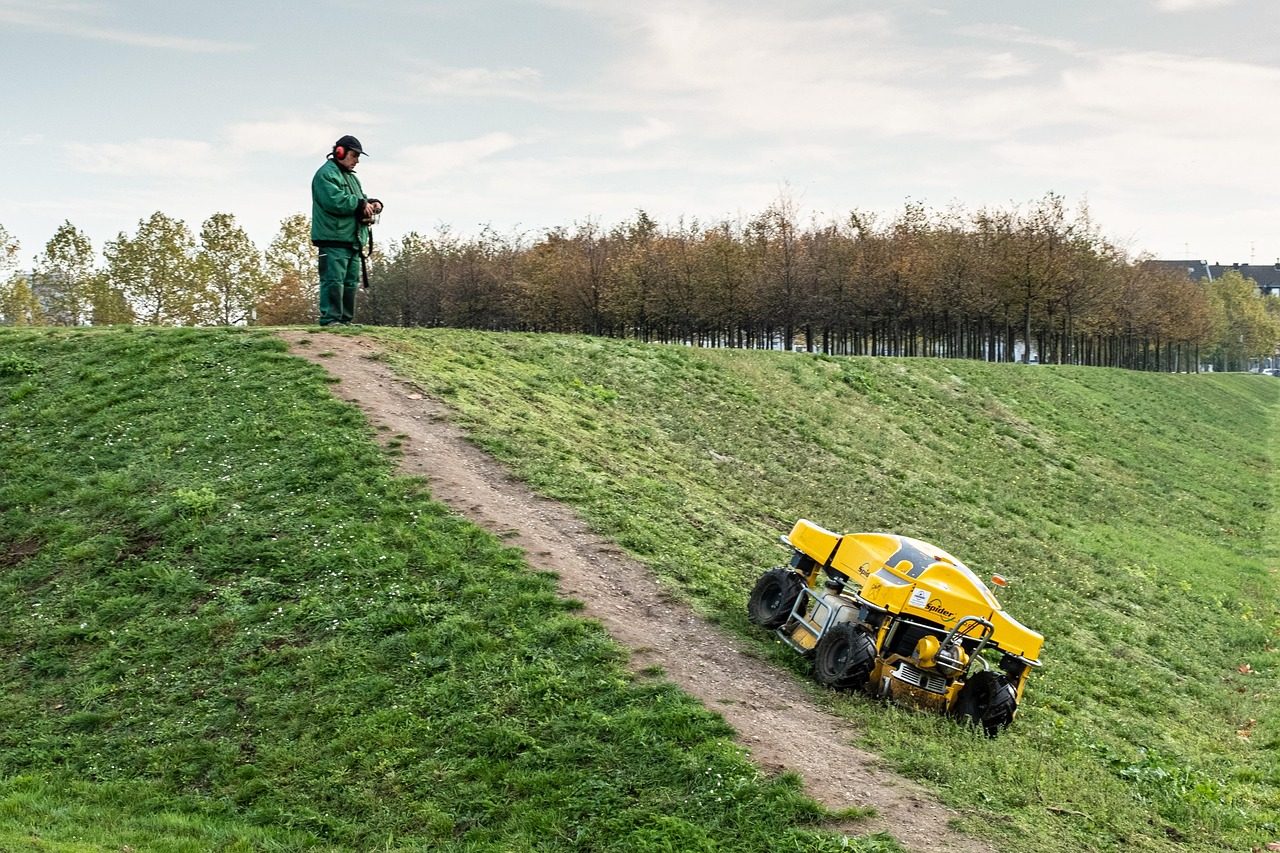
Entry-level units top out around a 20 to 25 percent grade, which is roughly 11 to 14 degrees. Steeper than that and you need a high-torque or all-wheel-drive model, and even those struggle on heavy slopes once the grass is wet and the wheels start slipping. If you have a real hill, assume you are shopping in the premium tier or not at all.
Trees, eaves, and narrow side yards
This one catches wire-free buyers off guard. Wireless mowers that navigate by RTK satellite positioning need a clear view of the sky. Dense tree canopy, the overhang of your roof eaves, and especially the narrow gap between your house and a fence all block or bounce the satellite signal. When the fix drops, the mower loses its place and stops or wanders. A tight, tree-shaded side yard is the most common reason an RTK mower underperforms in an otherwise fine lawn.
One lawn or several?
If your front and back yards are physically separate, check whether the model supports more than one map. Some popular units store only a single map, which means you are carrying the mower between zones by hand. That is not the robot life you paid for.
The honest summary: a flat, fenced, sub-half-acre lawn with open sky is a near-guaranteed win. Every box you cannot tick moves you toward a more expensive model or toward "not yet."
What it really costs (the sticker is just the start)
Robot mowers run anywhere from around $500 for a small wire-based unit to $2,500 and up for a large-area AWD model with vision and RTK. But the sticker is the beginning of the spend, not the end, and the extras are where buyers feel ambushed.
- Perimeter wire and install (wire models): Laying the boundary wire is genuine manual labor that can eat an afternoon, and the materials alone can run from a hundred dollars to over a thousand on a big or complex lawn. Plenty of owners just hire a pro to do it.
- Antenna and mount (RTK models): Wire-free does not mean cost-free. RTK units need their reference antenna placed somewhere with a wide-open view of the sky, which often means a pole or a roof mount.
- Replacement blades: The thin swinging blades wear out and need swapping every few months, more often if your lawn hides small sticks and rocks.
- Replacement battery: Batteries degrade over 1 to 3 years and replacements cost real money. Worth noting: the same cell often sells for half the price under a generic label, so shop around before buying the branded pack.
- Your time, up front: Most owners describe a first month of babysitting, fixing the spots where the mower gets stuck and tuning the schedule before it truly runs itself.
Add it up before you fall in love with a model. On a $2,500 machine, owners are blunt that it takes hundreds, if not thousands, of mows to pay for itself versus a regular mower. The payoff is your weekends back, not money saved.
Wire vs. wireless: which setup headache do you want?
There is no setup-free option. There is only choosing which kind of work you would rather do once.
Boundary wire
Older and budget models use a physical perimeter wire you pin or bury around the lawn edge and around every bed and obstacle. It is reliable once it is down, and it does not care about trees or sky. The downside is the install: it is a real chore, and if you pin the wire too close to the edge the mower strands itself just inside the line. Worse, if you ever want to change the boundary, you are often re-pulling the whole loop.
RTK and vision (wire-free)
Newer units skip the wire and navigate by satellite RTK positioning, sometimes backed up by an onboard camera. No trenching, and you can redraw boundaries in the app. The trade is the signal problem covered above: trees, eaves, and narrow yards degrade RTK, and you will likely spend the first weeks fixing trouble spots so the mower stops getting stuck. Models that add camera-assisted navigation handle weak-signal pockets better than pure RTK.
Rule of thumb: open, sunny lawn with simple boundaries, go wire-free and enjoy the easy install. Tree-shaded or oddly-shaped lawn where you can tuck a wire along fixed edges, the old-fashioned wire may actually frustrate you less.
It will not cut your edges. Plan for that.
This is the number one "I wish someone had told me" item, and it is true of every robot mower regardless of price. The blades are mounted toward the center of the body, so they physically cannot reach flush against a fence, a wall, a bed, or a driveway. You are left with a perimeter strip, usually a few inches, that the robot never touches. Boxy-chassis models also cannot tuck into curved boundaries, so curves leave a wider miss.
In practice that means roughly 95 percent of your lawn gets handled and you still walk the last 5 percent with a string trimmer every week or two. For most people that is a fine trade, the robot does the boring 95 percent, but go in expecting it. If you were picturing zero lawn tools in the garage, that is not this product.
Slopes, wet grass, and getting stuck
The brochure shows a robot gliding across a flawless lawn. Real lawns have bumps, holes, sticks, and weather, and that is where coverage promises meet reality.
- Bumpy or holey ground: Depressions and ruts are a top complaint. Mowers high-center on mounds, drop into holes, and stall. Owners with rough lawns often have to sand-level the worst spots before the robot will run clean laps.
- Debris: A stick or a pinecone can stop the thin blades or send the mower spinning in place until it drains its battery. Lawns under trees need a quick pickup before each run.
- Wet grass: Robots can run in light rain thanks to rain sensors, but wet grass clumps, clogs the deck, makes the wheels slip, and bends rather than slices, leaving a patchy cut. A rain sensor pausing the mower also stretches out the total time to finish.
- Tall or neglected grass: These are frequent-cut machines built to trim a little every day, not to reclaim a lawn you let grow for three weeks while on vacation. Some units even refuse to cut tall tufts because the height sensor mistakes them for obstacles.
- Winter: Cold drains the battery faster, and the units need frost-free storage, so you cannot leave it out and mow on the first warm day of spring.
None of this is a dealbreaker on a flat, well-graded lawn. On a soft, rutted, debris-strewn one, it is a daily annoyance.
Reliability, batteries, and repairs
These are electromechanical robots living outdoors in the weather, so things do wear and break. The recurring failure points owners report are drive-wheel motors and circuit boards, sometimes with plastic gearing that does not hold up. When a motor fails, the fix can drag on for months depending on the brand's support, which we will get to.
The predictable maintenance is the bigger budget line: blades every few months, and a battery that fades within 1 to 3 years and costs real money to replace. Add the Wi-Fi and app dependence, which introduces software bugs and connectivity as new ways for the mowing to stop. Buy from a brand with parts availability and a service path you can actually reach, not just the cheapest unit on the marketplace.
Theft, pets, and wildlife
Theft
A $1,500 to $2,500 machine that lives on your lawn is a target, and the base station or antenna often sits out secured by easy-to-remove bolts. This is a real worry, but the better units fight back with PIN locks, alarms, geofencing, and GPS tracking. The tracking is not theoretical: in one Texas case an owner got an alert that his mower was moving at 30 to 40 miles per hour, tracked it across Dallas in the app, and police recovered it along with other stolen equipment. If you live somewhere this matters, treat GPS tracking and a PIN lock as required features, not extras.
Pets and kids
Robot mowers are generally safe around dogs and cats thanks to obstacle sensors, lift-and-tilt cutoffs, and blades that stop when the unit is raised. Manufacturers still advise keeping children and pets clear and supervising, which, on a small lawn, can quietly cancel out the time savings.
Wildlife
The genuine safety gap is small ground wildlife. Hedgehogs and similar animals that freeze instead of fleeing can be badly injured, because the sensors miss a stationary animal tucked in the grass. Researchers have even built a hedgehog safety test for these machines. The practical mitigations are models with pivoting or retractable blades and running only during daylight when animals are less active. This matters most to wildlife-conscious owners and in regions where these animals are common.
How the major brands compare
Reputations shift with each model and firmware update, so treat this as a starting map and verify the specific unit you are considering. Here is the honest read from owner feedback.
- Husqvarna Automower: The established premium name with mature navigation and a loyal base of fenced-yard owners. The pointed complaints are reliability and warranty support, with wheel-motor and board failures, pricey batteries, and support that sometimes pushes owners onto local dealers who did not sell the unit.
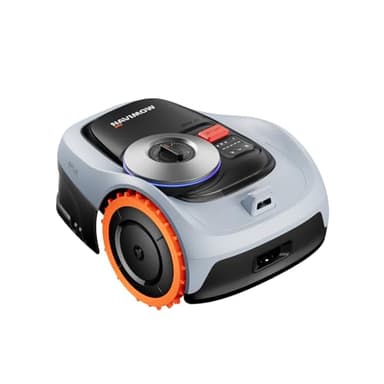
- Segway Navimow: Strong value in the wire-free tier, with RTK plus a camera fallback that helps in weak-signal pockets, and network RTK often included at no recurring cost. The knocks are slow returns and refunds with a restocking fee, and RTK that still struggles in tight or treed yards.
- Mammotion (Luba / Yuka): Powerful all-wheel-drive units that handle slopes and large areas, feature-rich, with a reputation for buggy early firmware. Support scores look high on review sites, but direct-to-consumer scores can be inflated, so spot-check before you rely on it.
- Ecovacs Goat: Capable LiDAR and vision navigation that remembers missed spots, with a string-trimmer add-on on newer Pro models. The catches are a single-map limit, a tendency to get stuck on bumps and in holes, refusing to cut tall tufts, and an exposed base station.
- Worx Landroid: The budget, wire-based option. Lower price, but you do the wire-laying labor, it cannot avoid low obstacles, and edging is fully manual.
So, is a robot mower worth it?
Yes, if your yard fits. Owners with flat, fenced, lightly-treed lawns under about half an acre are overwhelmingly happy and describe roughly 95 percent hands-off coverage and a real "hard to imagine going back" feeling. The machine quietly does the boring part and hands you your weekends.
No, or not yet, if your lawn fights it. Steep slopes, soft and rutted ground, heavy tree cover, narrow signal-blocking side yards, or multiple disconnected zones are where the money turns into frustration. The most expensive model in the world cannot fix a yard it was not built for, and buying anyway is exactly how the remorse stories start.
If you have read this far and your yard checks the boxes, the best-value entry point in our catalog is below. It is the wire-free RTK tier with camera assist, which is the sweet spot for most suburban lawns: no trenching, and a fallback for the weak-signal moments.