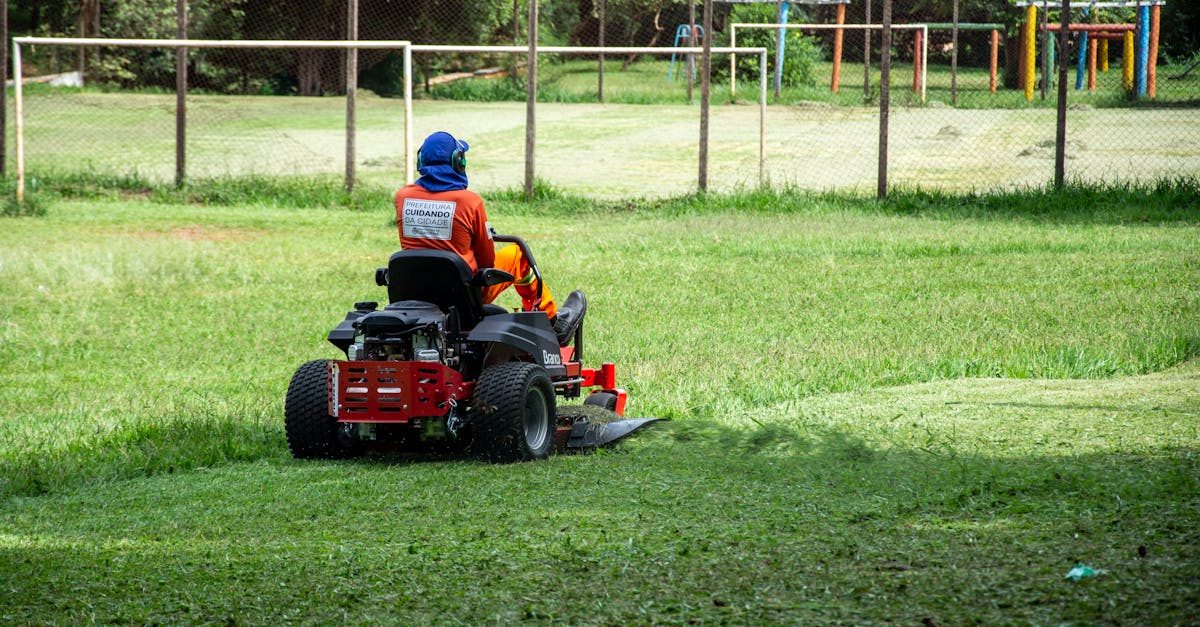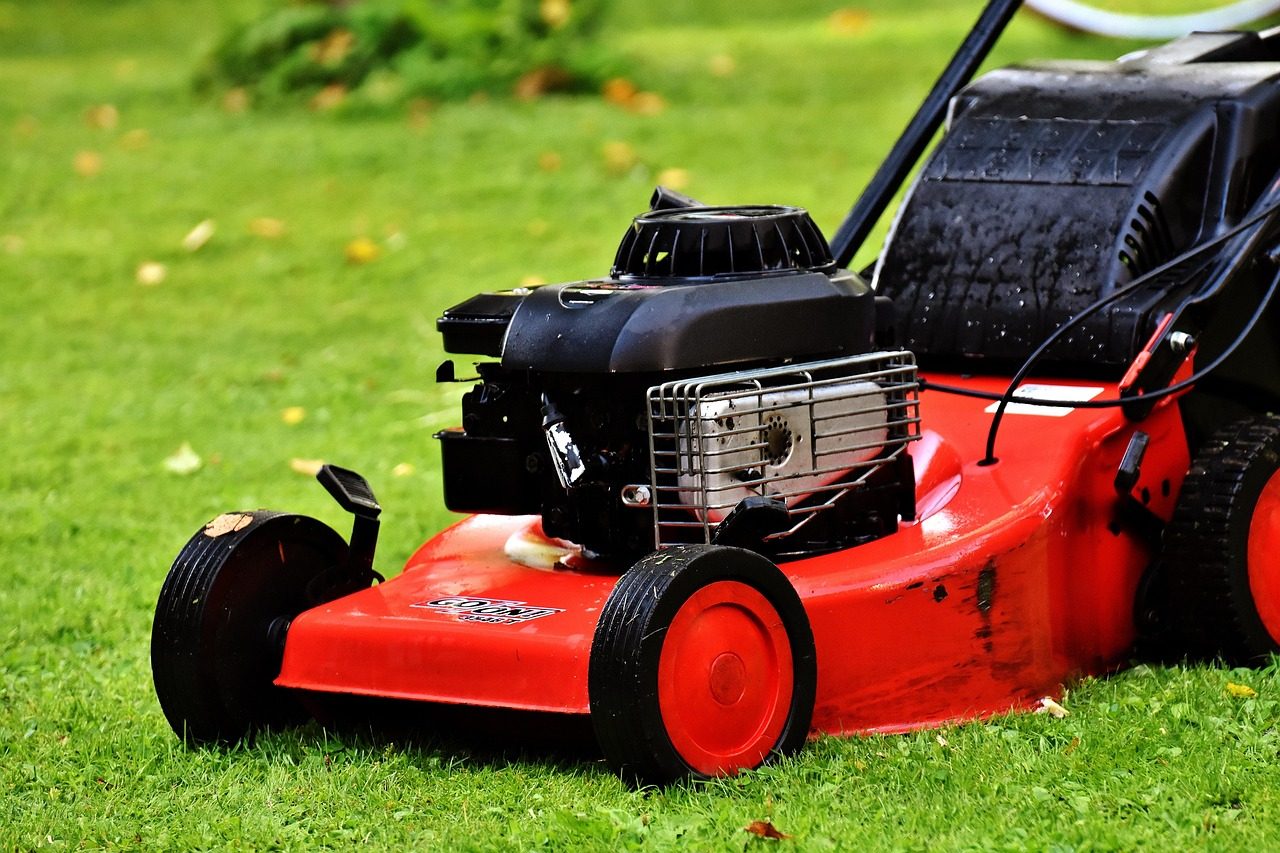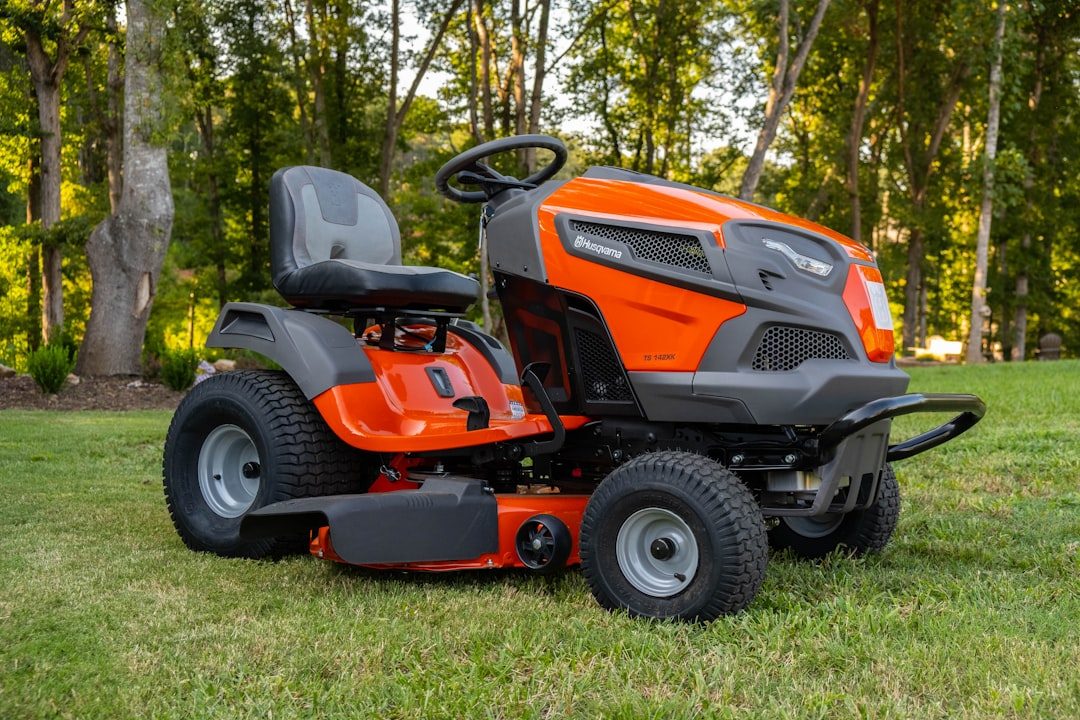

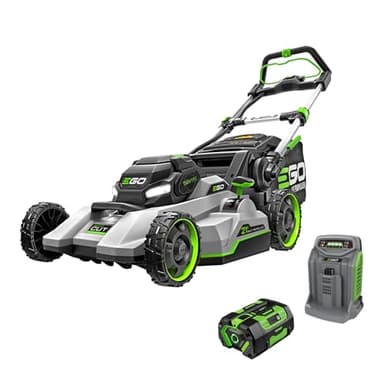
Zero-turn, lawn tractor, or rear-engine rider?
This is the master decision, and the right answer is driven less by your lawn's size than by its shape and what else you need the machine to do. Get this right and the rest is detail.
Lead with terrain, obstacles, and tasks
- Zero-turn (ZT): The speed champion. Owners routinely cut mowing time 40 to 60 percent versus a tractor, and the tight pivoting lets you cut right up to fences, trees, and beds. If your yard is cluttered with obstacles and you only need to mow, a zero-turn is usually the answer.
- Lawn or garden tractor: The do-everything choice. If you want a front loader, a snow blower, a tow-behind cart or spreader, or any ground-engaging implement, buy a tractor. They are also steadier on hills (more on that below). Open, rolling acreage with chores beyond mowing points here.
- Rear-engine rider: A niche pick for half an acre or less, tight storage, and a tighter budget. Be aware that Consumer Reports has declined to recommend any rear-engine rider, so treat it as a compromise, not a first choice.
The standard forum rebuttal is worth memorizing: "buy a tractor if you need implements, buy a zero-turn if you just mow." Everything else is sizing.
One caution on value: a cheap zero-turn is not the same product as a quality one. Owners warn that a low-end ZT can be "more of a liability in terms of how many hours you get out of it" than a comparably priced quality tractor. The badge does not buy you the build.
Do you even need to ride?
Before you spend riding-mower money, be honest about whether you need a riding mower at all. This is the most common way buyers waste a couple thousand dollars.
The consensus push-to-ride threshold is around three-quarters of an acre. Below that, a self-propelled walk-behind handles the job, and a modern battery model does it without gas, oil, or pull-starts. Owners who bought a rider for a small lot often report it "sat" after fewer than twenty mows because the walk-behind was faster to pull out for a quick cut.
Above roughly an acre, walking gets old fast. One owner described "at least 2.5 hours" to walk a little over an acre, which is exactly when riding starts to pay for itself. So measure your lawn honestly first, then decide. If you land under the line, the money-saving move is a quality battery push mower, not a riding mower.
What deck size do you actually need?
Deck width sets how fast you finish, but obstacles matter far more than the chart suggests. Use these as directional rules, then adjust down for a cluttered yard.
- Half an acre or less: a push or self-propelled mower, or a 28 to 30 inch rear-engine rider.
- Half to one acre: roughly a 42 inch rider, which mows an acre in about 35 minutes.
- One to three acres: a 46 to 54 inch rider, tractor, or zero-turn.
- Two acres: a 50 inch deck is the sweet spot.
- Three acres and up: 54 to 60 inch zero-turn territory.
The 60-inch trap
Bigger is not automatically better. Going from a 54 to a 60 inch deck on three acres saves only 7 to 10 minutes, and the wider deck scalps more on uneven ground because it cannot follow contours. Obstacle count swamps deck width entirely. The same three acres might take 25 minutes in a clean open field or well over two hours with trees, berms, and beds. Size the deck to your widest open runs, not to a spec-sheet bragging right.
Slopes and safety: the part that actually matters
If you take one section seriously, make it this one. Riding mowers send roughly 35,000 people to the emergency room and kill about 90 every year in the US, and rollovers are a leading cause. This is the rare lawn topic that is genuinely about safety, not preference.
What is the maximum safe slope?
Manufacturers flag anything steeper than 15 degrees as the danger zone. Fifteen degrees is roughly a 1 foot rise over every 4 feet. In practice, owners keep rear-drive lawn tractors under about 8 to 10 degrees, and lower-slung zero-turns or garden tractors can handle 10 to 15 degrees when used correctly. Above 15, you should not be riding.
Why zero-turns are the risky ones on hills
A standard mid-mount zero-turn steers by driving its rear wheels at different speeds. The moment those rear wheels lose traction on a slope, you lose steering. Consumer Reports testing found zero-turn riders "lost most of their steering control, skidding straight into simulated hazards" on 10 to 15 degree slopes. Owners describe wet grass as "slipping like you are on ice," and the front casters then swing the machine downhill. Zero-turns usually slide rather than roll, but if the downhill tire catches on something, that slide becomes a rollover.
How to stay safe
- On a real slope, choose a tractor (a four-wheel-drive one is steadier still) over a mid-mount zero-turn.
- Mow up and down a slope, never across it.
- Only mow slopes when the grass is dry.
- Use a rollover protection structure (ROPS) and wear the seatbelt. The deadliest scenario is tipping into a pond or ditch, where a pinned operator can drown.
To be fair, plenty of owners mow mild slopes daily without incident. The accurate takeaway is not "zero-turns cannot do hills," it is "when a zero-turn breaks traction, it fails fast and unforgivingly." Respect the 15 degree line.
Build quality: why the same model name can be two machines
The single most useful thing to understand before you shop is that a model spec'd for a big-box store is often built down to a price compared with the dealer version. Same name, different machine. Here is where the cost gets cut.
- Transmission: The biggest one. Budget zero-turns from nearly every brand (Cub Cadet, Toro, Troy-Bilt, Craftsman) use the sealed Hydro-Gear EZT, which is non-serviceable. Step-up machines use serviceable dual-hydro units (Hydro-Gear ZT-2800 or ZT-3100). Single-hydro means you steer by hand effort; dual-hydro handles hills and turns with less skill and is what box stores list as "dual transmission."
- Deck: Stamped decks (thin pressed steel) are residential and budget, and they dent and rust faster. Fabricated decks (welded plate) are the step-up and commercial marker. One nuance: a well-designed stamped deck can actually cut as well as a fabricated one. Fabricated mainly buys you durability, not a better cut.
- Bearings, warranty, engine: Single versus double-sealed spindle bearings, a 1 versus 3 year warranty, and a Kawasaki versus a budget engine are the other common giveaways.
None of this means box-store mowers are bad. It means you should know which tier you are buying and price it honestly against the dealer machine.
Reliability and the repairs owners actually hit
These are the failure points that show up again and again in owner forums, in rough order of how much they cost you.
- Hydrostatic transmission failure: The marquee fear. On entry units, one side can go sluggish on inclines after 20 to 30 minutes once it heats up, and the sealed EZT cannot be checked without removing it. A full replacement runs around $1,700, often more than the mower is worth, which is why owners call these "throwaway." The catch worth knowing: failures cluster around 250 hours, which for a once-a-week homeowner is several seasons, not a couple.
- Belts and the idler spring: If the blades barely spin with the deck raised but cut fine when lowered, the usual culprit is a weakened belt-tension spring, not the belt itself. Cheap fix, common scare.
- Deck spindles and bearings: Real but often overstated and maintenance-driven. They last 300 to 900-plus hours with care. What kills them early is frequent deck washing (which flushes out the grease), hitting objects, and over-greasing.
- Electrical, PTO clutch, safety switches: The top "won't start" or "blades won't engage" cause. A shorted PTO switch, a failed electric clutch, or a rusty solenoid. Often DIY-diagnosable, which is one more reason a dealer-serviceable machine pays off.
Electric zero-turns: ready for your yard?
Battery zero-turns (EGO, Ryobi, and pricier large-format brands) are genuinely good for suburban acre-lots and a poor fit for true acreage. Here is the honest read.
- Runtime versus the headline: An advertised "up to 2.5 acres" assumes the most favorable conditions (top drive speed, low blade speed, thin grass). Real-world, a 52 inch EGO finishes an acre with about 70 percent of the charge left, which is reassuring for normal lots but well short of the marketing acreage.
- Power in thick spring grass: The common complaint. Battery units can bog down and even trip overload cutouts in heavy spring growth, where a gas commercial mower would not.
- Charge time gates same-day mowing: Full charges run several hours, so if you drain it you may be waiting until tomorrow.
- The long-term battery cost: The biggest skeptic objection. Packs degrade over years, and a mower carrying four to six of them is a four-figure replacement down the road. Shift your thinking from transmission reliability to battery warranty, replacement cost, and how close the nearest service center is.
- Brand split: EGO is the more-recommended battery brand for longevity and uses wheel-like E-STEER that shortens the learning curve. Ryobi is the value pick with more battery-life complaints and a joystick some owners find oversensitive.
Cold-weather range loss is real but it is generic lithium-ion behavior, not a specific defect: expect noticeably less range below freezing, mostly reversible. Plan for it rather than fear it.
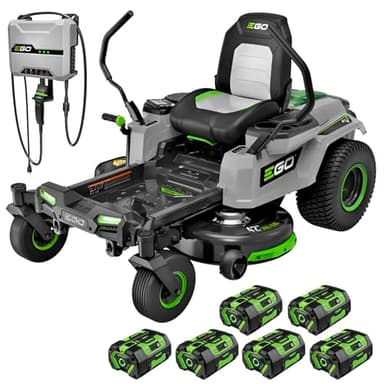
If you want to go electric and ride, EGO's Z6 is the zero-turn most of the owner feedback above is about. The 42-inch model below carries six 56V batteries and is the entry point into the line, with larger 52-inch decks available if you have more ground. EGO also makes a tractor-style version (the TR4204) if you would rather steer with a wheel than lap bars. The honest tradeoff is the same across all of them: strong performance now, and a four-figure battery replacement to plan for years down the road.
Recommended Products
- 1Check price
 Top pick
EGO POWER+ Z6 Zero Turn Riding Lawn Mower, 42" Deck (ZT4214L)
EGO's electric zero-turn, the machine most of the owner feedback above describes. The 42-inch model includes six 56V batteries and an 880W charger, no gas or maintenance, with the usual electric caveat of an eventual four-figure battery replacement. The strongest in-affiliate electric rider for a suburban acre-lot.
As an Amazon Associate we earn from qualifying purchases.
Comfort, learning curve, and will it even fit your shed
Comfort
Zero-turns ride rough. They have no suspension, and owners with back issues feel it. The common fixes are an aftermarket suspension seat (an $80 to $160 mechanical seat helps, a Grammer air-ride seat is a bigger upgrade) and dropping tire pressure. Factor a seat upgrade into the budget if your back is sensitive.
The twin-lever steering has a learning curve, but a short one: 15 to 30 minutes for some, an hour or two for others. EGO's wheel-style E-STEER and similar systems cut it down further.
Storage and size
This trips up more buyers than you would think. Measure your gate and shed door before you buy. If the mower's overall width is wider than your gate opening, it simply will not fit. Aim for a 4 to 6 inch buffer beyond the deck width, and note that the discharge chute is usually the part that snags a tight opening (you can often unbolt or fold it). Gated yards frequently force a 30 inch deck, which fits 36 inch gates.
Two more realities: you only need a trailer if the mower cannot reach the yard under its own power, and loading a 400 to 600-plus pound machine into a pickup bed is genuinely unsafe. Battery zero-turns are heavier still.
So which one should you buy?
Start with the honest filter: under about three-quarters of an acre, you probably do not need to ride at all. Above it, decide by terrain. Cluttered yard, pure mowing, and you want speed: zero-turn. Open acreage, hills, or any chore beyond mowing: tractor. A real slope steeper than 15 degrees: a tractor, mowed up and down, with ROPS, or hire it out.
On budget, the forum wisdom is "buy once, cry once," meaning a serviceable mid-tier or commercial machine with a repairable transmission outlasts a throwaway entry unit. But do not over-correct: if you mow a flat half-acre once a week, an entry machine will likely outlive its warranty many times over before those hour-driven weaknesses ever bite. Match the tier to your hours and your terrain, not to the most expensive option in the row.
Still deciding between a rider and going fully hands-off? A robot mower may be the better answer for a flat, fenced, sub-half-acre lawn. See the companion guide below.