
Is it kyllinga or nutsedge?
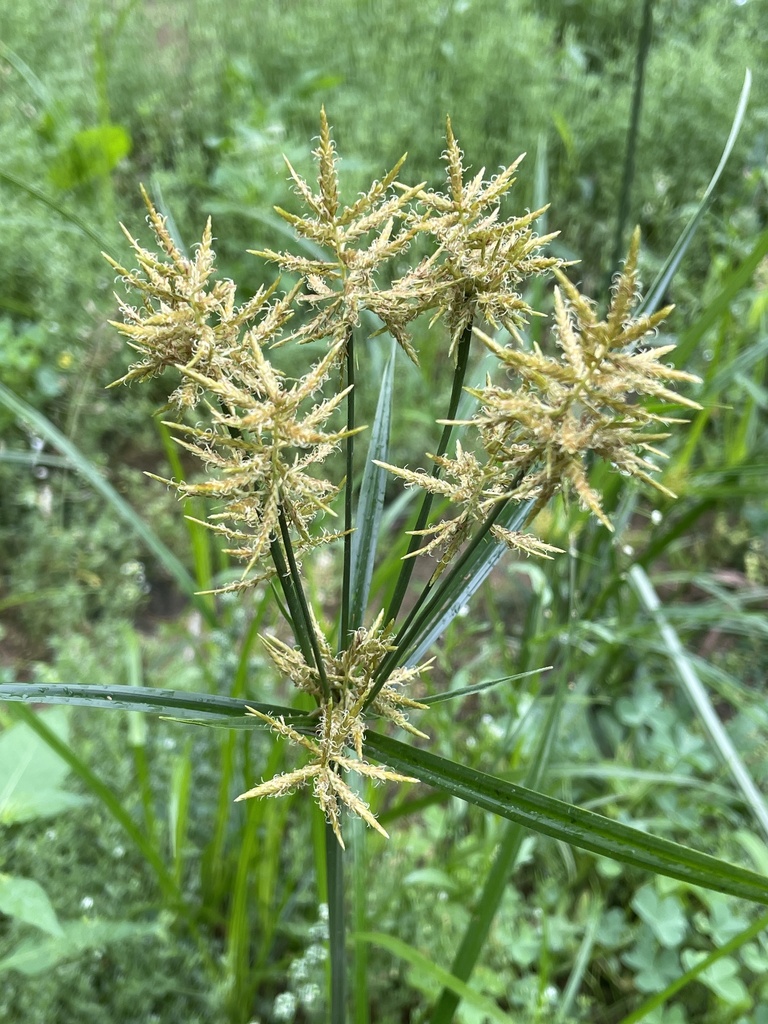
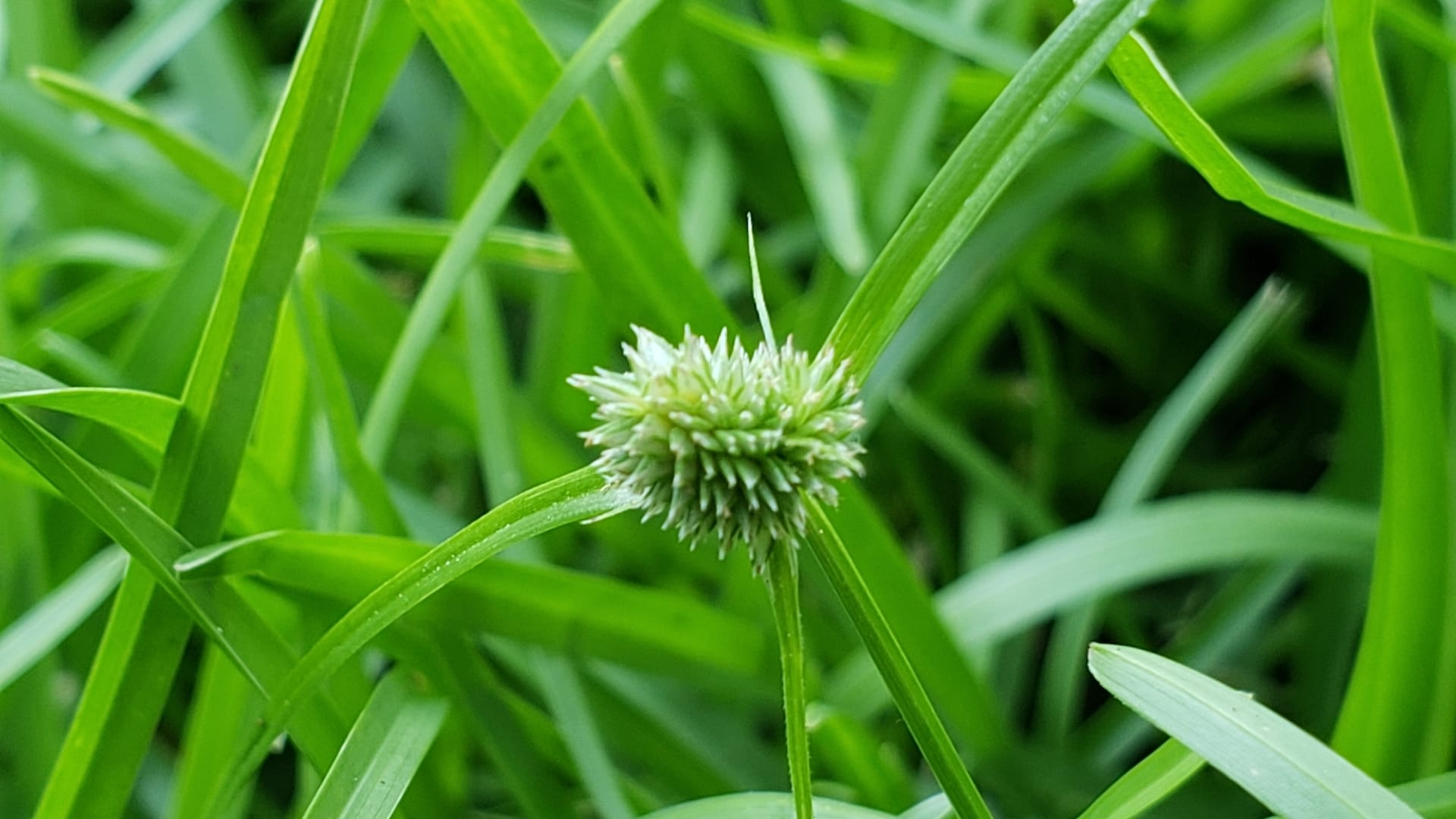
Start with the stem. Roll one between your thumb and finger. Does it feel triangular? Then you are looking at a sedge, and the next question is which one. Look at the top of a flowering stem. Kyllinga carries a single round, light green seed head about 3/8 inch across, sitting on three leaves that radiate out like a star, per UC IPM. A branched, spiky seed head points to yellow nutsedge instead.
No seed heads yet? Dig up a small piece. NC State TurfFiles notes that kyllinga spreads by well-developed rhizomes and produces no tubers, and LSU AgCenter describes those rhizomes as red to purple. If you find small, hard nutlets on the roots, nutsedge moves back to the top of the list. If you find a mat of reddish runners and no nutlets, you have kyllinga.
Green and false-green kyllinga look so alike that NC State groups them together under one name. You do not need to separate them for a home lawn. The plan below is built from sources covering both.
Why does it keep coming back in the same wet spot?
Where is the mat? If it sits around a sprinkler head, a downspout, a leaking valve, or a low spot that holds water after rain, the location is the clue. LSU AgCenter says green kyllinga prefers low areas with wet soil and is usually an indicator of poor drainage, and that poorly drained or overwatered lawns are ideal habitat. Rutgers goes further and treats a false-green kyllinga patch as a sign of chronically excessive soil wetness.
Want to confirm it? Push a screwdriver or soil probe into the patch the day after you water, then do the same in a healthy part of the lawn. If the kyllinga spot is still soft and wet while the rest has dried, that is the condition to fix. Herbicide can clear the mat, but it will move back in while the soil stays that way.
The rhizomes explain the rest. A mat is one connected network, and UC IPM warns that hoeing breaks rhizomes into smaller pieces that keep growing. It also names equipment sanitation as the best prevention, because rhizome pieces ride on mowers and tools into new spots. Kyllinga tolerates low mowing too, per LSU, so a short cut does not slow it down.
What actually clears a kyllinga mat?
Fix the water first. Repair leaks, cut back irrigation on that zone, and improve drainage where you can. Then pick a removal route that matches the size of the problem.
For a small patch, dig. Take the mat out with the top few inches of soil so the rhizomes come with it, and refill the spot with soil and seed or sod. Rutgers notes that a sod cutter works on larger areas as long as it cuts deep enough to take the rhizomes.
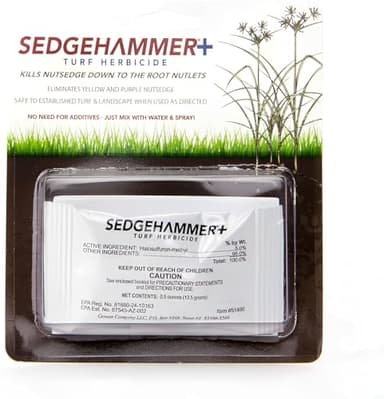
For mats too big to dig, a sedge herbicide is the standard route. Halosulfuron, sold to homeowners as SedgeHammer, controls green kyllinga, and UC IPM says two sequential applications give the best control. NC State's halosulfuron fact sheet says to treat plants that are actively growing, repeat in 6 weeks, and stay within two applications a year. Rutgers, writing for cool-season turf, spaces the two halosulfuron applications 4 weeks apart, lists sulfentrazone and imazosulfuron as the other options for false-green kyllinga, and says to wait 4 weeks before seeding a treated area.
Which products are safe on your grass? On warm-season lawns, LSU AgCenter lists halosulfuron, sulfentrazone, imazaquin, and the thiencarbazone, iodosulfuron, and dicamba mix as safe on St. Augustine, centipede, zoysia, and bermuda, and limits trifloxysulfuron to zoysia and bermuda. Those tables are a starting point. The label on the bottle you buy decides, so confirm it lists your grass type before you mix anything.
How to identify kyllinga
- Low, dense mats that sit tighter to the ground than the turf around them and widen every summer
- Patches concentrated where the soil stays wet: around sprinkler heads, downspouts, leaks, and low spots
- A single round, light green seed head about 3/8 inch across, held above three leafy bracts that spread like a star
- Triangular stems you can feel when you roll one between your fingers, with fine leaves in sets of three
- Reddish to purple rhizomes just under the surface when you lift a piece of the mat, and no tubers
Don't confuse it: Yellow and purple nutsedge also have triangular stems, but they grow taller and faster than the lawn, carry branched, spiky seed heads, and form tubers (nutlets) underground. Kyllinga stays short, knits into a dense mat, carries one round seed head per stem, and spreads by rhizomes with no tubers.
Not sure this is kyllinga? Snap a photo and our AI will identify the weed with treatments matched to your grass type.
When to treat kyllinga
Treatment (post-emergent)
Best time: Late spring into summer while the mat is actively growing
Target stage: Actively growing plants after spring green-up; expect a second application about 4 to 6 weeks later
Conditions: Apply when foliage is dry · No rain for 24 hours · Plants actively growing, turf not drought stressed
Germination starts around 65°F soil temperature (optimal 70°F). Track your ZIP's live soil temperature or get an exact plan from the herbicide timing calculator.
How to control kyllinga
- 1Fix the water first: repair leaks, cut back irrigation, and improve drainage in the wet spots where mats start
- 2Halosulfuron (SedgeHammer) controls kyllinga; plan on two applications rather than one
- 3Sulfentrazone is another labeled option; LSU AgCenter lists both as safe on St. Augustine, centipede, zoysia, and bermuda
- 4On cool-season lawns, Rutgers lists halosulfuron, sulfentrazone, and imazosulfuron for false-green kyllinga, with a 4 week wait before seeding
- 5Dig small patches out with the rhizomes and the top few inches of soil; hoeing breaks rhizomes into pieces that regrow
- 6Keep mowers and tools clean when moving from an infested area, since rhizome pieces start new patches
Good to know
- • A perennial sedge, not a grass: triangular stems and leaves in sets of three
- • Single round, light green seed head about 3/8 inch across, sitting on three leafy bracts
- • Spreads by a network of rhizomes into dense, low mats and has no tubers, which separates it from yellow and purple nutsedge
- • Thrives in poorly drained or overwatered spots and tolerates low mowing
- • Emerges in late spring as soil warms and goes dormant after the first frost
Weed control quotes
Get matched with local weed control pros on Angi. Free quotes, no obligation.
Angi is a partner; we may earn a commission if you request quotes there.
Products that work on kyllinga
These picks are not filtered to your lawn. Some herbicides damage certain grasses (atrazine is for warm-season lawns; Trimec harms St. Augustine). Verify your grass type on the product label before applying, or use the herbicide timing calculator for grass-filtered recommendations.
Recommended Products
- 1Check price
 Top pick
Rachio 3 Smart Sprinkler Controller 8-Zone
WiFi sprinkler controller with weather-adaptive scheduling that saves 20-50% on water. Works with Alexa, Google, and HomeKit. Kyllinga marks ground that stays wet. A weather-aware controller cuts the overwatering that lets the mats spread back after treatment.
As an Amazon Associate we earn from qualifying purchases.
Where kyllinga shows up
Most common in these regions: