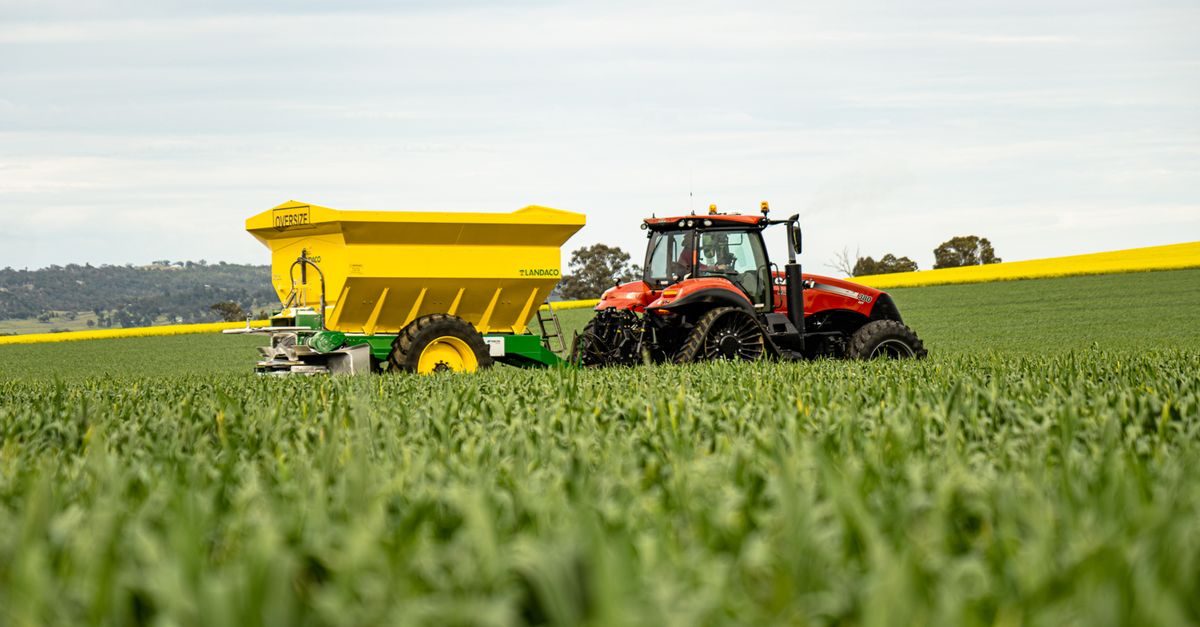
Best Fertilizer for St. Augustine Grass in Georgia (2026)
 Marcus GreenTurf Management Pro | 18 Years
As an Amazon Associate we earn from qualifying purchases.
Georgia homeowners face a constant battle to keep St. Augustine grass thick, green, and healthy as weather patterns shift from bone-dry heat to sudden humidity. Picking the best fertilizer for St. Augustine grass in Georgia isn't just a matter of grabbing any "Southern Lawn Food" off the shelf. It means navigating the state's unique soil diversity, coping with the humidity-driven disease pressures, and understanding new 2026 fertilizer formulations now on the market. Many guides overlook the fact that St. Augustine’s broad blades, shallow roots, and high shade tolerance set it apart from Bermuda or Zoysia-demanding a more tailored approach.
This guide breaks down how to choose the best fertilizer for St. Augustine grass in Georgia, how to build a month-by-month fertilizer schedule, and advanced soil management strategies that actually work in Georgia’s climate. You'll see why a one-size-fits-all approach causes more harm than good, and how to avoid the mistakes most homeowners (and many guides) make when feeding St. Augustine in our region.
The best fertilizer for St. Augustine grass in Georgia is a slow-release product formulated for Southern lawns, with a nitrogen focus and added iron. Confirm your lawn's needs with a recent soil test, then apply 3 lbs of nitrogen per 1,000 sq ft annually-starting in late spring after green-up, peaking in summer, and skipping winter. Never fertilize during dormancy or before heavy rain. Follow this schedule and you'll see dense, green growth May through September.
- Our Grass Database recommends 3 lbs of nitrogen per 1,000 sq ft annually for St. Augustine grass, split as 20% spring, 55% summer, 25% fall, and 0% winter.
- Apply fertilizer after St. Augustine shows consistent green-up, typically in late April to May in Georgia, and avoid feeding after mid-September.
- Use slow-release, Southern-formulated fertilizers with extra iron for best color and reduced burn risk in Georgia’s heat and humidity.
- Georgia’s soil type-clay, sandy, or loam-directly affects fertilizer choice, application rate, and watering schedule.
- Fertilizer misuse before heavy rain or on dormant St. Augustine increases disease risk and runoff, wasting product and harming local waterways.
This guide covers Georgia-specific timing, soil, and product notes. For the full national picture, NPK ratios, and the complete product comparison, see our main best fertilizer for St. Augustine grass guide.
Understanding St. Augustine Grass Needs in Georgia
St. Augustine grass in Georgia requires a tailored fertilization approach due to the state’s diverse soils and humid subtropical climate that drive both nutrient demand and disease pressure. Georgia’s soils range from heavy Piedmont clay in Atlanta, to sandy loam in the Coastal Plain, to organic-rich soils in river valleys-each influencing how fertilizer is absorbed and retained. Clay soils hold nutrients but compact easily, while sandy soils drain fast and lose nutrients to leaching, meaning fertilizer type and rate must adapt to your local soil.
Recommended products
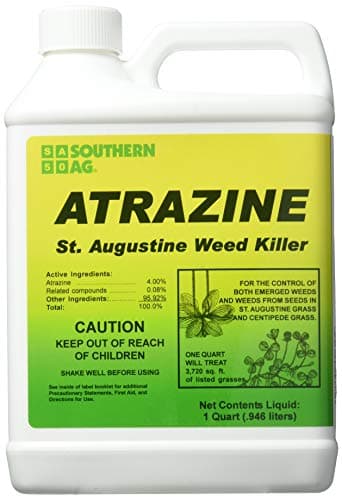
Southern Ag 006130 Atrazine St. Augustine Weed Killer 32oz Specialty Herbicide
Southern-grass herbicide option for St. Augustine and centipede lawns where three-way broadleaf products are unsafe.
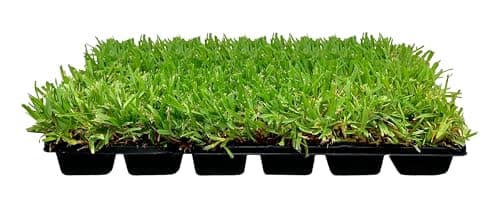
St. Augustine Palmetto Grass Plugs (18 Extra-Large Live Plugs)
Live Palmetto St. Augustine plugs, the way you actually start a St. Augustine lawn, since this grass is established from plugs or sod rather than seed.
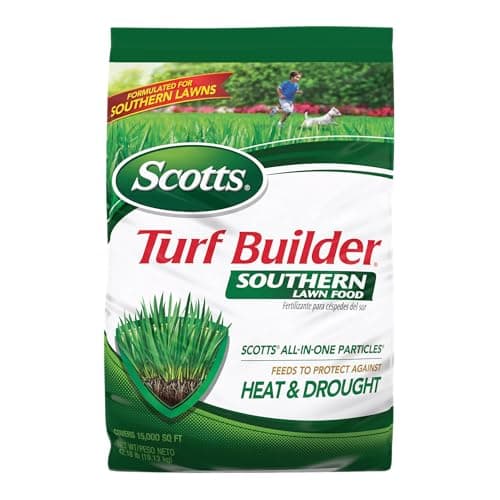
Scotts Turf Builder Southern Lawn Food
32-0-10 fertilizer with iron, formulated specifically for southern grasses like St. Augustine, Bermuda, Centipede, and Zoysia.
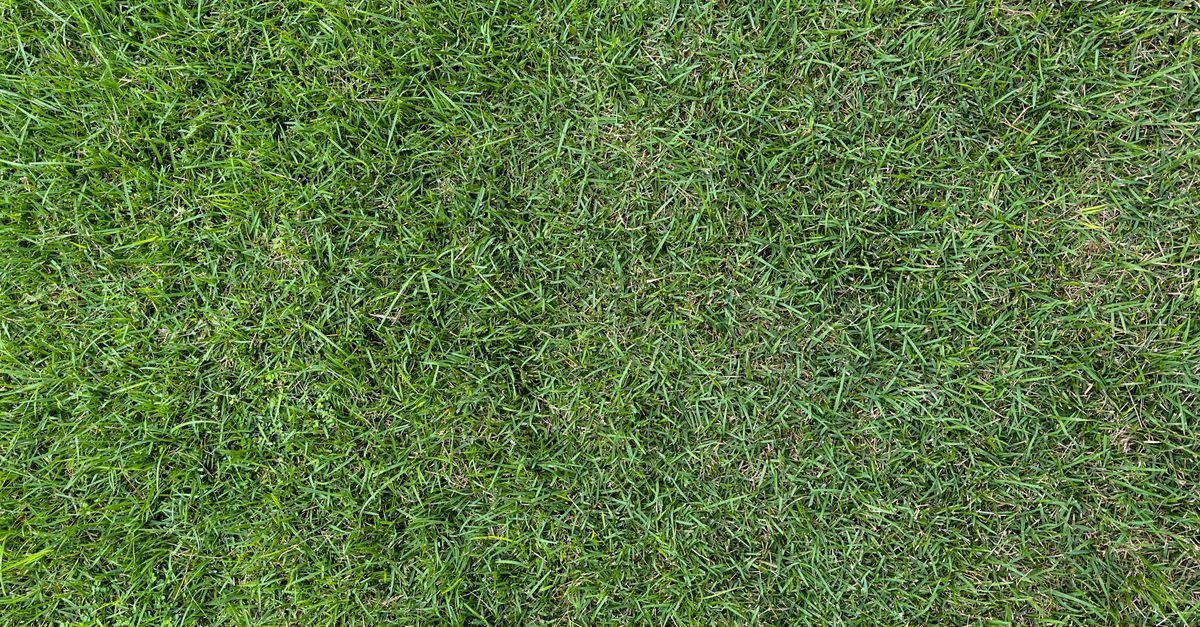
Georgia’s humid summers accelerate St. Augustine growth but also increase the risk of fungal diseases if nitrogen is over-applied or poorly timed. This grass is unique for its broad, flat blades and shallow roots (12 inches deep per our Grass Database), making it more susceptible to drought stress and fertilizer burn compared to Bermuda or Zoysia. Its high shade tolerance means it thrives where other Southern turf struggles, but the tradeoff is lower traffic tolerance and a greater need for careful nutrient management to keep it lush and disease-free.
Choosing the Best Fertilizer for St. Augustine Grass in Georgia (2026)
The most effective fertilizer for St. Augustine grass in Georgia delivers the right balance of nitrogen, phosphorus, and potassium (N-P-K), plus essential micronutrients like iron and magnesium to withstand local heat, humidity, and occasional drought. For 2026, look for a fertilizer with a 3:1:2 or 4:1:2 N-P-K ratio, such as 32-0-10 or 24-2-12, which supports dense green growth without promoting excessive thatch or disease.
Micronutrients play a critical role too. Iron boosts color (especially important in high pH or sandy soils prone to pale turf), while magnesium and sulfur help with photosynthesis and disease resistance. Granular slow-release fertilizers are the best choice for most Georgia lawns, offering steady feeding and lowering burn risk compared to quick-release or liquid products. Organic options can improve soil health, but synthetic blends usually deliver more precise results for St. Augustine’s demanding growth cycle. "Weed and feed" products should be used with caution-most three-way herbicide blends can damage St. Augustine, so only use products specifically labeled as “St. Augustine Safe.”
The Scotts Turf Builder Southern Lawn Food is an excellent fit for Georgia St. Augustine lawns, with a 32-0-10 formula and added iron for fast green-up and resilience through summer stress. For new lawns or patch repair, St. Augustine Palmetto Grass Plugs are the right start, as St. Augustine is never seeded but established from plugs or sod.
Reading Fertilizer Labels: Pro Tips
Understanding fertilizer labels is crucial for choosing the right product for St. Augustine in Georgia. The three numbers (N-P-K) indicate the percentage of nitrogen, phosphorus, and potassium by weight. For example, a 32-0-10 product delivers 32% nitrogen, 0% phosphorus, and 10% potassium. Look for keywords like “Southern Lawn” or “St. Augustine Safe”-these signal the product is formulated for warm-season grasses and won’t cause herbicide injury. Check the ingredient list for slow-release nitrogen sources (like sulfur-coated urea or polymer-coated urea), which provide steady feeding and minimize surge growth that leads to disease, as recommended by NC State TurfFiles.
Georgia St. Augustine Fertilizer Schedule & Application Calendar
Optimizing your Georgia St. Augustine fertilizer schedule means applying nutrients at the right times for maximum uptake and minimum disease risk. St. Augustine enters active growth once soil temperatures reach 65°F, usually in late April or early May in most of Georgia. The grass peaks in growth from May through September, requiring the bulk of its annual nitrogen during this window, with little to no feeding outside this period.
Based on our Grass Database, split fertilizer applications as follows: 20% of annual nitrogen in late spring after green-up, 55% spread across summer, and 25% in early fall (no later than mid-September in North Georgia or late September in the south). Never fertilize after grass growth slows-late nitrogen increases winter disease risk and runoff. Adjust timing for new sod or overseeded areas, which may need lighter, more frequent feedings for establishment. Newly installed plugs like St. Augustine Palmetto Grass Plugs respond best to diluted starter fertilizer in the first 2-3 weeks.
| Region | First Application | Last Application | Peak Fertilizer Window |
|---|---|---|---|
| North Georgia | Late April - Early May | Mid-September | June - August |
| South Georgia/Coast | Early - Mid April | Late September | May - September |
This table shows recommended start/end dates for fertilizer applications by Georgia region, ensuring nutrients are applied when St. Augustine is actively growing and can use them efficiently.
Step-by-Step Application Checklist
Before fertilizing, mow St. Augustine to 2.5-4 inches (never below 2.0 inches, as our dataset confirms), irrigate 24-48 hours prior if soil is dry, and check for adequate soil moisture-fertilizer should never be applied to drought-stressed grass. Calibrate your spreader according to product label rates and lawn size to ensure even coverage. After fertilization, water the lawn with 0.25-0.5 inches to move nutrients into the soil, but avoid saturating or causing runoff. Delay mowing for 24-48 hours post-application to maximize uptake.
Advanced Tips: Soil Testing, Amendments, and Customization
Soil testing is the foundation for a successful St. Augustine fertilizer plan in Georgia. Take samples from 3-5 areas of your lawn (4-6 inches deep), mix them in a clean bucket, and submit to your local extension office or a reputable lab. Your report will show pH (target 6.0-7.5 for St. Augustine), phosphorus, potassium, and micronutrient levels. If phosphorus is low, apply only as needed-Purdue Turfgrass Science notes phosphorus is rarely required on established lawns unless a soil test shows a deficiency.
- Purdue Turfgrass Science guidance: Phosphorus is rarely needed on established lawns unless a soil test shows a deficiency.
For Georgia’s clay soils, organic amendments like compost, biochar, or humic acids improve structure and nutrient retention. Sandy soils benefit from organic material to boost water- and nutrient-holding capacity. Aeration is essential where compaction limits root growth-perform core aeration in late spring or early summer, when St. Augustine is growing vigorously. Dethatching may be needed annually if thatch exceeds 0.5 inch, as excessive thatch blocks fertilizer from reaching roots.
Customize your fertilizer plan for shaded areas (which need less nitrogen), high-traffic zones (which may require more frequent feedings and soil repair), and coastal lawns (where salt exposure can stress turf). Integrate pest and disease control as part of your routine-St. Augustine is susceptible to chinch bugs and fungal diseases, both of which can worsen with fertilizer misapplication. For in-depth strategies, refer to related guides on St. Augustine grass disease identification and Georgia lawn pest management.
Seasonal Fertilizer Considerations for Georgia Lawns
Georgia’s seasons dictate the timing, rate, and type of fertilizer that will give the best results for St. Augustine lawns. Spring is for green-up and recovery, summer is for stress management, fall is for prepping for dormancy, and winter is for planning and soil amendment-not active feeding.
Spring: Wake-Up and Green-Up
Begin fertilizing once St. Augustine is fully green and soil consistently holds at least 65°F-usually late April to early May in Georgia. Use a slow-release, high-nitrogen product with added iron to promote deep color and recovery from winter dormancy. The timing data we track puts the first application at 20% of annual nitrogen, with no feeding before green-up to avoid wasted product and disease risk.

Summer: Stress Management
During Georgia’s hot, humid summers, St. Augustine needs the majority of its nitrogen (55% of annual total). Apply in 2-3 split doses, using slow-release formulas and watering deeply-1 inch per week, as our Grass Database specifies. Supplemental foliar iron sprays in July and August can boost color without pushing growth or disease. Avoid fertilizing during prolonged drought or when high temperatures exceed 95°F for several days.
Fall: Preparing for Dormancy
Apply the final 25% of annual nitrogen and boost potassium in early fall (by mid-September in North Georgia, late September in South Georgia) to build winter hardiness. Never fertilize after grass growth slows or frost is forecast, as late nitrogen increases the risk of large patch disease and weakens turf. This fall approach primes St. Augustine for a strong spring recovery.
Winter: Maintenance and Planning
Do not fertilize dormant St. Augustine in winter. Instead, focus on soil health by topdressing with compost, correcting pH, and planning your next year’s fertilizer program. If overseeding with rye or another cool-season grass, switch to a low-nitrogen, balanced fertilizer and follow cool-season management protocols.
Common Mistakes to Avoid with St. Augustine Fertilizer in Georgia
Misreading soil test results or skipping soil confirmation leads to costly over- or under-application of nutrients. Always double-check your soil test and adjust fertilizer rates only as recommended for your specific soil. Applying fertilizer too early in the spring or too late in the fall is a top mistake-this causes surge growth, wasted product, and opens the door to disease and runoff, especially in Georgia’s variable climate.
Safety oversights are another frequent issue. Over-applying fertilizer near water bodies or before heavy rain increases runoff and risks fines or environmental damage. Using non-St. Augustine-safe weed-and-feed products can harm pets, injure your turf, and violate local regulations. Failing to calibrate your spreader or mixing incompatible products leads to uneven growth and potential lawn injury. For detailed spreader setup, refer to our Spreader calibration guide, and for pet safety, review Lawn fertilizer safety for pets.
Conclusion
Feeding St. Augustine grass in Georgia requires more than just picking a fertilizer off the shelf. Start with a soil test, select a slow-release, Southern-formulated product like Scotts Turf Builder Southern Lawn Food, and stick to the optimal Georgia St. Augustine fertilizer schedule-late spring through early fall, with splits based on our recommended 3 lbs of nitrogen per 1,000 sq ft per year. Avoid common mistakes like mistimed applications, skipping soil amendments, and using non-St. Augustine-safe products. For your next steps, read our guides on St. Augustine lawn care in Georgia, Soil testing for Georgia lawns, and Georgia lawn pest and disease management. Drop your questions below for customized advice tailored to your Georgia lawn.
Top Picks
 Scotts Turf Builder Southern Lawn FoodCheck price on Amazon
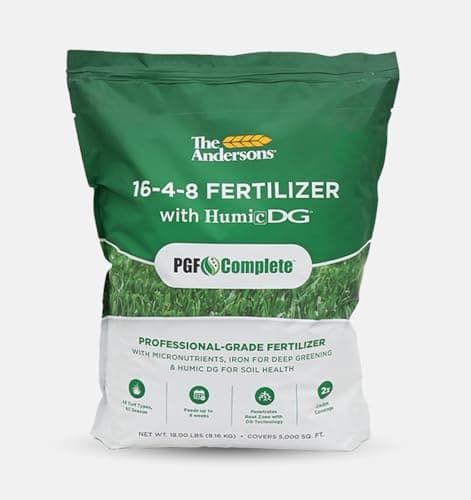
 The Andersons PGF Complete 16-4-8 (5,000 sq ft)Check price on Amazon
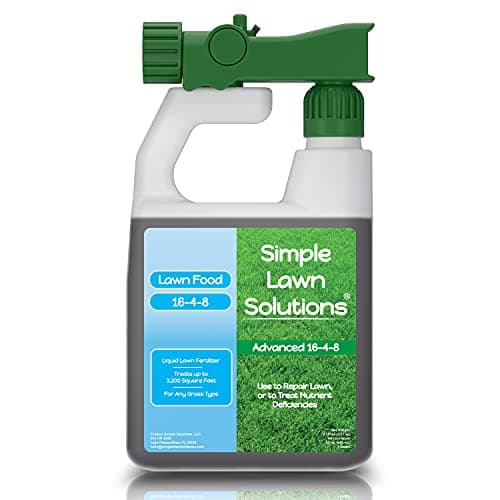
 Simple Lawn Solutions Advanced 16-4-8 Liquid Fertilizer (32 oz)Check price on Amazon
As an Amazon Associate we earn from qualifying purchases.
Free Lawn Care Tools
Begin fertilizing after the grass fully greens up in late April to early May. Make additional applications through summer and end by mid-September in the north or late September in southern Georgia.
A fertilizer with a 3:1:2 or 4:1:2 N-P-K ratio, such as 32-0-10 or 24-2-12, is ideal, delivering high nitrogen and potassium with little or no phosphorus unless a soil test shows a deficiency.
Apply 3 lbs of nitrogen per 1,000 sq ft annually, split as 20% in spring, 55% in summer, and 25% in early fall, with no fertilizer during winter dormancy.
Only use weed and feed products specifically labeled as 'St. Augustine Safe,' as most broadleaf herbicides can damage this grass. Always follow label directions and avoid mixing with other herbicides.
Clay soils may need less frequent feeding and benefit from aeration and organic amendments, while sandy soils require more frequent, lighter applications and organic matter to improve water and nutrient retention.
Applying fertilizer during winter dormancy wastes product, increases disease risk, and can lead to runoff. Wait until after spring green-up before applying any fertilizer.
Photos: thiago japyassu / Pexels, tu nguyen / Pexels, Lisa from Pexels / Pexels

Beat weeds and brown spots from your phone
Snap a photo, get the fix, and follow a plan timed to your soil and weather. Free on iPhone.