

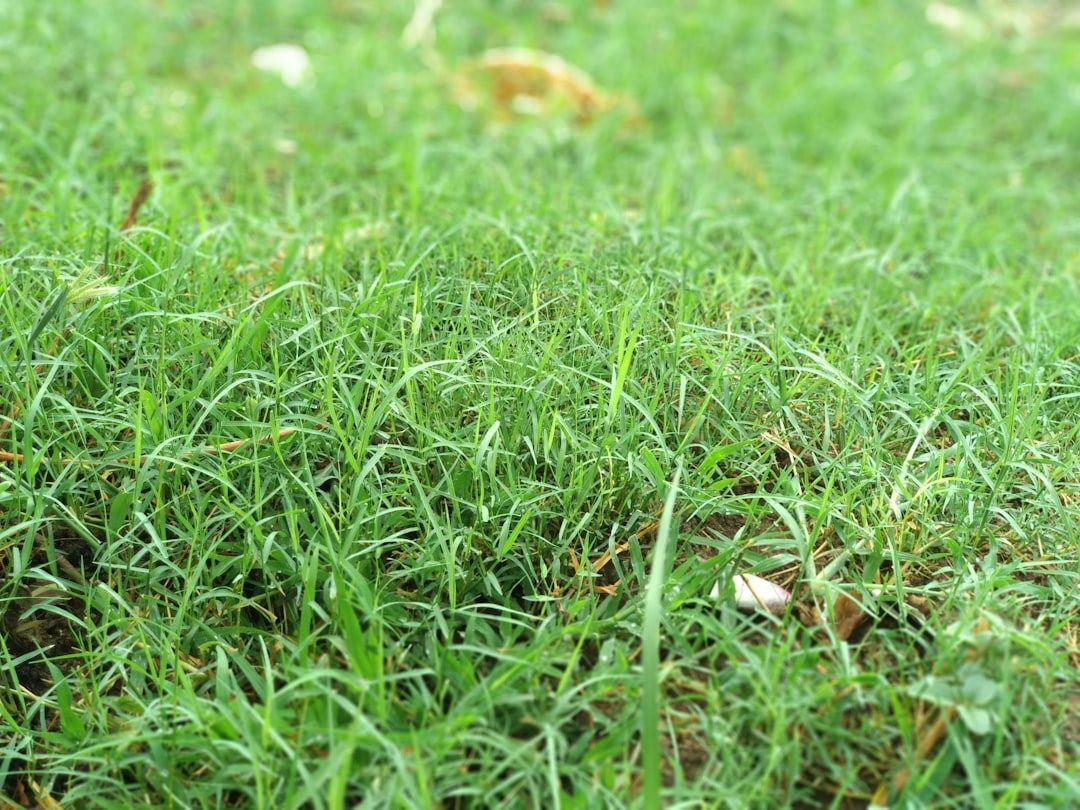
Can You Overseed After Applying Scotts Weed and Feed?
 Sarah MitchellLawn Diagnostics Specialist | 12 Years
As an Amazon Associate we earn from qualifying purchases.
Weeds and bare spots can make even the most diligent homeowner feel like they’re fighting a losing battle: you want to thicken your lawn with overseeding, but you also need to control the weeds that crowd out your desirable grasses. The intersection of these two goals raises the common question: can you overseed after applying Scotts Weed and Feed? The answer depends on timing, the type of weed and feed product used, your grass type, and your local climate. In this guide, I’ll walk you through the science, timing, and right steps-so you get a lush, weed-resistant lawn without wasting time or seed.
You can overseed after applying Scotts Weed and Feed, but only after the herbicide’s effects have dissipated enough to allow grass seed to germinate. For pre-emergent weed and feed products, wait at least 4-6 weeks (or until the product label says it’s safe) before overseeding; for post-emergent types, a 2-4 week wait is usually sufficient, but always confirm by testing a small patch. Overseeding too soon often leads to poor germination or thin stands. The fix is to wait for the recommended interval, check that weeds are dying back and soil is workable, then prep and seed following best practices. Avoid applying another weed and feed or fertilizer right after overseeding-young seedlings are sensitive to excess chemicals.
Understanding Scotts Weed and Feed Products
Before you decide whether you can overseed after applying Scotts Weed and Feed, it’s essential to understand what’s actually in these products, how they work, and how they interact with grass seed. “Weed and feed” refers to combination products that deliver both a herbicide (for weed control) and a fertilizer (to stimulate grass growth). Scotts offers various formulations, typically in granular form, but some are also available as liquids. These products are tailored for different regions: cool-season lawns in the North versus warm-season grasses in the South.
Recommended products
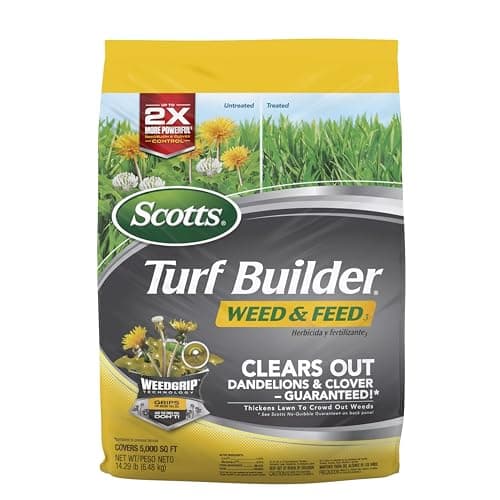
Scotts Turf Builder Weed and Feed 3
Kills existing weeds and feeds your lawn to thicken and crowd out future weeds.
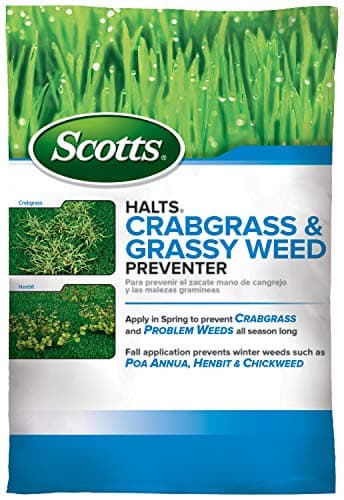
Scotts Halts Crabgrass and Grassy Weed Preventer
Standalone pre-emergent that prevents crabgrass, foxtail, and other grassy weeds before they start.
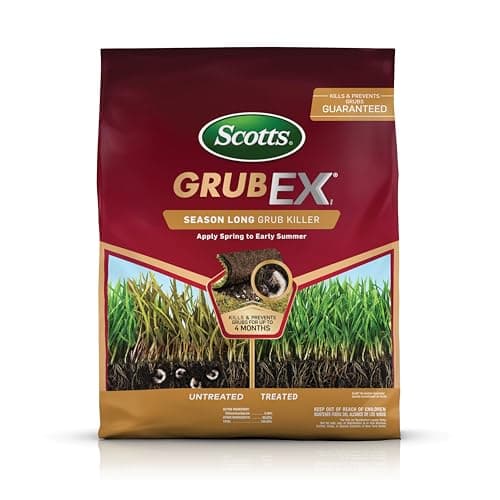
Scotts GrubEx1 Season Long Grub Killer
Scotts GrubEx1 Season Long Grub Killer can help prevent turf damage by killing grubs when they are young
The active ingredients usually fall into two categories: pre-emergent herbicides (which prevent weed seeds from sprouting) and post-emergent herbicides (which kill existing broadleaf weeds like dandelions). The fertilizer component is often a balanced NPK blend, designed to help the lawn thicken and crowd out future weeds naturally. The idea is to feed your grass while suppressing the competition.

For example, Scotts Turf Builder Weed and Feed 3 is a post-emergent, targeting visible broadleaf weeds, while Scotts Halts Crabgrass and Grassy Weed Preventer is a pre-emergent designed to stop grassy weeds before they start-each with different implications for seeding.
The Science Behind Weed and Feed Application
The key to understanding when you can overseed after applying Scotts Weed and Feed lies in the herbicide’s “residual effect”-how long it stays active in the soil. Pre-emergent herbicides, such as pendimethalin or dithiopyr, create a barrier that blocks both weed and grass seeds from germinating. This barrier can persist in the soil for 6-8 weeks or longer, depending on product, weather, and soil conditions. Overseeding during this period is usually ineffective: the seeds simply won’t sprout.
Post-emergent products like those containing 2,4-D or MCPA are designed to target weeds that have already emerged. They are less likely to inhibit grass seed germination but may still leave residues that can impact new seedlings for 2-4 weeks after application. Fertilizer alone won’t inhibit seed, but the presence of herbicides is the concern here.
Always check which type of weed and feed you have: pre-emergent products require a much longer wait before overseeding than post-emergent ones. Scotts products are clearly labeled, but when in doubt, refer to the product instructions and look for the active ingredients.
Why Overseeding is Important for Lawn Health
Overseeding is more than just a cosmetic fix-it's a cornerstone of healthy, resilient lawns. By introducing new grass seed, you thicken the turf, making it harder for weeds to get established. Overseeding also introduces improved varieties that may resist disease, drought, or pests better than your existing lawn. For cool-season lawns, fall is typically the best overseeding window, while warm-season lawns may benefit from late spring or even summer overseeding, depending on your region. A dense lawn is your best defense against future weed invasions.
Timing: When Can You Safely Overseed After Applying Scotts Weed and Feed?
The timing of overseeding after weed and feed application is critical. If you seed too soon, the herbicide may prevent germination or damage young seedlings. Wait too long, and you may miss the prime growing window for your grass type. Let’s diagnose this step by step.
How Long to Wait After Applying Scotts Weed and Feed Before Overseeding
Scotts and most university extension services recommend waiting until the herbicide’s activity has faded before overseeding. Here’s a general guideline:
- Pre-emergent weed and feed: Wait at least 4-8 weeks (or longer, depending on label directions).
- Post-emergent weed and feed: Wait 2-4 weeks, or until you see weed die-back and the label indicates it's safe to seed.
Some Scotts products specify even longer intervals for certain grass types. Always follow the strictest interval listed on the label.
The chart below summarizes the most common Scotts weed and feed products and their recommended overseeding intervals:
| Product Name | Type | Recommended Wait Before Overseeding | Best For |
|---|---|---|---|
| Scotts Turf Builder Weed and Feed 3 | Post-emergent | 2-4 weeks | Cool-season & northern warm-season lawns |
| Scotts Halts Crabgrass and Grassy Weed Preventer | Pre-emergent | 4-8 weeks (or after soil barrier breaks down) | Spring crabgrass prevention |
| Scotts GrubEx1 Season Long Grub Killer | Insecticide (not weed and feed) | No delay needed for overseeding | All lawns with grub issues |
These intervals assume typical weather. Heavy rain, drought, or very cool weather can extend or shorten the residual effect. When in doubt, test a small area before overseeding your entire lawn.
Signs Your Lawn is Ready for Overseeding
Visual cues tell you when it’s safe to overseed after applying Scotts Weed and Feed. Look for the following:
- Weed die-back: Treated weeds should be yellowing, wilting, or disappearing.
- Lawn color: Grass should be actively growing and green, not stressed or brown.
- Soil moisture: The soil should be workable, not waterlogged or bone dry.
To confirm that herbicide activity has faded, try a simple germination test: scratch a 1-foot patch of soil, sow a handful of grass seed, and water daily. If you see sprouting in 7-10 days, it’s likely safe to overseed the rest of your lawn. If not, wait another week and retest.
Regional and Seasonal Considerations
Best overseeding timing varies by region and grass type. According to our Regional Climate Data, the Northeast and Upper Midwest-both cool-season regions-have optimal overseeding windows in the fall and sometimes spring, depending on frost dates and soil temperatures. For example, the Northeast’s last frost is typically April 15-May 1, while the Upper Midwest sees its last frost as late as May 15. Warm-season regions like the Southeast overseed from late spring into summer, after the last frost and once soil temperatures are reliably above 65°F.
Our Regional Climate Data puts the pre-emergent window in the Northeast between March 15 and April 15, targeting a soil temperature of 55°F. If you’ve applied a pre-emergent weed and feed, overseeding before mid-May may not be effective. In the Southeast, the pre-emergent window is even earlier-from February 15 to March 15-which means spring overseeding should wait until mid- to late April at the earliest.
- Purdue Extension recommends waiting at least 4 weeks after pre-emergent application before overseeding and confirms that post-emergent products may allow seeding after 2-3 weeks, depending on weather.
Enter your ZIP code below to find your exact timing:
Loading Herbicide Timing Calculator...
Step-by-Step: How to Overseed After Applying Scotts Weed and Feed
Once your waiting period is up and your lawn is ready, overseeding becomes a matter of careful preparation and follow-through. Here’s the sequence I use with clients to maximize seedling survival and turf density.
Preparation: Assessing Your Lawn
First, verify that the herbicide’s residual effect is gone. Use the patch test described above-sow a handful of seed in a small area and monitor for germination over 7-10 days. If the patch sprouts successfully, proceed. If not, give it another week.

Next, prep your soil. Aeration is critical if your lawn is compacted-if a screwdriver can’t penetrate 6 inches deep, rent a core aerator. Dethatching helps remove old thatch that can block seed-soil contact. Finally, test your soil pH; most lawn grasses thrive at 6.0-7.0. Adjust if necessary with lime or sulfur.
Selecting the Right Grass Seed
Choose grass seed that matches your existing turf and regional climate. For the Northeast and Upper Midwest, our Regional Climate Data shows Kentucky Bluegrass, Perennial Ryegrass, and Fine or Tall Fescue as primary options. In the Southeast, Bermudagrass, Zoysia, St. Augustine, Centipede, and Bahia are common. Blending seed types can improve disease resistance and fill different lawn microclimates (sun, shade, traffic).
For uniform results, match seed blend to your dominant grass type-if unsure, see our guide on identifying your grass type.
The Overseeding Process
- Mow your lawn short (1.5-2 inches for cool-season, 1-1.5 inches for warm-season grasses). This ensures light reaches the soil and reduces competition for new seedlings.
- Remove clippings and debris. Rake up leaves, sticks, and old thatch to create a clean seeding bed.
- Aerate. Use a core aerator to relieve compaction and open channels for seed and water.
- Spread seed evenly. Use a broadcast spreader for large lawns, or hand seed for small patches. Overlap passes slightly to avoid skips.
- Rake lightly. Use a leaf rake to gently incorporate seed into the top 1/8 inch of soil. Good seed-to-soil contact is critical for germination.
- Water gently but thoroughly. Keep the soil consistently moist (not soggy) until seedlings are at least 2 inches tall. This usually means watering lightly 1-2 times daily for 2-3 weeks, then tapering off.
- Fertilize cautiously. If you used a weed and feed, delay additional fertilization until seedlings have at least two mowings. Too much nitrogen early can burn tender roots.
If you’re looking for a high-quality post-emergent weed and feed for established lawns that won’t interfere with overseeding after a short interval, Scotts Turf Builder Weed and Feed 3 is a solid choice. It’s best for cool-season lawns with existing weeds and provides enough feeding to support thickening, but always wait the recommended 2-4 weeks before seeding.
Post-Seeding Care: Maximizing Success
Water consistently and avoid heavy foot traffic on newly seeded areas. Once grass reaches mowing height (3-4 inches for most types), mow gently with a sharp blade, never removing more than 1/3 of the leaf blade at a time.
Do not apply additional weed control or fertilizer until new grass has been mowed at least twice. Monitor for seedling emergence-if you see thin spots after 21 days, reseed those areas. Keep an eye out for pests or diseases; for grub problems, Scotts GrubEx1 Season Long Grub Killer is effective and safe to use after seedling establishment (once the grass has been mowed 2-3 times).
Advanced Lawn Care Tips: Combining Weed & Feed with Overseeding
Sequencing and alternative strategies become important if you’re dealing with heavy weed pressure or want to minimize chemical use.
Sequencing for Maximum Results
Should you overseed before or after using weed and feed? If your lawn is more than 50% weeds, kill the weeds first, wait for the recommended interval, then overseed. If you have only a few patches or want to minimize herbicide use, overseed first, then spot-treat weeds with a targeted post-emergent 4-6 weeks later, once seedlings are established.
To minimize weed competition, mow low, prep the soil, and overseed as soon as the window opens. Use split applications-apply weed control in early spring, overseed in late spring or fall, and spot-treat late-emerging weeds as needed.
Alternative Approaches
If you prefer organic or natural methods, use corn gluten meal as a pre-emergent (note: this also blocks grass seed, so timing is still key), or hand-pull weeds before overseeding. After seeding, try vinegar-based spot treatments away from young seedlings, but avoid broad applications until the new grass is mature.
For stubborn annual weeds, use sequential spot-treatment after grass has been mowed twice. This allows seedlings to gain strength before facing herbicides.
Special Cases: High-Traffic Lawns, Shady Areas, and Renovations
High-traffic lawns may require more frequent overseeding and core aeration. Use turf-type tall fescue or perennial ryegrass blends for durability. In shady areas, choose shade-tolerant seed blends and avoid heavy nitrogen feeding, which can stress seedlings. For full lawn renovation after severe weed infestation, consider a non-selective herbicide, wait 2-3 weeks, then overseed aggressively and follow with careful aftercare.
Year-Round Overseeding Strategies
Optimal overseeding timing hinges on your region, grass type, and the weed and feed product used. Here’s how to adjust your plan for the season and climate.
Spring vs. Fall Overseeding: Pros, Cons, and Product Interactions
Fall is generally the best time to overseed cool-season lawns-temperatures are cooler, soil is warm, and weed pressure drops. Weed and feed applications are less common in fall, making it easier to avoid herbicide-seed conflicts. In spring, pre-emergent weed and feed can block both weeds and your new grass seed. If you must overseed in spring, wait until after the pre-emergent window closes (when soil temps are above 55°F and it’s been 4-8 weeks since application).

Spring overseeding is more common in warm-season lawns, but watch for heavy rains or unseasonable frosts that can delay germination. If drought or excessive rain threatens, delay overseeding-seedlings are vulnerable to both extremes.
Overseeding in Warm-Season vs. Cool-Season Lawns
Bermudagrass and zoysiagrass lawns in the Southeast can be overseeded in late spring or summer (after last frost and soil temps reach 65-70°F). For winter color, some southern homeowners overseed with perennial ryegrass in fall-just be sure no pre-emergent herbicide remains in the soil. Cool-season lawns (Kentucky Bluegrass, Fescue, Ryegrass) do best with fall overseeding, but spring is possible if you carefully time around weed and feed applications. According to our Regional Climate Data, the best window for fall overseeding in the Northeast is between the last frost and first frost (May-October).
Common Mistakes to Avoid
Most guides gloss over the real-world pitfalls of overseeding after using weed and feed. Here are the most common mistakes I see-and how to avoid them.
Misreading Product Labels and Overlooking Residual Effects
Not all weed and feed products are the same. If you’re not sure whether your Scotts product is pre-emergent or post-emergent, check the active ingredients and instructions. Applying seed too soon after a pre-emergent will almost always result in poor germination.
Failing to check the label’s recommended waiting period is a classic mistake. If the instructions say “do not seed for 8 weeks,” take it seriously-residual herbicide can persist longer than you think, especially in cool, dry conditions.
Timing Errors: Overseeding Too Soon or Late
Overseeding before the herbicide barrier breaks down wastes seed and effort. On the flip side, waiting too long can mean you miss your region’s prime growing window-resulting in weak seedling establishment before summer heat or winter cold.
Ignoring Regional and Lawn-Type Variations
Don’t apply a one-size-fits-all approach. Cool-season lawns, like Kentucky Bluegrass or Fescue, have different overseeding and weed control windows than warm-season lawns like Bermudagrass or Zoysia. Our Regional Climate Data confirms the importance of aligning your overseeding and weed and feed timing to your region’s frost and soil temperature patterns.
Overapplication or Misapplication of Products
Doubling up on weed and feed or fertilizer “just to be safe” can burn new seedlings and damage established turf. Always follow label rates and allow the recommended wait times between applications. Keep kids and pets off the lawn until the product has been watered in and dried-check the product’s re-entry interval.
Skipping Confirmation Tests
Always test a small patch for seed germination before overseeding your entire lawn. This early check can save you weeks of frustration. Don’t ignore soil health-test for compaction and pH, and address problems before seeding for best results.
- Contact your local extension office for region-specific weed and feed and overseeding intervals, especially if you’re using a non-Scotts product or have unique lawn conditions.
Conclusion
Yes, you can overseed after applying Scotts Weed and Feed-but only with careful timing and preparation. The critical steps are to wait for the herbicide to dissipate, confirm with a test patch, prep the soil, choose the right seed for your region, and water consistently. Don’t rush the process or skip steps-healthy, dense turf is the best defense against future weed outbreaks. For more detail on related topics, see How to Kill Crabgrass and Prevent It from Returning, Best Time to Aerate and Overseed Your Lawn, and Scotts Weed and Feed Application Tips. With a little detective work and patience, you can achieve a lush, weed-resistant lawn year after year.
Related Scotts Guides
Top Picks
- Scotts Turf Builder Weed and Feed 3 (5,000 sq. ft.)Check price on Amazon
- Scotts Turf Builder Grass Seed Bermudagrass (4 lb)Check price on Amazon
- Scotts Turf Builder EdgeGuard Mini Broadcast SpreaderCheck price on Amazon
As an Amazon Associate we earn from qualifying purchases.
Free Lawn Care Tools
For pre-emergent products, wait 4-8 weeks or as the label directs; for post-emergent types, 2-4 weeks is usually sufficient. Always confirm with a test patch before overseeding your entire lawn.
Overseeding too soon can result in poor or no seed germination, as residual herbicide may block new grass seed from sprouting. This wastes time, seed, and effort.
No, applying weed and feed right after seeding can harm seedlings. Wait until new grass has been mowed at least twice before using any weed control products.
Scotts Turf Builder Weed and Feed 3 is a post-emergent and allows for overseeding after a shorter waiting period (2-4 weeks), making it a good choice for lawns needing both weed control and new seed.
Try a small test patch: seed a 1-foot area, water daily, and monitor for germination over 7-10 days. If seed sprouts, the soil is ready for overseeding.
Fall is best for cool-season lawns, while late spring to early summer works for warm-season types. Always wait the product's recommended interval before seeding.
Photos: Alexas_Fotos / Pixabay, www.kaboompics.com / Pexels, Get Lost Mike / Pexels

Beat weeds and brown spots from your phone
Snap a photo, get the fix, and follow a plan timed to your soil and weather. Free on iPhone.
Related Articles
 Weed Control
Is Scotts Weed and Feed a Pre-Emergent? (Short Answer: No)
Mar 31, 2026•7 min read Weed Control
How Long Does Scotts Weed and Feed Take to Work? Day-by-Day Timeline
Mar 31, 2026•7 min read Weed Control
Summer Weed Control: Best Products and Timing for Crabgrass and Nutsedge (2026)
Apr 25, 2026•7 min read

