

Dormant vs Dead Grass: How to Tell the Difference
Updated August 18, 2026
Tug a handful. Dormant grass resists and the crowns stay firm, so it greens back up within about two weeks of steady water. Dead grass lifts out with no resistance and leaves sharp-edged patches, and it only comes back if you reseed or lay sod.
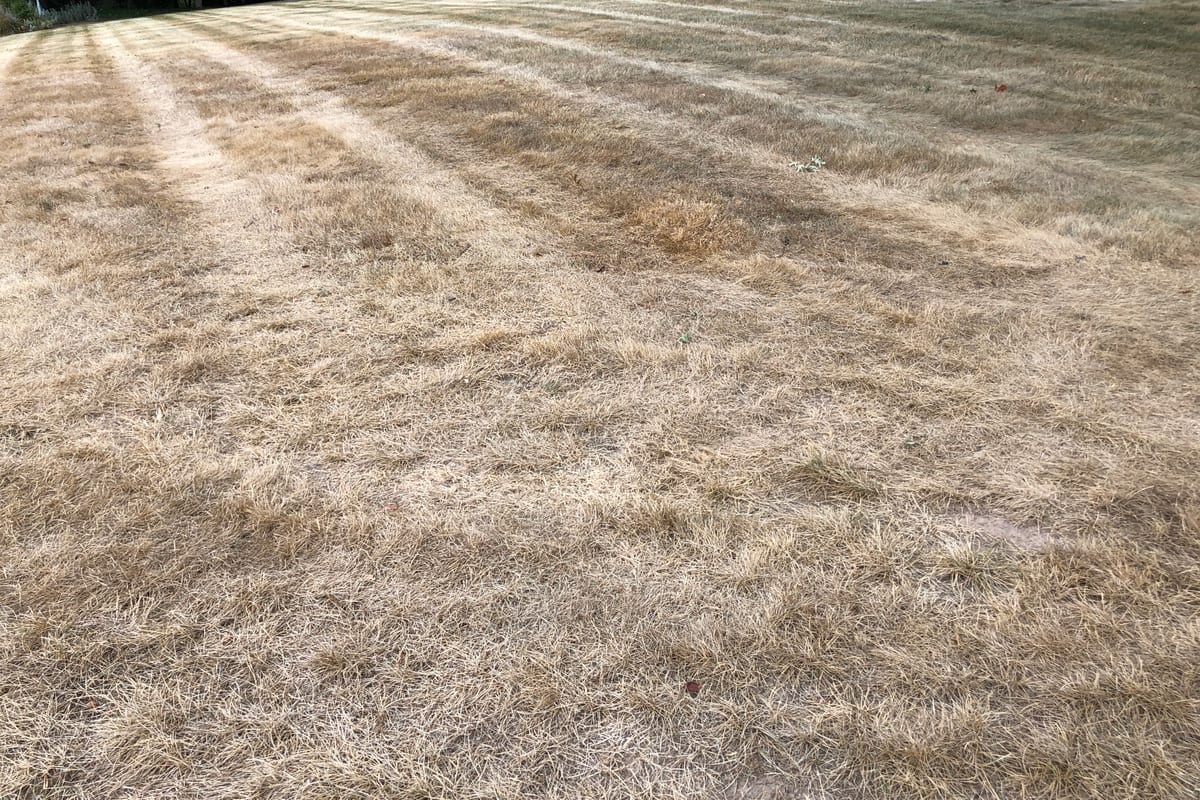
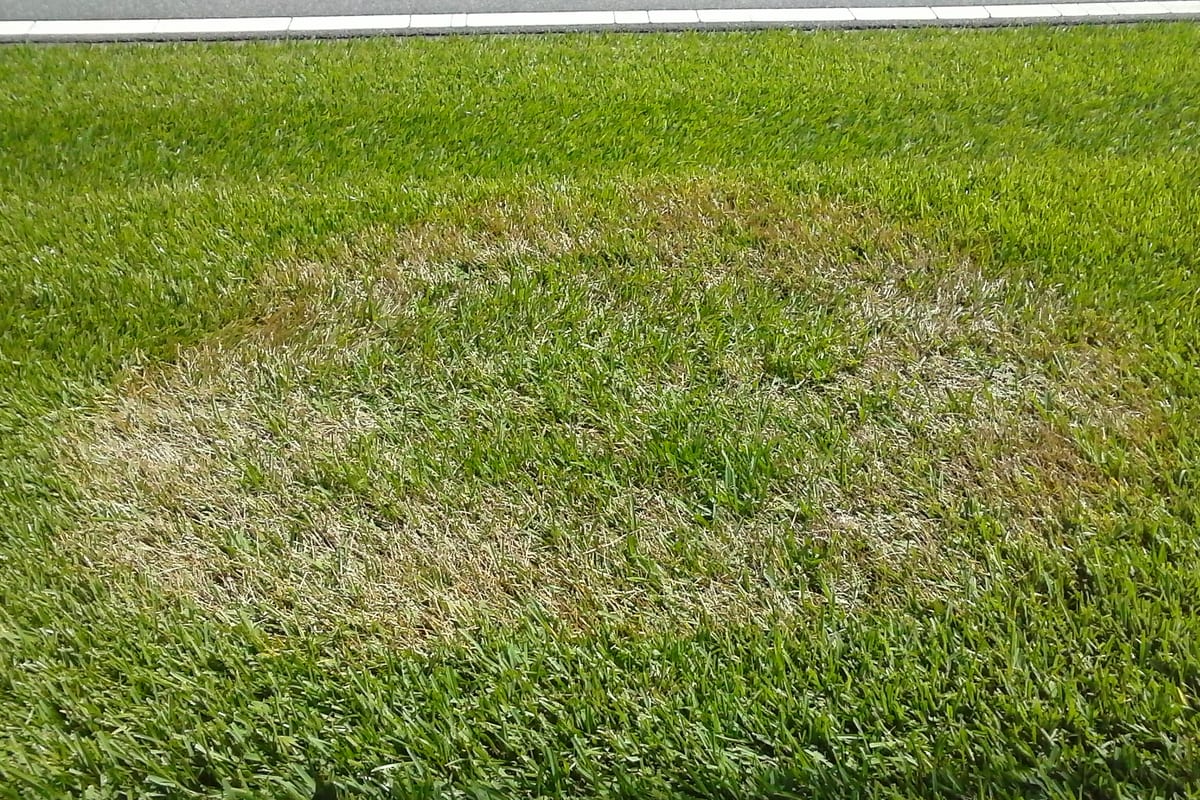
Dormant grass is alive and brown on purpose, while dead grass is gone and will not green up again no matter how much you water it. The fastest way to tell them apart is the tug test: grab a handful of the brown turf and pull firmly. Dormant grass resists, and the blades tear before the plant leaves the soil. Dead turf lifts out in your hand like a piece of old carpet, because the roots that anchored it are gone.
The second clue is shape. Dormancy is a whole-lawn response to weather, so it browns evenly across every area that gets the same sun and water. Death is local, so it shows up as patches, rings, streaks, or the outline of whatever caused it. A lawn that goes uniformly straw-colored in a July heat wave or after the first hard frost is behaving normally. A lawn with sharp-edged brown spots in the middle of green turf has a problem worth diagnosing, and the cause matters because grubs, disease, and a fertilizer spill all look similar from standing height and need completely different fixes.
Quick verdict
Dormant grass passes the tug test, browns evenly across the whole lawn, and greens back up within about two weeks of steady water. Dead grass pulls out with no resistance, shows sharp patch edges, and only comes back if you reseed or lay sod.
Dormant Grass vs Dead Grass: at a glance
Tug test
Color pattern
Crown at the base of a plant
Edges of the brown area
Roots
Timing
Response to water
How much of the lawn
Usual cause
What to do next
Verdict
AIt is probably dormant if...
- The whole lawn turned the same shade of straw at roughly the same time.
- A firm tug tears the blades but does not lift the plant out of the soil.
- It happened during a heat wave, a long dry spell, or right after the first hard frost.
- Pulling a plant apart shows a firm, pale crown and white roots still in the ground.
- Shaded or irrigated parts of the yard are still green while the exposed parts are not.
BIt is probably dead if...
- The brown area has a sharp edge, a ring, or a shape you can trace.
- The turf lifts out in a sheet or handful with no root resistance at all.
- Two weeks of steady watering changed nothing.
- The crowns at the base of the plants are brown, dry, and crumble.
- You can name the event that caused it: a spill, a dog, a scalped pass, grubs, or disease.
Get a deep, infrequent watering plan for your grass type and ZIP so a dormant lawn wakes up instead of dying.
Get your seasonal lawn care calendar for your ZIP
Every task, from feeding to weed control to aeration, has a window that shifts by region. Add your ZIP and we will email your 12-month lawn calendar right away, starting with this month.
Seasonal reminders and tips. No spam. Unsubscribe anytime.
Frequently asked questions
Is my grass dead or just dormant?
Do the tug test before you do anything else. Grab a handful of the brown turf and pull firmly. If the blades tear but the plant stays anchored, the crown and roots are alive and the lawn is dormant. If the whole patch lifts out with no resistance, that area is dead. Back the tug test up with two more checks: dormancy browns evenly across the whole lawn, while dead areas are patchy with sharp edges, and dormant crowns are pale green and firm at the base while dead crowns are brown and crumbly.
How do you do the tug test on a lawn?
Pick a spot in the middle of the brown area, close your hand around a small handful of blades near the soil, and pull straight up with steady pressure. Living dormant turf holds on, and you end up with torn blade tips in your hand. Dead turf comes away as a clump or a mat with soil falling off it. Repeat the test in three or four places, because most lawns are a mix. Then pull one plant apart at the base and look at the crown, the short white or pale-green section right where the blades meet the roots. Firm and pale means alive; brown and papery means gone.
How long can grass stay dormant?
Healthy turf tolerates several weeks of dormancy in a normal summer or winter without dying, and cool-season lawns in particular are built to shut down and wait. The risk starts when a drought runs long enough that the crowns dry out. If you want insurance during an extended dry spell, water occasionally rather than either soaking the lawn back into growth or letting it go completely bone dry, and follow the guidance your local extension service publishes for your grass type. Winter dormancy is not a concern at all: warm-season lawns go tan for months every year and green up on schedule.
Will watering bring dormant grass back?
Yes, if it is genuinely dormant. Water deeply and infrequently, aiming for about an inch a week including rain, and expect green to show up within one to two weeks rather than overnight. Light daily sprinkles do not work, because they wet the top of the soil and never reach the roots that need to wake up. If two weeks of proper watering produces no change anywhere in the patch, stop watering it and start planning a reseed, because you are watering dead soil.
Does dormant grass still need to be watered?
It does not need to be watered to survive a normal dormancy, but it does need you to stay off it. Traffic on dormant turf crushes crowns that have no ability to repair themselves until they green up, and that is how a dormant lawn turns into a dead one. If you want to keep the crowns comfortable through a long drought, an occasional deep soak is better than frequent light watering. If you want the lawn green rather than merely alive, you are back to a full watering schedule.
Can dormant grass turn into dead grass?
Yes, and that is the main reason the distinction matters. Dormancy is a survival state with a limit. If the drought outlasts the reserves in the crowns, or if the lawn takes heavy foot traffic, mower passes, or a dog run while it is dormant, those crowns die and that area does not come back. The practical rule is simple: while a lawn is brown and dormant, do not mow it, do not park on it, do not fertilize it, and keep the play and the traffic somewhere else.
How long does it take for reseeded areas to green up?
Longer than most people expect. After you rake out the dead material and get seed in contact with soil, you are usually looking at a couple of weeks before you see the first green fuzz and a full season before that patch matches the rest of the lawn in density. Timing matters more than product choice. Cool-season seed wants the late-summer to early-fall window, and warm-season lawns repair from plugs or sod in late spring. Our overseeding calculator gives you both the seed quantity and the window for your ZIP.