

Clover vs Oxalis: Three Leaflets, Two Very Different Weeds
Updated August 18, 2026
Look at the leaflet and the flower. Rounded leaflets with a pale band and white pom-pom flowers are white clover, and feeding the lawn is usually the first move. Heart-shaped notched leaflets with small yellow flowers are oxalis, and a thicker lawn plus early pulling is the fix.
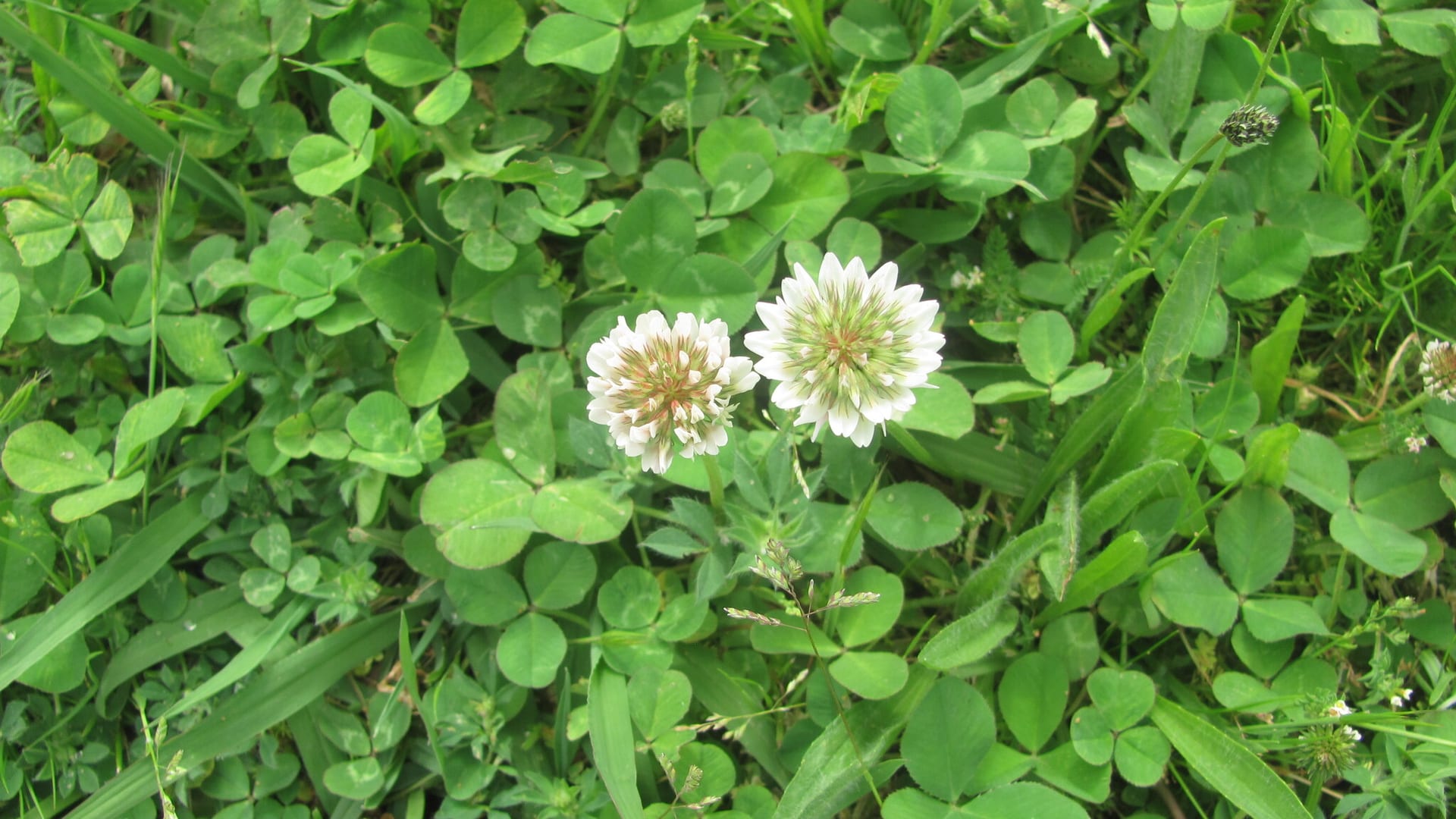
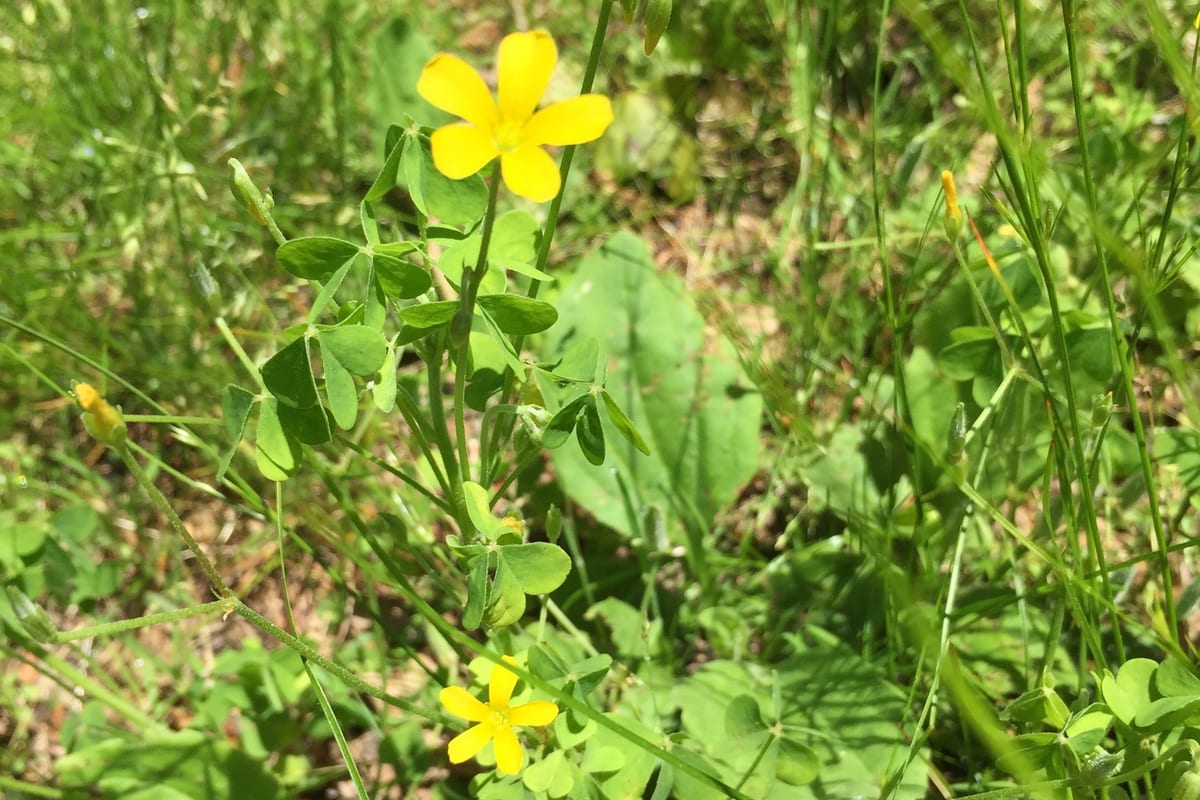
Look at the leaflet shape and the flower color and the answer is immediate: clover has three rounded leaflets, often with a pale crescent watermark, and white to pinkish pom-pom flowers, while oxalis has three heart-shaped leaflets with a notch at the tip and small bright-yellow five-petal flowers. Both grow low, both have three leaflets, and both get called clover by just about everyone, which is why the two get treated with the same products and the same disappointing results.
The reason to separate them is that they are telling you different things. Heavy white clover is usually a nitrogen report: clover fixes its own nitrogen out of the air, so it thrives exactly where underfed grass is losing, and a regular feeding program often shrinks it with no spraying at all. Oxalis is an opportunist that moves into thin, open turf and reseeds aggressively from little capsules that fling seed several feet when they dry. Clover you can legitimately choose to keep. Oxalis is a weed by any reasonable definition, and the fix for it is density plus early hand-pulling.
Quick verdict
Round leaflets with a pale band and white pom-pom flowers means white clover, and feeding the lawn is usually the first move. Heart-shaped notched leaflets with yellow flowers means oxalis, and the fix is a thicker lawn plus pulling it before the seed capsules dry.
White Clover vs Oxalis (Yellow Woodsorrel): at a glance
Leaflet shape
Leaf marking
Flower
How it spreads
Growth habit
What it says about your soil
Drought behavior
Season
Is it worth keeping?
First move
Verdict
AIt is white clover if...
- The three leaflets are rounded rather than notched at the tip.
- You can see a pale crescent watermark across the leaflets.
- The flowers are white or slightly pink globes and the bees are all over them.
- The patch spreads as a low mat with runners rooting along the ground.
- It stays green through a dry spell that has browned the grass around it.
BIt is oxalis if...
- Each leaflet is heart-shaped with a clear notch at the tip.
- The flowers are small, bright yellow, and have five petals.
- The foliage carries a purple or reddish cast rather than plain green.
- It grows as scattered small upright clumps instead of a spreading mat.
- You can find slim upright seed capsules that pop open when you touch them dry.
Heavy clover is usually a nitrogen problem. Get the feeding rate for your grass type, lawn size, and ZIP before you spray anything.
Get your seasonal lawn care calendar for your ZIP
Every task, from feeding to weed control to aeration, has a window that shifts by region. Add your ZIP and we will email your 12-month lawn calendar right away, starting with this month.
Seasonal reminders and tips. No spam. Unsubscribe anytime.
Frequently asked questions
Is it clover or oxalis in my lawn?
Check the tip of a leaflet and the color of the flower. Clover leaflets are rounded and often carry a pale crescent watermark, and the flowers are white or pinkish globes. Oxalis leaflets are heart-shaped with a distinct notch at the tip, and the flowers are small and bright yellow with five petals. If there are no flowers yet, the leaflet notch settles it on its own, and oxalis foliage frequently has a purple or reddish tint that clover does not.
Is clover or oxalis harder to kill?
Oxalis is generally the more stubborn of the two in a home lawn, because it reseeds constantly from capsules that fling seed several feet and it keeps producing them from late spring into autumn. Clover is a perennial that spreads by runners and seed, which sounds worse, but clover responds to something oxalis does not: feeding the grass. Take clover nitrogen advantage away with a real fertilization program and many lawns watch it recede over two seasons with no herbicide at all.
Does clover mean my soil is bad?
It usually means your soil is low in nitrogen, which is a very fixable thing rather than bad soil. Clover is a legume, so it partners with root bacteria to pull nitrogen out of the air and feed itself, while grass has to get nitrogen from the soil. In an underfed lawn that gap widens every season and the balance tips toward clover. That is why heavy clover is best read as a report rather than an invasion, and why fertilizing is the first move, not the last.
Should I keep clover in my lawn?
It is a legitimate choice and plenty of people make it deliberately. Clover stays green through drought that browns everything around it, supports pollinators, and quietly fertilizes the grass next to it. Some owners now overseed micro-clover on purpose for exactly those reasons. The trade-offs are the bee traffic in bare feet, the patchy two-tone look next to fine turf, and the fact that it flowers. If a uniform grass stand is the goal, feed the lawn first and treat spraying as the second step.
How do I get rid of oxalis?
Start with density and timing. Hand-pull while the soil is moist and, most importantly, before the seed capsules mature, because a plant left to dry out will scatter the next generation for you. Raise the mowing height so germinating seedlings sit in shade, and keep the lawn fed so thin patches close. If you do reach for a product, choose one labeled for oxalis and for your specific grass type, apply at the rate on the label, and expect to repeat it, because the seed bank in the soil is what you are actually fighting.
Is oxalis the same as shamrock?
The plant sold as a potted shamrock is usually an ornamental oxalis, so the family is the same even though the lawn weed and the gift-shop plant are different species. Yellow woodsorrel, the one in your turf, is a small weedy oxalis with yellow flowers and heart-shaped leaflets. True clover is a different genus entirely, with rounded leaflets and white flowers, and it is what most people picture when they think of a shamrock. Three leaflets alone never identifies any of them.