

Crabgrass vs Bermudagrass: How to Tell Them Apart
Updated August 18, 2026
Pull on the clump. Crabgrass lifts out in one shallow piece and its blades are wide and pale, while bermudagrass will not budge because it runs by stolons above ground and rhizomes below. Crabgrass dies at frost; bermuda goes tan and returns from the same roots.
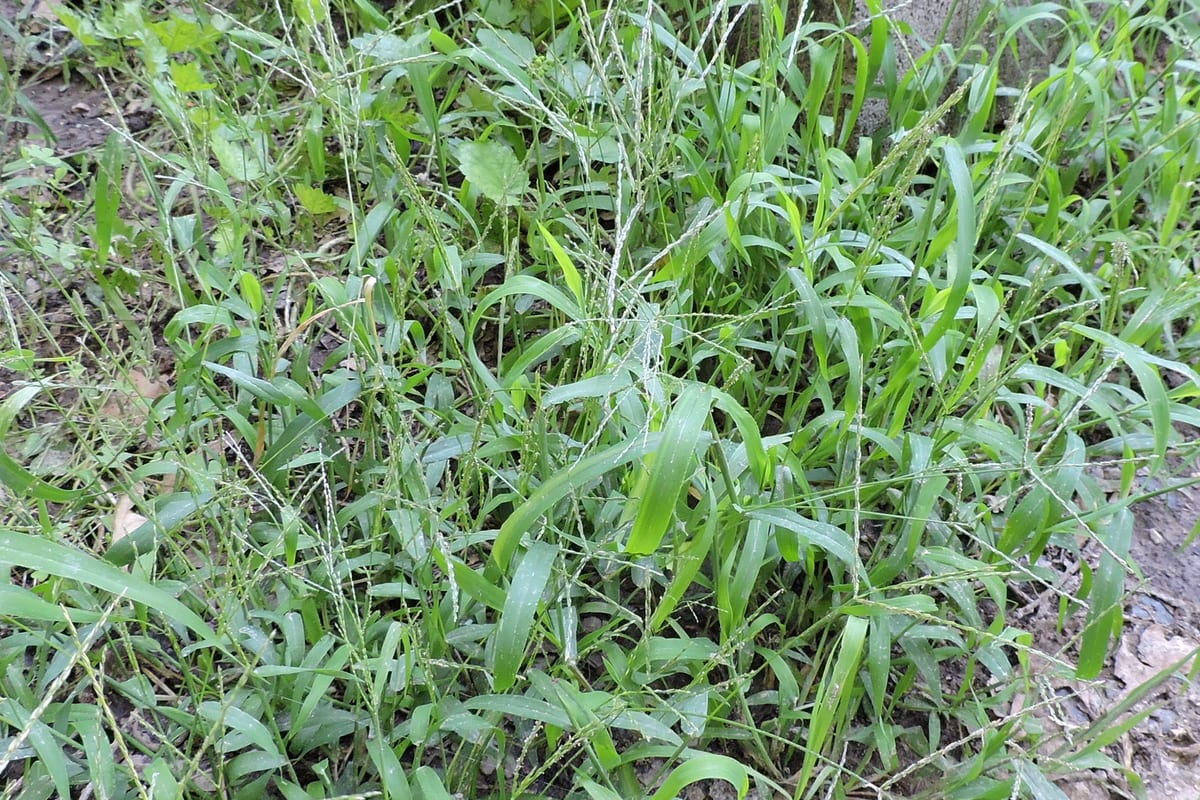
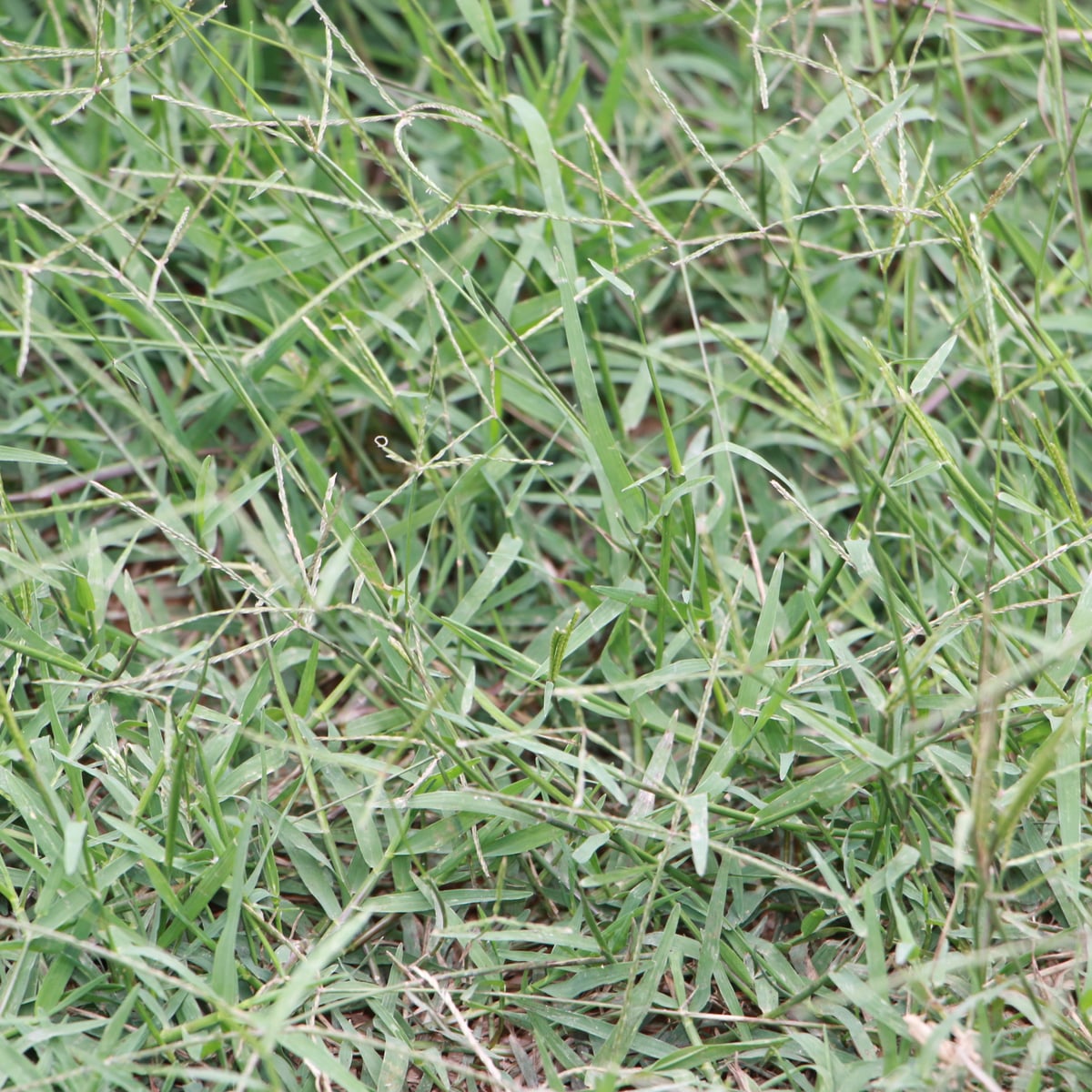
The fastest way to tell crabgrass from bermudagrass is to pull on it: crabgrass lifts out as one shallow clump with the stems radiating from a single point, while bermudagrass refuses to budge because it runs sideways above ground and below ground and roots again at every node. The blades give it away too. Crabgrass blades are wide, flat, and noticeably lighter green than the lawn around them. Bermuda blades are narrow and fine, and a bermuda lawn reads as a dense mat rather than a set of separate clumps.
This is worth getting right because the two plants live on completely different schedules. Crabgrass is a summer annual. Every plant you see grew from seed this spring, and every one of them dies at the first hard frost, which means a well-timed spring pre-emergent breaks the whole cycle. Bermudagrass is a perennial that comes back from the same roots for years. If bermuda is your lawn, that is exactly what you want. If bermuda has crept into a cool-season lawn, treating it like crabgrass will waste your money, because there is nothing seasonal about it to prevent.
Quick verdict
If it pulls out as a single flat clump with wide pale blades, it is crabgrass and spring pre-emergent timing solves it. If it will not pull, spreads by runners, and greens back up from the same spot every year, it is bermudagrass and you are dealing with a permanent grass, not a seasonal weed.
Crabgrass vs Bermudagrass: at a glance
Blade width and color
Growth habit
Does it pull out?
How it spreads
Seed head
Collar, where the blade meets the stem
Where it shows up first
Season
What winter does to it
Is it a weed?
What to do about it
Verdict
AIt is crabgrass if...
- It lifts out of the soil in one piece with a shallow root ball.
- The blades are wide, flat, and lighter green than everything around them.
- The stems fan out from one central point and lie flat against the ground.
- It appeared this spring along the driveway or a thin sunny patch, and it was not there last November.
- It disappears completely after the first hard frost and leaves a bare spot behind.
BIt is bermudagrass if...
- You cannot pull it up, and every piece you tear off has roots at the joints.
- The blades are fine and narrow, and the patch is a dense mat rather than a clump.
- You can see runners crossing bare soil, sidewalks, or bed edges.
- The same area greened back up this spring after going tan all winter.
- Bend a blade back where it joins the stem and you find a fringe of fine white hairs rather than a tall papery collar. Do not use the seed head for this, because both plants throw the same finger-like spikes.
Enter your ZIP and grass type for the pre-emergent and post-emergent windows that actually work in your climate.
Get your seasonal lawn care calendar for your ZIP
Every task, from feeding to weed control to aeration, has a window that shifts by region. Add your ZIP and we will email your 12-month lawn calendar right away, starting with this month.
Seasonal reminders and tips. No spam. Unsubscribe anytime.
Frequently asked questions
How do I know if it is crabgrass or bermuda?
Pull on it. Crabgrass comes out as a single shallow clump with the stems radiating from one point, and the blades are wide and noticeably lighter than the lawn. Bermudagrass will not pull, because it spreads by above-ground runners and underground rhizomes that root again at every joint, and its blades are much finer. If you are still unsure in the middle of summer, wait for winter: crabgrass dies at the first hard frost and leaves a bare spot, while bermuda simply goes tan and comes back from the same roots in late spring.
Will crabgrass killer hurt my bermuda lawn?
It depends entirely on the product, and the label is the only place that answer exists. Some post-emergent crabgrass products are labeled for use on established bermudagrass and some are not, and the same active ingredient can be safe on bermuda and damaging on St. Augustine or centipede. Read the label for your exact grass type before you mix anything, follow the rate printed there, and never assume a product that was fine on a neighbor lawn is fine on yours. Our herbicide timing tool will tell you when to treat; the label tells you what and how much.
Does crabgrass come back every year?
The plants do not, but the seed does. Crabgrass is a summer annual, so every plant dies at frost. What survives is the seed bank in your soil, and a single mature plant drops thousands of seeds that stay viable for years. That is why skipping pre-emergent for one spring can undo two good seasons. Two or three consecutive years of well-timed prevention plus a thicker lawn is what actually starves the seed bank down to stragglers.
Why does my bermuda lawn look like crabgrass in summer?
Two things usually cause this. First, bermuda that is mowed too high gets stemmy and coarse and starts to look like a weed. Second, real crabgrass is genuinely easy to miss inside a bermuda lawn, because both are warm-season and both peak in July. Look at the color contrast in flat morning light: crabgrass clumps read distinctly paler than the bermuda around them, and they sit slightly proud of the canopy after a mow. Then pull one. Bermuda holds; crabgrass does not.
Can I just pull bermudagrass out like crabgrass?
No, and trying usually makes it worse. Bermuda spreads with stolons on the surface and rhizomes underground, and every fragment you leave behind can start a new plant. Pulling a patch typically breaks the runners into pieces and gives you more plants than you started with. Crabgrass is the opposite: hand-pulling genuinely works because the whole plant comes up as one shallow unit, and it is a real option for a handful of clumps before they set seed.
How do I get rid of bermudagrass in a fescue lawn?
Honestly, this is one of the hardest problems in home lawn care and there is no quick answer. Bermuda that is established inside cool-season turf spreads underground, so spot-pulling and spot-spraying rarely finish the job, and most homeowners end up choosing between living with it, containing it with a hard edge, or renovating the area outright. Whatever route you take, start by confirming the ID: a lot of what gets called bermuda in a fescue lawn turns out to be crabgrass, which is a far easier fix.