Which lawn fungicide fits your disease?
Which disease is in the lawn? That answer picks the product. Here is the short list for cool-season lawns, with the active ingredient that matters.
| Product | Active ingredient | Fits when | Price |
|---|---|---|---|
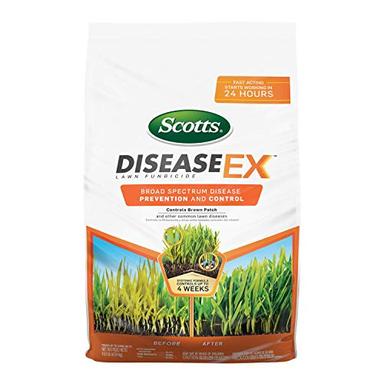
| Scotts DiseaseEx (10 lb granular) | Azoxystrobin (group 11) | Brown patch, red thread that didn't clear with nitrogen, snow molds. One bag covers up to 5,000 sq ft at the 2 lb preventive rate, 2,500 sq ft at the 4 lb curative rate. | $21.47 |
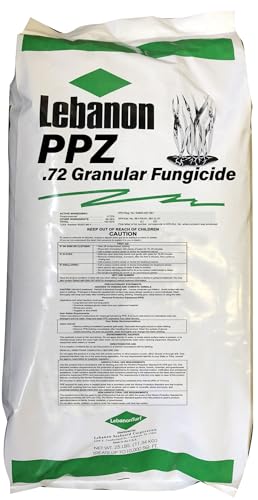
| Lebanon PPZ 0.72G (25 lb granular) | Propiconazole 0.72% (group 3) | Dollar spot, plus brown patch. Covers up to 16,000 sq ft. Not sold in every state; check the listing. | $56.97 |
| Headway G (30 lb granular) | Azoxystrobin + propiconazole (groups 11 + 3) | Bigger lawns, or brown patch and dollar spot in the same season. | $80.00 |
| Heritage G (30 lb granular) | Azoxystrobin 0.31% (group 11) | Bigger lawns with brown patch and no dollar spot. | $72.52 |
| BioAdvanced Fungus Control for Lawns (32 oz hose-end) | Propiconazole 2.42% (group 3) | Hose-end option for dollar spot on smaller lawns. One bottle covers 5,000 sq ft for most diseases, 2,500 sq ft for summer patch. | $22.98 |
Prices are Amazon prices checked November 27, 2026. They move, so check the listing. Use only products whose label lists residential lawns, at the label rate. Headway G and Heritage G are professional turf products, and state registration varies, so check that your state allows them on home lawns.
Is it a disease at all?
Brown spots have more causes than fungus. Before any product, run three quick checks.
- Grubs: tug the brown turf. If it lifts like loose carpet with the roots chewed off, grubs move to the top of the list. Penn State uses five to ten grubs per square foot as the usual curative threshold. Our grub killer guide covers that case.
- Drought: push a screwdriver into the soil. If it won't go in and the brown follows sunny slopes or the edges by the driveway, water first and wait a week.
- Dog spots or a fertilizer spill: a round dead center with a dark green ring around it points to urine or a spill. A fungicide won't touch either one.
Do the patches have a pattern, a ring, or lesions on the blades? Lesions are the spots or bands a fungus leaves on individual leaves, and they are the evidence a fungicide needs. If you see them, the next section narrows the disease. If you're still between suspects, a photo diagnosis narrows it faster than comparing leaves by eye.
Which disease is it, and what fixes it first?
Four diseases cause most of the fungicide questions in cool-season lawns. Each one has a condition that invites it, and that condition is the first fix.
| Disease | Conditions favor it | Fix first | Does a fungicide help? |
|---|---|---|---|
| Brown patch | Nights above 60°F, worst above 70°F (NC State). Tall fescue takes the most. | Water early in the morning and skip evening runs. Keep summer nitrogen at or under 0.5 lb per 1,000 sq ft (NC State). | Yes. Preventive azoxystrobin works well. |
| Dollar spot | 60°F to 85°F with high humidity and heavy dew (University of Maryland). | Feed it. Maryland says late spring and early summer nitrogen reduces severity. Remove dew and water early. | Sometimes. NC State says fungicides are seldom necessary for dollar spot in tall fescue. |
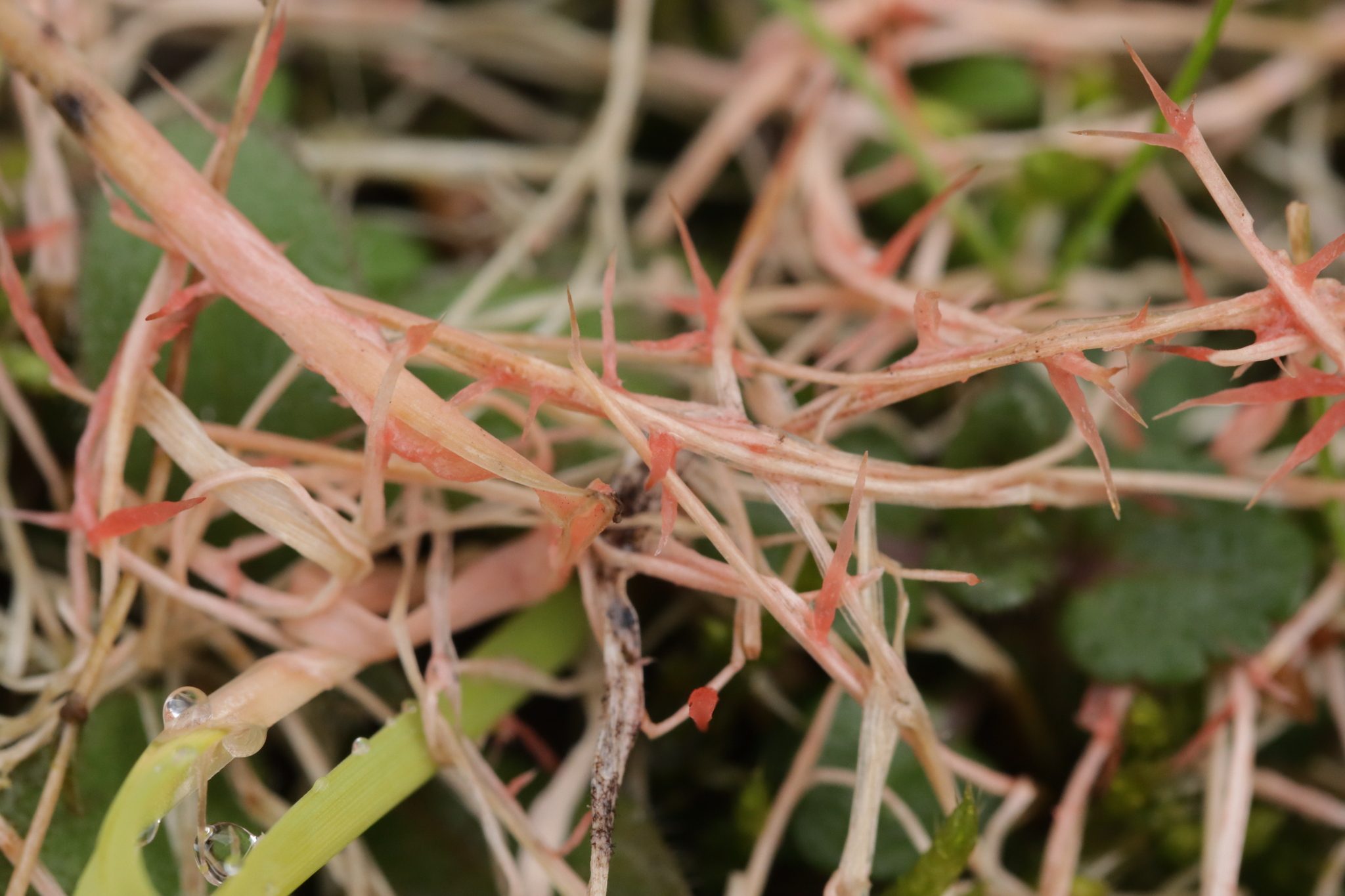
| Red thread | Cool, wet, humid spring and fall weather on underfed turf. Perennial ryegrass and fescues are most susceptible (UMass). | A light feeding of quick-release nitrogen (UMass). | Seldom needed on home lawns, per UMass and Purdue. |
| Summer patch | Kentucky bluegrass and fine fescues in summer heat (Ohio State). | Slow-release nitrogen, deep watering instead of frequent light cycles, and correct mowing height (Ohio State). | Only as prevention. Ohio State says the key is a preventive strategy. |
So which one fits your lawn? Match the weather and the grass first. If it's July, nights are warm, and the lawn is tall fescue, brown patch leads. If it's a dewy spring morning and you see small straw-colored spots, dollar spot leads.
Should you spray before or after symptoms?
When does a fungicide work best? Before you see the disease. NC State says the best way to improve fungicide performance is to apply it preventively, before symptoms appear. Curative applications might work, but they require higher application rates and shorter intervals.
There is a second catch. NC State notes that the fungus must be actively growing for a fungicide to work. A patch that went brown in August heat and stopped spreading won't respond to a spray in October.
- Preventive fits a lawn that gets the same disease every year, in the same spot, in the same weather. Use the lower label rate and the longer interval.
- Curative fits a disease that is spreading right now. Use the higher label rate and the shorter interval, and fix the condition that let it in.
If the disease showed up once after an unusual stretch of weather, the cultural fix alone may be enough. Watch it for a week, then decide.
Which active ingredient should you look for?
Read the active ingredient on the label, then the FRAC group. FRAC groups sort fungicides by how they work. Products with the same code have the same mode of action, per NC State.
- Azoxystrobin (group 11): the brown patch standard. NC State says 28 days of suppression is common with group 11 products. The catch is dollar spot. The University of Kentucky's turf disease guide says azoxystrobin can enhance dollar spot, and repeated use sometimes increases dollar spot pressure.
- Propiconazole (group 3): the dollar spot pick. The University of Maryland rates propiconazole excellent on dollar spot, with a 7 to 28 day interval.
- Azoxystrobin + propiconazole (groups 11 + 3): covers both. Maryland rates the Headway mix very good to excellent on dollar spot, with a 14 to 28 day interval.
Does the same problem keep coming back? Rotate groups. NC State says resistance is favored by repeated use of the same active ingredient, and dollar spot is one of the diseases most prone to it.
Best for brown patch: Scotts DiseaseEx
Is it brown patch in a cool-season lawn? DiseaseEx is the simplest fit. It's a granular azoxystrobin you put down with the same spreader you use for fertilizer. The listing says it controls 26 lawn diseases, including brown patch, red thread, gray and pink snow mold, necrotic ring spot and rust, and lasts up to four weeks.
Which rate are you using? The label runs 2 to 4 lb per 1,000 sq ft, with separate spreader settings for preventive and curative use. At the 2 lb preventive rate, a 10 lb bag covers 5,000 sq ft. At the 4 lb curative rate for an active outbreak, it covers 2,500 sq ft. Count bags from the rate you need.
Water it in. NC State says granular fungicides can work well, but irrigation or rainfall is needed for them to be effective. Full spreader steps are in our DiseaseEx instructions.
If dollar spot is the problem, look past this bag. It is an azoxystrobin product, and the Kentucky guide's warning applies.
Best for dollar spot: Lebanon PPZ propiconazole
Seeing small, straw-colored spots about the size of a coin, with cobweb-like threads in the morning dew? That fits dollar spot, and the first fix is nitrogen. If the lawn is fed and it keeps spreading, look for propiconazole. Maryland rates group 3 propiconazole products excellent on dollar spot.
Lebanon PPZ 0.72G is a granular propiconazole that goes through a broadcast spreader. The listing says it controls or suppresses 19 turf diseases, including brown patch and dollar spot, and a 25 lb bag covers up to 16,000 sq ft. Check that the exact product is registered in your state and its label lists your grass.
Prefer a hose-end bottle? BioAdvanced Fungus Control is also propiconazole, 2.42% per its label (EPA Reg. No. 92564-47), and lists dollar spot. Coverage depends on the disease: the label says one bottle covers 5,000 sq ft, or 2,500 sq ft for summer patch, fusarium blight and bermudagrass decline.
Brown patch and dollar spot in the same summer? Headway G combines azoxystrobin and propiconazole in one granular bag. It's a professional product with state-by-state registration, so check the label rate and your state's rules before you count bags.
Recommended Products
- 1Check price
 Top pick
Lebanon PPZ 0.72G Propiconazole Fungicide, Lawn Fungicide, 25 lb Bag
Granular 0.72% propiconazole for dollar spot and brown patch, applied with a broadcast spreader. Covers up to 16,000 sq ft, per the listing. Not sold in all states.
As an Amazon Associate we earn from qualifying purchases.
Working a case: brown rings in an 8,000 sq ft fescue lawn
The givens, as a scenario: an 8,000 sq ft tall fescue and bluegrass lawn in upstate New York. It's mid-July. Irregular brown patches, some with a darker edge, showed up after a week of warm, humid nights. The sprinkler runs at 8 p.m.
- Tug test. The turf holds. Grubs drop down the list.
- Leaf check. Blades at the patch margin have tan lesions with dark borders. That points to a fungus.
- Conditions. Warm nights, tall fescue, evening watering. NC State ties brown patch to nights above 60°F and advises against evening irrigation. Brown patch leads.
If those checks fit, here's the plan. Move the sprinkler to early morning first. Then treat. This is an active outbreak, so use the curative rate on the label: 4 lb per 1,000 sq ft. 8,000 sq ft takes 32 lb, which is four 10 lb bags, $85.88 at the November 27, 2026 price. Treating only the affected front section, say 2,500 sq ft, takes one bag. NC State says two to three applications through the summer are typically enough for brown patch.
If the spots had been small and coin-sized instead, dollar spot would lead, and the product would change to one whose label lists dollar spot.
When should you apply fungicide in a northern lawn?
Timing follows temperature. These are the starting points the extension sources give.
- Summer patch: start when soil at 2 to 3 inches reaches 65°F for three consecutive days, per Ohio State. In central Ohio that's usually around mid-May. The soil temperature tool shows yours.
- Brown patch: start before nights stay above 60°F. In North Carolina, NC State says applications starting in mid-May are generally very effective. Further north, that window usually arrives later, so watch your night temperatures.
- Dollar spot: Maryland says it is most prevalent in spring and fall, when warm days and cool nights leave dew on the grass.
- Red thread: cool, wet spring and fall weather. Feed it before you spray it.
Not sure about timing for your exact disease? Our post on when to apply fungicide to a lawn goes deeper. If none of these patterns match your lawn, stop treating and send a sample to your state's plant diagnostic lab through your county extension office.