

Red Thread Lawn Disease: Identification and Treatment
 Sarah MitchellLawn Diagnostics Specialist | 12 Years
As an Amazon Associate we earn from qualifying purchases.
If your cool-season lawn has broken out in ragged, pinkish patches and you look down to find tiny reddish threads poking out of the grass tips, you are almost certainly looking at red thread. I get asked about this one constantly every spring and fall, and the first thing I tell people is to relax a little. Red thread looks alarming, but in a home lawn it is rarely the disaster it appears to be. More often than not it is your grass waving a little flag that says feed me.
Red thread is a fungal disease (caused by Laetisaria fuciformis) that shows up as pinkish-tan patches with distinctive red or coral-colored threadlike strands extending from the leaf tips. It thrives in cool, wet weather and, above everything else, on lawns that are low on nitrogen. Fine fescues, perennial ryegrass, and Kentucky bluegrass are the most commonly affected grasses.
The good news is that it attacks the leaf blades, not the roots or crown, so it is largely cosmetic and the lawn almost always recovers. The fix is usually nutrition, not chemistry: a moderate nitrogen feeding to get the grass growing again, sensible mowing and watering, and patience. Fungicides are rarely warranted for home lawns.
What Red Thread Actually Is
Red thread is a foliar fungal disease caused by the fungus Laetisaria fuciformis. The name comes straight from its most recognizable feature: thin, reddish to coral-pink threadlike structures (called sclerotia, technically, but most people just call them threads) that grow out from the tips and edges of infected grass blades. These threads can look like tiny red antlers or needles, and in heavy infections you will also see pink, cottony tufts of fungal growth (mycelium) tangled in the canopy, especially in the early morning when everything is wet with dew.
The fungus lives in the leaf tissue and in thatch, and it survives unfavorable periods as those tough red threads, which can hang around in the lawn for a long time waiting for the right conditions to come back. When cool, damp weather returns, the fungus reactivates and spreads from blade to blade through contact, water splash, mowing, and foot traffic.
Here is the part that matters most for how you respond: red thread is a leaf-blade disease. It does not rot the crowns or kill the root system the way some of the more serious patch diseases do. That is exactly why it stays in the cosmetic-nuisance category for most home lawns rather than becoming a turf emergency.
How to Identify Red Thread
From a distance, red thread shows up as irregular patches of tan, bleached, or pinkish grass, usually somewhere from a couple of inches to roughly a foot or so across. The patches often have a ragged, water-soaked or scorched look, and they can run together into larger affected areas when the disease is really going. There is frequently a faint reddish or pink cast over the whole patch, which is the giveaway.
Get down on your hands and knees and look at individual blades, ideally in the morning. The two signature signs are:
- Red threads: fine, reddish-pink to coral-red strands extending beyond the tip of the leaf blade, like little branching needles. This is the single most diagnostic feature and the disease's namesake.
- Pink mycelium: cottony, pink-to-salmon tufts of fungal growth webbing through the grass, most visible when the lawn is wet. As it dries it can look more like a faint pink fuzz or flaky residue.
If you see those reddish threads, you have your answer. Very few other lawn problems produce them, which makes red thread one of the easier turf diseases to call with confidence once you know what to look for.
Red Thread vs Dollar Spot
Dollar spot is the look-alike people most often confuse with red thread, partly because both favor lower-fertility lawns. The difference is in the detail. Dollar spot produces small, distinct, silver-dollar-sized bleached or straw-colored spots, and on the individual blades you will see tan lesions with a darker, reddish-brown border that often spans the width of the leaf in an hourglass shape. What you will not see on dollar spot are red threads. If a patch has those pink-red strands and tufts, it is red thread; if it has small round bleached spots with banded lesions and no threads, lean toward dollar spot. For a deeper look at that disease, see our guide on what causes dollar spot.
Red Thread vs Drought Stress
Underfed lawns and underwatered lawns can both go off-color and patchy, so drought stress gets mistaken for red thread too. The tells here are the threads and the timing. Drought stress shows up in hot, dry weather, tends to follow the pattern of sun exposure and soil type (high spots, south-facing slopes, and compacted areas go first), and the grass takes on a blue-gray, wilted cast before browning. Red thread is the opposite season and condition: cool, wet, humid weather, and it brings those pink threads that drought never will. If you are seeing damage during a dry heat wave with no threads in sight, it is far more likely a water problem than a fungus.
What Conditions Favor Red Thread
Red thread is a creature of cool, wet weather. It is most active in the temperature range that lines up with spring and fall in cool-season lawn country, and it needs extended periods of leaf wetness from rain, dew, fog, or irrigation to really take hold and spread. Humid, overcast stretches where the grass stays damp for hours on end are prime conditions.
But weather is only half the story, and honestly it is the half you cannot control. The driver you can actually do something about is fertility. Low nitrogen is the single most important factor in red thread outbreaks. When a lawn is underfed, it grows slowly, and slow-growing turf cannot push out new tissue fast enough to stay ahead of the fungus. The same cool, wet week will hammer a hungry lawn and barely touch a well-fed one right next door. Other stresses that slow grass growth, like low soil fertility in general, compaction, and thatch buildup, all stack on top of the nitrogen issue and make outbreaks worse.
This is why I keep coming back to the same point: red thread is as much a nutrition signal as it is a disease. When I see it, my first question is almost never which fungicide, it is when did this lawn last get fed.
Which Grasses Get Red Thread
Red thread is firmly a cool-season grass problem. The grasses that get hit hardest are:
- Fine fescues (creeping red, chewings, hard fescue) are among the most susceptible and often show it first and worst.
- Perennial ryegrass is very prone to it and a frequent victim in overseeded and athletic-style lawns.
- Kentucky bluegrass gets it as well, particularly when it is underfed.
Tall fescue can pick it up too, though it tends to be less severely affected than the fine fescues and rye. Warm-season grasses like bermuda, zoysia, and St. Augustine are not the typical hosts for red thread, but they have their own disease lineups worth knowing if you grow them: see our guides on bermuda grass diseases, zoysia grass diseases, and St. Augustine grass diseases.
How to Treat and Manage Red Thread
The treatment for red thread is mostly about correcting the conditions that let it in, and the headline item is feeding the lawn.
1. Feed the Lawn (the Primary Fix)
Because low nitrogen is the core driver, a balanced nitrogen application is the most effective thing you can do. A moderate feeding gets the grass growing again so it can outgrow the infected tissue, and it directly removes the underlying deficiency that opened the door. The key word is moderate. You are not trying to blast the lawn with a giant dose, which can cause its own problems, you are trying to restore steady, healthy growth. Stick to the recommended rate for your grass type and the season, and lean on a sensible season-long feeding schedule rather than one panic application. Our nitrogen feeding calculator can help you dial in the right amount for your lawn size and grass type.
2. Mow Smart and Collect the Clippings
Keep mowing on your normal schedule, because regular mowing removes infected leaf tips and helps the new growth come in clean. While red thread is active, bag the clippings instead of mulching so you are physically carrying infected tissue and those red threads off the lawn rather than redistributing them. Use a sharp blade (a clean cut heals faster than a torn one), mow when the grass is dry if you can to avoid spreading the fungus, and rinse the mower deck off afterward. Mowing at the right height for your grass keeps the plant vigorous, and our mowing height tool gives you the target for your species.
3. Fix Your Watering Timing
Since red thread needs extended leaf wetness, how and when you water matters a lot. Water deeply and infrequently rather than with frequent light sprinklings, and do it early in the morning so the blades dry out over the course of the day. Evening watering leaves the lawn damp all night, which is exactly the conditions the fungus wants. If you have irrigation, shift it to a pre-dawn or early-morning cycle.
4. Improve Overall Fertility and Airflow
Beyond nitrogen, anything that improves the lawn's general vigor helps it shrug off red thread. Address compaction with aeration if the soil is tight, keep thatch in check since it harbors the fungus and holds moisture, and improve air movement and light where dense shade or poor drainage keeps the turf wet. A soil test is never a bad idea if you keep fighting fertility-related problems, because it tells you what you are actually short on instead of guessing.
When Is a Fungicide Warranted?
Here is where I differ from a lot of the panic-driven advice online: for the vast majority of home lawns, you do not need a fungicide for red thread, and reaching for one first is usually a waste of money. Red thread is cosmetic, it responds to feeding, and it clears up when the weather changes. Fungicides are a backstop reserved for high-value turf (think golf or sports fields) or the rare home situation where the same areas get hammered year after year despite good cultural practices. Even then, a fungicide treats the symptom while the nitrogen fix treats the cause. If you are considering spraying, that is the moment to talk to your local extension office about whether it is justified, what products are labeled for your situation, and the right timing, because that guidance is region-specific.
- Confirm the diagnosis before spending money: your local cooperative extension office or land-grant university turf program can verify red thread versus look-alikes like dollar spot, often from a photo or a sample.
- Ask for region-specific nitrogen rates and timing for your grass type, since the right feeding program varies by climate, soil, and species.
- If you are weighing a fungicide, get extension input on whether it is warranted at all, which products are labeled and available in your area, and the correct application window.
- Use extension recommendations for soil testing labs so any fertility decisions are based on your actual soil, not a generic schedule.
Recommended products
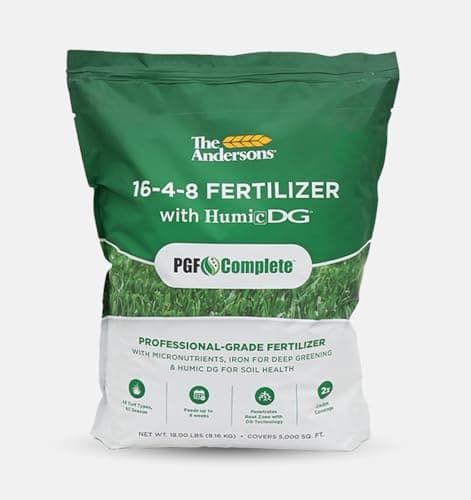
The Andersons PGF Complete 16-4-8
A slow release 16-4-8 granular that corrects the nitrogen deficiency behind most red thread.
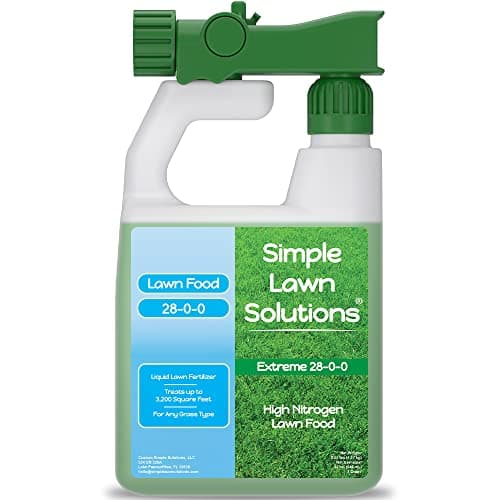
Simple Lawn Solutions 28-0-0 Liquid Fertilizer
A liquid 28-0-0 nitrogen that greens a starved lawn within days.
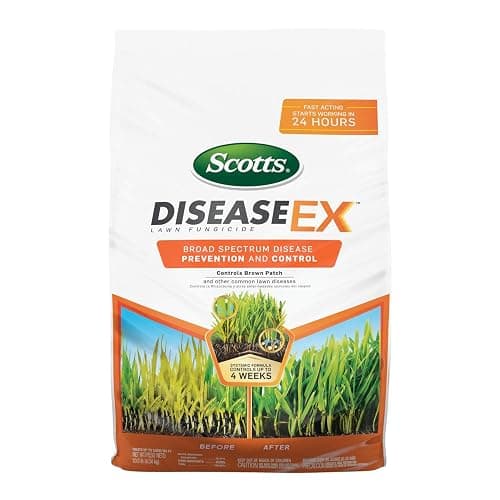
Scotts DiseaseEx Lawn Fungicide
A granular azoxystrobin fungicide for the rare case where red thread keeps spreading after feeding.
Preventing Red Thread
Prevention is really just good lawn care aimed at the conditions red thread exploits:
- Keep the lawn adequately fed. A consistent, season-appropriate nitrogen program is the number one preventive measure. Most red thread problems trace back to a lawn that got hungry.
- Water in the early morning, deeply and infrequently, so the grass does not sit wet for long stretches.
- Mow at the right height with a sharp blade, and keep the deck clean.
- Manage thatch and compaction so the fungus has fewer places to overwinter and the turf grows vigorously.
- Improve drainage, light, and airflow in chronically damp, shady spots.
- Consider more resistant cultivars when you overseed or renovate, since fine fescues and perennial ryegrasses vary in their susceptibility.
What Other Guides Miss
Most red thread articles lead with fungicides and bury the nitrogen story near the bottom, if they mention it at all. I think that is backwards. After years of looking at these lawns, the pattern is overwhelmingly consistent: red thread is a low-nitrogen disease first and a weather disease second. The lawns that get it badly are almost always the ones that have not been fed, and the single most reliable fix is a moderate feeding, not a spray bottle.
The second thing guides gloss over is how genuinely low-stakes this disease is for a home lawn. People see those red threads and pink fuzz and assume their lawn is dying. It is not. Red thread lives in the leaf blades, the crowns and roots are fine, and the grass grows out of it once conditions improve. Treating it like an emergency leads to overspending on chemicals and over-applying nitrogen out of panic, both of which can do more harm than the fungus would have.
So the reframe I want you to walk away with: when you see red thread, do not ask what will kill it. Ask what your lawn has been missing. Feed it sensibly, fix your watering, keep mowing and collecting clippings, and let the weather turn. That handles the overwhelming majority of cases. And if you want a second opinion on whether those threads are really red thread and not something that needs a different response, run a free AI diagnosis before you change anything.
Your Red Thread Action Plan
- Confirm it. Get on your knees and check for the reddish threads and pink mycelium on the blades. Rule out dollar spot (small banded spots, no threads) and drought (hot-dry timing, no threads).
- Feed the lawn. Apply a moderate, balanced nitrogen feeding at the recommended rate for your grass and season to get growth going and correct the deficiency.
- Adjust watering. Switch to deep, infrequent, early-morning watering so the grass dries out during the day.
- Mow and collect. Keep mowing at the right height with a sharp blade, bag the clippings while the disease is active, and clean the mower.
- Improve the basics. Address thatch, compaction, drainage, and shade so the turf stays vigorous and dries faster.
- Hold off on fungicide. Skip the spray for a normal home-lawn case and consult your local extension office before treating if the problem is severe or recurring.
- Be patient. Once you have fed the lawn and the weather warms and dries, the grass grows past the damage and fills back in.
Red thread is one of those problems that looks far worse than it is. Read it as the nutrition signal it usually is, feed your lawn, and you will have it sorted out without ever reaching for a chemical.
Free Lawn Care Tools
Red thread is caused by a fungus called Laetisaria fuciformis. It takes hold when the weather is cool and wet and, most importantly, when the grass is short on nitrogen. Underfed, slow-growing turf cannot outgrow the fungus, so a hungry lawn in a damp spring or fall is the classic setup. Think of it less as an infection that attacked a healthy lawn and more as a sign your grass needs feeding.
It often does once the weather dries out and warms up, because the fungus needs prolonged leaf wetness and cool temperatures to stay active. The catch is that it tends to come right back the next cool, wet stretch if the underlying low-fertility problem is never addressed. Red thread mostly affects the leaf blades, not the crown or roots, so the grass usually recovers rather than dying outright.
In most home lawns, yes, a balanced nitrogen feeding is the single most effective fix. A modest dose of nitrogen pushes new growth that lets the grass grow past the infected tissue, and it directly corrects the low-fertility condition that invited red thread in the first place. Avoid dumping on a heavy dose all at once, since a steady, moderate feeding program does more good than a single big hit.
For a home lawn it is largely cosmetic. The fungus damages leaf blades and leaves ragged tan or pinkish patches, but it rarely kills the plant because it does not attack the roots or crowns. The lawn looks rough for a few weeks, then fills back in once you feed it and the weather changes. It is a nuisance and a nutrition signal, not a lawn-killer.
Yes, keep mowing, and collecting the clippings while the disease is active is a sensible move. Bagging removes infected leaf tips and the threadlike fungal structures that can spread the disease to healthy areas. Mow at the recommended height for your grass with a sharp blade, and clean or rinse the mower afterward so you are not carrying fungus around the yard.
Look closely at the patch. Red thread produces distinctive reddish-pink threadlike strands extending from the tips of the blades and pink cottony tufts, with a color cast that runs pink to tan. Dollar spot leaves small, silver-dollar-sized bleached spots and individual blades show tan lesions with a darker border, but no pink threads. When you see those red or pink antler-like strands, it is red thread.

Your lawn plan, in your pocket all season
Grass ID, a season plan, soil-timed reminders, and a lawn journal that remembers what you did. Free on iPhone.